Review Management for Beauty Businesses: Building a 5-Star Reputation
Turn this article into takeaways for your work.


Each assistant summarizes the article only for you and suggests best practices for your work.
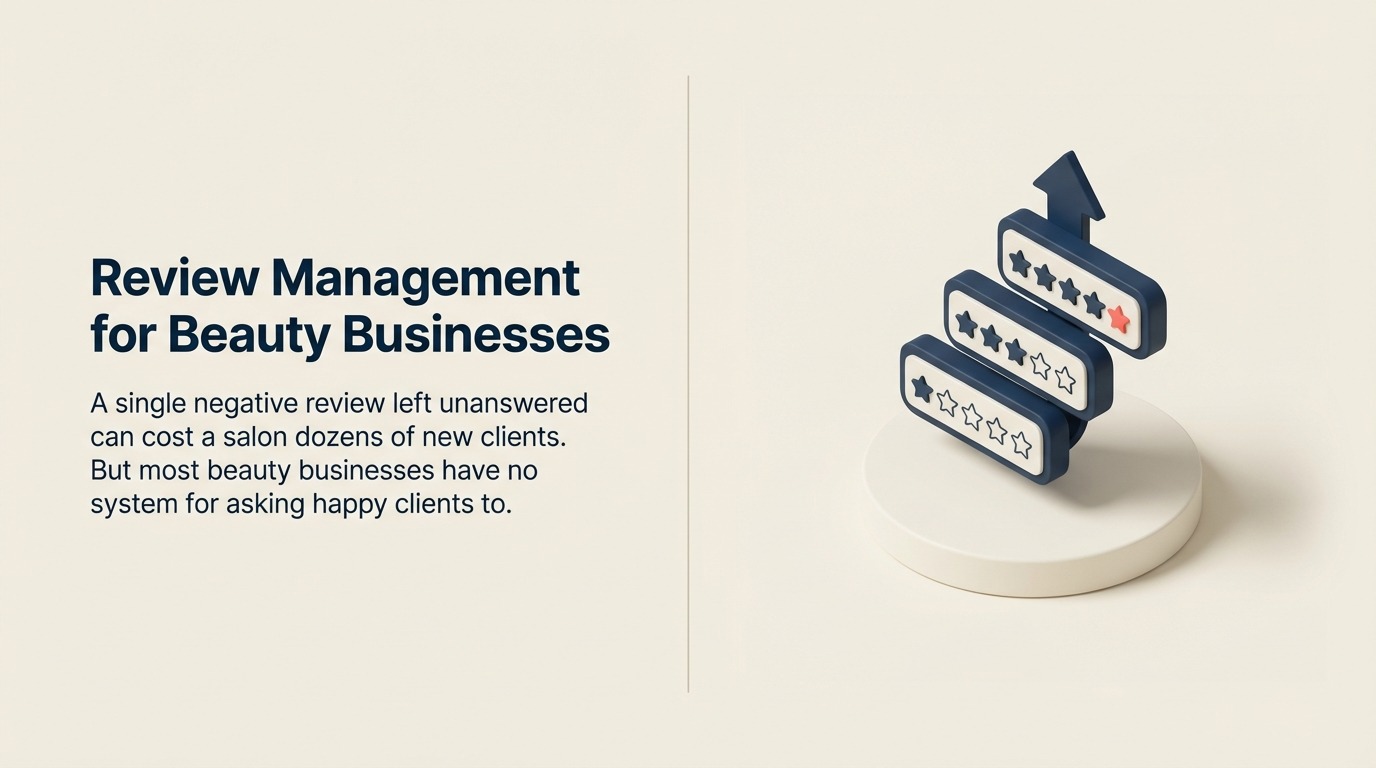
A single negative review, left unanswered, can cost a salon dozens of new clients. Studies of local service business search behavior show that 94% of consumers read online reviews before booking a new beauty appointment, and 58% won't consider a business with fewer than a 4.0-star average.
Yet most beauty businesses have no system for generating reviews from happy clients. They rely on the occasional client who takes it upon themselves to post something positive, while the clients who had problems (who are statistically more motivated to write) leave a trail of unaddressed complaints that shape the first impression for every potential new client who searches their name.
Reputation management isn't passive. It's a system. And when run intentionally, it becomes one of the most cost-effective growth levers in a beauty business. It also reinforces every other marketing investment. Local SEO for beauty centers depends heavily on review volume and recency, meaning your review system directly affects where you appear in local search results.
Key Facts: Online Reviews for Beauty Businesses
- 94% of consumers read reviews before choosing a local beauty service (BrightLocal 2023)
- Google reviews influence local search ranking. Businesses with 50+ reviews appear 2x more in local pack results
- Responding to reviews (positive and negative) increases booking conversion by 18% (Harvard Business Review)
New HBR research on what consumers find persuasive in online reviews identifies specific language patterns and response styles that most effectively convert skeptical readers into first-time bookers, useful context for crafting responses that go beyond generic acknowledgment.
Asking for Reviews: Timing and Method
The best time to ask for a review is immediately after a great service, while the client is still in the chair or walking out the door. Satisfaction is at its peak. The memory is fresh. The emotional connection to the experience is strong.
Waiting until the next day cuts conversion rates by roughly 40%. Waiting until a follow-up email two days later cuts them further. The ask, when it comes from the stylist or therapist directly ("I'd really appreciate it if you shared your experience on Google"), converts at 3-5x the rate of an automated message sent hours later.
Front desk review request script: "We're so glad you love it! We'd really appreciate it if you could leave us a quick Google review. It helps new clients find us. Here's a QR code that takes you straight there. It only takes a minute!"
Stylist direct ask: "It was so great working with you today! If you're happy with your results, it would mean the world to me if you left a quick review on Google. I'll send you the link right now."
The QR code at checkout is the most frictionless method. It removes the need for the client to search for your business, navigate to the reviews section, and figure out how to leave feedback. One scan, and they're on the review form. Laminate cards with the QR code for the checkout counter, styling stations, and treatment rooms.
For clients who opt in to SMS, a review request message sent within 2 hours of their appointment achieves 15-20% conversion (compared to 5-8% for email). The message should include a direct link, not a link to your website or a third-party platform, but the direct Google review link for your location. The same client communication and follow-up system that handles thank-you messages and rebooking reminders can deliver review requests automatically as part of the post-visit sequence.
Which Platforms to Prioritize
Not all review platforms are created equal. Google dominates for local beauty service discovery.
| Platform | Search Impact | Beauty Relevance | Response Needed |
|---|---|---|---|
| Very High (local SEO) | Essential | Yes, within 24-48h | |
| Yelp | Medium-High | Strong in urban markets | Yes, within 48h |
| Medium | Social proof for ads | Yes, within 48h | |
| Booksy | High for discovery | Strong for salons/spas | Yes, within 48h |
| Fresha | Medium | Growing, booking-integrated | Yes, within 48h |
Google is the primary focus for three reasons. First, Google reviews directly influence local search ranking, specifically the local pack results that appear when someone searches "hair salon near me." Statista's data on local business review behavior shows that as of 2023, 33% of U.S. consumers always read reviews before visiting a local business, meaning a strong Google review profile is the first filter a potential new client applies before they ever consider booking. Second, Google reviews appear prominently in Maps results: how most mobile users discover local beauty businesses. Third, Google has the widest reach of any platform for local service discovery.
Start by maximizing Google review volume. Once you have a consistent Google review generation system, extend it to Yelp and Booksy based on your market and clientele.
Google Review Strategy
Review volume and recency both matter for local search ranking. A business with 200 reviews averaging 4.6 stars will outrank a business with 30 reviews averaging 4.9 stars in most local search scenarios, because Google's algorithm treats review volume as a trust signal.
The goal is generating a consistent stream of reviews, not a one-time surge. A business that generates 10 reviews in January and zero in February signals lower activity than one generating 4-6 reviews per month consistently. Recency matters almost as much as volume.
Getting the review link in front of clients requires zero friction:
- QR code at checkout counter: Laminated card with "Leave us a review" text and a QR code linking directly to your Google review form
- SMS with direct link: Sent within 2 hours post-visit to opted-in clients
- Email footer: Every email communication includes a "Review us on Google" link in the signature
- Receipt or invoice: If you issue paper or digital receipts, the Google review link appears at the bottom
The review request should never feel transactional or desperate. "Tell us what you think" lands differently than "We're trying to get more reviews." Frame it as helping potential clients make good decisions, not as a metric you're chasing. An optimized Google Business Profile for salons amplifies the value of each review. The profile is the page potential clients land on after reading those reviews, and it needs to convert that trust into a booking.
Responding to Negative Reviews: A Step-by-Step Framework
A negative review is not a disaster. An unanswered negative review is.
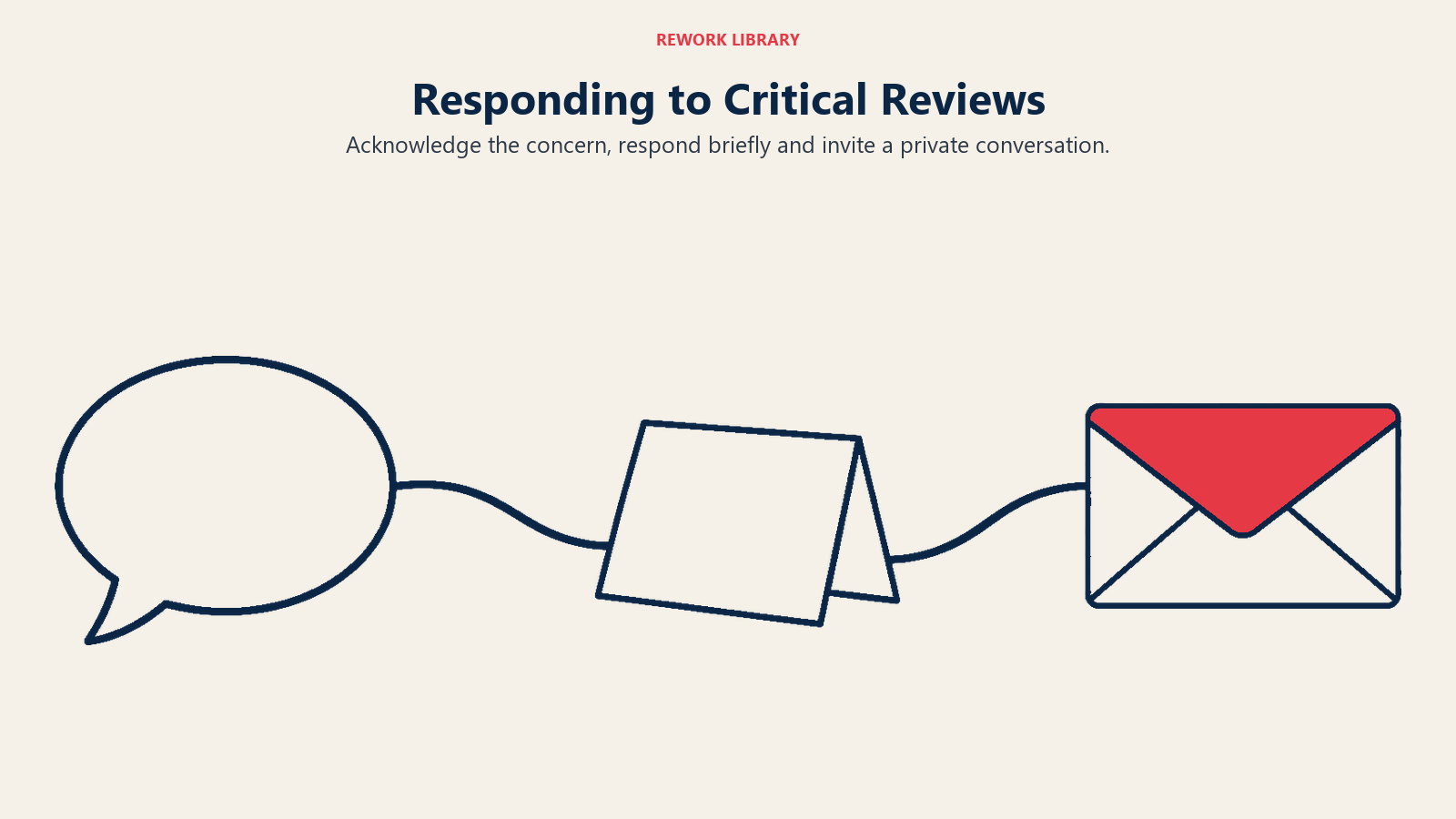
When potential clients see a business with a critical review and no response, they assume the business doesn't care. When they see a professional, empathetic response that addresses the issue directly, they often trust the business more, because it signals accountability.
Step 1: Acknowledge without being defensive. "Thank you for taking the time to share your experience. We're genuinely sorry this visit didn't meet your expectations."
Step 2: Take responsibility for the experience, not necessarily the mistake. You don't have to concede that the client was right about every detail to acknowledge that they had a poor experience.
Step 3: Move the conversation offline. "We'd love the opportunity to make this right. Please reach us directly at [email/phone] and we'll make it our priority."
Step 4: Don't over-explain or argue. Every line of a public response is marketing copy. Keep it professional, empathetic, and brief.
What to never say:
- "We have hundreds of happy clients" (dismissive)
- "This is the first we've heard of this" (implies the client is lying)
- "Our stylists are all certified professionals" (defensive, not responsive)
- Anything that identifies the client or describes their service in ways they wouldn't recognize as fair
Response time benchmarks: aim for negative reviews within 24 hours, positive reviews within 48-72 hours. The business that responds thoughtfully and quickly to a negative review often earns a revised rating from the original reviewer. This kind of proactive reputation management pairs naturally with broader social media marketing for salons, where how you handle public-facing feedback shapes your brand perception across all channels.
Sample response to a 2-star review:
"Thank you for sharing this with us, [Name]. We're truly sorry your experience wasn't what you hoped for. We hold ourselves to a high standard and it's clear we fell short for you. Please reach out to us at [email] so we can understand what happened and make it right. Your feedback matters to us."
Responding to Positive Reviews
Most businesses skip responding to positive reviews. That's a missed opportunity.
Responses to positive reviews do three things: they signal to the reviewer that their feedback was seen and valued (reinforcing loyalty), they demonstrate to potential clients that the business is engaged and cares, and they add keyword-rich content to your Google Business Profile at no cost.
Sample response to a 5-star review: "Thank you so much, [Name]! We loved having you in for your balayage. It turned out beautifully. We'll pass your kind words along to [Stylist Name], who will be so happy to hear this. See you in a few weeks!"
Keep responses specific to what the reviewer mentioned. Generic responses ("Thank you for your kind words!") are less effective than ones that reference the actual service or experience. Stylists who are frequently mentioned by name in positive reviews are valuable assets for your referral programs for beauty centers: their reputation is a natural magnet for word-of-mouth recommendations.
Monitoring Platforms and Spotting Trends
You can't respond to reviews you don't know exist. Setting up monitoring is non-negotiable.
Google Business Profile sends email notifications for new reviews by default. Make sure these are turned on and going to someone who will act on them within 24 hours.
For multi-platform monitoring, tools like Birdeye, Podium, and ReviewTrackers aggregate reviews from Google, Yelp, Facebook, and Booksy into a single dashboard. They also enable bulk review request campaigns via SMS and email. For salons generating significant review volume across multiple platforms, these tools pay for themselves in time saved.
Set up Google Alerts for your salon name, which catches mentions in blog posts, directories, and social media that don't appear in your standard review monitoring.
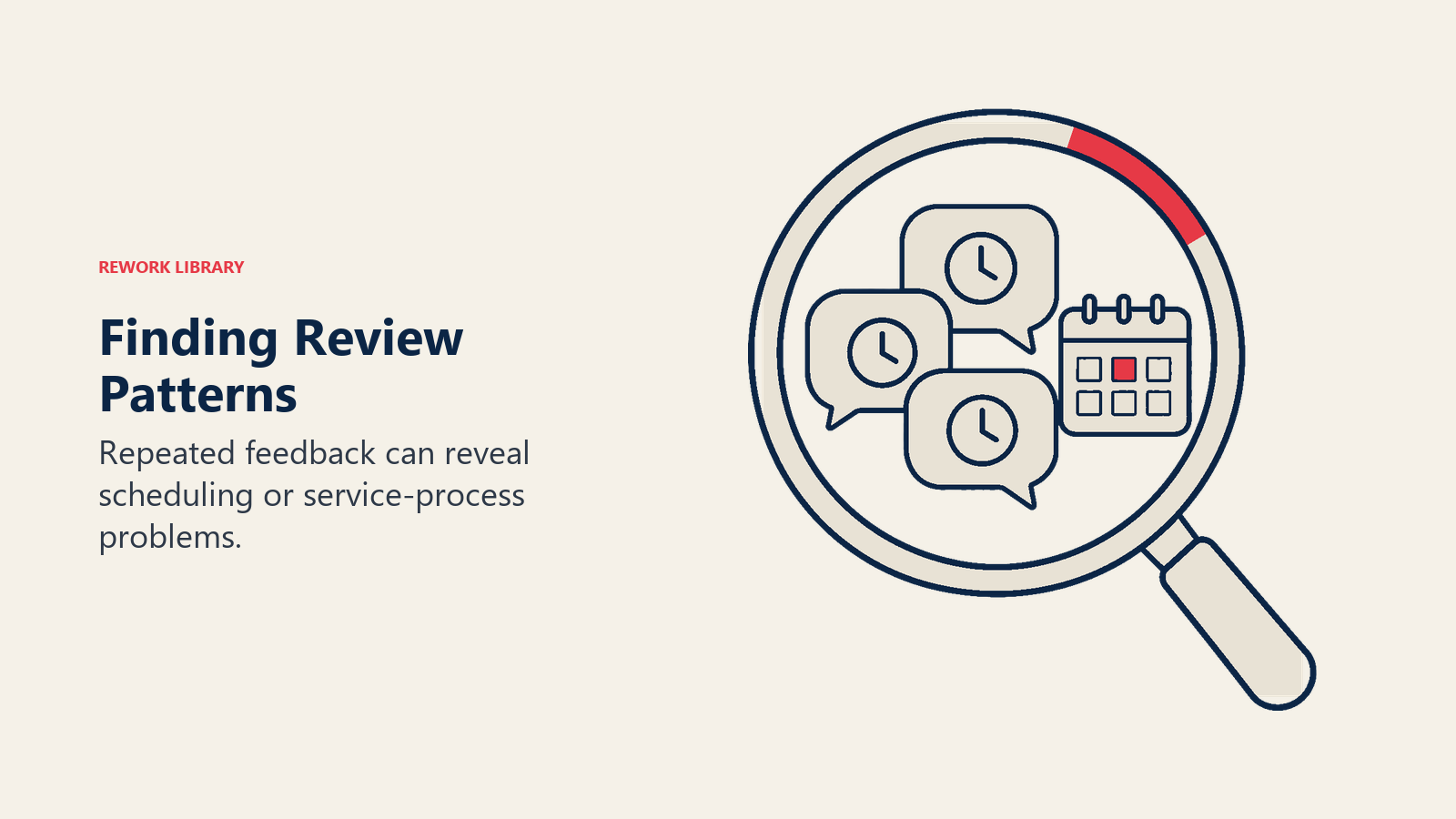
Reading sentiment patterns over time identifies operational issues before they compound. If you get four reviews in three months mentioning wait times, that's not a review problem. That's a scheduling problem. If you get three reviews mentioning a specific stylist by name (positively or negatively), that's data worth acting on. A data-driven approach to salon decisions treats review sentiment as a leading indicator. Feedback trends often surface problems before they appear in revenue numbers.
Turning Detractors into Promoters
When you resolve a complaint effectively and reach out personally, a meaningful percentage of dissatisfied clients can be won back, and some become your most loyal advocates. The psychology here is well-documented: people who've had a problem resolved successfully often feel more loyalty to a business than those who never had a problem at all. Inc.'s analysis of how online reviews impact buying decisions found that over 51% of consumers pay attention to how businesses respond publicly to complaints, making your recovery response as influential as the original review.
After moving a complaint offline and resolving it (whether that's a rescheduled appointment, a complimentary service, or a sincere apology), follow up 48-72 hours later: "I wanted to check in after our conversation. I hope we were able to make things right. Your experience matters to us, and we'd love the chance to earn back your trust."
When to offer compensation: service-related issues (color that didn't turn out correctly, a cut the client wasn't happy with) warrant a complimentary correction service. Administrative issues (difficulty booking, a wait that wasn't communicated) warrant a sincere apology and a modest gesture. Not every complaint warrants financial compensation, but every complaint warrants a response that makes the client feel heard.
One-Page Review Management SOP
Any beauty business can implement this protocol in a single week:
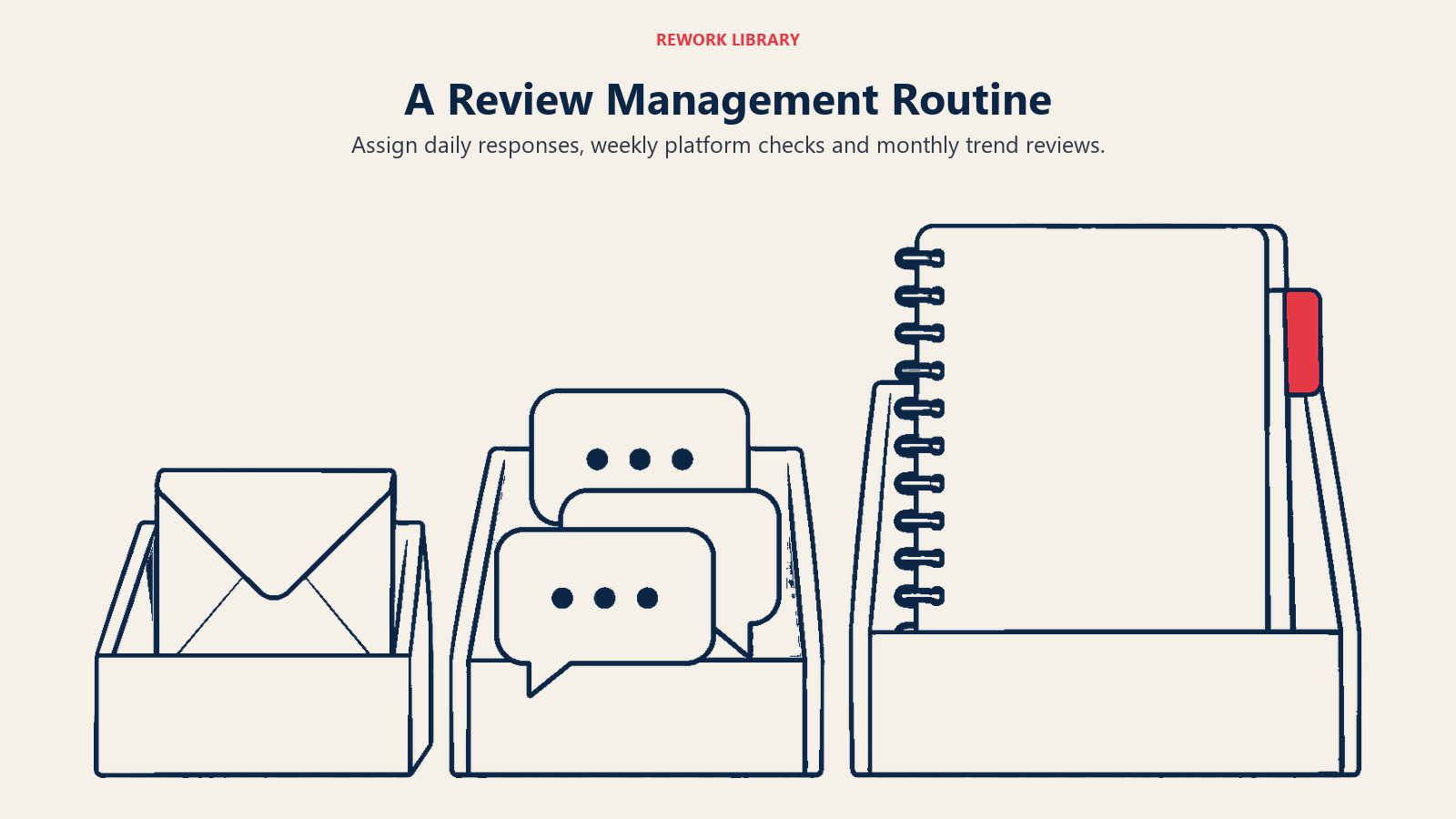
Daily:
- Check email notifications for new Google reviews
- Respond to any negative reviews within 24 hours
Weekly:
- Review all platforms (Google, Yelp, Facebook, Booksy) for new reviews
- Respond to all positive reviews (within 72 hours)
- Check overall rating trends: is the average trending up, flat, or down?
Monthly:
- Pull a review count report: total reviews, average rating, response rate
- Identify any recurring themes in feedback (positive or negative)
- Share patterns with the team: recognition for mentioned staff, action items for recurring issues
The metric that predicts whether your review strategy is working:
New review rate is the number of new reviews generated per month, divided by total appointments in that month. A healthy ratio for a mid-sized salon is 1 review per 20-30 appointments. If you're getting 200 appointments per month and generating fewer than 5 reviews, your ask system isn't working. If you're generating 20+, your system is strong.
Learn More

Senior Operations & Growth Strategist