Walk-In Conversion Strategies: Turning Foot Traffic into Loyal Clients
Turn this article into takeaways for your work.


Each assistant summarizes the article only for you and suggests best practices for your work.
A walk-in client is the most motivated prospect your salon will ever encounter. They've already made a decision. They've already passed competitors. They've already walked through your door. The lead generation work is done, and yet most salons let these clients leave without capturing their contact information, without booking a return appointment, and without any system to bring them back. Your client experience design directly shapes whether that initial visit ends as a transaction or the start of a relationship.
The average salon converts walk-ins into repeat clients at a rate of about 20-30%. Salons with structured conversion systems push that rate to 55-65%. That gap, measured across a full year of walk-in traffic, can represent hundreds of thousands of dollars in lifetime client value either captured or lost. HBR research shows that increasing customer retention rates by just 5% increases profits by 25–95%, which is why converting the walk-in into a repeat client matters so much financially.
Walk-in conversion isn't about being pushy or making clients feel pressured. It's about designing every touchpoint between "they walked in" and "they left" to make rebooking the obvious, natural next step.
Key Facts: Walk-In Client Behavior
- Walk-ins who book a return appointment before leaving are 5x more likely to become regular clients (Professional Beauty Association)
- Salons that capture client contact information on walk-ins increase retention by 40% vs those that don't (Mindbody Industry Report, 2024)
- The average cost to acquire a new salon client through advertising is $35-$80; a converted walk-in costs near zero
The Walk-In Conversion Funnel
Walk-in conversion happens across three distinct moments. Miss any of them and the client leaves as a one-time transaction rather than the beginning of a long-term relationship.
Moment 1: Arrival and first impression: before and immediately after they enter. This is where they decide whether they feel comfortable staying.
Moment 2: During the service: where trust is built through consultation quality, expertise demonstration, and genuine personal connection.
Moment 3: Checkout: where rebooking, data capture, and follow-up scheduling happen. This is the most critical moment and the one most salons waste.
Each moment requires different protocols, and all three need to be systematized rather than left to individual staff personality.
Storefront Presentation: Before They Walk In
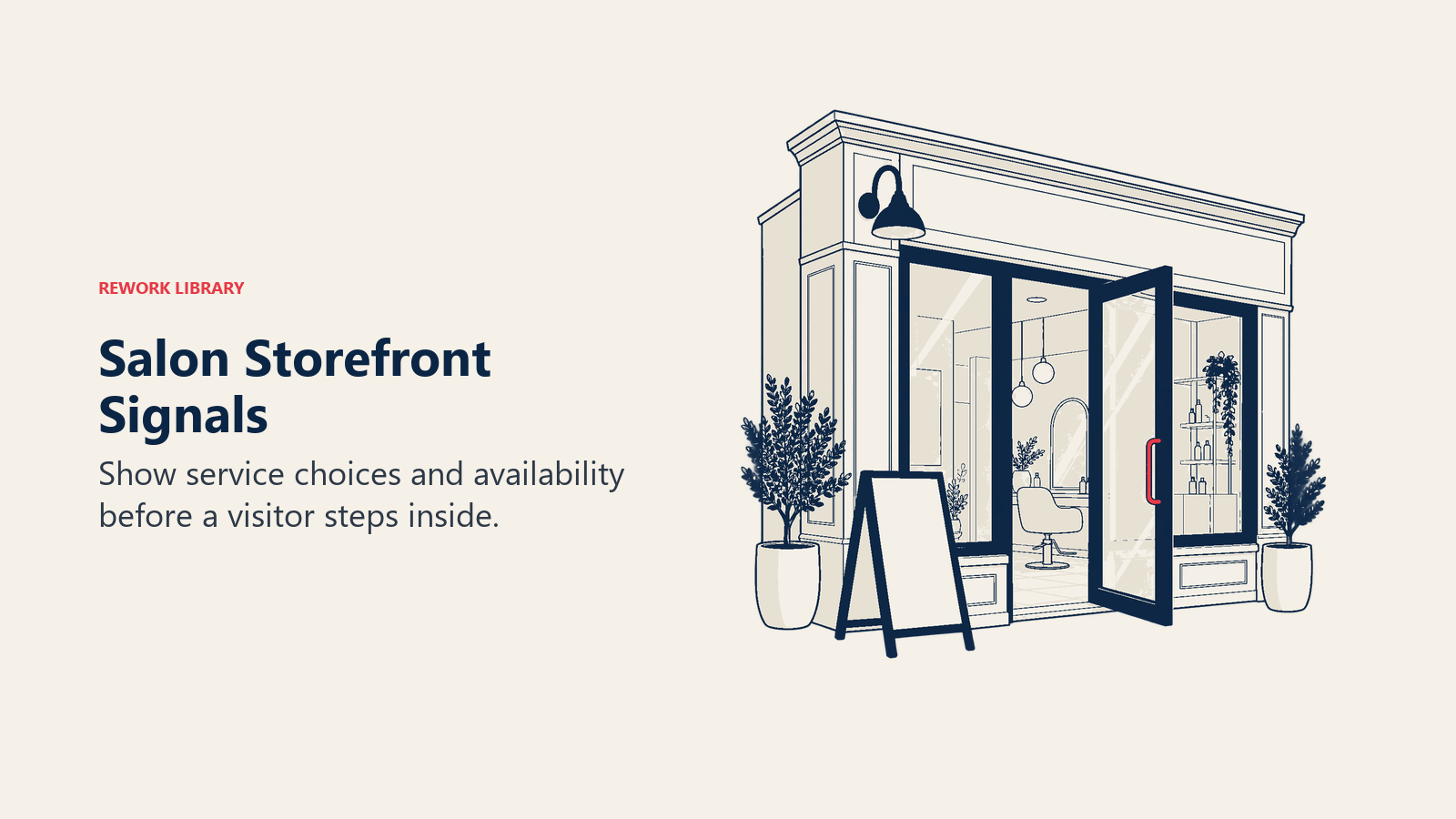
Walk-ins make a quality judgment before they open the door. Your exterior communicates availability, professionalism, and the experience they'll have inside.
Window displays and signage
A visible price list or service menu in the window answers the most common hesitation: "I don't know how much this costs." Removing price uncertainty increases foot-to-door conversion. Add a visible "Walk-Ins Welcome" sign if your volume supports it. It removes the perception that you're appointment-only. Your Google Business Profile for salons should reinforce the same message online, as many walk-ins check your profile before deciding to stop in.
Cleanliness and curb appeal
Hair salons, nail studios, and spas are held to high cleanliness standards by prospective clients before they experience your services. A clean window, tidy entrance, and well-lit interior visible from the street signal competence. Clutter, faded signage, or a dark entrance signals the opposite.
Open vs. appointment-only perception
If you do accept walk-ins, make it unambiguous. "By appointment preferred, walk-ins welcome when available" is a more honest message than "Walk-ins welcome" when you're often fully booked, but it needs to be matched by a system for managing capacity expectations gracefully.
Greeting Protocols: The First 60 Seconds
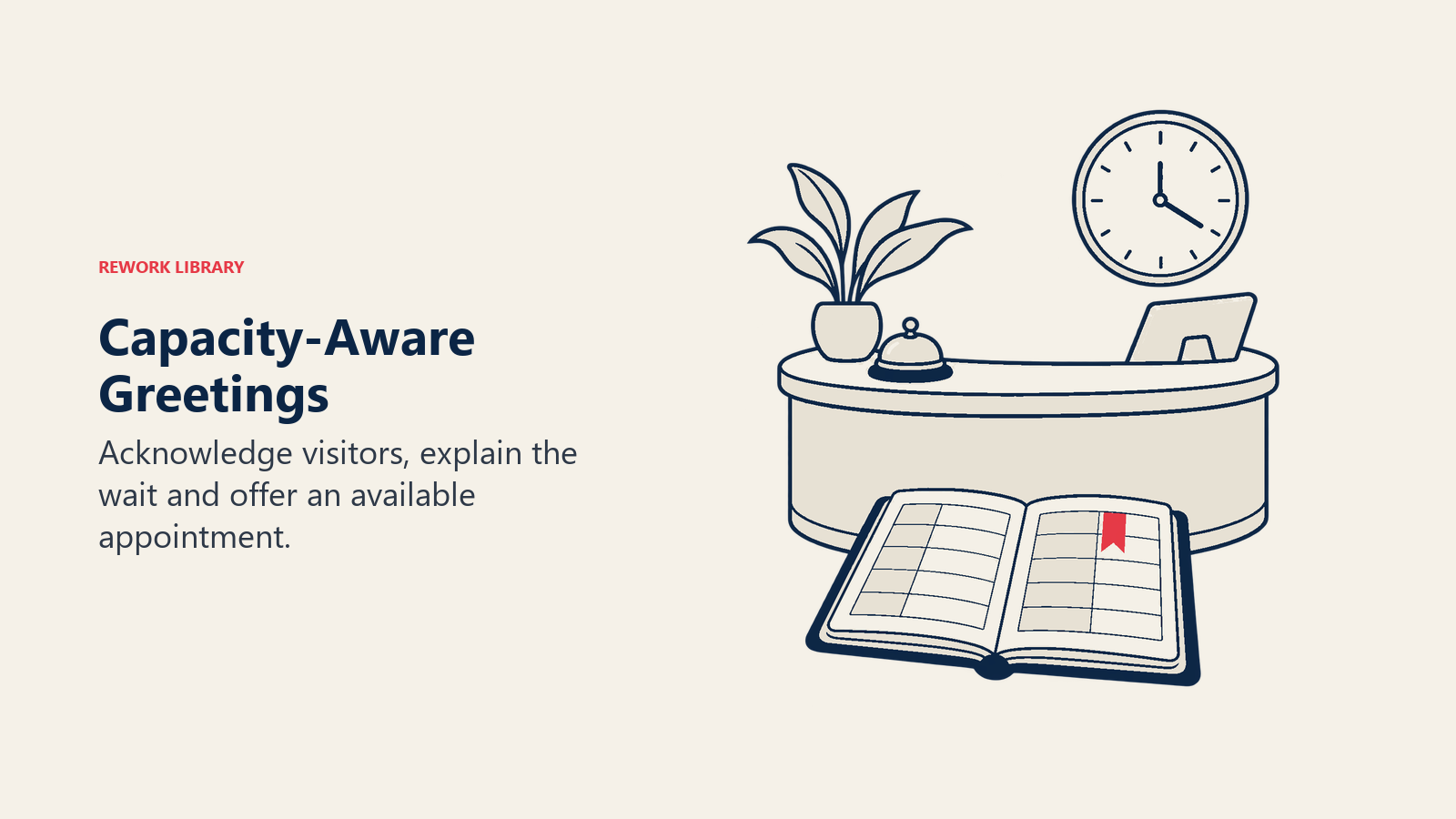
The greeting is make or break. A walk-in who waits 90 seconds without acknowledgment begins forming a negative impression. A walk-in who's acknowledged within 30 seconds (even if you can't serve them immediately) begins forming a positive one.
The acknowledgment script
Within 30 seconds of the client entering, someone on staff should make eye contact and say something along these lines:
"Hi! Welcome in. I'll be right with you. Can I grab your name and just let you know about wait times?"
This three-second interaction does three things: it acknowledges them immediately, sets expectations, and begins the data collection process (their name).
Managing capacity when fully booked
Don't send walk-ins away with "sorry, we're full." Instead:
"We're actually fully booked for the next two hours, but I'd love to get you in. Can I book you for first thing tomorrow morning? I'll hold it now so you're guaranteed the spot."
This converts a potential lost walk-in into a booked appointment. You've transformed a "sorry" into a service moment.
Wait time communication
If there is a wait, tell them exactly how long. Not "about 20 minutes" but "approximately 25 minutes." Offer seating. Offer water or a beverage if your setup allows. The quality of the wait experience is part of the service experience.
Sample Walk-In Greeting Script
| Scenario | What to Say |
|---|---|
| Available immediately | "Hi, welcome! I'm [Name]. What are you coming in for today? Let me pull you straight over." |
| Short wait (under 20 min) | "Hi, welcome! We have about a 15-minute wait. Let me grab your name and get you comfortable while you wait." |
| Fully booked | "Hi! We're fully booked right now but I'd love to get you locked in. Can I book you for [time/day] before you go?" |
Consultation Approach: Building Trust Before the Service
The consultation is where walk-ins decide whether they're going to become a loyal client or a one-time visitor. A great consultation demonstrates expertise and makes the client feel understood.
The needs assessment
Don't ask "What do you want done today?" Ask better questions:
- "How long has it been since your last [haircut/facial/treatment]?"
- "What's been bothering you most about [their hair/skin/nails] lately?"
- "What do you do every morning? Are you someone who spends time on it or want something low-maintenance?"
These questions reveal real needs rather than surface requests, and they position the stylist or therapist as a professional, not an order-taker. This consultation style also creates natural opportunities for upselling and cross-selling beauty services, where the upgrade is grounded in the client's own stated goals rather than a sales script.
Showing examples
Use your salon's booking system or a dedicated portfolio on your phone to show relevant before-and-afters during the consultation. This builds confidence, sets realistic expectations, and makes it easy to recommend upgrades or complementary services naturally.
Setting expectations
Walk-ins sometimes have unrealistic expectations, particularly for services like color correction or complex treatments. Address this during consultation, not after. "Here's what we can achieve today, and here's what a second appointment in six weeks would get you to the full result." This honesty converts them from a potentially disappointed one-visit client into a committed two-visit plan.
First-Visit Offers: Converting Without Discounting Too Deeply
A welcome offer is appropriate and effective. A deep discount on a first visit signals you're price-competing rather than value-leading.
Welcome offers that work
- Complimentary add-on service ($15-20 value: scalp massage, eyebrow tidy, hand treatment)
- Product sample or travel size retail product
- Priority rebooking window ("Your next appointment is held for 48 hours before we open the slot to others")
- First-visit loyalty points (if you run a loyalty program for your beauty center)
What to avoid
A 30-40% discount on the first visit sets a price anchor that clients will expect to maintain. You'll attract price-sensitive clients who shop around whenever they're not discounted, rather than value-conscious clients who stay for quality.
Rebooking at Checkout: The Most Critical Moment
This is where salons fail most consistently. The service ends, the client is happy, and the stylist says "See you next time!" leaving the return visit entirely to the client's initiative. Some will book. Most won't for another 4-6 months, if ever.
The rebooking conversation needs to happen before payment, when the client's enthusiasm about their result is at its peak.
The rebooking script
"I'm really glad you love it. For [hair color / skin treatment / nails], you'll want to come back in about [6 weeks / 4 weeks / 3 weeks] to keep this looking its best. Want me to go ahead and lock in a spot now while you're here? It takes 30 seconds."
Three elements make this script effective: the professional rationale (maintenance timeline), the client's benefit (keeping it looking good), and the ease (30 seconds). Don't ask "do you want to rebook?" That's a yes/no question with an easy no. Ask "want me to go ahead and lock it in?" which is a yes/no question where yes is the natural response.
Standing appointment offers
For maintenance services (blowouts, nail fills, brow shaping) offer a standing appointment:
"A lot of our clients who come in every three weeks find it easier to just hold the same time each week. Want me to set that up for you?"
Standing appointments generate the most reliable repeat revenue and dramatically reduce no-shows because clients feel ownership of a slot. You can find additional tactics for encouraging repeat visits in rebooking strategies for salons, which covers standing appointment scripts and pre-scheduling protocols in detail.
Capturing Contact Information: Building the Database
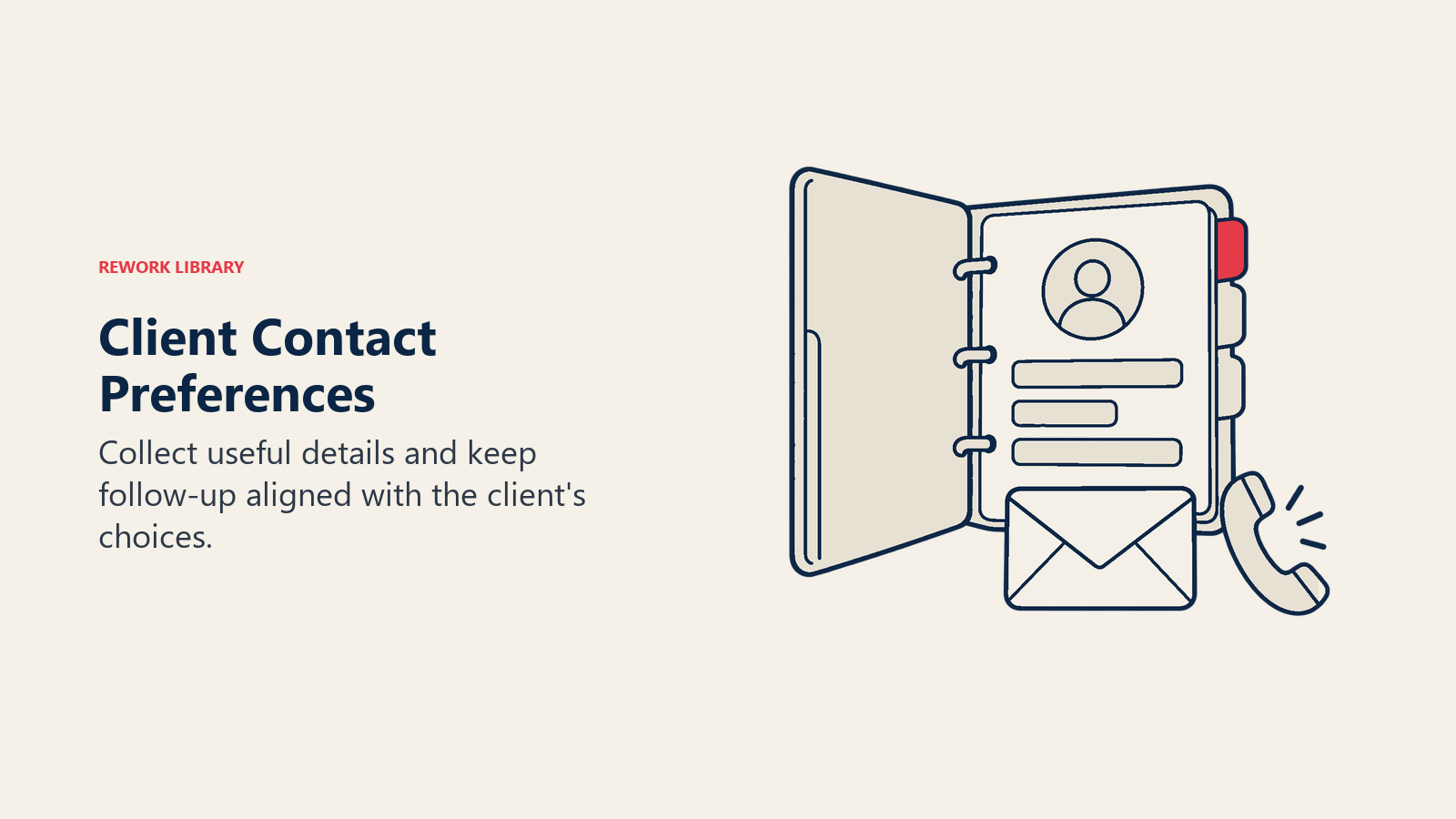
A walk-in who leaves without providing contact information is largely lost. Getting their details isn't just operationally useful. It's the entry point for everything that follows: follow-up messages, rebooking reminders, special offers, and long-term relationship management.
Natural data capture methods
- Digital check-in form on an iPad at reception (name, mobile, email, service preferences)
- Text receipt ("Can I send your receipt to your mobile?"), this gets you their number naturally
- Loyalty program sign-up ("We have a loyalty program. Every visits you earn a free service. Want me to set you up?")
What to capture
At minimum: name, mobile number, service type, stylist or therapist seen. Secondary priority: email, birthday, service preferences, product sensitivities. Don't ask for more information than you can actually use. A long intake form creates friction.
Walk-In Data Capture Form (Essential Fields)
| Field | Why It Matters |
|---|---|
| First name + last name | Personalization, client record |
| Mobile number | Appointment reminders, follow-up messages |
| Email address | Email marketing, rebooking campaigns |
| Service received | Segmentation for relevant future offers |
| Staff member seen | Preference capture for future bookings |
| How did you hear about us? | Acquisition attribution |
Post-visit follow-up timing
Send a follow-up text or email within 24 hours. Keep it simple: thank them for coming in, share a care tip related to their service, and include a booking link for their next appointment. This single touchpoint, sent consistently, meaningfully improves conversion from first-time walk-in to booked repeat client. Research on customer acquisition cost confirms that acquiring a new customer is five to twenty-five times more expensive than retaining one, making this follow-up worth more than almost any marketing spend. See client communication and follow-up for message templates and timing sequences that work across different service types.
Staff Training: Making Conversion Systematic
Walk-in conversion can't rely on individual staff charisma. It needs to be a systematized, trained, and measured process.
Role-play practice
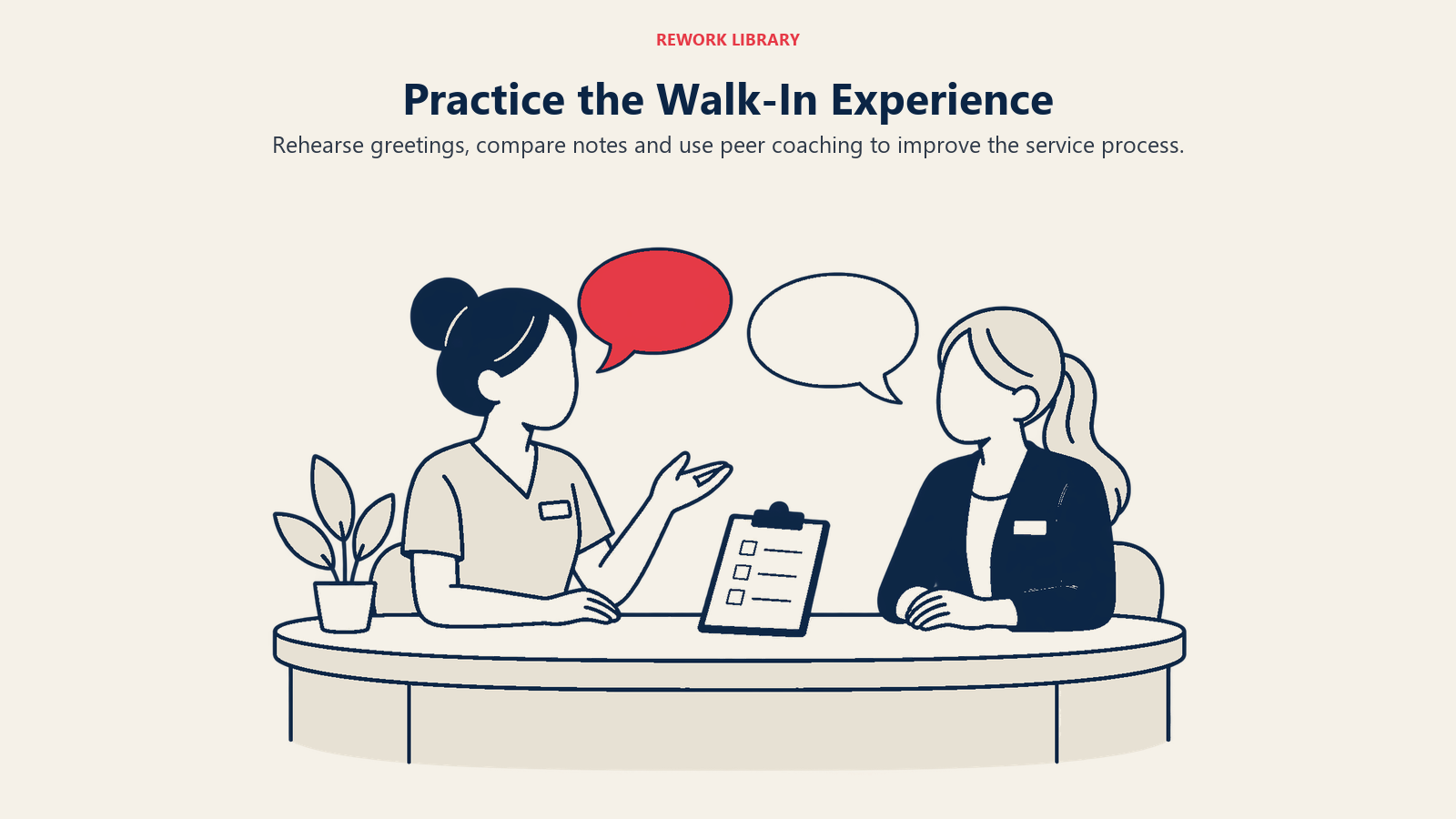
Run 10-minute role-play sessions in weekly team meetings. One staff member plays the walk-in, another practices the greeting and rebooking scripts. It feels awkward the first few times. It becomes natural within two weeks.
Tracking individual staff conversion rates
Your booking software can track how many walk-in clients each staff member has rebooked. Review this monthly, not to shame underperformers, but to identify who's excelling and pair them with staff who are struggling. The BLS Occupational Outlook for cosmetologists notes that over 575,000 hairdressers and cosmetologists work in the US, and in a competitive market, conversion skill is a genuine differentiator. Peer coaching is more effective than management coaching in most salon environments. Linking these metrics to your no-show and cancellation management data also helps identify whether walk-ins who don't rebook on the day are returning later or dropping out entirely. Automated appointment reminders can also follow up with walk-ins who provided contact information but did not pre-book before leaving.
Walk-In Conversion Checklist
- "Walk-Ins Welcome" signage visible from the street
- Greeting acknowledgment within 30 seconds of entry
- Wait time communicated clearly if applicable
- Consultation questions asked before service
- Welcome offer presented during service
- Rebooking offered before payment (with rationale)
- Contact information captured (name, mobile, email)
- Follow-up message scheduled for within 24 hours
- Client added to loyalty program if applicable
Learn More

Senior Operations & Growth Strategist
On this page
- The Walk-In Conversion Funnel
- Storefront Presentation: Before They Walk In
- Greeting Protocols: The First 60 Seconds
- Consultation Approach: Building Trust Before the Service
- First-Visit Offers: Converting Without Discounting Too Deeply
- Rebooking at Checkout: The Most Critical Moment
- Capturing Contact Information: Building the Database
- Staff Training: Making Conversion Systematic
- Learn More