Introducing New Services: Expanding Your Beauty Menu Strategically
Turn this article into takeaways for your work.


Each assistant summarizes the article only for you and suggests best practices for your work.
The conversation usually starts with enthusiasm. An owner comes back from a trade show, or a client asks about a treatment three times in one week, or a competitor adds something new and it feels like falling behind. The instinct is to move fast: get trained, order supplies, update the menu.
Three months later, the new service has been booked four times. The equipment sits in the back room. The training investment hasn't come close to paying back. And the owner is wondering what went wrong.
What went wrong was skipping the part before the launch.
Adding a new service without a structured validation and launch process is how well-intentioned owners turn capital into sunk costs. The salons that expand their menus successfully don't move faster. They move more deliberately. They validate demand before they invest. They train thoroughly before they open bookings. And they launch quietly before they launch publicly. A clear picture of beauty center growth stages helps owners understand when their business is ready to absorb new service categories versus when it's better to consolidate the existing menu.
Key Facts: New Service Launches in Beauty
- Services added without staff certification have 3x higher client complaint rates in the first 90 days (Professional Beauty Association)
- The average break-even period for a new equipment-dependent service is 6-9 months, not 30 days (Salon Today industry survey)
- Salons that use soft launches report 40% fewer execution problems at full public launch compared to direct full launches
Market Demand Research
The single best investment before adding any service is spending two weeks figuring out whether clients actually want it.
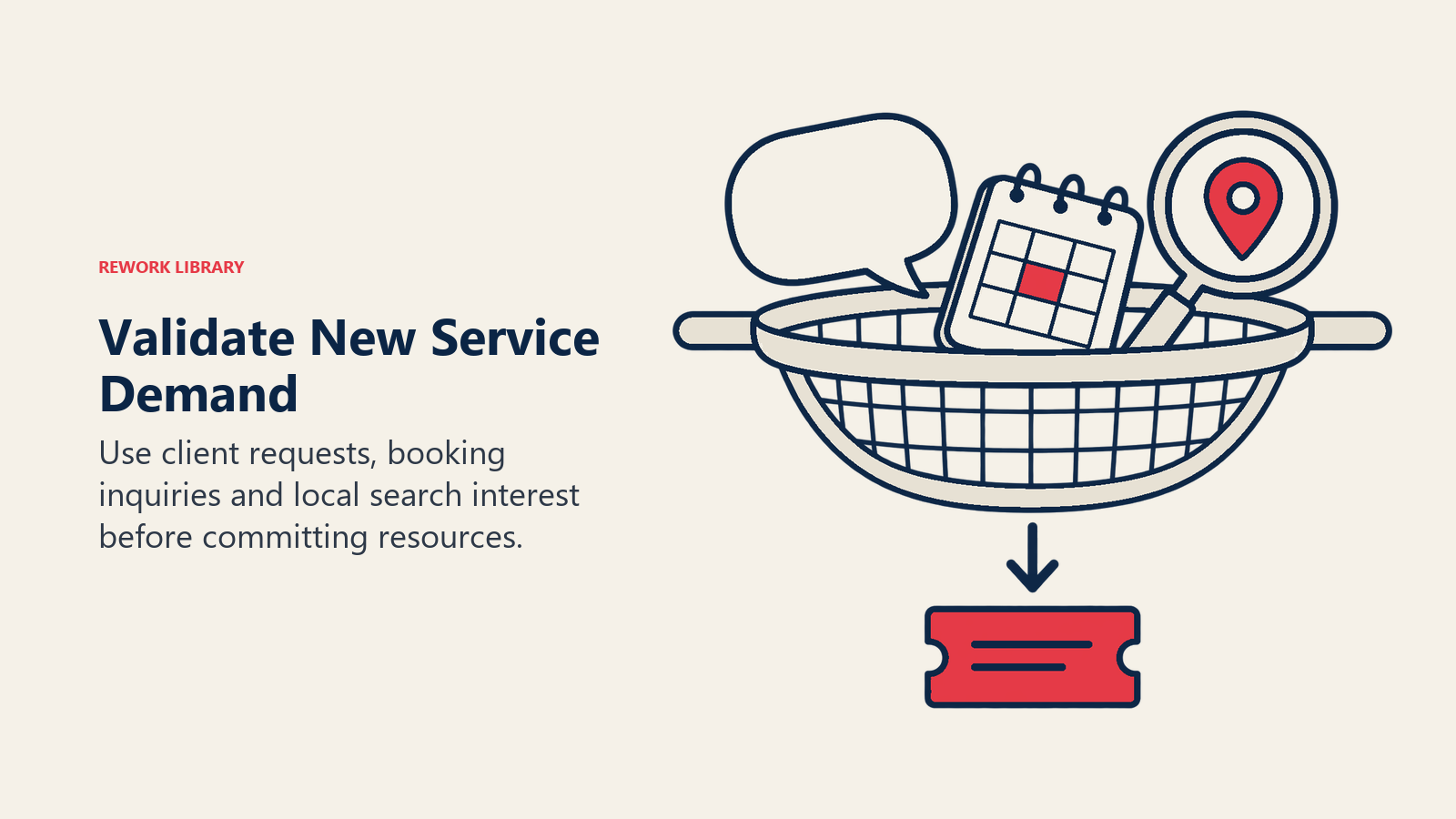
Here's the validation checklist that saves expensive mistakes:
Client survey data. Send a three-question survey to your active client list: "What services do you wish we offered?" is enough. You don't need a sophisticated instrument. You need 50 responses. If the treatment you're considering doesn't appear organically in the top five requests, demand is weaker than you think.
Booking request patterns. Check whether your front desk or booking system captures requests for services you don't offer. Most salon software allows you to log client requests. Six months of logged requests will tell you more than any trade publication trend report.
Competitor menu analysis. Look at what your top three local competitors are booking heavily. A thorough competitive analysis for beauty businesses goes beyond menu comparison to examine positioning, pricing, and booking patterns. If a service is on every menu but yours, it's table stakes. If it's on one menu and that salon is visibly busy, it might be an opportunity. If nobody in a 10-mile radius offers it, ask whether that's because demand doesn't exist or because supply hasn't arrived yet.
Search volume. Google Trends and Google Keyword Planner show whether people in your area are searching for a treatment. "Lash lift [city]" with high search volume and low local competition is a signal worth acting on. A treatment with no search volume is a trend that hasn't arrived yet, and might not.
The distinction between a trend and a durable service category matters enormously. Microblading has been a durable category for years. Some treatments peak at trade shows and disappear from client demand within 18 months. Before investing in training and equipment, determine which category your candidate service belongs to. McKinsey's State of Beauty report identifies skincare and wellness-adjacent treatments as among the fastest-growing service segments through 2030, giving salon owners a useful framework for evaluating which service additions have durable demand.
Training and Certification Requirements
Every service addition has a training pathway. The question is how long it is, what it costs, and whether you can execute it at the quality level your clients expect.
Map out the full picture before committing:
Certifications required vs. recommended. For advanced skin treatments, laser services, and anything involving chemical peels or needles, state regulations often require specific licenses or certifications. Non-compliance isn't just a legal risk. It's a liability risk that insurance may not cover. Check your state board requirements before your training budget. The BLS Occupational Outlook for skincare specialists confirms that employment in this category is projected to grow 10% through 2033, meaning the barrier of proper credentialing is both a compliance requirement and a competitive signal to clients.
Provider credibility. Training from the manufacturer of a device or product line gives your staff product-specific competence but not always technique depth. Third-party certification programs from accredited cosmetology or esthetics schools typically produce more transferable skill. Both have value; understand which you're getting.
Training cost and time. A two-day certification course at $800 per staff member is a different investment than a three-week program at $3,500. Factor both the direct cost and the lost revenue from staff time in training.
For technical services (microblading, lash extensions, dermaplaning), plan for 30-60 practice hours before staff deliver services on paying clients. Rushing this phase is where the 3x complaint rate in early service launches comes from.
Equipment and Space Requirements
The true cost of adding a service is rarely just the training. Work through this calculation before committing:
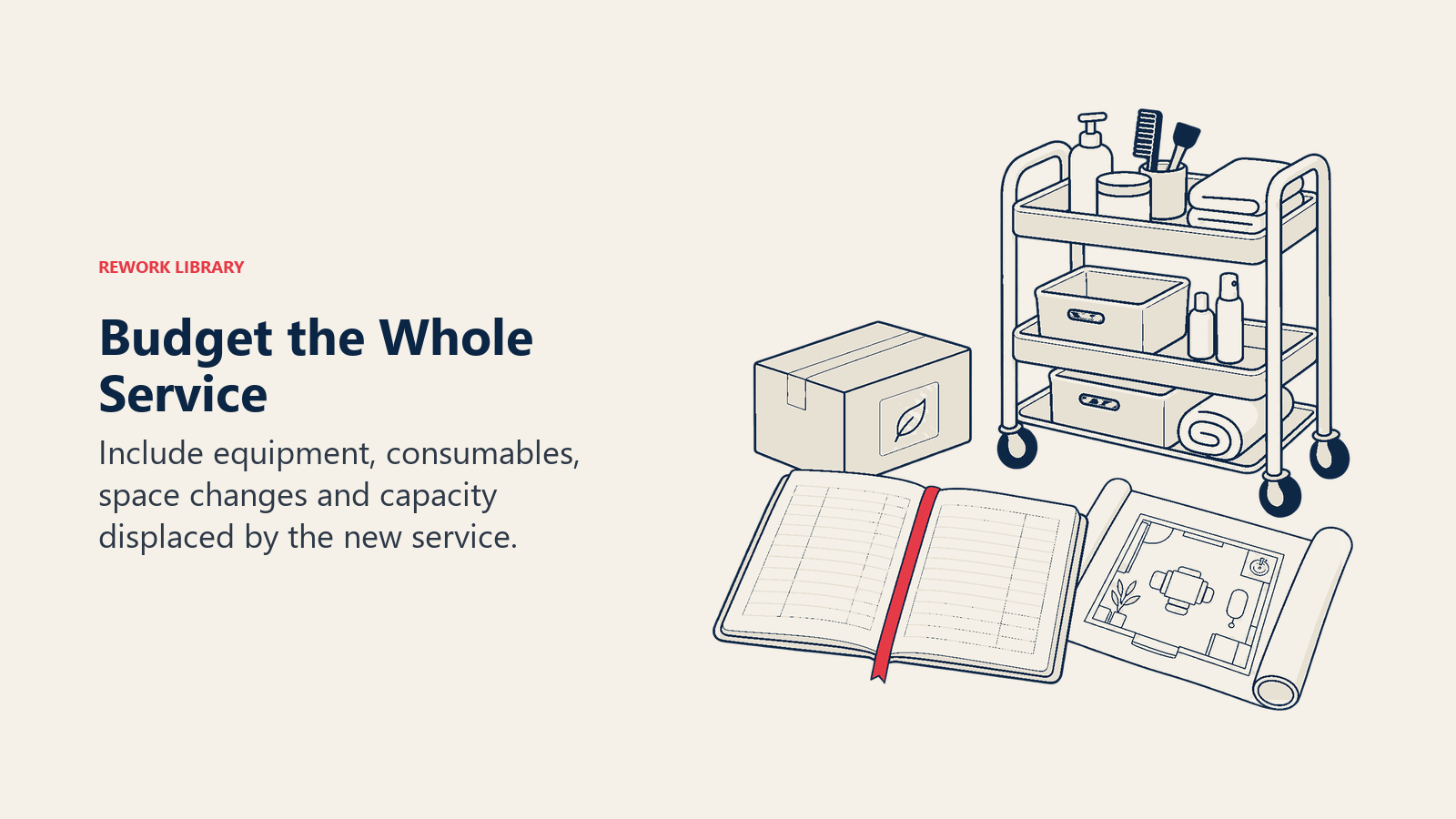
Equipment. A professional facial steamer runs $300-800. A microdermabrasion machine runs $2,000-8,000. A laser device for hair removal runs $15,000-80,000. Know your number before your enthusiasm outpaces your budget. The IBISWorld Cosmetology & Beauty Schools industry report notes that the $1.8 billion training sector exists precisely because equipment-dependent services require documented competency before client delivery, which should factor into your launch timeline.
Consumables. Lash extension adhesives, wax supplies, peel solutions. Recurring consumable costs are ongoing overhead that affects margin on every service. Calculate cost per service delivered, not just upfront supply order.
Space reconfiguration. Some services require dedicated rooms (waxing, advanced skin treatments). If you're converting space, calculate the lost revenue from whatever was in that space before, plus any build-out costs.
Break-even analysis. At your planned service price, with your estimated consumable cost per service, how many bookings per month do you need to recover the training and equipment investment in 12 months? If the answer is 40 bookings per month and your salon currently does 300 total appointments per month across all services, 40 bookings of a new service represents 13% of total capacity, which is aggressive for an unproven service. Running the unit economics for beauty centers on any new service gives you a clear payback timeline before you commit.
Do the math before you sign the lease on equipment.
The Soft Launch Approach
The soft launch is the most valuable and most underused tool in service expansion. The principle: launch quietly to a test group of 20-30 existing clients before opening public bookings.
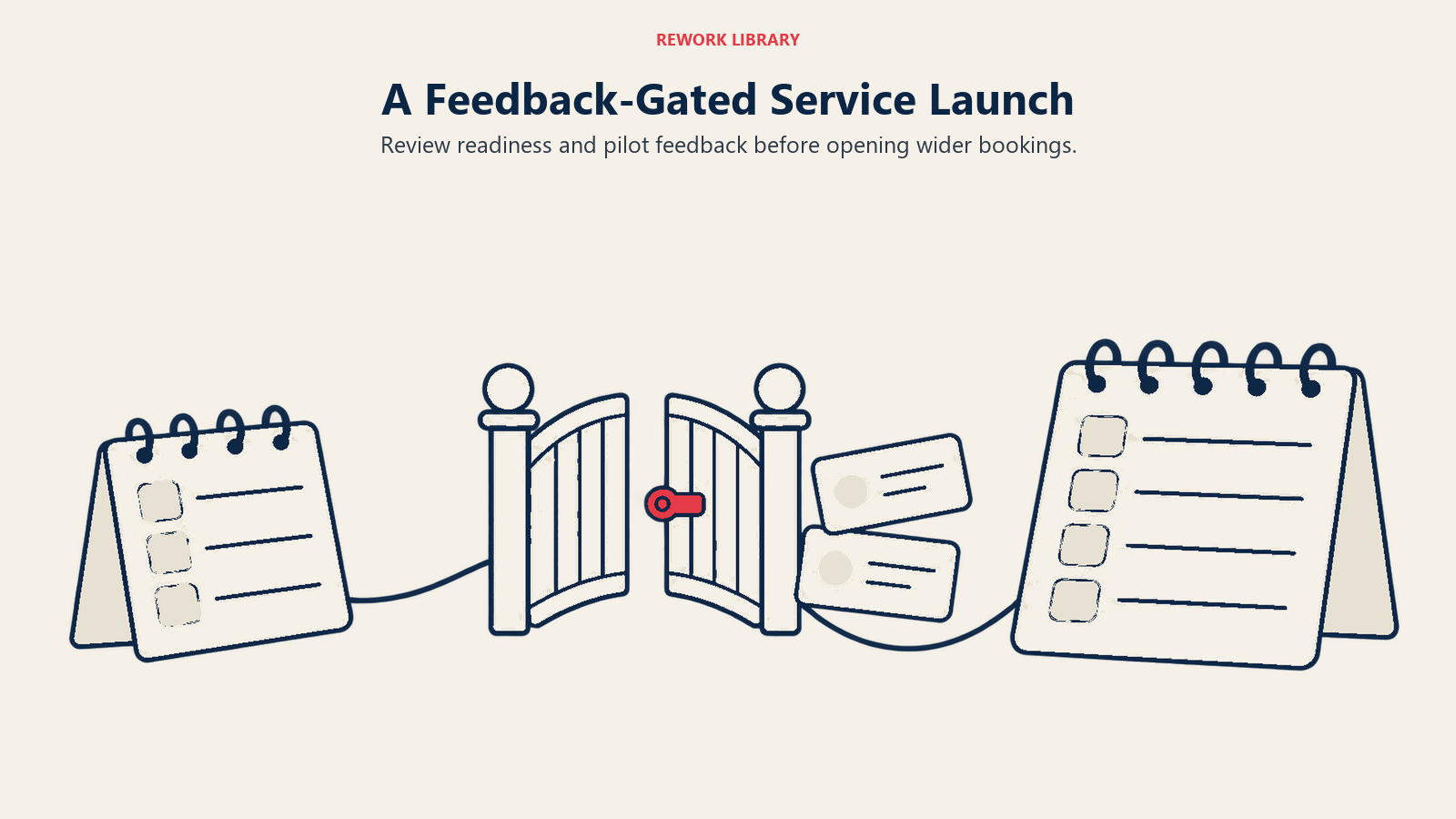
Here's why this works. Your most loyal clients are forgiving. They want you to succeed. They'll give you honest feedback in a way that strangers won't. And if something goes wrong in the first three executions (technique problem, timing issue, client reaction), it happens with clients who have enough relationship history to absorb it.
Soft launch structure (8-week timeline):
Weeks 1-2: Staff complete training and practice on each other and volunteer friends. Track any execution issues.
Weeks 3-4: Invite 15-20 existing clients by name. Offer the service at an introductory rate (20-30% below planned price). Collect written feedback after each appointment.
Weeks 5-6: Review feedback, address any technique or process issues. Run a second round of soft launch with another 10-15 clients.
Week 7: Finalize price, update booking system, train reception staff to explain the service and answer questions.
Week 8: Full public launch with email announcement, social content, and in-salon signage.
A common mistake is combining the soft launch with the first public announcement. Don't announce the service on social media until you've delivered it 20+ times and worked out the execution problems. Prematurely publicizing a service you're not yet executing well is how one difficult client experience becomes a public review. The review management for beauty businesses framework covers exactly how to protect your reputation during these early execution phases.
Pricing New Services
Setting the price for a new service is harder than it looks, and the most common mistake is pricing too low at launch.
Low introductory pricing feels like a good way to attract first bookings. But it anchors client expectations. When you raise the price six months later (as the service proves itself and confidence builds), clients who booked at the introductory rate feel penalized. Some won't rebook. The workaround is positioning introductory pricing explicitly as a soft-launch rate that ends on a specific date.
Pricing frameworks to consider:
Cost-plus: Calculate total cost per service (consumables, staff time, allocated equipment depreciation) and add your target margin. This gives you a floor, not a ceiling.
Market rate: What are local competitors charging for the same or comparable service? Pricing within 10-15% of market rate is safe; pricing below signals lower quality, not better value.
Value positioning: For premium or differentiated services, price above market rate and defend it with positioning: better materials, more thorough technique, longer appointment time, more experienced staff.
Don't introduce a service at a price you're embarrassed to defend. If the price feels too high, the service isn't positioned correctly yet. Reposition before discounting.
Client Communication About New Offerings
When you're ready to go public, the announcement needs to do three things: explain what the service is, explain who it's for, and give clients a reason to book now.
Email announcement structure: Subject line that names the service ("We now offer lash lifts. Here's what to expect"), two paragraphs explaining the service and its results, a clear call to action with a booking link. Keep it under 300 words.
Social content: Before and after photos (with client permission), staff introducing the service on video, booking call-to-action in the caption. Your Instagram and TikTok strategy for beauty should amplify new service launches with before-and-after content that shows the transformation rather than just announcing the addition.
In-salon signage: Tent cards on stations, a brief service description at reception, staff trained to mention the new offering at the end of relevant appointments.
Reception training: Your front desk staff will field the first questions. Train them on the basic service description ("It's a chemical treatment that lifts and curls the natural lashes, results last 6-8 weeks"), pricing, and the booking process. They don't need to be experts; they need to be confident enough to capture the booking without redirecting every question to a stylist.
Measuring New Service Success
Set your success metrics before launch, not after. The 90-day scorecard for a new service:
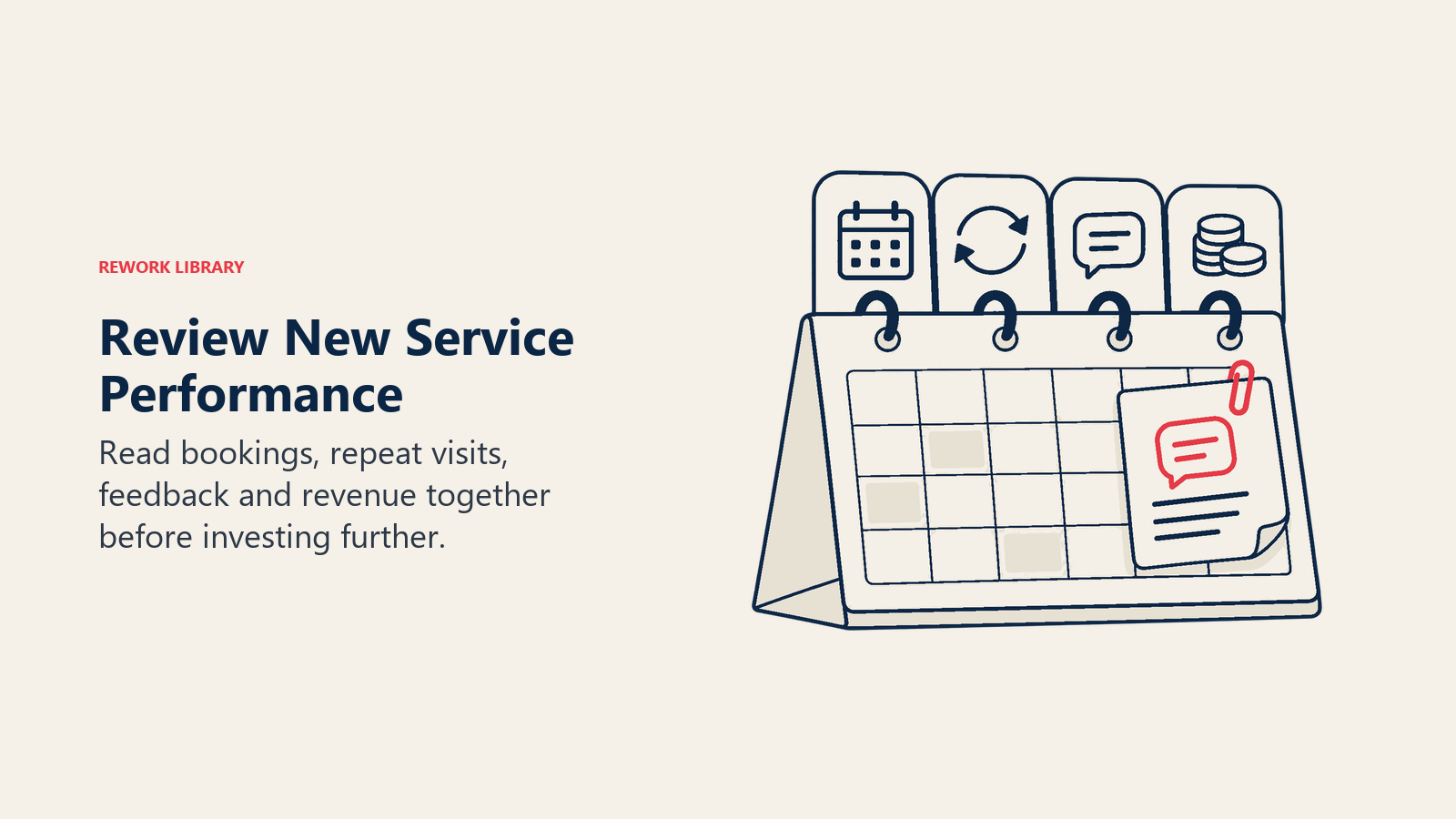
Booking rate: What percentage of available new service slots are being booked? Below 40% by week eight suggests either pricing, awareness, or product-market fit issues. The Professional Beauty Association's education resources provide industry-specific frameworks for evaluating service launch readiness and setting realistic performance benchmarks by service category.
Repeat booking rate: Of clients who book the new service once, what percentage book again within their expected service interval? Below 50% suggests client satisfaction issues worth investigating.
Client satisfaction scores: Collect post-service feedback with a two-question survey: "How satisfied were you with [service]?" and "Would you recommend this service to a friend?" Anything below 4.2/5.0 average requires investigation.
Revenue contribution: At 90 days, calculate the service's monthly revenue contribution as a percentage of total revenue. Compare against your break-even projection.
If a service hasn't hit 50% slot utilization by week 12, run a structured diagnosis before investing further. Is the problem awareness, pricing, staff confidence, or genuine demand mismatch? Each problem has a different solution. Expanding marketing spend on a service that clients try once and don't rebook is wasting money on the wrong problem. Your online booking optimization setup matters here too, a new service that's hard to find or book online will underperform regardless of demand.
The Long View on Service Expansion
Successful service expansion is a skill that gets easier with practice. The first time you run a structured validation process and soft launch, it feels slower than just putting the service on the menu. But the second and third time, the process becomes routine and the outcomes become predictable.
The best service additions aren't driven by owner enthusiasm or competitive pressure. They're pulled by validated client demand, supported by properly trained staff, and launched in a way that builds competence before volume. That discipline is what separates a menu that grows revenue from a menu that grows longer. Once a new service is established, pairing it with package deals and bundles can accelerate uptake by combining it with familiar services clients already book.
Learn More

Senior Operations & Growth Strategist