Gift Card & Voucher Programs: A Revenue Accelerator for Beauty Centers
Turn this article into takeaways for your work.


Each assistant summarizes the article only for you and suggests best practices for your work.
A salon owner in Austin ran a casual Mother's Day gift card promotion in 2023: one Instagram post, a sign at the front desk, and a mention in the weekly email. She sold $14,200 in gift cards in six days. Her normal weekly service revenue was $18,000.
What struck her wasn't just the dollar amount. It was that she'd been offering gift cards for four years with almost no promotion, and they'd been a $400-600 per month side item. A week of intentional promotion generated 35 times that.
Most beauty businesses sit in the same position. Gift cards exist as a passive option, available if someone asks, mentioned occasionally around the holidays. The businesses running structured gift card programs treat them differently: as a proactive revenue acceleration tool that requires design, promotion, and operational discipline. Understanding how gift cards fit within a broader beauty center revenue strategy helps owners set realistic contribution targets before building the program.
Key Facts: Gift Cards in Beauty Retail
- Gift card breakage (unredeemed value) averages 10-19% of total gift card sales in the beauty industry (First Data Gift Card Gauge)
- 62% of beauty gift card recipients are first-time visitors to the salon (Square seller data)
- Gift card programs generate an average 3.5% revenue lift for salon businesses that actively promote them year-round (Salon Today)
Digital vs. Physical Gift Cards
The operational trade-offs between plastic cards and digital delivery have shifted significantly in the last five years. Both have a place, but the economics favor digital for most modern salon operations.
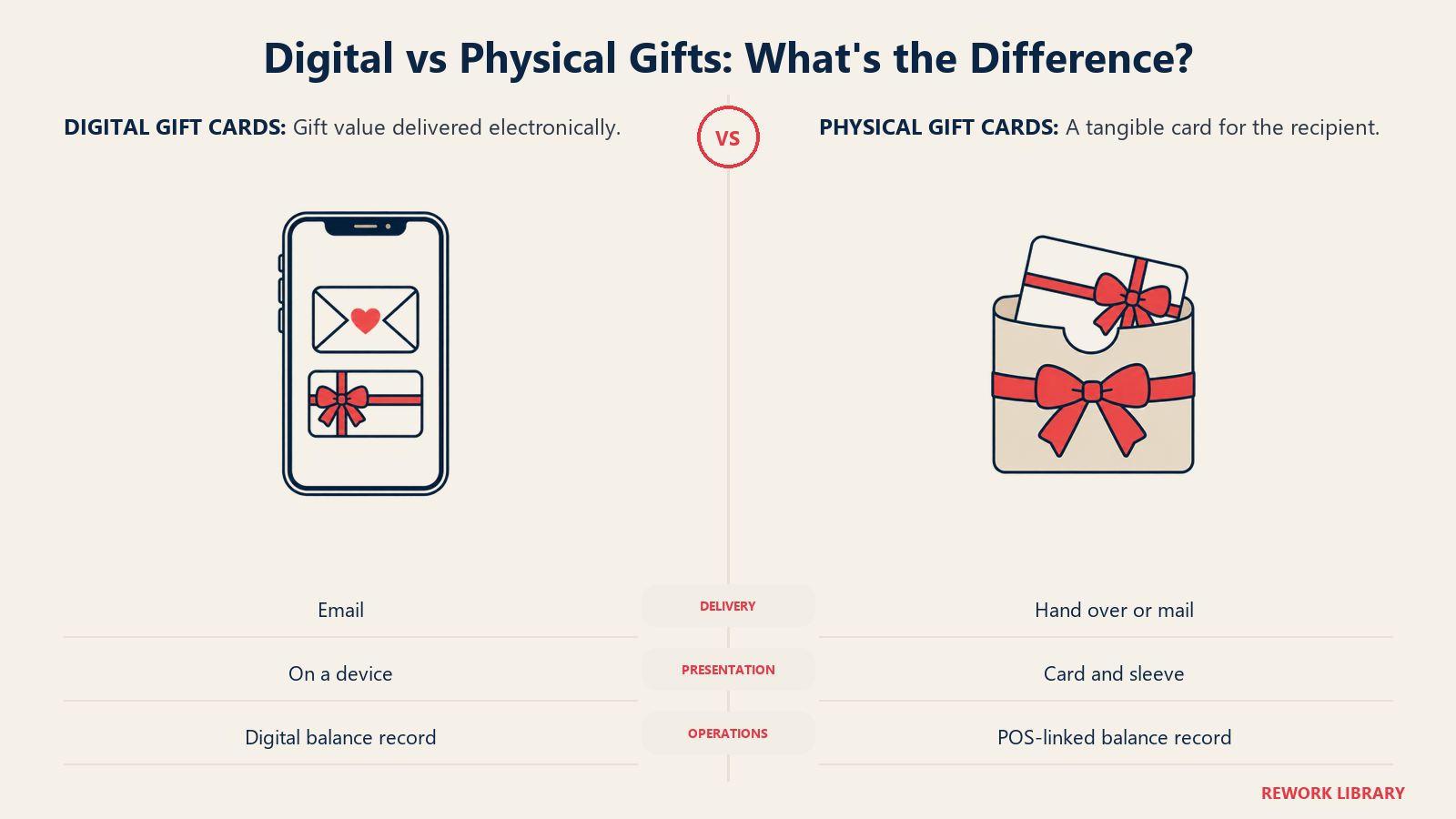
| Factor | Physical Cards | Digital Cards |
|---|---|---|
| Fulfillment cost | $0.50-2.00 per card (printing, carrier) | $0 (email delivery) |
| Loss rate | 8-12% (lost, forgotten) | 2-4% (email searchable) |
| Redemption tracking | Requires POS integration | Usually built in |
| Client preference | Older demographics (55+) | Under-45 demographics |
| Gifting experience | Higher perceived value | Instant delivery advantage |
| Fraud risk | Card cloning possible | Code-based, lower fraud |
The practical answer for most salons is both. Digital cards handle the majority of transactions. They're cheaper to fulfill, easier to track, and preferred by clients who want to purchase and send instantly. Physical cards serve specific use cases: high-value purchases where the physical presentation matters (bridal party gifts, premium gift sets), older client demographics who prefer tangible items, and in-salon impulse purchases at checkout. Your salon management software guide should inform which platforms support digital gift card issuance and real-time balance tracking natively.
If you're launching or overhauling your gift card program, start with digital. The tracking and redemption management is far easier to set up correctly, and the lower fulfillment cost means more margin on every sale.
Pricing and Denominations
The denominations you offer shape buying behavior. Most clients buying a beauty gift card are purchasing for someone else, which means they're selecting an amount that signals the appropriate gift, not necessarily an amount tied to a specific service.
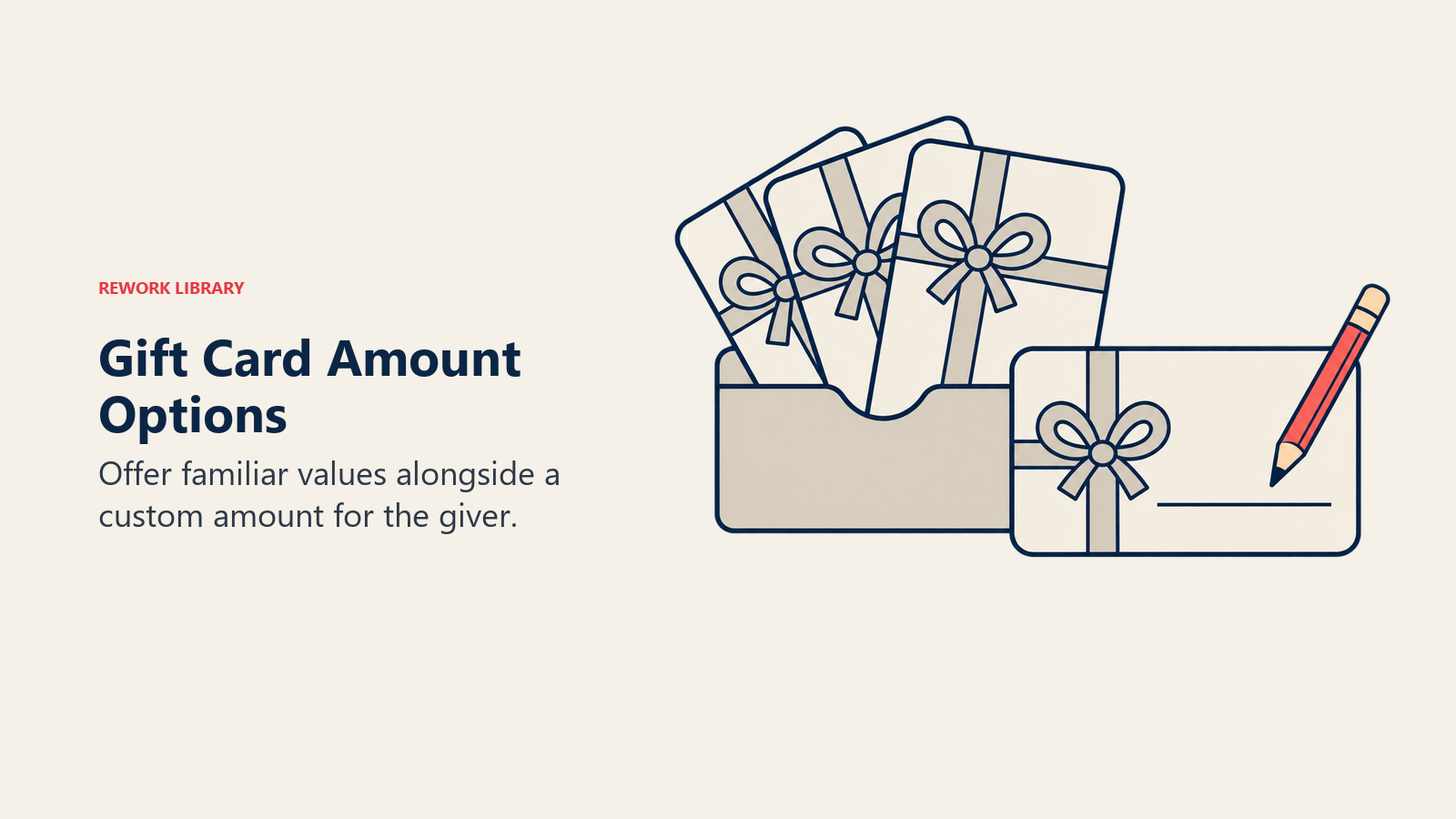
Standard denomination strategy: Offer $25, $50, $100, and $150. The $50 and $100 denominations will drive the majority of volume. The $25 option captures impulse buys and stocking stuffers. The $150 option appeals to premium gifters. Statista's U.S. gift card market data shows total annual gift card sales in the United States exceeded $200 billion in 2023, with the average consumer planning to spend around $170 on gift cards, confirming that the category is firmly established as a mainstream purchase behavior, not a niche one.
Custom amount option: Allow clients to enter any amount between $25 and $500. This captures the client who has a specific budget or who wants to give an exact service cost.
Bonus value cards: The "buy $100, get $120 in value" structure is a powerful sales driver. The client perceives they're getting 20% more for their recipient, and you're generating $100 in cash for $120 in future service obligation. At a 50% margin on services, $120 in future service costs you $60 in labor and materials, so you're ahead on a $100 cash receipt even after providing the bonus value.
Run bonus value promotions strategically, typically two to three times per year at peak gift-buying moments. Running them continuously trains clients to wait for the bonus and erodes the urgency.
Round number psychology: Gift buyers overwhelmingly select round numbers. $75 underperforms $100. $125 underperforms $150. When in doubt, anchor denominations to round numbers.
Promotion Strategies by Occasion
The highest-converting gift card moments follow a predictable calendar:
Mother's Day (highest volume window): Start promoting two weeks before the date. Mother's Day is the single largest gift card selling window for most beauty businesses. Lead with messaging about giving the gift of relaxation or self-care. Add-on promotion: "Purchase a $100 gift card and we'll add a complimentary gift wrapping card with your personalized note." Coordinate your gift card push with your seasonal promotions calendar so messaging is sequenced correctly across all channels.
Christmas and Holiday Season: This window runs from November 15 through December 23. Gift cards perform well here as both last-minute gifts and planned purchases. Position them as the gift that lets her choose exactly what she wants. The Friday after Thanksgiving is often the highest single-day gift card volume for salons.
Valentine's Day: Couples spa packages and single-service gift cards for partners. The "for her" messaging is conventional but effective. Lead time: email goes out February 1st, with a reminder February 10th.
Birthdays: Birthday-triggered automated gift card promotions ("Your client Sarah's birthday is next week. Would you like to send her a gift?") require software integration but produce strong results with premium client segments. Birthday gift card programs work best for salons with a book of 500+ active clients.
Bridal parties: Gift cards for the bridal party to use in the months before the wedding. Position them as a practical, thoughtful gift from the bride to her bridesmaids, or from the wedding party to the bride. These run at higher denominations ($150-300) and convert well when your salon actively books bridal clients.
Breakage Revenue
Breakage is the portion of gift card value that's never redeemed. It's real revenue: the cash has been collected, no service will ever be performed against it.
Industry averages in beauty run 10-19% breakage on gift card sales. On a salon that sells $50,000 in gift cards annually, that's $5,000 to $9,500 in breakage revenue. According to Wikipedia's accounting treatment of breakage, unredeemed gift card revenue is treated as essentially pure profit since no goods or services need to be delivered against it, though proper liability accounting is required until redemption periods lapse.
A concrete example: A salon sells 500 gift cards averaging $100 each ($50,000 total). At 15% breakage, $7,500 of that will never be redeemed. The salon collected $50,000 in cash and delivered $42,500 in services, generating the equivalent of 15% pure margin on unredeemed cards.
Two important caveats on breakage:
First, don't build your gift card program around breakage expectations. It's a windfall, not a revenue line to budget against. The goal of a gift card program is to drive new client acquisition, boost cash flow, and increase sales. Breakage is a byproduct.
Second, understand the accounting. Unredeemed gift card value is a liability on your balance sheet until it's either redeemed or legally expires. Many businesses defer recognizing breakage revenue until the card's expiration period has passed. Work with your accountant to handle this correctly.
Tracking and Redemption Management
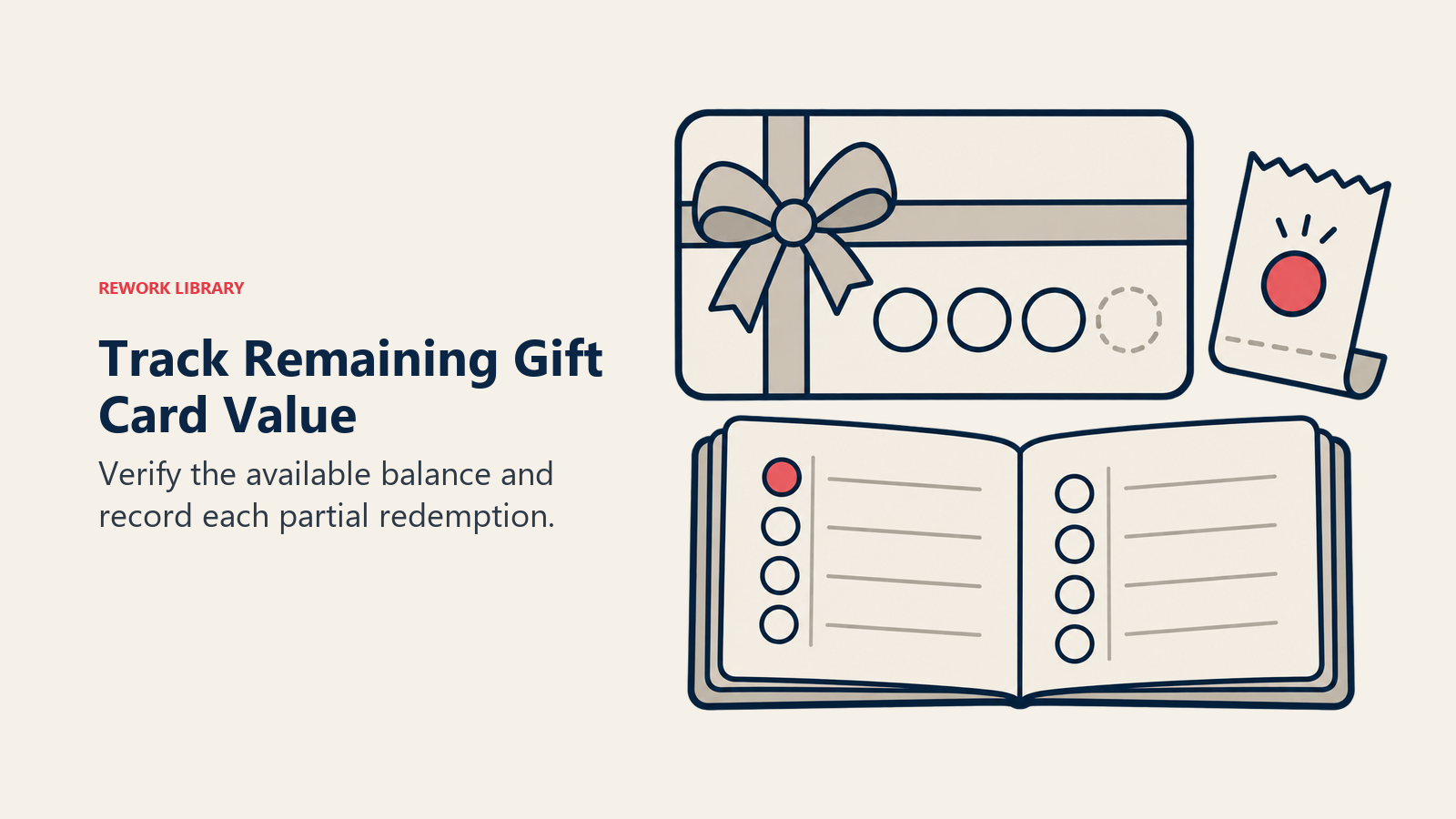
A gift card program without proper tracking is a liability management problem waiting to happen. You need to know, at any moment:
- Total outstanding gift card liability (unredeemed balance across all cards)
- Redemption rate by cohort (cards sold in November 2025 are redeeming at what rate?)
- Average redemption time from purchase to first use
- Partial redemption balances
Most modern salon software (Vagaro, Boulevard, Fresha, Mindbody) handles this natively. If your current system doesn't, you need to evaluate whether a standalone gift card platform is worth the integration complexity, or whether it's time to upgrade your core software. The CRM for salons and beauty centers should also store gift card purchase history so staff can reference it when building client profiles.
Fraud prevention: Digital gift card codes should be generated with sufficient randomness that they can't be guessed. Physical cards should have scratch-off security codes. Train staff to verify current balance before applying a gift card payment, not assume the full face value is available.
Partial redemptions: A client with a $100 gift card who books a $75 service has a $25 remaining balance. Your system needs to track this balance, and your staff needs to know how to apply it accurately. Partial redemption errors (giving clients full card value when a balance remains, or refusing to apply partial balances) erode trust quickly.
Legal Requirements
Gift card law varies by state and country, and the penalties for non-compliance can include forced refunds of full card values.
In the United States: The federal CARD Act (Credit Card Accountability Responsibility and Disclosure Act of 2009) establishes baseline rules for all gift cards: no expiration within five years of purchase, no inactivity fees unless the card has been inactive for 12+ consecutive months. Many states layer additional protections on top: some prohibit expiration entirely or require unclaimed property reporting after a dormancy period. The Federal Trade Commission's gift card guidance and the Consumer Financial Protection Bureau both publish up-to-date resources on these requirements that any salon operating a gift card program should review.
Expiration policy best practices: The safest approach for most salons is no expiration on gift cards. It eliminates compliance risk, removes client friction, and the practical impact is minimal since most cards are redeemed within 18 months anyway.
Disclosure requirements: Your gift card policy should be visible at point of purchase, both online and in-salon. This includes any fees, expiration policies, and what happens to balance if the business closes. If you sell gift cards in significant volume, work with a local business attorney to review your terms and disclosure language.
Gift Cards as a Client Acquisition Tool
Sixty-two percent of beauty gift card recipients are first-time visitors to the salon that issued the card. This makes gift cards one of the most cost-efficient new-client acquisition channels available. The acquisition is funded by the gift-giver, not by the salon. Harvard Business Review's research on the value of keeping the right customers quantifies exactly why converting those first-time gift card visitors matters: acquiring a new client costs five to 25 times more than retaining one, making the gift card's built-in acquisition mechanism genuinely valuable, but only if the follow-up converts them into regulars.
But gift card redemption isn't automatic conversion. A first-time client redeeming a gift card is worth nothing if they don't return. The structured first-visit follow-up is what turns gift card redemption into client retention. A strong client experience design ensures that first visit creates a genuine reason to rebook at full price.
First-visit follow-up sequence for gift card redeemers:
24 hours after the appointment: Thank you email from their stylist, with a review request and rebooking link.
7 days after: Email with a first-time visitor offer: a specific add-on or service at a discounted rate for their second visit only.
30 days after: Rebooking reminder tied to their service interval ("It's been a month since your haircut. Ready to book?")
Track your gift card client conversion rate: what percentage of first-visit redeemers become regular clients (booking at least twice in the 12 months after their first visit). A healthy program should convert 30-40% of gift card redeemers into regulars. Below 25% suggests the first-visit experience or follow-up sequence needs attention. Rebooking strategies for salons provides specific scripts and timing frameworks for converting first-time gift card visitors into regular clients.
Building a Year-Round Program
The highest-performing gift card programs don't spike around the holidays and then disappear. They maintain year-round visibility with intentional promotion at high-purchase moments.
Keep gift cards visible in your physical space always: at reception, on stations, in your service menu. Make digital purchase available on your website's homepage, not buried in a "shop" menu. Train staff to mention gift cards at checkout when clients mention a friend's birthday, upcoming wedding, or other occasion. Pairing gift card visibility with an active referral program for beauty centers creates a compounding acquisition loop where gift recipients become referrers themselves.
The annual calendar looks something like this: major push in November-December (holiday season), significant push for Mother's Day, moderate push for Valentine's Day and graduation season, and year-round passive availability with automated birthday and anniversary triggers.
A salon selling $5,000 per month in gift cards on a structured program isn't unusual. That's $60,000 per year in upfront cash, with breakage adding another $9,000 at 15%, and the new-client acquisition value adding a compounding revenue benefit on top. That's not a side feature. That's a program worth designing carefully.
Learn More