Loyalty Programs for Beauty Centers: Reward Systems That Actually Retain Clients
Turn this article into takeaways for your work.


Each assistant summarizes the article only for you and suggests best practices for your work.
Most loyalty programs are punch cards that live in a drawer. Clients earn a free blowout after ten visits, lose the card twice, and eventually forget the program exists. The beauty center considers it a marketing line item. Neither side gets much out of it.
The loyalty programs that actually work (the ones that change how often clients come in and how much they spend) are built around behavioral psychology, not just discount mechanics. They create genuine status, deliver rewards clients want, and remind people of their progress at exactly the right moments.
Here's what separates a program that drives measurable retention from one that just costs you margin. For salons ready to move beyond rewards into fully recurring revenue, membership models for spas and salons offer a complementary structure that combines the commitment benefits of a membership with the client-recognition elements of a loyalty tier.
Key Facts: Beauty Center Loyalty Programs
- Existing clients spend 67% more on average than new ones (Bain & Company)
- Acquiring a new client costs 5-7x more than retaining an existing one (Harvard Business Review)
- Loyalty program members visit 20% more frequently and spend 13% more per visit than non-members (Bond Brand Loyalty 2023)
For a deeper look at retention economics, McKinsey's research on loyalty program design and its impact on customer spending shows that top-performing programs can boost revenue from redeeming customers by 15–25% annually.
What a Beauty Loyalty Program Is (and Isn't)
A loyalty program is not a discount program. That distinction matters enormously for your margins and for your brand positioning.
A discount program rewards clients for spending money by reducing what they pay. It trains clients to wait for deals. It erodes the perceived value of your services. And it attracts price-sensitive clients who are the first to leave when a competitor offers a deeper discount.
A loyalty program rewards clients for relationship longevity. It increases the emotional switching cost of going elsewhere. It makes clients feel recognized and valued. And it reinforces the behaviors you actually want: more frequent visits, higher service spend, referrals.
The behavioral goal of a loyalty program is to increase visit frequency, not just to reward it after the fact. That distinction shapes every design decision, from how points are earned to when rewards are delivered.
Points-Based Systems: How They Work
Points programs are the most common loyalty structure in beauty. Clients earn points on every transaction and redeem them for services, products, or discounts.
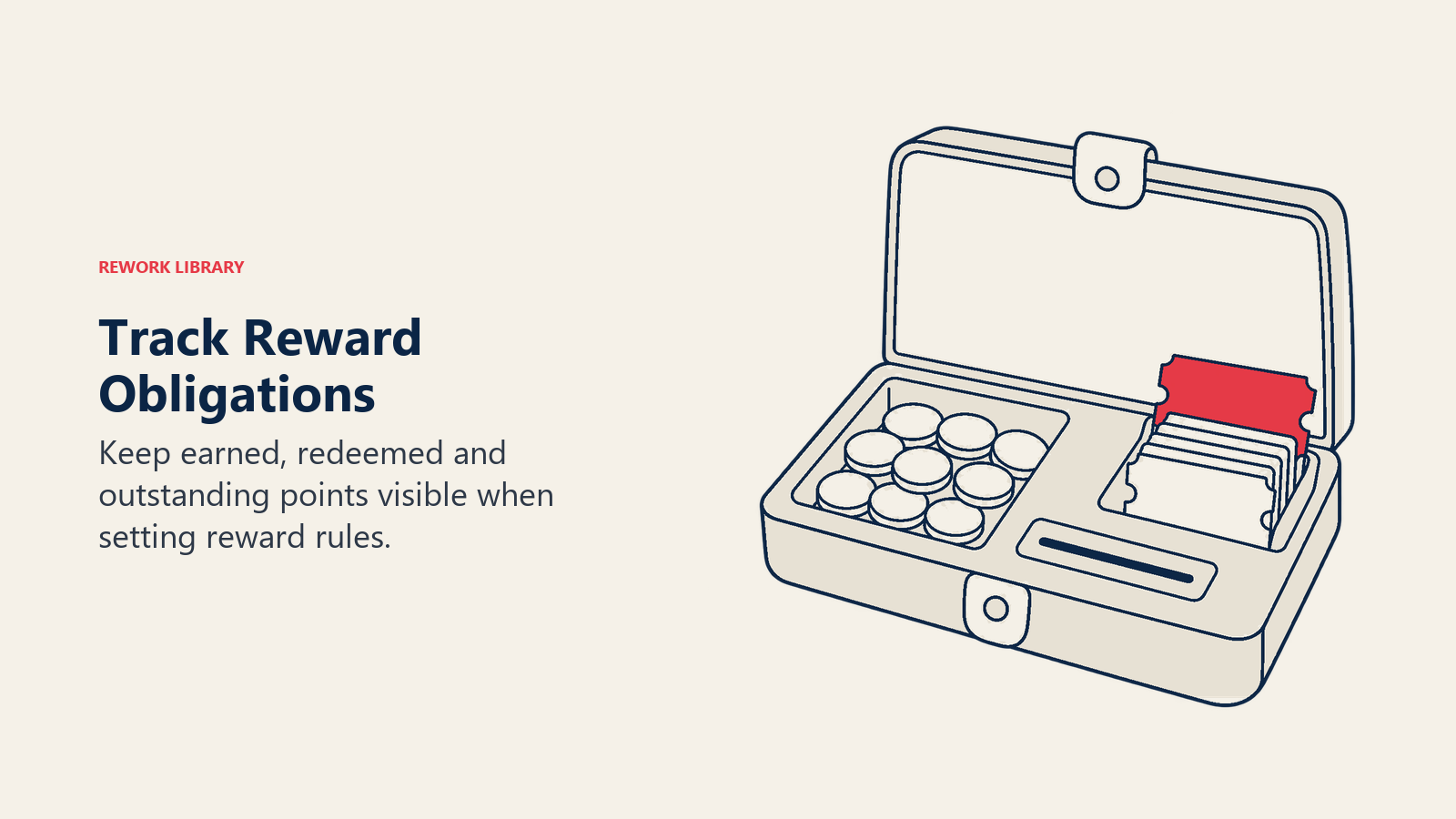
The mechanics are straightforward: clients earn 1 point per dollar spent. Every 100 points equals $5 to $10 in reward value. A client spending $80 per visit earns 80 points, about a $4-$8 reward, or 5-10% back. That's a reasonable return that doesn't destroy your margin.
Beyond transaction spend, high-performing programs award bonus points for behaviors that build the relationship: writing a Google review (50 points), referring a friend who books (100 points), booking online instead of by phone (10 points), or completing a consultation for a new service (25 points). Awarding bonus points for reviews also pairs naturally with a review management strategy for beauty businesses, where the loyalty program actively generates the social proof that attracts new clients.
According to Statista's loyalty program research, 80% of U.S. consumers report purchasing more frequently from a brand after joining its loyalty program, a strong indicator that enrollment itself changes behavior even before a reward is redeemed.
The liability consideration is real. Outstanding points represent a future obligation. If 500 clients each have 200 points, you're carrying a $5,000-$10,000 balance on your books. Points that never expire accumulate into a liability. Most effective programs use a 12-month rolling expiry: points earned in January 2025 expire January 2026. That's long enough that clients don't feel cheated, but short enough to contain your exposure.
| Program Type | Complexity | Behavior Driven | Best For |
|---|---|---|---|
| Points per dollar | Medium | Spend increase | Multi-service businesses |
| Visit-based punch | Low | Frequency | Single-service salons |
| Tiered status | High | Frequency + spend | Full-service centers |
| Hybrid (points + milestones) | High | Both | Growing multi-service teams |
Visit-Based Systems: Simpler and Often More Effective
If your clients primarily book one service type (color clients, lash clients, nail clients), a visit-based program often outperforms a points program because it directly targets the behavior you want: more frequent bookings.
The logic is simple: visit 10 times, get your 11th service complimentary. Or every 5th blowout is on the house. There's no math to explain, no balance to track, no threshold to remember. Clients understand it immediately.
Digital visit tracking solves the paper-card problem. Paper punch cards have a 30-40% loss rate. Digital tracking through booking software means the visit is logged automatically, the client gets a confirmation notification, and the "you're 2 visits away from your reward" reminder goes out without anyone lifting a finger. This automation is most effective when your CRM for salons and beauty centers is connected to your loyalty platform, enabling personalized messages based on each client's specific visit history and service preferences.
Visit-based programs also tend to have lower fraud exposure than paper systems. Staff can't issue phantom punches. Clients can't present cards that have been altered.
The hybrid model captures the best of both: points on every dollar spent, plus a bonus reward for every 5th visit. This drives both spend and frequency simultaneously, the two variables with the biggest impact on client lifetime value.
Tier Structures: Making Status Feel Meaningful
Bronze, Silver, Gold (or whatever language fits your brand). Tier programs work because of a well-documented psychological phenomenon: people work harder to maintain status they've already achieved than to achieve it from zero.
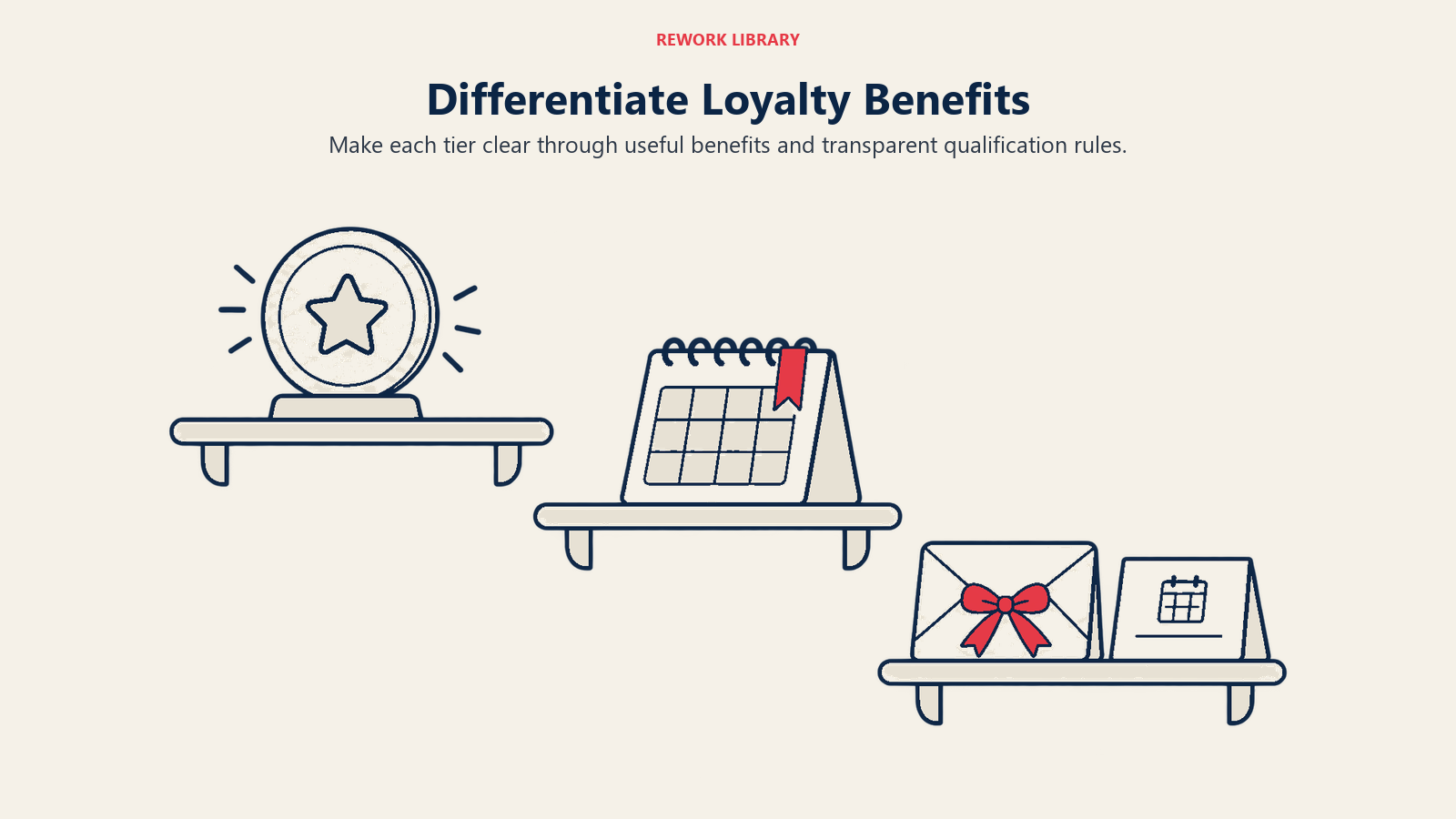
Design tiers with genuine benefit differentiation. If Silver clients get 10% off products and Gold clients get 15% off products, the difference isn't compelling enough to drive status aspiration. Real tier differentiation looks like:
- Bronze: Basic points earning, birthday month offer
- Silver: Accelerated points (1.25x earning), priority booking access, complimentary add-on once per quarter
- Gold: Double points, dedicated stylist assignment, invitation to new service previews, annual VIP appreciation event
Thresholds can be spend-based ($500 annual spend = Silver, $1,200 = Gold) or visit-based (12 visits = Silver, 20 = Gold). Spend-based thresholds reward your highest-revenue clients. Visit-based thresholds reward your most frequent clients. Many businesses use a combination: whichever threshold is reached first triggers the tier upgrade. Rebooking strategies for salons can be designed with loyalty thresholds in mind, nudging clients to pre-schedule their next appointment when they're close to a tier upgrade to accelerate both frequency and tier progression.
Status reset timing creates urgency without frustration. Annual resets (January 1) are simple but can feel arbitrary. Rolling 12-month windows (based on the client's enrollment anniversary) feel more personal and spread renewal activity throughout the year rather than creating a January scramble.
Digital Loyalty Cards: Technology That Makes Programs Stick
The fastest way to kill participation is to make your loyalty program hard to use. Paper cards get lost. Custom apps don't get downloaded. The sweet spot is digital wallet integration.
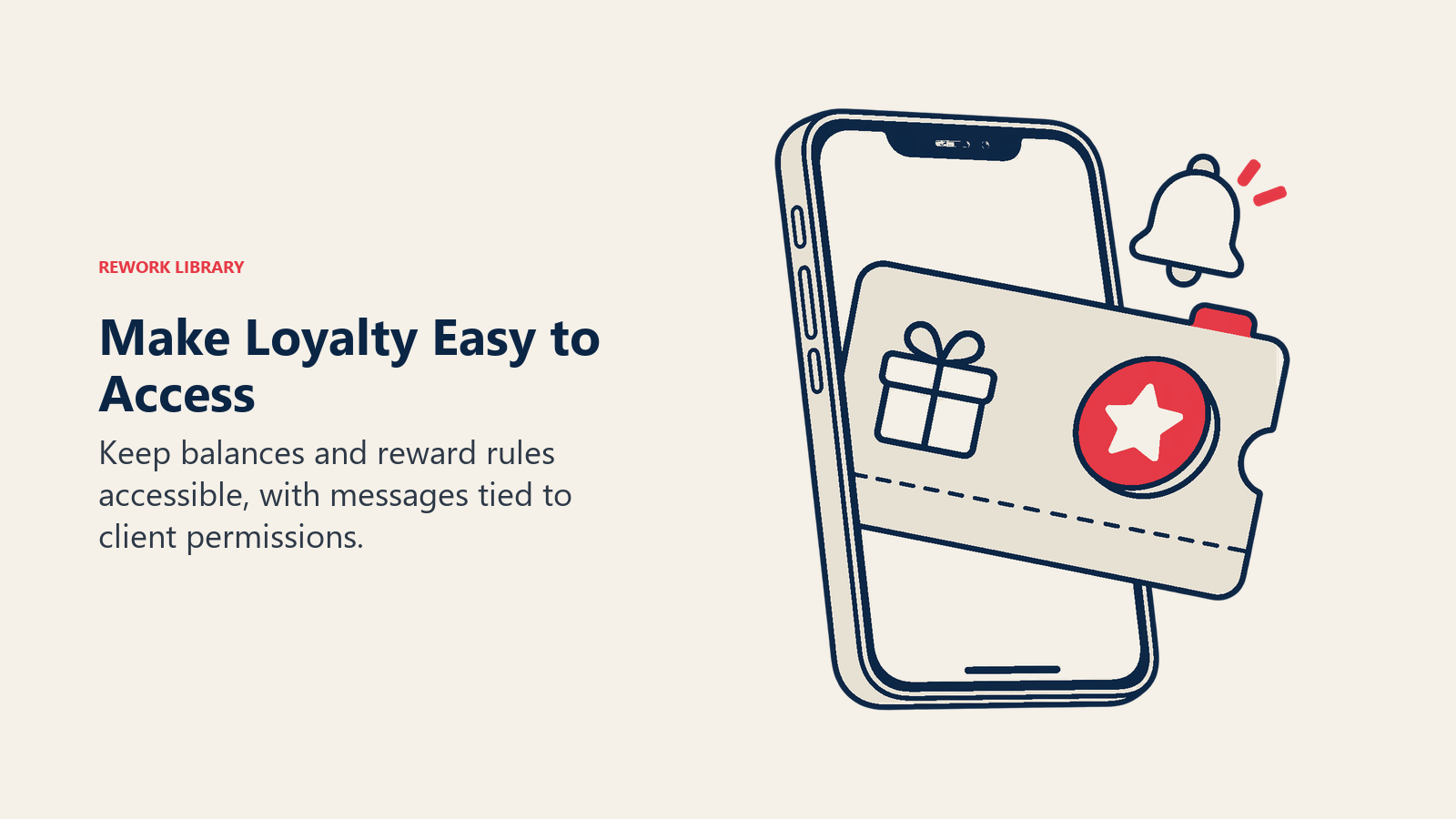
Apple Wallet and Google Wallet passes let clients store their loyalty card on their phone without downloading anything. The card shows their current points balance and updates automatically after each visit. It can even send a push notification when they're near your location, nudging walk-in traffic.
SMS-based loyalty programs remove the app barrier entirely. After each visit, clients receive a text: "You have 340 points. Just 60 more to earn a free treatment. Book at [link]." No app, no login, no friction. Open rates for these messages run above 90% compared to 20-25% for email.
Booking software with built-in loyalty tracks everything automatically. Vagaro, Fresha, Boulevard, and Mindbody all have native loyalty modules that connect earning and redemption to the appointment record. The client's points balance appears at checkout. Staff see it too. The whole system runs without a spreadsheet or manual tracking.
Birthday Perks: High-ROI Personal Touches
Birthday campaigns are one of the highest-return automations in beauty center marketing. The mechanism is simple: in the week before a client's birthday month, they receive an offer tied to a booking. The offer should drive a visit, not just a discount.
Free treatment beats percentage discount for birthday campaigns. "Enjoy a complimentary express facial this month" is more compelling than "20% off your next visit" because it ties to a specific experience, not a math calculation. Clients who come in for the free treatment typically book additional services, and the average birthday visit generates 1.4x the ticket of a standard visit.
Automating birthday campaigns requires three things: a client profile with date of birth, a booking system that can trigger a campaign based on date fields, and a message template that's been written once and runs indefinitely. The setup takes about two hours. The return runs every month, forever. Email marketing for beauty centers is the channel where these automated campaigns deliver the best open rates, with birthday messages averaging 3-4x the open rate of standard promotional emails.
VIP Programs: Recognizing Your Most Valuable Clients
The top 10-15% of your clients by annual spend typically generate 40-50% of your revenue. A VIP program is how you make sure they feel treated accordingly, so they stay.
Identifying VIP clients is straightforward from your booking software's revenue reports. Use data-driven decisions for salon owners to segment clients by annual revenue contribution before designing your VIP tier, so you're recognizing the clients who actually drive the most value rather than the ones who simply visit most frequently. Flag the top tier by annual spend, then design a set of perks that genuinely reflect that relationship:
- Early access to book before slots open to the general public
- A dedicated primary stylist or therapist (with a backup)
- Invitation to new service previews before public launch
- An annual private client appreciation event
- A personal note from the owner on their salon anniversary
VIP programs are particularly effective for clients showing signs of drift: booking less frequently, spending less per visit, or going longer between appointments. A personal outreach from the owner ("We noticed we haven't seen you as much lately. As a Gold client, I wanted to reach out personally") has meaningfully higher reactivation rates than a generic win-back campaign.
Measuring Loyalty Program ROI
A loyalty program that you can't measure is just an expense. These are the metrics that tell you whether it's working:
Retention rate differential: What's the 12-month retention rate for enrolled members vs non-members? Industry programs that are working typically show a 15-25 point gap. If there's no gap, the program isn't changing behavior.
Average spend differential: How much do members spend per visit compared to non-members? A working program shows members spending 10-20% more.
Visit frequency delta: Before enrollment vs after enrollment for the same clients. Did enrollment change how often they come in?
Redemption rate: Too low (below 20%) means clients aren't engaged with the program and have forgotten it exists. Too high (above 60%) means rewards are too easy to earn and your program cost is eating margin. HBR's foundational research on the mismanagement of customer loyalty remains one of the clearest frameworks for distinguishing genuine loyalty from discount dependency.
Program cost as % of revenue: Most well-run loyalty programs cost 3-5% of revenue after redemptions. Anything above 7% needs a redesign.
| Metric | Healthy Range | Danger Zone |
|---|---|---|
| Member retention rate | 65-80% | Below 55% |
| Non-member retention rate | 40-55% | Below 35% |
| Avg spend: members vs non-members | +15-20% | Less than +5% |
| Redemption rate | 20-50% | Below 10% or above 60% |
| Program cost as % of revenue | 3-5% | Above 7% |
Common Mistakes to Avoid
Overly complex rules destroy participation. If clients need to read four bullet points to understand how earning works, you've already lost them.
Points that expire too fast (within 6 months) create frustration, not urgency. Clients feel penalized for not visiting frequently enough during a busy season of their life. That's not loyalty, that's a penalty program.
Rewards that aren't worth earning. If 1,000 points buys a $5 discount, clients doing the math will disengage. The psychological value of the reward needs to feel meaningful relative to the effort.
Not promoting enrollment. The best-designed program fails if staff don't mention it at checkout. Enrollment scripts should be part of onboarding for every new hire. This is especially important for capturing walk-in conversion, where a loyalty enrollment offer at checkout is one of the most effective ways to secure a first-time client's contact information and future commitment.
No reminders. Clients forget they have points within 60 days of their last visit. Automated balance reminders via SMS, sent when a client is approaching a reward threshold, are one of the highest-converting messages you can send.
Loyalty Program Launch Checklist
Before launching or relaunching a loyalty program, confirm:
- Program rules fit on a single card or screen (one-sentence summary possible)
- Technology platform selected and integrated with booking software
- Points-to-value ratio set and liability exposure calculated
- Tier thresholds and tier benefits documented and tested
- Birthday campaign automated and templated
- Staff training completed: every team member can explain the program in 30 seconds
- Enrollment offer ready (bonus points on first enrollment day)
- Reporting dashboard configured (retention rate, spend differential, redemption rate)
- 90-day review date scheduled
The Business Case for Getting This Right
A loyalty program isn't a cost center. It's a retention investment with a measurable return. The math is straightforward: a client retained for five years instead of two is worth 2.5x more in lifetime revenue. McKinsey's analysis of how paid loyalty programs affect consumer spending found that members of paid programs are 60% more likely to increase their spending with the brand, a multiplier that compounds directly into lifetime value calculations. The program cost to achieve that retention is a fraction of what you'd spend acquiring a replacement.
When designed correctly, with clear rules, meaningful rewards, and consistent promotion, a loyalty program pays for itself within 90 days through reduced churn and increased frequency from enrolled clients.
Learn More

Senior Operations & Growth Strategist
On this page
- What a Beauty Loyalty Program Is (and Isn't)
- Points-Based Systems: How They Work
- Visit-Based Systems: Simpler and Often More Effective
- Tier Structures: Making Status Feel Meaningful
- Digital Loyalty Cards: Technology That Makes Programs Stick
- Birthday Perks: High-ROI Personal Touches
- VIP Programs: Recognizing Your Most Valuable Clients
- Measuring Loyalty Program ROI
- Common Mistakes to Avoid
- Loyalty Program Launch Checklist
- The Business Case for Getting This Right
- Learn More