No-Show & Cancellation Management: Protecting Your Revenue
Turn this article into takeaways for your work.


Each assistant summarizes the article only for you and suggests best practices for your work.
A 15% no-show rate on a fully booked Thursday doesn't just hurt that day. It chips away at annual revenue in ways that don't show up cleanly on any report. The stylist sits idle for 45 minutes. The color is mixed and wasted. A client on the waitlist who would have taken the slot isn't reached in time. And the psychological effect on staff, of preparing for appointments that don't materialize, compounds quietly into morale and retention problems.
The industry average no-show rate is 10-20%. That's not a fixed reality of the service business. It's a systems failure. Most of it is preventable with the right combination of policy, reminders, and deposit requirements. These same systems also support rebooking strategies for salons. When clients who cancel do so with enough notice, those slots can be filled by clients waiting to rebook.
The goal isn't to penalize clients or create adversarial policies. It's to design a system that makes showing up the path of least resistance and makes no-showing feel like a genuine inconvenience for the client, not just for you.
Key Facts: No-Shows in Beauty Businesses
- No-shows cost the US beauty industry an estimated $26 billion annually (American Association of Cosmetology Schools)
- Salons with automated two-way reminder confirmation reduce no-shows by 30-40% (Booker/MINDBODY)
- Deposit requirements for new clients reduce no-show rates by up to 50% without significantly impacting booking conversion
The U.S. Hair & Nail Salons industry report from IBISWorld tracks the market at $90.9 billion across 1 million U.S. businesses, context that makes the scale of no-show revenue losses clearer when calculated as a percentage of this industry total.
Understanding the No-Show Problem
Not all no-shows are equal. Understanding why they happen determines the right response.
The forgetter: The most common type. They genuinely forgot. Life got busy, they didn't have the appointment in their calendar, or the reminder SMS went to an old phone number. This client is recoverable. Better reminder systems fix this entirely.
The ambivalent: They weren't sure they wanted the appointment when they booked it, and by the time it comes around, the motivation is gone. They avoid the uncomfortable conversation of cancelling rather than facing the staff. This client needs a different kind of outreach: a confirmation request that gives them an easy out while you still have time to fill the slot.
The chronic canceller: They book with good intentions and cancel frequently, sometimes at the last minute, sometimes not at all. This client costs you more in scheduling disruption than they generate in revenue. They need a deposit policy applied specifically to them.
The deliberate no-shower: They had a bad experience or found an alternative and simply stopped coming without communicating. This is the rarest type but the most difficult to address.
Calculating Your No-Show Revenue Cost
Before designing a solution, know your number.
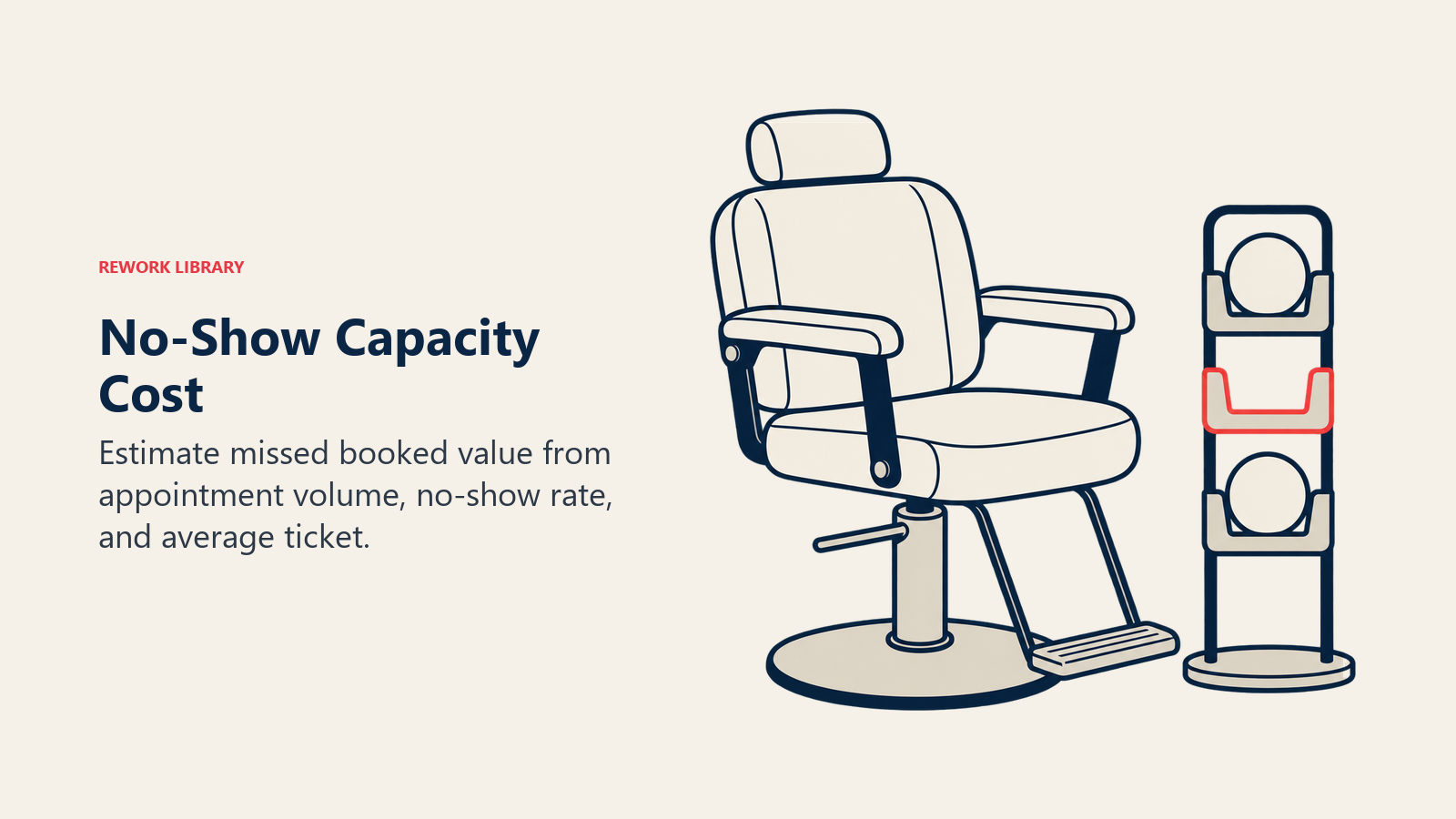
Daily cost: (Daily appointments) × (no-show rate %) × (average ticket) = daily revenue lost
Monthly cost: Daily cost × operating days per month
Annual cost: Monthly cost × 12
Example: A salon running 30 appointments per day, with a 12% no-show rate and a $75 average ticket, loses:
- Daily: 30 × 0.12 × $75 = $270
- Monthly: $270 × 26 days = $7,020
- Annual: $7,020 × 12 = $84,240
That's a meaningful number. For most mid-sized salons, addressing no-shows is worth more in recovered revenue than most marketing campaigns generate in new business. Understanding these numbers is part of the broader unit economics for beauty centers framework. No-show rate directly affects revenue per available appointment slot, which is one of the core metrics for salon profitability.
Cancellation Policy Design
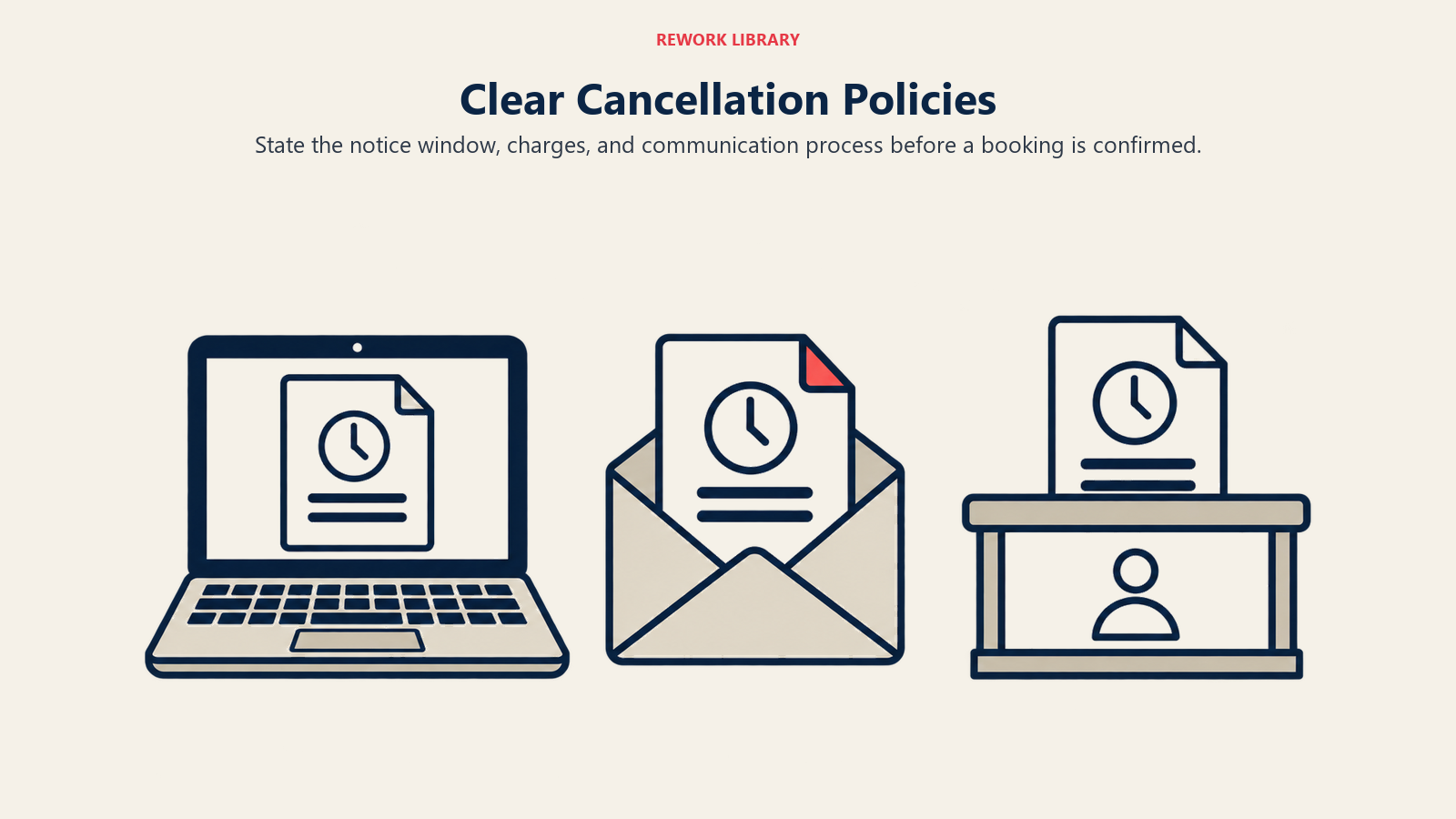
An effective cancellation policy has three components: a notice period, a charge structure, and a clear communication protocol. Most salon policies fail because they're vague, inconsistently enforced, or written in language that sounds aggressive rather than professional.
Standard policy (appropriate for established businesses): "We kindly ask for 24 hours notice if you need to cancel or reschedule. Appointments cancelled with less than 24 hours notice may be subject to a charge of 50% of the service value. No-shows will be charged 100% of the service value."
Strict policy (appropriate for high-demand services, new clients, or repeat offenders): "We require 48 hours notice to cancel or reschedule your appointment. Cancellations within 48 hours are charged 50% of the service value. Cancellations within 24 hours or no-shows are charged 100% of the service value. A credit card is required to hold all appointments."
How to communicate the policy without it feeling punitive: The framing matters. "Out of respect for our stylists' time and other clients who could have taken your slot, we have a 24-hour cancellation policy" lands more professionally than "You will be charged if you cancel late." The former acknowledges that the client is part of a community with shared norms. The latter sounds like a threat.
The policy should appear:
- On the booking page, before confirmation
- In the booking confirmation message
- In the appointment reminder (paraphrased)
- On a visible sign at the reception desk
Online booking optimization matters here: the booking flow is where clients first see your cancellation policy. Platforms that surface the policy clearly at the confirmation step see higher compliance rates than those that bury it in terms and conditions.
Deposit Requirements: When and How
Deposits are the single most effective tool for reducing no-shows among high-risk segments. A client who has paid $50 toward a $200 service is substantially more likely to show up than one who hasn't.
When to require deposits:
- First-time clients (all services over $60)
- High-ticket services (color corrections, extensions, multiple-service packages)
- Clients with a documented no-show history
- Holiday periods (December, Mother's Day weekend, prom season)
How deposits work in practice: Most booking platforms (Vagaro, Boulevard, Fresha, Mindbody) support deposit collection at the time of booking. The deposit amount (typically 25-50% of the service value) is charged to a card stored on file, or paid upfront online. If the client shows up, the deposit applies to their service total. If they cancel within policy, it's refunded. If they no-show or cancel late, the deposit is retained.
The booking conversion concern: Most salon owners worry that requiring deposits will reduce bookings. The data tells a more nuanced story. New client booking conversion does decrease slightly, typically 5-10%, when deposits are required. But the clients who do book convert to genuine appointments at dramatically higher rates. The net effect on revenue is almost always positive.
Handling disputes: When a client disputes a retained deposit, the conversation should be professional and firm: "Our policy was communicated at booking and in your confirmation message. We held this time specifically for you, and we weren't able to fill it with another client on short notice. We'd be happy to apply the deposit to your next appointment if you'd like to reschedule."
Automated Reminders That Actually Work
Reminder automation reduces no-shows by 30-40% on its own, before any policy or deposit system is in place. It's the highest-leverage, lowest-cost intervention available. Statista's data on SMS marketing benefits shows that higher open rates are the top reason businesses adopt text-based reminders, the same mechanism that makes a two-way SMS confirmation dramatically more effective than an email equivalent. The automated appointment reminders guide covers the full technical setup for these sequences, including message templates and the two-way confirmation format.
Optimal reminder sequence:
| Timing | Channel | Content |
|---|---|---|
| 48 hours before | SMS | Appointment details + easy cancellation link |
| 24 hours before | Email or SMS | Confirmation request: ask client to confirm |
| 2-3 hours before | SMS (optional) | Day-of reminder for high-ticket services |
The 24-hour reminder should be a two-way confirmation, not just a notification. "Your appointment with [Stylist Name] is tomorrow at 2pm! Reply YES to confirm or call us at [number] to reschedule." This triggers three things: clients who forgot are reminded, clients who can't make it have an easy path to cancel (giving you time to fill the slot), and clients who don't respond get flagged for follow-up.
The message copy matters. "Reply YES to confirm your appointment" achieves significantly higher response rates than "This is a reminder of your upcoming appointment." The call to action makes it easy to act, which is the goal.
Integration with booking software: Boulevard, Vagaro, Fresha, and Mindbody all have built-in reminder automation. Setup takes about 30 minutes and the system runs indefinitely. The templates are editable, so customize them to match your brand voice, not just the platform's generic defaults.
Waitlist Management: Turning Cancellations into Wins
A cancellation doesn't have to mean an empty slot if you have a waitlist. The revenue loss from a late cancellation becomes zero if the slot is filled.
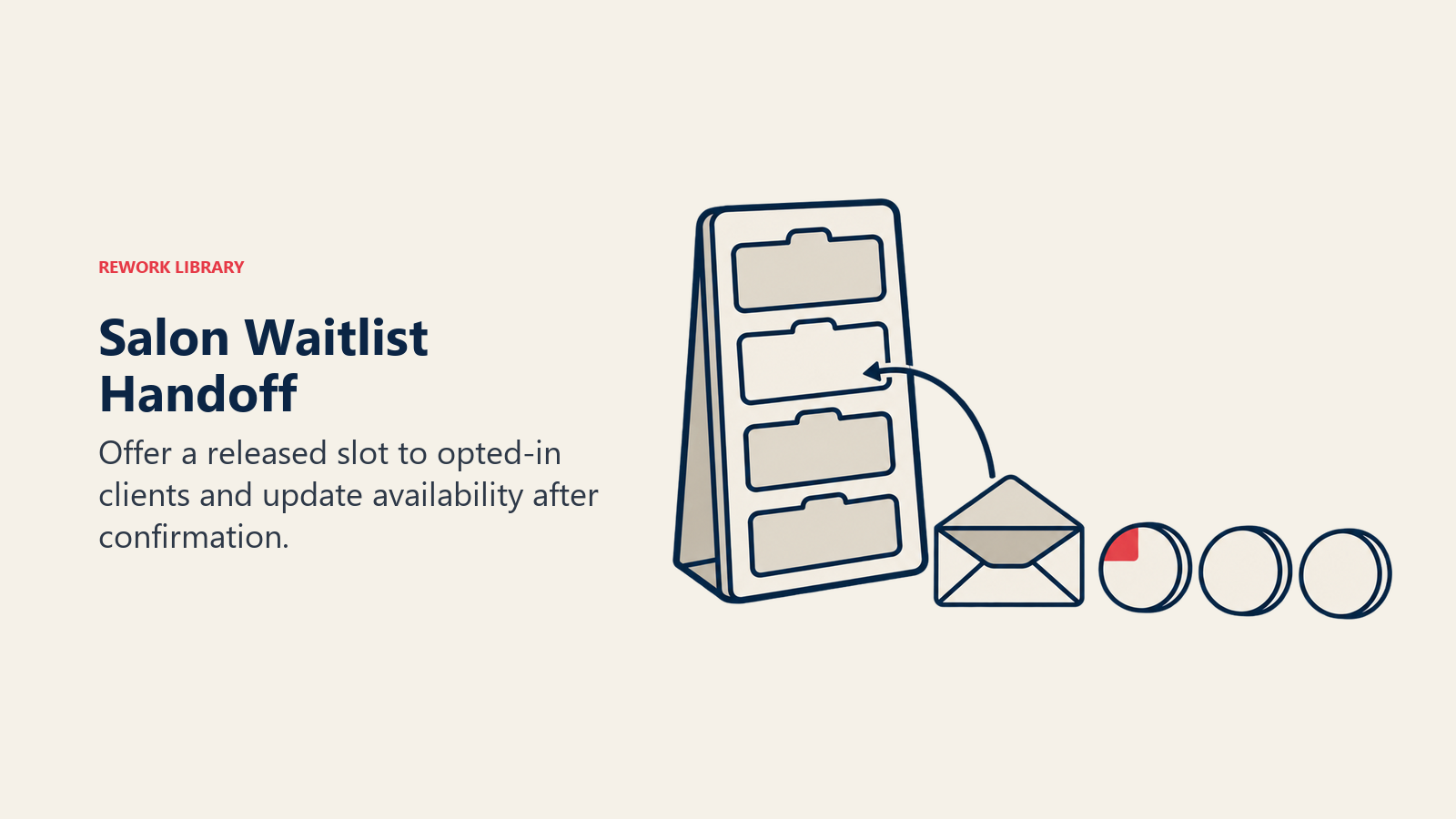
Effective waitlist management requires:
- A maintained list of clients who want appointments on shorter notice than availability typically allows
- A rapid notification system when a slot opens
- A clear response window, typically 15-30 minutes before the offer goes to the next person on the list
Most booking platforms support digital waitlists. When a cancellation comes in, the system automatically notifies the next waitlisted client via SMS with a booking link. The first client to respond and confirm gets the slot.
For slots that open with very short notice (same-day), broadcasting to a "standby list" works better than a sequential waitlist. Send an SMS to your 10-20 most-responsive clients: "We have a cancellation today at 3pm. [service] with [stylist]. First to reply gets it!" This creates urgency and often fills the slot within minutes. This standby audience is often built naturally from your loyalty programs for beauty centers: high-frequency clients who've opted into priority communications are exactly the people most likely to respond quickly to a same-day opening.
Tracking and Managing Repeat Offenders
Every booking system generates data that lets you identify clients with problematic patterns. A client who has cancelled twice in 30 days with less than 24 hours notice is a different conversation than a first-time offender.
Flagging criteria:
- 2+ no-shows in 12 months
- 3+ late cancellations (under 24 hours) in 6 months
- Pattern of booking high-demand slots and releasing them repeatedly
The conversation with a repeat no-show client:
This conversation needs to happen once, clearly, and in person or by phone, not by text. "I wanted to touch base with you about your recent bookings. We've had a few situations where we weren't able to fill your slot on short notice when you've cancelled, and it does affect our other clients and our team's schedule. Going forward, I'd like to require a deposit to hold your appointments. I want to keep seeing you as a client. I just need us to have a system that works for both of us."
Most clients respond well to this kind of direct, non-accusatory conversation. It's the client who doesn't respond well (who's defensive, dismissive, or simply doesn't change behavior after the deposit requirement is applied) who may not be the right fit for your schedule.
When to remove a client from your book: A client who has cost more in revenue disruption than they've generated in service fees over the past 12 months, who doesn't respond to direct conversation or deposit requirements, is a net negative. Politely declining to rebook ("We're currently not taking new appointments in that time slot") is a legitimate business decision. Tracking these patterns at the individual client level is one of the core use cases for a CRM for salons and beauty centers.
No-Show Reduction Action Plan
30-day milestones:
- Implement 24-hour and 48-hour automated SMS reminders with confirmation request
- Add cancellation policy to booking page, confirmation, and reminder messages
- Begin tracking no-show rate by week and by staff member
60-day milestones:
- Implement deposit requirement for new clients and services over $80
- Build and activate a digital waitlist
- Identify and flag all clients with 2+ no-shows in the past year
- Have one-on-one conversations with highest-frequency no-show clients
90-day milestones:
- Review no-show rate, targeting a 5-10 point reduction from baseline
- Adjust reminder sequence timing based on what's working
- Formalize repeat offender policy in writing for staff consistency
- Report no-show rate, revenue impact, and recovery rate in monthly P&L review
The single change that consistently delivers the biggest drop in no-show rates: Two-way SMS confirmation with a specific action required (reply YES). For salon owners benchmarking their no-show reduction progress against industry norms, the Professional Beauty Association's salon insights dashboard tracks appointment metrics across 50,000+ U.S. salons, providing a reliable external reference point for what healthy attendance rates look like by business size and service type. Not just a reminder, but a request for active confirmation, with an easy path to cancel if needed. This single change routinely reduces no-shows by 25-35% in the first month of implementation.
Learn More

Senior Operations & Growth Strategist