Beauty Center Growth Stages: From Startup to Multi-Location
Turn this article into takeaways for your work.


Each assistant summarizes the article only for you and suggests best practices for your work.
Most salons don't fail in year one. They fail in year three or four, when the owner, flush with the confidence of early success, tries to scale something that isn't stable yet. They hire a second location before the first one runs without them. They add staff before they have onboarding systems. They chase growth metrics before they've figured out unit economics.
The difference between salons that stall and salons that build real businesses isn't talent or even capital. It's stage awareness. Knowing which growth stage you're actually in (not which stage you wish you were in) determines what you should be working on right now. According to the Bureau of Labor Statistics, only about 49 percent of all new business establishments survive to their fifth year, and for beauty businesses, the failure concentration happens precisely when owners attempt premature scaling in years three and four. Choosing the right beauty center business models early sets the structural foundation that either enables or limits your progression through these stages.
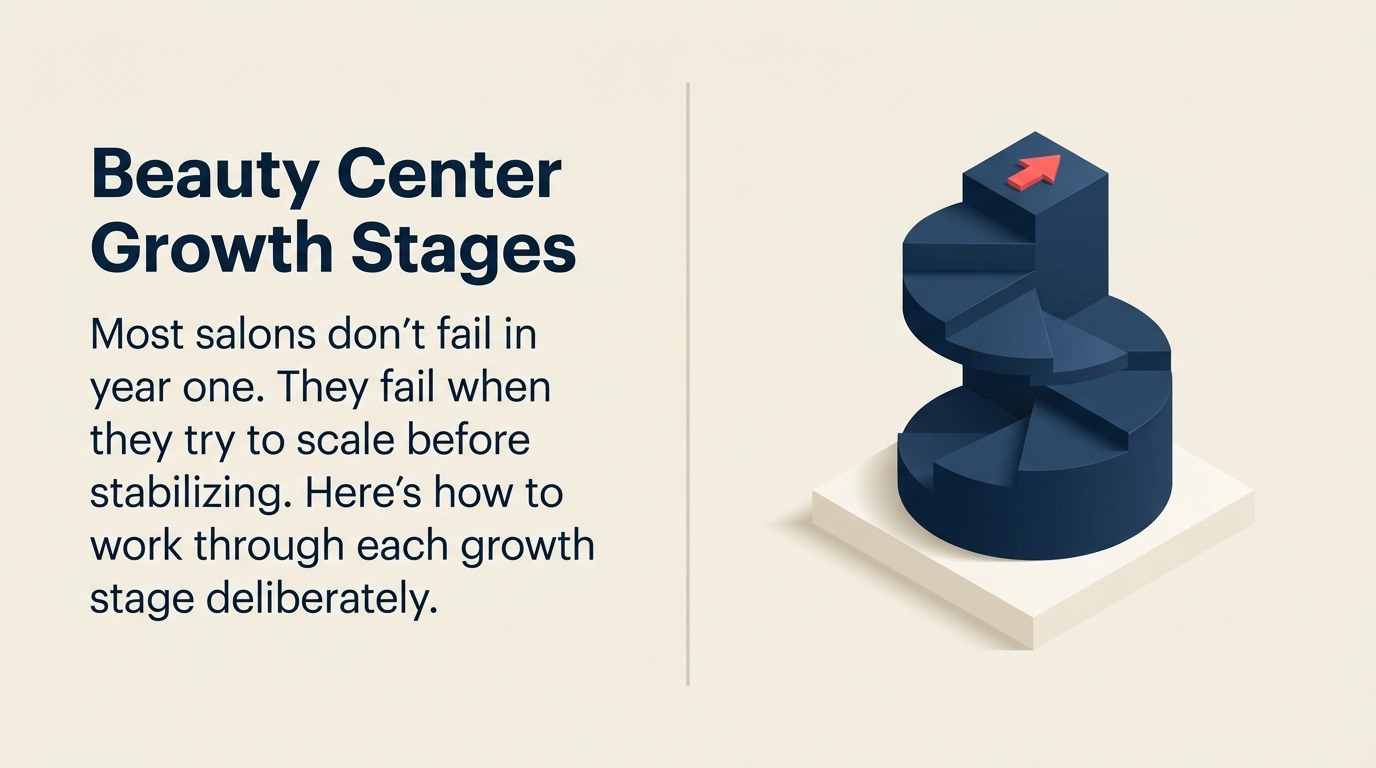
There are five stages in the beauty center growth progression. Each has its own defining challenge, its own KPIs that matter, and its own failure mode that traps owners who skip the work required before moving forward.
Key Facts: Beauty Center Growth Stages
- 53% of beauty businesses don't survive past five years, with the highest failure rate occurring in years three and four when owners attempt premature scaling (Small Business Administration)
- Beauty businesses with documented SOPs and operational systems are 2.4x more likely to successfully open a second location within seven years (Beauty Industry Group)
- The average single-location salon takes 18-24 months to reach stable positive cash flow after opening (Professional Beauty Association)
Stage 1: Startup (0-12 Months)
The defining challenge: Building a client base from nothing and establishing service quality consistency before you run out of cash.
This stage is about survival, but not in a crisis sense. It's about proving the concept: can you attract clients, deliver excellent work, and retain enough of them to sustain the business?
The fatal mistake at this stage is over-investment before client demand exists. A salon that opens with $150,000 in equipment, a full-time front desk, and a team of five stylists before any of them have clients is burning cash on infrastructure that isn't generating revenue yet. Start lean, prove the client experience, then invest. Establishing local SEO for beauty centers from day one accelerates the pace at which new clients discover you organically.
KPIs that matter in Stage 1:
- New client count per month (target: 15-30+ depending on size)
- Client retention after first visit (target: 40%+ return within 90 days)
- Occupancy rate (target: 50% within 6 months, 65% by month 12)
- Average ticket value (establish your benchmark early)
- Cash burn rate versus revenue trajectory
Common pitfall: Over-investing in equipment, decor, and staff before a client base exists. Buy the essentials, prove demand, reinvest from revenue.
System focus: Your booking process, client intake, service delivery consistency, and follow-up. These don't need to be sophisticated, but they need to exist and work reliably.
Stage 2: Stabilization (12-24 Months)
The defining challenge: Achieving consistent occupancy, positive cash flow, and breaking owner-dependency.
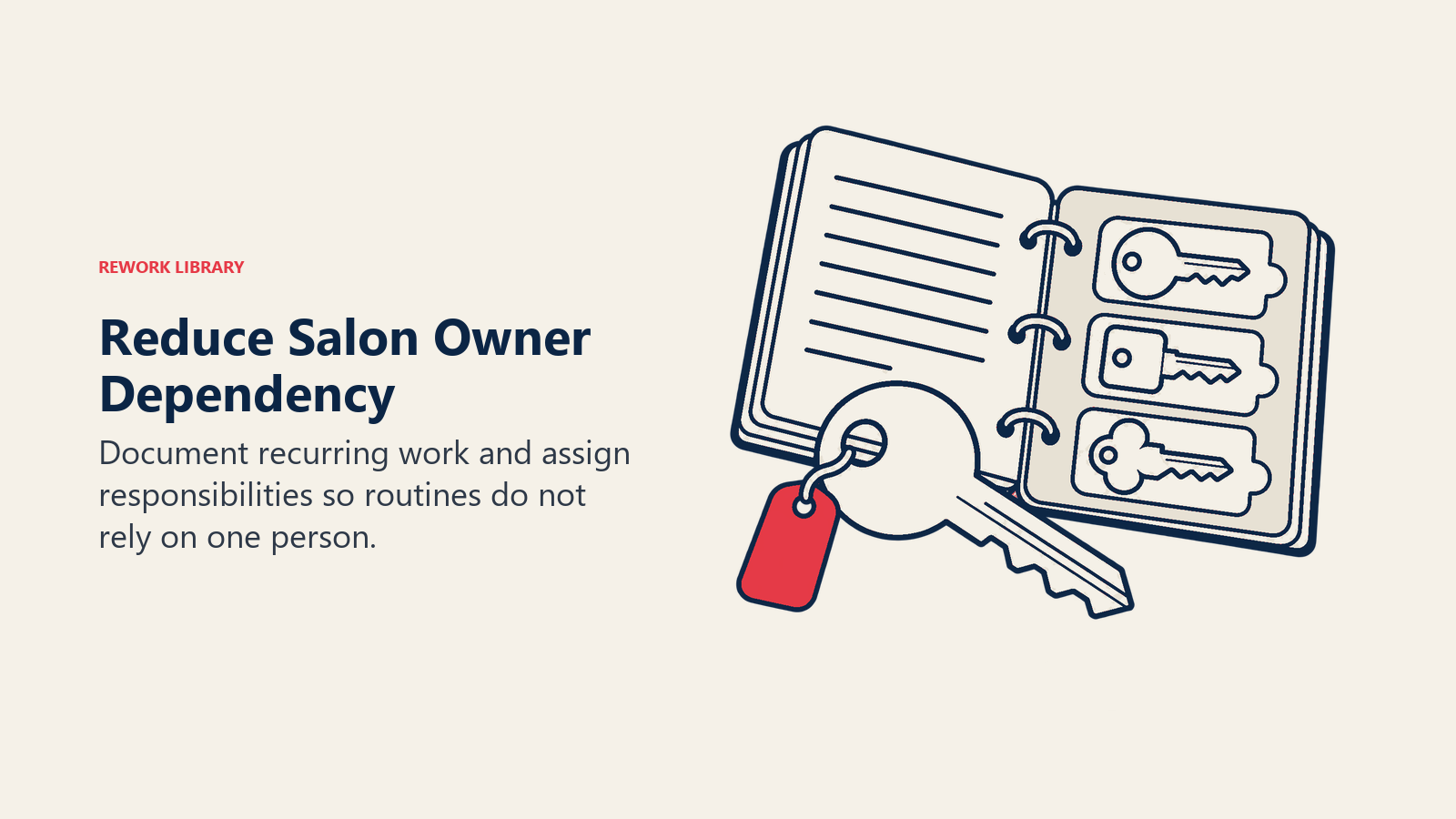
You've proven the concept. Clients are coming back. Revenue is growing. But the business still runs on your personal presence: you're the best stylist, the client relationship manager, the booking handler, and the problem solver. If you leave for a week, things fall apart.
Stabilization means building the first layer of business infrastructure that doesn't require you to be physically present for everything. That means documented service protocols, a reliable team member who handles reception or scheduling, and client communication systems that run without manual effort. Setting up automated appointment reminders and a defined client communication and follow-up workflow are the two highest-leverage systems to implement at this stage.
KPIs that matter in Stage 2:
- Occupancy rate (target: 70-75% consistently)
- Client retention rate (target: 60%+ of new clients returning 3+ times in 12 months)
- Break-even analysis: are you covering all fixed costs with a margin buffer?
- Staff productivity: revenue per stylist per hour worked
- Owner hours versus revenue (should be declining as % relationship)
Common pitfall: Owner-dependency becomes structural. You stay the best technician in the shop because you're afraid client quality will drop if you step back. But this prevents team development and caps your capacity. The business should run better as you systematically transfer skills and relationships.
System focus: Staff onboarding, client communication workflows, booking and scheduling protocols, basic financial reporting.
Stage 3: Growth Acceleration (Years 2-4)
The defining challenge: Scaling revenue and team without breaking culture or quality.
This is the most exciting and most dangerous stage. Revenue is growing, occupancy is strong, and you're seeing the potential for real scale. The temptation is to hire quickly, add capacity, and ride momentum.
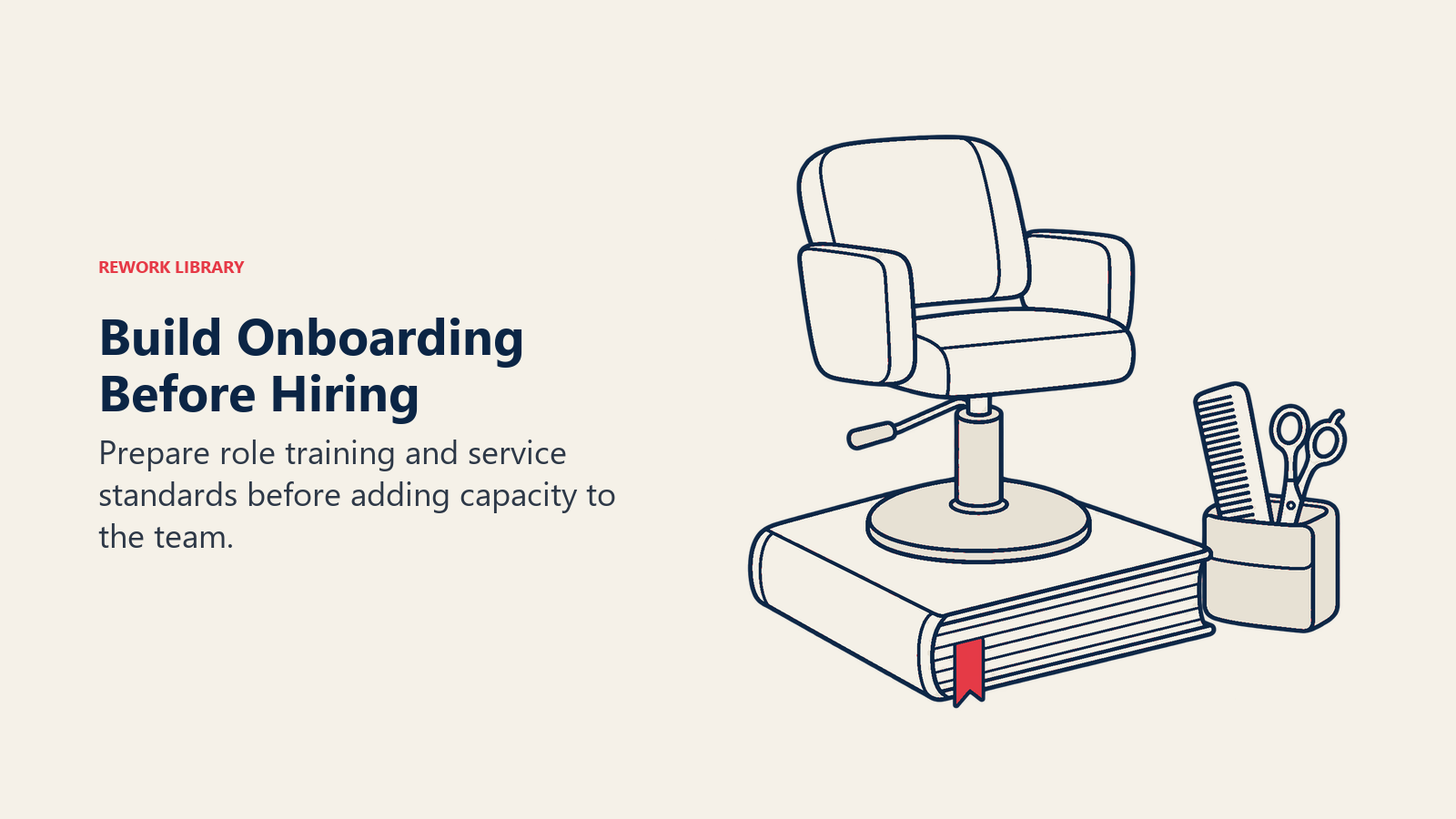
But growth acceleration without systems creates chaos. When you hire five new stylists without a training program, quality becomes inconsistent. When you add services without clear protocols, client experience varies by technician. When you add team without management structure, culture erodes because no one is actively maintaining it.
KPIs that matter in Stage 3:
- Revenue growth rate (target: 20-35% year-over-year)
- Average ticket value growth (upsell and service mix improvement)
- Team productivity per chair (revenue per available hour)
- Client acquisition cost (marketing spend divided by new clients acquired)
- Retail revenue as % of total (target: 15-25%)
- Staff retention rate (target: keep your best people for 2+ years)
Common pitfall: Hiring without onboarding systems. Every new hire who isn't properly trained becomes a client experience risk. Build a 30-60-90 day onboarding protocol before your next hire, not after. Training programs for beauty staff give you the framework to onboard consistently and protect the service quality that earned your early growth.
System focus: Training and onboarding, team performance management, marketing systematization, retail sales programs, scheduling optimization.
Stage 4: Optimization (Mature Single Location)
The defining challenge: Maximizing profitability and building systems-dependent operations that can run without the owner's daily involvement.
A Stage 4 salon is operating at 75-85% occupancy consistently, has a stable team, and generates predictable revenue. But the owner is still deeply operationally involved, making daily decisions, handling exceptions, being the culture carrier.
Optimization means making the business genuinely owner-independent. That requires documented systems for every repeatable process, a management layer that handles day-to-day decisions, and financial reporting that gives the owner visibility without requiring their presence.
This is also the stage where pricing power becomes available. A salon with a strong reputation, documented quality standards, and a waitlist can raise prices meaningfully (often 15-25%) without significant client loss. McKinsey's analysis of the beauty services market finds that specialized and luxury offerings command stronger pricing premiums and face less competitive pressure than generalist concepts, a structural advantage that a Stage 4 business is finally positioned to capture. Reviewing pricing strategies for beauty centers at this stage helps you raise rates strategically rather than reactively.
KPIs that matter in Stage 4:
- Net profit margin (target: 15-25% for commission salons, 30-40% for booth rental)
- Waitlist percentage (having a waitlist is a signal to raise prices)
- Owner hours required per week (target: under 20 hours for a systems-run business)
- Revenue per square foot
- Team NPS (how likely are team members to refer the business as a great place to work)
Common pitfall: Neglecting culture as processes take over. Systems are necessary, but a salon that feels like a corporate machine loses the human connection that drives client loyalty. Invest in culture actively: team events, recognition programs, ongoing education.
System focus: Management layer development, financial dashboards, quality control systems, pricing strategy, team development programs.
Stage 5: Multi-Location (Replication and Scale)
The defining challenge: Replicating what works across a new location without the founder's daily presence. Not just the systems, but the culture, the client experience, and the quality.
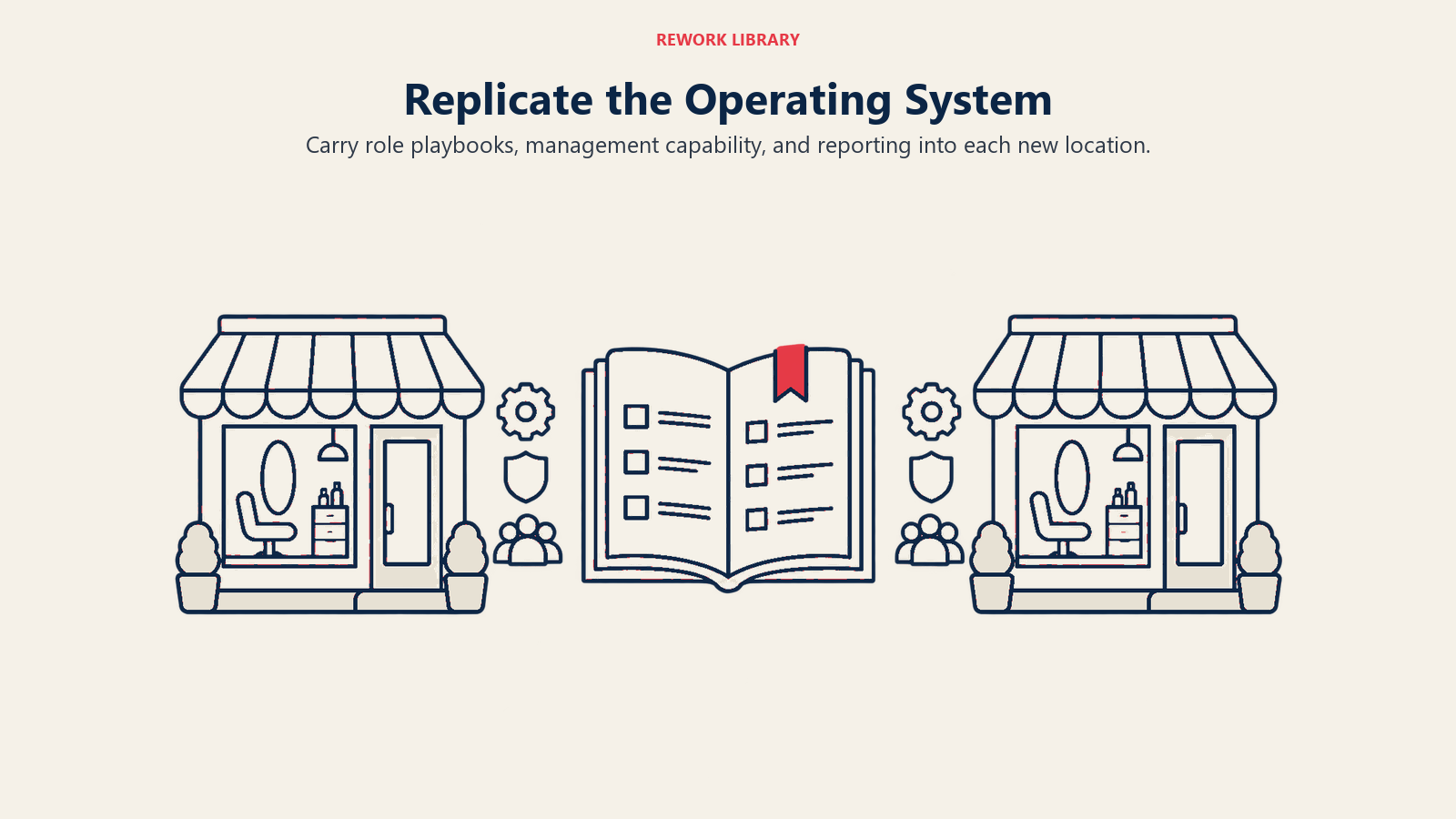
Multi-location is only viable when Stage 4 is genuinely complete. The test: can your first location operate for six months without you making a single operational decision? If the answer is no, you're not ready to open a second location.
The most common failure mode at this stage is replicating the problems of location one rather than replicating its successes. Owners who open a second location while the first still has quality consistency issues, team turnover problems, or financial reporting gaps are spreading dysfunction, not building a brand. The U.S. hair salon industry has over one million businesses according to IBISWorld, making multi-location differentiation, not just additional capacity, the sustainable advantage at scale. The unit economics for beauty centers from your first location should be strong and well-understood before you attempt to replicate the model elsewhere.
KPIs that matter in Stage 5:
- Same-location revenue growth (location one must continue growing while location two launches)
- New location ramp time to break-even (benchmark: 6-12 months for a well-planned launch)
- Management team depth (do you have managers who can lead a location independently?)
- Centralized vs. location-level cost structure
- Brand consistency metrics across locations
Common pitfall: Moving to multi-location before the first location is truly systems-dependent. If you need to be physically present at location one to maintain quality, adding a second location means one of them will be underserved.
System focus: Playbooks for every role, centralized HR and training, multi-location financial reporting, supply chain optimization, brand standards documentation.
Stage Transition Triggers
Knowing when to move from one stage to the next is as important as knowing what to do at each stage. Don't move on the calendar. Move on signals.
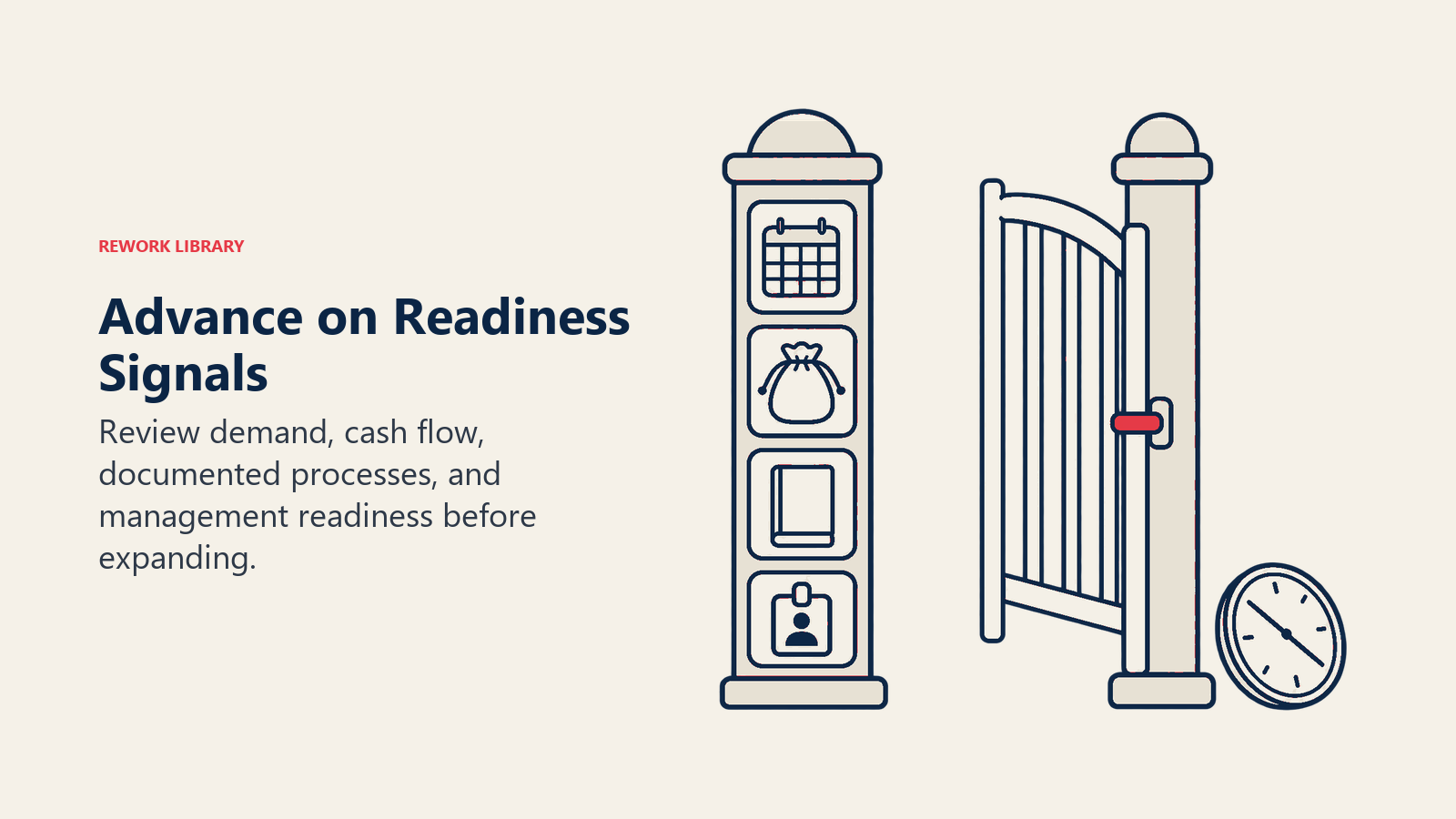
Stage 1 to 2: You've maintained 60%+ occupancy for three consecutive months, you have at least two returning clients for every new client, and you're cash-flow positive in a typical week.
Stage 2 to 3: Your business runs without your constant intervention for at least five days per week, you have a waitlist for at least 30% of your booking slots, and you've documented your top 10 operational processes. Having online booking optimization in place is a prerequisite for this transition, as managing waitlists and fill rates manually at scale is not sustainable.
Stage 3 to 4: Revenue growth is slowing (which is normal at maturity), you have a manager who handles daily operations, and your financial reporting gives you weekly visibility without manual compilation.
Stage 4 to 5: Your first location runs without you for 90+ consecutive days, you have documented playbooks for every role, and you have a candidate for general manager of the second location who has been managing the first one effectively.
The Role of Systems at Each Stage
Every stage requires systems, but the sophistication level scales with the stage.
At Stage 1, a system is a checklist. At Stage 2, it's a documented process with an owner. At Stage 3, it's a training program and performance standard. At Stage 4, it's an auditable quality control process. At Stage 5, it's a scalable playbook that can be handed to someone who's never worked in your business.
Don't skip stages. Owners who try to build Stage 4 systems at Stage 1 waste time on infrastructure for problems they don't have yet. Owners who operate at Stage 3 with Stage 1 systems are managing chaos. A salon management software guide can help you identify what tools to adopt at each stage without over-investing in complexity you don't yet need.
Build what your current stage requires, then build what the next stage demands before you need it. The global wellness economy, which includes beauty services, was estimated at $6.7 trillion in 2024 according to Statista, with personal care and beauty accounting for over $1.3 trillion of that total. At that scale, stage-appropriate growth is not a theoretical concept, it's the operational discipline that separates businesses that capture their share from those that collapse under premature ambition.
Learn More

Senior Operations & Growth Strategist