Instagram & TikTok Strategy for Beauty: Content That Converts Followers to Clients
Turn this article into takeaways for your work.


Each assistant summarizes the article only for you and suggests best practices for your work.
A beauty business with 12,000 Instagram followers and four bookings per month from social media isn't a social media success story. It's an audience that hasn't been given a reason to book. The gap between follower count and booking count is almost always a strategy gap, not a content quality gap.
Most beauty businesses post when they remember to, use whatever lighting is available that day, and hope that followers eventually convert. Some do, but the conversion rate from passive audience to paying client is far lower than it needs to be for the time investment to make sense. A broader social media marketing strategy for salons should sit underneath the platform-specific tactics covered here.
The businesses that generate real bookings from social media treat it as a booking channel with a measurable conversion rate, not a branding exercise with a vague payoff. Statista's research on beauty shopping across social media platforms shows TikTok and Instagram together accounting for the majority of social-driven beauty purchases in the U.S. confirming these are the two channels worth prioritizing. That shift in orientation changes every decision: what content to create, how to caption it, what call to action to include, and how to measure whether it's working.
Key Facts: Social Media in the Beauty Industry
- 72% of beauty clients report that Instagram influenced their decision to visit a new salon or spa (Statista, 2024)
- TikTok beauty content sees 3-4x higher organic reach than Instagram Reels for accounts under 10,000 followers
- Salons that post consistently (4-5 times per week) see 2.3x higher profile visit-to-booking rates than those posting fewer than twice weekly
- Statista data on U.S. beauty consumers influenced by social media shows that social influence on beauty purchases is highest among younger generations, making TikTok an especially high-priority channel for salons targeting clients under 35
Instagram vs TikTok: Why You Can't Cross-Post and Call It a Strategy
To convert beauty followers into bookings, treat social media as a measurable booking channel: post platform-specific content (polished Reels for Instagram, raw authentic video for TikTok) 4-5 times a week, point your bio link straight at your booking page, and add a clear booking call to action to every Story and high-intent comment. Follower count is not the metric; bio-link clicks and bookings are.
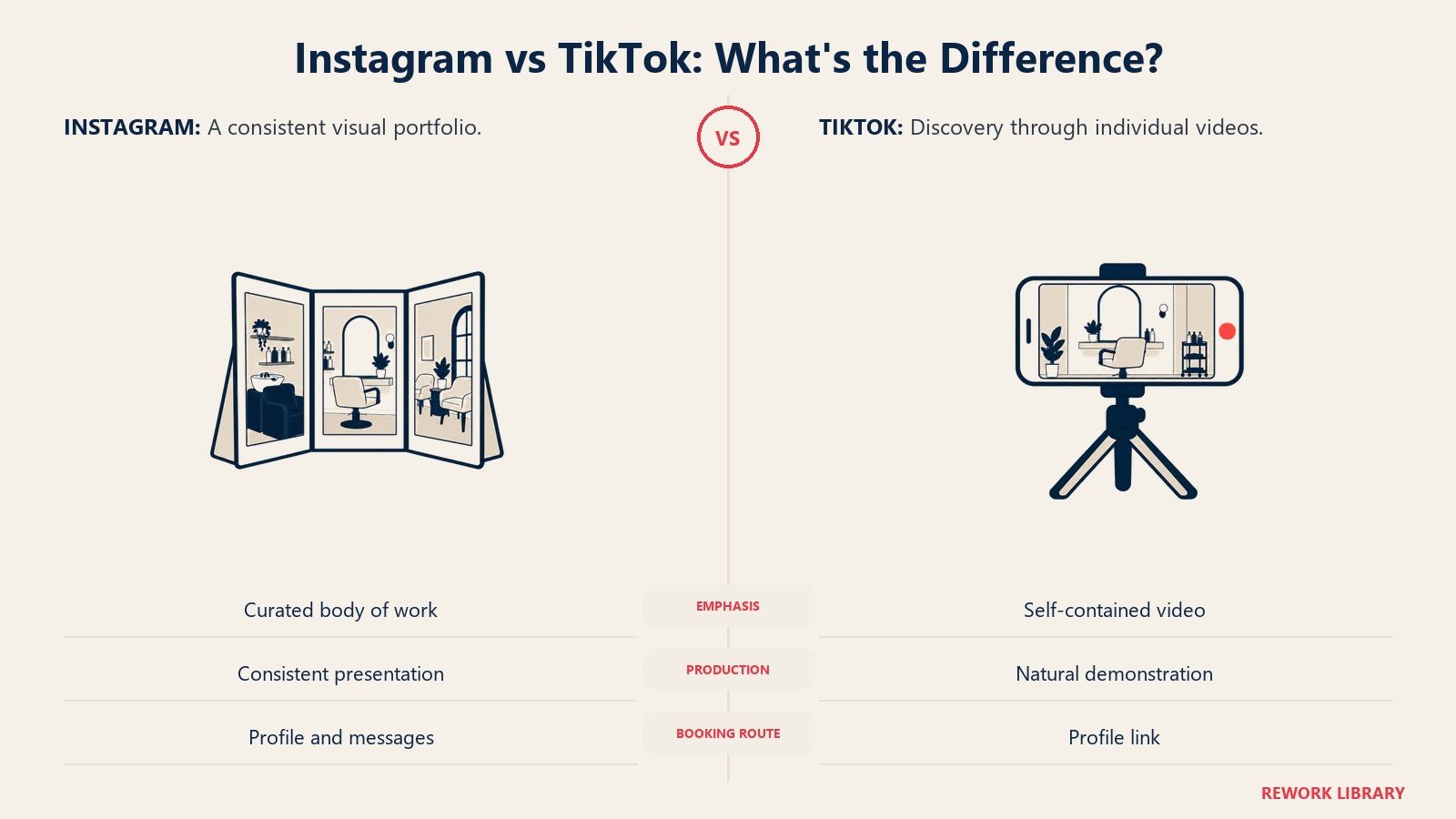
The most common mistake beauty businesses make on social media is treating Instagram and TikTok as the same platform with different logos. The audiences behave differently, the algorithm priorities are different, and the content that performs on one often tanks on the other.
| Dimension | TikTok | |
|---|---|---|
| Audience intent | Discovery + aspiration | Entertainment first, then discovery |
| Content lifespan | Stories: 24 hours; Feed: evergreen; Reels: weeks | Videos peak fast (24-72 hours) but can resurface randomly |
| Caption behavior | Clients read captions more; hashtags matter | Spoken words and on-screen text are indexed for search |
| Primary conversion path | Bio link + Story swipe-up + DM | Profile visit + link in bio |
| Best content format | Polished Reels, aesthetic feed, story sequences | Raw, authentic video; trending audio; educational content |
| Local discovery | Location tags + hashtags | TikTok SEO (keywords in captions + speech) |
On Instagram, your feed is a portfolio. New profile visitors will scroll back through six to eight posts to evaluate whether your work is worth booking. On TikTok, a single video can reach thousands of people who've never heard of you, but they're not looking at your feed history.
This means Instagram rewards consistency of aesthetic and quality. TikTok rewards authenticity and discoverability. A highly polished Reel that performs well on Instagram often feels too produced on TikTok. A raw, talking-to-camera TikTok about a client's hair transformation story often looks out of place in an Instagram feed.
Content Types That Actually Drive Bookings
Not all content performs equally when the goal is converting viewers to clients. Here's what works and why:
Transformation Videos (Reels + TikTok): The before-and-after reveal is the highest-converting content format in beauty. It shows the work, demonstrates the skill, and creates an aspirational pull. On TikTok, the transformation with a trending audio track and text overlay explaining the service and price gets shared. On Instagram, the same transformation with a detailed caption about the technique and a booking CTA in the last line performs well in Reels. For a complete system around this format, before and after content marketing covers the photography setup, consent workflow, and caption formula.
Day-in-the-Life Content: Showing behind the scenes of how your salon operates (the morning setup, the team arriving, a time-lapse of a full color session) builds familiarity and trust with potential clients who are deciding between your business and a competitor. This format works better on TikTok, where authenticity is rewarded.
Educational Tutorials: "How to maintain your balayage at home" or "What to ask for if you want lived-in color" positions your staff as experts and gives clients a reason to share the content. Educational content has a longer shelf life than promotional content on both platforms.
Staff Introduction Content: Clients book people, not salons. A 30-second video of a stylist introducing themselves, showing their work, and explaining their specialty creates personal connection before the first appointment.
Stories for Conversion: Instagram Stories are where the conversion work happens. Same-day availability slots, limited-time offers, poll stickers asking "Hair or nails today?" are the nudges that move a passive follower to an active booking.
Posting Schedule: Consistency Beats Frequency
A realistic posting cadence for a small beauty team:
Instagram: 4-5 times per week on feed/Reels + 3-4 Stories per day TikTok: 3-4 videos per week
That sounds like a lot. But most of it can be batch-created in two to three hours per week if you build the habit into your workflow.
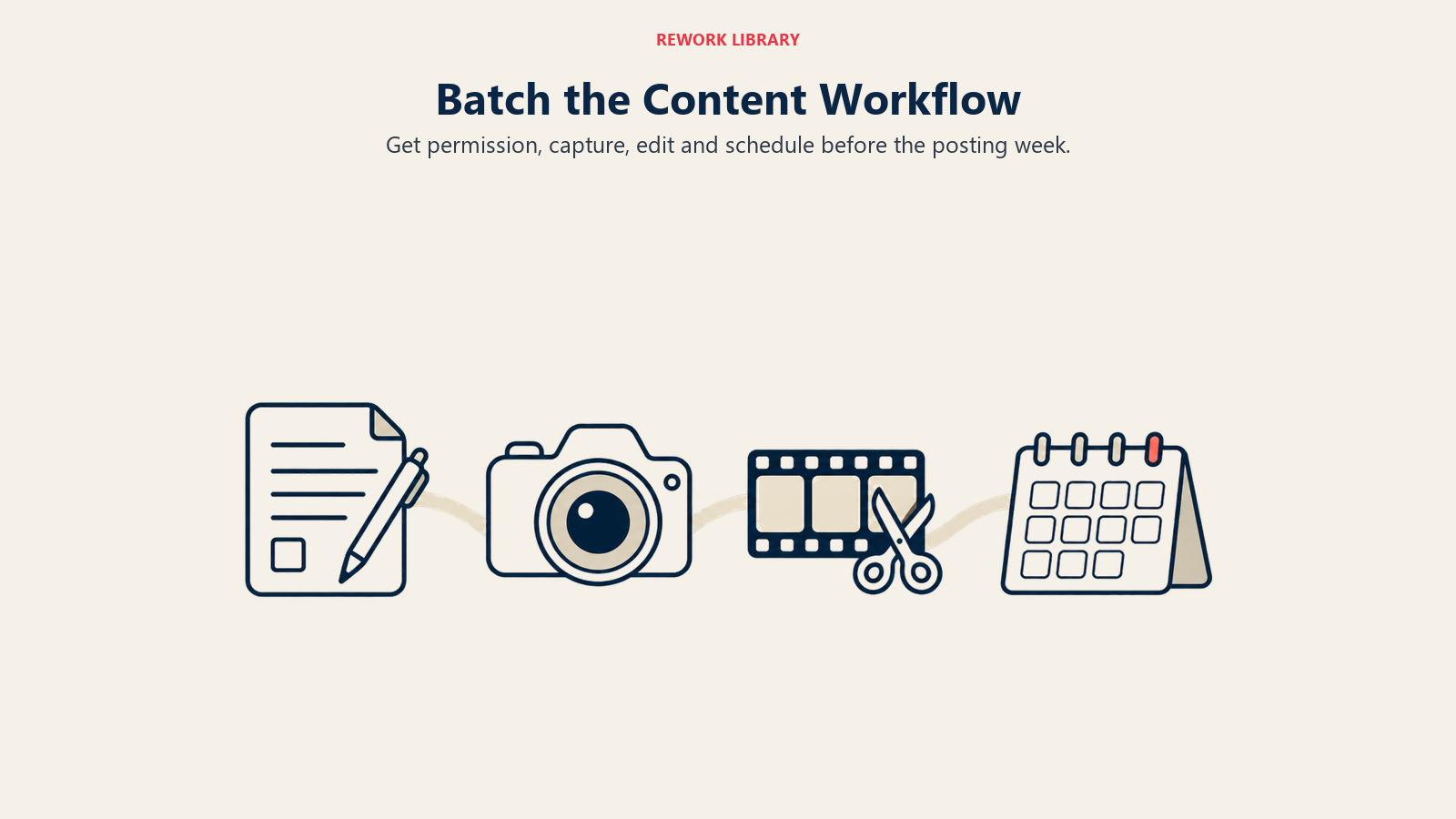
Content Batching Workflow:
- Monday: Shoot content during two or three bookings. Ask clients for permission before the appointment begins, not during.
- Tuesday: Edit the week's Reels and TikToks using CapCut or InShot. Aim for 60-90 seconds per platform.
- Wednesday: Write captions, load to scheduling tools (Later or Buffer for Instagram; TikTok's own scheduling for TikTok)
- Thursday-Saturday: Post goes live on schedule; respond to all comments within four hours
The scheduling tool is non-negotiable for a small team. Posting manually means posting inconsistently because real life intervenes. Batch and schedule. It's the only way a team without a dedicated social media person maintains a consistent presence.
Hashtag and Discovery Strategy
Instagram Hashtags: The approach that works in 2025-2026 is more targeted, not more numerous. Use 8-12 hashtags per post:
- 3-4 location-based: #miamisalon #miamihair #miaminhaircolorist
- 3-4 service-specific: #balayage #haircolor #blondespecialist
- 2-3 niche beauty: #lived-in color #beachyhair
- 1-2 broad discovery: #hairgoals #salonlife
Avoid hashtags with over 50 million posts. Your content will be buried instantly. The sweet spot is hashtags with 500K-5M posts where genuine discovery is possible.
TikTok SEO: TikTok's algorithm indexes spoken words and on-screen text, not just hashtags. Say the service name, the location, and the result out loud in your videos. "Today I'm doing a balayage transformation in [City], here's everything that goes into getting this lived-in blonde look" tells TikTok's algorithm exactly what the video is about and who to show it to. Local discoverability on TikTok now intersects with search engine visibility, and your Google Business Profile for salons captures the same high-intent local audience through a different channel.
Use 3-5 hashtags on TikTok. More than that dilutes the signal. Include your city, service type, and one broader beauty tag.
Converting Followers to Bookings
This is where most beauty businesses completely fall down. They create good content, build a following, and then do nothing to convert that audience into clients. Here's the conversion stack that works:
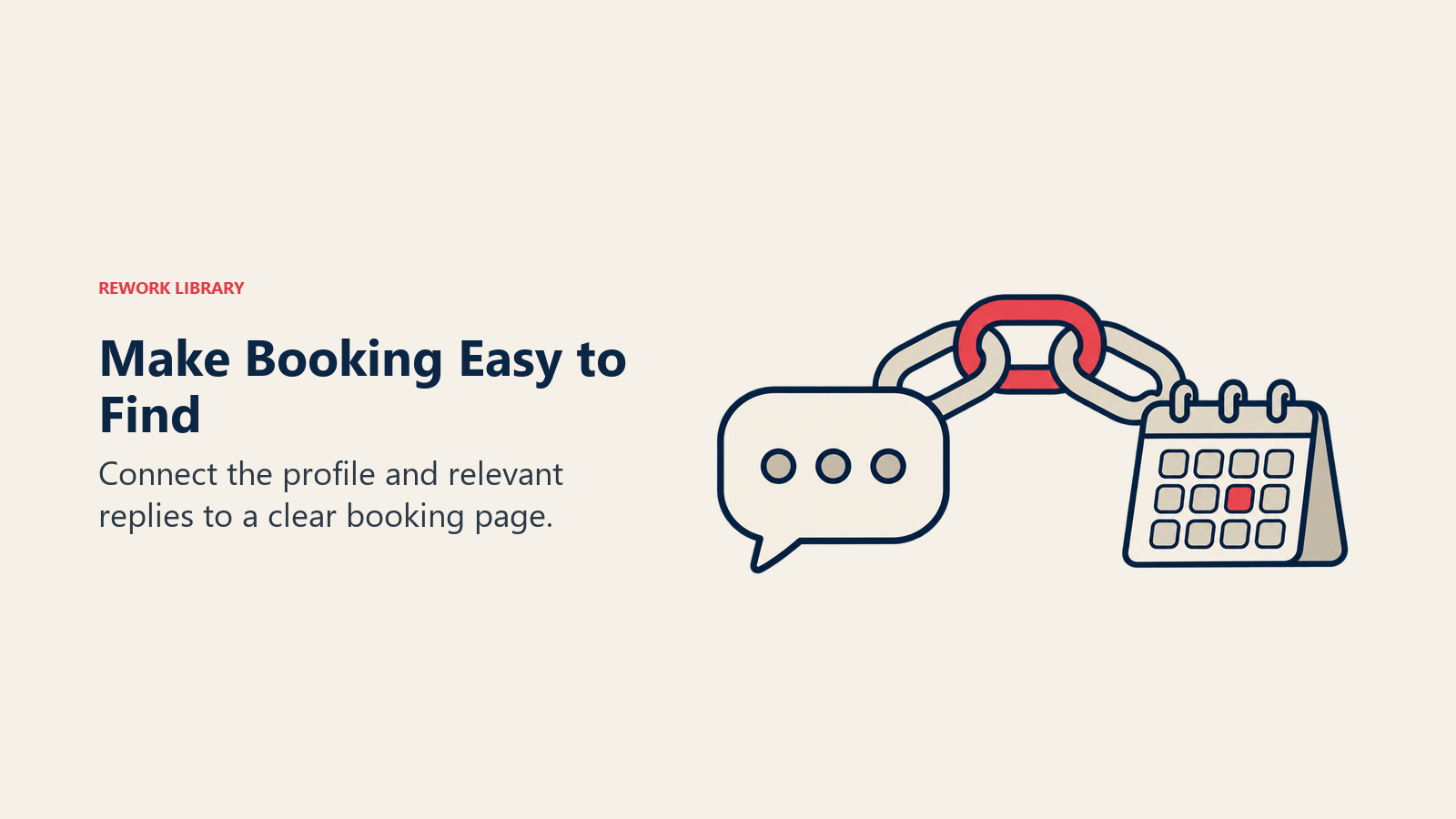
Bio Link Optimization: Your Instagram bio link is a single URL. Don't waste it on your website homepage. Point it directly to your online booking page. Use a link aggregator like Linktree or Beacons only if you genuinely have multiple conversion destinations (booking, gift cards, product shop), otherwise a direct booking link converts better. The booking experience your social followers land on matters as much as the content that sent them there, and online booking optimization covers the friction points that lose clients after they click.
Story CTAs: Every Story that shows work should end with "Book in the link in bio" or a direct booking sticker if your platform integrates with Instagram's booking tools. This isn't aggressive. It's answering the implicit question every person watching your Story is already asking.
Comment Response Strategy: When someone comments "How much does this cost?" or "Do you take new clients?" respond within two hours and move them to DM or direct them to your booking link. Comments with specific intent are warm leads. Treat them that way.
DM Automation: Tools like ManyChat allow you to set up simple Instagram DM automations. The broader Statista overview of beauty brands on social media tracks engagement benchmarks by platform, providing a useful external reference when assessing whether your own response rates and DM conversion are tracking at, above, or below market. Someone comments a specific word ("BOOK" or "PRICE") and automatically receives a DM with your booking link. This removes the response time delay for high-intent inquiries.
Limited-Time Offers for Conversion: If you want to move followers to a first booking, a time-constrained offer works better than a permanent discount. "New clients who book by Friday get a complimentary gloss treatment with any color service" creates urgency. A permanent "new client discount" doesn't. These time-sensitive offers can be amplified through email marketing for beauty centers to reach your existing client base simultaneously, compounding the reach of any social campaign.
Sample Weekly Posting Schedule:
| Day | TikTok | |
|---|---|---|
| Monday | Reel: transformation reveal | TikTok: before-and-after with trending audio |
| Tuesday | Feed post: team spotlight | TikTok: educational service explainer |
| Wednesday | Stories: availability + booking CTA | - |
| Thursday | Reel: educational tutorial | TikTok: day-in-the-life content |
| Friday | Stories: weekend availability | TikTok: client testimonial or UGC repost |
| Saturday | Feed post: work result close-up | - |
| Sunday | Stories: behind the scenes | - |
Measuring What Matters
Follower count is not a business metric. The metrics that tell you whether social media is earning its place in your strategy. Inc.'s guide to visual content marketing underscores why content format choices matter: visual posts generate significantly higher engagement and click rates than text-only alternatives, which directly affects how many followers actually make it to your booking page.
- Profile visits that result in bio link clicks: This is your awareness-to-interest conversion rate
- Bio link clicks that result in bookings: Track this in your booking platform by asking "How did you find us?"
- Story views on posts with booking CTAs: Are people watching the CTA stories?
- DM volume from social: Are you getting inquiry DMs from people who found you on Instagram or TikTok?
If you can't answer these questions, your measurement infrastructure needs attention before your content strategy does. Most booking platforms allow you to ask a "how did you hear about us?" question during online booking. Turn that on immediately.
Social media is a booking channel, not a branding exercise. Measure it the same way you'd measure any other acquisition channel: by the clients and revenue it generates, not by the likes. For salons that want to extend their reach through third-party credibility, influencer partnerships for salons offers a complementary acquisition channel that works especially well when your organic content is already converting.
Instagram & TikTok for Beauty Questions
How do beauty businesses convert Instagram followers into bookings?
Point your bio link directly at your online booking page, end every Story that shows work with a "Book in the link in bio" prompt or booking sticker, and respond to high-intent comments within two hours by moving them to a booking link. The gap between followers and bookings is almost always a conversion-strategy gap, not a content-quality gap.
Should you post the same content on Instagram and TikTok?
No. Instagram rewards a polished, consistent aesthetic because visitors scroll back through your feed before booking. TikTok rewards raw, authentic video and discoverability. A highly produced Reel often feels too polished on TikTok, and a talking-to-camera TikTok looks out of place in an Instagram feed.
How often should a salon post on social media?
A realistic cadence for a small team is 4-5 Instagram feed or Reels posts per week plus 3-4 Stories per day, and 3-4 TikTok videos per week. Salons posting consistently see about 2.3x higher profile-visit-to-booking rates than those posting fewer than twice weekly. Batch and schedule to stay consistent.
What social content drives the most bookings for beauty businesses?
Before-and-after transformation videos are the highest-converting format because they show the skill and create aspirational pull. Educational tutorials, staff introductions, and day-in-the-life content build trust, while Instagram Stories with availability slots and booking CTAs do the direct conversion work.
What metrics should a salon track on social media?
Track profile visits that become bio-link clicks, bio-link clicks that become bookings (ask "how did you find us?" at booking), Story views on posts with booking CTAs, and inbound DM volume from social. Follower count is not a business metric; bookings and revenue are.
Learn More

Senior Operations & Growth Strategist