Upselling & Cross-Selling Beauty Services: Boosting Revenue Per Visit
Turn this article into takeaways for your work.


Each assistant summarizes the article only for you and suggests best practices for your work.
A salon with 1,000 monthly visits generating an average ticket of $65 makes $65,000 per month. Increase that average by $15 through a single well-chosen add-on per visit, and you generate $180,000 in additional annual revenue, without one extra marketing dollar spent and without adding a single new client. The BLS projects 5% employment growth for cosmetologists through 2034, meaning supply of service providers is rising, which makes revenue per visit optimization increasingly important for individual salon competitiveness.
But most salons leave this revenue sitting unclaimed. Not because their staff don't care, but because no one has built a system for it. Individual stylists and therapists vary enormously in how often they recommend add-ons. Some do it naturally. Most don't. The difference isn't personality. It's training, scripting, and a culture that frames recommendations as expert advice rather than sales pressure. This system-building mindset is also what separates salons that succeed at service menu optimization, where high-margin "Puzzle" services require exactly the same kind of active staff recommendation to reach their potential.
The goal isn't to squeeze more money out of clients. It's to make sure every client leaves having received what their hair, skin, or nails actually needed, and knowing about services they didn't book that would genuinely benefit them next time. That's good service. Done well, it also happens to be the highest-return revenue lever in a beauty business.
Key Facts: Average Ticket in Beauty
- Salons with a structured add-on recommendation system generate 23% higher average tickets than those without (Professional Beauty Association, 2024)
- A $10 increase in average ticket across 800 monthly visits adds $96,000 in annual revenue
- Clients who purchase retail products during a service visit rebook at 2x the rate of those who don't (Mindbody, 2024)
Upselling vs. Cross-Selling: Understanding the Difference
These two terms get used interchangeably but they describe different actions with different techniques.
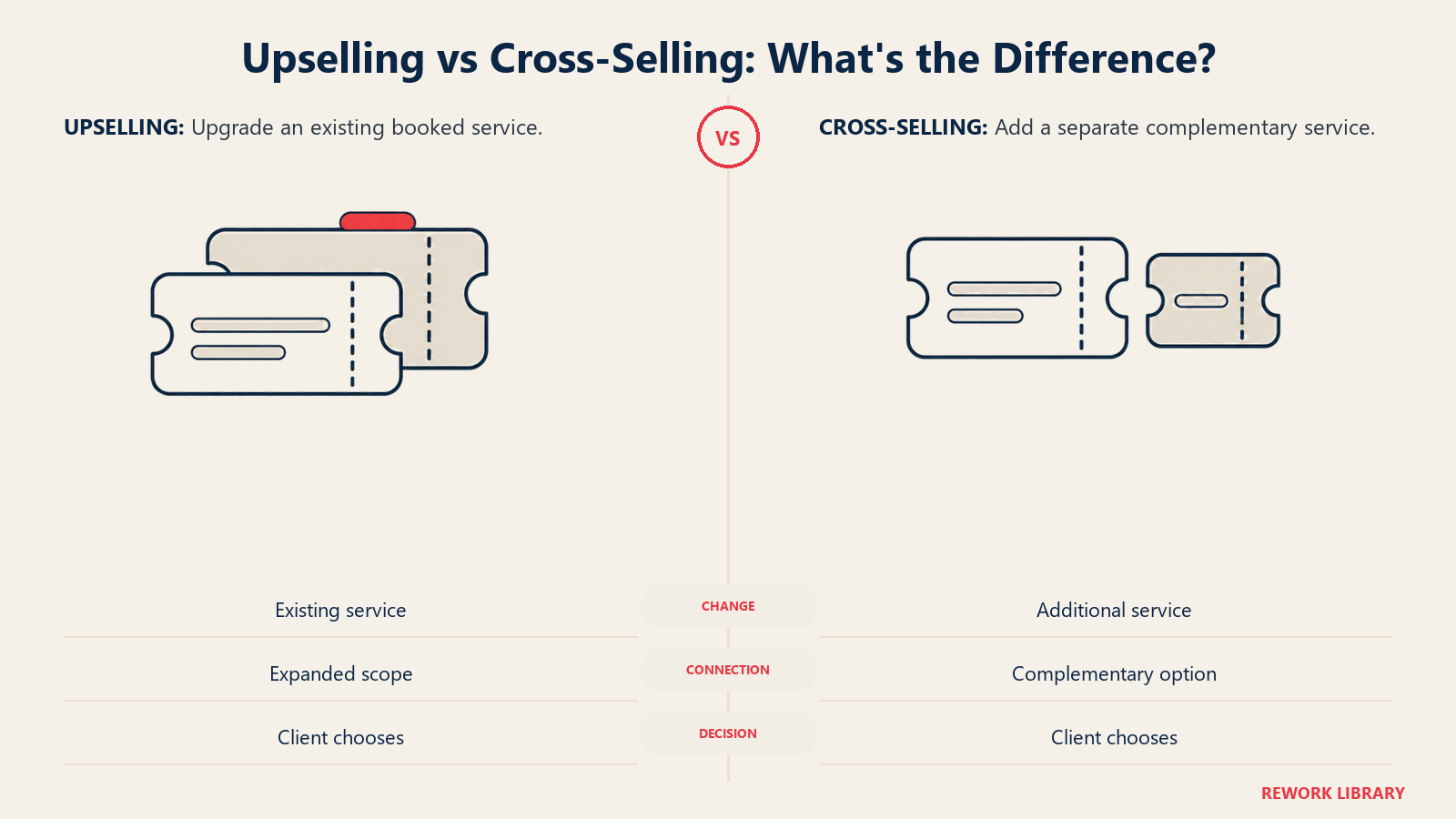
Upselling is upgrading the existing service the client is already booking.
- Base color → balayage or highlights
- Standard manicure → gel or dip powder
- Express facial → deep cleanse with extractions
- Shampoo and cut → cut with scalp treatment and blowout
The client came in for one service and leaves having received a more comprehensive (and more valuable) version of it. Upselling works best when the upgrade genuinely improves the result the client is seeking.
Cross-selling is adding a complementary service to what they've booked. McKinsey's research on the art of cross-selling shows that the most effective cross-sells are grounded in genuine need rather than scripts, and that advisory framing consistently outperforms transactional prompts.
- Haircut → eyebrow tidy
- Manicure → cuticle treatment or hand massage
- Hair color → skin gloss treatment
- Facial → lip or chin wax
The client came in for one service and leaves having received an additional service that naturally paired with it. Cross-selling works best when the connection between the two services is logical and the add-on is quick enough to feel effortless.
The retail distinction
Product recommendations during or after a service aren't technically upselling. They're a separate revenue category. But they operate on the same principle: expert advice from someone the client trusts. Retail is covered separately below, but it follows the same consultation-first framework. For a deeper look at the retail opportunity specifically, see retail product sales in salons, which covers product selection, staff incentives, and display strategies that lift conversion rates.
"Recommending" beats "selling" every time
The language you use (internally and with clients) matters. A stylist who feels like they're "selling" something will approach the conversation differently than one who feels they're "recommending" something based on professional assessment. Train your team to think of add-on suggestions as part of the service, not an extension of a sales conversation. The client can feel the difference.
Consultation-Based Upselling: Making Upgrades Feel Expert
The highest-conversion moment in any appointment is the consultation window, before the service begins, when the client's expectations are being set and when they're most open to guidance.
The assessment question framework
Before recommending anything, ask questions that uncover what the client actually wants to achieve. Generic questions get generic answers. Specific questions reveal specific needs.
Instead of: "What are you getting done today?" Ask:
- "When you leave today, what's the one thing you most want to be different about how your [hair/skin/nails] looks?"
- "How does your [hair/skin] feel lately: dry, oily, damaged, or healthy?"
- "What's your morning routine like? Are you someone who spends 20 minutes or 5 minutes on styling?"
These questions do two things: they gather the information you need to make a genuine recommendation, and they signal to the client that you're approaching this as a professional assessment rather than a service transaction.
Connecting the upgrade to their stated goal
This is the key technique. Don't recommend an upgrade randomly. Connect it explicitly to what the client just told you.
"You mentioned you want more dimension and movement. The base color will give you the foundation, but adding a few face-framing highlights would give you that lived-in brightness you're describing. It's about 30 extra minutes. Want me to show you what it would look like?"
The recommendation is grounded in their goal. The logic is clear. The ask is soft ("Want me to show you?") rather than pressured. This approach converts at 3-4x the rate of "Would you like to add anything?"
Using visual examples
Before-and-after photos in your booking system, on a salon iPad, or on your phone are powerful consultation tools. Showing rather than describing is more persuasive and sets accurate expectations. "This is what a toning gloss adds to a color like yours" lands better than describing it verbally. Building a library of this content for consultations also feeds your before and after content marketing program, where the same images drive organic reach and new client acquisition.
The Top 10 Add-On Services: What Works and What It Costs
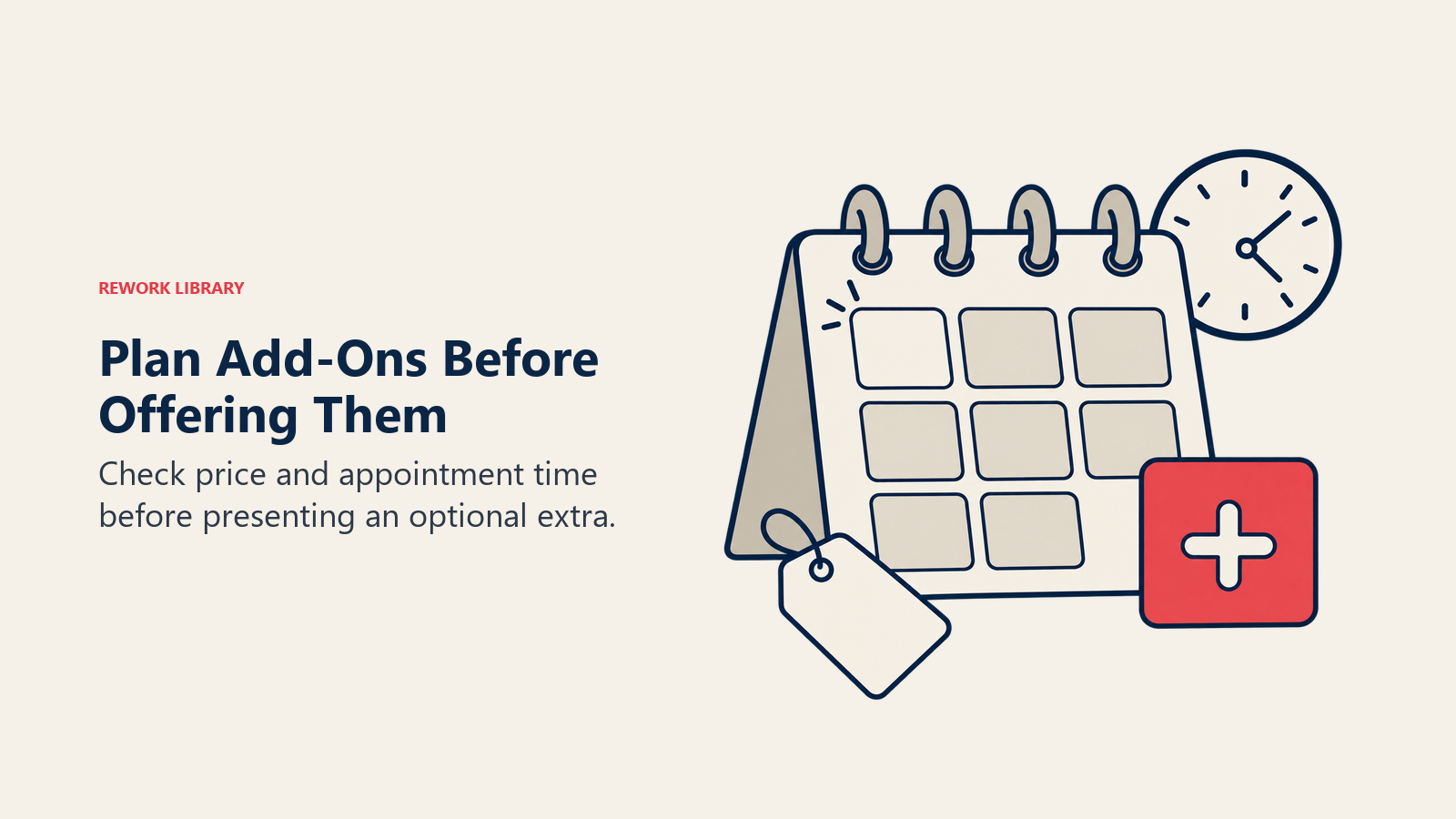
High-performing add-ons share three characteristics: they're high-margin, they take minimal additional time, and they fit naturally into existing service slots.
Top Add-On Services by Category
| Add-On Service | Typical Price | Extra Time | Margin % |
|---|---|---|---|
| Scalp treatment / Olaplex | $25–$45 | 5–10 min | 70–80% |
| Conditioning mask or gloss | $20–$35 | 5 min | 65–75% |
| Eyebrow tidy / wax | $15–$25 | 10–15 min | 80–85% |
| Nail art (per nail) | $5–$15 | 5–20 min | 60–70% |
| Scalp massage | $15–$30 | 10 min | 85–90% |
| Cuticle treatment | $10–$20 | 5 min | 75–85% |
| Lip or chin wax | $10–$18 | 5–8 min | 80–90% |
| Express hand treatment | $15–$25 | 10 min | 70–80% |
| Skin booster / serum add | $20–$40 | 3–5 min | 65–75% |
| Hot towel finish | $10–$15 | 3 min | 85–90% |
These are your highest-return add-ons. They should be the ones every staff member knows how to recommend, how to deliver, and how to price. They shouldn't require a sales pitch. They should feel like obvious enhancements.
Positioning add-ons as enhancements, not extras
The language matters. "Would you like to add a conditioning treatment?" sounds transactional. "Your hair's been through a lot with the color process. I'd recommend a conditioning mask to lock in the result and protect the integrity. It takes 5 minutes and makes a real difference in how the color sits" sounds like expert advice. The second framing converts at a significantly higher rate.
Retail Product Recommendations: The Second Revenue Stream
Retail is often the most underperformed revenue opportunity in beauty businesses. The typical salon converts retail at 10-15% of service revenue. Well-run salons hit 20-30%. According to IBISWorld's analysis of the U.S. beauty industry, retail product sales represent a meaningful secondary revenue stream, and salons that develop it systematically outperform those treating it as incidental.
The three-product rule
Never recommend more than three products in a single visit. Too many recommendations overwhelm clients, feel pushy, and result in zero purchases. One or two targeted recommendations land at a far higher conversion rate than a full routine walkthrough.
Connect product to the service just delivered
The most effective retail recommendation happens during the service: "I'm using [product] on your hair right now because it does [specific result for their specific concern]. You can keep a bottle at home and the results last much longer." Then at checkout: "Did you want to grab that [product] before you go? It's $38."
This framing works because the recommendation is tied to a real-time experience they just had. They felt the product working. You're not selling them something abstract. You're offering them a way to extend what they just experienced.
Commission vs. non-commission retail
Some salons pay retail commissions (typically 10-15% for the staff member). Others don't. Both models work. Commission motivates recommendations but can create a slightly salesy dynamic. Non-commission requires that recommendations be embedded in the service culture and recognized as a professional expectation rather than an optional activity. If you don't pay commission, make retail performance a visible part of your team culture through recognition and tracking rather than financial incentive. How retail commission integrates with your broader commission structures for salons determines whether staff see retail as part of their earnings or as optional extra effort.
The Consultation Upsell Script
This four-step framework applies to any upsell or cross-sell conversation:
Step 1: Assessment (question) "Tell me a bit about what's been going on with your [hair/skin/nails] lately. Any concerns or things you'd like to see improve?"
Step 2: Observation (professional insight) "I'm noticing [specific observation: dryness along the hairline / uneven texture / nail breakage at the tips]. That's something we can address today."
Step 3: Recommendation (connecting to their goal) "Based on what you're describing and what I'm seeing, I'd recommend adding [service/product]. Here's why it'll make a difference for you specifically: [reason tied to their concern]."
Step 4: Close (soft ask) "Want me to include that today? It only adds [time/cost]."
The close is intentionally low-pressure. You've built the case in steps 1-3. The ask in step 4 is a natural yes-or-no. A declined recommendation isn't a failure. It's a professional exchange. That client now knows about the service and may choose it next time.
Training Staff to Upsell Naturally
The gap between staff who recommend add-ons regularly and those who never do isn't about personality. It's about practice.
Role-play in team meetings
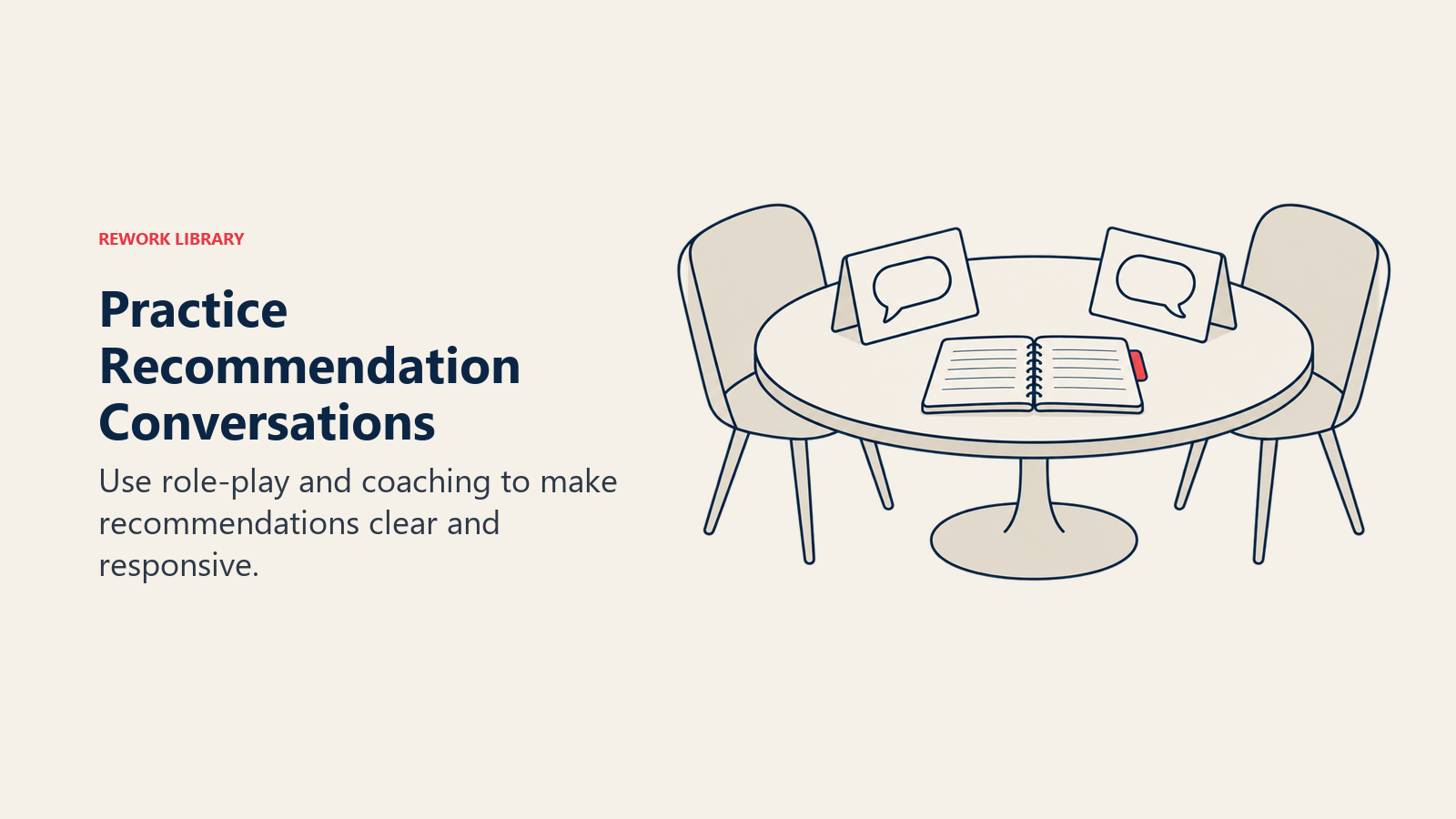
Dedicate 10 minutes of weekly team meetings to upsell role-play. One person plays the client with a specific profile ("I want my color refreshed and I mentioned I've been having breakage"), another practices the consultation script. Rotate the scenario weekly. It feels awkward initially. Within three weeks, it feels second nature. For a structured approach to building this capability across your team, see training programs for beauty staff, which covers how to design ongoing skill development that sticks beyond the first session.
The difference between reading and recommending
A staff member who reads from a mental checklist ("would you like a scalp treatment, an Olaplex treatment, or a conditioning mask?") will convert poorly. A staff member who says "I think you should do the Olaplex today given what your hair's been through, and here's why" will convert at 3-4x the rate. Train for the second version.
Average Ticket Tracking by Staff Member
Make average ticket visible weekly. Not in a shame-and-blame way, but in a "let's understand and improve" way.
| Staff Member | Monthly Visits | Avg Ticket | Add-On Rate | Monthly Revenue |
|---|---|---|---|---|
| Sarah | 85 | $89 | 42% | $7,565 |
| Marcus | 72 | $74 | 28% | $5,328 |
| Priya | 91 | $95 | 51% | $8,645 |
| Team Avg | 83 | $86 | 40% | $7,138 |
This table, shared monthly, shows each team member where they stand. Priya's 51% add-on rate and $95 average ticket tells you she's consulting well. Marcus at 28% and $74 is leaving money on the table, and more importantly, he may not be fully serving his clients' needs. The coaching conversation focuses on improvement, not judgment.
Monthly target setting
Set team average ticket targets in $5-$10 monthly increments. Going from $65 to $80 average ticket is a 23% revenue increase. In a salon doing 800 monthly visits, that's \(12,000 more per month. The target should be realistic and tied to specific behaviors (add-on rate %) rather than just the outcome (\)). Tracking this alongside data-driven decisions for salon owners gives you the reporting infrastructure to see which staff, service categories, and appointment types are driving the most add-on revenue.
Ethical Upselling: Protecting the Client Relationship
The long game in upselling is lifetime client value. HBR's research on cross-selling ethics and client trust warns that aggressive recommendations erode the relationship and trigger cancellations, while advisory-style recommendations build trust that sustains years of repeat business. A client who feels pressured into a service they didn't need is a client who won't rebook. A client who feels that your team consistently gives them expert, honest advice, sometimes recommending, sometimes saying "you don't need that today", is a client who comes back for years and refers friends.
The ethical framework is simple: only recommend what the client genuinely needs or what will meaningfully improve their result. Transparency on pricing before any add-on is delivered, with no surprises at checkout. And a declined recommendation should be accepted gracefully: "No problem at all. Just know it's there if you want to try it next time."
Long-term thinking: the add-on sale is worth $25 today. The client relationship, sustained over 3 years of monthly visits, is worth $2,600. Don't risk the $2,600 for the $25. A client who trusts your team's recommendations is also the most likely candidate for a loyalty program or package deal, where that trust converts into a deeper financial commitment that benefits both sides.
Learn More

Senior Operations & Growth Strategist
On this page
- Upselling vs. Cross-Selling: Understanding the Difference
- Consultation-Based Upselling: Making Upgrades Feel Expert
- The Top 10 Add-On Services: What Works and What It Costs
- Retail Product Recommendations: The Second Revenue Stream
- The Consultation Upsell Script
- Training Staff to Upsell Naturally
- Ethical Upselling: Protecting the Client Relationship
- Learn More