Membership Models for Spas & Salons: Building Recurring Revenue
Turn this article into takeaways for your work.


Each assistant summarizes the article only for you and suggests best practices for your work.
A beauty center is a salon, spa, or clinic that provides grooming and wellness services like hair, nails, facials, and skincare. A membership model turns that center's irregular walk-in visits into recurring monthly revenue: clients pay a fixed fee each month for service credits, discounts, and priority access, so the business earns predictable income instead of relying on unpredictable bookings.
Subscription businesses are valued at 4-8x higher multiples than transactional ones. HBR's analysis explains why subscription businesses command premium valuations: predictable revenue makes cash flow forecasting reliable and reduces acquisition risk for any buyer. The reason is simple: predictable revenue is worth more than uncertain revenue. This principle applies as much to a nail studio as it does to a SaaS company.
A salon with 200 active members generating $50 per month has $120,000 in predictable annual revenue before a single walk-in appointment, before any retail sale, and before any non-member booking. That cash comes in automatically every month. It funds payroll, rent, and product inventory regardless of whether it rains on a Tuesday or whether a slow week follows a school holiday.
Membership programs are not the right fit for every beauty business. They work best in services with regular maintenance cadences: blowout bars, nail studios, facial clinics, med spas, and full-service salons where clients come in monthly or more. But for businesses where the service fits, a well-designed membership program can be one of the most significant financial changes an owner makes. Understanding your beauty center business model and which revenue streams it supports is the starting point before designing a membership structure.
Key Facts: Salon Membership Programs
- Members visit 2.4x more frequently than non-member clients and spend 25% more on additional services per visit (ISPA Foundation, 2024)
- Salons with membership programs report 35% lower client churn than those without (Mindbody Business Intelligence, 2024)
- The break-even point for most salon memberships is 1.8 visits per month, easily achievable with monthly maintenance services
Membership vs. Loyalty Program vs. Prepaid Package
These three concepts are often confused. Understanding the difference matters because they serve different strategic purposes.
Loyalty programs reward clients for spending, with points earned on purchases and redeemable for discounts or free services. They're transaction-based and don't generate revenue predictably. Every redemption is a future cost, not future revenue.
Prepaid packages are a one-time upfront purchase of multiple sessions at a discount. Better for cash flow than single bookings, but they're finite. When the sessions run out, the client relationship resets. For a detailed comparison of how to structure and price these packages, see package deals and bundles.
Membership programs are an ongoing recurring commitment, typically monthly billing, that gives clients a regular benefit (service credits, discounts, priority access) in exchange for a predictable monthly fee. The key distinction is recurrence. Revenue comes in every month without requiring the client to make a new purchase decision.
Which businesses benefit most
Blowout bars, nail studios, brow and lash bars, facial clinics, med spas, and full-service salons where monthly visits are the natural cadence. Hair salons where clients come every 6–8 weeks are harder to structure because the monthly math doesn't naturally align with the visit frequency.
Membership Tier Design: Structuring Levels That Appeal to Different Clients
Three tiers is the industry standard and for good reason: two tiers feel like a binary choice; four or more create decision paralysis. The sweet spot is three tiers with meaningful differentiation between them.
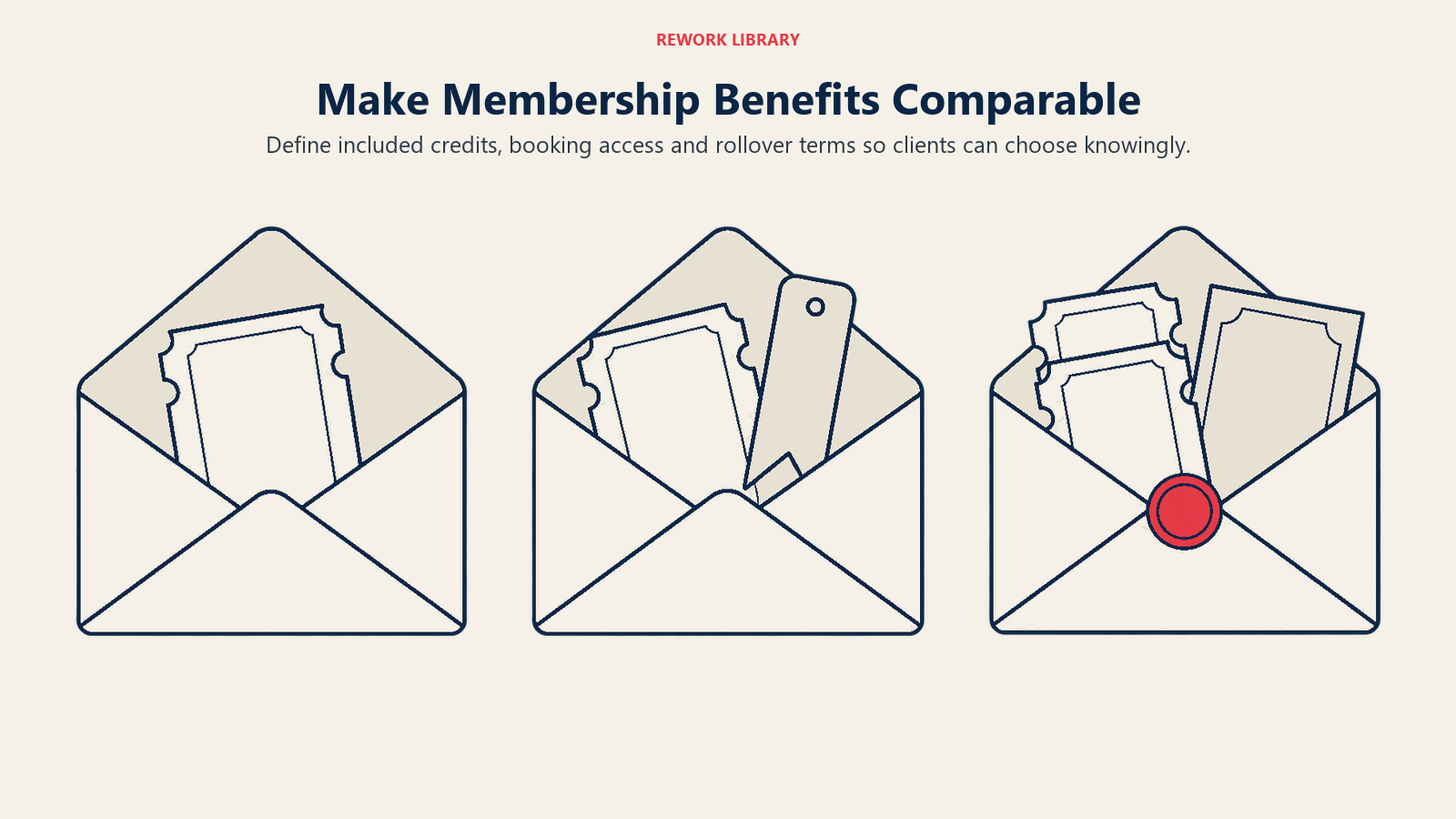
Typical tier structure: Essential, Premium, VIP
Membership Tier Comparison Table
| Benefit | Essential ($39/mo) | Premium ($69/mo) | VIP ($99/mo) |
|---|---|---|---|
| Monthly service credit | 1 express service | 1 signature service | 1 signature + 1 express |
| Discount on additional services | 10% | 15% | 20% |
| Retail product discount | N/A | 10% | 15% |
| Priority booking window | N/A | 48hrs advance | 72hrs advance |
| Rollover credits | No | 1/month | 2/month |
| Guest passes | N/A | 1/quarter | 2/quarter |
| New service early access | No | Yes | Yes |
The anchor tier principle
In three-tier pricing, the majority of members will choose the middle tier. This is well-documented across subscription products in every industry. McKinsey's work on subscription model design confirms that middle-tier adoption is the norm and that perceived value, not just price, drives which tier clients select. Design your middle tier (Premium) as the one that represents the best value per dollar. Clients should feel that it's the smart choice. VIP should feel generous enough to attract enthusiastic clients, but shouldn't be priced so high that it looks inaccessible to your core market. The same anchoring psychology that shapes tier selection also applies to your pricing strategies for beauty centers more broadly, where the middle option consistently drives the highest volume of conversions.
What to avoid
More than three tiers creates confusion, not choice. A client who spends 10 minutes comparing tier benefits and still isn't sure which is right for them will choose none of them. Simplicity converts. Complexity doesn't.
Monthly vs. Annual Plans: Pricing Structure Choices
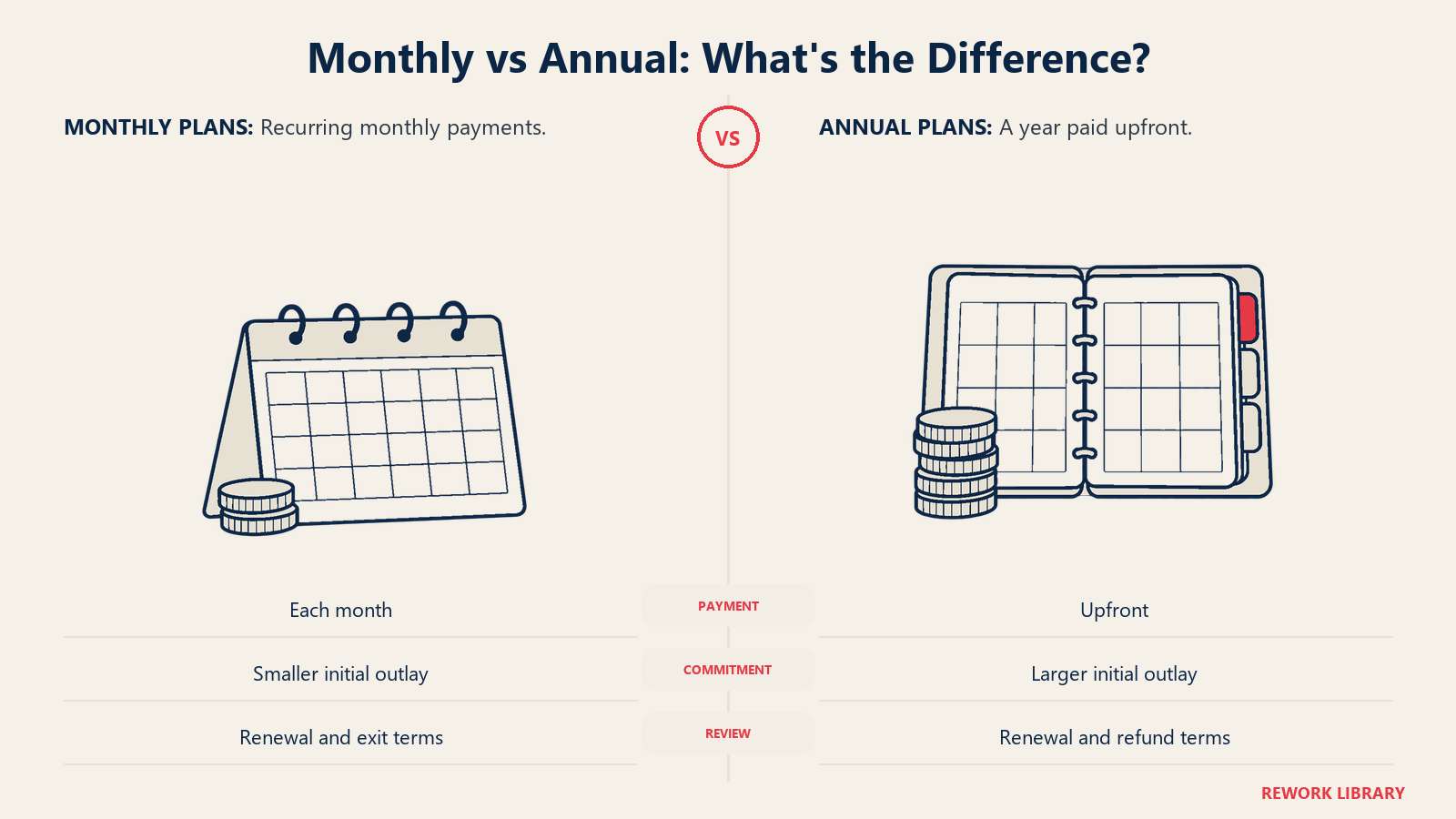
Monthly billing
Lower barrier to entry. Clients can join without a large upfront commitment, which increases enrollment. But it also creates higher churn risk, since a client who wants to pause or cancel can do so with a few clicks.
Annual billing
Clients pay upfront for a full year, typically at a 10–15% discount vs the monthly rate. Annual members have lower churn, visit more frequently, and spend more per visit. Inc.'s coverage of how recurring revenue increases business value highlights that annual commitments are particularly valuable because they lock in future cash flow and signal deep client trust. The commitment changes their psychological relationship with the membership. They want to get value from it.
Hybrid offer
Offer both: "Join monthly, or save $X by paying annually." Most members will choose monthly, but a meaningful minority will choose annual, and those clients are your most valuable.
Why annual members outperform monthly members
A client who pays $828 upfront for an annual Premium membership is motivated to use it. They've already committed the money. They'll book. They'll show up. They'll bring friends. A monthly member who pays $69 and doesn't visit in month three will cancel in month four. Annual commitment changes behavior.
Pricing Member Plans Profitably: The Math Behind Sustainable Memberships
The biggest mistake salon owners make with memberships is pricing them too low, generating volume but not profitability. Work through the numbers before setting your tiers.
Break-even analysis
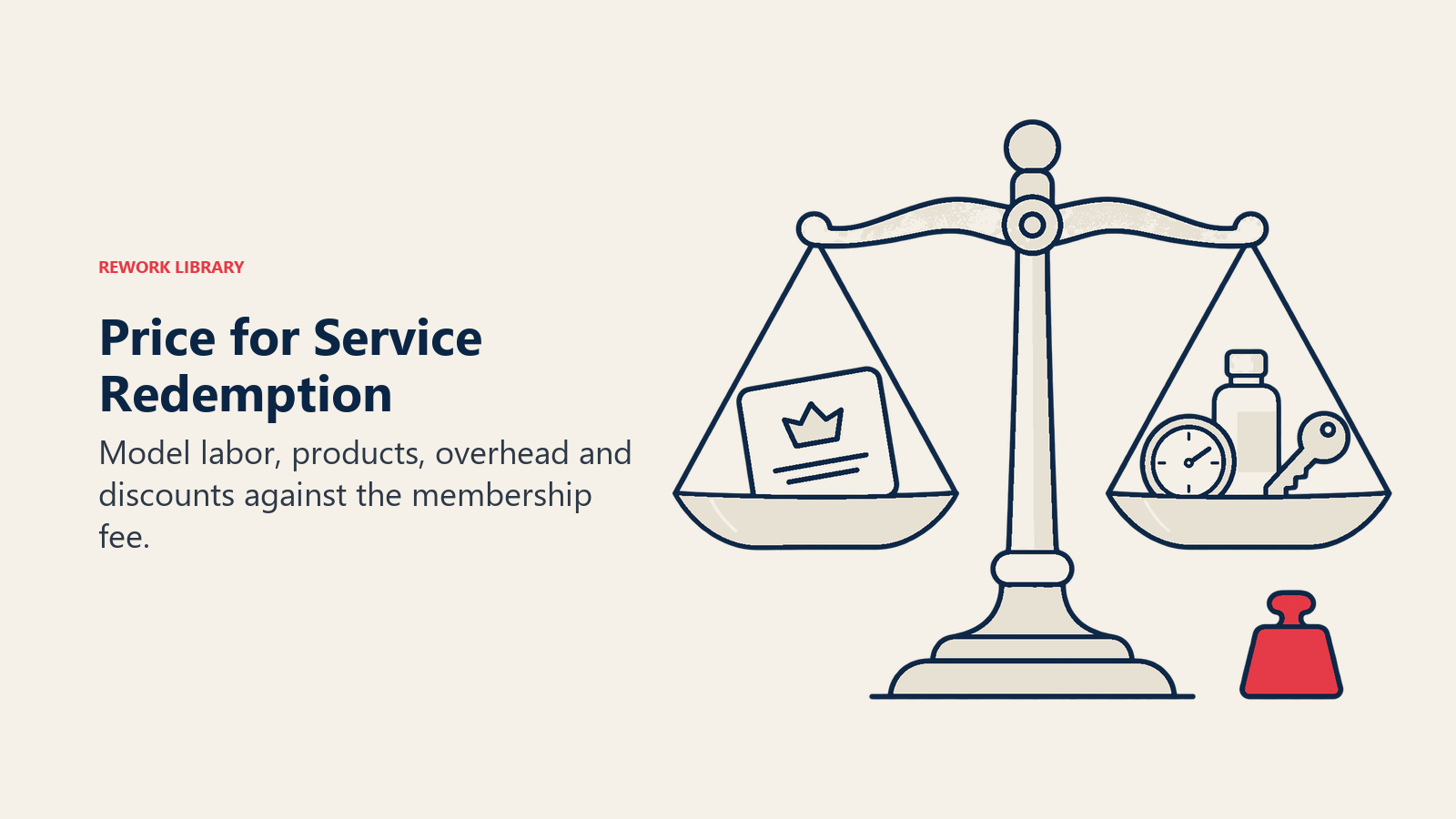
For a membership to be profitable, the revenue it generates must exceed the cost of services redeemed plus overhead allocation. The break-even visit frequency is the number of visits at which the membership is exactly profitable. Below this, every additional redemption costs you.
Example: An Essential membership at $39/month includes one express blowout. The express blowout costs you $12 in labor and $2 in product. Your overhead allocation per service slot is $8. Total cost: $22. At $39/month, you have a $17 gross margin per member per month as long as they don't exceed one visit, which the plan doesn't include.
The risk is over-redemption of discounts on additional services. If the member also takes 10% off a $55 haircut each month, that's $5.50 less revenue from a service you'd have delivered at full price anyway. Model this in before launching.
New member over-redemption buffer
New members use their membership benefits more intensively in the first 90 days. They're excited, they want to extract value, and they're exploring what the plan includes. Build a 20–25% over-redemption buffer into your first-quarter financial projections.
MRR Projection Model
| Members | Monthly Fee | Gross MRR | Retention Rate | Estimated Annual Revenue |
|---|---|---|---|---|
| 50 | $39 | $1,950 | 85% | $21,645 |
| 100 | $69 | $6,900 | 85% | $76,590 |
| 200 | $69 | $13,800 | 85% | $153,180 |
| 150 | $99 | $14,850 | 88% | $174,924 |
Member Perks That Drive Retention: What Actually Keeps People Subscribed
The monthly service credit brings members in. The additional perks keep them subscribed.
Priority scheduling
Members book before non-members. At a salon where popular appointment windows fill quickly, this benefit has real tangible value, not just a marketing claim. Implement it in your booking software by opening member booking 48–72 hours before the general availability window. This only works if your online booking optimization setup supports tiered access windows, so verify your platform's capabilities before making priority scheduling a core membership benefit.
Rollover credits
Partial rollover (keep unused credit from last month, once) reduces the pressure clients feel to use their membership every single month without fail. This reduces the psychological churn trigger: "I didn't use it last month so I may as well cancel." Full rollover is too generous, since you want members visiting, not accumulating unused credits.
Exclusive products and early service access
Offer members first access when a new treatment or product launches. This satisfies the desire for insider status without significant cost. A pre-launch email to members only: "Before we announce this publicly, we wanted to offer you the chance to try our new [service] first." Clients who feel valued are far less likely to cancel.
Retention and Churn Management: Keeping Members Active
Churn is the metric that kills membership programs. Industry benchmark for healthy retention: 80% or higher per month (i.e. less than 20% of members cancel in any given month). The spa industry employs nearly 361,000 workers in the US and faces real competition for client loyalty, which means churn management is a permanent operational priority, not a one-time fix.
Identifying at-risk members
A member who hasn't booked in 45 days is at risk. Set up an automated trigger in your booking software: any member without an appointment in 45 days receives a message:
"Hi [Name], we've missed seeing you! Your [benefit] is ready and waiting. Want to grab a spot this week? [Booking link]"
This prompt reactivates a meaningful percentage of at-risk members before they consciously decide to cancel. This type of automated outreach is a standard feature of automated appointment reminder systems, which can be configured to trigger on inactivity patterns rather than just upcoming bookings. For broader retention strategy, client communication and follow-up covers how to sequence these messages alongside regular re-engagement campaigns.
Pause vs. cancel options
Give members who want to cancel the option to pause instead. A 30-day or 60-day pause costs you one month of revenue but retains the member relationship. Most members who pause come back. Most who cancel don't.
Win-back before cancellation
When a member contacts you to cancel, don't just process the cancellation. Have a script:
"I'm sorry to see you go. Can I ask what prompted this? I'd love to see if there's something we can do to make the membership work better for you."
A one-month credit or service add-on can retain a member who was going to cancel over a perceived value issue. Retaining that member is worth far more than the credit cost.
Software for Memberships: Tools and Operational Setup
Running memberships manually is possible for the first 10–20 members and becomes a disaster at 50+. Use a platform with built-in membership management.
Recommended platforms
Vagaro, Mindbody, Boulevard, and Fresha all offer membership modules with automated billing, redemption tracking, and cancellation management. Boulevard is considered the most full-featured for high-volume operations. Vagaro offers the best value for smaller salons. Mindbody dominates in spas. The salon management software guide provides a detailed feature comparison to help you select the right platform for your membership structure and client volume.
Billing automation requirements
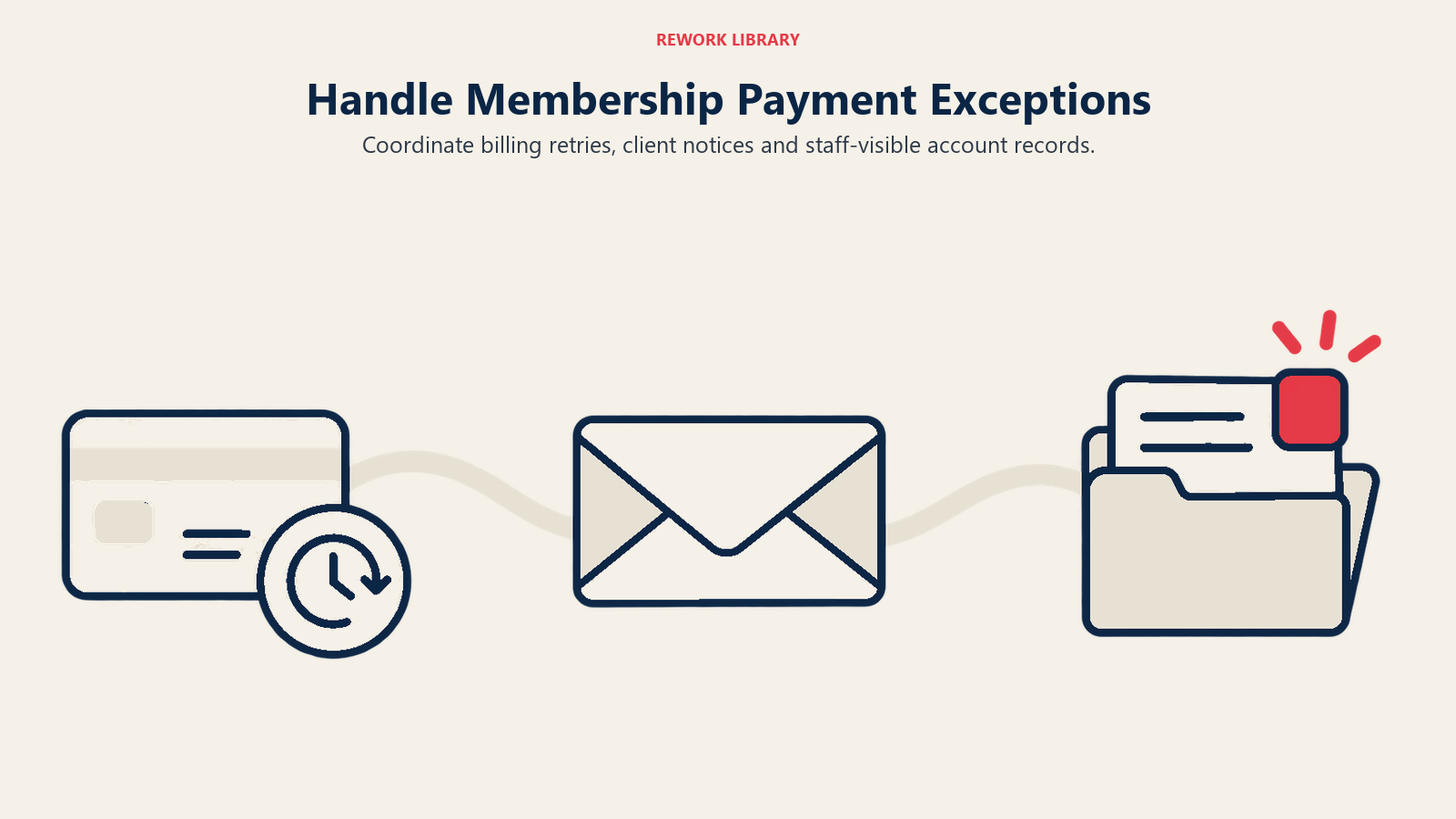
Failed payment handling matters. When a member's card declines, the system should automatically: retry the charge after 3 days, send an email notification to the member, and flag the account in staff-facing booking views. A failed payment that isn't caught for two weeks is a lost membership fee and a potentially churned member.
Staff training on memberships at point of service
Staff need to know: which clients are members, what their current tier includes, and what they've already redeemed this month. This information should be visible in the appointment record, not something staff have to look up separately. A member who asks about their benefits and gets a blank stare will cancel.
Launching a Membership Program: From Design to First 100 Members
Soft launch to existing loyal clients
Before announcing publicly, email your top 50–100 clients with a founding member offer: 20% off the regular monthly rate, locked in for as long as they maintain membership. This generates early enrollment, validates the program structure, and gives you operational testing data before you're running at scale. Use email marketing for beauty centers to segment this outreach by visit frequency and average spend, so your founding member offer goes to exactly the clients most likely to find it compelling.
Founding member pricing
A founding member rate, lower than your published price and locked in permanently as long as the client stays subscribed, rewards early adopters and creates a powerful retention mechanic. Founding members churn at much lower rates because cancellation means losing their rate.
90-Day Launch Checklist
- Three membership tiers designed with benefits and pricing
- Break-even analysis completed for each tier
- Booking software membership module configured and tested
- Billing automation set up with failed payment workflows
- Staff trained on membership benefits and redemption process
- Founding member email sent to top 50–100 clients
- In-salon signage and collateral prepared
- Public launch email and social post scheduled
- 90-day review meeting booked (day 1 of launch)
- Success metrics defined (member count target, MRR target, churn benchmark)
90-day launch targets
Month 1: 20–30 founding members from existing client base Month 2: 50 total members after public launch Month 3: 80–100 members with churn rate below 10%
Review the program at 90 days against these targets. If enrollment is below target, the most common issues are: pricing too high for your market, benefits not compelling enough, or insufficient promotion in-salon. Identify the issue before month 4.
Learn More

Senior Operations & Growth Strategist
On this page
- Membership vs. Loyalty Program vs. Prepaid Package
- Membership Tier Design: Structuring Levels That Appeal to Different Clients
- Monthly vs. Annual Plans: Pricing Structure Choices
- Pricing Member Plans Profitably: The Math Behind Sustainable Memberships
- Member Perks That Drive Retention: What Actually Keeps People Subscribed
- Retention and Churn Management: Keeping Members Active
- Software for Memberships: Tools and Operational Setup
- Launching a Membership Program: From Design to First 100 Members
- Learn More