Rebooking Strategies for Salons: Filling Your Chair Before Clients Leave
Turn this article into takeaways for your work.


Each assistant summarizes the article only for you and suggests best practices for your work.
Salon rebooking is the practice of securing a client's next appointment before or right after they leave, and it's the most direct lever on revenue predictability in any beauty business. The highest-performing salons reach 70-80% rebooking rates by making a deliberate ask at checkout, training stylists to frame it as care, and backing it up with timed SMS reminders for clients who leave without booking.
A salon where 40% of clients rebook before leaving is perpetually chasing new clients. Every week starts from scratch: checking who might be overdue, pulling up lapsed client lists, hoping the phone rings. Marketing spend runs high. Revenue feels unpredictable regardless of how busy the floor looked last Saturday.
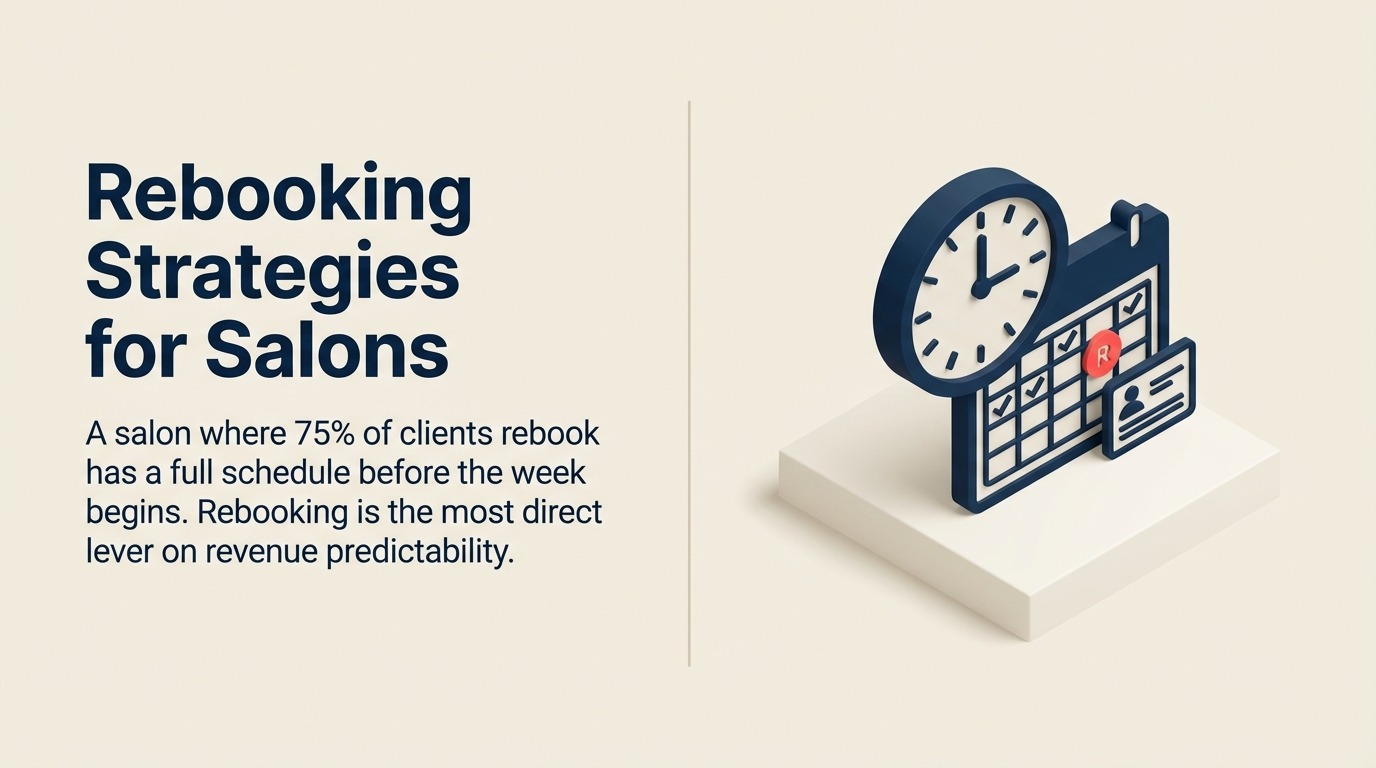
A salon where 75% of clients rebook has a full schedule before the week begins. Staff can plan. Cash flow is consistent. Marketing spend can shift from acquisition to retention. The business has a completely different feel. And completely different economics. Those unit economics for beauty centers shift dramatically once rebooking becomes a reliable system rather than a hopeful outcome.
Rebooking isn't a nice-to-have. It's the most direct lever on revenue predictability in any service business. And it can be systematically improved.
Key Facts: Salon Rebooking
- A 10-point improvement in rebooking rate typically adds 15-20% to annual revenue
- Salons with rebooking rates above 70% report 35% lower client acquisition costs (Professional Beauty Association)
- SMS rebooking reminders have 5x the open rate of email reminders for appointment-based services
The Professional Beauty Association's salon insights research tracks monthly revenue-per-salon and client frequency data across more than 50,000 U.S. salons, the underlying benchmark dataset behind many industry rebooking rate comparisons.
What Rebooking Rate Measures and Why It Matters
Rebooking rate is the percentage of clients who book their next appointment before or immediately after leaving. It's one of the cleanest leading indicators of revenue predictability in a salon.
The industry benchmark is 60-80%. Below 50% signals a retention problem. Not necessarily a service quality problem (clients may love what you do), but a systems problem. The moment after the appointment isn't being used to secure the next one.
The math is worth understanding. Take a salon with 200 clients per week. At a 50% rebooking rate, 100 clients leave without a next appointment. Those 100 clients need to decide to come back, remember to call, find a convenient slot, and follow through. Maybe 60-65 do. The other 35-40 drift to another salon, to someone's recommendation, or just to longer intervals between visits.
Raise that rebooking rate to 70% and you've secured 140 clients automatically. The 60 who leave without rebooking are a much smaller pool to win back. Annual revenue impact for a mid-sized salon making that shift is typically $40,000-$80,000 without adding a single new client. Loyalty programs for beauty centers compound on top of strong rebooking rates, turning high-frequency visitors into true advocates.
Rebooking at Checkout: The Highest-Leverage Moment
The best moment to book the next appointment is when the current appointment just ended. Satisfaction is high. The service is fresh in the client's mind. The stylist knows exactly what was done and when it should be maintained.
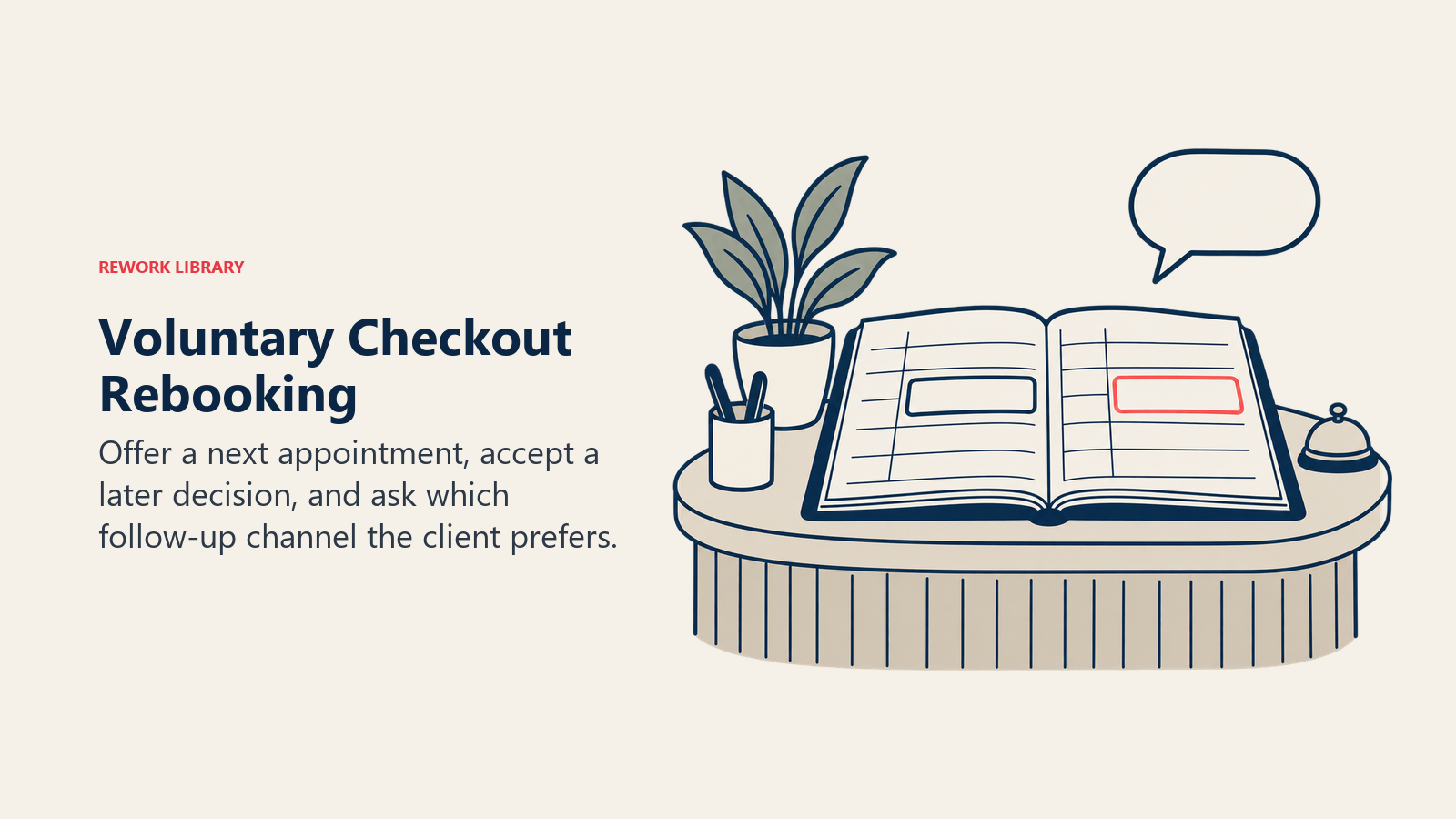
The checkout conversation is the highest-leverage moment in the rebooking cycle, and most salons don't use it deliberately. Pairing this with a thoughtful client experience design, from arrival greeting through farewell, gives the checkout ask a much warmer context to land in.
The difference between a direct ask and passive waiting is significant. "Would you like to book your next appointment now?" outperforms "Let us know when you'd like to come back" by a 3:1 margin in studies of service appointment businesses. The active ask removes the mental effort from the client. They don't have to remember to call. They just say yes or suggest a timeframe.
Three checkout rebooking scripts:
Script 1: The direct offer "I'd recommend coming back in 6 weeks to maintain this color. I have a Thursday at 10 or Saturday morning. Would either of those work?"
Script 2: The soft hold "Most of my color clients come back every 6-8 weeks. Can I put a tentative hold in for you around mid-May? You can confirm or adjust once you're home and check your calendar."
Script 3: The wellness frame "For this cut to look its best, I'd suggest a trim in about 5 weeks. We're pretty booked on weekends. Want to grab a slot before they fill up?"
Handling "I'll call later" shouldn't mean giving up. "Of course. I'll also send you a reminder in a few weeks so you don't have to keep track of it. Is SMS or email better for you?" That's not pressure. That's service.
Rebooking Benchmarks by Service Type
Not all services rebook at the same rate, and not all should. Color clients have a maintenance cycle driven by root growth. Haircut clients have more flexibility. Understanding benchmarks by service type lets you set realistic targets and spot where your biggest gaps are.
| Service Type | Target Rebooking Rate | Maintenance Interval |
|---|---|---|
| Color (full) | 70-80% | 6-8 weeks |
| Color (partial/gloss) | 65-75% | 8-10 weeks |
| Haircut | 60-75% | 4-6 weeks |
| Blowout | 50-65% | 1-2 weeks |
| Facial/skincare | 65-80% | 4-6 weeks |
| Nail services | 50-70% | 2-4 weeks |
| Waxing | 65-75% | 3-4 weeks |
| Lash extensions | 70-80% | 2-3 weeks |
If your color rebooking rate is at 55% and the benchmark is 70-80%, you have a specific gap to close. If your facial rebooking is at 75%, that's working. This kind of service-level analysis tells you where to focus training and script development. Reviewing your service menu optimization alongside rebooking data can surface whether underperforming service categories are also structurally underpriced or under-promoted.
The Stylist's Role in Rebooking: Making It Personal
The most effective rebooking conversations come from the stylist or therapist, not the front desk. When the person who just did the service says "you should come back in 6 weeks to maintain this," it lands differently than a front desk prompt. It sounds like professional advice, not a sales pitch.
This distinction matters. Clients who perceive the rebooking ask as a sales push are more likely to deflect. Clients who perceive it as a maintenance recommendation are more likely to book.
Stylist rebooking rate is a meaningful individual performance metric, not to create competition, but to identify who needs coaching. A stylist with a 45% rebooking rate isn't necessarily delivering worse services than a colleague at 75%. They may just not have the script or the confidence to close the conversation.
Peer coaching works better than manager coaching in this context. Have your highest rebooking-rate stylists walk through how they approach the checkout conversation. Record it, if team culture permits. Make the language available to everyone. The goal isn't to create a scripted, robotic checkout experience. It's to give staff the words that make the natural ask easier. Strong stylist and therapist retention matters here too: your best rebookers are often your senior staff, and their departure takes rebooking performance with them.
Automated Rebooking Reminders: Technology as Follow-Up
The clients who leave without booking are still reachable. But timing is everything.
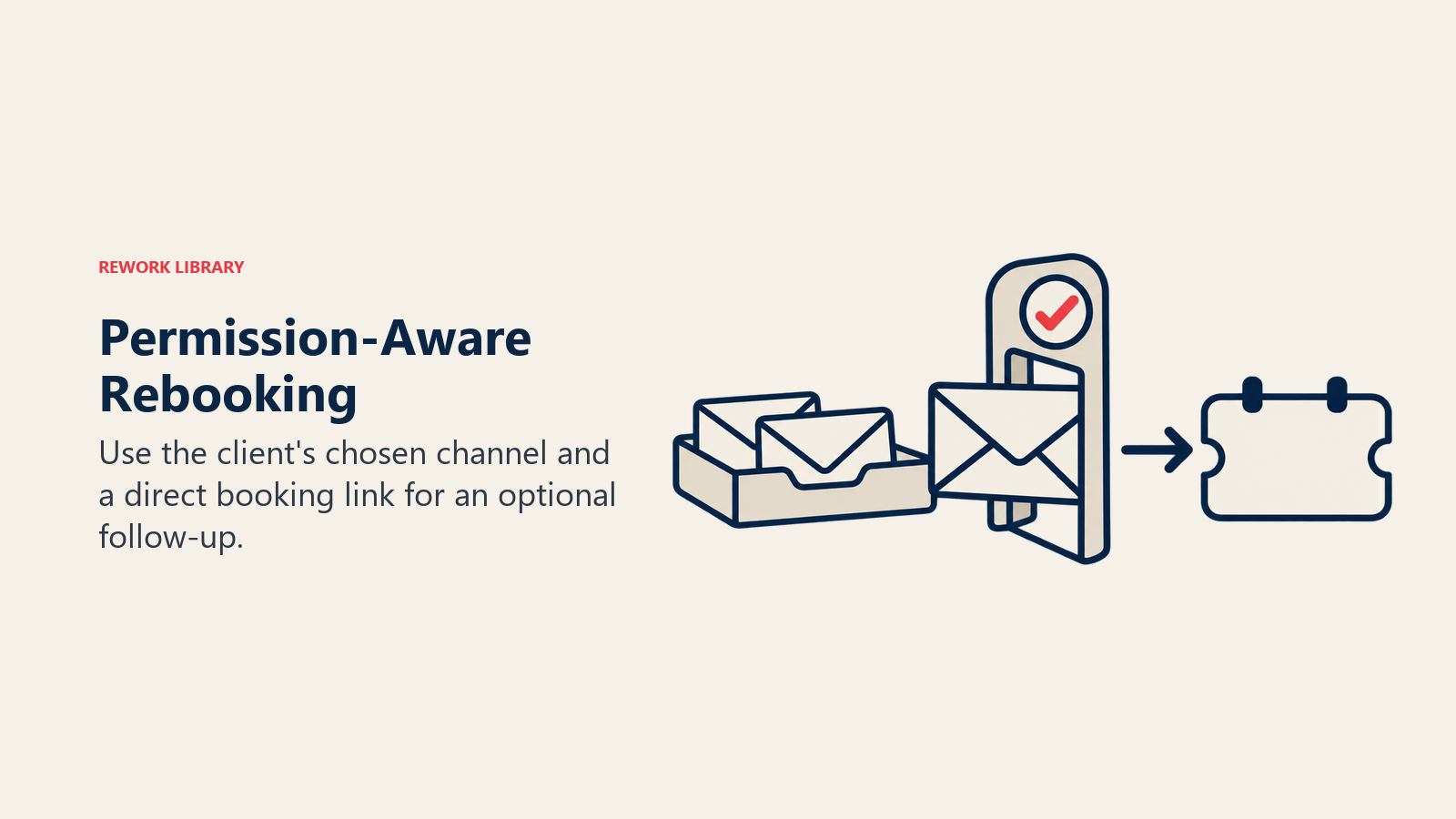
Wait too long (8 weeks post-visit) and the client may have already booked elsewhere or decided they're stretching the interval. Reach out too early (1 week post-visit) and you're interrupting a moment when rebooking isn't on their mind.
The optimal sequence for most services:
- Day 2 post-visit: Thank-you message with aftercare tips (no booking ask, just relationship building)
- Week 3 post-visit: "Time to think about your next appointment" with a direct booking link
- Week 5 post-visit: "We're filling up for [time of year], grab your usual slot" with urgency
SMS consistently outperforms email for appointment reminders. Open rates run 85-95% for SMS vs 20-25% for email. Click-through rates for booking links in SMS are 3-4x higher than the same link in email. Statista's SMS marketing benchmarks confirm that higher open and click-through rates are the primary reason businesses adopt text-based outreach over other channels. For clients who've opted in to SMS communication, this is your primary rebooking channel. A broader client communication and follow-up strategy ties the rebooking sequence into a full post-visit rhythm that keeps clients engaged between appointments.
Booking software integrations automate this entirely. Boulevard's "client return" campaigns, Vagaro's automated SMS sequences, and Fresha's rebooking nudges all handle this without staff involvement. Set it up once and it runs for every client who leaves without rebooking.
Standing Appointments: The Ultimate Rebooking Outcome
A standing appointment is a recurring slot reserved automatically: every 6 weeks, every 4 weeks, same time, same stylist. The client doesn't have to remember to book. The slot is theirs unless they release it.
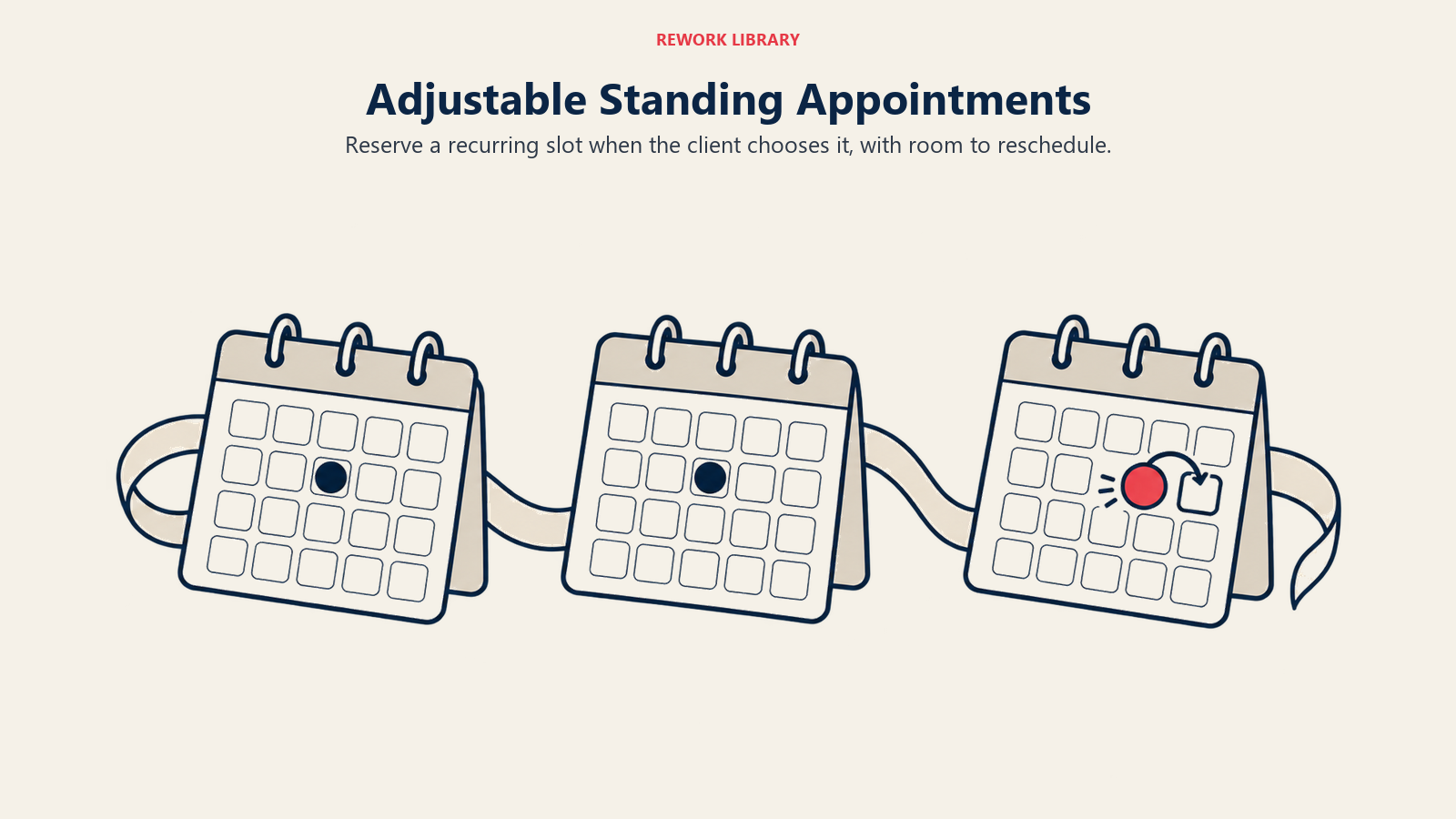
Standing appointments are the ceiling of rebooking success. They represent 100% rebooking rate for the clients who have them, plus predictable revenue that's booked weeks in advance. Online booking optimization makes the initial booking frictionless, which often translates to higher standing appointment adoption among new clients.
They're most appropriate for clients with predictable maintenance cycles: regular color clients, weekly blowout clients, executives who want the same Friday afternoon slot every four weeks. Offering standing appointments isn't right for every client, but identifying and proposing it to the right ones is a significant retention move.
The conversation is simple: "You come in every 5-6 weeks pretty consistently. Would it be easier if I just held a recurring slot for you, same day, same time? You can always swap it out if you have a conflict."
Most clients who are asked say yes.
Staff Training for Rebooking
Rebooking improvement doesn't happen from a single team meeting. It requires:
Role-play practice: Staff need to say the words out loud before using them with clients. A 15-minute role-play exercise at a team meeting, using real service scenarios, makes the checkout ask feel natural rather than forced.
Visible weekly data: Post rebooking rates by staff member (with appropriate sensitivity to how it's framed, as a growth metric, not a performance ranking). When staff can see their number and the team's number, they engage with improving it.
Script libraries: Three to five variations of the checkout ask, available to everyone, so staff can choose the version that matches their communication style. Some stylists prefer a direct offer. Others prefer the tentative hold approach. Both work. Having options means better adoption.
Monthly team discussions: Rebooking rate as a standing agenda item in team meetings. What's working? Where are the gaps? Which service types are underperforming?
Monthly Rebooking Tracking Dashboard
Tracking rebooking rate from your booking software should be a monthly ritual. Most platforms can generate this report natively. Look for "retained clients," "return visit rate," or "rebooking rate" in your analytics section. Data-driven decisions for salon owners starts with knowing which metrics to pull and how to act on them.
A useful monthly tracking view looks like this:
| Staff Member | Jan Rate | Feb Rate | Mar Rate | Trend | Notes |
|---|---|---|---|---|---|
| Whole team | 58% | 62% | 67% | +9pts | Color bookings driving gains |
| [Stylist A] | 72% | 74% | 75% | +3pts | Strongest performer |
| [Stylist B] | 44% | 51% | 58% | +14pts | Coaching in Feb working |
| [Stylist C] | 61% | 59% | 63% | +2pts | Stable |
Set 90-day improvement targets that are realistic: a 5-10 point increase over 90 days is achievable with consistent scripting and reminders. HBR's analysis of the value of keeping the right customers shows that a 5% improvement in retention can lift profits by 25-95%, a compounding impact that starts with consistent rebooking habits at checkout. A 25-point jump in 30 days isn't, and chasing it creates pressure that can degrade the client experience.
Dealing with No-Commitment Clients
Some clients genuinely resist rebooking, and it's worth understanding why before writing them off.
Some clients prefer spontaneity. They'll rebook, but on their terms and in their time. The win-back sequence works for them. The 3-week SMS reminder catches them when they're ready.
Others are ambivalent about the salon itself. They're testing alternatives, or they had a service that wasn't quite right, or they're dealing with budget changes. These clients need a different kind of outreach: a check-in rather than a rebooking push.
For genuine no-commitment clients, the waitlist close can work: "We do get pretty full, especially on weekends. Would you like to be on my preferred client list? I can reach out when a slot opens that would work for you." This inverts the dynamic. Instead of asking them to commit, you're offering them priority access. Clients lost to chronic no-shows or late cancellations represent a different problem, and the no-show and cancellation management system addresses those directly before they damage rebooking rates.
When to stop chasing: if a client hasn't booked after three automated reminders and a personal outreach, redirect your effort. The time and attention is better invested in converting borderline clients who are closer to a yes.
Rebooking Is a Service Skill
The frame matters. Rebooking isn't a sales conversation. It's a service conversation. When a stylist genuinely cares about the client's hair health, color maintenance, or skin results, the rebooking ask is a natural extension of that care. "You should come back in six weeks" is advice, not a pitch.
The salon's job is to give staff the tools, the scripts, and the data to make that conversation happen consistently, with every client, after every appointment. That consistency is what separates a 75% rebooking rate from a 50% one.
Frequently Asked Questions about Salon Rebooking Strategies to Hit 70%+ and Fill Your Chairs
What is a good rebooking rate for a salon?
The industry benchmark is 60-80%. Above 70% is strong and signals a healthy retention system. Anything below 50% points to a systems problem, not necessarily a service-quality problem, because the moment after the appointment isn't being used to book the next one.
How do you increase rebooking rates at a salon?
Make a direct ask at checkout ("Would you like to book your next appointment now?"), have the stylist frame it as maintenance advice rather than a sales pitch, offer standing appointments to predictable clients, and send timed SMS reminders at week 3 and week 5 for anyone who left without booking.
Why is rebooking important for salon revenue?
Rebooking is the cleanest leading indicator of revenue predictability. A 10-point improvement in rebooking rate typically adds 15-20% to annual revenue, and salons above 70% report roughly 35% lower client acquisition costs because they spend less to replace clients who drift away.
Is SMS or email better for rebooking reminders?
SMS wins clearly. Open rates run 85-95% for SMS versus 20-25% for email, and click-through on booking links is 3-4x higher. For clients who've opted in to text, SMS should be your primary rebooking channel.
Learn More

Senior Operations & Growth Strategist
On this page
- What Rebooking Rate Measures and Why It Matters
- Rebooking at Checkout: The Highest-Leverage Moment
- Rebooking Benchmarks by Service Type
- The Stylist's Role in Rebooking: Making It Personal
- Automated Rebooking Reminders: Technology as Follow-Up
- Standing Appointments: The Ultimate Rebooking Outcome
- Staff Training for Rebooking
- Monthly Rebooking Tracking Dashboard
- Dealing with No-Commitment Clients
- Rebooking Is a Service Skill
- Learn More