AI Process Mining and Optimization
Turn this article into takeaways for your work.


Each assistant summarizes the article only for you and suggests best practices for your work.
Your order-to-cash process takes 45 days on average, but nobody knows why. Some orders close in two weeks while others languish for months. Your team can describe how the process should work, but that's not the same as knowing how it actually works.
This is the invisible waste that process mining reveals.
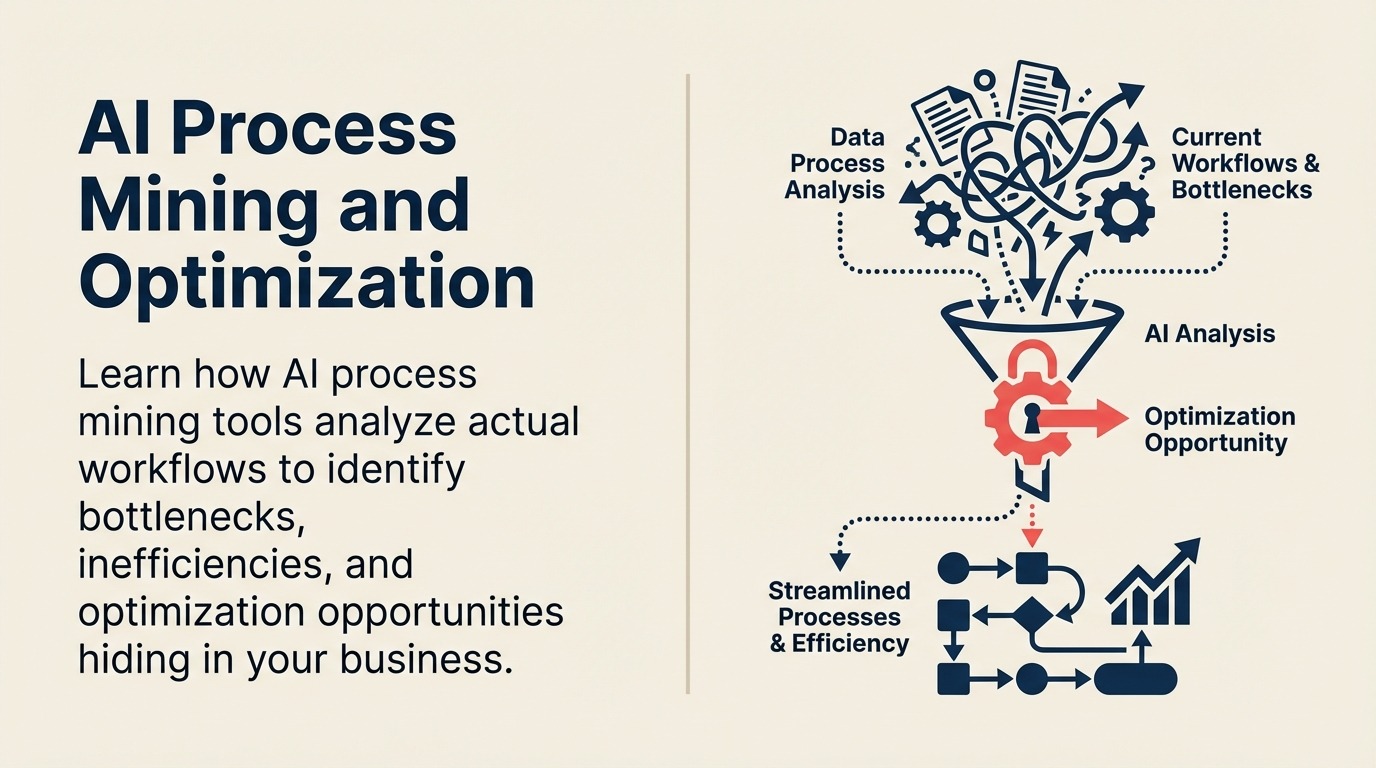
Most companies don't really know where time goes in their processes. They have org charts and process maps, but these show the intended workflow, not reality. AI process mining analyzes what actually happens in your systems to show you exactly where inefficiencies hide.
Understanding what AI productivity tools can do starts with visibility into your current state. Process mining provides that foundation for data-driven optimization.
What is AI Process Mining
Process mining turns digital footprints into process maps and performance insights.
Event log analysis examines every action recorded in your business systems. When someone creates an order, approves a request, or processes a payment, that event gets logged with a timestamp and user. Process mining connects these events to reconstruct actual process flows.
Process discovery builds visual maps of how work actually flows through your organization. Instead of drawing how you think processes work, the software shows you the real paths that transactions take, including every variation and exception.
Conformance checking compares actual processes to intended processes. You can see where reality deviates from your designed workflow and understand whether those deviations cause problems or represent valid flexibility.
Performance analysis measures time between process steps, identifies bottlenecks, and calculates how much each variation costs. You get concrete data about where delays occur and which process paths are most efficient.
Predictive process monitoring uses historical patterns to forecast future process behavior. The AI can predict which cases will miss deadlines, which transactions will require rework, or which processes are likely to fail compliance checks.
How AI Process Mining Works
The process mining workflow turns system logs into actionable insights.
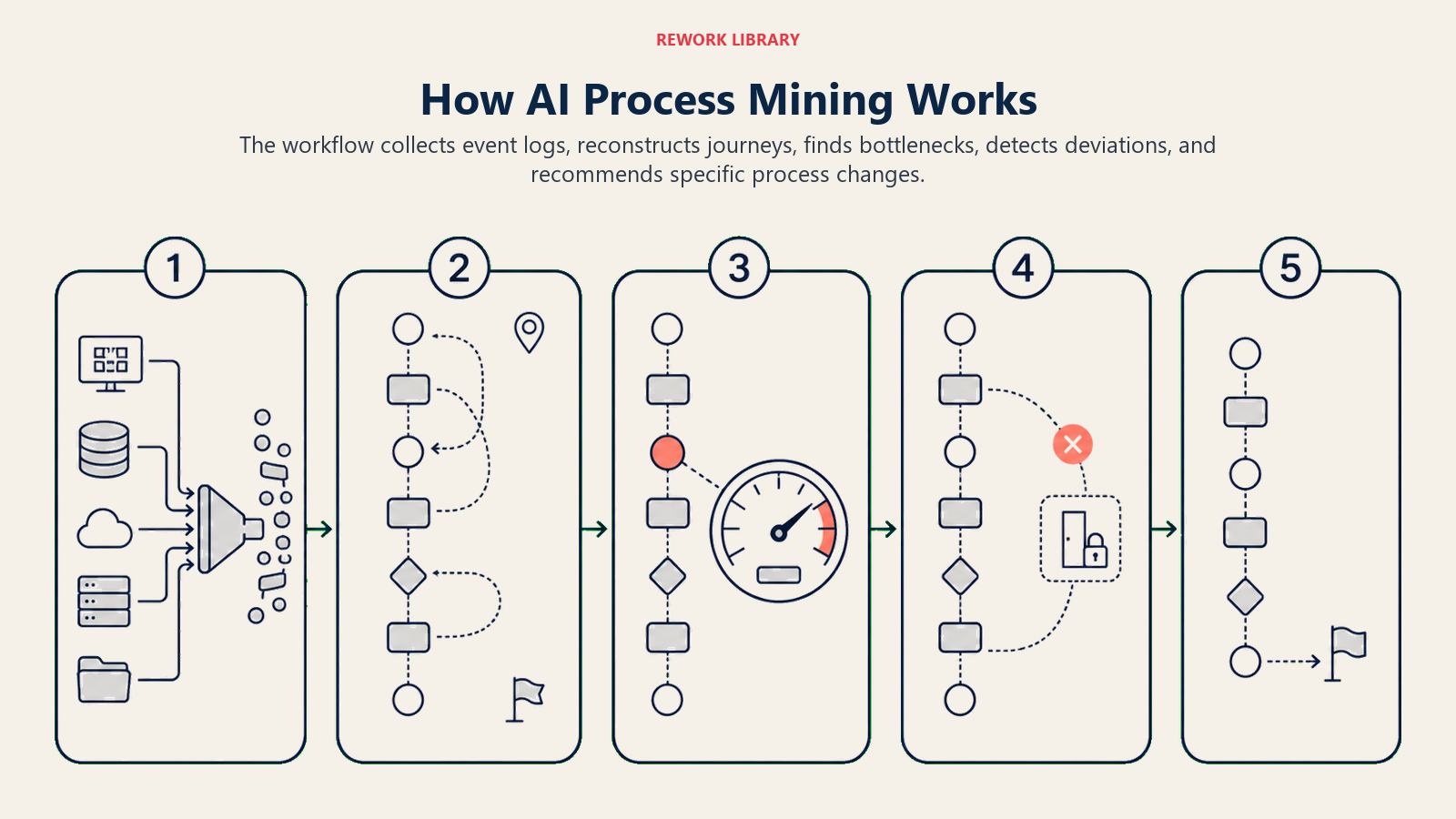
Data collection from systems pulls event logs from your business applications. Most enterprise systems (ERP, CRM, ticketing systems) already record process events. Process mining tools connect to these systems and extract the relevant data.
Process flow reconstruction connects events into complete process journeys. If an order was created on Monday, approved on Tuesday, and fulfilled on Friday, the software reconstructs that sequence and shows the full timeline.
Bottleneck identification reveals where processes slow down. By analyzing thousands of process instances, the AI identifies which steps consistently cause delays and how much time each bottleneck costs.
Deviation detection spots when processes take unusual paths. The software can flag transactions that skip required approvals, experience excessive rework, or follow inefficient routes through your organization.
Optimization recommendation suggests specific improvements based on what the data reveals. The AI doesn't just show you problems but proposes concrete changes like eliminating unnecessary steps, automating manual tasks, or reordering process sequences.
Leading Process Mining Platforms
Several platforms offer AI-powered process mining capabilities.
Celonis pioneered process mining for enterprise and remains the market leader. Celonis offers deep analytics capabilities and integrations with major ERP systems. Celonis excels at large-scale enterprise deployments but requires significant investment and expertise.
UiPath Process Mining combines process discovery with robotic process automation. UiPath organizations can identify automation opportunities through process mining, then build bots to execute those automations within the same platform.
Microsoft Process Advisor provides accessible process mining within the Power Platform ecosystem. Microsoft Process Advisor is ideal for organizations already using Microsoft tools who want to start with process mining without major new platform investments.
SAP Signavio integrates process mining with process modeling and collaboration tools. Companies running SAP can gain deep visibility into their ERP processes and model improvements before implementation.
Minit (now part of Microsoft) offers user-friendly process mining focused on quick insights rather than extensive customization. It's good for teams new to process mining who want fast time-to-value.
Business Process Applications
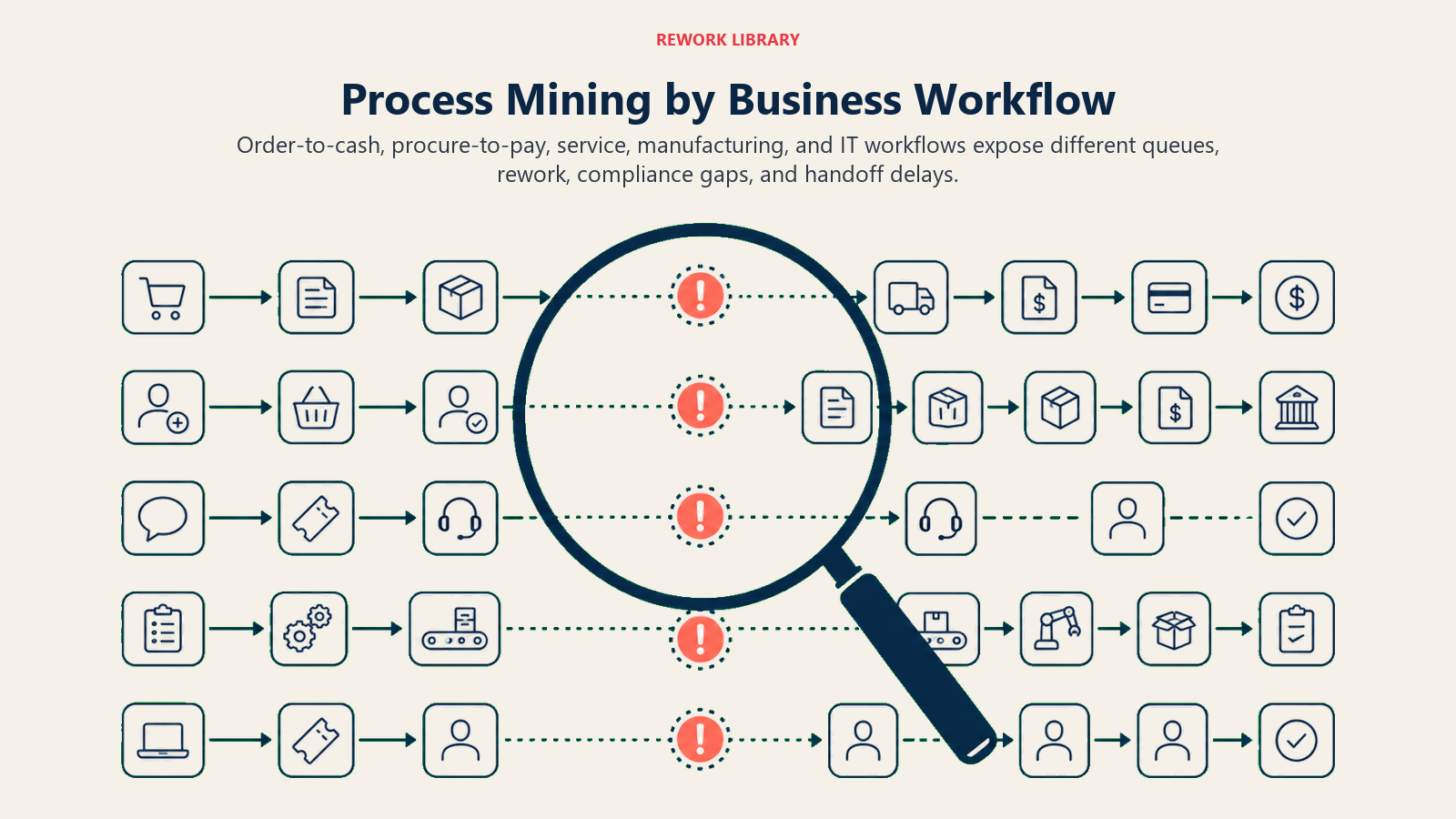
Process mining delivers value across different operational areas.
Order-to-Cash Optimization
The order-to-cash cycle touches sales, operations, finance, and customer service. Process mining reveals:
- Why some orders take weeks longer than others to fulfill
- Where manual approvals create unnecessary delays
- Which customer segments require excessive rework
- How process variations impact cash collection timing
- Where automation could eliminate manual touchpoints
Procure-to-Pay Improvement
Procurement processes often hide significant waste and compliance risk:
- How long requisitions actually wait for approvals
- Which suppliers consistently cause processing delays
- Where maverick spending bypasses proper procedures
- What invoice exceptions require manual intervention
- How much duplicate work happens across procurement steps
Customer Service Workflows
Service processes directly impact customer experience and operational cost:
- How many touchpoints customers experience for different issue types
- Where tickets get transferred unnecessarily between teams
- Which process paths lead to faster resolution
- What causes repeated customer contacts for the same issue
- How workload distributes across service channels
Manufacturing Operations
Production processes benefit from visibility into actual workflow execution:
- Where work-in-progress accumulates in the production flow
- Which process sequences minimize changeover time
- How equipment downtime ripples through production schedules
- What quality issues require rework at which process stages
- How production efficiency varies across shifts and facilities
IT Service Management
IT processes often suffer from handoff delays and unclear ownership:
- How long tickets actually spend waiting between status changes
- Which types of requests require the most back-and-forth communication
- Where knowledge gaps cause escalations and delays
- What automation could eliminate routine service requests
- How SLA violations correlate with specific process patterns
Value Discovery Framework
Process mining uncovers different types of business value.
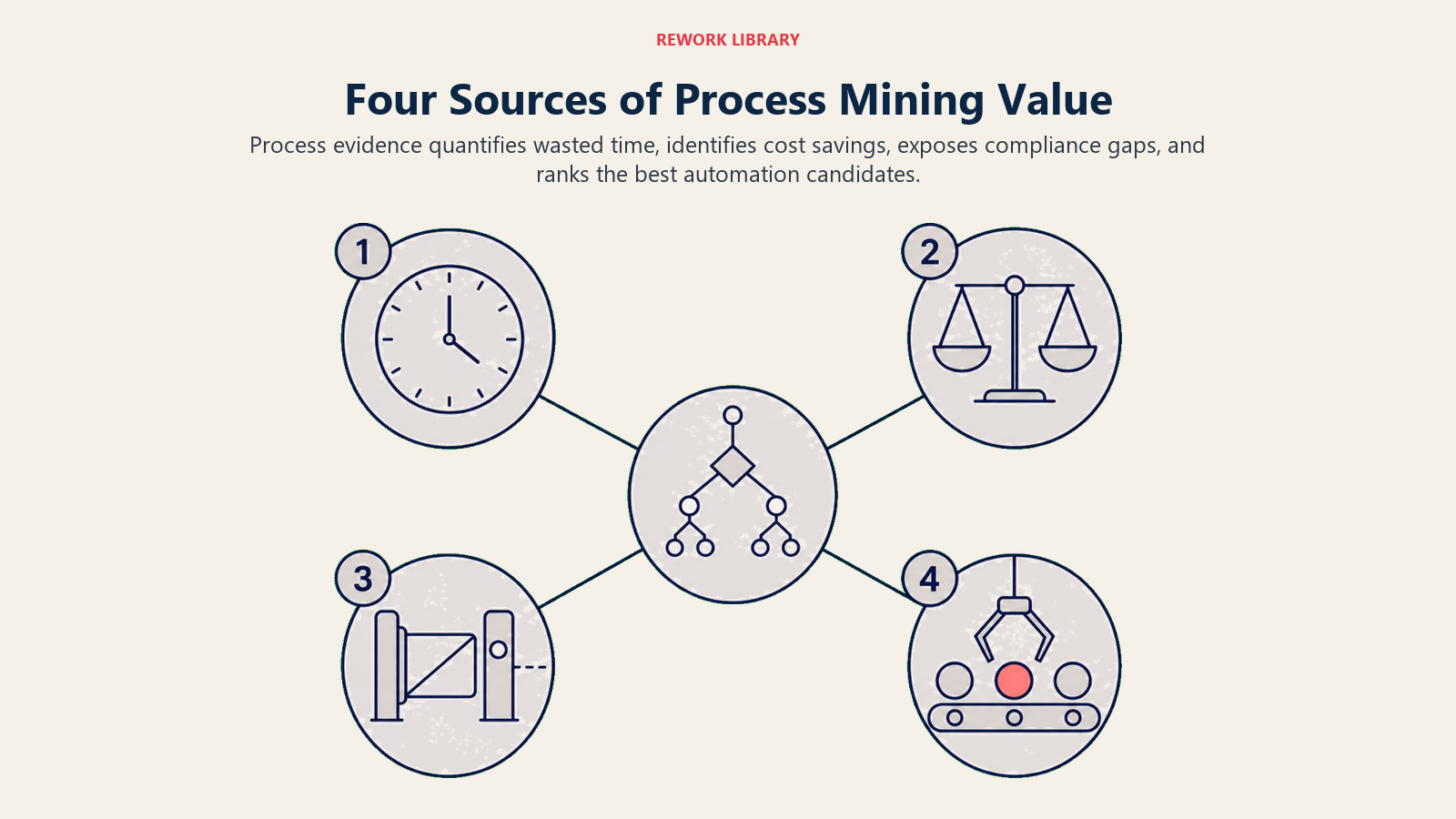
Time waste identification quantifies how much time processes consume unnecessarily. You can measure time spent waiting for approvals, sitting in queues, or undergoing rework. Each hour of waste represents opportunity for improvement.
Cost reduction opportunities emerge when you understand process inefficiency. Manual steps that could be automated, duplicate work that could be eliminated, and exceptions that could be prevented all represent concrete cost savings.
Compliance issue detection spots processes that deviate from required procedures. You can identify which transactions skip mandatory approvals, which controls get bypassed, and where audit risks exist.
Automation candidate identification highlights the best opportunities for robotic process automation or workflow tools. Process mining shows which tasks are highly repetitive, follow consistent patterns, and consume significant manual effort.
This connects directly to AI workflow automation, where process mining identifies what to automate and measures the impact after automation is deployed.
The Process Optimization Cycle
Process mining enables continuous improvement through a structured cycle.
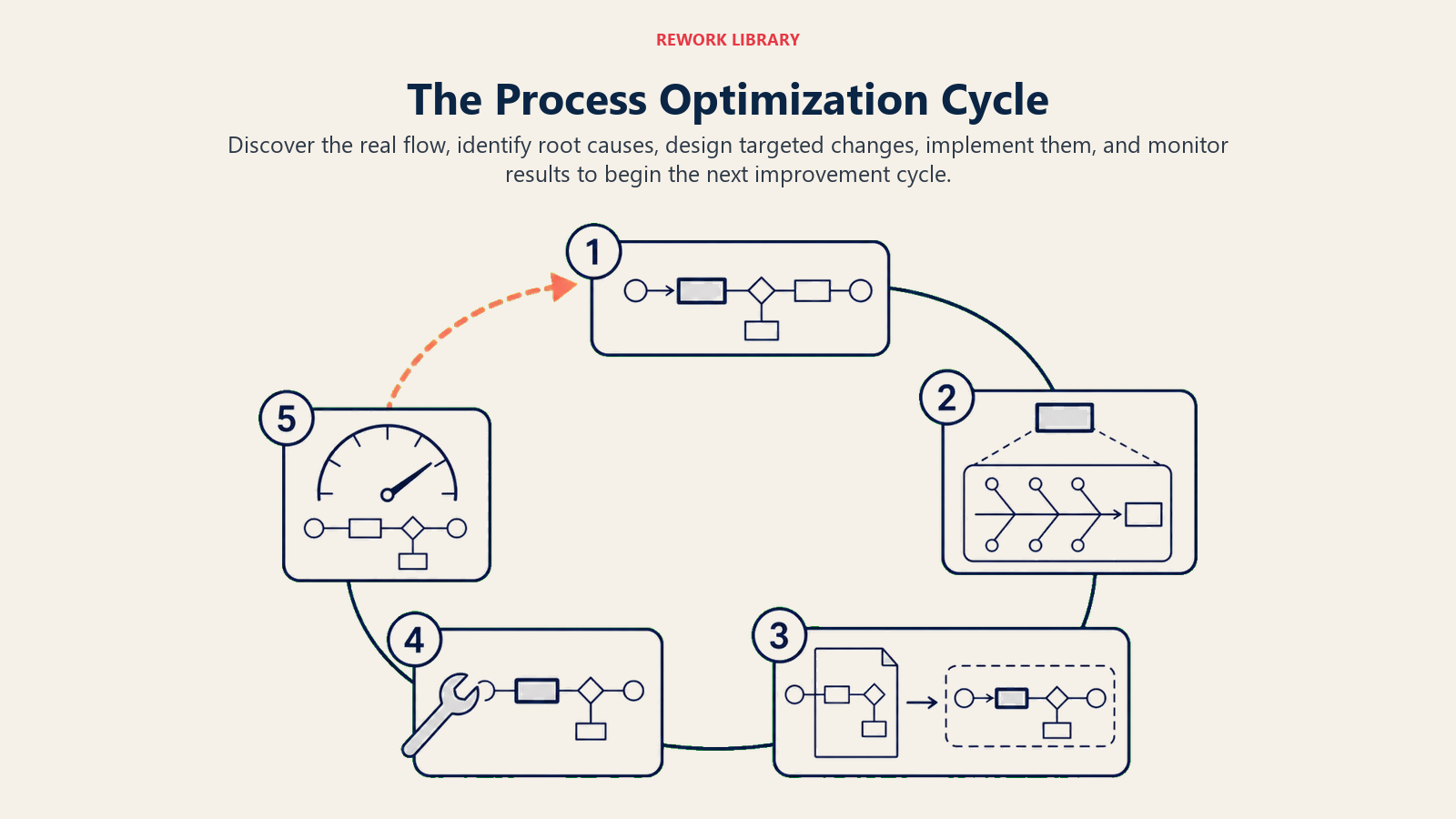
Discovery and analysis starts by understanding your current state. Mine your processes to see what actually happens today without assumptions or preconceptions.
Root cause identification digs into why inefficiencies exist. Don't just know that order approvals take three days, understand whether that's because approvers are overloaded, notifications aren't working, or the approval criteria are unclear.
Optimization design develops specific improvements based on root causes. Create targeted solutions that address actual problems rather than assumed issues.
Implementation puts changes into practice through process redesign, automation, policy changes, or system modifications.
Continuous monitoring tracks whether improvements deliver expected results and identifies new optimization opportunities. Process mining isn't a one-time project but an ongoing practice.
ROI from Process Mining
Real companies achieve measurable results through process mining.
A telecommunications company used process mining to analyze their service activation process. They discovered that 30% of activations required manual intervention due to incomplete customer data. By fixing the data collection step, they reduced activation time from 14 days to 3 days and eliminated 40% of manual work.
A manufacturing company mined their procurement process and found that small purchases under $5,000 went through the same approval chain as large purchases over $100,000. They implemented automated approval for small purchases, reducing procurement cycle time by 60% for routine orders.
A healthcare provider analyzed patient onboarding and discovered that 45% of registrations required follow-up calls to collect missing information. They redesigned the initial intake form based on which questions were most often incomplete, reducing registration errors by 70%.
An insurance company used process mining to understand claims processing. They found that 20% of claims bounced between adjusters multiple times due to unclear assignment rules. Fixing the routing logic reduced average claim processing time by 5 days.
Getting Started with Process Mining
Begin with a high-impact process that's causing visible problems. Don't start with your most complex process, choose one where inefficiency is obvious and data is readily available.
Ensure you have access to detailed event logs. Process mining requires timestamped event data showing who did what when. Verify your systems capture this information before committing to a platform.
Start with discovery before optimization. Resist the urge to immediately jump to solutions. Spend time understanding what your processes actually look like and where problems truly exist.
Involve process owners and frontline workers in analysis. They can help interpret what the data shows and validate whether insights match operational reality. They'll also be crucial for implementing improvements.
Measure baseline performance before making changes. You need clear metrics for cycle time, exception rates, and process costs so you can quantify improvement after optimization.
Connect process mining insights to your AI tool implementation roadmap. The bottlenecks you discover guide which AI tools will deliver the highest ROI.
Process mining reveals the invisible waste hiding in your business processes. When you can see exactly where time goes, what causes delays, and which variations work best, you can make targeted improvements that deliver measurable results.
The companies winning with process optimization aren't just documenting ideal workflows. They're mining actual process data to find and fix real inefficiencies.
Related Articles:

On this page
- What is AI Process Mining
- How AI Process Mining Works
- Leading Process Mining Platforms
- Business Process Applications
- Order-to-Cash Optimization
- Procure-to-Pay Improvement
- Customer Service Workflows
- Manufacturing Operations
- IT Service Management
- Value Discovery Framework
- The Process Optimization Cycle
- ROI from Process Mining
- Getting Started with Process Mining