Teori Penentuan Kendiri: Autonomi, Kompetensi, Keterkaitan

Turn this article into takeaways for your work.


Each assistant summarizes the article only for you and suggests best practices for your work.
Kebanyakan pengurus tahu perbezaan antara ahli pasukan yang benar-benar ingin menyelesaikan masalah dengan seseorang yang hanya memenuhi waktu kerja sehingga ulasan seterusnya. Teori penentuan kendiri (SDT) menerangkan dengan tepat mengapa jurang itu wujud dan, yang lebih berguna, apa yang boleh anda lakukan untuk menutupnya.
SDT adalah kerangka yang perlu diketahui oleh setiap pemimpin yang bekerja pada pengekalan pekerja, penglibatan pekerja, atau prestasi.
Apakah teori penentuan kendiri?
Teori penentuan kendiri (SDT) adalah model motivasi manusia yang disokong penyelidikan yang dibangunkan oleh ahli psikologi Edward Deci dan Richard Ryan pada tahun 1985. Tuntutan terasnya: manusia bukan kain putih yang menunggu untuk diberi insentif. Mereka datang dengan tiga keperluan psikologi asas yang semula jadi, dan apabila keperluan-keperluan tersebut dipenuhi secara konsisten, motivasi intrinsik berkembang secara semula jadi, tanpa memerlukan tekanan luar yang berterusan.

Apabila keperluan itu tidak dipenuhi, motivasi merosot, penglibatan pekerja jatuh, dan orang sama ada mengalami keletihan atau secara senyap-senyap menjadi tidak berminat.
SDT membingkai semula tugas pengurus daripada "Bagaimana saya mendorong orang untuk berprestasi?" kepada "Apakah keadaan yang saya wujudkan yang sama ada memenuhi atau membunuh keperluan-keperluan ini?"
Penemuan utama SDT: Motivasi intrinsik bukan sesuatu yang anda pasang dalam diri orang. Ia muncul apabila orang merasakan mereka bertindak atas pilihan tulen, membina kemahiran sebenar, dan bekerja dalam kumpulan yang menghargai mereka.
Fakta Utama
- Penyelidikan SDT asal Deci dan Ryan (1985) menunjukkan bahawa memperkenalkan ganjaran luaran yang mengawal untuk tugas yang sudah menyeronokkan secara konsisten mengurangkan motivasi peserta untuk meneruskannya setelah ganjaran dikeluarkan, fenomena yang mereka sebut kesan penurunan nilai.
- Penyelidikan Keadaan Tempat Kerja Global Gallup secara konsisten mendapati bahawa hanya sekitar 23% pekerja di seluruh dunia terlibat secara aktif di tempat kerja, mencadangkan majoriti bekerja dalam keadaan yang gagal menyokong keperluan psikologi asas mereka.
- Meta-analisis yang merangkumi kajian SDT dalam tetapan tempat kerja (Van den Broeck et al., 2016) mendapati bahawa kepuasan keperluan dikaitkan secara positif dengan kesejahteraan, motivasi autonomi, dan prestasi kerja merentasi industri dan budaya.
Tiga keperluan asas
SDT mengenal pasti tiga keperluan sejagat yang memacu motivasi autonomi dan berterusan sendiri. Tiada satupun yang boleh menggantikan yang lain, ketiga-tiganya penting.
| Keperluan | Maksudnya | Contoh di tempat kerja |
|---|---|---|
| Autonomi | Pengalaman bertindak atas pilihan tulen, bukan paksaan. Orang perlu merasakan mereka memiliki keputusan dan tindakan mereka. | Pengurus produk yang menetapkan keutamaan penyelidikan mereka sendiri merasakan autonomi. Yang terpaksa menjalani setiap keputusan melalui tiga lapisan kelulusan tidak. |
| Kompetensi | Pengalaman menguasai cabaran dan melihat kemahiran mereka berkembang. Orang memerlukan tugas yang mencabar mereka tanpa menghancurkan mereka. | Pembangun perisian yang diberi ciri-ciri yang semakin kompleks untuk dimiliki merasakan kompetensi. Yang dikitar semula melalui pembaikan pepijat rutin selama berbulan-bulan tidak. |
| Keterkaitan | Pengalaman hubungan tulen dan keprihatinan dalam pasukan. Orang perlu merasakan mereka bermakna bagi orang-orang di sekeliling mereka. | Wakil jualan yang pengurusnya menyemak selepas panggilan yang sukar merasakan keterkaitan. Yang hanya mendengar daripada pengurus mereka semasa ulasan Pipeline tidak. |
Setiap keperluan beroperasi secara bebas. Peranan yang sangat autonomi yang mengasingkan orang (keterkaitan rendah) masih menghasilkan ketidaksinambungan. Pasukan yang rapat di mana tiada siapa yang berkembang (kompetensi rendah) akan menjadi lesu. Ketiga-tiga bekerja bersama.
Motivasi intrinsik berbanding ekstrinsik
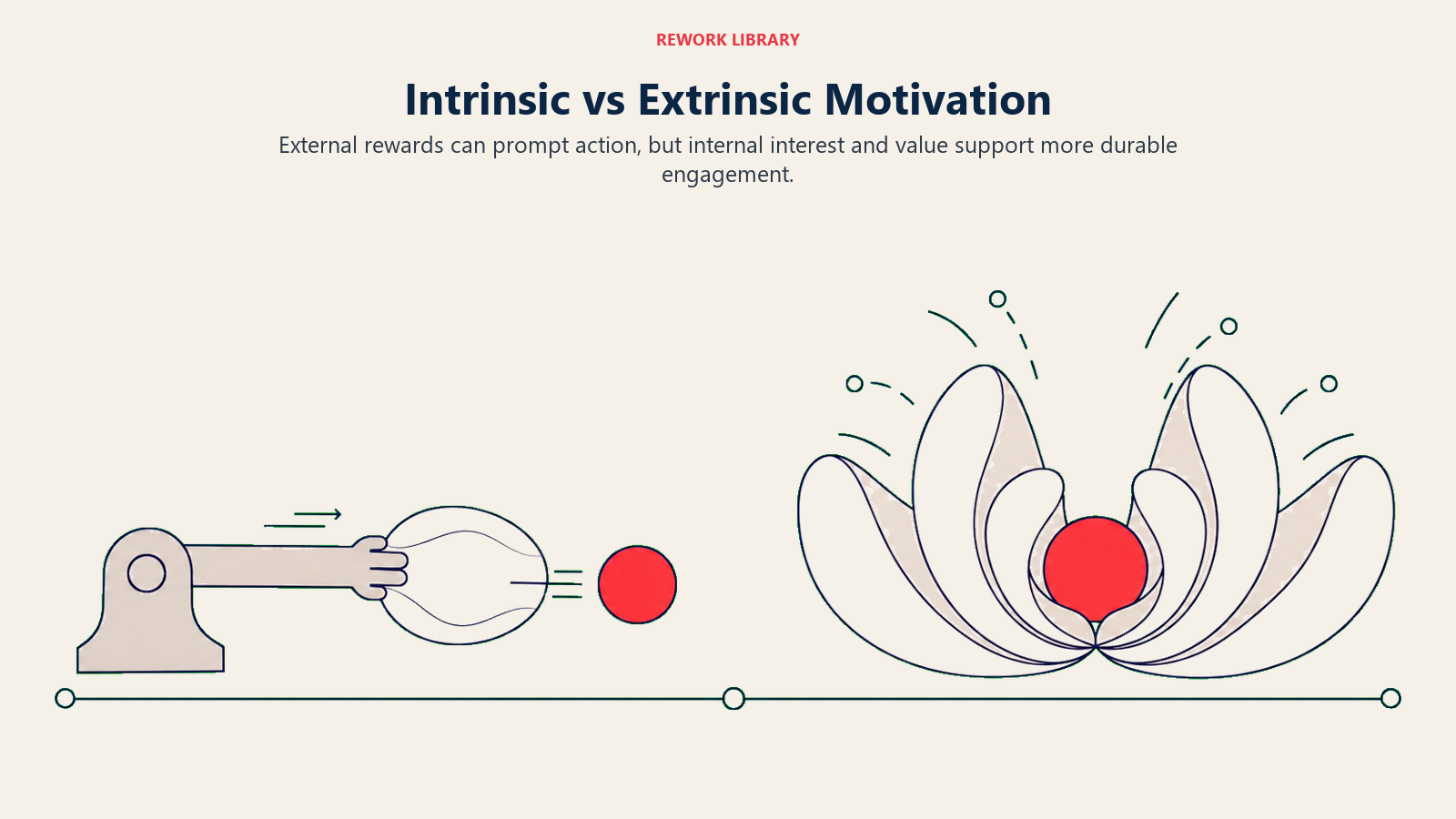
SDT menggambarkan motivasi sebagai sebuah kontinum, bukan suis binari. Model ini mengakui bahawa kebanyakan motivasi di tempat kerja berada di suatu tempat di tengah, bukan sepenuhnya luaran, bukan sepenuhnya dalaman.
| Titik pada kontinum | Penerangan | Rupa-rupanya di tempat kerja |
|---|---|---|
| Amotivasi | Tiada motivasi langsung | "Saya tidak nampak tujuan projek ini" |
| Peraturan luaran | Bertindak untuk mendapatkan ganjaran atau mengelakkan hukuman | "Saya akan mencapai kuota atau saya akan kehilangan bonus saya" |
| Peraturan dimasukkan | Bertindak untuk mengelakkan rasa bersalah atau melindungi imej diri | "Saya tidak boleh gagal dalam perkara ini, orang akan menganggap rendah tentang saya" |
| Peraturan yang dikenal pasti | Bertindak kerana matlamat itu penting secara peribadi | "Projek ini sejajar dengan arah yang saya ingin bawa kerjaya saya" |
| Peraturan yang disepadukan | Bertindak kerana matlamat itu sejajar dengan nilai teras | "Kerja ini adalah siapa saya yang sebenar dan apa yang saya perjuangkan" |
| Motivasi intrinsik | Bertindak kerana aktiviti itu sendiri memberi ganjaran | "Saya hilang jejak masa apabila saya menyelami kerja ini" |
Implikasi praktis bagi pemimpin: anda jarang cuba membalikkan suis dari sifar kepada intrinsik. Anda cuba menggerakkan orang di sepanjang kontinum ke arah bentuk motivasi yang lebih autonomi. Walaupun memindahkan seseorang dari peraturan luaran ke peraturan yang dikenal pasti adalah kemenangan yang bermakna.
Manfaat dan batasan teori penentuan kendiri
Apa yang SDT betulkan untuk organisasi:
- Ia menjelaskan penglibatan pekerja dengan lebih tepat berbanding model yang menganggap motivasi semata-mata sebagai fungsi pampasan atau reka bentuk kerja.
- Ia memberikan pemimpin tuas yang boleh ditindak: jika seseorang tidak berminat, anda boleh mendiagnosis keperluan mana yang tidak dipenuhi dan campur tangan secara khusus.
- Ia merentasi budaya. Tiga keperluan muncul secara konsisten merentasi konteks nasional dan profesional yang pelbagai dalam kesusasteraan penyelidikan.
- Ia membingkai semula pengekalan pekerja. Orang yang berhenti tidak selalu mahukan lebih banyak wang. Sering mereka mahukan lebih banyak autonomi, laluan pertumbuhan yang lebih jelas, atau kepunyaan yang lebih baik.
Di mana SDT mempunyai batasan:
- Ia adalah model psikologi, bukan model sistem. Ia tidak secara langsung menangani halangan struktural seperti proses yang rosak, strategi yang tidak jelas, atau kekangan sumber yang menjejaskan prestasi tanpa mengira motivasi.
- Autonomi tidak dialami secara universal dengan cara yang sama. Sesetengah individu, atau sesetengah budaya organisasi, benar-benar lebih suka lebih banyak bimbingan dan struktur, SDT tidak sepenuhnya menjelaskan variasi ini.
- Mengukur kepuasan keperluan dalam skala besar memerlukan usaha yang disengajakan. Kebanyakan tinjauan penglibatan tidak dipetakan secara langsung kepada konstruk SDT.
Gunakan SDT sebagai kanta diagnostik, bukan sebagai teori lengkap prestasi organisasi.
Cara mengaplikasikan teori penentuan kendiri di tempat kerja (langkah demi langkah)
Langkah 1: Berikan orang autonomi sebenar tentang cara mereka bekerja

Autonomi tidak bermaksud tiada akauntabiliti. Ia bermaksud memberikan orang pemilikan ke atas laluan, walaupun destinasinya ditentukan. Mulakan dengan mengaudit bagaimana keputusan sebenarnya bergerak melalui pasukan anda. Jika setiap panggilan kecil memerlukan kelulusan pengurus, anda sedang menghakis autonomi secara sistematik.
Cuba: Biarkan individu mencadangkan pendekatan mereka sendiri terhadap projek sebelum anda berkongsi pendekatan anda. Terima cadangan yang berbeza daripada apa yang anda pilih, selagi ia kukuh.
Langkah 2: Reka bentuk kerja yang membina kompetensi
Cabaran optimum untuk motivasi berada tepat di atas keupayaan semasa, cukup sukar untuk memerlukan regangan, cukup boleh dicapai untuk membina keyakinan. Kerja rutin menghakis kepuasan keperluan kompetensi walaupun ia adalah kerja yang secara teknikalnya mahir, kerana penguasaan sudah berlaku.
Cuba: Kenal pasti seorang dalam pasukan anda yang telah berada dalam kumpulan kemahiran yang sama selama lebih dari 12 bulan. Tugaskan mereka pengembangan skop dalam suku tahun berikutnya.
Langkah 3: Bina keterkaitan tulen, bukan budaya yang pura-pura
Keterkaitan tidak datang dari acara membina pasukan. Ia datang daripada corak interaksi harian di mana orang merasakan mereka dilihat, didengar, dan dihargai. Secara khusus: adakah anda tahu apa yang setiap orang dalam pasukan anda benar-benar peduli? Adakah mereka tahu anda mengambil berat tentang mereka di luar output mereka?
Cuba: Dalam 1:1 anda berikutnya, luangkan 10 minit pertama tentang pengalaman orang tersebut, bukan tugas mereka. Tanya apa yang meletihkan mereka dan apa yang memberi tenaga kepada mereka minggu ini.
Langkah 4: Fikirkan semula cara anda menggunakan ganjaran dan pengiktirafan
Ganjaran luaran tidak memusnahkan motivasi secara automatik, tetapi ganjaran yang mengawal dan bersyarat (yang dikaitkan secara eksplisit dengan pematuhan tingkah laku yang sempit) secara konsisten menjejaskan motivasi intrinsik dari semasa ke semasa. Ini adalah kesan penurunan nilai Deci dan Ryan.
Ganjaran yang mengakui kompetensi dan usaha tanpa mewujudkan kebergantungan, seperti "anda mengendalikan rundingan itu dengan mahir" dan bukannya "inilah RM200 untuk menutup perjanjian itu", cenderung untuk mengekalkan dan bahkan menyokong motivasi intrinsik.
Cuba: Alihkan sekurang-kurangnya satu bahagian bahasa pengiktirafan pasukan anda daripada transaksional ("terima kasih kerana mencapai angka") kepada mengesahkan kompetensi ("cara anda membingkai masalah klien itu menunjukkan pertumbuhan sebenar dalam pemikiran strategik anda").
Langkah 5: Ukur apa yang sebenarnya berlaku
Pemimpin yang dimaklumkan oleh SDT tidak menunggu keputusan tinjauan penglibatan tahunan untuk mendiagnosis motivasi. Bina gelung maklum balas yang lebih pendek. Tanya secara langsung. Perhatikan isyarat tingkah laku: penurunan inisiatif, peningkatan ketidakhadiran, dan pemikiran jangka pendek adalah tanda awal bahawa satu atau lebih keperluan asas tidak dipenuhi.
Alat seperti Skala Kepuasan dan Kekecewaan Keperluan Psikologi Asas (BPNSFS) wujud untuk pengukuran formal, tetapi perbualan bulanan yang tulen sering kali mengeluarkan isyarat yang sama dengan lebih cepat.
Contoh teori penentuan kendiri
| Senario | Analisis SDT | Respons kepimpinan |
|---|---|---|
| Jurutera kanan berhenti mencadangkan idea baru selepas penyusunan semula | Kemungkinan besar hakisan autonomi, pemilikan sebelumnya dilucutkan dalam struktur baharu | Delegasikan semula skop secara eksplisit; biarkan mereka memiliki bahagian roadmap |
| Wakil jualan berprestasi tinggi mula terlepas sasaran selepas enam bulan | Kemungkinan kompetensi sudah mencapai pelantar, jenis perjanjian yang sama, tiada pinggiran pertumbuhan | Pindahkan mereka ke segmen perusahaan atau perluas tanggungjawab produk mereka |
| Pengurus baharu secara teknikalnya tajam tetapi tidak berminat dengan budaya pasukan | Keterkaitan rendah, masih dilihat sebagai penyumbang individu, belum dimasukkan | Pasangkan dengan projek berorientasikan pasukan; wujudkan kerjasama rakan sebaya yang berstruktur |
| Pasukan mencapai sasaran tetapi pusing ganti pekerja melonjak | Hanya peraturan luaran, orang dimotivasikan oleh komisen, bukan kerja | Masukkan pembangunan profesional, pengiktirafan untuk kraf, dan perkembangan peranan |
| Analis muda berkembang pesat tanpa banyak pengawasan | Ketiga-tiga keperluan dipenuhi, peranan autonomi, kemahiran berkembang, pasukan kolaboratif | Lindungi keadaan; perhatikan perubahan skop yang boleh mengikisnya |
Teori penentuan kendiri berbanding teori motivasi lain
SDT berada dalam ekosistem penyelidikan motivasi yang lebih luas. Berikut adalah di mana ia bersetuju, berbeza, dan melengkapi alternatif utama.
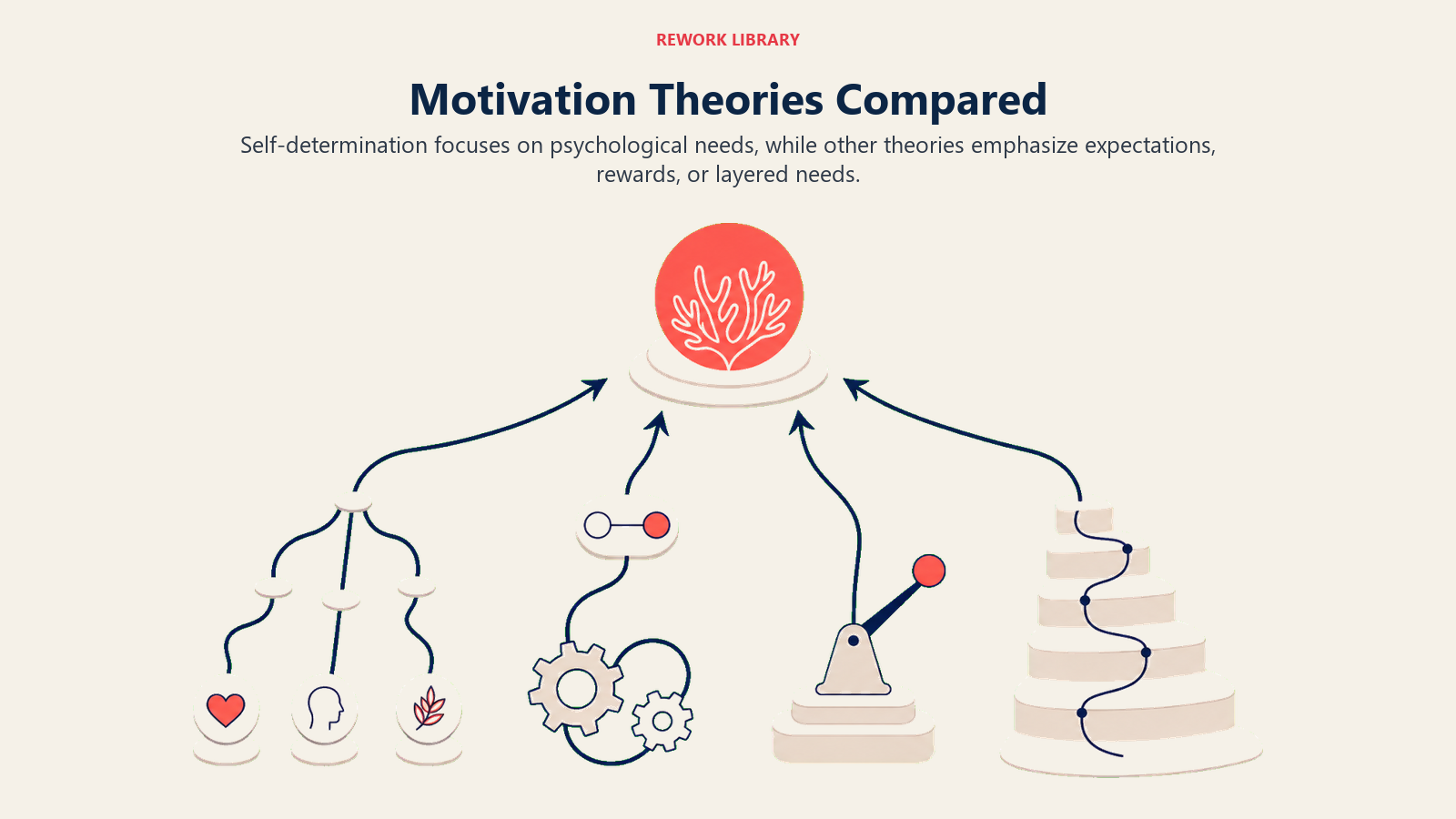
SDT berbanding Hierarki Keperluan Maslow: Maslow mencadangkan bahawa keperluan mesti dipenuhi secara berurutan, fisiologi sebelum keselamatan, keselamatan sebelum kepunyaan, dan seterusnya. SDT menolak hierarki ini. Tiga keperluan psikologi adalah serentak dan selari; tiada satu yang mengutamakan yang lain. Dalam amalan, SDT menawarkan ketepatan operasi yang lebih tinggi untuk konteks kerja pengetahuan di mana keperluan fisiologi secara amnya dipenuhi.
SDT berbanding Teori Dua Faktor Herzberg: Herzberg membahagikan faktor kerja kepada faktor kebersihan (yang menghalang ketidakpuasan) dan motivator (yang mendorong kepuasan). SDT sebahagian besarnya sejajar dengan pembahagian ini: faktor kebersihan kira-kira sepadan dengan keadaan yang tidak menggagalkan keperluan asas, dan motivator sepadan dengan keadaan yang secara aktif memenuhinya. Tetapi SDT menambah nuansa dengan menerangkan mengapa motivator tertentu berfungsi, mereka memenuhi autonomi, kompetensi, dan keterkaitan.
SDT berbanding Teori Jangkaan: Teori jangkaan Victor Vroom berpendapat motivasi adalah fungsi sama ada orang percaya usaha membawa kepada prestasi, prestasi membawa kepada hasil, dan hasil itu bernilai secara peribadi. SDT dan teori jangkaan saling melengkapi: teori jangkaan menerangkan pengiraan kognitif, SDT menerangkan tanah psikologi di mana pengiraan itu berlaku. Seseorang dengan kepuasan keperluan autonomi yang rendah mungkin berhenti membuat pengiraan sama sekali.
SDT berbanding Teori Ekuiti: Teori ekuiti Adams memfokuskan pada persepsi keadilan, orang membandingkan nisbah usaha/ganjaran mereka dengan rakan sebaya. SDT tidak secara langsung menangani keadilan, tetapi kekecewaan keperluan keterkaitan sering mengamplifikasikan ekuiti yang dirasakan. Apabila orang berasa terputus hubungan dari pasukan atau pengurus mereka, mereka meneliti isyarat keadilan dengan lebih tajam.
Lihat juga: Teori X dan Teori Y McGregor, andaian Teori Y tentang motivasi manusia sejajar rapat dengan apa yang SDT ramalkan: layani orang sebagai mampu mengarahkan diri sendiri dan mereka cenderung menjadi lebih mengarahkan diri sendiri. Kepimpinan Transformasi berbanding Kepimpinan Transaksi dan Gaya Kepimpinan Coaching kedua-duanya menggambarkan tingkah laku kepimpinan yang secara langsung menyokong tiga keperluan SDT.
Soalan Lazim tentang Teori Penentuan Kendiri
Apakah tiga keperluan dalam teori penentuan kendiri?
Tiga keperluan psikologi asas adalah autonomi (bertindak atas pilihan tulen dan bukannya tekanan luaran), kompetensi (mengalami pertumbuhan dan penguasaan kemahiran), dan keterkaitan (merasakan hubungan dan penghargaan tulen oleh orang lain). SDT menyatakan bahawa ketiga-tiga keperluan mesti dipenuhi secara konsisten untuk motivasi intrinsik berkembang dan berterusan. Memenuhi hanya satu atau dua menghasilkan penglibatan separa pada yang terbaik.
Bagaimana teori penentuan kendiri berbeza daripada hierarki Maslow?
Perbezaan utama adalah struktur. Maslow berpendapat keperluan mesti dipenuhi dalam urutan tetap, anda tidak boleh mengejar kepunyaan sehingga keselamatan diwujudkan. SDT menganggap tiga keperluan sebagai serentak dan sama penting: anda boleh mempunyai keterkaitan yang kuat dan kepuasan kompetensi yang lemah pada masa yang sama, dan kedua-duanya mempengaruhi motivasi secara bebas. SDT juga memfokuskan khusus pada keperluan psikologi yang mendorong motivasi autonomi, dan bukannya mengkatalogkan semua keperluan manusia dari kelangsungan hidup ke atas.
Adakah ganjaran menjejaskan motivasi intrinsik?
Ia bergantung pada jenis ganjaran dan cara penyampaiannya. Ganjaran yang mengawal, yang bersyarat pada pematuhan tingkah laku yang sempit dan ditadbir untuk mengarahkan tingkah laku, secara konsisten menjejaskan motivasi intrinsik dari semasa ke semasa. Ini adalah kesan penurunan nilai yang didokumentasikan dengan baik oleh Deci dan Ryan. Ganjaran bermaklumat yang mengakui kompetensi dan mengesahkan autonomi cenderung untuk tidak menjejaskan motivasi, dan bahkan boleh menyokongnya. Peraturan praktisnya: beri ganjaran kepada kualiti kerja, bukan hanya fakta bahawa sasaran dicapai.
Bolehkah SDT diterapkan pada pasukan jarak jauh atau hibrid?
Ya, walaupun setiap keperluan memerlukan usaha yang disengajakan dalam tetapan teragih. Autonomi sering lebih mudah diberikan dari jarak jauh, orang mengawal persekitaran dan jadual mereka. Kompetensi memerlukan pelaburan aktif: maklum balas yang disengajakan, tugasan regangan, dan laluan pembangunan kemahiran yang ketara. Keterkaitan adalah yang paling sukar: ia tidak muncul daripada saluran Slack sahaja. Ia memerlukan pelaburan 1:1 yang konsisten, ritual pasukan yang kelihatan, dan pemimpin yang secara aktif menunjukkan bahawa mereka mengenali dan mengambil berat tentang orang, bukan hanya kerja.
Adakah teori penentuan kendiri boleh diterapkan di luar tempat kerja?
SDT pada asalnya dibangunkan dan diuji dalam tetapan pendidikan, dan sejak itu telah diterapkan pada penjagaan kesihatan, psikologi sukan, keibubapaan, dan psikoterapi, serta tingkah laku organisasi. Tiga keperluan muncul secara konsisten merentasi kumpulan budaya dan demografi dalam kesusasteraan penyelidikan, mencadangkan bahawa ia mencerminkan sesuatu yang asasi tentang fungsi psikologi manusia dan bukannya sesuatu yang khusus untuk mana-mana konteks tertentu.
Bacaan berkaitan
- Apakah Kepimpinan
- Hierarki Keperluan Maslow
- Teori Dua Faktor Herzberg
- Teori Jangkaan
- Teori Ekuiti
- Teori X dan Teori Y McGregor
- Kepimpinan Transformasi berbanding Kepimpinan Transaksi
- Gaya Kepimpinan Coaching
Penyelidikan di sebalik SDT kini sudah empat dekad mendalam, tetapi mesej praktisnya bagi pemimpin adalah mudah: orang tidak perlu dikawal untuk berprestasi dengan baik. Mereka memerlukan keadaan di mana motivasi tulen boleh berakar. Bina keadaan tersebut dengan sengaja, dan prestasi cenderung untuk mengikutinya.

On this page
- Apakah teori penentuan kendiri?
- Fakta Utama
- Tiga keperluan asas
- Motivasi intrinsik berbanding ekstrinsik
- Manfaat dan batasan teori penentuan kendiri
- Cara mengaplikasikan teori penentuan kendiri di tempat kerja (langkah demi langkah)
- Langkah 1: Berikan orang autonomi sebenar tentang cara mereka bekerja
- Langkah 2: Reka bentuk kerja yang membina kompetensi
- Langkah 3: Bina keterkaitan tulen, bukan budaya yang pura-pura
- Langkah 4: Fikirkan semula cara anda menggunakan ganjaran dan pengiktirafan
- Langkah 5: Ukur apa yang sebenarnya berlaku
- Contoh teori penentuan kendiri
- Teori penentuan kendiri berbanding teori motivasi lain
- Bacaan berkaitan