Keselamatan Psikologi: Mengapa Ia Penting dan Cara Membinanya
Turn this article into takeaways for your work.


Each assistant summarizes the article only for you and suggests best practices for your work.
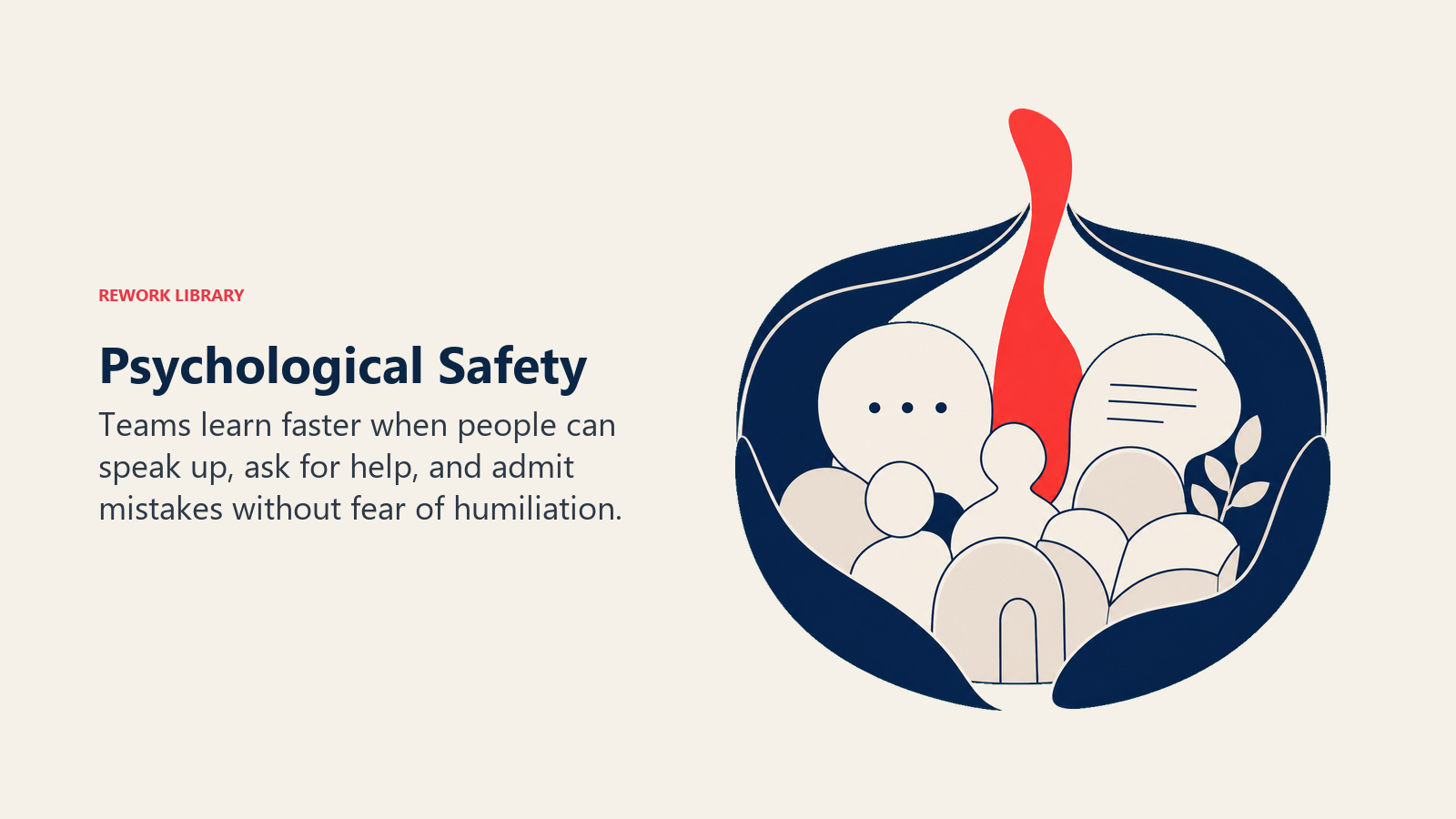
Keselamatan psikologi adalah satu kualiti pasukan yang meramalkan sama ada orang akan bersuara tentang masalah, menguji idea baharu, dan pulih dengan cepat daripada kesilapan. Tanpa ia, walaupun pasukan yang bijak dan berbakat akan berprestasi di bawah potensi mereka kerana orang kekal diam untuk mengelakkan risiko.
Apakah Keselamatan Psikologi?
Keselamatan psikologi adalah kepercayaan bersama bahawa pasukan adalah selamat untuk pengambilan risiko interpersonal. Profesor Harvard Business School, Amy Edmondson, yang mencipta istilah ini dalam penyelidikannya pada 1999, mentakrifkannya sebagai "rasa yakin bahawa pasukan tidak akan memalukan, menolak, atau menghukum seseorang kerana bersuara." Ia bukan tentang bersikap baik atau selesa sepanjang masa. Ia tentang sama ada orang merasa cukup selamat untuk bertanya soalan, mengakui kesilapan, dan mencabar idea tanpa takut akan pembalasan atau penghinaan.
Perbezaan utama: keselamatan psikologi adalah sifat peringkat pasukan, bukan sifat personaliti. Seseorang boleh yakin dalam satu pasukan dan kekal diam dalam pasukan yang lain. Persekitaran lebih penting daripada individu.
Fakta Penting
- Pasukan dengan keselamatan psikologi yang tinggi adalah 27% lebih berkemungkinan untuk melaporkan pembelajaran daripada kesilapan, menurut penyelidikan Amy Edmondson merentasi hospital dan kilang pembuatan (1999, dikemas kini 2018).
- Project Aristotle Google (2016) mengkaji 180 pasukan dan mendapati keselamatan psikologi adalah peramal tunggal terkuat keberkesanan pasukan, mengatasi faktor seperti kemahiran, kanan, dan komposisi pasukan.
- Penyelidikan Gallup (2017) mendapati hanya 3 daripada 10 pekerja A.S. sangat bersetuju bahawa pendapat mereka dikira di tempat kerja, bermakna kebanyakan pasukan beroperasi jauh di bawah potensi mereka.
4 Peringkat Keselamatan Psikologi
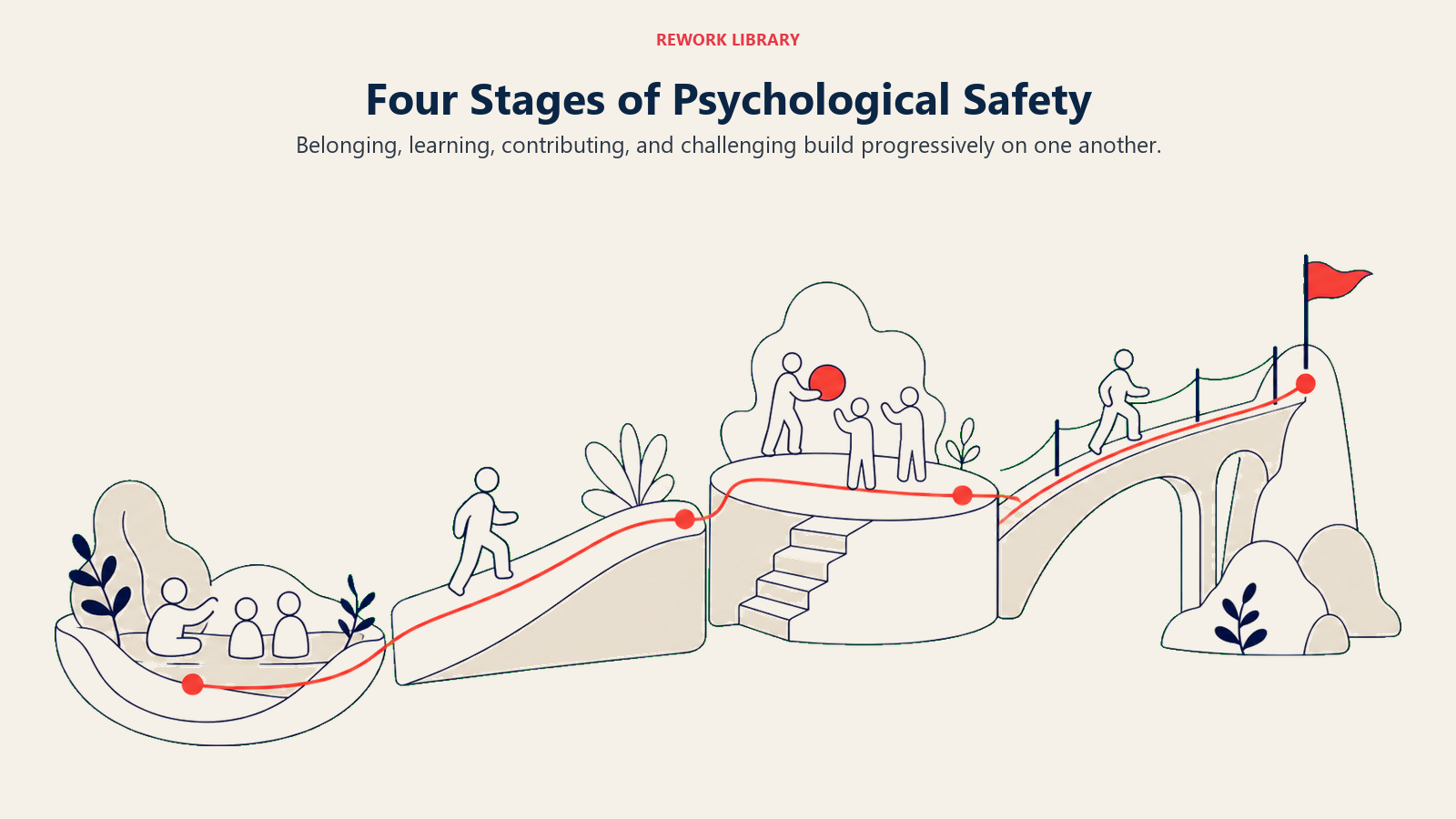
Penyelidik Timothy Clark, dalam bukunya The 4 Stages of Psychological Safety (2020), menghuraikan model yang memetakan cara keselamatan berkembang dalam sebuah pasukan. Setiap peringkat dibina berdasarkan peringkat sebelumnya.
| Peringkat | Nama | Maksudnya | Contoh |
|---|---|---|---|
| 1 | Keselamatan Kemasukan | Anda merasa diterima sebagai sebahagian daripada pasukan | Pekerja baharu mendapat onboarding yang mesra; tiada seorang pun yang dikecualikan dari mesyuarat utama |
| 2 | Keselamatan Pelajar | Anda merasa selamat untuk bertanya soalan dan mengakui Anda tidak tahu sesuatu | Seorang pengurus berkata "Saya juga tidak tahu, mari kita fikirkan bersama" secara terbuka |
| 3 | Keselamatan Penyumbang | Anda merasa selamat untuk membawa idea dan melakukan kerja Anda tanpa terlalu membenarkan diri | Jurutera mencadangkan penyelesaian tanpa takut ditolak |
| 4 | Keselamatan Pencabar | Anda merasa selamat untuk mencabar keadaan sedia ada, mempersoalkan kepimpinan, dan membangkitkan kebimbangan | Ahli pasukan membangkitkan pelan yang cacat dan pengurus berterima kasih kepada mereka kerana berbuat demikian |
Pasukan sering tersekat pada Peringkat 1 atau 2. Orang merasa termasuk dan boleh bertanya soalan, tetapi mereka tidak menyumbang dengan bebas atau mencabar kepimpinan. Bergerak ke Peringkat 3 dan 4 memerlukan kerja yang disengajakan daripada sesiapa yang menjalankan pasukan.
Mengapa Keselamatan Psikologi Penting
Kes perniagaannya adalah kukuh. Project Aristotle Google mendapati bahawa pasukan berprestasi terbaik di Google berkongsi satu benang merah: ahli-ahli merasakan mereka boleh mengambil risiko tanpa dihukum. Ia bukan tentang mempunyai orang yang paling bijak atau matlamat yang paling jelas. Ia tentang sama ada orang tersebut merasa cukup selamat untuk menggunakan keupayaan mereka sepenuhnya.
Terdapat tiga kawasan di mana impaknya paling ketara:
Pembelajaran dan pemulihan kesilapan. Pasukan dengan keselamatan psikologi yang tinggi mendedahkan masalah lebih awal. Seorang jururawat yang menandakan kesilapan ubat, wakil jualan yang mengakui tawaran sedang terbantut, pembangun yang membangkitkan kecacatan reka bentuk sebelum pelancaran, semua ini berlaku lebih kerap apabila orang tahu mereka tidak akan dipersalahkan. Penyelidikan hospital Edmondson menunjukkan bahawa unit berprestasi lebih tinggi sebenarnya melaporkan lebih banyak kesilapan, bukan lebih sedikit, kerana mereka merasa cukup selamat untuk menandakannya.
Inovasi. Idea baharu adalah tidak pasti secara semula jadi. Jika orang takut dihakimi kerana mencadangkan sesuatu yang mungkin tidak berjaya, mereka menahan diri. Keselamatan psikologi memberikan pasukan kebenaran untuk bereksperimen. Itulah sebabnya konsep ini menjadi pusat kepada budaya agile dan pembangunan produk.
Pengekalan dan penglibatan. Orang yang merasa selamat secara psikologi di tempat kerja lebih terlibat dan kurang berkemungkinan untuk pergi. Mereka membawa perhatian penuh kepada kerja daripada menghabiskan tenaga pada perlindungan diri. Bagi pengurus, ini bermakna pusing ganti yang lebih rendah pada pasukan yang mengamalkannya secara konsisten.
Tanda-tanda Keselamatan Psikologi yang Rendah
Keselamatan psikologi yang rendah tidak selalu jelas. Ia sering kelihatan seperti ketidakterlibatan daripada konflik. Perhatikan isyarat-isyarat ini:
| Isyarat | Apa yang mungkin Anda perhatikan |
|---|---|
| Kesunyian dalam mesyuarat | 2-3 orang yang sama sahaja yang bercakap; yang lain kekal diam walaupun ditanya |
| Berita buruk tidak sampai ke atas | Masalah muncul lewat, selepas menjadi krisis |
| Menyalahkan selepas kesilapan | Post-mortem berfokus pada siapa, bukan apa dan mengapa |
| Kadar soalan yang rendah | Pekerja baharu berhenti bertanya soalan dalam beberapa minggu selepas menyertai |
| Bahasa yang tidak pasti | "Saya mungkin salah, tetapi..." sebelum setiap cadangan |
| Pemikiran kumpulan | Keputusan dibuat dengan cepat tanpa perdebatan yang nyata |
| Orang menunggu untuk diberitahu | Tiada seorang pun yang menawarkan idea di luar perihalan kerja mereka |
Jika Anda mengenali tiga atau lebih daripada ini dalam pasukan Anda, keselamatan psikologi mungkin rendah. Berita baiknya adalah ia boleh dibina semula dengan tingkah laku yang konsisten dari masa ke masa.
Cara Membina Keselamatan Psikologi dalam Pasukan
Membina keselamatan psikologi adalah amalan kepimpinan, bukan latihan sekali sahaja. Ini adalah langkah-langkah konkrit yang ditunjukkan oleh penyelidikan dan amalan menjadi berkesan:
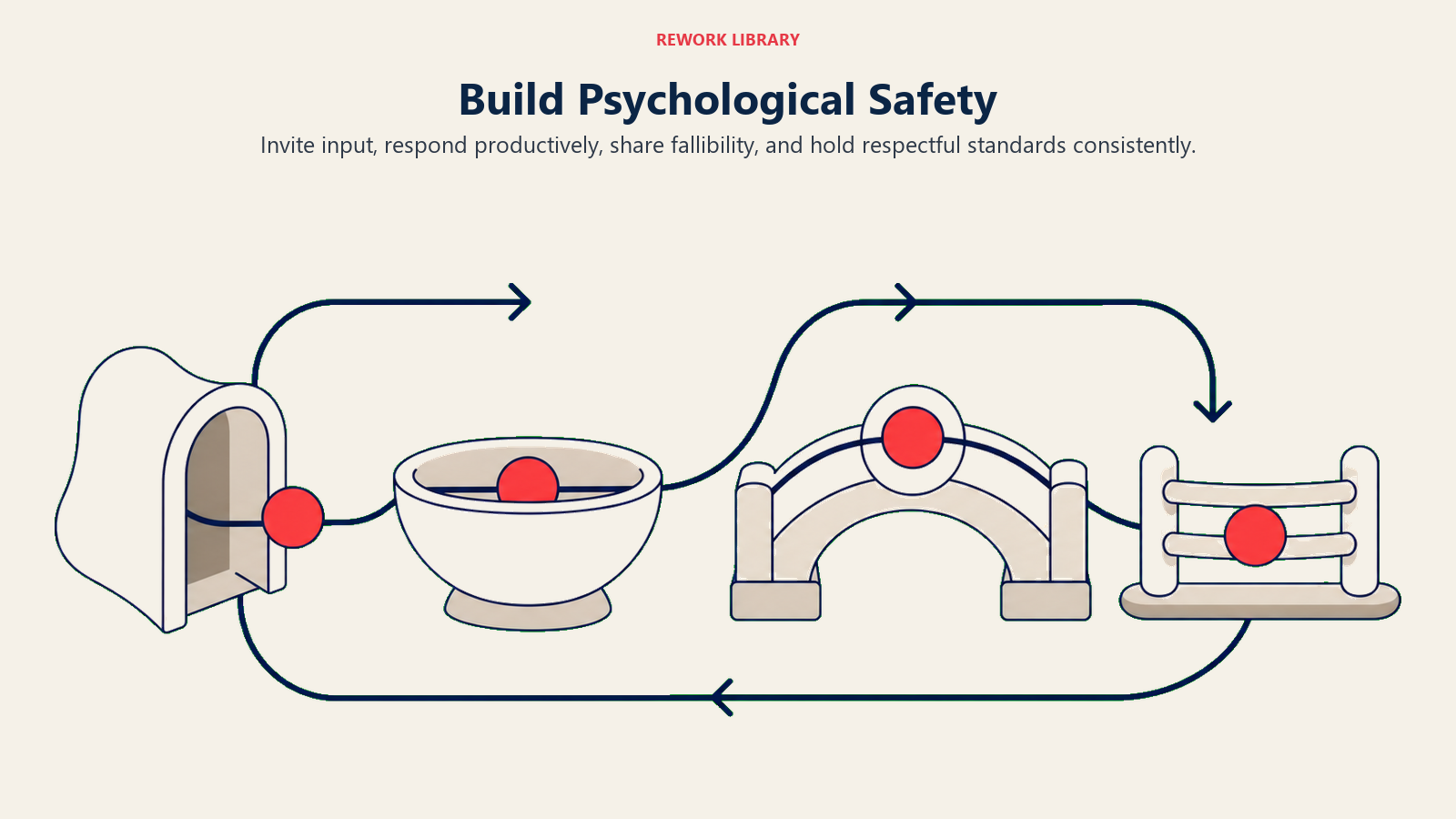
Tunjukkan kebolehgagalan secara terbuka. Kongsikan kesilapan yang Anda buat, apa yang Anda pelajari, dan apa yang Anda ubah. Apabila pemimpin menormalkan kesilapan, ia memberikan semua orang lain kebenaran untuk melakukan perkara yang sama. Berkata "Saya silap suku lepas" dalam mesyuarat pasukan memberi lebih kesan daripada mana-mana bengkel.
Tanya soalan yang benar-benar ingin tahu. Bukan "adakah sesiapa mempunyai kebimbangan?" tetapi soalan terbuka dan spesifik: "Bahagian pelan ini yang paling kurang Anda yakin tentangnya?" atau "Apa yang akan Anda lakukan secara berbeza jika Anda menjalankan ini?" Soalan memberi isyarat bahawa input dihargai, bukan sekadar ditoleransi.
Bertindak balas dengan minat, bukan penghakiman. Apabila seseorang membangkitkan kebimbangan atau mencadangkan idea, respons pertama Anda menentukan sama ada mereka akan melakukannya lagi. Ucapkan terima kasih kepada mereka. Libatkan diri dengan substans. Walaupun idea itu tidak berjaya, buat orang itu merasa didengar sebelum menjelaskan mengapa.
Lindungi suara secara langsung. Apabila seseorang diganggu atau ditutupi oleh orang lain, campur tangan: "Mari kita dengar apa yang Sarah sedang katakan." Apabila orang paling junior dalam bilik kekal diam, tanya mereka secara langsung. Tindakan perlindungan yang kecil dan awam memberi isyarat bahawa semua suara penting.
Pisahkan ideasi daripada penilaian. Wujudkan ruang eksplisit untuk menjana idea sebelum mengkritiknya. Ini menghilangkan ketakutan terhadap penolakan segera yang menghentikan sumbangan. Walaupun sesi percambahan fikiran 10 minit sebelum mesyuarat keputusan mengubah dinamik.
Jalankan retrospektif tanpa menyalahkan. Selepas projek atau sprint, tanya apa yang berlaku, bukan siapa yang menyebabkannya. Gunakan kerangka seperti "blameless post-mortem" dari budaya DevOps. Matlamatnya adalah untuk mencari punca sistemik dan menambah baik proses, bukan untuk memberikan kesalahan.
Beri ganjaran atas tindakan membangkitkan masalah lebih awal. Kenali secara terbuka apabila seseorang menandakan isu sebelum ia meningkat. Jika Anda hanya memberi ganjaran kepada kemenangan, orang belajar untuk menyembunyikan masalah sehingga mereka tidak dapat lagi.
Berlaku konsisten merentasi keseluruhan pasukan Anda. Keselamatan psikologi runtuh apabila pemimpin bertindak balas kepada sesetengah orang tetapi menolak orang lain. Jika pemain berprestasi tinggi mendapat lebih banyak masa bercakap dan lebih banyak belas kasihan daripada pemain berprestasi rendah, pasukan memperhatikan dan menyesuaikan tingkah laku mereka dengan sewajarnya.
Keselamatan Psikologi dan Gaya Kepimpinan
Keselamatan psikologi bukan milik satu gaya kepimpinan, tetapi sesetengah gaya menjadikannya lebih mudah untuk dibina. Kepimpinan inklusif mungkin adalah padanan semula jadi yang paling rapat, kerana ia berkongsi komitmen teras yang sama: setiap suara menyumbang, dan pemimpin secara aktif berusaha untuk mengurangkan halangan kepada penyertaan. Kepimpinan beretika mengukuhkannya juga, kerana kepercayaan kepada niat pemimpin adalah prasyarat untuk orang merasa selamat mengambil risiko interpersonal.
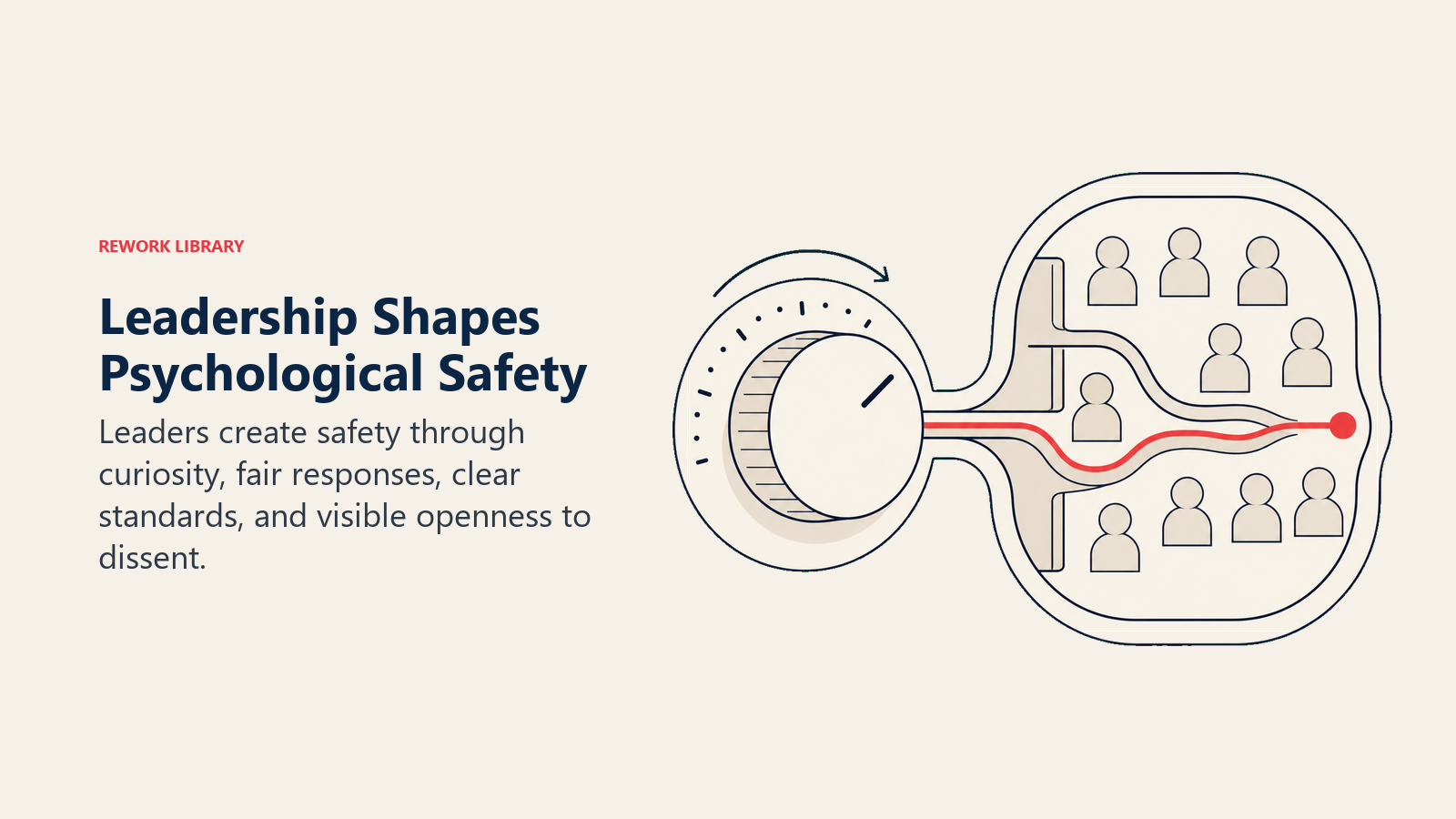
Kepimpinan khidmat membina keselamatan psikologi melalui penekanannya pada pemimpin sebagai sumber dan bukannya autoriti, yang mengurangkan jarak kuasa yang sering mengekalkan orang diam. Gaya kepimpinan coaching melakukannya dengan bertanya soalan daripada mengarahkan, yang secara semula jadi mewujudkan lebih banyak ruang untuk orang berfikir dengan kuat dan menyatakan ketidakpastian.
Kepimpinan affiliative, yang mengutamakan hubungan dan keharmonian emosi, boleh menyokong keselamatan psikologi tetapi juga berisiko merosakkannya jika pemimpin mengelakkan konflik untuk mengekalkan perdamaian. Mengelakkan perbualan yang sukar bukan perkara yang sama dengan mewujudkan keselamatan.
Kepimpinan autentik berkaitan secara langsung dengan keselamatan psikologi kerana pemimpin yang secara terbuka berkongsi ketidakpastian dan ketidaksempurnaan diri sendiri memberikan seluruh pasukan kebenaran untuk melakukan perkara yang sama.
Untuk mana-mana gaya ini mewujudkan keselamatan psikologi yang tulen, pemimpin memerlukan satu kemahiran asas: mendengar secara aktif. Jika orang merasa benar-benar didengar daripada sekadar ditoleransi, keselamatan untuk bersuara akan mengikutinya.
Soalan Lazim tentang Keselamatan Psikologi
Adakah keselamatan psikologi sama dengan tempat kerja yang selesa atau bebas konflik?
Tidak. Keselamatan psikologi sebenarnya membolehkan lebih banyak konflik yang produktif, bukan kurang. Apabila orang merasa selamat, mereka mencabar idea secara lebih langsung dan mendedahkan perselisihan lebih awal, yang membawa kepada keputusan yang lebih baik. Matlamatnya bukan keselesaan tetapi keyakinan bahawa input yang jujur adalah diterima.
Berapa lama masa yang diperlukan untuk membina keselamatan psikologi?
Tiada jadual masa yang tetap. Pasukan dengan sejarah menyalahkan atau menghukum memerlukan masa yang lebih lama untuk membina semula kepercayaan. Tetapi tingkah laku yang konsisten daripada seorang pemimpin sahaja boleh mula mengalihkan norma pasukan dalam beberapa minggu. Kuncinya adalah konsistensi: satu respons yang menolak terhadap kebimbangan yang dibangkitkan boleh membatalkan berbulan-bulan kemajuan.
Bolehkah keselamatan psikologi diukur?
Ya. Soal selidik asal 7-item Edmondson adalah instrumen yang paling banyak digunakan. Soalan seperti "Jika saya membuat kesilapan dalam pasukan ini, ia sering dipegang terhadap saya" (skor terbalik) dan "Adalah selamat untuk mengambil risiko dalam pasukan ini" memberikan garis dasar kuantitatif. Banyak pasukan menjalankan versi ini dalam soal selidik penglibatan suku tahunan.
Bagaimana jika kepimpinan kanan tidak menyokongnya?
Anda masih boleh membina keselamatan psikologi dalam pasukan Anda sendiri, walaupun budaya yang lebih luas tidak menunjukkan contohnya. Ahli pasukan Anda mengalami tingkah laku Anda setiap hari. Pengurus yang mewujudkan keselamatan secara tempatan menghasilkan peningkatan prestasi yang nyata walaupun dalam organisasi dengan budaya keseluruhan yang lemah. Walau bagaimanapun, menyokong ke atas untuk perubahan budaya yang lebih luas adalah sebahagian daripada tugas.
Adakah keselamatan psikologi bermakna orang boleh berkata apa sahaja tanpa akibat?
Tidak. Keselamatan psikologi merangkumi risiko interpersonal, bermakna idea, soalan, kesilapan, dan kebimbangan. Ia tidak bermakna tiada standard untuk tingkah laku, prestasi, atau kelakuan profesional. Sebuah pasukan boleh mempunyai keselamatan psikologi yang tinggi dan masih mengekalkan jangkaan yang jelas tentang kualiti dan akauntabiliti.
Keselamatan psikologi bukan kemewahan yang lembut. Ia adalah keadaan struktur yang menentukan sama ada kecerdasan pasukan Anda benar-benar muncul di tempat kerja. Penyelidikan adalah konsisten, daripada hospital Edmondson hingga ke pasukan kejuruteraan Google: apabila orang merasa selamat untuk bersuara, pasukan belajar lebih cepat, menyesuaikan diri dengan lebih baik, dan berprestasi pada tahap yang lebih tinggi. Membinanya bermula dengan cara Anda bertindak balas kali seterusnya seseorang membangkitkan sesuatu yang tidak selesa.