Kepimpinan Kontingensi vs Kepimpinan Situasi Dijelaskan
Turn this article into takeaways for your work.


Each assistant summarizes the article only for you and suggests best practices for your work.
Perdebatan kepimpinan kontingensi vs kepimpinan situasi berada di jantung salah satu soalan paling berguna dalam teori pengurusan: apabila sesuatu berjalan salah dengan pasukan, perlukah pemimpin yang berubah, atau perlukah situasinya? Kedua-dua kerangka kerja mengatakan pendekatan kepimpinan yang betul bergantung pada konteks. Tetapi mereka memberi jawapan yang bertentangan tentang siapa yang perlu melakukan penyesuaian.
Apakah Perbezaan Antara Kepimpinan Kontingensi dan Kepimpinan Situasi?
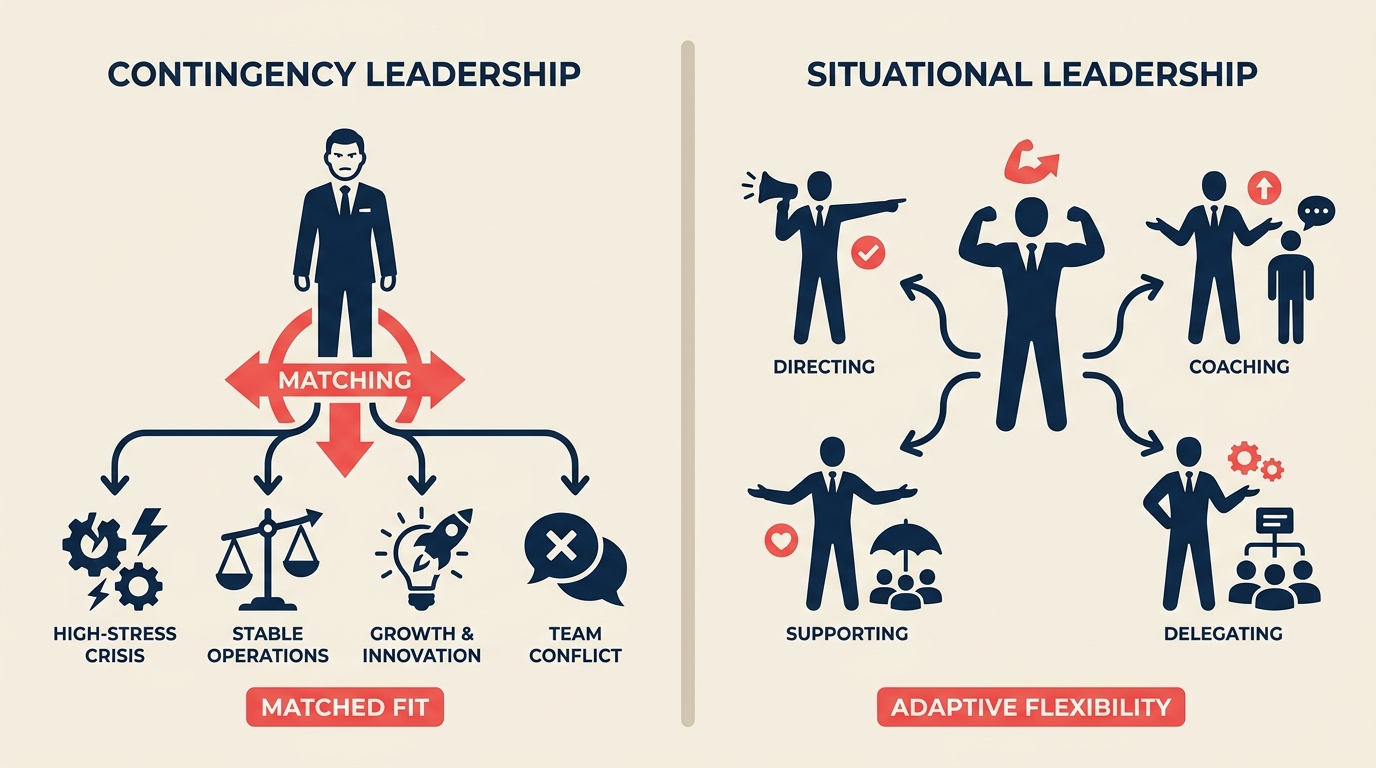
Kedua-dua teori kontingensi dan kepimpinan situasi menolak idea bahawa satu gaya kepimpinan berfungsi di mana-mana. Perbezaan utama adalah siapa atau apa yang perlu berfleksibel. Teori kontingensi (dibangunkan oleh Fred Fiedler) berpendapat bahawa gaya pemimpin adalah relatif tetap: anda tidak boleh mengubahnya secara boleh dipercayai, jadi langkah praktikal adalah memadankan pemimpin dengan situasi yang betul. Kepimpinan situasi (Hersey dan Blanchard) berpendapat bahawa gaya pemimpin harus boleh disesuaikan: orang yang sama harus mengubah pendekatan mereka berdasarkan tahap perkembangan semasa setiap pengikut.
Ringkasnya: teori kontingensi menukar kerusi untuk muat pemimpin; kepimpinan situasi mengajar pemimpin untuk menukar tempat duduk mereka.
Fakta Utama
- Fred Fiedler menerbitkan model kontingensinya pada tahun 1967 dalam A Theory of Leadership Effectiveness, berdasarkan penyelidikan merentasi lebih 800 kumpulan dalam tetapan ketenteraan, pendidikan, dan industri (Fiedler, 1967).
- Paul Hersey dan Ken Blanchard memperkenalkan kepimpinan situasi pada tahun 1969, pada asalnya menamainya "teori kitaran hayat kepimpinan," dalam buku mereka Management of Organizational Behavior (Hersey dan Blanchard, 1969).
- The Ken Blanchard Companies melaporkan bahawa program kepimpinan situasi SLII Blanchard telah digunakan oleh lebih daripada 70 peratus syarikat Fortune 500, menjadikannya salah satu kerangka kerja kepimpinan yang paling banyak digunakan dalam sejarah latihan korporat.
Apakah Teori Kepimpinan Kontingensi?
Teori kepimpinan kontingensi, khususnya model kontingensi Fiedler, dibina atas satu dakwaan pusat: gaya kepimpinan adalah sifat personaliti, bukan tingkah laku yang dipelajari. Fiedler percaya sama ada anda secara semula jadi bermotivasi tugas atau bermotivasi hubungan adalah sebahagian besarnya stabil, seperti personaliti yang stabil.
Untuk mengenal pasti gaya itu, Fiedler membangunkan skala pekerja paling kurang disukai (LPC). Pemimpin menilai rakan sekerja yang paling sukar mereka bekerjasama. Skor tinggi bermaksud pemimpin melihat sesuatu yang positif walaupun pada kolaborator terburuk mereka (bermotivasi hubungan). Skor rendah bermaksud penilaian keras merentas semua aspek (bermotivasi tugas).
Model ini kemudian menilai situasi melalui tiga faktor:
- Hubungan pemimpin-ahli: Berapa banyak kepercayaan dan hormat yang dimiliki pasukan terhadap pemimpin
- Struktur tugas: Seberapa jelas kerja, matlamat, dan prosedur ditakrifkan
- Kuasa jawatan: Berapa banyak autoriti formal yang dipegang oleh pemimpin
Faktor-faktor ini bersama menghasilkan penilaian "keselesaan situasi." Padanan antara orientasi LPC pemimpin dan tahap keselesaan meramalkan prestasi. Pemimpin LPC-rendah cenderung berprestasi terbaik pada hujung-hujung (situasi sangat menguntungkan atau sangat tidak menguntungkan). Pemimpin LPC-tinggi cenderung berprestasi terbaik di tengah-tengah yang sederhana, di mana hubungan dan fleksibiliti paling penting.
Preskripsi Fiedler mengikut secara semula jadi: jangan cuba mengubah gaya pemimpin. Sebaliknya, reka bentuk semula situasi untuk memadankan pemimpin yang anda ada.
Untuk pandangan yang lebih mendalam tentang mekanik model, lihat artikel penuh model kontingensi Fiedler dan gambaran keseluruhan teori kepimpinan kontingensi.
Apakah Kepimpinan Situasi?
Kepimpinan situasi, seperti yang ditakrifkan oleh model Hersey-Blanchard, bermula dari premis yang bertentangan: pemimpin boleh dan harus menyesuaikan gaya mereka. Gaya yang betul untuk sebarang saat bergantung pada tahap perkembangan semasa pengikut, satu kombinasi kecekapan mereka (kemahiran dan pengetahuan) dan komitmen (keyakinan dan motivasi) untuk tugas tertentu.
Hersey dan Blanchard mentakrifkan empat gaya kepimpinan:
| Gaya | Nama | Arahan Tinggi atau Rendah | Sokongan Tinggi atau Rendah |
|---|---|---|---|
| S1 | Mengarahkan | Tinggi | Rendah |
| S2 | Coaching | Tinggi | Tinggi |
| S3 | Menyokong | Rendah | Tinggi |
| S4 | Mendelegasi | Rendah | Rendah |
Dan empat tahap perkembangan pengikut yang sepadan:
| Tahap | Nama | Kecekapan | Komitmen |
|---|---|---|---|
| D1 | Pemula Bersemangat | Rendah | Tinggi |
| D2 | Pelajar Kecewa | Rendah-Sederhana | Rendah |
| D3 | Cekap tetapi Berhati-hati | Sederhana-Tinggi | Berubah-ubah |
| D4 | Pencapai Berdikari | Tinggi | Tinggi |
Logiknya adalah langsung: pengikut D1 memerlukan kepimpinan S1 (arahan yang jelas, penyeliaan rapat). Pengikut D4 memerlukan kepimpinan S4 (autonomi penuh, pengawasan minimum). Terlalu mengarahkan D4 menyebabkan mereka hilang motivasi. Terlalu kurang mengarahkan D1 menyediakan mereka untuk gagal.
Titik kritikal: diagnosis ini berlaku pada tahap tugas, bukan tahap orang. Jurutera kanan boleh menjadi D1 pada teknologi baru dan D4 pada domain terasnya serentak. Tahap perkembangan adalah khusus konteks, bukan satu label.
Lihat apakah teori kepimpinan situasi untuk kerangka kerja penuh, dan model hersey-blanchard untuk penggunaan langkah demi langkah.
Kontingensi vs Situasi: Perbandingan Berdampingan
| Dimensi | Kepimpinan Kontingensi (Fiedler) | Kepimpinan Situasi (Hersey-Blanchard) |
|---|---|---|
| Idea teras | Gaya kepimpinan adalah tetap; padankan pemimpin dengan situasi | Gaya kepimpinan adalah fleksibel; pemimpin menyesuaikan diri dengan pengikut |
| Siapa yang menyesuaikan diri | Organisasi (dengan menstruktur semula situasi) | Pemimpin (dengan mengubah tingkah laku mereka) |
| Pemboleh ubah utama | Keselesaan situasi (hubungan pemimpin-ahli, struktur tugas, kuasa jawatan) | Tahap perkembangan pengikut (kecekapan dan komitmen) |
| Pengasas | Fred Fiedler, 1967 | Paul Hersey dan Ken Blanchard, 1969 |
| Cara menggunakan | Ukur LPC, nilai keselesaan situasi, susun semula konteks jika terdapat ketidakpadanan | Diagnosis tahap D1-D4 setiap pengikut bagi setiap tugas, gunakan gaya S1-S4 yang sepadan |
| Had utama | Sukar untuk menstruktur semula situasi dalam organisasi sebenar; mengandaikan gaya tidak boleh berkembang | Memerlukan diagnosis jujur dan tepat tentang kesediaan pengikut; fleksibiliti tingkah laku yang tinggi dituntut daripada pemimpin |
Di Mana Ia Bertindih
Walaupun mempunyai preskripsi yang berbeza, kepimpinan kontingensi dan kepimpinan situasi berkongsi andaian asas.
Kedua-duanya menolak idea bahawa terdapat gaya kepimpinan yang terbaik secara universal. Teori sifat dan tradisi "lelaki agung" mengandaikan bahawa pemimpin yang berkesan dilahirkan dengan kualiti unggul tetap yang terpakai di mana-mana. Kedua-dua kerangka kerja menentang pandangan itu.
Kedua-duanya mengakui bahawa prestasi datang dari keserasian, bukan dari kualiti pemimpin mutlak secara bersendirian. Pemimpin yang cemerlang dalam satu konteks mungkin berprestasi rendah dalam konteks yang lain. Dan kedua-dua kerangka kerja jujur bahawa ini adalah masalah sistematik yang boleh didiagnosis berbukan nasib buruk secara rawak.
Bahkan, kepimpinan situasi kadang-kadang dipanggil "teori kontingensi" dalam literatur akademik. Istilah ini merangkumi mana-mana teori yang mengatakan keberkesanan adalah bergantung kepada konteks. Model Fiedler adalah versi yang paling terkenal, tetapi Hersey-Blanchard juga layak di bawah label yang sama.
Untuk gambaran yang lebih luas tentang cara kerangka kerja ini berhubung dengan pendekatan bergantung konteks yang lain, lihat gambaran keseluruhan teori kepimpinan dan teori path-goal.
Bila Menggunakan Setiap Pendekatan
Gunakan pemikiran teori kontingensi untuk keputusan pemilihan dan penempatan. Apabila anda menugaskan pemimpin kepada pasukan baru, memutuskan siapa yang harus menjalankan pemulihan berbanding operasi penskalaan, atau membina pelan penggantian, kerangka kerja Fiedler mengemukakan soalan yang betul: apakah jenis situasi ini, dan gaya semula jadi pemimpin yang manakah paling sesuai dengannya?
Pemimpin yang bermotivasi tugas cenderung menonjol dalam situasi krisis (keadaan tidak menguntungkan di mana arahan pantas diperlukan) dan dalam operasi yang lancar dan stabil (keadaan sangat menguntungkan di mana struktur lebih penting berbanding pembinaan hubungan). Pemimpin yang bermotivasi hubungan cenderung menonjol di tengah-tengah: pasukan dengan beberapa jurang kepercayaan, atau projek dengan kekaburan yang ketara di mana sokongan adalah penting.
Gunakan kepimpinan situasi untuk pengurusan orang sehari-hari. Setelah seseorang berada dalam pasukan anda, model Fiedler tidak memberikan anda banyak yang boleh dilakukan. Hersey-Blanchard memberikan. Setiap pertemuan satu-sama-satu, setiap projek baru, dan setiap perbualan prestasi adalah peluang untuk bertanya: di mana orang ini sekarang, dan adakah saya memimpin mereka dengan cara yang sepadan dengan itu?
Kedua-dua kerangka kerja ini termasuk dalam set alatan pengurus. Teori kontingensi lebih baik untuk keputusan tahap makro. Kepimpinan situasi lebih baik untuk kerja harian dan mingguan dalam membangunkan orang.
Cara Menggunakan Model-Model Ini
Langkah 1: Nilai Jenis Situasi yang Anda Hadapi
Mulakan dengan mendiagnosis situasi yang lebih luas menggunakan tiga faktor Fiedler. Seberapa kuat kepercayaan antara anda dan pasukan anda? Seberapa berstruktur dan ditakrifkan kerja itu? Dan berapa banyak autoriti formal yang sebenarnya anda miliki untuk membuat keputusan dan memperuntukkan sumber?
Ini memberitahu anda sama ada anda berada dalam persekitaran yang menguntungkan, tidak menguntungkan, atau sederhana, yang membentuk sama ada keutamaan keseluruhan adalah mewujudkan struktur atau membina hubungan.
Langkah 2: Ketahui Gaya Dominan Anda Sendiri
Lakukan penilaian diri yang jujur yang direka oleh skala pekerja paling kurang disukai (LPC) Fiedler untuk menggesa. Apabila anda menerangkan kolaborator paling sukar anda, adakah anda mendapati sebarang kualiti penebusan (berorientasikan hubungan) atau menilai mereka dengan keras merentas semua aspek (berorientasikan tugas)?
Walaupun tanpa tinjauan LPC formal, kebanyakan pemimpin boleh mengenal pasti situasi di mana mereka berasa semula jadi dan berkesan berbanding situasi di mana mereka berasa di luar kepakaran mereka. Corak-corak itu mendedahkan orientasi lalai anda, yang merupakan data berguna sama ada dalam keputusan penempatan atau perbualan pembangunan diri.
Langkah 3: Ukur Tahap Perkembangan Setiap Ahli Pasukan
Beralih kepada kanta Hersey-Blanchard. Untuk setiap tugas utama dalam senarai kerja pasukan anda sekarang, tanya dua soalan tentang orang yang berkaitan: Seberapa cekap mereka dalam tugas tertentu ini? Dan seberapa bermotivasi dan yakin mereka tentang tugas itu hari ini?
Tetapkan penilaian D1-D4 sementara. Jika anda tidak pasti, condongkan ke nombor yang lebih rendah. Tidak cukup menyokong seseorang yang ternyata sudah bersedia adalah kesilapan yang boleh dipulihkan. Meninggalkan seseorang yang memerlukan lebih banyak struktur tidak boleh dipulihkan dengan mudah.
Langkah 4: Sama Ada Bentuk Semula Situasi atau Fleksibel Pendekatan Anda
Jika anda dalam ketidakpadanan yang ketara (kanta kontingensi): lihat apa yang sebenarnya boleh anda ubah. Bolehkah anda menjelaskan struktur tugas melalui SOP yang lebih baik atau alat pengurusan projek? Bolehkah anda meningkatkan hubungan pemimpin-ahli melalui lebih ketelusan atau dengan menangani konflik yang belum diselesaikan? Bolehkah anda merundingkan lebih banyak autoriti formal? Walaupun penambahbaikan separa kepada keselesaan situasi boleh menutup jurang yang bermakna.
Jika anda dalam saat coaching sehari-hari (kanta situasi): gunakan gaya yang sepadan dengan sengaja dan bertujuan. Dan apabila orang itu berkembang, ubah gaya anda untuk sepadan. Jadikan peralihan itu eksplisit supaya orang mengalaminya sebagai pengiktirafan pertumbuhan berbukan pelepasan tiba-tiba.
Contoh
Teori kontingensi dalam tindakan. Sebuah syarikat memerlukan pemimpin untuk pemulihan: semangat rendah, pasukan tidak mempercayai pengurusan, dan jalan ke hadapan tidak jelas. Ini adalah situasi yang sangat tidak menguntungkan. Pemimpin yang bermotivasi tugas (LPC-rendah) yang mengenakan arahan yang jelas dengan cepat cenderung mengatasi pemimpin yang mengutamakan hubungan yang cuba membina kepercayaan sebelum mewujudkan struktur. Keputusan tugasan itu sendiri adalah intervensi.
Kepimpinan situasi dalam tindakan. Pengurus kejayaan pelanggan mempunyai pekerja baru yang bersemangat tetapi tidak berpengalaman (D1) dan wakil kanan yang telah berada dalam peranan selama empat tahun dan secara konsisten mencapai kuota secara bebas (D4). Pengurus menggunakan semakan harian dan panduan langkah demi langkah dengan pekerja baru (S1) dan semakan peringkat tinggi mingguan dengan wakil kanan (S4). Pengurus yang sama, dua pendekatan yang sangat berbeza, dikalibrasi oleh tahap perkembangan.
Menggabungkan kedua-duanya. Pengarah kejuruteraan menempatkan ketua teknikal yang baru dinaikkan pangkat ke dalam projek dengan semangat pasukan yang baik, hasil yang ditakrifkan dengan baik, dan autoriti yang jelas. Itu adalah situasi yang menguntungkan yang sesuai dengan pemimpin yang bermotivasi tugas (kanta kontingensi). Dalam projek itu, ketua menggunakan diagnostik Hersey-Blanchard untuk melatih jurutera junior secara berbeza daripada yang kanan (kanta situasi). Kerangka kerja tersebut saling mengukuhkan.
Untuk lebih banyak perbandingan gaya kepimpinan, lihat kepimpinan demokratik vs autokratik dan kepimpinan khidmat vs kepimpinan transformasi.
Kesilapan Biasa
Mencampurkan kedua-dua kerangka kerja. Pengurus kadang-kadang mengandaikan "kepimpinan situasi" bermaksud perkara yang sama dengan "teori kontingensi." Ia tidak sama. Kepimpinan situasi adalah model khusus (Hersey-Blanchard) tentang perkembangan pengikut. Teori kontingensi adalah label yang lebih luas yang merangkumi mana-mana teori di mana keberkesanan bergantung kepada konteks, termasuk model Fiedler. Menggunakan istilah secara berganti mewujudkan kekeliruan dalam perbualan pasukan dan HR.
Mengandaikan semua orang boleh berfleksibel dengan sempurna. Kepimpinan situasi menuntut banyak daripada pemimpin: diagnosis yang cepat dan tepat tentang kesediaan pengikut, kemudian pertukaran gaya yang disengajakan, kadang-kadang antara perbualan dalam hari yang sama. Kebanyakan pemimpin mempunyai gaya lalai yang mereka kembali kepada di bawah tekanan. Membina julat yang tulen memerlukan amalan selama berbulan-bulan, bukan satu sesi latihan sahaja.
Mengabaikan kesediaan pengikut. Kegagalan yang paling biasa dalam menggunakan Hersey-Blanchard adalah mendiagnosis tahap perkembangan berdasarkan gelaran jawatan atau tempoh perkhidmatan berbukan keadaan semasa sebenar. Pekerja kanan yang mengambil cabaran yang benar-benar baru adalah D1 pada tugas itu. Melayan mereka sebagai D4 kerana kanan mereka dan mendelegasikan dengan segera adalah persediaan untuk kegagalan.
Melayan teori kontingensi sebagai alasan statik. Fiedler berpendapat bahawa gaya adalah tetap, tetapi penyelidikan kepimpinan moden mencadangkan gaya boleh berkembang dari masa ke masa, hanya perlahan. Pemimpin yang menggunakan teori kontingensi sebagai alasan untuk tidak pernah melabur dalam pembangunan diri mereka sendiri terlepas dari tujuannya: memahami orientasi semula jadi anda adalah titik permulaan, bukan penghujung.
Soalan Lazim
Adakah kepimpinan situasi satu teori kontingensi?
Ya, dalam pengertian akademik yang lebih luas. Istilah "teori kontingensi" merangkumi mana-mana kerangka kerja kepimpinan yang berpendapat bahawa keberkesanan bergantung kepada konteks berbukan sifat tetap. Hersey-Blanchard layak. Tetapi dalam perbualan pengurusan sehari-hari, "teori kontingensi" biasanya merujuk khusus kepada model Fiedler, manakala "kepimpinan situasi" merujuk kepada Hersey-Blanchard. Perbezaan itu penting apabila anda menggunakan mana-mana kerangka kerja.
Siapa yang mencipta setiap model?
Fred Fiedler membangunkan model kontingensi di Universiti Illinois, menerbitkannya pada tahun 1967. Paul Hersey dan Ken Blanchard membangunkan teori kepimpinan situasi pada tahun 1969, pada mulanya menamainya "teori kitaran hayat kepimpinan." Blanchard kemudiannya mengemas kini versinya menjadi SLII, yang memperhalusi konvensyen penamaan dan menambah alat penilaian berstruktur.
Model yang mana lebih mudah digunakan?
Kepimpinan situasi umumnya lebih mudah digunakan sehari-hari kerana ia memberikan pengurus kerangka tindakan yang jelas: diagnosis tahap-D pengikut, gunakan gaya-S yang sepadan. Model Fiedler lebih berguna untuk keputusan organisasi (penempatan, reka bentuk peranan) tetapi lebih sukar untuk ditindaklanjuti secara langsung, kerana menstruktur semula situasi memerlukan lebih banyak autoriti dan sumber berbanding mengubah tingkah laku kepimpinan.
Bolehkah kedua-dua model digunakan bersama-sama?
Ya, dan berbuat demikian sering lebih berkuasa berbanding menggunakan mana-mana satu sahaja. Gunakan pemikiran teori kontingensi ketika membuat keputusan penempatan dan tugasan. Gunakan kepimpinan situasi ketika mengurus individu dalam tugasan yang sedia ada. Kerangka kerja tersebut menangani tahap masalah kepimpinan yang berbeza dan saling melengkapi berbukan bersaing.
Adakah gaya kepimpinan benar-benar kekal tetap?
Fiedler berpendapat ya, melayan orientasi LPC sebagai sifat personaliti yang stabil. Kebanyakan penyelidik dan pengamal kontemporari mengambil pandangan yang lebih bernuansa: gaya lalai adalah nyata dan berkuasa, tetapi pemimpin boleh membina julat yang tulen dari masa ke masa melalui amalan yang disengajakan dan maklum balas. Implikasi praktikalnya adalah untuk mengambil gaya lalai semasa anda dengan serius sebagai titik permulaan sambil tidak menerimanya sebagai siling yang kekal.
Teori kontingensi dan kepimpinan situasi muncul dari saat intelektual yang sama: pengiktirafan bahawa pemimpin yang hebat tidak datang dari acuan tunggal. Tetapi mereka memberikan pengurus dua alatan yang sangat berbeza. Satu mengatakan letakkan orang yang betul di tempat duduk yang betul. Yang lain mengatakan ajar setiap orang untuk menukar tempat duduk bergantung kepada siapa yang mereka layani. Kedua-duanya betul. Kemahirannya adalah mengetahui soalan mana yang anda sebenarnya cuba jawab.
Bacaan berkaitan
- Model kontingensi Fiedler untuk mekanik pemadanan gaya kepada situasi
- Model Hersey-Blanchard untuk kerangka kerja empat gaya dan empat tahap
- Apakah teori kepimpinan kontingensi untuk mazhab kontingensi yang lebih luas
- Apakah teori kepimpinan situasi untuk kerangka kerja situasi yang lebih luas
- Teori path-goal untuk pendekatan kontingensi ketiga yang berfokus kepada motivasi
- Gambaran keseluruhan teori kepimpinan untuk konteks merentas semua mazhab utama

On this page
- Apakah Perbezaan Antara Kepimpinan Kontingensi dan Kepimpinan Situasi?
- Apakah Teori Kepimpinan Kontingensi?
- Apakah Kepimpinan Situasi?
- Kontingensi vs Situasi: Perbandingan Berdampingan
- Di Mana Ia Bertindih
- Bila Menggunakan Setiap Pendekatan
- Cara Menggunakan Model-Model Ini
- Langkah 1: Nilai Jenis Situasi yang Anda Hadapi
- Langkah 2: Ketahui Gaya Dominan Anda Sendiri
- Langkah 3: Ukur Tahap Perkembangan Setiap Ahli Pasukan
- Langkah 4: Sama Ada Bentuk Semula Situasi atau Fleksibel Pendekatan Anda
- Contoh
- Kesilapan Biasa
- Bacaan berkaitan