Gaya Kepimpinan Lewin: 3 Gaya Kepimpinan Klasik
Turn this article into takeaways for your work.


Each assistant summarizes the article only for you and suggests best practices for your work.
Gaya Kepimpinan Lewin memberikan pengurus bahasa untuk sesuatu yang mereka sudah sedia tahu secara intuitif: situasi yang berbeza memerlukan cara yang berbeza untuk memimpin. Apa yang kajian tahun 1939 itu sebenarnya buktikan ialah gaya mana yang menghasilkan hasilnya yang bagaimana, dan penemuan itu telah bertahan selama 85 tahun.
Apakah Gaya Kepimpinan Lewin?
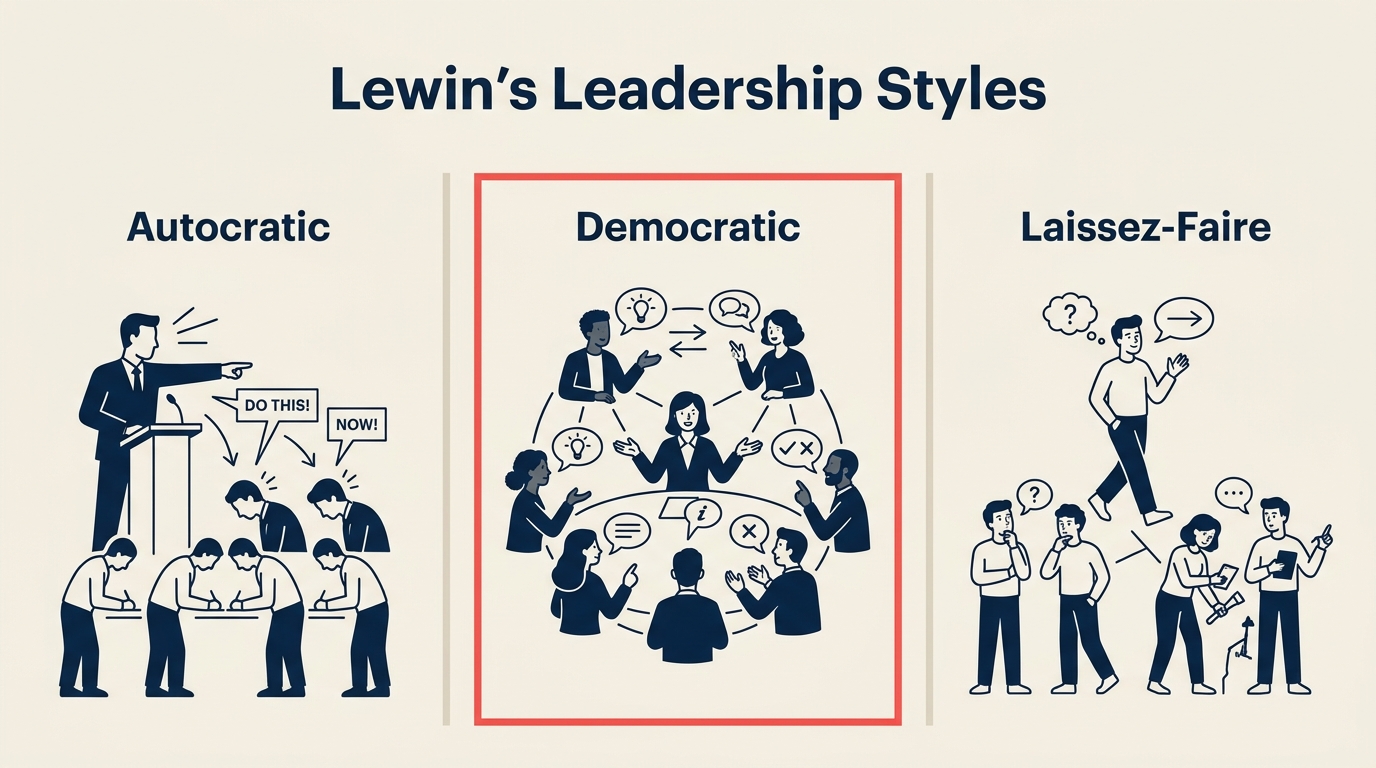
Gaya Kepimpinan Lewin ialah kerangka tiga pendekatan kepimpinan yang berbeza, pertama kali dikenal pasti oleh ahli psikologi Kurt Lewin bersama Ronald Lippitt dan Ralph White dalam penyelidikan mereka pada tahun 1939 di Iowa Child Welfare Research Station. Tiga gaya itu ialah autokratik (pemimpin memutuskan sendiri), demokratik (kumpulan mengambil bahagian dalam pembuatan keputusan), dan laissez-faire (pasukan beroperasi dengan hala tuju yang minimum). Bersama-sama, mereka membentuk taksonomi tingkah laku kepimpinan berasaskan bukti yang paling awal, dan mereka kekal sebagai titik rujukan utama dalam teori kepimpinan hari ini.
Fakta Utama
- Kajian asal diterbitkan dalam Lewin, Lippitt, dan White (1939) "Patterns of Aggressive Behavior in Experimentally Created Social Climates" (Journal of Social Psychology, 1939).
- Gaya demokratik menghasilkan gabungan produktiviti dan kepuasan tertinggi dalam eksperimen Lewin, dengan kumpulan autokratik menunjukkan hasilnya yang lebih tinggi hanya di bawah pengawasan langsung (Lewin et al., 1939).
- Lewin secara meluas dianggap sebagai pengasas psikologi sosial moden dan membangunkan bidang pembangunan organisasi; "Model Perubahan" beliau (Nyahbekukan-Ubah-Bekukan Semula) muncul daripada badan kerja yang sama (American Psychological Association, 2010).
Kajian asal (1939)
Lewin, Lippitt, dan White merekrut kumpulan kanak-kanak lelaki berusia 10 tahun di Universiti Iowa dan meminta mereka mengambil bahagian dalam kelab hobi selepas sekolah. Pemimpin dewasa dilatih untuk mengamalkan salah satu daripada tiga gaya kepimpinan, kemudian bergilir-gilir antara kumpulan supaya setiap kumpulan mengalami ketiga-tiga pendekatan sepanjang beberapa bulan. Para penyelidik memerhati dan merekod tingkah laku, hasilnya kerja, pencerobohan antara ahli, dan semangat. Reka bentuk pusingan yang terkawal itulah yang menjadikan kajian ini penting: ia membolehkan penyelidik mengasingkan kesan gaya kepimpinan daripada perbezaan dalam komposisi kumpulan. Hasilnya menunjukkan perbezaan yang jelas dan boleh diukur dalam tingkah laku kumpulan bergantung kepada gaya yang digunakan, bukan kepada kanak-kanak lelaki mana yang kebetulan berada dalam kumpulan.
3 gaya kepimpinan
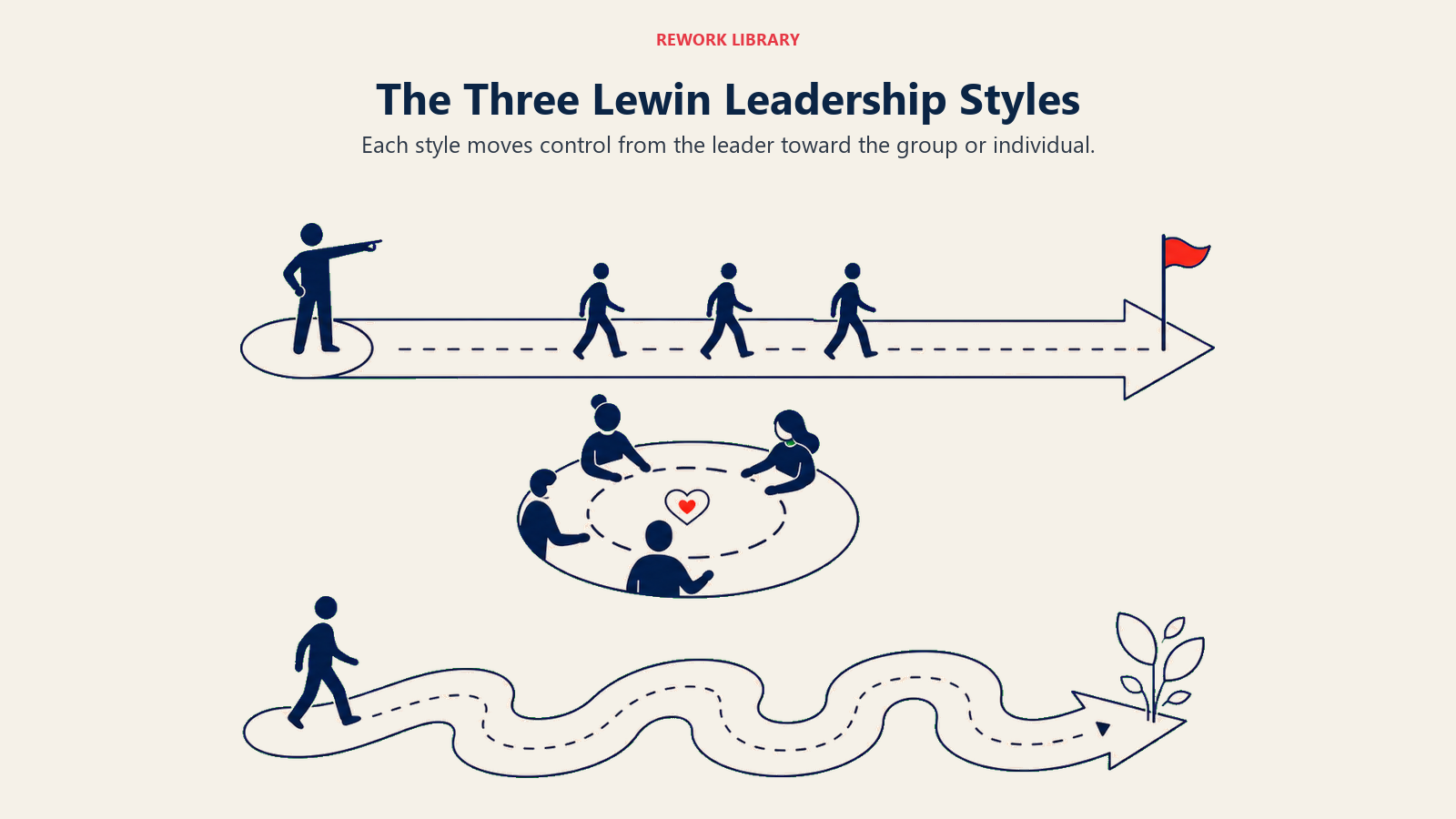
Ketiga-tiga gaya Lewin berbeza dari segi berapa banyak kawalan yang dikekalkan oleh pemimpin dan berapa banyak pemilikan pembuatan keputusan yang diberikan kepada kumpulan.
Kepimpinan autokratik (autoritarian)
Kepimpinan autokratik ialah gaya di mana pemimpin membuat keputusan secara sepihak, mengeluarkan arahan, dan mengharapkan pematuhan. Pasukan melaksanakan; input daripada ahli pasukan tidak diminta sebelum keputusan dibuat.
Tingkah laku: menetapkan matlamat tanpa rundingan, menugaskan kerja dengan arahan yang tepat, memantau hasilnya dengan rapat, dan memberikan maklum balas yang bersifat mengarah berbanding kolaboratif.
Bila ia berfungsi: situasi krisis, persekitaran kritikal dari segi keselamatan, onboarding pasukan yang tidak berpengalaman, atau mana-mana konteks di mana kelajuan lebih penting daripada komitmen. Mandur tapak pembinaan yang menghentikan kerja apabila protokol keselamatan dilanggar tidak mengadakan kumpulan fokus dahulu.
Bila ia gagal: dari semasa ke semasa, dengan pasukan yang mahir yang menginginkan pemilikan, atau dalam kerja kreatif di mana motivasi bergantung kepada pelaburan dalaman. Data Lewin menunjukkan bahawa apabila pemimpin autokratik meninggalkan bilik, hasilnya merosot tajam kerana kerja didorong oleh pematuhan, bukan pengarahan diri.
Contoh: Pengurus lantai kilang semasa peningkatan pengeluaran dengan tarikh akhir pelanggan yang ketat. Kelajuan dan konsistensi lebih penting daripada semangat dalam tempoh tersebut.
Baca lagi: Kepimpinan Autokratik
Kepimpinan demokratik (penyertaan)
Kepimpinan demokratik ialah gaya di mana pemimpin menjemput input kumpulan, memfasilitasi perbincangan, dan membuat keputusan yang mencerminkan pemikiran kolektif. Pemimpin mengekalkan kuasa muktamad tetapi secara aktif menggunakan perspektif pasukan untuk sampai ke sana.
Tingkah laku: menjalankan sesi kerja sebelum menetapkan hala tuju, meminta pandangan yang bersaing, menerangkan alasan di sebalik keputusan, dan mewakilkan tugas pilihan yang bermakna kepada pasukan.
Bila ia berfungsi: pasukan dengan kepakaran yang relevan, inisiatif perubahan yang memerlukan komitmen agar berkesan, atau mana-mana konteks di mana kualiti keputusan lebih penting daripada kelajuan. Kumpulan Lewin di bawah kepimpinan demokratik menghasilkan kerja berkualiti tinggi walaupun apabila pemimpin menyingkir, kerana motivasi bersifat dalaman.
Bila ia gagal: tekanan masa yang nyata, pasukan tidak berpengalaman yang memerlukan hala tuju yang jelas dan menjadi cemas dengan soalan terbuka, atau situasi di mana rantaian arahan yang jelas penting dari segi undang-undang atau operasi.
Contoh: Pengarah produk yang menjalankan perancangan peta jalan suku tahunan bersama jurutera dan pereka sebelum membuat komitmen kepada kitaran berikutnya. Pengetahuan teknikal pasukan adalah penentu kualiti rancangan tersebut.
Baca lagi: Kepimpinan Demokratik
Kepimpinan laissez-faire (pewakilan tugas)
Kepimpinan laissez-faire ialah gaya di mana pemimpin memberikan hala tuju yang minimum, membiarkan pasukan menetapkan matlamat dan kaedah mereka sendiri, dan hanya campur tangan apabila diminta. Kuasa pembuatan keputusan diedarkan kepada individu.
Tingkah laku: menetapkan objektif yang luas dan menyingkir, memberikan akses kepada sumber tanpa menetapkan cara menggunakannya, menyemak dari semasa ke semasa berbanding menyelia, dan mempercayai ahli pasukan untuk mengorganisasikan diri.
Bila ia berfungsi: pasukan profesional kanan yang sangat berkemampuan dan bermotivasi sendiri, persekitaran penyelidikan di mana kebebasan menghasilkan kerja yang lebih baik, dan disiplin kreatif di mana kekangan membunuh hasilnya. Rakan kongsi di firma undang-undang tidak mengarahkan cara peguam bela kanan menyelidik kes.
Bila ia gagal: ahli pasukan baharu yang memerlukan struktur, pasukan yang kekurangan kemahiran atau keyakinan untuk mengarahkan diri, atau situasi di mana penyelarasan antara ahli adalah kritikal dan tiada siapa yang menguruskannya. Kumpulan laissez-faire Lewin menunjukkan hasilnya terendah daripada ketiga-tiga dan tahap kebergantungan tertinggi apabila pemimpin hadir.
Contoh: Ketua R&D yang menetapkan hala tuju penyelidikan dan kemudian memberikan saintis kelonggaran untuk meneroka kaedah, garis masa, dan kerjasama tanpa semakan harian.
Baca lagi: Kepimpinan Laissez-Faire
Penemuan Lewin: apa yang kajian itu tunjukkan
Keputusan tahun 1939 Lewin adalah jelas dalam beberapa dimensi:
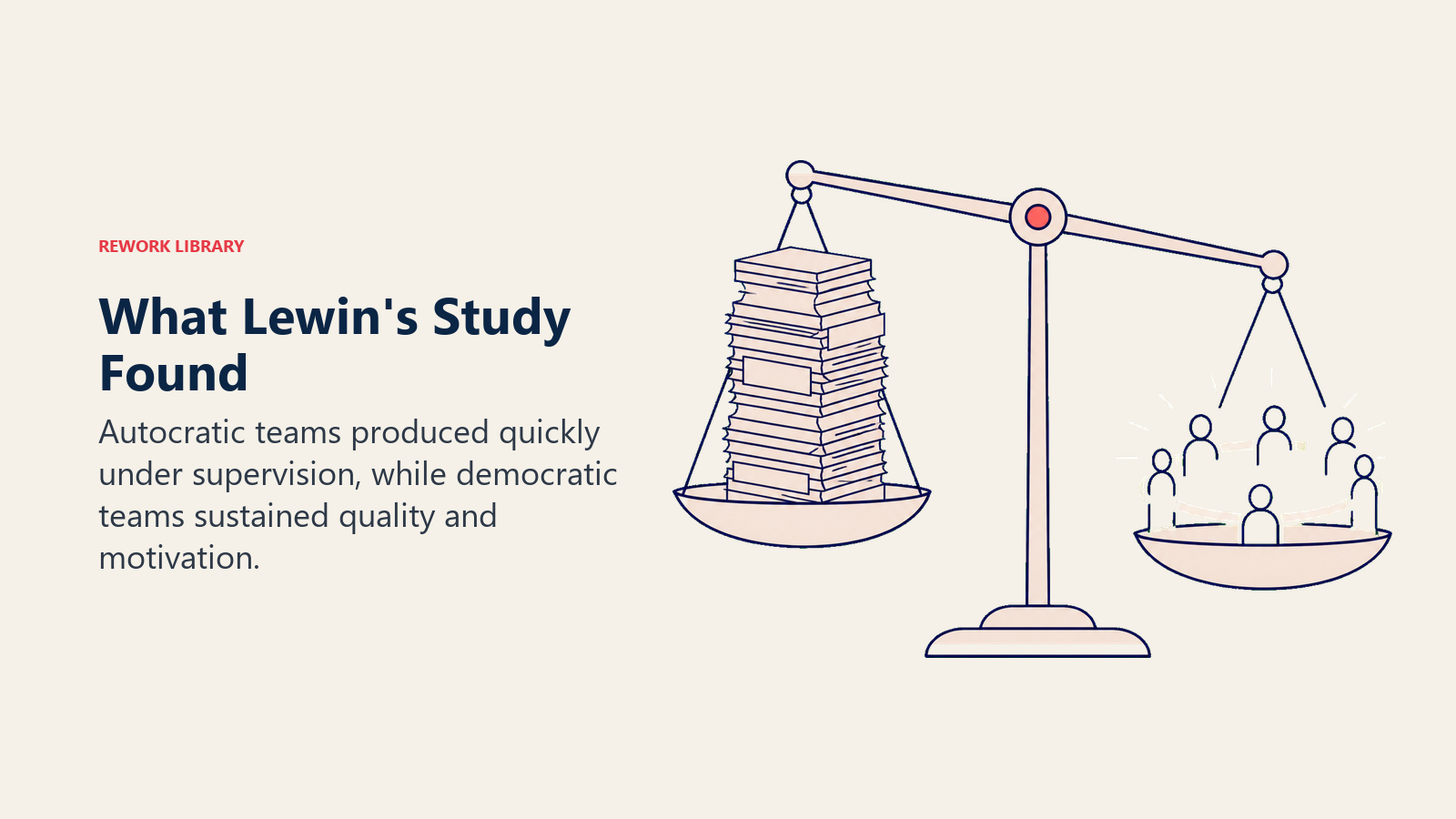
- Produktiviti: Kumpulan autokratik menghasilkan hasilnya mentah tertinggi tetapi hanya apabila pemimpin hadir. Hasilnya merosot apabila pemimpin menyingkir. Kumpulan demokratik menghasilkan hasilnya yang baik secara konsisten tanpa mengira pengawasan. Kumpulan laissez-faire menghasilkan paling sedikit secara keseluruhannya.
- Kepuasan: Kumpulan demokratik melaporkan semangat dan kepuasan kerja tertinggi. Kumpulan autokratik melaporkan kepuasan yang lebih rendah dan dalam sesetengah kes, kekecewaan yang lebih tinggi. Kumpulan laissez-faire melaporkan kepuasan semasa bermain bebas tetapi kekecewaan semasa tugas kerja.
- Pencerobohan: Kumpulan autokratik menunjukkan tahap pencerobohan dan permusuhan antara ahli yang tertinggi, terutamanya permusuhan yang didorong oleh kekecewaan terhadap pemimpin. Kumpulan demokratik menunjukkan pencerobohan yang jauh lebih rendah. Kumpulan laissez-faire menunjukkan pencerobohan yang sederhana.
- Kebergantungan: Kumpulan autokratik menjadi bergantung kepada pemimpin untuk semua inisiatif. Kumpulan demokratik membina kebergantungan diri dan terus bekerja ketika pemimpin tiada. Kumpulan laissez-faire menunjukkan kebergantungan yang tidak sekata: sesetengah ahli berkembang secara bebas sementara yang lain menjadi tidak terlibat.
- Kreativiti: Kumpulan demokratik secara konsisten menghasilkan kerja yang lebih kreatif dan asli. Kumpulan autokratik menghasilkan hasilnya yang dapat diramalkan dan patuh. Kumpulan laissez-faire menunjukkan kreativiti yang sporadik.
Bila menggunakan setiap gaya
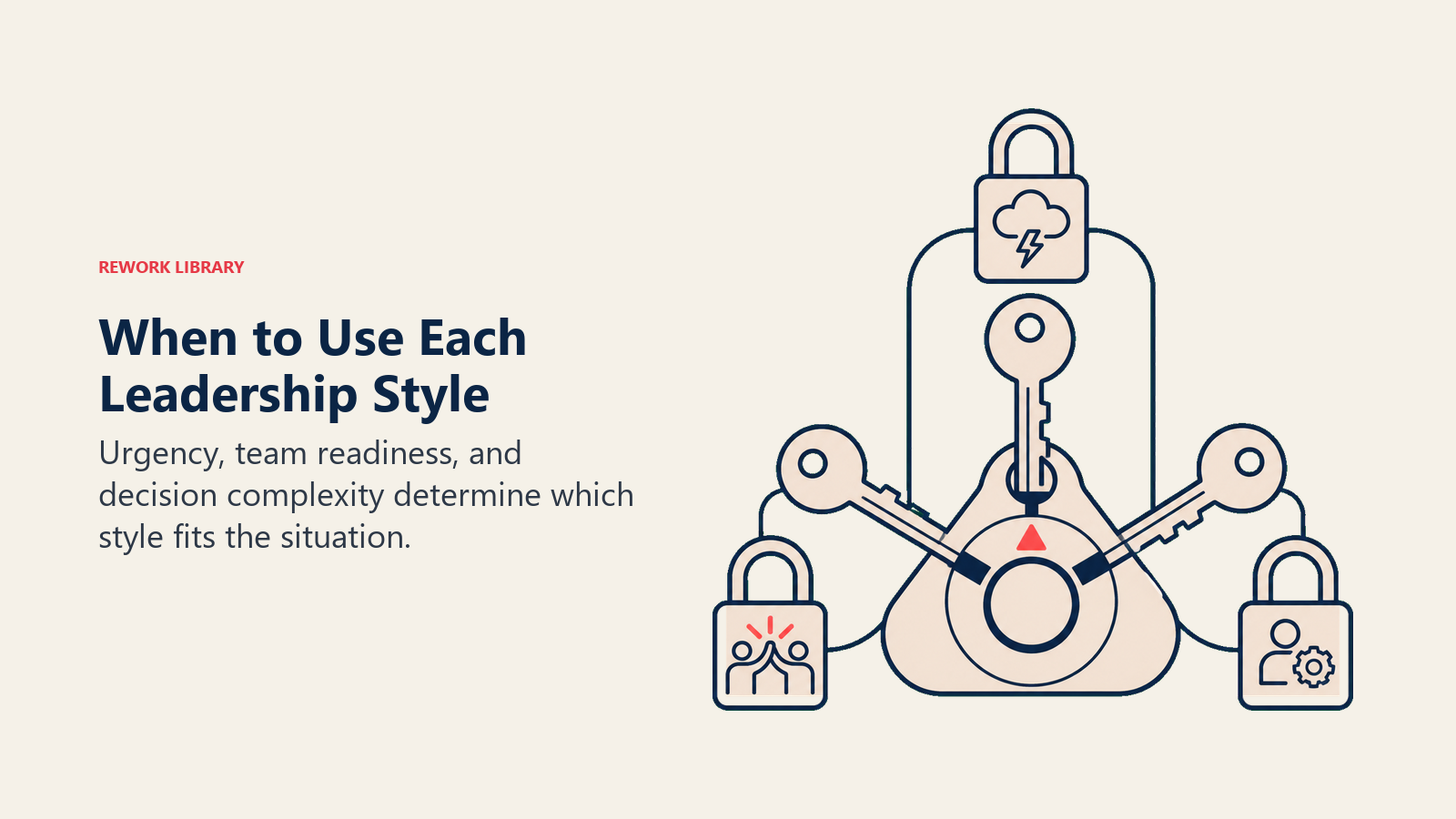
Setiap gaya mempunyai kes penggunaan yang sah, tetapi kesesuaiannya bergantung kepada pengalaman pasukan, kesegeraan, dan berapa banyak input yang diperlukan oleh keputusan tersebut.
| Gaya | Terbaik untuk | Elakkan apabila | Contoh moden |
|---|---|---|---|
| Autokratik | Respons krisis, tugas kritikal keselamatan, pasukan baru yang memerlukan hala tuju yang jelas | Pengurusan pasukan kemahiran tinggi jangka panjang, kerja kreatif, pembinaan budaya | Pengurus loji semasa penutupan keselamatan |
| Demokratik | Pasukan mahir, pengurusan perubahan, perancangan strategi, keputusan yang memerlukan komitmen | Tekanan masa yang nyata, persekitaran berasaskan pematuhan | VP Produk yang menjalankan sprint peta jalan |
| Laissez-faire | Pakar kanan, R&D, profesional kreatif, pencarum autonomi | Pekerja baharu, keperluan penyelarasan antara fungsi, projek yang samar-samar | Ketua Penyelidikan dengan pasukan peringkat PhD |
Pengurus terbaik tidak memilih satu gaya secara kekal. Mereka membaca pasukan, tugas, dan tekanan masa, kemudian memilih mengikutnya. Kerangka Lewin paling berguna sebagai alat diagnostik: apabila sesuatu terasa tidak kena dalam sesebuah pasukan, ia sering kali boleh ditelusuri kepada ketidakpadanan gaya antara apa yang dilakukan pemimpin dan apa yang sebenarnya diperlukan situasi itu.
Bagaimana gaya Lewin mempengaruhi teori moden
Kerangka tiga gaya Lewin bukan sekadar menggambarkan tingkah laku kepimpinan. Ia mewujudkan asas saintifik untuk membandingkan gaya, yang membuka pintu kepada setiap model kepimpinan utama yang menyusul.
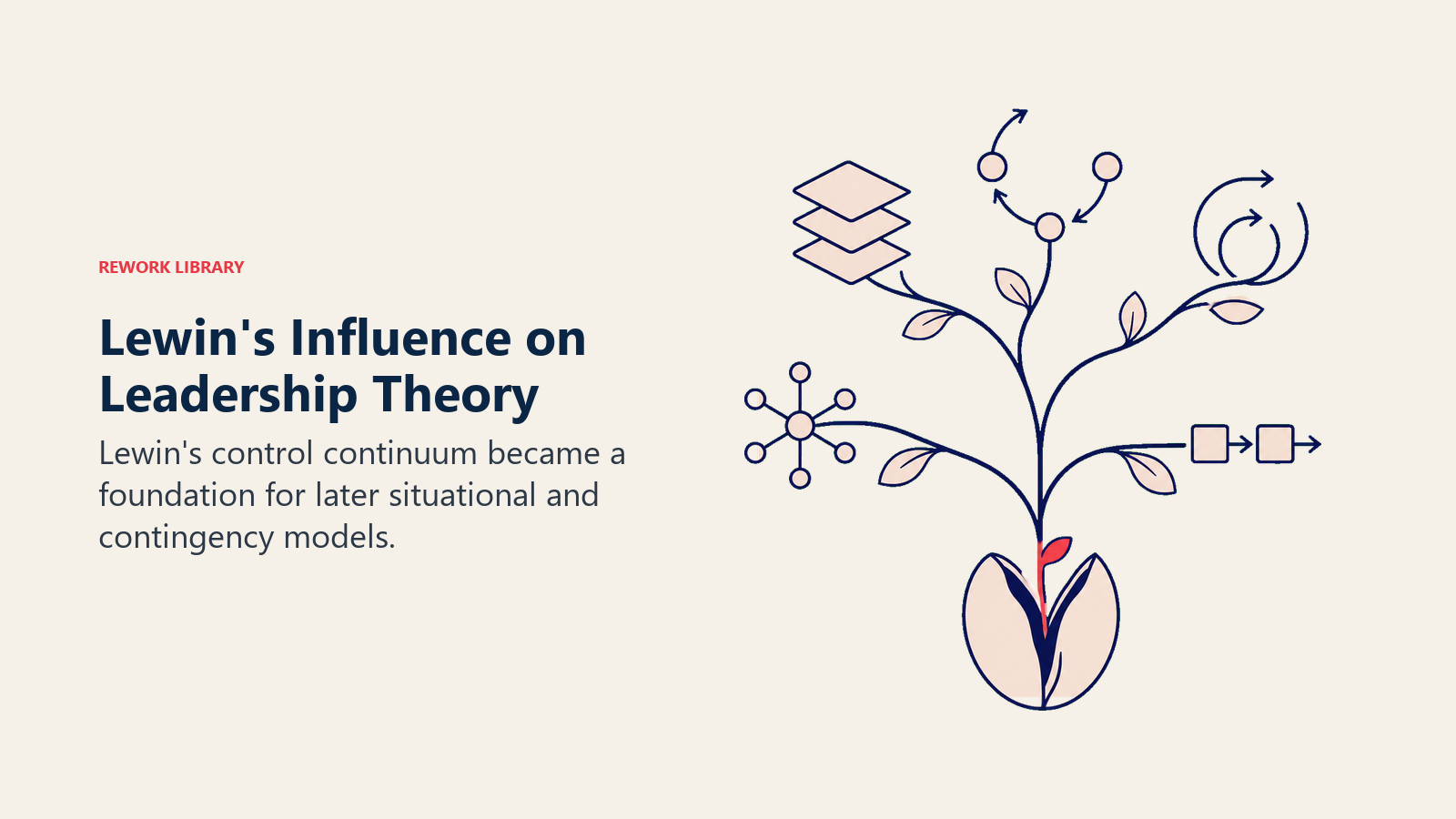
Blake-Mouton Managerial Grid (1964) oleh Robert Blake dan Jane Mouton dibina terus daripada paksi kawalan pemimpin berbanding pasukan Lewin dengan memetakan keprihatinan terhadap orang berbanding keprihatinan terhadap produktiviti, menghasilkan lima gaya pengurusan. Anda boleh membaca kerangka penuh di Blake-Mouton Managerial Grid. Model Situational Leadership oleh Paul Hersey dan Ken Blanchard meluaskan wawasan Lewin bahawa konteks mengubah apa yang berfungsi terbaik, dengan menambah dimensi tahap perkembangan pengikut. Kerangka mereka diliputi secara terperinci di Gaya Situational Leadership. Teori Path-Goal (House, 1971) mengambil gaya demokratik Lewin dan memformalkan idea bahawa pemimpin menyesuaikan tingkah laku mengarah atau menyokong mereka untuk memadankan apa yang diperlukan pengikut untuk mencapai matlamat. Dan Kepimpinan Transformasi, yang berada di tiang bertentangan dengan kawalan autokratik, mengambil asas ideologinya daripada penemuan Lewin bahawa motivasi dalaman menghasilkan prestasi yang lebih baik berbanding pematuhan. Lihat Apakah Teori Kepimpinan Transformasi untuk bagaimana ia berkembang.
Benang yang menghubungkan semuanya ialah kesimpulan teras Lewin: gaya kepimpinan bukan sifat personaliti yang tetap. Ia adalah pilihan tingkah laku, dan pilihan yang betul bergantung kepada situasi.
Cara beranjak antara gaya
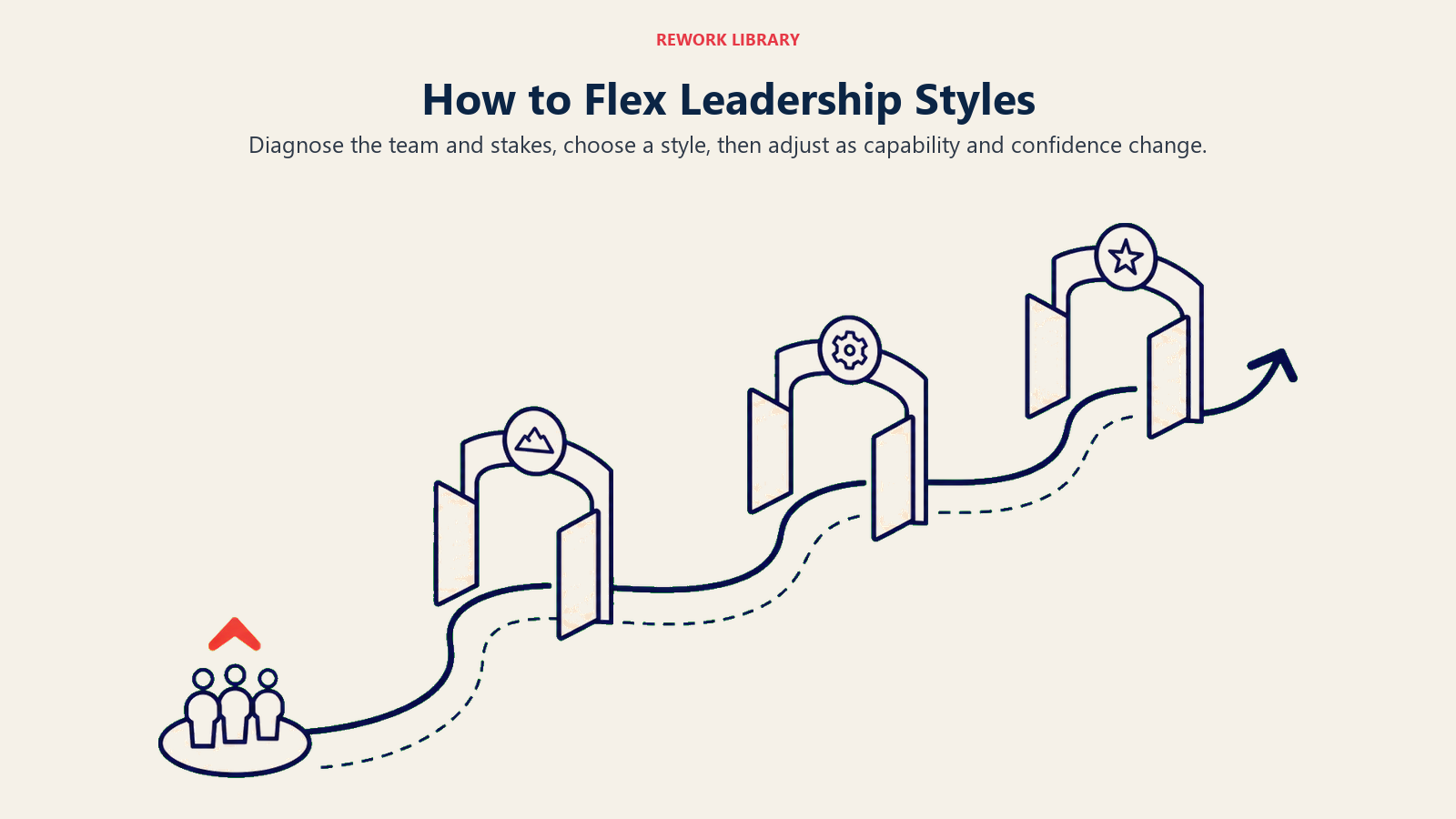
Diagnosis pasukan dan apa yang dipertaruhkan, pilih gaya, kemudian sesuaikan apabila keupayaan dan keyakinan berubah.
Langkah 1: Baca pasukan
Sebelum memilih gaya, perhatikan tahap kemahiran dan keyakinan pasukan. Pasukan profesional kanan dengan autonomi tinggi memerlukan kepimpinan laissez-faire atau demokratik. Pasukan baru atau dalam konteks baharu memerlukan lebih banyak hala tuju autokratik, bukan kerana mereka kurang berkemampuan, tetapi kerana mereka belum mempunyai maklumat untuk mengarahkan diri dengan baik. Peringkat Perkembangan Kumpulan Tuckman ialah peta yang berguna di sini: pasukan pada peringkat Forming memerlukan lebih banyak hala tuju; pasukan pada peringkat Performing memerlukan lebih sedikit.
Langkah 2: Nilai tugas
Tanya apa yang sebenarnya dipertaruhkan. Adakah ini keputusan keselamatan di mana kelajuan dan pematuhan penting? Gunakan autokratik. Adakah ini keputusan strategi di mana anda memerlukan pasukan untuk melaksanakan sesuatu yang mereka percaya? Gunakan demokratik. Adakah ini kerja kreatif atau penyelidikan di mana kekangan membunuh hasilnya? Beralih ke laissez-faire. Jenis tugas biasanya merupakan isyarat yang paling jelas.
Langkah 3: Pilih gaya dan bersikap jelas mengenainya
Jangan biarkan pasukan meneka mod yang anda gunakan. Jika anda menjalankan keputusan berstruktur dengan tarikh akhir yang ketat, katakan demikian. Jika anda membuka sesi perancangan untuk input yang tulen, katakan itu juga. Sumber kekeliruan terbesar dalam kepimpinan ialah apabila pengurus kelihatan meminta input tetapi sudah memutuskan, atau kelihatan mewakilkan tugas tetapi kemudian mengatasi setiap pilihan. Namakan gaya yang anda gunakan.
Langkah 4: Komunikasikan sebabnya
Pasukan bertindak balas dengan lebih baik apabila mereka memahami mengapa pergeseran gaya sedang berlaku. "Minggu ini kita dalam mod krisis, jadi saya akan lebih mengarah berbanding biasa" lebih berkesan berbanding sekadar mengeluarkan arahan. Ketelusan itu sendiri merupakan dorongan demokratik, dan ia mengekalkan kepercayaan walaupun mod pembuatan keputusan sementara bersifat autokratik.
Langkah 5: Sesuaikan berdasarkan maklum balas
Perhatikan apa yang sebenarnya berlaku. Jika pendekatan demokratik menyebabkan keputusan tersekat, ketatkan kawalan sementara. Jika pendekatan autokratik sedang mewujudkan kepasifan dan kebencian dalam pasukan yang mahir, longgarkanlah. Tanda kepimpinan situasi ialah tepat ini: kesediaan untuk terus menyesuaikan ekualisasi berbanding mempertahankan gaya yang tetap.
Kritikan dan keterbatasan
Kerangka Lewin telah bertahan dengan sangat baik, tetapi ia mempunyai keterbatasan sebenar yang patut diketahui:
- Sampel kecil dan homogen: Kajian asal menggunakan kanak-kanak lelaki berusia 10 tahun dalam kelab hobi, yang jauh berbeza daripada pasukan korporat. Generalisasi merentasi konteks profesional dewasa, pasukan pelbagai, dan persekitaran berisiko tinggi adalah andaian, bukan penemuan yang terbukti.
- Kerangka binari: Tingkah laku kepimpinan sebenar jarang sesuai dengan tiga kategori dengan kemas. Kebanyakan pengurus mencampurkan gaya dalam satu perbualan, apatah lagi merentasi satu hari atau satu suku tahun.
- Mengabaikan ciri pengikut: Kerangka Lewin meletakkan semua berat penerangan pada tingkah laku pemimpin dan memperlakukan respons kumpulan sebagai hasilnya yang langsung. Ia sebahagian besarnya mengabaikan bagaimana sifat pengikut individu, jangkaan, dan latar belakang budaya menengahi kesan setiap gaya.
- Tiada konteks kerjaya atau industri: Gaya laissez-faire yang berfungsi kurang baik dalam kajian Lewin tentang kanak-kanak lelaki mungkin berfungsi baik dengan pasukan pakar bedah yang berpengalaman. Norma industri, budaya profesional, dan jangkaan peranan semuanya membentuk maksud "kepimpinan yang baik" dalam konteks tertentu.
- Kaedah pengukuran yang lapuk: Pengukuran berasaskan pemerhatian tentang pencerobohan dan produktiviti dalam kelab tahun 1939 tidak peta dengan bersih kepada metrik kualiti hasilnya dalam kerja pengetahuan moden.
Keterbatasan ini tidak membatalkan kerangka. Tetapi inilah sebab mengapa tiada teori kepimpinan tingkah laku yang serius hari ini bergantung kepada Lewin sahaja.
Amalan terbaik
- Mulakan dengan diagnosis: sebelum memilih gaya, namakan situasi sebenar, bukan yang anda inginkan.
- Lalai kepada demokratik untuk keputusan yang memerlukan pelaksanaan yang berterusan. Komitmen adalah input prestasi, bukan kemewahan.
- Simpan autokratik untuk keperluan mendesak yang tulen atau keselamatan. Menggunakannya sebagai lalai memberi isyarat ketidakselamatan, bukan kuasa.
- Gunakan laissez-faire hanya dengan pasukan yang mempunyai kemahiran dan keyakinan untuk mengarahkan diri. Mewakilkan tugas kepada pasukan yang keliru bukan kepimpinan tanpa campur tangan; ia adalah pengabaian.
- Namakan gaya yang anda gunakan, terutamanya apabila anda beralih mod. Kesunyian tentang perubahan gaya melahirkan sinisme.
- Semak semula gaya lalai anda apabila anda berpindah ke pasukan baharu. Pendekatan yang berkesan dengan pasukan terakhir anda mungkin tidak sesuai dengan yang baharu.
- Perhatikan hanyutan gaya di bawah tekanan. Kebanyakan pengurus mengencangkan ke arah autokratik apabila tertekan, walaupun situasinya tidak memerlukannya.
- Perlakukan kerangka Lewin sebagai peta permulaan, bukan jawapan akhir. Padanankan dengan model situasional atau transformasi untuk gambaran yang lebih penuh.
Tiga gaya Lewin kekal sebagai kanta praktikal 85 tahun selepas kajian Iowa, bukan kerana ia mudah, tetapi kerana soalan teras yang dijawabnya masih merupakan soalan yang betul: diberi pasukan dan situasi ini, berapa banyak kawalan yang perlu saya pegang? Mendapatkan penentukuran yang betul masih merupakan kemahiran utama pengurusan. Dan Lewin memberikan kita bukti kukuh pertama bahawa ia penting.

Senior Operations & Growth Strategist
On this page
- Apakah Gaya Kepimpinan Lewin?
- Kajian asal (1939)
- 3 gaya kepimpinan
- Kepimpinan autokratik (autoritarian)
- Kepimpinan demokratik (penyertaan)
- Kepimpinan laissez-faire (pewakilan tugas)
- Penemuan Lewin: apa yang kajian itu tunjukkan
- Bila menggunakan setiap gaya
- Bagaimana gaya Lewin mempengaruhi teori moden
- Cara beranjak antara gaya
- Langkah 1: Baca pasukan
- Langkah 2: Nilai tugas
- Langkah 3: Pilih gaya dan bersikap jelas mengenainya
- Langkah 4: Komunikasikan sebabnya
- Langkah 5: Sesuaikan berdasarkan maklum balas
- Kritikan dan keterbatasan
- Amalan terbaik