Kepimpinan Inklusif: Ciri-ciri, Tingkah Laku, dan Contoh
Turn this article into takeaways for your work.


Each assistant summarizes the article only for you and suggests best practices for your work.
Kepimpinan inklusif ialah salah satu peramal paling jelas bagi pasukan berprestasi tinggi, namun kebanyakan pengurus tidak pernah menerima latihan formal tentang cara mengamalkannya. Jika anda seorang pengarah atau ketua pasukan yang cuba membuka lebih banyak potensi daripada orang anda, di sinilah tempat untuk bermula.
Apakah Kepimpinan Inklusif?
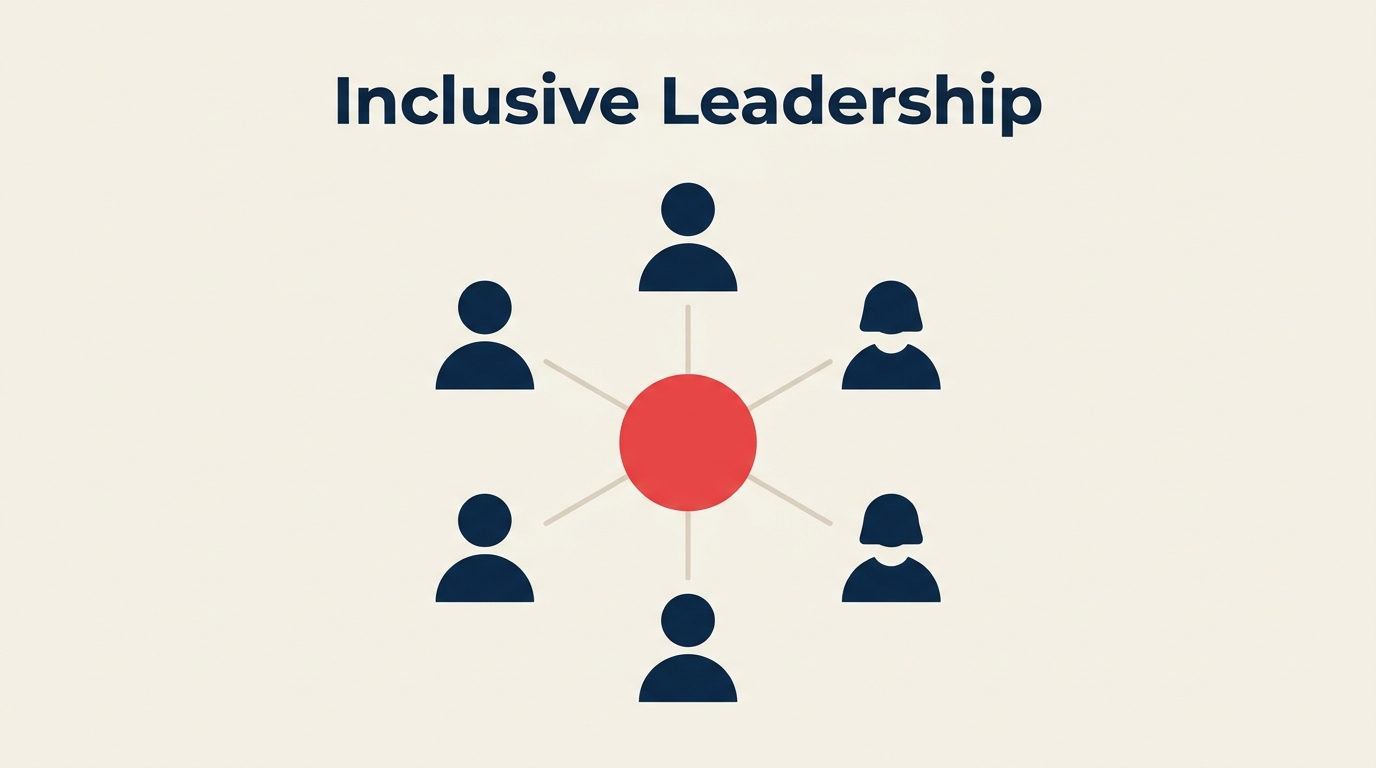
Kepimpinan inklusif ialah pendekatan kepimpinan di mana pemimpin secara aktif mewujudkan keadaan bagi setiap ahli pasukan untuk menyumbang, berasa dihargai, dan melakukan kerja terbaik mereka tanpa mengira latar belakang, identiti, atau gaya bekerja. Ia melampaui pengambilan keragaman. Pemimpin inklusif sentiasa menyemak titik buta mereka sendiri, secara aktif meminta pandangan yang berbeza, dan memastikan suara yang kurang terwakili membentuk keputusan, bukan sekadar mendengar tentang keputusan tersebut.
Perbezaan ini penting. Anda boleh mempunyai pasukan yang pelbagai dan masih mengendalikannya dengan cara yang menumpukan suara dan peluang dalam kalangan orang-orang yang sama. Kepimpinan inklusif adalah amalan yang mengubah kepelbagaian menjadi prestasi sebenar.
Fakta Penting
- Pasukan dengan pemimpin inklusif 17% lebih berkemungkinan melaporkan prestasi tinggi dan 20% lebih berkemungkinan membuat keputusan yang lebih baik (Deloitte, 2016 Global Human Capital Trends).
- Pekerja yang berasa disertakan 3x lebih berkemungkinan terlibat sepenuhnya berbanding mereka yang tidak berasa disertakan (Deloitte Insights, 2020).
- Organisasi dalam kuartil teratas untuk kepelbagaian etnik dan budaya 36% lebih berkemungkinan mencapai keuntungan di atas purata berbanding mereka dalam kuartil keempat (McKinsey, Diversity Wins, 2020).
Ciri-ciri Pemimpin Inklusif
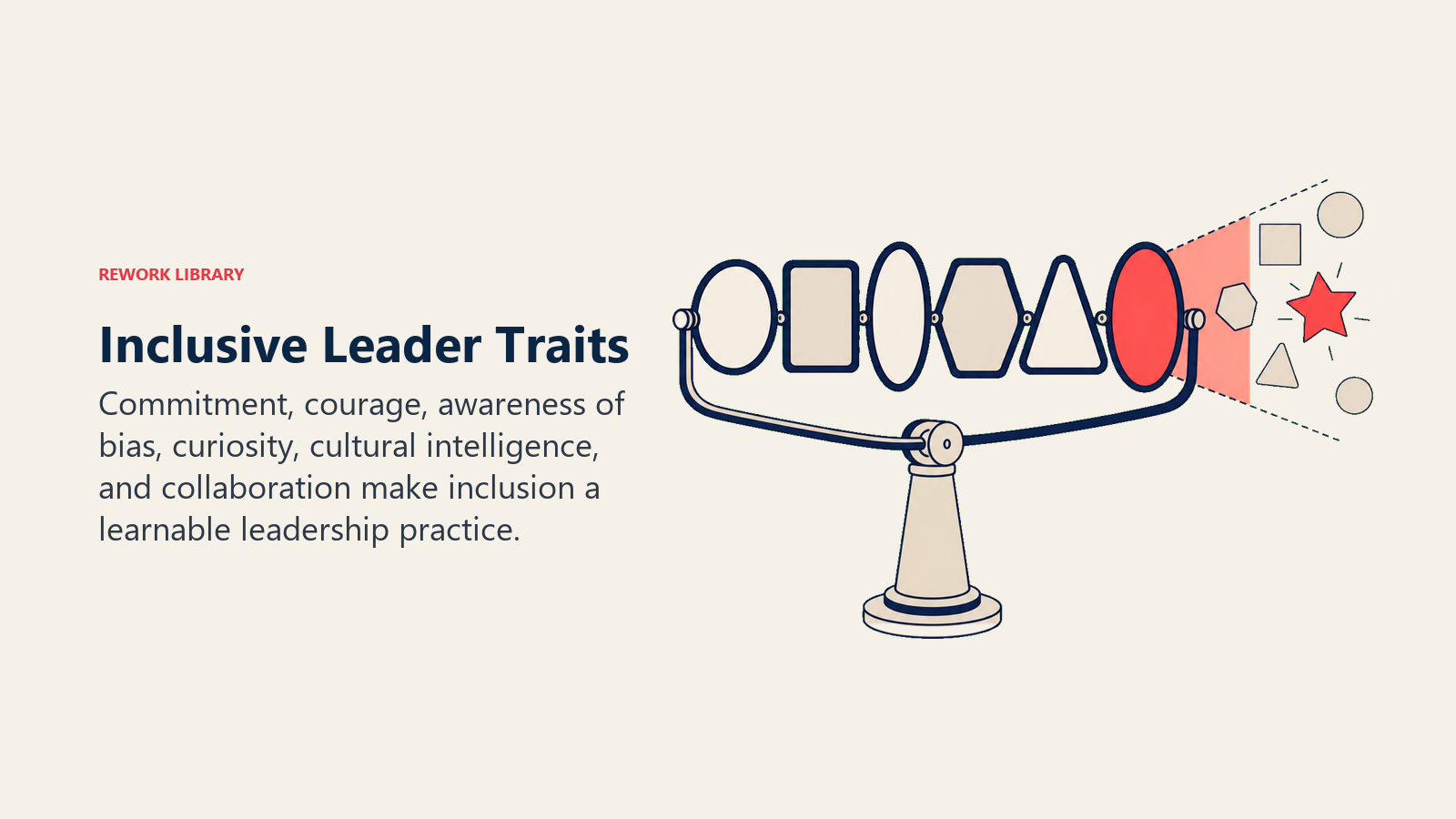
Penyelidik Deloitte mengenal pasti enam ciri tandatangan yang muncul secara konsisten pada pemimpin yang pasukannya melaporkan penyertaan yang tinggi. Ini bukan jenis personaliti tetapi tingkah laku yang boleh dipelajari.
| Ciri | Bagaimana Rupanya |
|---|---|
| Komitmen | Mengutamakan penyertaan sebagai matlamat strategik, bukan sekadar kotak semak HR. Bercakap tentangnya secara terbuka dan menyokongnya dengan masa dan belanjawan. |
| Keberanian | Mencabar status quo. Menegur tingkah laku eksklusif, walaupun ia janggal atau mahal secara politik. |
| Kesedaran tentang berat sebelah | Mengetahui titik buta mereka sendiri dan membina penjagaan proses (temu duga berstruktur, fasilitator mesyuarat bergilir) untuk mengurangkan kesan berat sebelah pada keputusan. |
| Rasa ingin tahu | Bertanya soalan sebelum membuat kesimpulan. Menganggap perspektif yang berbeza sebagai peluang pembelajaran, bukan halangan. |
| Kecerdasan budaya | Menyesuaikan gaya komunikasi dan pengurusan untuk berkesan merentas latar belakang budaya yang berbeza. |
| Kerjasama | Memperkasakan ahli pasukan untuk menyumbang dengan bermakna. Berkongsi kuasa berbanding menimbun hak keputusan. |
Kebanyakan pengurus mendapat markah yang baik pada satu atau dua daripada ini secara semula jadi. Matlamatnya bukan kesempurnaan merentas keenam-enam dari hari pertama; ia adalah penilaian diri yang jujur tentang kawasan mana yang memerlukan amalan yang disengajakan.
Tingkah Laku Kepimpinan Inklusif
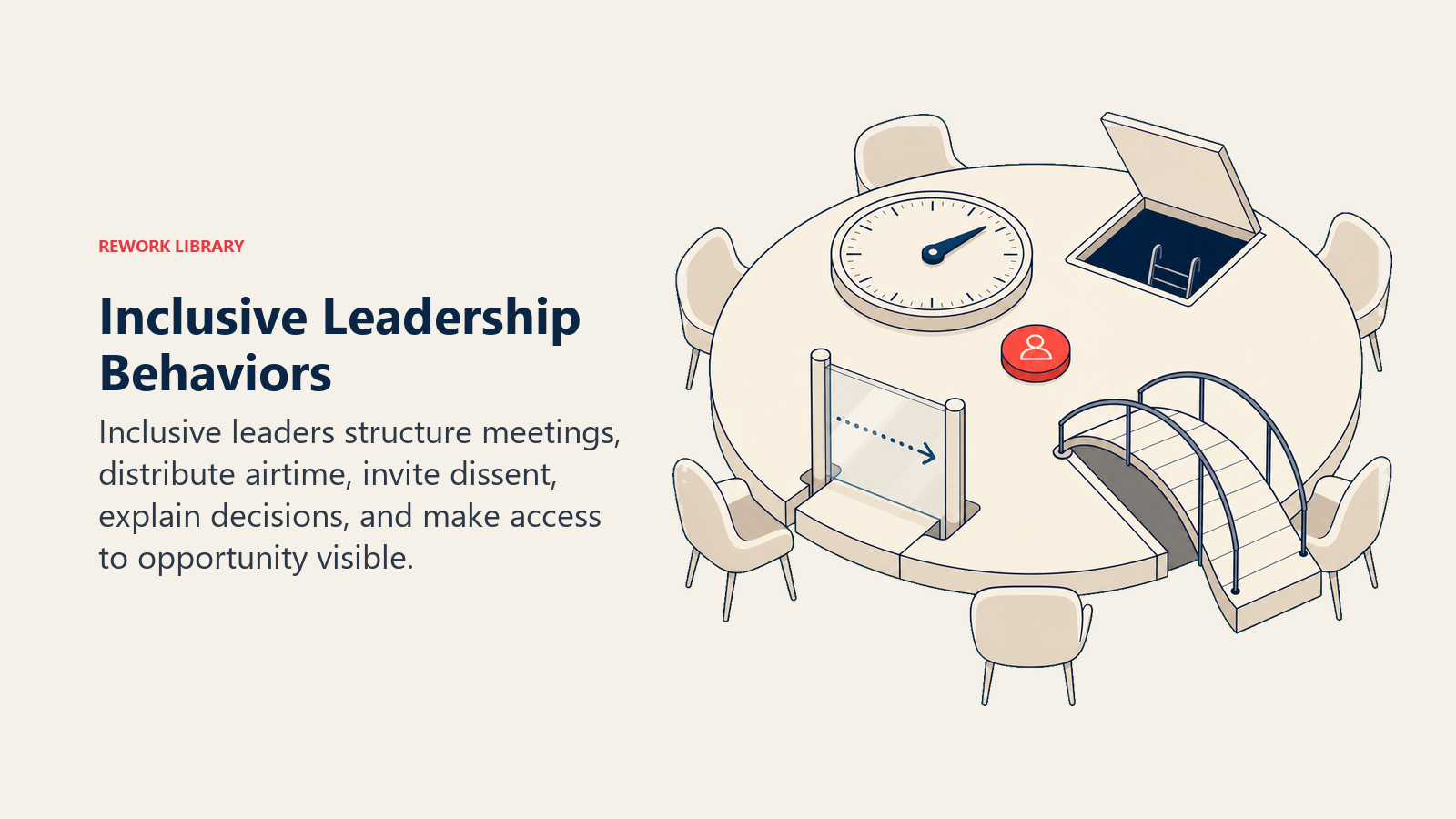
Ciri-ciri menggambarkan siapa anda. Tingkah laku menggambarkan apa yang anda lakukan pada Selasa pagi. Berikut ialah amalan harian yang memisahkan pemimpin inklusif daripada mereka yang hanya bercita-cita untuk menjadi begitu.
Dalam mesyuarat:
- Tugaskan peranan fasilitator bergilir supaya suara yang sama tidak mengawal agenda setiap kali.
- Namakan dan hentikan corak di mana ahli pasukan tertentu secara konsisten dipotong cakap atau idea mereka dikreditkan kepada orang lain.
- Hantar bahan pra-baca sekurang-kurangnya 24 jam lebih awal supaya orang yang memproses maklumat secara berbeza boleh menyumbang dengan bermakna, bukan hanya mereka yang berfikir pantas dalam keadaan tertekan.
Dalam perbualan prestasi dan kerjaya:
- Gunakan kriteria penilaian yang konsisten. Apabila memberikan maklum balas, kaitkan pemerhatian kepada tingkah laku dan hasil tertentu, bukan tanggapan samar-samar.
- Menjadi penaja secara aktif, bukan sekadar mentor. Mentor memberi nasihat; penaja mempertaruhkan kredibiliti mereka untuk memperjuangkan kenaikan pangkat seseorang atau projek berprofil tinggi.
Dalam komunikasi harian:
- Gunakan nama dan kata ganti yang betul untuk orang. Dapatkan dengan betul. Jika anda tidak pasti, tanya secara peribadi sekali berbanding mengelak orang tersebut.
- Agihkan tugasan mencabar merentas pasukan, bukan hanya kepada mereka yang paling mengingatkan anda tentang diri anda.
- Semak "mikro-afirmasi," tindakan kecil yang memberi isyarat seseorang diterima: mengakui sumbangan mereka dalam benang mesej, meminta pandangan mereka dalam mesyuarat rentas fungsi, mengingati apa yang mereka katakan minggu lepas.
Mengenai struktur dan norma pasukan:
- Jadikan peraturan tersirat eksplisit. Jika terdapat peraturan tidak bertulis bahawa peranan tertentu tidak menghadiri mesyuarat tertentu, tuliskannya supaya anda boleh memeriksa sama ada ia adil.
- Cipta pelbagai saluran maklum balas supaya ahli pasukan yang pendiam atau jauh mempunyai cara untuk membangkitkan kebimbangan yang tidak memerlukan bersuara di hadapan kumpulan.
Mengapa Kepimpinan Inklusif Penting
Kes perniagaan untuk kepimpinan inklusif bukan bersifat lembut. Kajian secara konsisten mengaitkannya dengan hasil yang dipedulikan oleh pasukan kewangan dan operasi.
Kadar inovasi. Pasukan yang pelbagai menghasilkan penyelesaian yang lebih kreatif kerana mereka membawa lebih banyak pembingkaian masalah ke atas meja. Tetapi itu hanya diterjemahkan kepada output jika ahli pasukan berasa selamat untuk berkongsi idea yang tidak konvensional. Keselamatan psikologi adalah mekanismenya; kepimpinan inklusif mewujudkan keadaan untuknya.
Kualiti keputusan. Kumpulan dengan input yang benar-benar pelbagai membuat lebih sedikit kesilapan yang boleh diramal. Pasukan yang homogen cenderung untuk menumpu pada titik buta yang sama. Pemimpin inklusif yang secara aktif mencari pandangan yang berbeza mendapat gambaran yang lebih lengkap sebelum membuat komitmen.
Pengekalan pekerja. Pekerja yang tidak berasa disertakan akan pergi. Menggantikan pekerja peringkat pertengahan menelan belanja 50-200% daripada gaji tahunan mereka dalam pengambilan pekerja, penerimaan pekerja baharu, dan kehilangan produktiviti. Mengurangkan pusing ganti dalam kumpulan yang kurang terwakili adalah salah satu pelaburan pulangan tertinggi yang boleh dibuat oleh pemimpin orang.
Penglibatan pekerja. Data Deloitte yang disebut sebelumnya menunjukkan jurang penglibatan 3x antara pekerja yang berasa disertakan dan mereka yang tidak. Pekerja yang terlibat adalah lebih produktif, kekal lebih lama, dan lebih berkemungkinan mengesyorkan syarikat kepada calon-calon.
Prestasi pasukan. Apabila orang percaya sumbangan mereka dihargai, mereka membawa lebih banyak keupayaan mereka ke tempat kerja. Itu bukan retorik motivasi; ia adalah logik mudah usaha budi bicara.
Kepimpinan Inklusif berbanding Kepimpinan Etika
Kepimpinan inklusif dan kepimpinan etika bertindih tetapi tidak sama.
| Dimensi | Kepimpinan Inklusif | Kepimpinan Etika |
|---|---|---|
| Fokus utama | Memastikan setiap suara menyumbang dan dihargai | Melakukan apa yang betul; menyelaraskan tindakan dengan prinsip moral |
| Motivasi | Membuka prestasi pasukan melalui rasa kepunyaan | Membina kepercayaan melalui integriti dan keadilan |
| Skop | Dalaman: komposisi pasukan, proses, budaya | Dalaman dan luaran: pemegang kepentingan, nilai, kelakuan |
| Tingkah laku utama | Meminta input, menghapuskan halangan, menaja bakat | Memodelkan kejujuran, berpegang kepada standard, melaporkan salah laku |
Dalam amalan, pemimpin yang paling berkesan adalah kedua-duanya. Kepimpinan etika menetapkan lantai moral; kepimpinan inklusif meningkatkan siling tentang apa yang boleh dicapai oleh pasukan. Pemimpin boleh sangat beretika tetapi masih menjalankan mesyuarat di mana suara tertentu sentiasa mendominasi. Dan pemimpin boleh sangat inklusif dalam proses sambil masih bertolak ansur dengan jalan pintas etika di tempat lain.
Jika anda membina ke arah kepimpinan khidmat atau kepimpinan autentik, tingkah laku inklusif dan etika adalah blok binaan teras, bukan tambahan.
Cara Menjadi Pemimpin yang Lebih Inklusif
Ini adalah amalan, bukan destinasi. Berikut ialah urutan konkrit yang berjaya dalam organisasi sebenar.
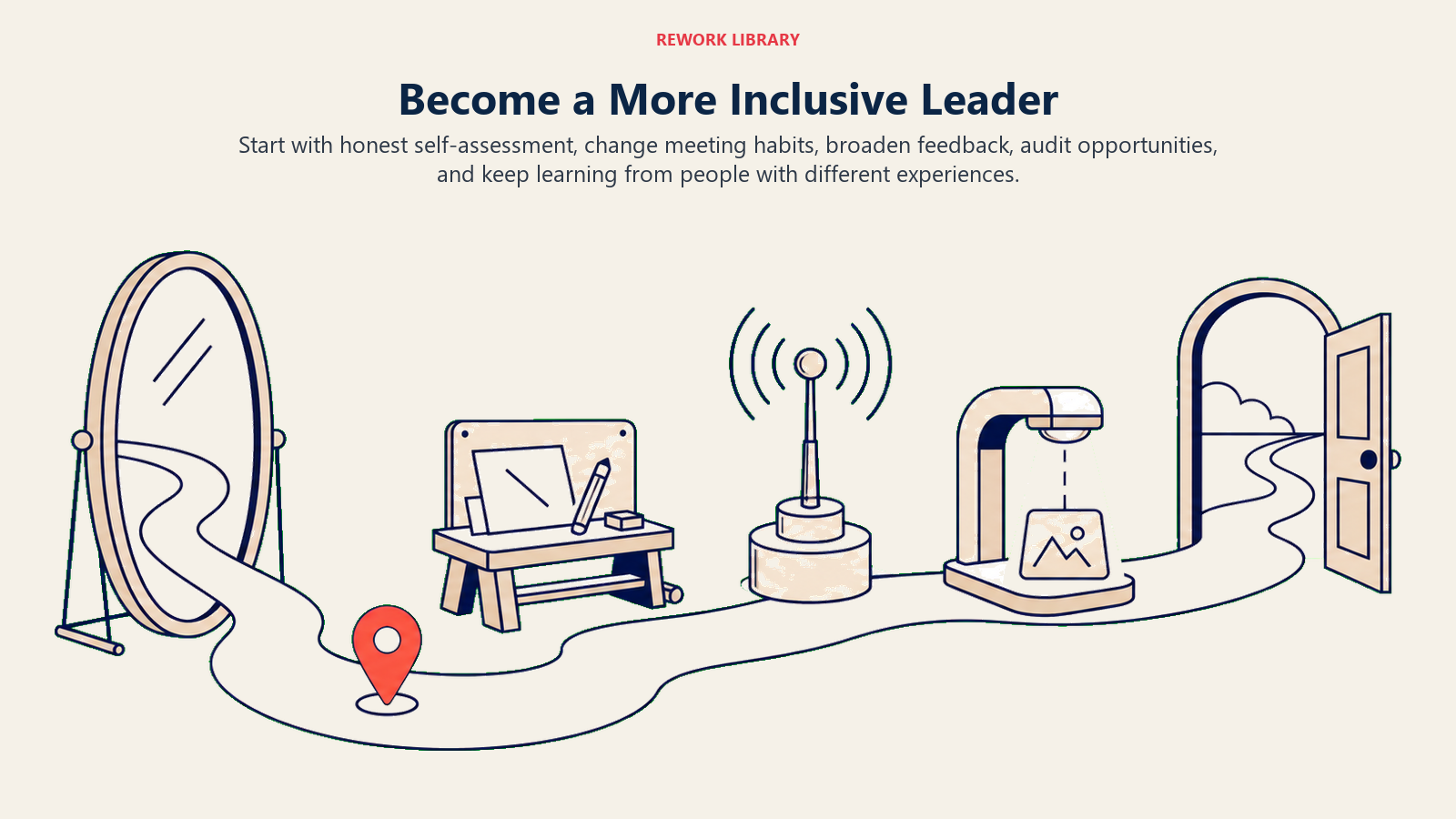
Jalankan penilaian diri yang jujur. Beri markah diri anda terhadap enam ciri (komitmen, keberanian, kesedaran tentang berat sebelah, rasa ingin tahu, kecerdasan budaya, kerjasama). Minta rakan sekerja yang dipercayai untuk melakukannya bagi pihak anda secara bebas. Jurang antara skor kendiri anda dan skor mereka adalah isyarat pertama anda.
Audit dinamik mesyuarat anda. Rakam video diri anda memudahkan mesyuarat pasukan jika budaya syarikat anda mengizinkannya, atau minta rakan sekerja untuk memerhati dan memberikan maklum balas khusus. Siapa yang paling banyak bercakap? Idea siapa yang dikembangkan berbanding diabaikan?
Pilih satu perubahan tingkah laku dan amalkan selama 30 hari. Perubahan tidak datang daripada kesedaran sahaja. Pilih satu tingkah laku khusus (contohnya: sebelum setiap mesyuarat keputusan, minta pandangan orang yang paling senyap dalam bilik dahulu) dan ulangi sehingga ia menjadi automatik.
Bina penjagaan struktur. Jangan bergantung sepenuhnya pada kehendak diri sendiri. Kad skor temu duga berstruktur, fasilitasi bergilir, semakan resume tanpa nama, dan sesi kalibrasi semuanya mengurangkan permukaan di mana berat sebelah peribadi boleh beroperasi.
Dapatkan maklum balas daripada mereka yang paling terkesan. Tanya ahli pasukan dari kumpulan yang kurang terwakili sama ada mereka berasa didengari. Gunakan saluran tanpa nama jika perlu. Bertindak berdasarkan apa yang anda dengar, dan tutup gelung secara terbuka supaya orang melihat bahawa input membawa kepada perubahan.
Pelajari konteks budaya, bukan stereotaip. Kecerdasan budaya bukan tentang menghafal budaya mana yang "langsung" berbanding "tidak langsung." Ia tentang bertanya soalan dan kekal ingin tahu tentang cara latar belakang seseorang membentuk keutamaan komunikasi dan gaya kerja mereka. Kepimpinan adaptif membina pada kemahiran yang sama.
Modelkannya secara nyata. Apabila anda menegur komen yang berat sebelah dalam mesyuarat, anda menjadikannya selamat bagi orang lain untuk berbuat demikian. Apabila anda secara terbuka menaja seseorang dari kumpulan yang kurang terwakili, anda memberi isyarat bahawa penyertaan adalah nilai yang mempengaruhi kerjaya, bukan hanya nilai yang disebut dalam perhimpunan umum.
Ukur dan laporkan. Jejaki kadar kenaikan pangkat, kadar penugasan projek, dan skor tinjauan penglibatan mengikut kumpulan demografi. Apa yang diukur diuruskan. Kongsikan data dengan pasukan anda supaya akauntabiliti adalah kolektif, bukan hanya milik pemimpin.
Bacaan berkaitan: Kepimpinan demokratik mempunyai beberapa amalan yang bertindih, terutama sekitar pembuatan keputusan bersama dan suara bergilir.
Soalan Lazim
Apakah definisi paling mudah kepimpinan inklusif?
Kepimpinan inklusif bermaksud mewujudkan persekitaran di mana semua orang dalam pasukan boleh menyumbang keupayaan penuh mereka dan berasa benar-benar dihargai. Ia aktif, bukan pasif. Ia memerlukan menyemak titik buta anda sendiri dan membina proses yang mengurangkan kesan berat sebelah terhadap siapa yang didengari dan siapa yang mendapat peluang.
Bagaimana kepimpinan inklusif berbeza daripada pengurusan kepelbagaian?
Pengurusan kepelbagaian memberi tumpuan kepada komposisi pasukan (siapa yang ada dalam bilik). Kepimpinan inklusif memberi tumpuan kepada pengalaman berada dalam pasukan (sama ada orang-orang tersebut sebenarnya boleh menyumbang). Anda boleh mempunyai pengambilan pekerja yang pelbagai tanpa kepimpinan inklusif, dan hasilnya biasanya pusing ganti yang tinggi dalam kalangan orang yang sama yang anda usahakan untuk direkrut.
Bolehkah kepimpinan inklusif dipelajari, atau adakah ia ciri personaliti?
Ia boleh dipelajari. Enam ciri yang dikenal pasti dalam kajian Deloitte (komitmen, keberanian, kesedaran tentang berat sebelah, rasa ingin tahu, kecerdasan budaya, kerjasama) semuanya merupakan tingkah laku yang boleh dibangunkan dengan amalan yang disengajakan. Sesetengah orang bermula dengan kecenderungan semula jadi yang lebih kuat ke arah rasa ingin tahu atau kerjasama, tetapi tiada satu pun daripada keenam-enam itu yang tetap.
Apakah kesilapan terbesar yang dilakukan oleh pengurus apabila cuba menjadi lebih inklusif?
Kesilapan yang paling biasa adalah memberi tumpuan kepada isyarat yang kelihatan berbanding mengubah proses yang mendasari. Meraikan bulan warisan budaya sambil masih menjalankan mesyuarat di mana tiga orang yang sama mengawal perbincangan tidak membuat perbezaan. Perubahan proses, penjagaan struktur, dan tingkah laku yang konsisten dalam konteks peribadi lebih penting daripada isyarat awam.
Bagaimana saya mengukur kepimpinan inklusif dalam pasukan saya?
Mulakan dengan data tinjauan penglibatan yang dipecah mengikut kumpulan demografi. Jika kumpulan tertentu secara konsisten mendapat markah yang lebih rendah pada rasa kepunyaan, suara, atau keadilan, itu adalah penunjuk utama. Data kadar kenaikan pangkat dan penugasan (adakah peluang mencabar diedarkan secara saksama?) dan tema temu duga keluar (adakah orang dari kumpulan tertentu keluar pada kadar yang lebih tinggi?) melengkapkan gambaran tersebut. Kepimpinan inklusif adalah permainan jangka panjang. Pasukan tidak menjadi berprestasi tinggi semalaman, dan berat sebelah tidak hilang selepas satu latihan. Tetapi pemimpin yang komited terhadap amalan secara konsisten, menyemak kesan mereka, dan menyesuaikan haluan mewujudkan persekitaran di mana lebih ramai orang mereka melakukan kerja terbaik mereka. Itulah pulangan berganda yang menjadikannya berbaloi.