Fixed Operations Overview - ディーラー成功を支える利益センター - 2026年版ガイド
Turn this article into takeaways for your work.


Each assistant summarizes the article only for you and suggests best practices for your work.
Variable operations、新車と中古車の販売、は自動車小売業で最も注目を集めます。Dealerは毎日unit salesを追跡します。Manufacturersは毎月market shareを測定します。業界出版物は毎年volume leaderを祝います。しかしデータが明らかにすること: fixed operationsは総収益のわずか15-20%にもかかわらず、dealershipの純利益の50-70%を生成します。McKinseyのdealer profitabilityに関する研究は、partsとserviceに焦点を当てた改善により、dealer groupsがfixed-cost absorptionを大幅に向上させ、vehicle salesへの圧力を軽減できることを確認しています。
その比率は誤植ではありません。ServiceとParts departmentは一貫してSales departmentよりも高い純利益marginを生み出し、volatilityが少なく、より良いcash flow特性、そしてより持続可能な顧客関係で行います。繁栄するdealershipはこの基本的な真実を理解しています。苦労するdealershipは、fixed ops departmentがunderperformしている間、販売volumeに排他的に焦点を当てます。
Fixed operationsをマスターすることで、一貫して強力なreturnを生み出すdealershipと、市場の低迷をかろうじて生き延びるdealershipを分けます。新車marginが圧縮され、中古車valueが変動するとき、fixed opsは安定した予測可能なprofitabilityを提供し、operation全体を支えます。
The Five Revenue Streams
Customer pay serviceとpartsはfixed opsの最も収益性の高いsegmentを表します。これらはmaintenance、repair、partsに市場rateを支払う小売顧客です。Negotiatedされたwarranty timeはありません。Retailよりも低いmanufacturer reimbursement rateはありません。Pure marginのビジネスで、効率的なservice advisorとproductiveなtechnicianが例外的なreturnを生み出します。
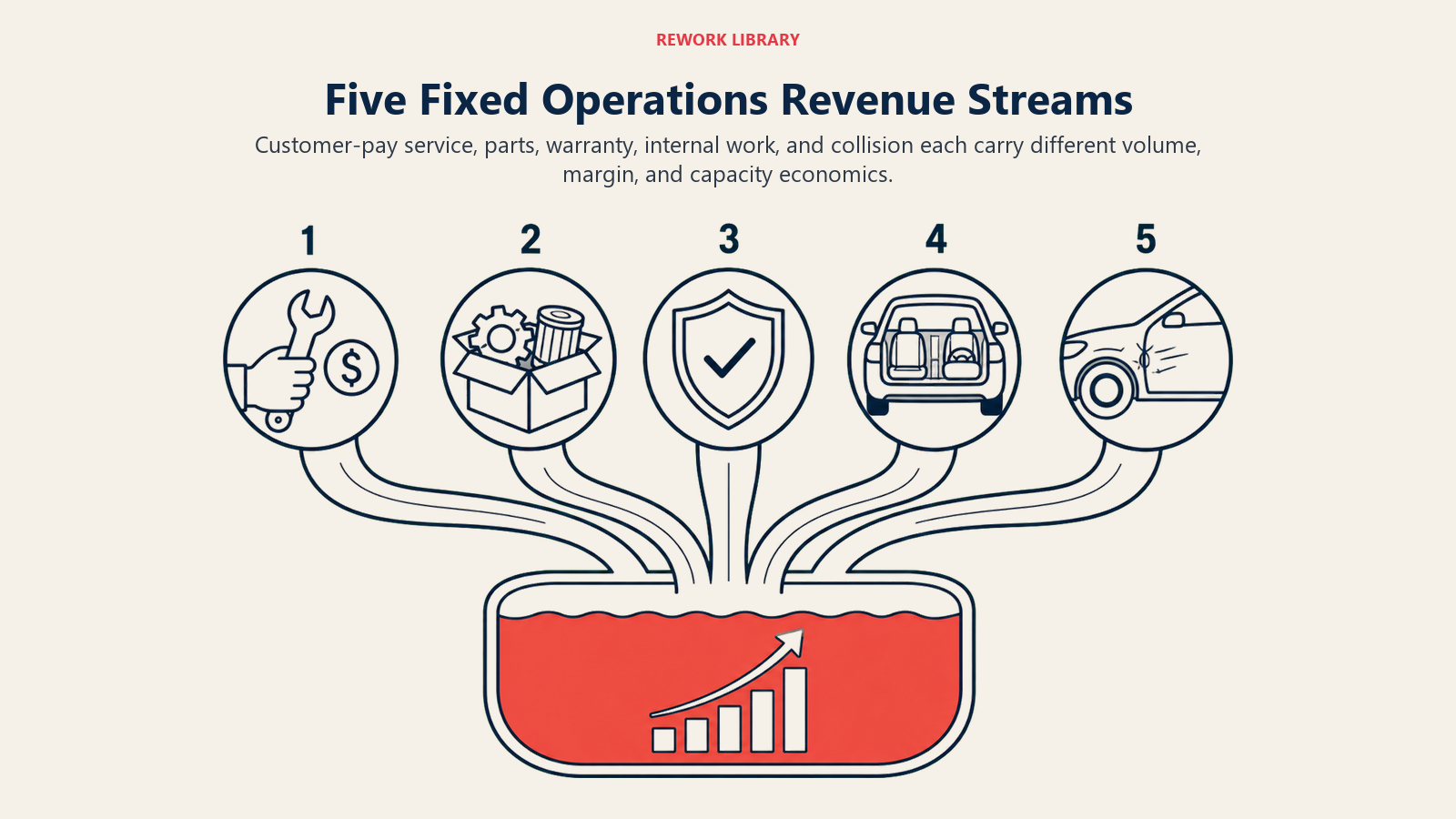
Customer pay workのgross profit marginは通常、laborで65-75%、partsで40-50%です。$400のbrake jobはpartsで$120、technician laborで$80のコストがかかり、$200のgross profitを生成する可能性があります。これを毎日100のrepair orderにわたってスケールすると、customer payがprofitabilityを推進する理由がわかります。Challengeはvolumeを維持すること、customer retentionとconquest marketingがこのrevenue streamに直接影響します。
Warranty serviceはvolumeを提供しますが、marginは低くなります。Manufacturersはnegotiatedされたrate(通常、customer pay retail rateよりも20-30%低い)でlaborを償還し、partsはinvoiceに適度なmarkupを加えます。$150をlaborで支払うwarranty jobは、effective labor rateが$150であるがmanufacturer reimbursementが$100の場合、$120しか生成しない可能性があります。Fixed costをカバーし、technicianをproductiveに保っていますが、warranty workで富を築いているわけではありません。
Internal work、retail販売のために trade-inとused inventoryをreconditioningすること、は、ほとんどのdealerが与えるよりも多くの戦略的注意に値します。この作業はslow periodの間technicianをproductiveに保ち、提供される実際のvalueを反映するrateで請求されるべきです。多くのdealerがinternal workを「無料」として扱い、used vehicleに人為的なprofitabilityを作り出し、fixed opsのgross profitを損ないます。Competitive rateでinternal workを請求し、それらのcostを正確に割り当ててください。
Independent repair shopへのwholesale partsは活用されていない機会です。Independent shopは顧客のrepairのためにOEM partsが必要です。あなたはそれらのpartsを在庫に持っています。Wholesale price(invoiceに15-25%を加える)でそれらを販売すると、いずれにせよ持っている在庫から増分gross profitを生成します。多くのdealerがこのrevenue streamを完全に無視し、independent shopがregional wholesalerからpartsを注文する間、お金をテーブルに残します。
Understanding Key Metrics
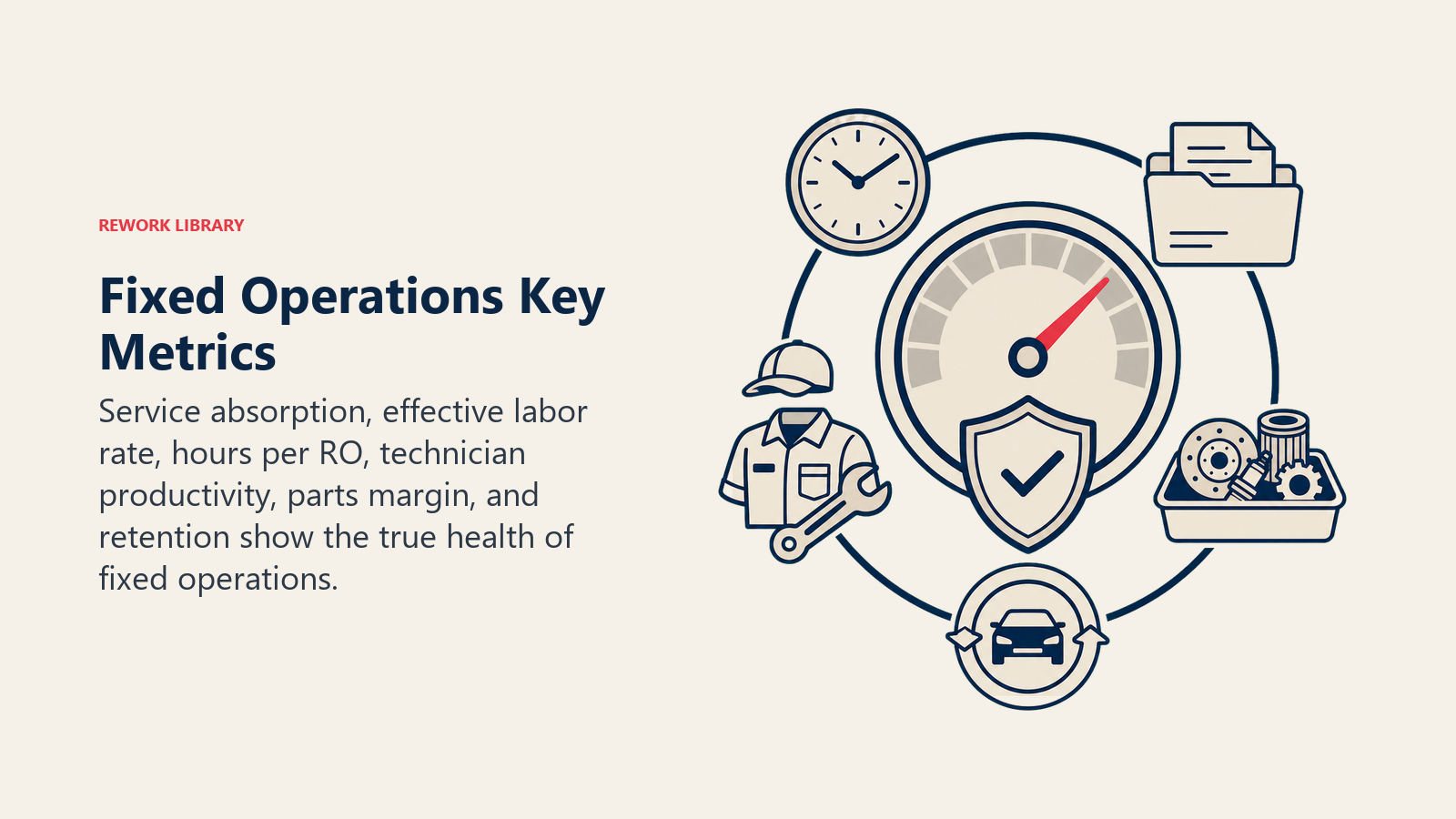
Service absorption rateは、fixed ops departmentが総dealershipのoverheadをカバーするのに十分なgross profitを生成するかどうかを測定します。計算は簡単です: fixed opsのgross profitを総dealershipのoverhead expenseで割ります。NADAデータによると、service absorptionの全国平均は約56%ですが、top performerは100%+をtargetとしています。100%のabsorption rateはfixed opsがすべてのoverhead、家賃、utility、管理給与、施設cost、を支払い、variable opsのprofitのすべてのdollarがbottom lineにdropすることを意味します。
100%+のabsorptionを達成することでdealershipの経済を変革します。Fixed opsがoverheadをカバーする場合、sales departmentははるかに低いmarginで収益的に営業できます。販売価格でより競争力を持つことができます。なぜなら、overheadをカバーするのに十分なgrossを抽出しようとしているのではないからです。一貫して120-150%のabsorptionを達成しているdealerは、基本的に販売volumeに依存する単一の統合されたoperationではなく、2つの別々のprofit centerを営業しています。
100%のabsorptionへの道は、revenue growthとexpense managementの両方に焦点を当てる必要があります。Repair orderごとのcustomer pay hourを増やす、parts-to-labor ratioを改善する、effective labor rateを上げる、wholesale partsビジネスを拡大する、すべてがgross profitを高めます。同時に、technician productivityを管理する、parts inventory costを制御する、facility efficiencyを最適化する、expense sideを管理します。Absorptionは両方の次元にわたる協調的な努力を通じて改善されます。
Effective labor rate(ELR)は、technicianが顧客の作業に時計を打つ時間ごとに生成される実際のlabor revenueを測定します。Postedされたlabor rateが$175であるがELRが$145の場合、heavily discountingしているか、significant unbilled timeを経験しています。その$30のgapは何千もの年間hourにわたって乗算され、substantial lost profitを表します。Top-performingのservice departmentは、disciplinedなpricingとeffectiveなservice advisor sellingを通じてposted rateの10%以内でELRを維持します。
Repair orderごとのhour(RO)は直接department profitabilityに影響します。Average ROが1.8 hourの場合、$175のELRで顧客ごとに$315のlabor revenueを生成しています。より良いinspection processと改善されたupsellingを通じて2.4 hourに増やすと、$420を生成しています、同じ数の顧客から33%の増加。このmetric改善には、より良いtraining、より良いprocess、service advisorによるより良いmenu sellingが必要です。
Service Department Profit Centers
Express serviceとQuick lube operationは、high-volume、low-marginのentry pointを提供し、customer relationshipを構築します。Oil change、tire rotation、inspection、これらのserviceは顧客をドアに入れ、徹底的なinspectionが追加のneedを特定します。Express laneはそれ自体が大規模なprofit centerであることを意図していません、より高いmarginのrepair workにconvertする顧客trafficを生成することを意図しています。
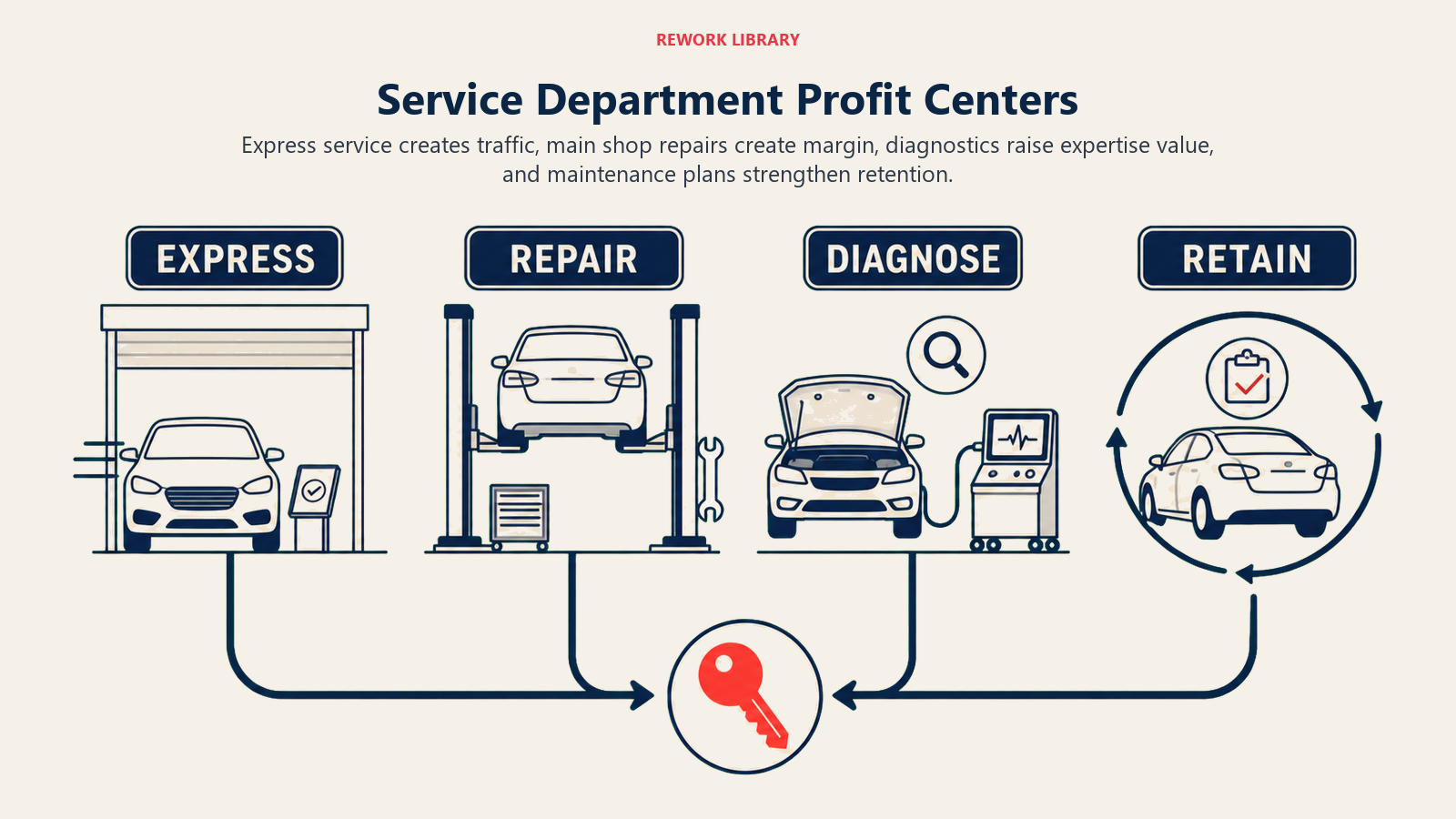
Express serviceの経済はvolumeとspeedを必要とします。顧客を迅速に処理し(ROごとに30-45分をtarget)、安定したappointment flowを維持し、express customersの20-30%を追加のservice recommendationにconvertする必要があります。1.5 hoursごとのROでexpress operationを実行しているか、add-on workを生成していない場合、より収益的に展開できるreal estateとlaborでお金を失っています。
Scheduled maintenance programは、メーカーが推奨するservice intervalに顧客を登録することで予測可能なservice revenue streamを作成します。Maintenance programにcommitする顧客は、年間3-4回の訪問を生成する定期的な顧客になります。登録されたmaintenance customerの1人のlifetime valueは、vehicle ownershipにわたって$3,000-5,000である可能性があり、occasionalのservice customerの$400-600と比較して。
Diagnostic and major repair workはROごとに最高のgross profitを生成しますが、熟練したtechnicianと洗練されたequipmentを必要とします。Transmission repairは15-20 hourの作業から$2,500のlabor revenueを生成する可能性があります。Check engine lightのengine diagnosticは、高いmarginのrepairの機会を作り出します。Diagnostic trainingとequipmentへのinvestmentは、この作業をindependent shopに失う代わりにcaptureできる場合、配当を支払います。
TireとWheel serviceは、dealerによってしばしば見落とされる重要なmargin opportunityを表します。Tire salesは35-45%のparts marginとinstallation laborを生成します。Wheel alignment、balancing、TPMS serviceは増分revenueを追加します。多くのdealerは、modest inventory investmentとtrained staffで容易にcaptureできるときに、このビジネスをtire chainsとquick lube shopに譲ります。
Parts Department Optimization
Parts inventory managementは、service departmentのneedに対するavailabilityと、excess inventoryのcarrying costとのbalanceを取ります。Turn rateのtargetは、dealer parts departmentで年間6-8回である必要があります。Slower turnは、slow-moving partsに資本を縛っていることを意味します。Faster turnは、repairを遅らせ顧客をfrustさせるstockoutを意味する可能性があります。Sweet spotはdealershipのsizeとservice volumeによって異なります。
Wholesale partsビジネス開発は、あなたのparts department optimization戦略を通じてOEM partsを必要とするindependent repair shopとの関係を構築することに焦点を当てます。Parts specialistをindependentに電話をかけるように割り当て、competitive pricing(通常invoiceに20-25%を加える)を提供し、信頼できるsame-day deliveryを提供します。Service needのためにすでにstockingしているpartsを活用して、external customerから増分profitを生成しています。
Retail customerへのonline parts salesは、significant opportunityにもかかわらず、ほとんどのdealerでunderdevelopedのままです。多くの顧客がDIY repairを好むか、independent mechanicに自分のpartsを供給したいと考えています。Local pickupまたはshippingでonline parts ordering systemをsetupすると、このrevenue streamが開かれます。Marginはservice department internal salesよりも低いかもしれませんが、minimal additional overheadで増分ビジネスです。
Partsのmatrix pricingは、online parts retailersからの競争とmargin goalとのbalanceを取ります。Uniform markup(すべてのpartsでinvoiceに40%を加える)の代わりに、matrix pricingはpart costと競争環境に基づいてvariable markupを適用します。High-dollar partsは25%のmarkupを持つ可能性があります。Low-dollar partsは60%のmarkupを持つ可能性があります。この戦略は、price-sensitiveなitemで競争力を保ちながら総gross profitを最適化します。
Technology Stack Requirements
DMS integrationとreportingは、dealership data analyticsを通じてfixed ops managementの基盤を提供します。DMSは、このguideで言及されているすべてのmetric、service absorption、ELR、ROごとのhour、parts-to-labor ratio、technician productivity、を追跡する必要があります。DMSがこれらのreportを簡単に生成できない場合、blindで飛んでいます。Modern DMS platformは、daily decisionを通知するreal-time dashboardでこのデータをaccessibleにします。
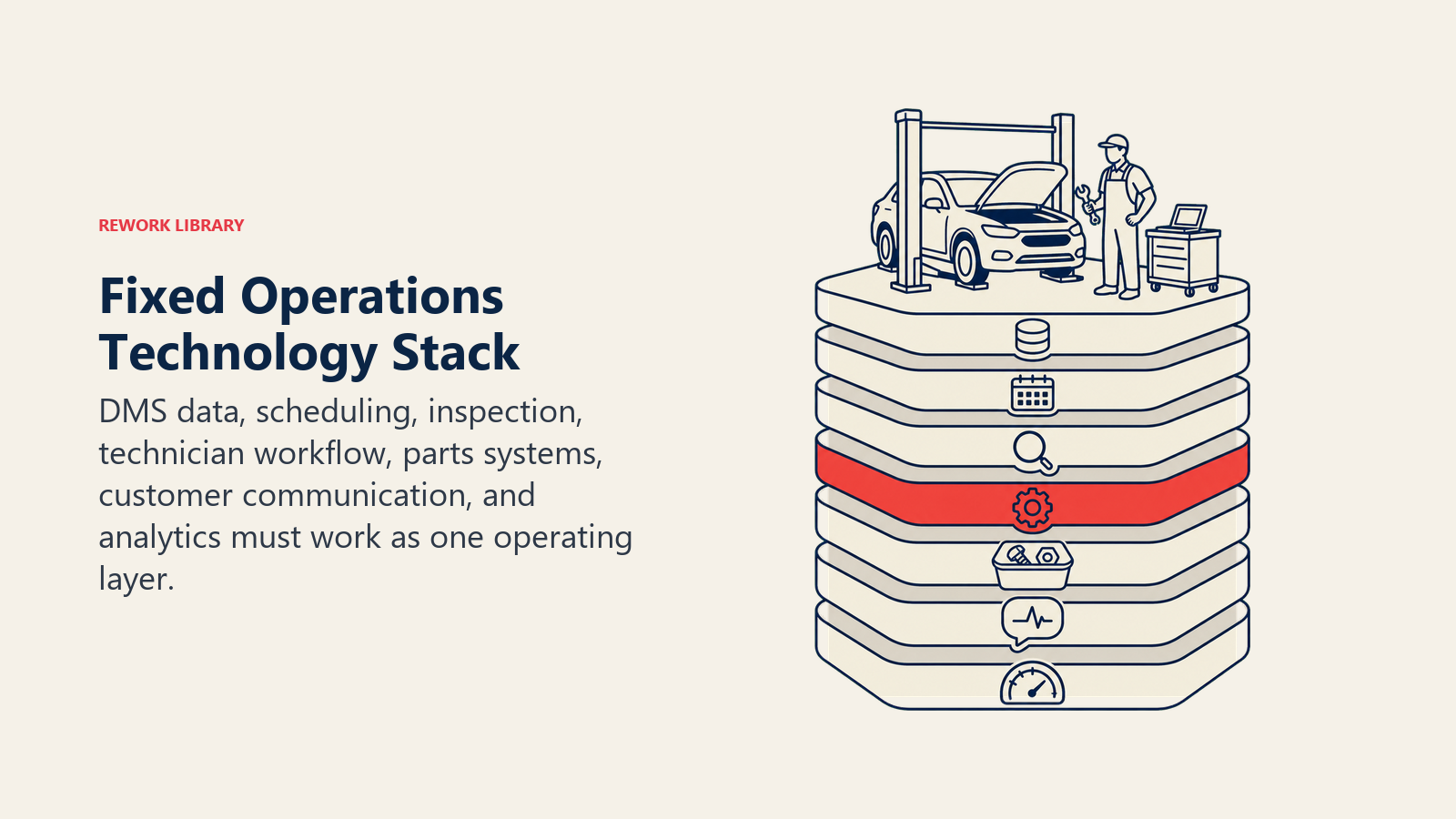
Serviceのschedulingとappointment systemは、missed appointmentを減らし、technician utilizationを最適化します。Online schedulingにより、顧客は都合の良いときにserviceをbookできます。TextとemailによるAutomatedのappointment reminderは、no-showを30-40%減らします。Service updateのためのtwo-way textingはcustomer experienceを改善し、phone volumeを減らします。これらのsystemは、improved efficiencyを通じて迅速に自己支払いします。
Digital vehicle inspection(DVI) toolは、service advisorがrecommendationを提示する方法を変革します。顧客がbrake serviceを必要とする理由を口頭で説明する代わりに、advisorは実際のbrake padの状態を示すphotoとvideoを送信します。このvisual evidenceは、approval rateを30-40%から60-70%に増やします。AutoVitals、Tekmetric、またはOEM-providedのtoolのようなDVI systemは、通常bayごとに月$50-100のコストですが、月に数千の追加revenueを生成します。
Parts catalogとordering systemがDMSと統合されると、parts procurementを効率化し、ordering errorを減らします。VIN decodingを備えたelectronic parts catalogは、正しいparts orderingを保証します。ManufacturerとWarehouse distributor systemとのintegrationは、real-timeのpricingとavailability checkingを可能にします。Usage patternに基づいたautomated replenishmentは、inventory levelを最適化します。
Customer communication platformは、すべてのtechnologyを結束したcustomer experienceに結びつけます。Mileageとtimeに基づいたautomatedのservice reminder。Post-serviceのfollow-up survey。Seasonal serviceのためのtargeted marketing。これらのplatformは、service visit間のengagementを維持し、より高いcustomer retentionとincreased service frequencyを推進します。
Strategic Importance to Dealership Value
Fixed opsのperformanceは、売却する時にdealership valuationに劇的に影響します。4-5xのearningsで取引されているdealershipは、fixed opsのabsorptionが120%を超える場合、6-7xのearningsを命じる可能性があります。Haig PartnersのAnalysisが指摘するように、fixed operationsは2025年以降のdealership valueを推進するquiet profit engineとして機能します。Buyerは、strong fixed opsが、volatileなvehicle salesとmanufacturer incentiveに依存しないstableなprofit streamを提供することを認識しています。
Fixed opsのcash flowの予測可能性により、strong service departmentを持つdealershipはlenderとprivate equity buyerにとってより魅力的になります。Vehicle salesは経済サイクル、manufacturer inventory、incentive programとともに変動します。Service revenue streamは、顧客が新しい車両を購入しているかどうかに関係なく、maintenanceとrepairを必要とするため、比較的安定しています。
Customer lifetime value計算はfixed opsの重要性を強調します。あなたから1台の車両を購入する顧客は、$2,000-3,000の総gross profitを生成します。同じ顧客が7年間あなたとvehicleをserviceすると、$4,000-6,000のservice gross profitと$800-1,200のparts gross profitを生成します。Service customerを保持することは、transaction-orientedなshopperに追加の車両を販売するよりも価値があります。
Fixed opsは、vehicle salesがslowになるmarket downturn中にcushionを提供します。2008-2009のrecessionはこれを明確に明らかにしました、100%以上のabsorption rateを持つdealerは生き残り、profitabilityのためにsales volumeに依存するdealerは失敗しました。Strong fixed ops departmentは、18-24ヶ月のdepressed sales volumeを乗り切るためのcash flowを提供しました。
Building Sustainable Profitability
最も収益性の高いdealershipは、単に良いservice departmentを運営するだけでなく、dedicated leadership、clear metric、strategic investmentを持つ意図的なprofit centerとしてfixed opsを運営します。彼らは、車両を購入するすべての顧客が、initial saleのgross profitよりも価値のある潜在的なservice revenueを表すことを認識しています。
Fixed opsとのsales integrationは、vehicle deliveryで始まります。顧客が新しい車両のdeliveryを受けるとき、service programへの登録は標準手順である必要があります。彼らが出発する前に最初のserviceがscheduleされます。Maintenance programが説明され登録されます。Service departmentのintroductionが完了します。このhandoffは、顧客がserviceのために戻るか、competitorを訪問するかを決定します。
Fixed opsへのmarketing investmentは、そのprofit contributionに比例する必要があります。Fixed opsがnet profitの60%を生成する場合、marketing budgetの意味のあるshareを受け取る必要があります。Seasonal maintenanceのためのservice-specificなmarketing campaign、recall completion、またはcompetitive service conquestは、customer lifetimeにわたって複利するincremental revenueを推進します。
Facilityとequipment investmentは、salesエリアに偏ることが多いです、upgraded showroom、customer lounge、fancy display、service areaは時代遅れのままです。これは顧客と従業員の両方に間違ったmessageを送信します。Modern、clean、well-equippedのservice departmentは、qualityとprofessionalismを示します。顧客を保持し、熟練したtechnicianを引き付けるのに役立ちます。
The Path Forward
Fixed operationsのmasteryは、「serviceは販売をサポートするために行うこと」から「serviceは戦略的focusとinvestmentに値するprimary profit center」へのmindsetのshiftを必要とします。そのshiftは、resource allocation、leadership attention、compensation structure、daily operating priorityに現れます。
明確なfixed opsのmetricを確立し、それらを厳密に追跡することから始めてください。Service absorption rate、ELR、ROごとのhour、parts-to-labor ratio、technician productivityとefficiency。Dailyにleadershipに可視化するdashboardを作成してください。測定されるものは管理され、管理されるものは改善されます。
Service advisorのtrainingと開発にinvestしてください。これらのpositionはdepartmentのprofitabilityにとって重要ですが、多くの場合minimal trainingを持つentry-level roleとして扱われます。Menu selling、inspection process、customer communicationを理解するservice advisorは、ROごとに大幅に高いhourとcustomer satisfactionを推進します。ここでのtraining investmentはimmediate returnを生成します。
Generic service reminderを超えてsystematic customer retention strategiesを開発してください。Vehicle ageとmileageに基づいたpersonalized outreach。Out-of-service customerのためのtargeted campaign。Consistent serviceを報告するloyalty program。これらのstrategiesはcustomer conquestよりもコストが低く、retention rateが改善するにつれて時間とともに複利します。
あなたのfixed ops departmentは、dealershipのprofitabilityをpowerするか、missed opportunityを表します。85%のabsorptionと125%のabsorptionの違いは、年間net profitで$500K-$800Kである可能性があります。そのgapは、revenue growth、expense management、operational excellenceに焦点を当てることで閉じることができます。Fixed operationsをマスターし、dealershipのprofitabilityをマスターしてください。