Junior Supply Chain Coordinator Job Description Template - 2026 Guide
Turn this article into takeaways for your work.


Each assistant summarizes the article only for you and suggests best practices for your work.
What You'll Get From This Guide
- Complete job description template for entry-level supply chain coordinator positions
- Detailed responsibilities covering inventory management, vendor coordination, and logistics support
- Must-have and nice-to-have qualification requirements for junior-level candidates
- Salary benchmarks by location and industry with $38,000-$52,000 range insights
- 18 behavioral and technical interview questions with evaluation criteria
- Industry-specific considerations for manufacturing, retail, healthcare, and technology sectors
- Professional development pathways and career progression guidance for coordinators
Finding the right Junior Supply Chain Coordinator is crucial for building efficient operations and developing future supply chain leaders. This entry-level position serves as the foundation for supply chain excellence, handling coordination tasks while learning the fundamentals of logistics, procurement, and inventory management.
Key Highlights
- Entry-level position perfect for recent graduates or career changers
- Average salary range: $38,000 - $52,000 annually
- Strong growth potential with clear advancement paths
- Essential role in maintaining supply chain efficiency
- Ideal blend of administrative coordination and analytical work
- Growing demand across manufacturing, retail, and logistics industries
Why This Role Matters
The Junior Supply Chain Coordinator position represents the entry point into one of business's most critical functions. In today's interconnected global economy, supply chains have become increasingly complex, requiring dedicated professionals to ensure smooth operations from procurement to delivery.
This role is particularly valuable because it provides comprehensive exposure to all aspects of supply chain management while maintaining focused responsibilities that allow for effective learning and skill development. Junior coordinators often become the backbone of supply chain operations, handling essential coordination tasks that keep goods flowing efficiently through the pipeline.
About the Role
We are seeking a detail-oriented and proactive Junior Supply Chain Coordinator to join our operations team. In this entry-level position, you will support various supply chain activities including inventory management, vendor coordination, order processing, and logistics support. This role offers excellent learning opportunities and exposure to all aspects of supply chain operations.
As our Junior Supply Chain Coordinator, you will work closely with senior team members to ensure smooth operations while developing foundational skills in procurement, logistics, and supply chain analysis. You will handle routine coordination tasks while learning to identify opportunities for process improvements and cost optimization.
The ideal candidate will bring strong organizational skills, attention to detail, and eagerness to learn about supply chain management. You will be part of a collaborative team environment where your contributions directly impact our operational efficiency and customer satisfaction.
Key Responsibilities
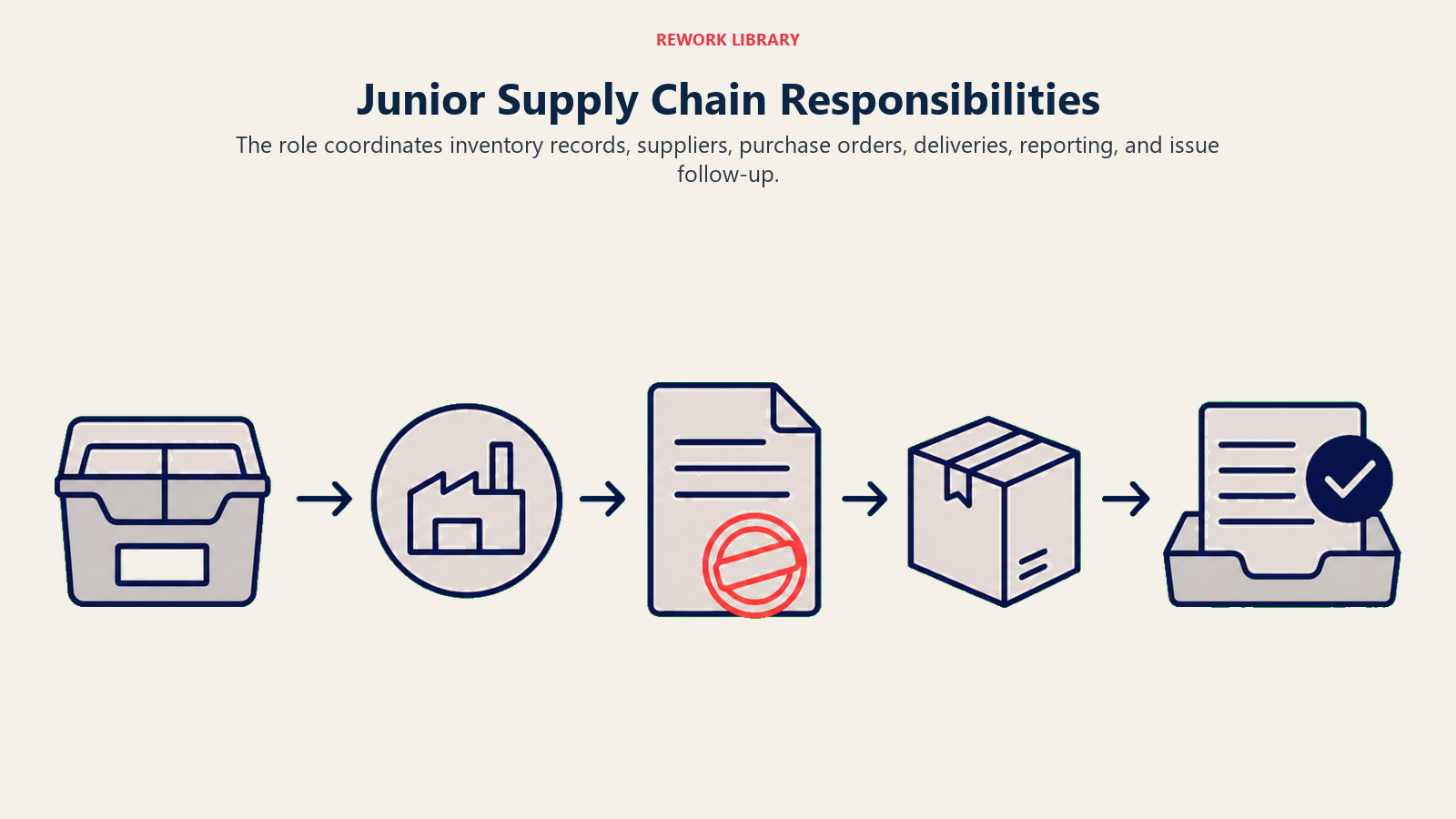
Inventory Management Support
- Monitor inventory levels and assist with stock replenishment planning
- Update inventory management systems and maintain accurate records
- Support cycle counting activities and reconcile inventory discrepancies
- Assist with inventory forecasting and demand planning activities
Vendor and Supplier Coordination
- Communicate with suppliers regarding order status, delivery schedules, and requirements
- Maintain vendor contact databases and performance tracking records
- Support vendor onboarding processes and documentation requirements
- Assist with supplier performance evaluations and scorecards
Order Processing and Management
- Process purchase orders and ensure accuracy of specifications and quantities
- Track order status and communicate updates to internal stakeholders
- Coordinate with receiving teams to ensure timely order fulfillment
- Maintain order documentation and filing systems
Logistics and Transportation Support
- Coordinate shipment schedules with carriers and logistics providers
- Track shipments and resolve delivery issues or delays
- Support freight audit processes and documentation
- Assist with routing optimization and transportation planning
Data Analysis and Reporting
- Prepare routine reports on inventory levels, order status, and supplier performance
- Maintain supply chain databases and ensure data accuracy
- Support analysis of supply chain metrics and KPIs
- Create presentations and summaries for management review
Process Improvement Support
- Identify opportunities for process improvements and efficiency gains
- Assist with implementation of new procedures and systems
- Support continuous improvement initiatives and lean projects
- Document standard operating procedures and best practices
Administrative and Coordination Tasks
- Schedule meetings and coordinate communication between departments
- Maintain filing systems and ensure proper documentation
- Support budget tracking and expense reporting activities
- Assist with special projects and cross-functional initiatives
Customer Service Support
- Respond to internal customer inquiries regarding order status and delivery schedules
- Coordinate with customer service teams to resolve supply-related issues
- Support customer requirements planning and specification management
- Maintain customer communication logs and follow-up activities
Requirements
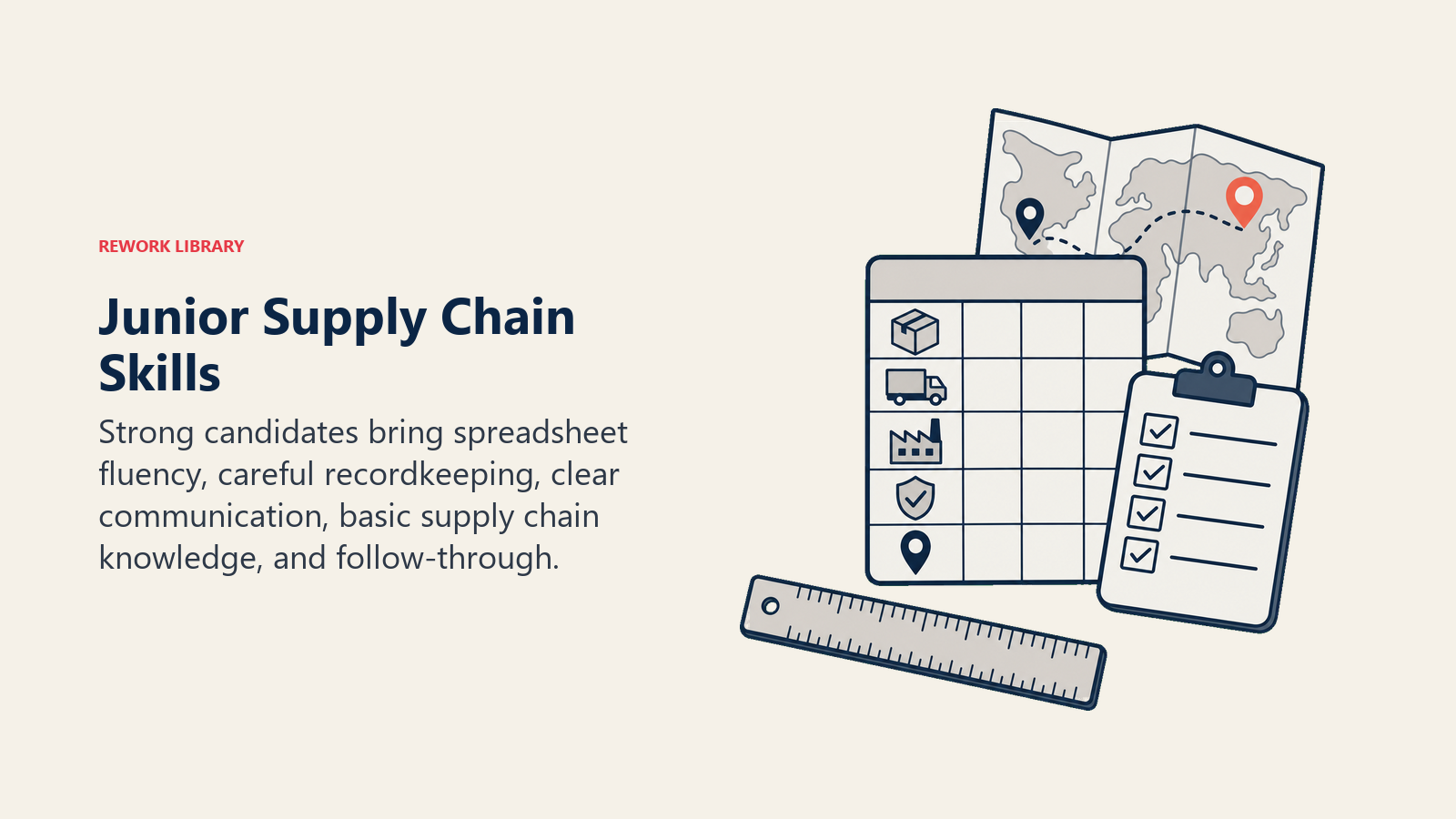
Must-Have Qualifications
- Bachelor's degree in Supply Chain Management, Business Administration, Operations Management, or related field
- 0-2 years of experience in supply chain, operations, or related business functions
- Proficiency in Microsoft Office Suite, particularly Excel for data analysis and reporting
- Strong organizational skills with ability to manage multiple tasks and priorities
- Excellent written and verbal communication skills for vendor and internal coordination
- Detail-oriented approach with strong accuracy in data entry and record keeping
- Basic understanding of supply chain concepts including procurement, logistics, and inventory management
- Ability to work collaboratively in a team environment and support cross-functional initiatives
Nice-to-Have Qualifications
- Experience with ERP systems (SAP, Oracle, Microsoft Dynamics) or inventory management software
- Internship or co-op experience in supply chain, operations, or manufacturing environments
- Basic knowledge of lean manufacturing principles or Six Sigma methodologies
- Familiarity with logistics and transportation management concepts
- Understanding of international trade regulations and import/export procedures
What We Offer
Compensation Package
- Competitive salary range: $38,000 - $52,000 annually based on experience and location
- Performance-based bonuses and annual salary reviews
- Comprehensive benefits package including health, dental, and vision insurance
- 401(k) retirement plan with company matching
Professional Development
- Structured training program covering all aspects of supply chain management
- Mentorship opportunities with senior supply chain professionals
- Support for professional certifications (APICS, ISM, CSCMP)
- Clear advancement paths to Supply Chain Analyst, Buyer, or Specialist roles
Work Environment
- Collaborative team environment with opportunities for cross-functional projects
- Modern office facilities with latest technology and systems
- Flexible work arrangements including hybrid options where applicable
- Employee wellness programs and work-life balance initiatives
Context Variations
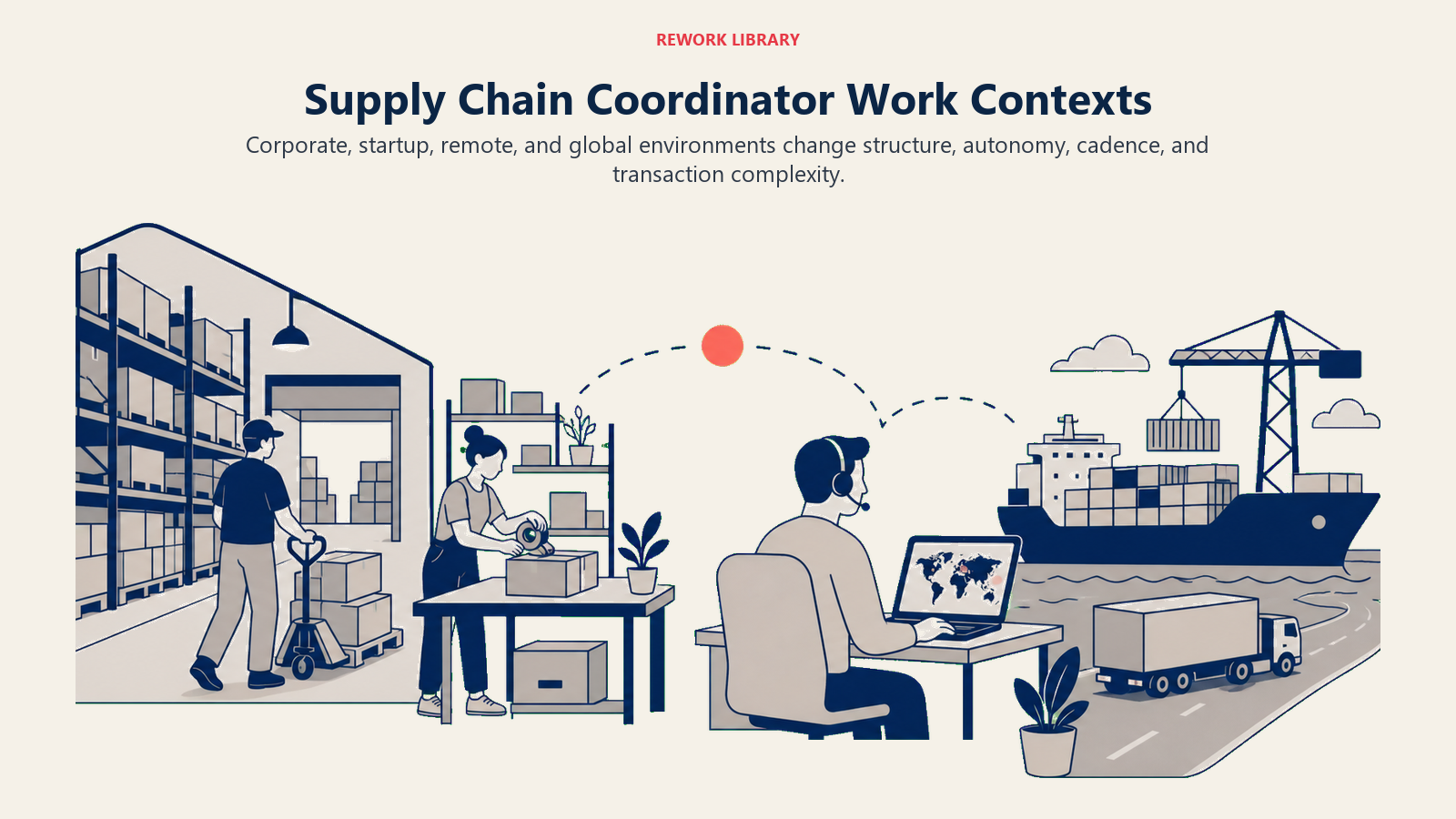
Corporate Environment
In large corporations, Junior Supply Chain Coordinators typically work within established processes and systems, focusing on specific segments of the supply chain. The role emphasizes compliance with corporate policies, working with multiple vendors across global supply networks, and supporting large-scale operations with substantial transaction volumes.
Startup Environment
Startup environments offer Junior Coordinators broader exposure to all aspects of supply chain operations, often requiring more flexibility and willingness to take on diverse responsibilities. The role may involve direct interaction with company founders, participation in strategic decisions, and opportunities to shape processes and systems from the ground up.
Remote/Hybrid Work
Remote and hybrid positions for Junior Supply Chain Coordinators focus heavily on digital communication tools, cloud-based supply chain systems, and virtual vendor management. Success requires strong self-direction, excellent digital communication skills, and proficiency with collaboration platforms and supply chain software.
Industry Considerations
| Industry | Key Requirements | Specific Skills |
|---|---|---|
| Manufacturing | Understanding of production scheduling, raw materials management, MRP systems | Knowledge of manufacturing processes, quality control, capacity planning |
| Retail | Seasonal demand planning, vendor negotiation, store replenishment | Merchandising concepts, POS systems, category management |
| Healthcare | Regulatory compliance, sterile supply management, critical inventory tracking | FDA regulations, medical device knowledge, patient safety protocols |
| Technology | Component sourcing, new product introduction, supplier qualification | Technical specifications, product lifecycle management, innovation processes |
| Food & Beverage | Perishable inventory management, cold chain logistics, food safety compliance | HACCP principles, shelf life management, traceability systems |
| Automotive | Just-in-time delivery, supplier development, quality standards | Automotive standards, lean manufacturing, supplier auditing |
Note: Some industries may require additional certifications or specialized training for compliance purposes.
Compensation Guide
Salary Information
National Average Range: $38,000 - $52,000 annually
| Metro Area | Entry Level | Mid-Range | Top Range |
|---|---|---|---|
| New York, NY | $42,000 | $48,000 | $56,000 |
| Los Angeles, CA | $41,000 | $47,000 | $54,000 |
| Chicago, IL | $39,000 | $45,000 | $52,000 |
| Houston, TX | $37,000 | $43,000 | $50,000 |
| Atlanta, GA | $36,000 | $42,000 | $49,000 |
| Seattle, WA | $40,000 | $46,000 | $53,000 |
| Denver, CO | $38,000 | $44,000 | $51,000 |
| Phoenix, AZ | $36,000 | $42,000 | $48,000 |
Factors Affecting Compensation:
- Industry sector (technology and healthcare typically pay premium)
- Company size and complexity of supply chain operations
- Educational background and relevant internship experience
Salary data based on 2026 market research from leading compensation surveys and job market analysis.
Interview Questions
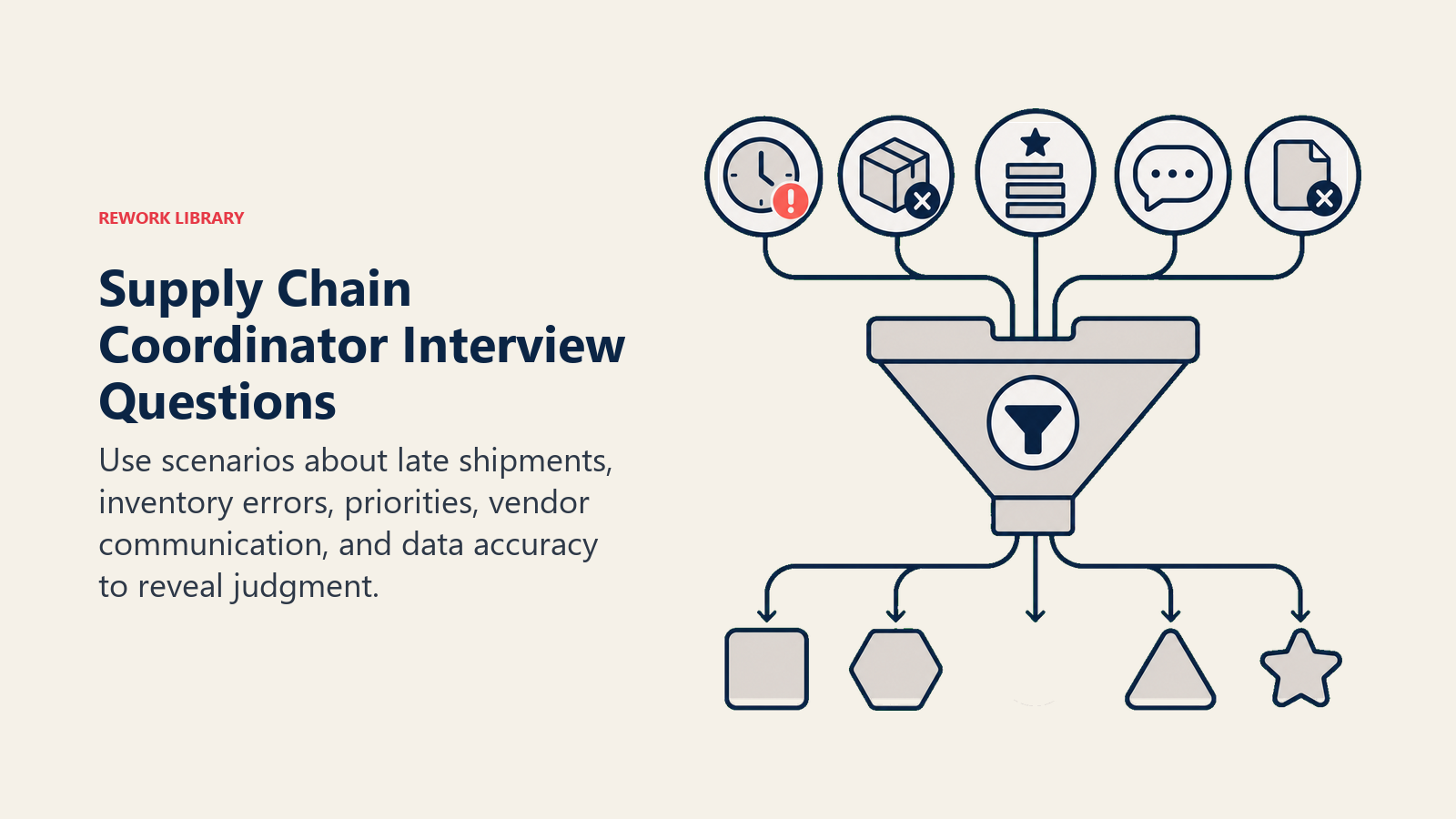
Technical and Functional Questions
Supply Chain Fundamentals
"Explain the basic components of a supply chain and how they interconnect to deliver value to customers." Look for understanding of suppliers, manufacturing, distribution, and customers as key components.
"How would you prioritize multiple urgent purchase orders when working with limited supplier capacity?" Assess problem-solving skills and understanding of business priorities.
"Describe the difference between push and pull inventory systems and when each might be appropriate." Evaluate knowledge of inventory management concepts and strategic thinking.
"Walk through the steps you would take to investigate and resolve an inventory discrepancy." Look for systematic approach, attention to detail, and problem-solving methodology.
"How would you handle a situation where a key supplier is consistently delivering late?" Assess communication skills, vendor management understanding, and escalation procedures.
"Explain what information you would need to evaluate a supplier's performance effectively." Look for understanding of KPIs like on-time delivery, quality, cost, and service metrics.
"Describe how you would organize and maintain accurate supplier contact information and performance data." Evaluate organizational skills and understanding of data management importance.
"What factors would you consider when determining optimal inventory levels for different products?" Assess analytical thinking and understanding of inventory optimization concepts.
Behavioral Questions
"Tell me about a time when you had to manage multiple competing deadlines. How did you prioritize and ensure everything was completed accurately?" Look for time management skills, organizational abilities, and stress management.
"Describe a situation where you had to communicate complex information to someone who wasn't familiar with the technical details." Assess communication skills and ability to translate technical concepts.
"Give me an example of a time when you identified an error or inefficiency in a process. What did you do about it?" Look for attention to detail, proactive thinking, and improvement mindset.
"Tell me about a time when you had to work with a difficult vendor or internal customer. How did you handle the situation?" Evaluate interpersonal skills, conflict resolution abilities, and professionalism.
"Describe a situation where you had to learn a new system or process quickly. What was your approach?" Assess learning agility, adaptability, and self-directed learning capabilities.
"Tell me about a time when you made a mistake at work. How did you handle it and what did you learn?" Look for accountability, learning orientation, and problem-solving skills.
Culture Fit Questions
"What aspects of supply chain management interest you most, and why did you choose this career path?" Assess genuine interest in the field and career motivation.
"How do you stay organized when managing multiple projects and deadlines simultaneously?" Look for practical organizational systems and time management strategies.
"Describe your ideal work environment and how you prefer to collaborate with team members." Evaluate fit with company culture and team dynamics.
"What do you hope to learn and accomplish in your first year as a Junior Supply Chain Coordinator?" Assess goal-setting abilities and alignment with role expectations.
Evaluation Tips
- Technical questions: Focus on fundamental understanding rather than advanced expertise
- Behavioral questions: Look for specific examples and clear problem-solving approaches
- Culture fit: Assess enthusiasm for learning and collaboration skills
Hiring Tips
Quick Sourcing Guide
Top Recruitment Platforms
- LinkedIn: Best for sourcing recent graduates and entry-level professionals with supply chain education
- Indeed: Excellent reach for local candidates and those transitioning into supply chain careers
- CollegeRecruiter: Ideal for targeting recent graduates from supply chain and business programs
- APICS Career Center: Specialized platform for supply chain professionals and those pursuing certifications
Professional Communities
- APICS/ASCM Local Chapters: Connect with students and new professionals in supply chain management
- Council of Supply Chain Management Professionals (CSCMP): Access to student members and early-career professionals
- University Career Centers: Partner with schools offering supply chain management programs
Posting Optimization Tips
- Emphasize learning opportunities and career growth potential in job descriptions
- Include specific training programs and mentorship opportunities
- Highlight exposure to various supply chain functions and departments
- Mention support for professional development and certifications
Red Flags to Avoid
Common Hiring Mistakes
- Overemphasizing experience requirements: This is an entry-level position focused on potential and willingness to learn
- Ignoring soft skills: Communication and organizational abilities are often more important than technical expertise
- Focusing only on supply chain majors: Business, operations, and engineering graduates can be excellent candidates
- Undervaluing internship experience: Co-ops and internships provide valuable practical exposure
- Neglecting cultural fit assessment: Team collaboration is essential in coordination roles
- Rushing the interview process: Take time to assess learning potential and genuine interest in supply chain
For Job Seekers - Junior Supply Chain Coordinator Opportunities
What skills should I develop to be competitive for junior supply chain coordinator positions?
Focus on Excel proficiency, organizational skills, communication abilities, and basic understanding of supply chain concepts through coursework, online learning, or internships.
Is this role suitable for career changers without supply chain background?
Yes, many successful coordinators come from diverse backgrounds. Transferable skills like project coordination, data analysis, and vendor management are highly valuable.
What certifications would help me stand out as an entry-level candidate?
While not required, APICS Supply Chain Operations Reference (SCOR) basics or introductory logistics certifications can demonstrate commitment to the field.
How important are internships for landing a junior coordinator role?
Internships are extremely valuable as they provide practical experience and demonstrate genuine interest in supply chain careers. Co-op programs are particularly beneficial.
What questions should I ask during interviews for these positions?
Ask about training programs, mentorship opportunities, career advancement paths, the types of suppliers and products you'll work with, and how success is measured in the role.
What's the typical work environment for junior supply chain coordinators?
Most positions involve office-based work with significant computer time, regular communication with vendors and internal teams, and occasional visits to warehouses or supplier facilities.

Senior Customer Retention Strategist
On this page
- Key Highlights
- Why This Role Matters
- About the Role
- Key Responsibilities
- Requirements
- Must-Have Qualifications
- Nice-to-Have Qualifications
- What We Offer
- Context Variations
- Corporate Environment
- Startup Environment
- Remote/Hybrid Work
- Industry Considerations
- Compensation Guide
- Salary Information
- Interview Questions
- Technical and Functional Questions
- Behavioral Questions
- Culture Fit Questions
- Evaluation Tips
- Hiring Tips
- Quick Sourcing Guide
- Red Flags to Avoid