AI Researcher Job Description (2026): AI-Era Skills, Responsibilities & Hiring Guide
Turn this article into takeaways for your work.


Each assistant summarizes the article only for you and suggests best practices for your work.
What You'll Get From This Guide
- Complete AI Researcher job description template with research-focused requirements
- Salary benchmarks and compensation data for research positions
- 25+ interview questions evaluating research methodology and technical expertise
- Academic vs. industry research environment considerations
- Skills assessment for different research specializations and experience levels
- Real examples from leading research institutions and AI companies
- Guidelines for evaluating publication records and research impact
- Career progression paths from researcher to principal scientist roles
An AI Researcher drives innovation by developing cutting-edge algorithms, conducting experiments, and publishing research that advances the field of artificial intelligence. This role combines deep technical expertise with scientific rigor to solve complex problems and push the boundaries of what's possible in AI.
Key Highlights
- Average Salary: $140,000 - $220,000+ annually
- Experience Level: Advanced degree required, 3-8 years research experience
- Growth Rate: 32% projected growth through 2032
- Key Skills: Machine learning, deep learning, research methodology, academic publishing
- Work Environment: Mix of independent research and collaborative team projects
- Career Path: Senior Researcher → Research Lead → Principal Scientist → Research Director
Why This Role Matters in 2026
AI Researchers are the architects of tomorrow's intelligent systems, conducting fundamental research that shapes entire industries. They bridge the gap between theoretical computer science and practical applications, developing algorithms that power everything from autonomous vehicles to medical diagnostics. As AI capabilities expand rapidly, researchers provide the scientific foundation that ensures these technologies are robust, ethical, and beneficial to society.
What makes this role more valuable as AI tools become widespread is the irreplaceable human judgment it requires at its core. Large language models can now survey literature in seconds, generate candidate hypotheses, and even write experimental code. What they cannot do is form a genuinely novel scientific question, design a methodology that rules out the right confounds, or exercise the scientific judgment to recognize when a result is interesting rather than merely statistically significant. AI accelerates the infrastructure of research: literature review, code scaffolding, experiment tracking, citation management. The researcher owns hypothesis formation, methodology design, and the interpretation of results that the field has not seen before.
This role offers the unique opportunity to contribute to human knowledge while working on problems that could impact millions of lives. AI Researchers increasingly see their work transition from academic papers to production systems faster than ever before, precisely because AI tooling closes the gap between research prototype and deployed capability.
AI Skills & Tools for AI Researchers in 2026
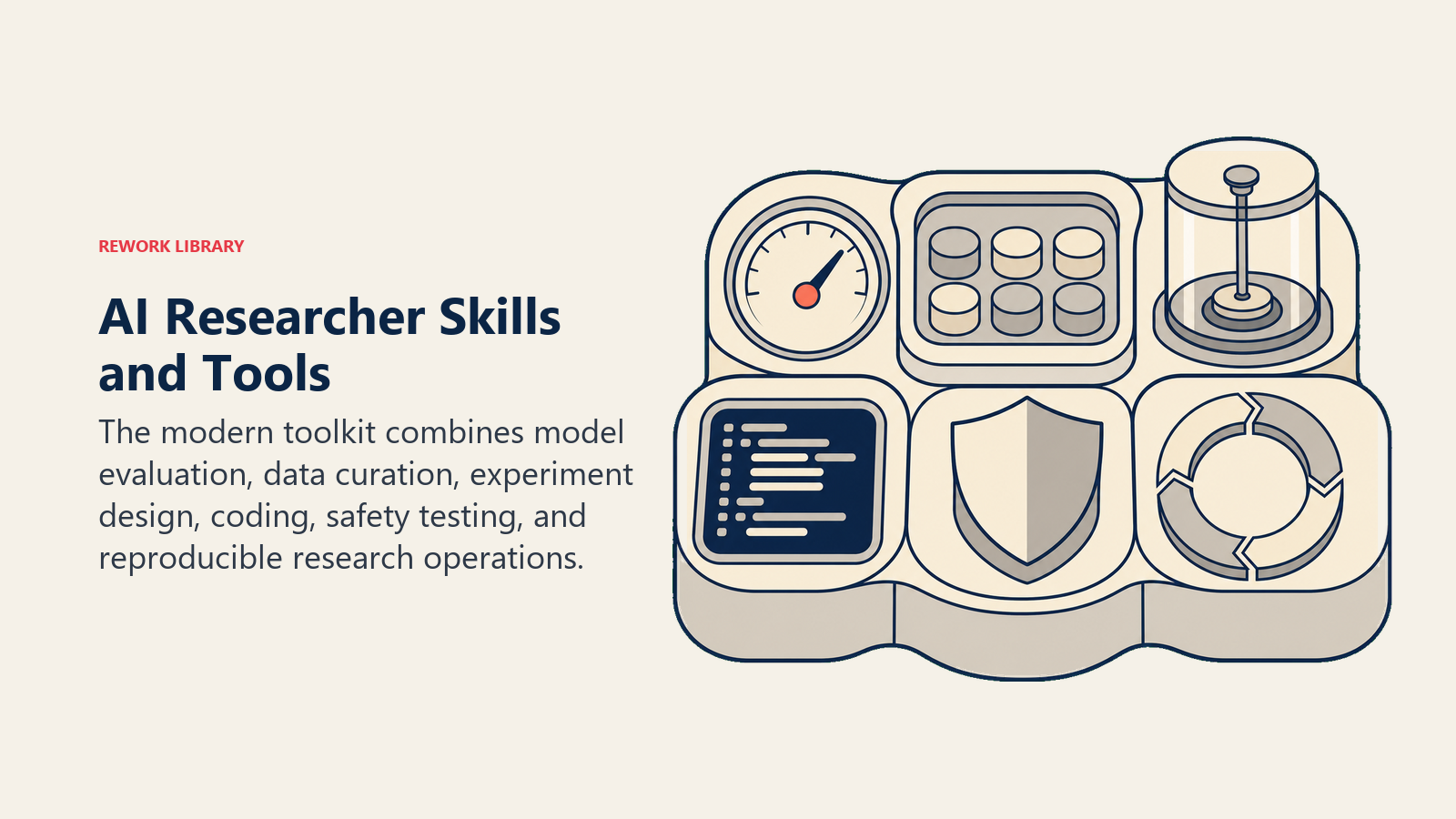
The expectation for AI researchers has shifted. The best candidates no longer just know the literature; they use AI tooling to move through it faster and build on it more rigorously.
AI tools this role uses actively:
- Semantic Scholar AI and Elicit for literature synthesis: these tools surface relevant papers, cluster findings by theme, and identify contradictory results across hundreds of papers in minutes rather than weeks
- Papers with Code for benchmarking and reproducibility: tracking state-of-the-art performance across datasets, finding existing implementations, and validating that a proposed approach is genuinely novel versus an incremental variation
- Weights and Biases (W&B) and MLflow for experiment tracking: logging hyperparameters, metrics, and artifacts across runs so that experiments are reproducible, comparable, and auditable; essential for publication-quality rigor
- ChatGPT and Claude for drafting related-work sections, generating LaTeX-formatted proofs for review, summarizing paper batches, and preparing presentation outlines from research notes
- GitHub Copilot and Cursor for accelerating prototype implementation: experienced researchers use AI code assistants to scaffold boilerplate faster, letting them focus on the novel algorithmic components
- Consensus.app and Research Rabbit for citation graph exploration and finding related-work clusters that keyword searches miss
Prompt fluency is a research accelerator. Researchers who write precise prompts for literature summarization, counterargument generation, and hypothesis stress-testing compress early-stage research cycles significantly. The key discipline is knowing when to trust the output and when to verify against primary sources.
AI-skill demand context: Demand for AI researchers with tool-fluent research workflows has risen roughly 144% year over year. Roles that specify proficiency in modern research toolchains (W&B, Elicit, Semantic Scholar AI) in their requirements command approximately a 56% wage premium over identical research titles that do not. For AI researchers specifically, this reflects the field's shift toward reproducible, infrastructure-aware research practice.
The researcher's comparative advantage grows as AI scales. As language models commoditize literature summarization and code generation, the highest-value research output becomes the question that no one else thought to ask, the experimental design that rules out the confound, and the interpretation of a result that required deep domain knowledge to recognize as significant. These are human capabilities that compound with experience.
Working Alongside AI Agents for AI Researchers
AI agents are taking on meaningful portions of the research support workflow. Strong candidates understand this handoff clearly.
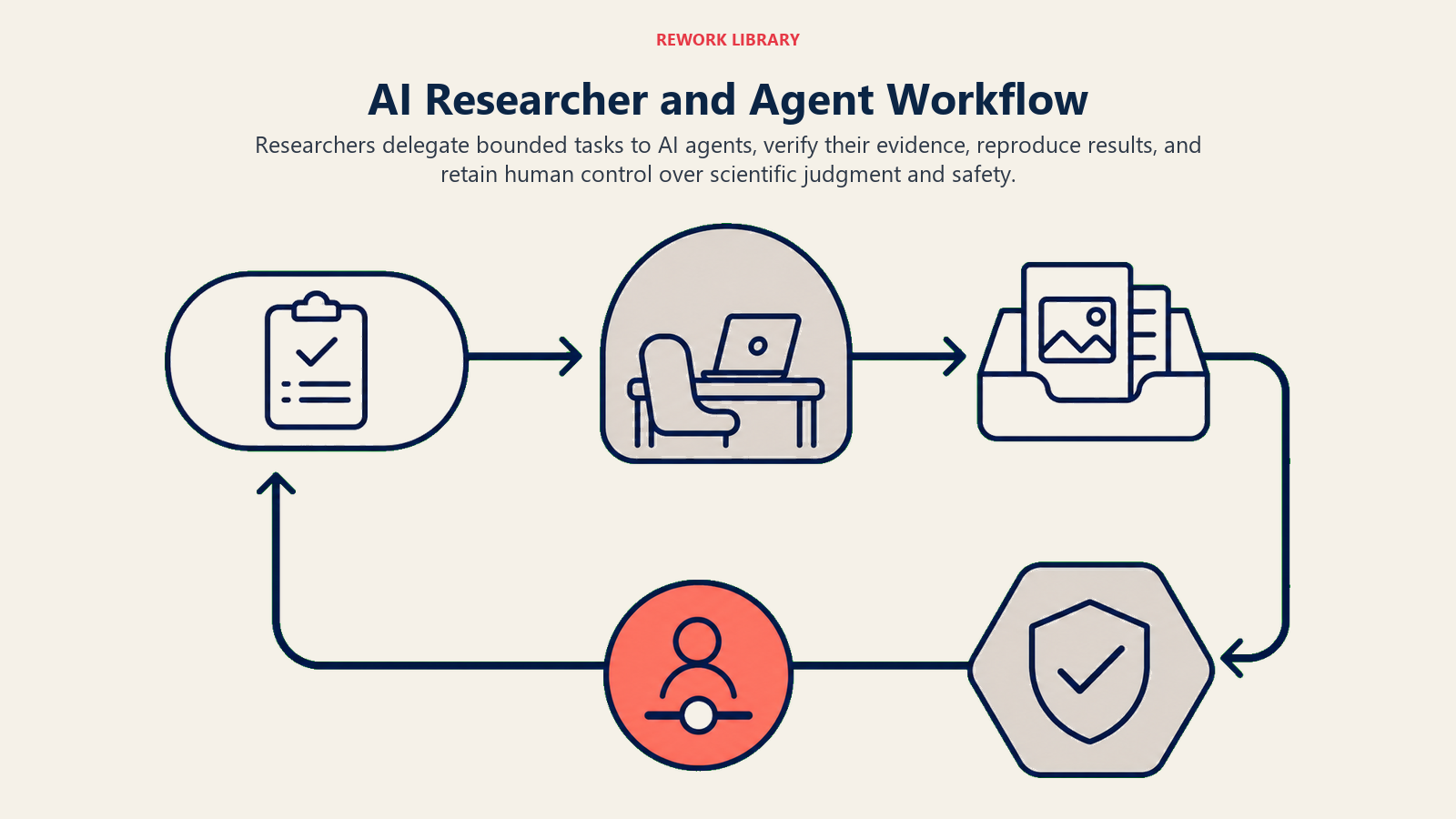
What agents handle well:
- Literature review agents that continuously monitor ArXiv, Semantic Scholar, and domain-specific databases for new papers matching a research thread, delivering daily digests ranked by relevance
- Experiment monitoring agents that watch W&B runs, flag anomalous loss curves, send alerts when a run diverges from expected behavior, and summarize completed experiments in a structured format
- Citation tracking agents that maintain a bibliography database, surface when a paper in the researcher's reading list gets cited by new high-impact work, and flag potential duplicate results in the literature
- Code generation agents that scaffold standard deep learning training loops, data loading pipelines, and evaluation harnesses, freeing researcher attention for the novel algorithmic components
- Paper writing agents that draft boilerplate sections (abstract structure, related work framing, appendix formatting) for researcher editing and extension
What the AI researcher still owns (and cannot delegate):
- Hypothesis formation: identifying which research question is genuinely open, scientifically important, and tractable given current methods is the highest-leverage judgment in research; no agent generates this reliably
- Methodology design: choosing which baseline to compare against, which ablation tells the right story, and which evaluation dataset is fair requires deep domain knowledge and scientific integrity
- Scientific judgment on novel results: recognizing that an unexpected result is interesting rather than a bug requires experience with the space of plausible outcomes; this is the core researcher skill
- Interpretation and storytelling: translating experimental results into a claim the field can build on requires understanding what the community knows, what it doubts, and what framing will survive peer review
- Ethical review and safety assessment: deciding whether a research direction or a model capability should be published, restricted, or escalated requires human accountability that no agent can hold
The handoff line: Agent outputs are inputs to the researcher's thinking. Literature review agents surface candidates; the researcher judges relevance and novelty. Experiment monitoring agents flag anomalies; the researcher decides whether it is a bug or a finding. The scientific contribution is always the human's.
AI Fluency by Experience Level
Because the AI researcher file predates the standard experience matrix format, the following summarizes AI-fluency expectations by career stage.
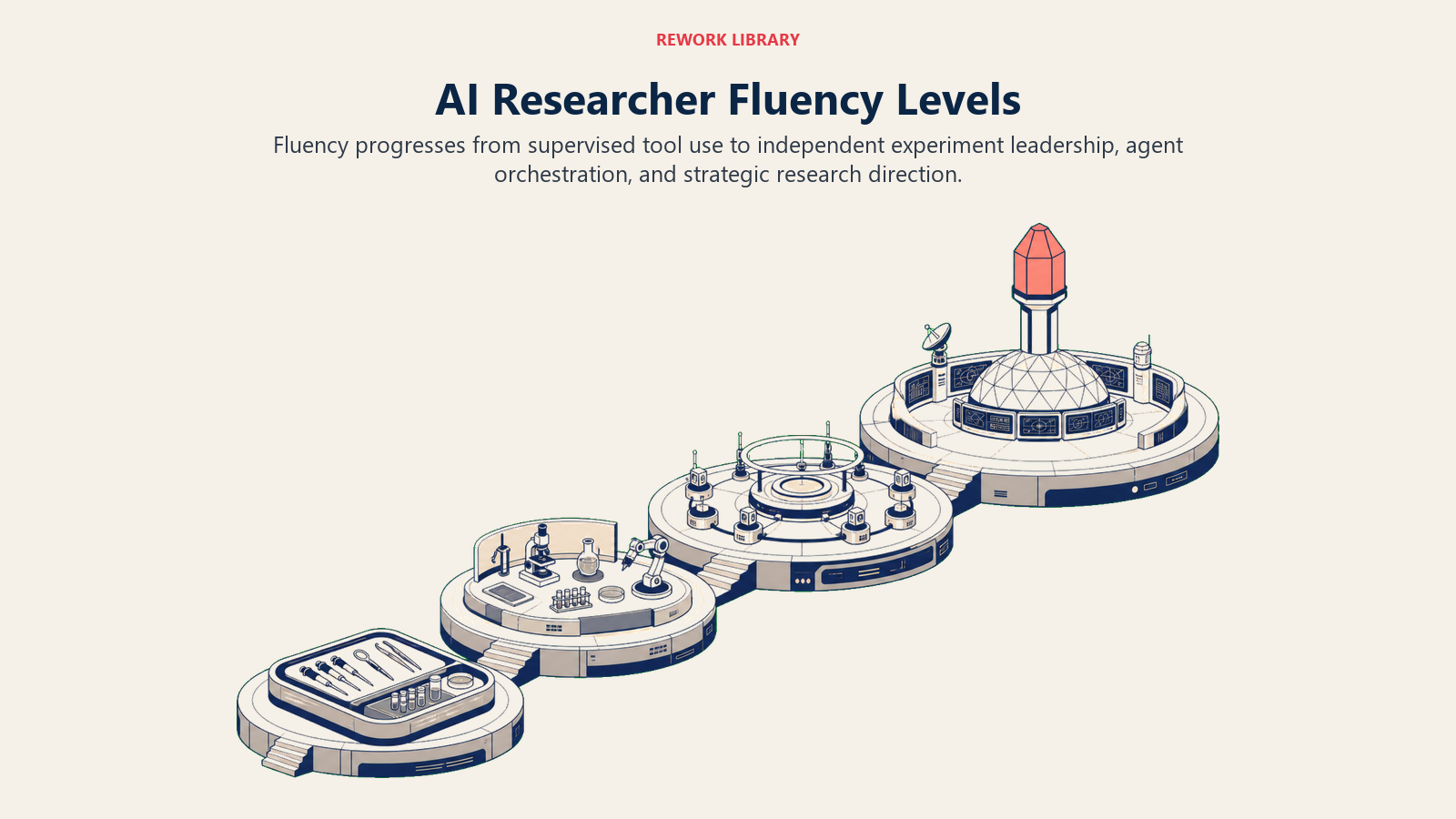
Entry Level / PhD Student:
- Uses Elicit, Semantic Scholar AI, and Papers with Code daily for literature review and benchmarking
- Tracks experiments rigorously in W&B or MLflow from day one; understands why reproducibility is non-negotiable
- Prompts Claude or ChatGPT to stress-test arguments, generate counterexamples, and summarize related-work clusters
- Understands that agent-generated literature summaries require verification against primary sources
Mid-Level / Postdoc or Research Scientist:
- Builds reusable research toolchains: automated literature monitoring pipelines, structured experiment logging templates, reproducibility checklists
- Designs experiment monitoring agents and configures alerts for their active research threads
- Uses AI code assistants (Copilot, Cursor) to accelerate prototype implementation without losing algorithmic clarity
- Can evaluate whether an AI-assisted literature synthesis is comprehensive or has systematic gaps
Senior Level / Principal Scientist or Research Lead:
- Designs AI-augmented research processes for the team: which support tasks agents own, how to audit agent outputs, how to maintain scientific rigor when team velocity accelerates
- Sets standards for reproducibility, experiment tracking, and responsible disclosure across the group
- Evaluates AI tooling options for the team and makes principled decisions about where automation helps and where it creates risk (e.g., automated paper triage may miss genuinely novel work that does not match existing citation patterns)
- Can present to leadership, safety boards, and external collaborators where AI assists the research process and where the team's human scientific judgment is the irreplaceable layer
Primary Job Description Template
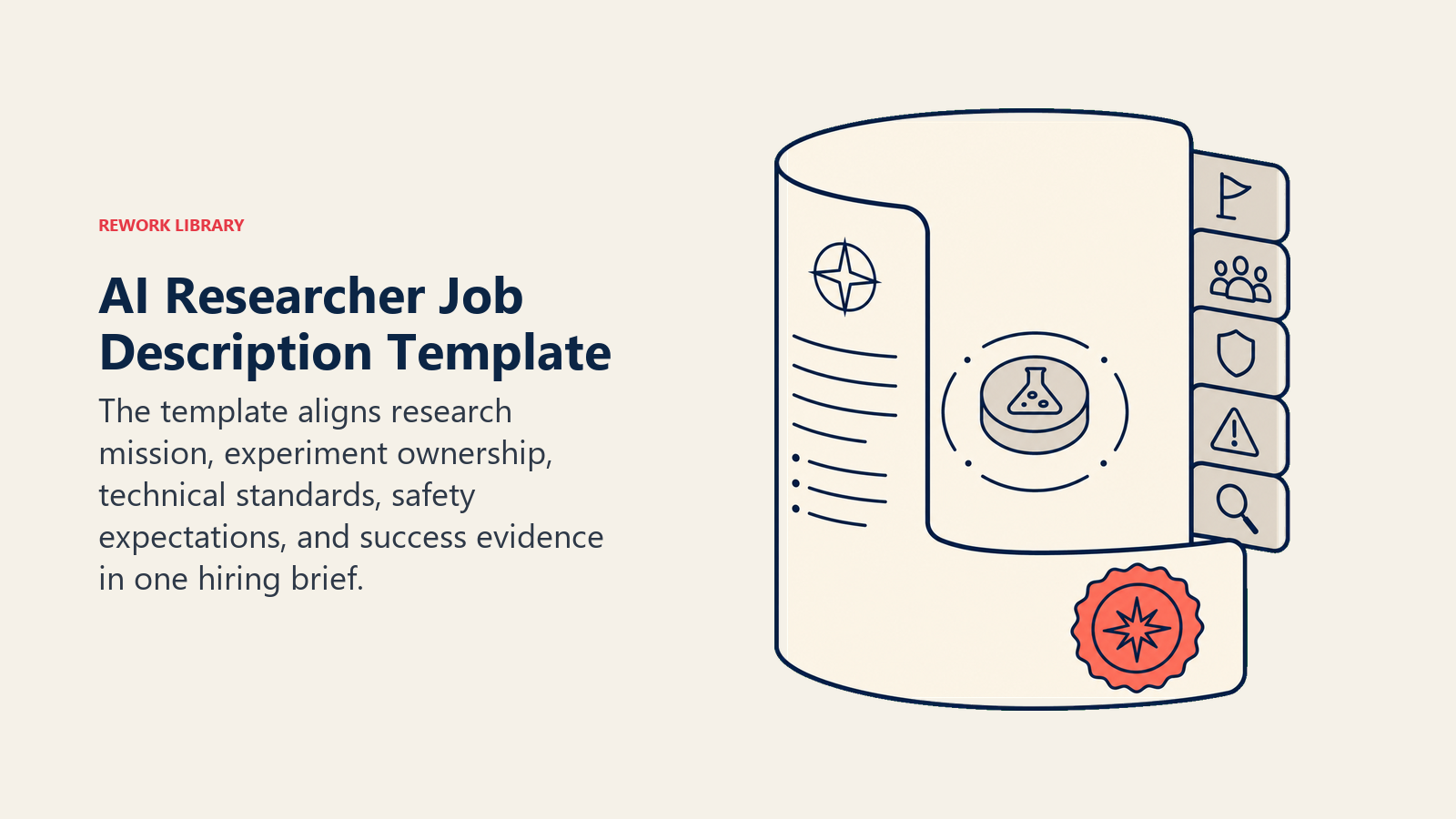
The template aligns research mission, experiment ownership, technical standards, safety expectations, and success evidence in one hiring brief.
About the Role
We are seeking a talented AI Researcher to join our research team and contribute to groundbreaking developments in artificial intelligence. You will conduct independent research, collaborate with cross-functional teams, and help translate theoretical breakthroughs into practical applications. This role offers the opportunity to work on challenging problems at the intersection of computer science, mathematics, and domain-specific applications.
As an AI Researcher, you will be responsible for designing experiments, developing novel algorithms, and communicating your findings through publications and presentations. You will work closely with engineering teams to ensure research outcomes can be successfully implemented and scaled. The ideal candidate combines strong theoretical knowledge with practical implementation skills and a passion for pushing the boundaries of AI capabilities.
Key Responsibilities
- Conduct Independent Research: Design and execute research projects that advance the state of the art in machine learning, deep learning, or specialized AI domains
- Develop Novel Algorithms: Create innovative approaches to solve complex problems in computer vision, natural language processing, robotics, or other AI fields
- Publish Research Findings: Author high-quality papers for top-tier conferences and journals, contributing to the broader AI research community
- Prototype and Validate: Build proof-of-concept systems to demonstrate the feasibility and effectiveness of research ideas
- Collaborate Across Teams: Work with product teams, engineers, and other researchers to translate research into practical applications
- Mentor Junior Researchers: Guide PhD students, research interns, and junior team members in their research endeavors
- Stay Current with Literature: Continuously review latest research publications and attend conferences to stay at the forefront of AI developments
- Present Research Results: Deliver compelling presentations at internal meetings, conferences, and academic symposiums
- Evaluate Research Impact: Assess the potential applications and limitations of research findings for real-world deployment
- Contribute to Research Strategy: Help shape the long-term research roadmap and identify promising new research directions
Requirements
Must-Have Qualifications:
- PhD in Computer Science, Machine Learning, Mathematics, Statistics, or related field
- 3+ years of research experience in AI/ML with demonstrated publication record
- Strong programming skills in Python, with experience in TensorFlow, PyTorch, or similar frameworks
- Deep understanding of machine learning fundamentals, statistics, and optimization methods
- Experience with experimental design, hypothesis testing, and rigorous evaluation methodologies
- Track record of publications in top-tier conferences (NeurIPS, ICML, ICLR, AAAI, etc.)
- Excellent written and verbal communication skills for technical and non-technical audiences
- Ability to work independently while contributing effectively to team objectives
Nice-to-Have Qualifications:
- Postdoctoral research experience or industry research background
- Expertise in specific AI domains (computer vision, NLP, robotics, reinforcement learning)
- Experience with large-scale distributed computing and cloud platforms
- Knowledge of AI ethics, fairness, and responsible AI development practices
- Open-source contributions to ML libraries or research tools
- Experience transitioning research prototypes to production systems
- Grant writing experience and familiarity with research funding processes
What We Offer
- Competitive Compensation: $140,000 - $220,000 base salary plus equity and performance bonuses
- Research Freedom: 20% time for independent research projects and academic pursuits
- Conference Support: Full funding for attending and presenting at major AI conferences
- Publication Incentives: Bonuses for publications in top-tier venues
- Computing Resources: Access to high-performance GPU clusters and cloud computing credits
- Collaboration Opportunities: Partnerships with leading universities and research institutions
- Professional Development: Support for continuing education and skill development
- Flexible Work Environment: Hybrid remote options with collaborative lab spaces
Context Variations
Corporate Environment
Large technology companies offer AI Researchers substantial resources, including massive datasets, computing infrastructure, and opportunities to see research translated into products used by millions. These roles often balance fundamental research with applied research aligned to business objectives, providing clear paths from research to product impact.
Startup Environment
AI startups provide researchers with the opportunity to wear multiple hats, moving quickly from ideation to implementation. These environments offer more direct influence on product direction and the chance to see research immediately applied to solve customer problems, though with potentially more resource constraints than larger organizations.
Academic-Industry Hybrid
Many organizations now offer hybrid roles that allow researchers to maintain academic affiliations while working on industry problems. These positions often provide the best of both worlds: academic freedom to publish and pursue fundamental questions, combined with access to real-world data and implementation opportunities.
Industry Considerations
| Industry | Key Focus Areas | Unique Requirements |
|---|---|---|
| Technology | Large-scale ML systems, user experience optimization | Experience with production ML pipelines, A/B testing |
| Healthcare | Medical imaging, drug discovery, clinical decision support | Understanding of regulatory requirements, clinical workflows |
| Automotive | Computer vision, sensor fusion, autonomous systems | Real-time processing expertise, safety-critical system experience |
| Finance | Algorithmic trading, fraud detection, risk modeling | Knowledge of financial markets, regulatory compliance |
| Robotics | Motion planning, perception, human-robot interaction | Hardware integration experience, real-time control systems |
| Entertainment | Content generation, recommendation systems, game AI | Creative applications, user engagement metrics |
Compensation Guide
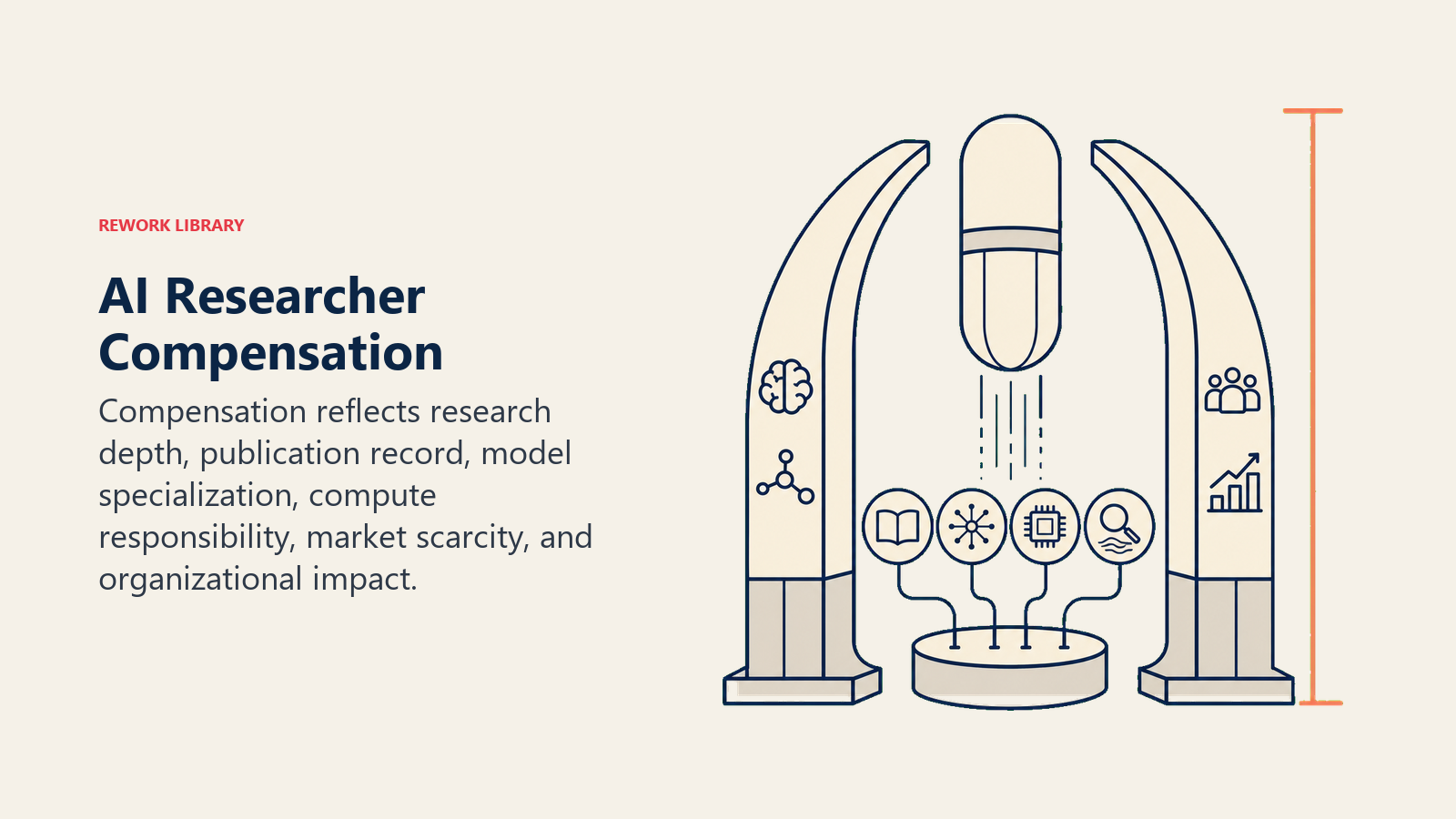
Compensation reflects research depth, publication record, model specialization, compute responsibility, market scarcity, and organizational impact.
Salary Information
National Average Range: $140,000 - $220,000+ annually
AI-fluent researchers who can demonstrate proficiency with modern research toolchains (W&B, Elicit, Semantic Scholar AI, reproducible experiment pipelines) command a meaningful premium above these baselines. Candidates who arrive with a published record and working knowledge of AI-assisted research workflows consistently outperform baseline offers.
| Metro Area | Base Salary Range | Total Compensation |
|---|---|---|
| San Francisco Bay Area | $180,000 - $280,000 | $250,000 - $400,000+ |
| Seattle | $160,000 - $240,000 | $220,000 - $350,000 |
| New York City | $155,000 - $235,000 | $210,000 - $340,000 |
| Boston | $145,000 - $220,000 | $200,000 - $320,000 |
| Los Angeles | $140,000 - $210,000 | $190,000 - $300,000 |
| Austin | $130,000 - $195,000 | $180,000 - $280,000 |
| Chicago | $125,000 - $190,000 | $170,000 - $270,000 |
| Remote | $120,000 - $200,000 | $160,000 - $290,000 |
Factors Affecting Compensation:
- Publication Record: Strong publication history in top-tier venues (NeurIPS, ICML, ICLR) can increase offers substantially
- AI Toolchain Fluency: Researchers who demonstrate reproducible experiment workflows, active use of literature synthesis tools, and experiment monitoring practices stand out in competitive searches
- Specialization: Expertise in high-demand areas like large language models, multimodal systems, or AI safety commands a premium
- Industry Experience: Researchers with both academic and industry backgrounds often earn more than purely academic candidates
- Company Stage: Established tech giants typically offer higher base salaries; startups may offer more equity upside
Salary data compiled from multiple market sources including Glassdoor, Levels.fyi, and industry reports. Always verify current rates before making offers.
Interview Questions
Technical/Functional Questions
Describe a research project where you had to overcome significant technical challenges. How did you approach the problem? Evaluate problem-solving methodology and persistence
Walk me through your process for designing experiments to validate a new machine learning approach. Assess experimental design and scientific rigor
How do you stay current with the rapidly evolving AI research landscape? Gauge commitment to continuous learning
Explain a complex AI concept to someone without a technical background. Test communication skills and depth of understanding
Describe your experience with peer review. How do you handle criticism of your work? Evaluate ability to engage with academic community
What's your approach to reproducible research? How do you ensure others can build on your work? Assess commitment to research best practices
Tell me about a time when your research didn't work as expected. How did you pivot? Understand resilience and adaptability
How do you balance pursuing novel research directions with meeting project deadlines? Evaluate project management and prioritization skills
Behavioral Questions
Describe a situation where you had to collaborate with researchers who had different perspectives or methodologies. Assess teamwork and conflict resolution skills
Tell me about a time when you had to present complex research findings to a non-technical stakeholder. Evaluate communication and influence skills
How do you handle situations where your research findings contradict popular beliefs or existing approaches? Test intellectual integrity and courage
Describe your experience mentoring junior researchers or students. What was challenging about it? Gauge leadership potential and teaching ability
Tell me about a research project that required you to learn completely new skills or domains. Assess learning agility and adaptability
How do you prioritize multiple research projects with competing deadlines? Evaluate time management and decision-making
Culture Fit Questions
What motivates you most about AI research? What impact do you hope to have? Understand passion and long-term vision
How do you view the balance between open research and proprietary development? Gauge fit with company's research philosophy
What role should AI researchers play in addressing ethical concerns about AI? Assess awareness of responsible AI development
How do you prefer to receive feedback on your research work? Understand communication preferences and growth mindset
Hiring Tips
Quick Sourcing Guide
Top Platforms:
- Academic Networks: Leverage university partnerships and conference connections
- Specialized Communities: AI research forums, ArXiv discussions, and ML Twitter
- Professional Networks: LinkedIn with focus on publication history and conference attendance
- Research Conferences: Direct recruiting at NeurIPS, ICML, ICLR, and domain-specific conferences
Professional Communities:
- Machine Learning Research communities on Reddit and Discord
- AI safety and alignment research groups
- Open source ML project contributors
- Academic lab alumni networks
Posting Optimization:
- Emphasize research freedom and publication opportunities
- Highlight computing resources and collaboration opportunities
- Mention specific research areas and methodologies
- Include information about conference attendance and academic partnerships
Red Flags to Avoid
- Limited Publication History: Be cautious of candidates with no recent publications in quality venues
- Inability to Explain Work: Researchers should be able to clearly communicate their contributions
- Lack of Code/Implementation: Pure theory without implementation experience may not translate well to industry
- Poor Collaboration Skills: Research increasingly requires teamwork and cross-functional collaboration
- Resistance to Feedback: Academic peer review requires openness to criticism and iteration
- Narrow Focus: Inability to adapt research approaches or learn new domains
AI Researcher Hiring - For Employers
What's the difference between an AI Researcher and a Machine Learning Engineer?
AI Researchers focus on developing novel algorithms and advancing the field through publications, while ML Engineers focus on implementing and scaling existing techniques in production systems.
How important is a PhD for this role?
A PhD is typically essential as it demonstrates research methodology, independent thinking, and the ability to contribute original knowledge to the field.
Should we prioritize candidates with industry experience or academic backgrounds?
The best candidates often have both. Academic experience ensures research rigor, while industry experience helps translate research into practical applications.
How can we evaluate the quality of a candidate's research publications?
Look at the venues where they publish (top-tier conferences like NeurIPS, ICML), citation counts, and the novelty of their contributions. Consider having current researchers review their work.
What's a reasonable timeline for an AI Researcher to produce their first publication at our company?
Typically 12-18 months, depending on the research area and complexity. Initial months are usually spent on literature review, problem definition, and initial experiments.
AI Researcher Careers - For Job Seekers
What's the typical career progression for an AI Researcher?
Usually: AI Researcher → Senior AI Researcher → Principal Researcher → Research Lead → Research Director or Chief Scientist.
How important is it to have a strong publication record before applying?
Very important. Most positions expect 3-5 quality publications in relevant venues. Focus on conference papers over journal articles in computer science.
Can I transition from academia to industry research without losing research freedom?
Many companies now offer academic-style research roles with publication freedom. Look for research labs at major tech companies or hybrid academic-industry positions.
What programming skills are most important for AI Researchers?
Python is essential, along with deep learning frameworks like PyTorch or TensorFlow. R, Julia, or MATLAB may be useful for specific domains.
How do I stay competitive in such a rapidly evolving field?
Regularly read papers on ArXiv, attend major conferences, participate in research communities, and maintain active collaborations with academic researchers.
Is remote work common for AI Researchers?
Many companies offer hybrid arrangements, but pure remote work can be challenging due to the collaborative nature of research and need for specialized computing resources.
Senior Customer Retention Strategist
On this page
- Key Highlights
- Why This Role Matters in 2026
- AI Skills & Tools for AI Researchers in 2026
- Working Alongside AI Agents for AI Researchers
- AI Fluency by Experience Level
- Primary Job Description Template
- About the Role
- Key Responsibilities
- Requirements
- What We Offer
- Context Variations
- Corporate Environment
- Startup Environment
- Academic-Industry Hybrid
- Industry Considerations
- Compensation Guide
- Salary Information
- Interview Questions
- Technical/Functional Questions
- Behavioral Questions
- Culture Fit Questions
- Hiring Tips
- Quick Sourcing Guide
- Red Flags to Avoid