Gaya Kepemimpinan Jan Koum: Privasi sebagai Produk, Ketabahan Pendatang Ukraina, dan Keluar $19B WhatsApp
Turn this article into takeaways for your work.


Each assistant summarizes the article only for you and suggests best practices for your work.
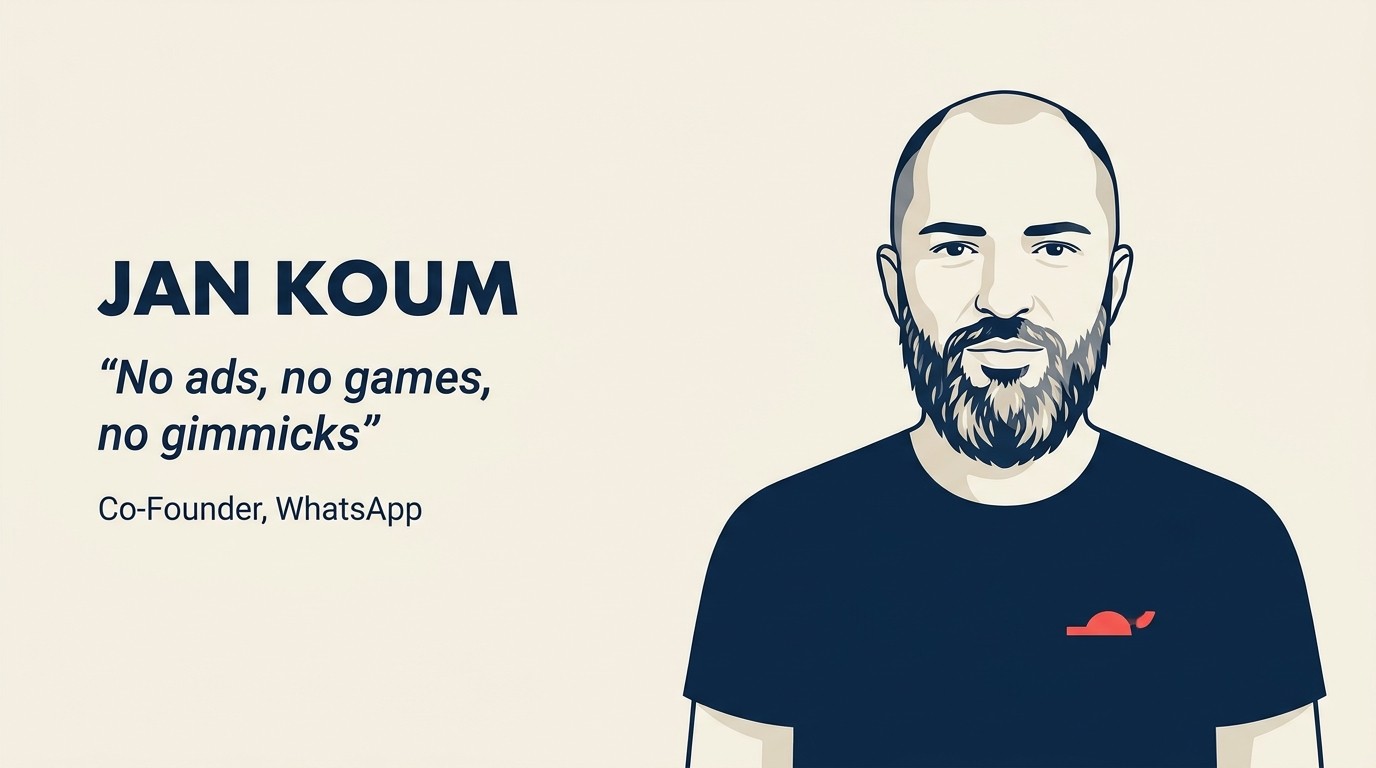
Jan Koum membesar di sebuah kampung era Soviet di Ukraine di mana kerajaan memantau panggilan telefon. Latar belakang itu bukan hanya biografi — ia adalah keseluruhan tesis produk. WhatsApp mempunyai satu peraturan: tiada iklan, tiada permainan, tiada trik. Pemesejan mudah yang berfungsi. Koum dan Brian Acton membinanya dengan 35 jurutera dan menjualnya kepada Facebook pada Februari 2014 dengan harga $19 bilion — pada masa itu pemerolehan syarikat bersandar usaha niaga terbesar dalam sejarah.
Kemudian pada 2018, Koum berhenti daripada lembaga pengarah Facebook selepas perselisihan tentang privasi data dan rancangan sasaran iklan. Dia mempunyai wang untuk berkata tidak. Kebanyakan pengendali tidak mendapatkan kemewahan itu.
Tetapi kerangka kerja yang dia gunakan, kesederhanaan produk radikal ditambah dengan penolakan pendekatan anti-pengiklanan sebagai pembezaan kompetitif, terpakai dengan baik sebelum anda mencapai $19 bilion. Dan cerita tentang apa yang terjadi selepas dia meninggalkan Facebook dengan prinsipnya tetap utuh adalah layak untuk diperiksa sebagai kes kepemimpinan, bukan hanya satu kes kewangan.
Fakta Utama: Jan Koum Sekali Pandang
- Lahir: 1976 di Kyiv, Ukraine (kemudian Kesatuan Soviet); berhijrah ke Mountain View, California pada umur 16 bersama ibunya
- Mengasas bersama WhatsApp: 2009 dengan Brian Acton, kedua-duanya bekas jurutera Yahoo
- Prinsip asas: "Tiada iklan, tiada permainan, tiada trik" — disiarkan di blog Acton sebelum peluncuran
- Pemerolehan: Menjual WhatsApp kepada Facebook pada Februari 2014 dengan harga $19 bilion — pemerolehan syarikat bersandar usaha niaga terbesar dalam sejarah pada masa itu
- Momen Simbolik: Koum dilaporkan menandatangani dokumen pemerolehan Facebook pada ambang pejabat kebajikan di Mountain View di mana keluarganya pernah mengumpul setem makanan
- Saiz pasukan pada penjualan: ~35 jurutera berkhidmat kepada 450 juta pengguna
- Keberangkatan: Berhenti daripada lembaga pengarah Facebook pada April 2018 kerana perselisihan tentang privasi data dan rancangan sasaran iklan
- Nilai bersih pada keluar: Kira-kira $9 bilion dari segi peribadi daripada pemerolehan
Model Anti-Iklan Koum
Model Anti-Iklan Koum ialah doktrin produk pengguna yang merancang keluar insentif ekonomi untuk mengewang data pengguna dengan menggantikan pengiklanan dengan langganan terus atau pembiayaan syarikat induk. Ia memperlakukan "tiada iklan" bukan sebagai tuntutan pemasaran tetapi sebagai kekangan seni bina yang membentuk setiap keputusan produk, pengambilan kerja, dan pemerolehan hiliran. Ujian yang menentukan model ialah sama ada pengasas sanggup meninggalkan produk apabila komitmen tiada-iklan dipecahkan.
Pecahan Gaya Kepemimpinan
| Gaya | Berat | Cara ia Ditunjukkan |
|---|---|---|
| Pengendali Produk Minimalis | 65% | WhatsApp dibina atas pengikat eksplisit. Tiada kemas kini status. Tiada pengiklanan. Tiada permainan. Tiada ciri graf sosial. Hanya pemesejan yang boleh dipercayai, cepat, dan percuma di pasaran di mana SMS menelan kos wang. Setiap permintaan ciri yang masuk dinilai terhadap soalan mudah: adakah ini menjadikan pemesejan berfungsi lebih baik, atau adakah ia menambah kerumitan yang pengguna tidak minta? Pada 35 jurutera berkhidmat kepada 500 juta pengguna, WhatsApp mengekalkan set ciri yang pasukan satu persepuluh saiznya boleh telah dihantar. Pengikat itu adalah pilihan operasi yang disengajakan. |
| Pemimpin Berasaskan Privasi-Sebagai-Prinsip | 35% | Prinsip tiada-iklan Koum bukan penentuan pemasaran. Ia datang daripada pengalaman hidup bagaimana rasa pengawasan. Membesar dalam sistem di mana komunikasi peribadi tidak peribadi membentuk pemahamannya tentang apa yang perlu dilindungi oleh perisian pemesejan. Prinsip itu bertahan melalui tahun Yahoo, melalui asas WhatsApp, dan melalui rundingan pemerolehan Facebook — di mana Koum dan Acton dilaporkan mengeluarkan komitmen untuk mengekalkan model tiada-iklan sebagai syarat perjanjian. Prinsip itu pecah selepas Koum pergi. Tetapi bahawa ia bertahan selama itu, melawan tekanan pemerolehan $19 bilion, mengatakan sesuatu tentang betapa dalam ia tertanam. |
Pembahagian 65/35 mencerminkan bahawa kejayaan WhatsApp terutamanya adalah cerita pelaksanaan produk, ia berfungsi lebih baik daripada alternatif di pasaran yang paling penting. Tetapi pilihan produk adalah tidak boleh dipisahkan daripada nilai. Sebab WhatsApp tidak mempunyai iklan bukan kerana Koum menjalankan angka dan memutuskan iklan akan menjejaskan pengekalan. Ia kerana iklan tidak serasi dengan apa yang dia fikir perisian pemesejan harus menjadi. Minimalisme produk dan prinsip privasi adalah keputusan yang sama yang dibuat daripada kepercayaan yang sama.
Ciri-Ciri Kepemimpinan Utama
| Ciri | Penilaian | Apa Maksudnya dalam Amalan |
|---|---|---|
| Pengikat Produk Ekstrem | Luar Biasa | Permukaan produk WhatsApp pada 2014 adalah lebih kecil daripada kebanyakan aplikasi yang dilancarkan hari ini oleh pembangun tunggal. Itu adalah disengajakan. Koum dan Acton kedua-duanya datang daripada Yahoo, di mana pembengkakan produk adalah endemik. Mereka membina WhatsApp sebagai program kaunter yang jelas: lakukan satu perkara, lakukan ia dengan andal, dan halang setiap tekanan untuk menambah ciri yang akan mencairkan kes penggunaan teras. Pada 500 juta pengguna, pengikat itu memerlukan disiplin organisasi yang aktif — menolak permintaan ciri yang akan mudah untuk dihantar dan akan meningkatkan metrik penglibatan dalam jangka pendek. |
| Tukar Nilai atas Hasil | Luar Biasa | Koum dan Acton meninggalkan tawaran kerja Yahoo apabila mereka mengasas WhatsApp. Mereka merancang model perniagaan sekeliling langganan $1 setiap tahun dan bukannya pengiklanan dari hari pertama. Mereka menegosiasikan komitmen privasi ke dalam pemerolehan Facebook. Dan Koum meninggalkan kedudukannya di lembaga pengarah Facebook — dan pampasan yang datang dengannya — apabila komitmen tersebut tidak lagi dihormati. Setiap keputusan itu mempunyai kos kewangan. Setiap adalah dibuat dengan konsisten dengan kerangka nilai yang sama. Konsistensi yang jenis itu, merentasi beberapa titik keputusan taruhan tinggi, adalah jarang. |
| Etos Kerja Pendatang dan Kelicikan | Sangat Tinggi | Koum tiba di Mountain View, California pada umur 16 dengan ibunya. Mereka berada pada setem makanan. Dia mengajar diri sendiri pemrograman daripada manual komputer yang dibuang yang dia cari di sebuah toko buku terpakai. Dia bekerja di Yahoo selama sembilan tahun sebagai seorang jurutera sebelum mengasas WhatsApp bersama pada umur 33. Latar belakang itu menghasilkan postur operasi tertentu: jangan belanjakan apa yang anda tidak miliki, jangan upah apa yang anda tidak perlukan, bina infrastruktur sendiri sebelum anda membayar orang lain untuk membinanya. Kiraan kepala 35-jurutera WhatsApp pada 500 juta pengguna bukan kegagalan pengurusan — ia adalah ungkapan disengajakan bagi postur itu. |
| Disiplin Penskalaan Pasukan Kecil | Tinggi | Kebanyakan syarikat pada 500 juta pengguna akan mempunyai 500 jurutera. WhatsApp mempunyai 35. Koum dan Acton membina keandalan melalui kesederhanaan daripada melalui kiraan kepala. Pilihan infrastruktur yang mereka buat — set alat sumber terbuka yang dipilih dengan baik, pendekatan konservatif untuk penambahan ciri, budaya on-call kejuruteraan yang ketat — menghasilkan sistem yang berskala tanpa memerlukan pertumbuhan pasukan berkadaran. Itu adalah disiplin kejuruteraan yang sukar untuk dikekalkan semasa syarikat berkembang dan semasa tekanan untuk menambah ciri meningkat. |
3 Keputusan yang Menentukan Jan Koum sebagai Pemimpin
1. Membina WhatsApp atas Prinsip "Tiada Iklan" di Puncak Aplikasi Pengguna Dibiayai Pengiklanan
Pada 2009, setiap aplikasi pengguna yang berjaya dibina atas model monetasi pengiklanan. Facebook adalah dibiayai pengiklanan. Gmail adalah dibiayai pengiklanan. Twitter adalah dibiayai pengiklanan. Konsensus Lembah Silikon adalah bahawa cara yang betul untuk membina produk pengguna bebas adalah untuk mewang melalui iklan, dan bahawa pengguna akan menerima iklan sebagai pertukaran kerana tidak membayar secara terus.
Koum membina WhatsApp atas tesis bertentangan. Model langganan $1 setiap tahun adalah jelas tentang tukar: anda bayar kami jumlah kecil, kami tidak pernah menunjukkan anda pengiklanan, dan kami tidak pernah menjual data anda. Itu adalah keseluruhan perjanjian.
Prinsip tiada-iklan bukan terutamanya penentuan produk. Koum telah membesar di sebuah negara di mana pengawasan kerajaan komunikasi adalah standard. Idea membina platform pemesejan yang menuai data pengguna untuk pengiklanan adalah secara peribadi tidak serasi dengan pengalamannya tentang apa yang dilakukan pengawasan pada tingkah laku manusia. Orang berkomunikasi berbeza apabila mereka fikir seseorang memerhati. Tesis produk Koum adalah bahawa pemesejan harus terasa peribadi, dan cara paling mudah untuk memastikan itu adalah untuk merancang keluar insentif ekonomi untuk mewang data pengguna.
Prinsip itu ternyata adalah pemacu pertumbuhan yang kuat di pasaran di luar Amerika Syarikat. Di Eropah, Amerika Latin, India, dan Asia Tenggara, WhatsApp berkembang kerana ia adalah lebih murah daripada SMS, berfungsi merentasi pembawa, dan dipercayai untuk tidak menggali data pengguna. Evan Spiegel membina identiti awal Snapchat atas isyarat serupa yang ragu-ragu iklan — sifat keringkasan sebagai pendirian privasi, dirancang untuk menarik pengguna yang tidak selesa dengan pengumpulan data kekal Facebook. Kepercayaan dibina oleh reka bentuk produk, bukan oleh pemasaran. Anda tidak boleh mengeluarkan kepercayaan itu. Anda harus membinanya ke dalam seni bina produk dari permulaan.
2. Menjual kepada Facebook dengan Harga $19B Sambil Mengekalkan Komitmen Tiada-Iklan Utuh — dan Sama ada Ia Bertahan
Pada Februari 2014, Mark Zuckerberg memperoleh WhatsApp dengan harga $19 bilion dalam tunai dan saham. Pada masa itu, WhatsApp mempunyai 450 juta pengguna dan 35 pekerja. Harga pemerolehan per-pengguna yang terlibat adalah nilai yang memerlukan Facebook untuk akhirnya mewang pengguna itu dalam beberapa cara.
Koum dan Brian Acton berunding dengan keras tentang komitmen privasi. Mengikut akaun Acton yang selepas itu dan pelaporan awam, perjanjian pemerolehan termasuk komitmen bahawa WhatsApp akan mengekalkan jenama bebas, model tiada-iklan, dan infrastruktur data berasingan. Koum menyertai lembaga pengarah Facebook sebagai bahagian perjanjian. Rekod pemerolehan Mark Zuckerberg — Instagram pada 2012, WhatsApp pada 2014 — mengikuti corak yang konsisten: beli ancaman sebelum ia berskala, kemudian urus integrasi nilai asas terhadap model pengiklanan Facebook.
Untuk kira-kira empat tahun, komitmen itu bertahan dengan pelbagai tahap integriti. WhatsApp mengekalkan jenama sendirinya. Ia melancarkan penyulitan hujung-ke-hujung pada 2016, yang merupakan penambahbaikan privasi yang tulen. Tetapi integrasi antara data pengguna WhatsApp dan ekosistem pengiklanan Facebook mula mempercepatkan pada 2018, bertepatan dengan skandal Cambridge Analytica dan tekanan kawal selia yang lebih luas pada amalan data Facebook.
Koum meletak jawatan daripada lembaga pengarah Facebook pada April 2018. Pernyataan awamnya adalah ringkas. Brian Acton adalah lebih jelas dalam temu bual Forbes yang selepas itu, menggambarkan perselisihan tentang data pengguna dan komitmen privasi. Acton kemudian menghangatkan "Sudah tiba masanya. #deletefacebook" dan menghadiahkan $50 juta kepada Yayasan Signal untuk membiayai aplikasi pemesejan yang memberi fokus privasi yang menjadi alternatif yang paling sejajar nilai dengan WhatsApp.
Cerita pemerolehan kini adalah kes pembelajaran yang digunakan dalam kursus etika perniagaan dan dalam perbincangan dasar tentang sama ada komitmen privasi boleh bertahan pemerolehan korporat. Jawapannya, dalam kes WhatsApp, adalah bahawa ia bertahan selama kira-kira empat tahun sebelum tekanan ekonomi daripada model perniagaan syarikat induk menghakis mereka. Garis masa itu adalah layak untuk difahami jika anda berfikir tentang syarat pemerolehan, struktur akuisisi, atau sebarang perjanjian di mana anda membenamkan komitmen nilai ke dalam perjanjian undang-undang.
3. Berhenti daripada Lembaga Pengarah Facebook pada 2018 atas Perselisihan Privasi
Keputusan untuk berhenti adalah di mana profil kepemimpinan menjadi tidak selesa. Koum mempunyai $9 bilion daripada segi peribadi daripada pemerolehan Facebook: lebih daripada cukup wang untuk keluar daripada sebarang keadaan yang dia tidak setuju. Kebebasan kewangan membuat keluar yang berasaskan prinsip lebih mudah daripada ia akan menjadi untuk pengasas yang memerlukan pampasan berkelanjutan.
Tetapi mudah tidak bererti mudah. Koum adalah di lembaga pengarah. Dia mempunyai hubungan dengan Zuckerberg dan pasukan kepemimpinan. Dia telah membina WhatsApp dan jujur percaya dalam produk. Berhenti bererti memberi isyarat secara awam perselisihan dengan syarikat yang baru saja membayarnya $9 bilion. Itu bukan keputusan bebas kos tanpa mengira nilai bersih.
Pengunduran penting kerana ia adalah cukup berkaitan untuk dipercayai. Jika Koum telah senyap mengurangkan penglibatan lembaganya atau secara beransur-ansur menceraikan diri daripada Facebook, ia akan mudah untuk menolak sebagai transisi eksekutif rutin. Larian CEO dwi Jack Dorsey di Twitter dan Square menunjukkan apa yang alternatifnya kelihatan seperti — tinggal di dalam tenda walaupun nilai berbeza, cuba mengarah dari dalam. Sebaliknya, kedua-dua dia dan Acton membuat keberangkatan mereka awam cukup untuk memberi isyarat bahawa komitmen privasi tidak telah dihormati.
Implikasi warisan adalah sukar: penciptaan produk terbesar Koum kini dikendalikan oleh syarikat yang amalan data adalah yang bertentangan dengan apa yang dia binakan WhatsApp di sekitar. Dia tidak boleh mengawal itu. Dia hanya boleh mengawal sama ada dia terus meminjamkan kehadiran dan kredibiliti kepada lembaga pengarah yang membuat keputusan itu. Dia memilih tidak untuk.
Bagi pengendali, pengunduran adalah soalan yang sukar: apabila anda menjual syarikat anda, apa yang anda sebenarnya menjual? Dan jika pemeroleh tidak menghormati komitmen yang dibuat pada pemerolehan, apa yang anda lakukan? Jawapan Koum adalah: anda tinggal. Itu adalah jawapan yang berasaskan prinsip. Ia juga adalah jawapan yang hanya tersedia kepada pengasas yang mempunyai kemerdekaaan kewangan untuk membuat. Membina kemerdekaaan itu, supaya anda sentiasa mempunyai pilihan untuk tinggal apabila nilai anda dilanggar, adalah sendiri objektif kepemimpinan.
Apa Jan Koum Akan Lakukan dalam Peranan Anda
Jika anda seorang CEO yang membina produk pengguna, model produk WhatsApp adalah latihan pengikat. Koum dan Acton menghabiskan lebih tenaga organisasi mengeluarkan ciri daripada menambahnya. Apakah di peta jalan produk anda sekarang yang harus dikeluarkan daripada dihantar? Bukan kerana ciri adalah buruk, tetapi kerana menambahnya mencairkan kes penggunaan teras yang pengguna paling setia anda bergantung kepada. Disiplin produk paling sukar adalah mengatakan tidak kepada perkara yang akan meningkatkan metrik penglibatan tetapi mengurangkan kepercayaan.
Jika anda seorang COO atau pemimpin operasi, kiraan kepala 35-jurutera WhatsApp adalah penanda aras kecekapan untuk dikaji. Pada 500 juta pengguna, daya pemprosesan per jurutera adalah luar biasa. Kecekapan itu datang daripada pilihan infrastruktur yang dibuat awal: alat yang betul, seni bina yang betul, budaya on-call yang betul. Bukan daripada mengambil orang paling ramai atau membina sistem paling kompleks. Apakah seni bina paling mudah yang boleh mengendalikan skala semasa anda? Dan apakah kiraan kepala yang anda perlukan jika anda dibina ke arah kesederhanaan itu daripada ke arah kesempurnaan ciri?
Jika anda seorang pemimpin produk, prinsip tiada-iklan Koum adalah model kekangan nilai-sebagai-produk. Mempunyai nilai yang jelas yang tidak boleh dirunding (dalam kes WhatsApp, tiada pengiklanan) memaksa setiap keputusan produk melalui penapis yang menjaga produk yang koheren. Ia juga berkomunikasi jelas kepada pengguna jenis produk apa yang mereka gunakan. Apakah nilai yang tidak boleh dirundi dalam produk anda? Jika anda tidak mempunyai satu, anda membuat keputusan produk berdasarkan kes-ke-kes mengikut metrik. Itu menghasilkan produk yang tidak konsisten. Pengguna mempercayai produk yang terasa konsisten.
Jika anda seorang pemimpin jualan atau pemasaran, model pertumbuhan WhatsApp adalah antitesis pemerolehan berbayar. Produk berkembang kerana ia dipercayai dan kerana ia adalah lebih murah dan lebih baik daripada alternatif di pasaran di mana SMS mahal. Kepercayaan datang daripada seni bina tiada-iklan, dan kesan rangkaian melakukan pengedaran. Tiada belanjawan pemasaran. Tiada pertumbuhan diretas. Model ini hanya berfungsi jika produk memberikan janji kepercayaan secara konsisten. Tetapi jika ia melakukan, pengedaran adalah lebih cepat dan lebih murah daripada mana-mana saluran berbayar yang anda boleh jalankan. Berapakah kos untuk membina jenis kepercayaan-berdasarkan pengedaran itu untuk produk anda?
Bagaimana Rework Memungkinkan Playbook Koum
Cetak biru WhatsApp — 35 jurutera, 450 juta pengguna, tiada iklan, satu prinsip yang jelas — hanya berfungsi apabila tindanan operasi di sekitar pasukan berpadanan dengan pengikat produk. Alatan yang membengkak menghasilkan produk yang membengkak. Koum dan Acton mengekalkan permukaan kejuruteraan mereka kecil dengan memilih infrastruktur yang melakukan satu pekerjaan dengan baik dan menolak untuk meluas. Itu adalah postur operasi yang Rework dibina untuk: pasukan kecil menjalankan produk yang berasaskan prinsip tanpa mengumpul seret pentadbiran.
Rework's Work Ops (daripada $6/pengguna/bulan) memberikan pasukan kurus satu ruang kerja tunggal untuk peta jalan, putaran on-call, dan keputusan pemotongan ciri — tempat yang tepat di mana organisasi 35-orang harus terus mengatakan tidak. Seterusnya CRM dan Sales Ops (daripada $12/pengguna/bulan) mengendalikan sisi pergi-ke-pasaran tanpa memaksa anda ke dalam mentaliti iklan-dan-upsell yang akan bercanggah dengan tesis produk gaya Koum. Intinya bukan ciri lebih banyak. Ia adalah alat lebih sedikit, pemilikan lebih jelas, dan leverage cukup per kepala yang produk anda boleh kekal semudah yang anda janjikan kepada pengguna anda.
Petikan Terkenal dan Pembelajaran Seterusnya Luar Bilik Pengarah
Koum dan Acton menyiarkan manifesto pengasasan WhatsApp pada blog Acton sebelum peluncuran: "Tiada iklan! Tiada permainan! Tiada trik!" Itu adalah keseluruhan penentuan jenama dalam sembilan patah kata. Bingkai "berada di mana-mana" Brian Chesky di Airbnb berfungsi dengan cara yang sama — pernyataan pendek yang memberitahu pengguna apa produk itu dengan menamakan apa yang ia menolak untuk menjadi. Ia juga adalah ringkasan kompetitif: ia menentukan apa WhatsApp adalah dengan menamakan apa yang ia menolak untuk menjadi. Itu adalah jenis penentuan jenama yang lebih jarang dan lebih mudah dippertahankan daripada tuntutan penentuan positif, kerana ia mencipta komitmen yang anda boleh dipertanggungjawabkan untuk.
Tentang privasi, Koum telah menghubungkan falsafahnya dalam produk secara terus kepada biografi: "Membesar, saya lihat bagaimana kerajaan menggunakan maklumat terhadap orang. Saya tidak ingin membina sesuatu yang melakukan itu." Itu bukan pernyataan PR. Ia adalah penjelasan mengapa produk dirancang cara itu. Keputusan produk yang datang daripada biografi pengasas daripada penyelidikan pasaran cenderung untuk bertahan lebih lama. Mereka adalah lebih sukar untuk memujuk pengasas keluar dari mereka kerana mereka tidak dipegang sebagai hipotesis perniagaan tetapi sebagai kepercayaan peribadi.
Penjelas yang lebih sukar tentang cerita WhatsApp adalah apa yang ia mengatakan tentang nilai asas dan pemerolehan korporat. Koum binakan produk yang dia percaya dalam. Dia menjualnya untuk harga pemerolehan permulaan terbesar dalam sejarah pada masa itu. Dia cuba melindungi nilai asas melalui syarat perjanjian. Dia tinggal di lembaga untuk mempengaruhi integrasi. Dan akhirnya, dia meninggalkan kerana nilai yang dia binakan di sekitar tidak dihormati. Itu adalah lengkum penuh. Ia berakhir dengan pengasas meninggalkan penciptaannya. Kebanyakan cerita pemerolehan tidak termasuk bab itu.
Di Mana Gaya Ini Pecah
Model "tiada iklan, tiada trik" Koum hanya berdaya maju apabila produk berkembang secara organik dan tidak memerlukan pemerolehan berbayar. WhatsApp berjaya kerana kesan rangkaian menjadikan pemasaran tidak relevan. Setelah cukup orang dalam jaringan sosial tertentu berada di atasnya, orang-orang yang tinggal bergabung kerana kenalan mereka sudah ada di sana. Kebanyakan pengasas tidak mempunyai kelebihan struktur itu. Model nilai-atas-hasil juga mencipta ketegangan apabila pelabur atau pemeroleh mendorong untuk mewang. Seperti sejarah WhatsApp selepas 2014 menunjukkan, prinsip asas terabrosi di bawah pemilikan korporat walaupun pengasas berjuang untuk mereka. Meninggalkan $9 bilion dalam nilai adalah satu resolusi untuk ketegangan itu. Ia bukan resolusi yang berskala kepada pengasas yang belum pun membuat keluar itu.

On this page
- Fakta Utama: Jan Koum Sekali Pandang
- Model Anti-Iklan Koum
- Pecahan Gaya Kepemimpinan
- Ciri-Ciri Kepemimpinan Utama
- 3 Keputusan yang Menentukan Jan Koum sebagai Pemimpin
- 1. Membina WhatsApp atas Prinsip "Tiada Iklan" di Puncak Aplikasi Pengguna Dibiayai Pengiklanan
- 2. Menjual kepada Facebook dengan Harga $19B Sambil Mengekalkan Komitmen Tiada-Iklan Utuh — dan Sama ada Ia Bertahan
- 3. Berhenti daripada Lembaga Pengarah Facebook pada 2018 atas Perselisihan Privasi
- Apa Jan Koum Akan Lakukan dalam Peranan Anda
- Bagaimana Rework Memungkinkan Playbook Koum
- Petikan Terkenal dan Pembelajaran Seterusnya Luar Bilik Pengarah
- Di Mana Gaya Ini Pecah