Gaya Kepemimpinan Yann LeCun: Sains Terbuka, Pertaruhan Kontrarian
Turn this article into takeaways for your work.


Each assistant summarizes the article only for you and suggests best practices for your work.
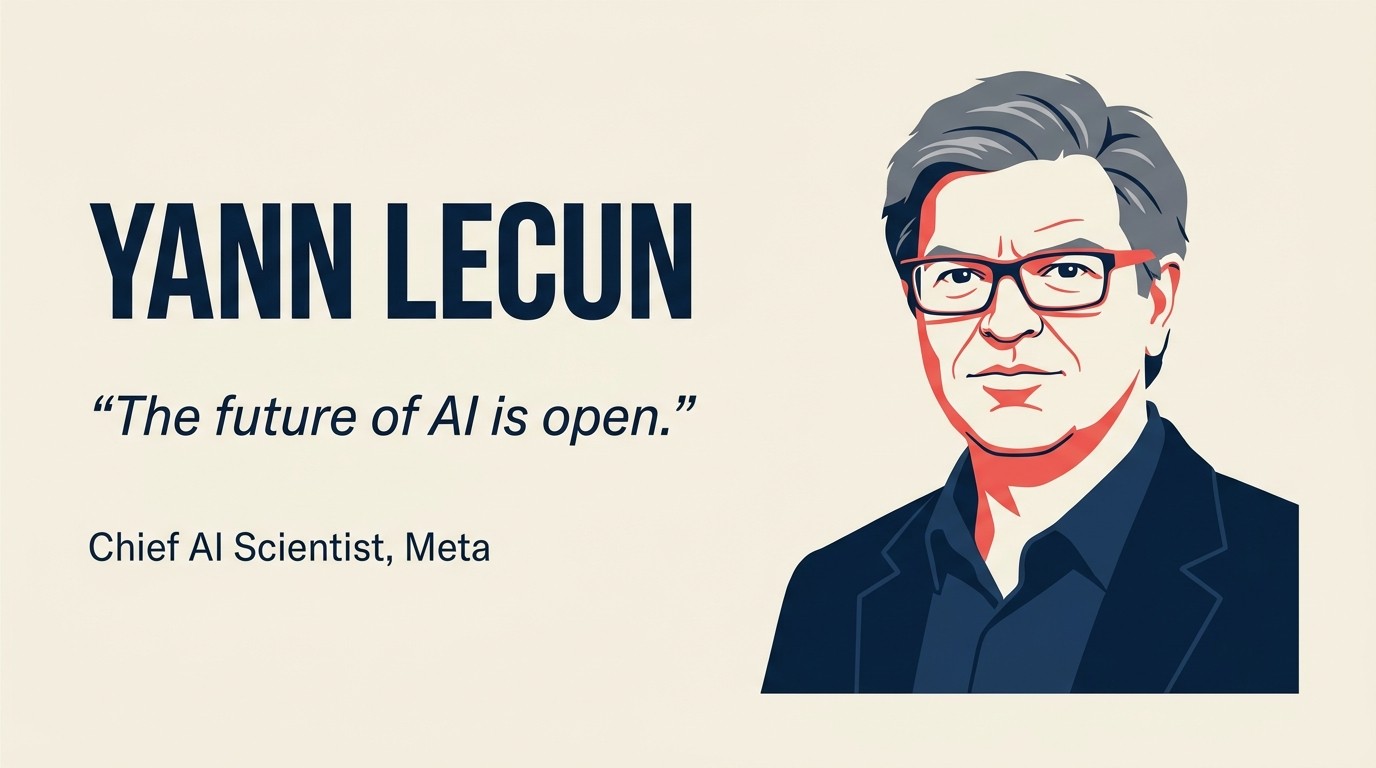
Fakta Utama: Yann LeCun (lahir 1960, Soisy-sous-Montmorency, Perancis) telah berkhidmat sebagai Ketua Saintis AI di Meta sejak 2013, di mana dia menubuhkan FAIR (Penyelidikan AI Facebook). Dia adalah Professor Perak di Institut Courant NYU. Pada akhir 1980-an dia membantu mencipta rangkaian neural konvolusi (CNN), seni bina yang mendasari visi komputer moden, dan melancarkan LeNet untuk pengiktirafan cek perbankan. Dia berkongsi Anugerah Turing 2018 dengan Yoshua Bengio dan Geoffrey Hinton untuk kerja pembelajaran mendalam yang asas. LeCun menjunjung PyTorch daripada TensorFlow, menyokong peluncuran Llama Meta yang sumber terbuka, dan adalah pengkritik paling terbuka industri mengenai kerisau AI dan naratif keselamatan model tertutup.
Doktrin Sains Terbuka AI
Doktrin Sains Terbuka AI ialah keyakinan bahawa kemajuan kecerdasan buatan bergerak lebih cepat, lebih selamat, dan lebih adil apabila model, kerangka kerja, dan penyelidikan dilepaskan secara terbuka daripada disimpan di belakang dinding syarikat. Di bawah doktrin ini, keterbukaan dianggap sebagai strategi kompetitif — bukan konsesi etika — kerana ekosistem yang dibina di sekitar alat terbuka menjadi lebih boleh pertahankan daripada parit proprietari. Kedudukan kontrarian pelengkap LeCun menyatakan bahawa pemimpin teknikal mesti secara terbuka menentang naratif konsensus apabila bukti tidak menyokongnya, walaupun apabila naratif itu secara komersial mudah untuk pesaing.
Yann LeCun menghabiskan kebanyakan 1990-an mengerjakan teknologi yang selebihnya bidang sebahagian besarnya telah meninggalkan. Rangkaian neural konvolusi adalah mahal dari segi pengiraan, menjadi kontroversial secara teoritikal, dan kurang dibiayai. Pasukannya di Bell Labs membinanya apa pun juga, memperhalusi backpropagation untuk menjadikannya boleh latihan, dan melancarkan LeNet — sistem pengiktirafan tulisan tangan — ke cawangan bank AS. Menjelang 1998, LeNet membaca kira-kira 10 hingga 20 peratus daripada semua cek yang diproses di Amerika Syarikat.
Itu cara panjang untuk mengatakan: LeCun telah betul tentang perkara sukar pada saat yang tidak selesa sebelumnya. Itulah sebabnya kedudukannya semasa — bahawa model bahasa besar sahaja tidak akan mencapai kecerdasan umum buatan, dan bahawa bidang itu perlu mengejar sesuatu yang lebih seperti model dunia — berbaloi untuk diambil dengan serius walaupun ia tidak mudah untuk orang yang membina model tersebut.
Dia berkongsi Anugerah Turing 2018 dengan Yoshua Bengio dan Geoffrey Hinton, tiga penyelidik yang kini dipanggil bapa-bapa pembelajaran mendalam. Dia telah menghabiskan 11 tahun sebagai ketua saintis AI Meta, membina FAIR menjadi salah satu makmal penyelidikan terbuka paling produktif di dunia, dan menyokong PyTorch melawan TensorFlow pada masa apabila TensorFlow mempunyai berat penuh Google di belakangnya. Rekod jejaknya pada pertaruhan panjang adalah baik.
Analisis Gaya Kepemimpinan
| Gaya | Berat | Cara ia Ditunjukkan |
|---|---|---|
| Perintis Kontrarian | 60% | Mode lalai LeCun adalah mengenal pasti kedudukan konsensus dalam bidang, menilainya pada merit teknikal, dan menerbitkan pendapat sebenarnya — tanpa mengira sama ada ia popular. CNN pada 1990-an. AI sumber terbuka pada 2010-an. Keraguan AGI mengenai LLM pada 2020-an. Dia tidak memilih kedudukan kontrarian untuk keterlihatan. Dia memilihnya kerana dia berfikir mereka betul dan dia sanggup mempertahankan mereka pada panjang. |
| Penyokong Sains Terbuka | 40% | LeCun membina FAIR dengan prinsip bahawa penyelidikan AI harus diterbitkan, model harus dilepaskan, dan bidang itu maju lebih cepat apabila semua orang mempunyai akses kepada alat yang sama. Kedudukan itu menghasilkan dominasi PyTorch dan peluncuran Llama Meta. Ia juga mentakrifkan keberatannya terhadap OpenAI dan Anthropic's pendekatan model tertutup, yang dia anggap kedua-duanya strategik salah dan epistemik jujur. Dario Amodei adalah tandingan paling jelas — penyelidik OpenAI terdahulu yang membina Anthropic dengan premis bahawa model sempadan memerlukan pelaksanaan yang berhati-hati terkawal, kedudukan LeCun telah menolak sebagai strategi kompetitif berpakaian sebagai keselamatan. |
Nisbah itu menerangkan kedua-dua pengaruhnya dan geseran yang dia jana. Kepemimpinan kontrarian tanpa keterbukaan hanya akan menjadi sukar untuk digunakan. Sains terbuka tanpa kesediaan kontrarian untuk menahan kedudukan yang tidak popular menghasilkan penyelidikan selamat, optimisasi kutipan. Bersama-sama, mereka mencipta gaya yang menggerakkan bidang tetapi juga membakar jambatan.
Sifat-Sifat Kepemimpinan Utama
| Sifat | Penilaian | Apa Maksudnya dalam Amalan |
|---|---|---|
| Degil Intelektual | Luar Biasa | LeCun telah memegang tesis CNNnya melalui dua musim dingin AI dan tesis keraguan AGInya melalui gelombang GPT-4. Itu bukan degil dalam arti menolak untuk mengemaskini pada bukti. Ia adalah kapasiti untuk mengekalkan kedudukan yang beralas teknikal di bawah tekanan sosial untuk mematuhi. Kebanyakan penyelidik menyerah lebih awal. Dia tidak. |
| Keyakinan Sumber Terbuka | Sangat Tinggi | Ini bukan hanya falsafah. LeCun membina infrastruktur institusional mengelilingi sains terbuka: dasar penerbitan FAIR, pelaburan PyTorch Meta, peluncuran model Llama. Dia menganggap keterbukaan sebagai leverage kompetitif, bukan hanya sikap etika. Hujahnya ialah AI tertutup mencipta risiko monopoli manakala AI terbuka mempercepat bidang keseluruhan termasuk kemampuan Meta sendiri. |
| Visi Teknikal Jangka Panjang | Tinggi | Kerangka JEPA (Joint Embedding Predictive Architecture) LeCun telah membangunkan sejak kira-kira 2022 mewakili pertaruhan seni bina multi-tahun. Ini bukan peta jalan produk. Ia adalah teori apa yang keperluan intelijen yang LLM tidak berikan. Sama ada dia betul tentang JEPA tidak diketahui. Tetapi kesediaan untuk berkomitmen sumber penyelidikan serius untuk hipotesis seni bina yang tidak populer adalah jarang pada tahap keahliannya. |
| Kesediaan Perbincangan Awam | Tinggi | LeCun bertaraf pada X dengan Sam Altman, Elon Musk, penyelidik keselamatan AI, dan sesiapa yang meletakkan tuntutan atas meja yang dia pikir salah. Itu bukan tingkah laku biasa untuk ketua saintis di syarikat besar. Ia adalah pilihan yang sengaja untuk memastikan perbincangan teknikal tetap awam dan untuk menunjukkan bahawa arah AI Meta tidak didorong oleh ketakutan komersial kebenaran. |
3 Keputusan yang Menentukan LeCun
1. Mencipta CNN dan LeNet (1989-1998) Tanpa Sokongan Industri
Apabila LeCun tiba di Bell Labs sebagai postdok pada 1988, dia sudah pun mengerjakan penggunaan backpropagation kepada pengiktirafan tulisan tangan menggunakan seni bina konvolusi. Idea itu secara teknikal bunyi tetapi praktikal sukar. Rangkaian neural memerlukan pengiraan yang perkakasan 1980-an hampir tidak menyokong. Bidang itu telah menjadi marah tentang sambungan selepas musim dingin AI pertama.
LeCun membinanya apa pun juga. Menjelang 1989, dia telah menerbitkan kertas asas tentang CNN. Menjelang 1998, seni bina LeNet-5 adalah versi terbesar yang dipoles — dan ia berjalan dalam pengeluaran di bank di seluruh Amerika Syarikat.
Keputusan kepemimpinan di sini bukanlah pilihan tunggal. Ia adalah komitmen yang berkelanjutan kepada program penyelidikan yang tidak mempunyai bayaran jangka pendek yang jelas dan yang bahagian ketara komuniti AI dianggap jalan buntu. Bell Labs memberikan kepadanya sumber dan jalan untuk mengejarnya. Dia menggunakannya tanpa maaf.
Apa yang ini tunjukkan: pertaruhan teknikal paling penting sering kelihatan salah selama bertahun-tahun sebelum mereka kelihatan betul. LeCun mempunyai hasil (LeNet dalam pengeluaran) sebelum CNN menjadi bergambar. Itu adalah mod pengesahan yang berbeza daripada membina untuk konsensus. Jika anda memimpin organisasi teknikal, tanya sama ada pasukan anda mempunyai kebenaran untuk bekerja pada perkara yang akan kelihatan salah selama dua tahun sebelum mereka kelihatan betul.
2. Budaya PyTorch Pembinaan di Facebook AI Research (FAIR)
Apabila LeCun menyertai Facebook pada 2013 untuk membina FAIR, dia mempunyai dua mandat: menghasilkan penyelidikan AI berkelas dunia dan membuat Facebook lebih baik pada AI. Pengaturan itu memerlukan meyakinkan Mark Zuckerberg bahawa penerbitan penyelidikan secara bebas — termasuk kerja pesaing boleh bina — adalah strategi jangka panjang yang lebih baik daripada menyimpannya. Zuckerberg bersetuju, dan pertaruhan pada AI sumber terbuka itu telah menentukan kedudukan Meta dalam bidang sejak. Dia melaksanakan kedua-duanya dengan membina organisasi penyelidikan yang menerbitkan secara terbuka, merekrut bakat akademik yang menginginkan kemerdekaan penyelidikan, dan menyandarkan pembangunan PyTorch sebagai kerangka kerja yang penyelidik — dalaman dan luaran Meta — benar-benar mahu gunakan.
Keputusan PyTorch adalah penting. TensorFlow, yang disokong oleh Google, adalah kerangka kerja penyelidikan yang dominan pada 2015 apabila PyTorch diluncurkan. TensorFlow mempunyai lebih ramai pengguna, tutorial lebih, dan syarikat yang lebih besar di belakangnya. LeCun dan pasukan FAIR menyokong PyTorch kerana ia mempunyai graf pengiraan dinamik yang lebih baik, yang menjadikan eksperimen penyelidikan jauh lebih cepat. Mereka betul.
Menjelang 2022, PyTorch telah menjadi kerangka kerja yang dominan dalam penyelidikan AI — digunakan dalam majoriti kertas yang diterbitkan di NeurIPS, ICML, dan ICLR. Itu bukan pemasaran. Ia adalah pertaruhan teknikal dan budaya bahawa alat penyelidikan terbaik akan menang, dan bahawa membuatnya terbuka akan mempercepat penerimaan lebih cepat daripada sebarang platform tertutup.
Model FAIR juga membuktikan bahawa anda boleh menarik penyelidik akademik serius ke dalam makmal industri tanpa memerlukan mereka untuk meninggalkan norma penerbitan. Itu lebih sukar daripada bunyi. Kebanyakan makmal AI korporat bergelut dengan ketegangan antara penerbitan penemuan dan perlindungan keuntungan kompetitif. LeCun menyelesaikan ketegangan itu dengan membuat keterbukaan keuntungan kompetitif.
3. Secara Terbuka Menentang Perangka Keselamatan AI Model Tertutup
Pada 2023 dan 2024, apabila OpenAI dan Anthropic membina naratif mengelilingi keselamatan AI yang memerlukan peluncuran model tertutup yang berhati-hati dikawal, LeCun secara terbuka dan konsisten menolak kembali. Hujahnya mempunyai dua bahagian: pertama, bahawa LLM tidak menimbulkan risiko kelangsungan yang dihubung kerana mereka tidak mempunyai seni bina yang diperlukan untuk tingkah laku sebenar yang autonomus yang diarahkan objek. Kedua, bahawa menggunakan keselamatan sebagai pembenaran untuk model tertutup adalah strategi kompetitif berpakaian sebagai etika.
Dia berkata ini secara langsung dan berulang kali. Pada X, dalam temu bual, dalam ceramah akademik. Dia memanggil naratif kemusnahan AI "preposterously ridiculous" dalam pos 2023. Dia berpendapat bahawa Meta mengeluarkan Llama secara terbuka lebih selamat daripada pendekatan tertutup OpenAI kerana model terbuka membenarkan penyelidikan keselamatan bebas yang model tertutup cegah.
Kedudukan itu betul-betul kontroversi. Orang bijak di OpenAI dan Anthropic tidak bersetuju dengannya. Tetapi pendirian awam LeCun menolak perbincangan keselamatan AI dalam arah yang diperlukan untuk pergi: ke arah kekhususan empirik tentang bahaya yang sebenarnya berkemungkinan daripada rayuan umum kepada risiko kelangsungan.
Bagi pemimpin: kesediaan untuk menamakan kedudukan yang secara langsung bercanggah dengan naratif pemasaran pesaing adalah jarang dan berguna. LeCun tidak melembut kritik untuk mengelakkan konflik. Dia menyatakan kedudukan teknikal dan membuat pihak lain berpendapat terhadap tuntutan yang spesifik. Itu adalah kedudukan retorik yang jauh lebih sukar untuk disusun.
Apa yang LeCun Akan Lakukan dalam Peranan Anda
Jika anda seorang CEO, playbook sumber terbuka secara langsung boleh diterjemahkan ke konteks bukan-AI. Tesis LeCun ialah melepaskan perkara membina lebih ramai kepercayaan dan keupayaan daripada menyimpannya. Dalam perniagaan anda, itu mungkin bermakna penerbitan metodologi anda, pembebasan alatan dalaman sebagai sumber terbuka, atau perkongsian penyelidikan yang pesaing anda secara teoritikal boleh mengambil manfaat. Penemuan kontraintuatif daripada kerjaya LeCun: keterbukaan mencipta keuntungan kompetitif yang lebih tahan lama daripada rahasia kerana ia membina ekosistem mengelilingi pendekatan anda yang lebih sukar untuk direplikasi daripada pendekatan itu sendiri.
Jika anda seorang COO, model FAIR LeCun mempunyai pelajaran operasi tentang bakat. Dia membina organisasi penyelidikan dengan memberikan orang bijak kemerdekaan penyelidikan yang tulen — keupayaan untuk bekerja pada apa yang mereka temui menarik dan menerbitkannya. Pasukan operasi anda mungkin mempunyai orang yang boleh melakukan lebih jika anda memberikan mereka lintang untuk bekerja pada masalah yang anda tidak telah memberikan tugas. Tasking yang ketat adalah cekap dalam persekitaran stabil. Ini adalah masalah pengekalan bakat dalam yang bergerak cepat.
Jika anda seorang pemimpin produk, cerita PyTorch adalah kajian kes pengurusan produk. PyTorch menang bukan melalui pemasaran atau jualan perusahaan tetapi melalui membuat kerja penyelidik sehari-hari lebih baik. LeCun dan pasukannya mengutamakan pengalaman pembangun orang yang sebenarnya membina model. Jika produk anda mempunyai jurang penggunaan antara pengadopsi awal dan pelancaran luas, soalannya biasanya: apa yang akan membuat ini betul-betul lebih baik bagi orang yang menggunakannya setiap hari, bukan hanya mengesankan pada panggilan demo?
Jika anda dalam jualan atau pemasaran, strategi perbincangan awam LeCun diterjemahkan kepada kepemimpinan pemikiran dengan gigi. Dia tidak menulis kandungan berhati-hati, berhedge yang mengelakkan kontroversi. Dia menyatakan kedudukan teknikal tertentu dan mengundang tolakan. Pendekatan itu menghasilkan lebih ramai keterlibatan dan kredibiliti lebih dengan pembeli yang canggih secara teknikal daripada kandungan yang dipoles yang mengatakan tiada perkara yang kontroversi. Jika pasaran anda mempunyai ortodoksi anda fikir salah, mengatakan demikian secara langsung adalah strategi pembezaan.
Bagaimana Rework Pas dengan Model Operasi LeCun
Logik operasi LeCun memasangkan keyakinan teknikal kontrarian dengan leverage sumber terbuka: ambil pertaruhan seni bina yang tidak popular tetapi betul, kemudian lepaskan alatan supaya ekosistem kompaun mengelilingi pendekatan anda. Playbook hanya berfungsi jika lapisan operasi dalaman bergerak secepat lapisan penyelidikan — yang merupakan di mana kebanyakan organisasi tersekat. Rework dibina untuk pasukan pembangun-pertama, AI-hadapan menjalankan playbook ini. CRM dan Sales Ops ($12/pengguna/bln) dan Work Ops ($6/pengguna/bln) tumpukannya memberikan produk, penyelidikan, dan fungsi GTM permukaan operasi bersama tanpa memaksa perdagangan vendor-tertutup yang LeCun mengkritik. Pasukan berlayar terhadap kerangka kerja terbuka, mengesan isyarat penerimaan dalam Rework, dan memastikan gerakan komersial sejajar dengan pertaruhan teknikal. Bagi pemimpin yang membuat panggilan gaya LeCun jangka panjang, soalan operasi bukan kerangka kerja yang mana mempunyai lebih ramai ciri — ia adalah yang mana mendapat keluar daripada cara para jurutera anda.
Petikan Terkenal & Pelajaran Seterusnya di Sebalik Dewan Pengarah
"Saya tidak percaya bahawa LLM akan membawa kepada AGI. Saya tidak fikir mereka akan membawa kepada sistem yang boleh berfikir, yang mempunyai akal waras, yang boleh merancang, yang mempunyai ingatan tetap, atau yang boleh belajar tugas baru dengan cepat." — Yann LeCun, temu bual dengan Lex Fridman, 2022.
Itu adalah tuntutan yang tertentu dan boleh dipalsukan daripada salah seorang daripada tiga orang yang membina asas yang LLM berjalan di atas. Dia mungkin salah. Garis masa mungkin mengejutkannya. Tetapi kesediaan untuk membuat ramalan yang tertentu dan boleh dipalsukan tentang soalan teknikal berisiko tinggi adalah kebalikan daripada gaya komunikasi lindung-diri-segalanya yang mendominasi kebanyakan ulasan eksekutif tentang AI.
Dalam respons 2024 pada X untuk ramalan kemusnahan AI, LeCun menulis: "Sebelum sistem boleh mengambil alih dunia, ia perlu menunjukkan ia boleh menavigasi kedai runcit dengan boleh diandalkan." Ayat itu mengandungi lebih banyak penentuan logik untuk berfikir tentang risiko AI daripada kertas keselamatan yang panjang kebanyakan. Dia mempunyai bakat untuk mencari objek konkrit yang melembapkan alarm abstrak.
Di Mana Gaya Ini Pecah
Kontrarianism awam adalah mahal. Permusuhan LeCun dengan penyelidik keselamatan AI, penggemar LLM, dan ketua makmal bersaing telah menjadikannya benar-benar sukar bagi beberapa orang untuk bekerjasama dengan. Koalisi dalam penyelidikan teknologi memerlukan tahap tarif diplomatik yang LeCun tidak selalu gunakan. Program penyelidikan JEPA bergerak lebih perlahan daripada sempadan LLM sebahagiannya kerana lebih sukar untuk merekrut orang kepada arah yang bidang lihat secara skeptikal.
Keyakinan sumber terbuka juga mempunyai had sebenar. Peluncuran Llama Meta mempercepat penyelidikan keupayaan global, termasuk untuk pelaku dengan fokus keselamatan kurang daripada Meta. Penolakan LeCun tentang kebimbangan itu berbunyi lebih pasti daripada bukti menyokong. Dan keraguan AGInya, walaupun jika betul tentang jalan, mungkin salah tentang masa dengan cara yang penting untuk cara organisasi merancang. Menjadi betul akhirnya bukanlah sama dengan menjadi betul untuk keputusan di hadapan anda sekarang. Fei-Fei Li dan Demis Hassabis kedua-duanya berkongsi akar pembelajaran mendalam LeCun tetapi telah mendarat dalam kedudukan berbeza mengenai keselamatan dan keterbukaan — berbaloi untuk dibaca sebagai set kontras.
Soalan Kerap Ditanya tentang Falsafah AI Yann LeCun
Siapa Yann LeCun?
Yann LeCun adalah saintis komputer Perancis-Amerika yang lahir pada 1960, kini Ketua Saintis AI di Meta (sejak 2013) dan Professor Perak di Institut Courant NYU. Dia adalah salah seorang daripada tiga penyelidik yang dikenali sebagai "bapa-bapa pembelajaran mendalam" dan mengasaskan makmal penyelidikan FAIR Meta.
Apakah Rangkaian Neural Konvolusi (CNN)?
CNN adalah kelas rangkaian neural dalam yang LeCun membantu mencipta pada akhir 1980-an yang menggunakan lapisan konvolusi untuk memproses data seperti grid dengan cekap seperti imej. Seni bina LeNetnya telah digunakan dalam cawangan bank AS untuk membaca kira-kira 10-20% daripada semua cek yang diproses pada akhir 1990-an, dan CNN kekal asas untuk visi komputer moden.
Mengapa LeCun memenangkan Anugerah Turing?
LeCun berkongsi Anugerah Turing 2018 — sering dipanggil Hadiah Nobel pengkomputeran — dengan Yoshua Bengio dan Geoffrey Hinton untuk terobosan konsep dan kejuruteraan yang membuat rangkaian neural dalam komponen kritikal pengkomputeran. Petikan secara jelas mengiktiraf kerja mereka pada backpropagation, rangkaian konvolusi, dan pembelajaran perwakilan.
Mengapa LeCun menentang kemusnahan AI?
LeCun berpendapat bahawa model bahasa besar semasa kurang komponen seni bina yang diperlukan untuk tingkah laku autonomus yang diarahkan objek — ingatan tetap, perancangan, model dunia, dan penalaran akal waras. Dia telah memanggil tuntutan risiko kelangsungan "preposterously ridiculous" dan mendalilkan bahawa pembenaran berasaskan keselamatan untuk model tertutup adalah strategi kompetitif yang berpakaian sebagai etika.
Mengapa Llama Meta adalah sumber terbuka?
LeCun mendesak pembukaan sumber Llama dengan tesis bahawa model terbuka memungkinkan penyelidikan keselamatan bebas, mencegah kepekatan monopoli keupayaan AI, dan mempercepat bidang keseluruhan lebih cepat daripada pendekatan tertutup. Dia menganggap keterbukaan sebagai leverage strategik — keuntungan ekosistem pembebasan terbuka mengatasi risiko kompetitif perkongsian berat.
Apa yang boleh dipelajari oleh pemimpin AI daripada Yann LeCun?
Tiga pelajaran menonjol: berkomitmen kepada pertaruhan yang beralas teknikal walaupun mereka kelihatan salah selama bertahun-tahun (CNN melalui dua musim dingin AI), menganggap keterbukaan sebagai leverage kompetitif daripada konsesi etika (PyTorch, Llama), dan mempertahankan kedudukan yang boleh dipalsukan tertentu secara terbuka daripada pernyataan korporat yang berkedge (perdebatan keraguan AGInya yang berkelanjutan).
Bacaan berkaitan: Gaya Kepemimpinan Andrew Ng, Gaya Kepemimpinan Sam Altman, Membina Pasukan Siap AI.

On this page
- Doktrin Sains Terbuka AI
- Analisis Gaya Kepemimpinan
- Sifat-Sifat Kepemimpinan Utama
- 3 Keputusan yang Menentukan LeCun
- 1. Mencipta CNN dan LeNet (1989-1998) Tanpa Sokongan Industri
- 2. Budaya PyTorch Pembinaan di Facebook AI Research (FAIR)
- 3. Secara Terbuka Menentang Perangka Keselamatan AI Model Tertutup
- Apa yang LeCun Akan Lakukan dalam Peranan Anda
- Bagaimana Rework Pas dengan Model Operasi LeCun
- Petikan Terkenal & Pelajaran Seterusnya di Sebalik Dewan Pengarah
- Di Mana Gaya Ini Pecah