Corporate Wellness Partnerships: How Gyms Win Business Clients
Turn this article into takeaways for your work.


Each assistant summarizes the article only for you and suggests best practices for your work.
Business wellness partnerships let a gym sell memberships to employers instead of one consumer at a time. A single corporate contract can deliver 15 to 50 pre-committed members and steady monthly revenue. To win them, you need a productized package, a focused sales process targeting companies of 25 to 200 employees, and billing built for corporate accounts.
Most gym operators spend their entire marketing budget chasing individual consumers, one lead at a time, one conversion at a time. But a single corporate wellness contract can deliver 15 to 50 pre-committed members before the billing cycle even starts. These aren't maybe-members who clicked an ad. They're employees whose company is already paying for access.
The math is straightforward: a small business with 30 employees signs a wellness agreement at $45 per employee per month. That's $1,350 in guaranteed monthly revenue from one deal. Close three of those deals and you've added $4,050 in MRR without running a single Facebook ad.
The problem is that most gyms have no formal process for building these partnerships. They wait for a local company to call them, put together a generic discount offer, and wonder why the relationship stalls after six months. Corporate wellness partnerships done right require a real sales process, a structured product offering, and operational systems that most gyms don't have yet. Understanding your gym's core business model is the foundation before layering in a B2B channel.
Key Facts: Corporate Wellness in the U.S.
- 80% of companies with 50+ employees offer some form of wellness benefit (SHRM, 2024)
- Employer wellness spending reached $51 billion annually, with fitness reimbursements as the most common benefit
- Employees who use company fitness benefits have 25% lower healthcare costs on average (RAND Corporation)
- Corporate gym partnerships average 18-month retention, versus 9 months for consumer-acquired members
The global corporate wellness market has grown into a multi-billion-dollar segment, with fitness benefits consistently ranking among the most requested employee perks.
What Corporate Wellness Partnerships Actually Look Like
Before you start pitching local businesses, you need a clear product to sell. Corporate wellness partnerships come in three main structures, and each serves a different type of employer.
Employer-subsidized memberships are the most common. The company covers part or all of the monthly membership fee for participating employees. Your gym bills the employer directly, or employees pay reduced rates and submit for reimbursement. This model works with any size company and is easiest to administer.
Bulk access agreements involve the employer purchasing a block of memberships at a negotiated rate (say, 20 memberships at $40 each when your standard rate is $55). Employees claim memberships from the block. This creates predictable cash flow and gives you a committed floor, though not every seat gets filled immediately. This structure pairs well with a multi-tier membership design where corporate access maps cleanly to your existing tiers.
On-site programming is the premium tier. Your gym sends instructors to deliver classes at the employer's office or facility. This requires more operational lift but commands higher rates and builds deep institutional relationships. A single on-site contract at three sessions per week can generate $2,000 to $4,000 monthly, separate from any in-gym membership agreements.
Most operators should start with subsidized memberships or bulk access agreements before considering on-site programming. Get the administrative relationship right before adding logistics.
Which Employers to Target
Not every local company has a wellness budget. You need to focus your prospecting on employers most likely to say yes quickly.
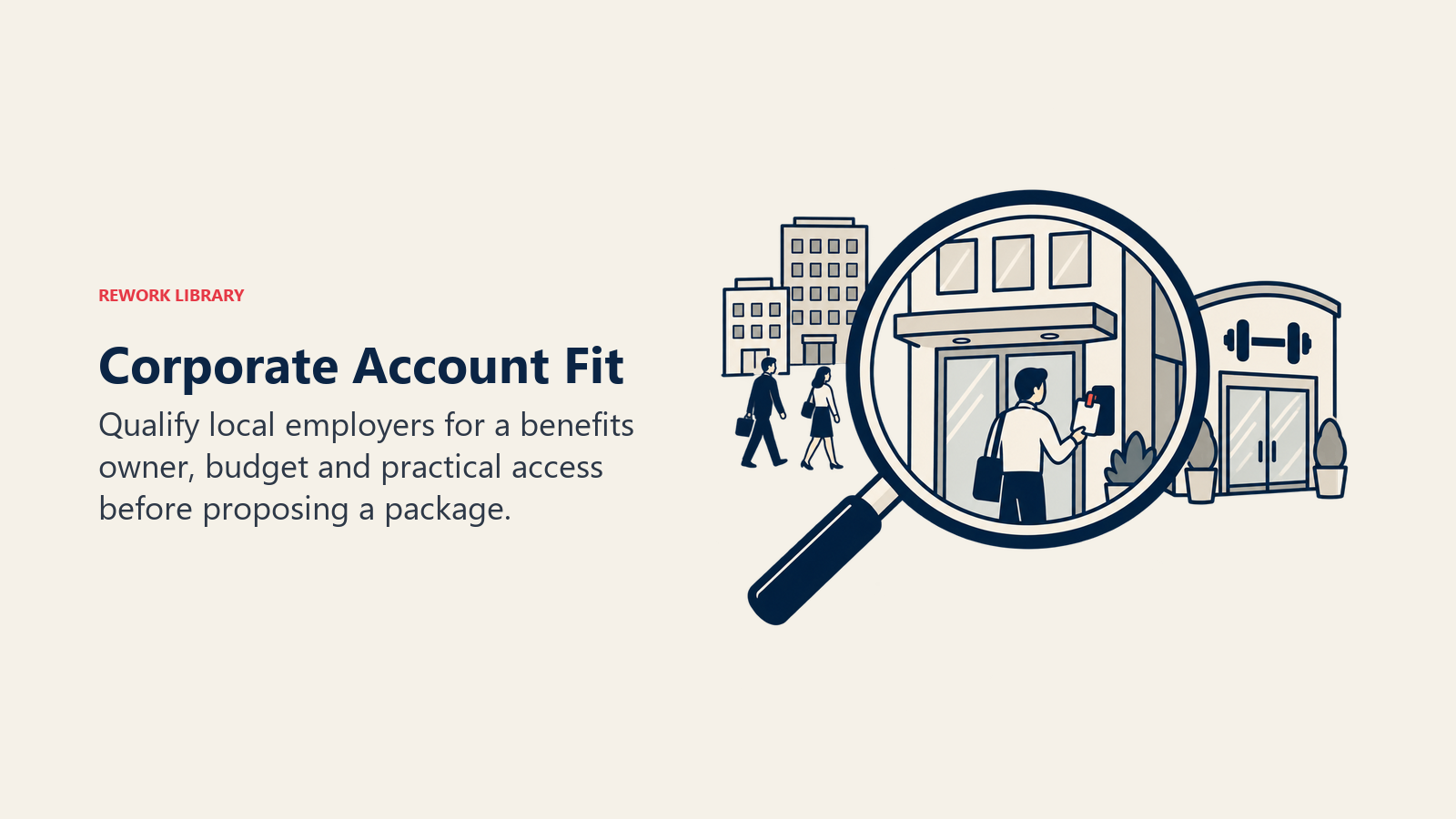
Company size sweet spot: 25 to 200 employees. Large enterprises have procurement processes that can take 6 to 12 months and often require insurance compliance documentation. Very small businesses (under 15 employees) rarely have formal benefits budgets. The 25 to 200 range has a real HR or office manager function, an actual benefits budget, and a decision-maker you can reach within two calls. A solid fitness competitive analysis of your local market will tell you which employers are already working with competing gyms.
Industries with the highest wellness adoption: Technology companies (where benefits are a recruiting tool), professional services firms (law, accounting, consulting), healthcare organizations (strong cultural alignment), financial services, and manufacturing companies with active safety programs. The BLS data on employee access to wellness programs shows adoption rates vary significantly by sector and employer size, which helps calibrate where your prospecting effort is most likely to pay off. Avoid retail and food service, where high turnover makes wellness programs hard to administer and HR is usually stretched thin.
Trigger events to watch for: Companies that just moved into a new office (they want to set up benefits), recently closed a funding round (flush with cash and hiring), announced expansion, or publicly discussed talent retention challenges. Local business journals and LinkedIn company pages are your best prospecting sources.
Start with 10 to 15 target companies. Qualify them before you spend time on a proposal.
Corporate Package Structures
Your corporate offering should be a product, not a negotiation. Here's a simple three-tier structure most gyms can launch within 30 days:
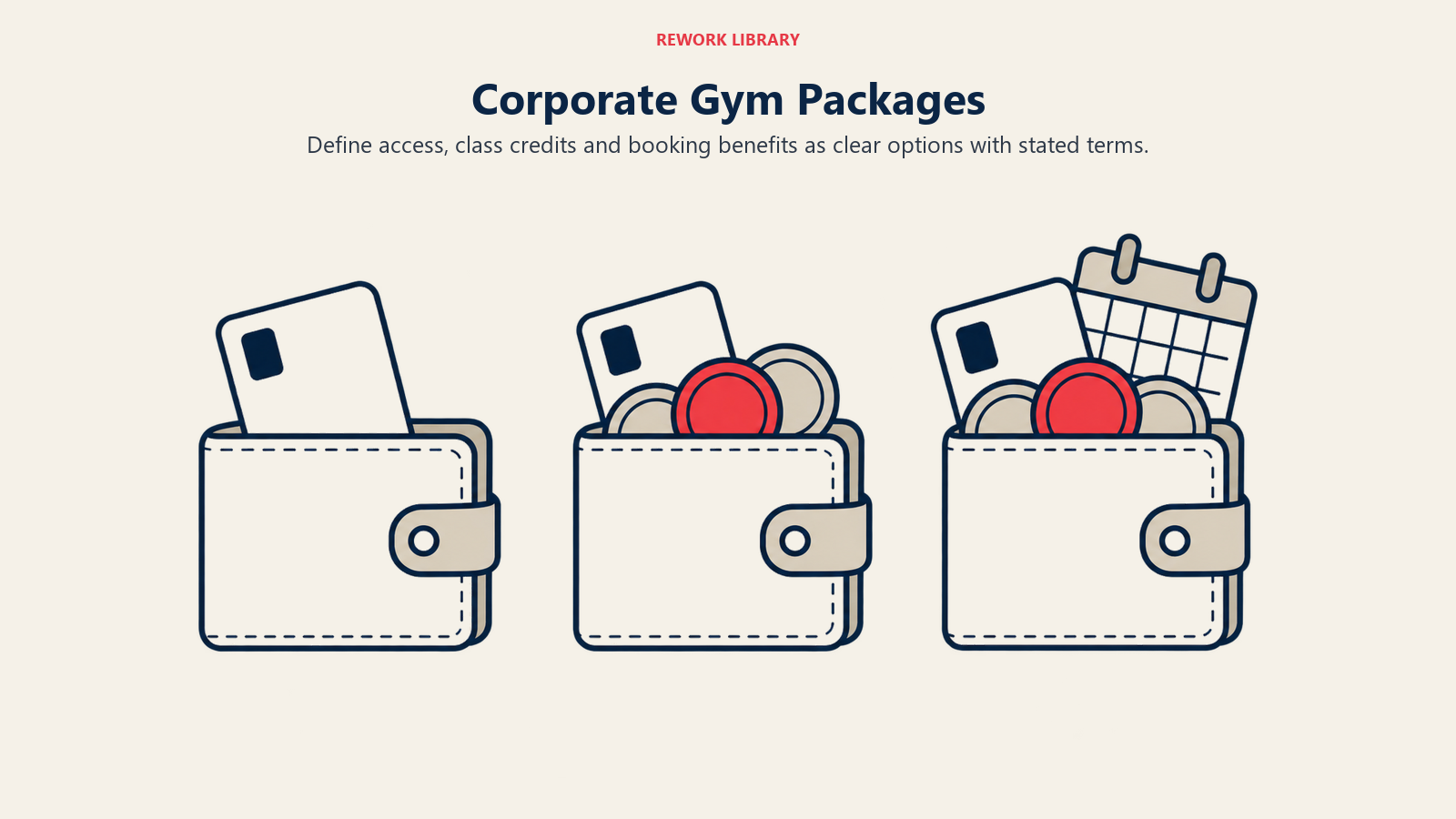
Tier 1: Access Package: Unlimited gym access, standard hours, no class credits included. Rate: $35 to $45 per employee per month (vs your standard $55+). Minimum: 10 employees. Billing: monthly invoice to employer.
Tier 2: Wellness Package: Unlimited access plus 8 group class credits per month per employee, one guest pass per month. Rate: $50 to $65 per employee per month. Minimum: 8 employees. Billing: monthly invoice with usage report.
Tier 3: Premium Corporate: All access, unlimited classes, personal training session credit (1 per quarter per employee), priority booking, corporate locker assignment. Rate: $80 to $100 per employee per month. Minimum: 5 employees. Best for senior team benefits packages.
Offer an annual contract at a 10% discount versus monthly rates. Annual billing upfront at the start of the contract creates immediate cash flow and locks in the relationship. The same logic applies to your consumer-facing memberships; the tradeoffs between contract and month-to-month billing models mirror the decisions you'll face when structuring corporate agreements.
Don't build bespoke packages for every company. If a prospect wants something outside these tiers, evaluate whether the deal size justifies the operational complexity. Most of the time, the answer is no.
The Sales Process for Corporate Wellness
The most common mistake gym operators make is pitching to the wrong person. HR generalists and office managers handle wellness perks. Benefits administrators at larger companies control the actual budget. C-suite contacts own strategy but delegate implementation. Know who you're talking to before you walk in.
Step 1: Identify the right internal buyer: For companies under 50 employees, the decision-maker is usually the Office Manager, Operations Manager, or CEO directly. For 50 to 200 employees, look for the HR Manager or Director of People. For 200+, find the Benefits Manager. LinkedIn makes this straightforward.
Step 2: The outreach email: Keep it under 100 words. Subject: "Fitness benefit for [Company Name] team." Body: "Hi [Name], I run [Gym Name] near your [Location] office. We work with companies like [local reference company] to provide wellness benefits for their teams. I'd love to share a quick proposal. Could we do 15 minutes on a call this week?" No pitch decks in the cold email. Just get the call.
Step 3: The discovery call: Ask three questions before you mention pricing. What wellness benefits do they currently offer? Have they considered a fitness benefit before? What's their biggest challenge with employee wellness? Listen for budget signals and past experience with gym memberships. Then present your packages based on what you heard.
Step 4: The proposal: One page, maximum. Include: package name, included benefits, per-employee rate, minimum headcount, contract length options, and a clear next step ("Approve this proposal to get 30-day onboarding started"). Don't send a proposal that requires a response. Include a simple signature line and a 10-day expiry.
The best corporate wellness salespeople close on the second or third touchpoint. If a deal extends beyond 30 days without a signed agreement, either the budget doesn't exist or you don't have the right contact. Move on.
Billing and Administrative Models
Corporate accounts require different billing infrastructure than individual members. Get this wrong and you'll spend more time on admin than the revenue justifies.
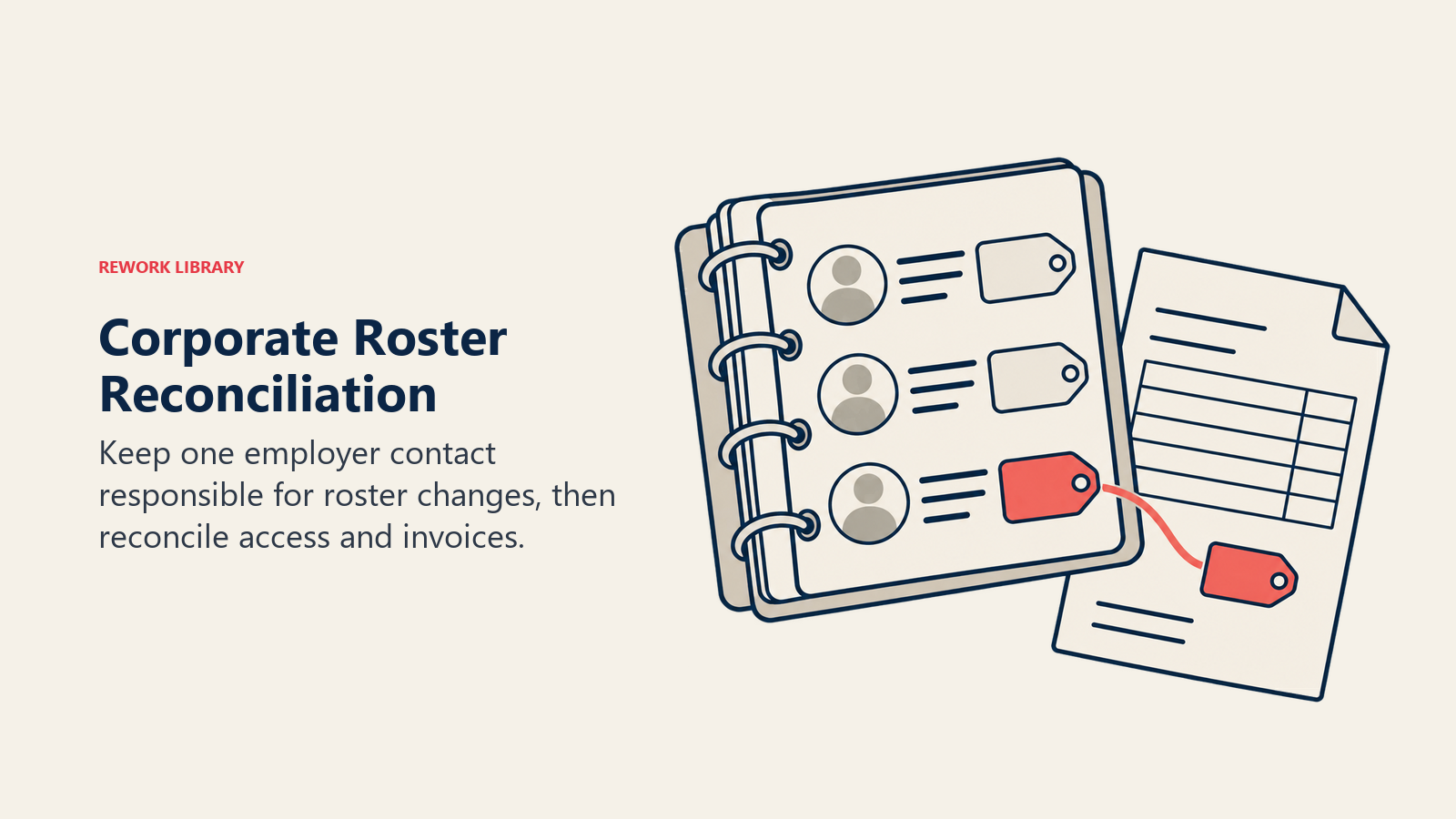
Invoice-based billing is the standard for corporate accounts. Send a monthly invoice to the employer's accounts payable or HR contact, net 30 days. Keep a simple roster of participating employees: names, email addresses, start dates. Update the roster monthly as employees join or leave the program. Tracking these accounts in your gym management software prevents the roster management from becoming a manual spreadsheet nightmare.
Underutilization policy: If the employer purchases 20 memberships but only 14 employees actively use the gym, do you still charge for 20? Yes, with a minimum commitment clause written into the contract. Frame it around the employer: they're securing reserved capacity, not paying per visit. Most employers accept this.
Employee turnover administration: Set a clear process for roster changes. New employees added mid-month are prorated. Departed employees removed within 30 days of notification. Designate one contact at the company as the wellness administrator who handles all roster changes. This keeps your admin overhead manageable.
Billing comparison: | Model | Cash Flow | Admin Load | Best For | |---|---|---|---| | Monthly invoice, net 30 | Moderate | Low | Most corporate accounts | | Quarterly prepay, 10% discount | High | Very low | Employers who prefer simplicity | | Annual prepay, 15% discount | Very high | Lowest | Anchor accounts, larger companies | | Per-employee utilization billing | Unpredictable | High | Rarely worth the complexity |
Retaining Corporate Members
B2B-sourced members churn differently than consumer-acquired members. They didn't choose your gym. Their employer chose it for them. That distinction matters enormously for retention.
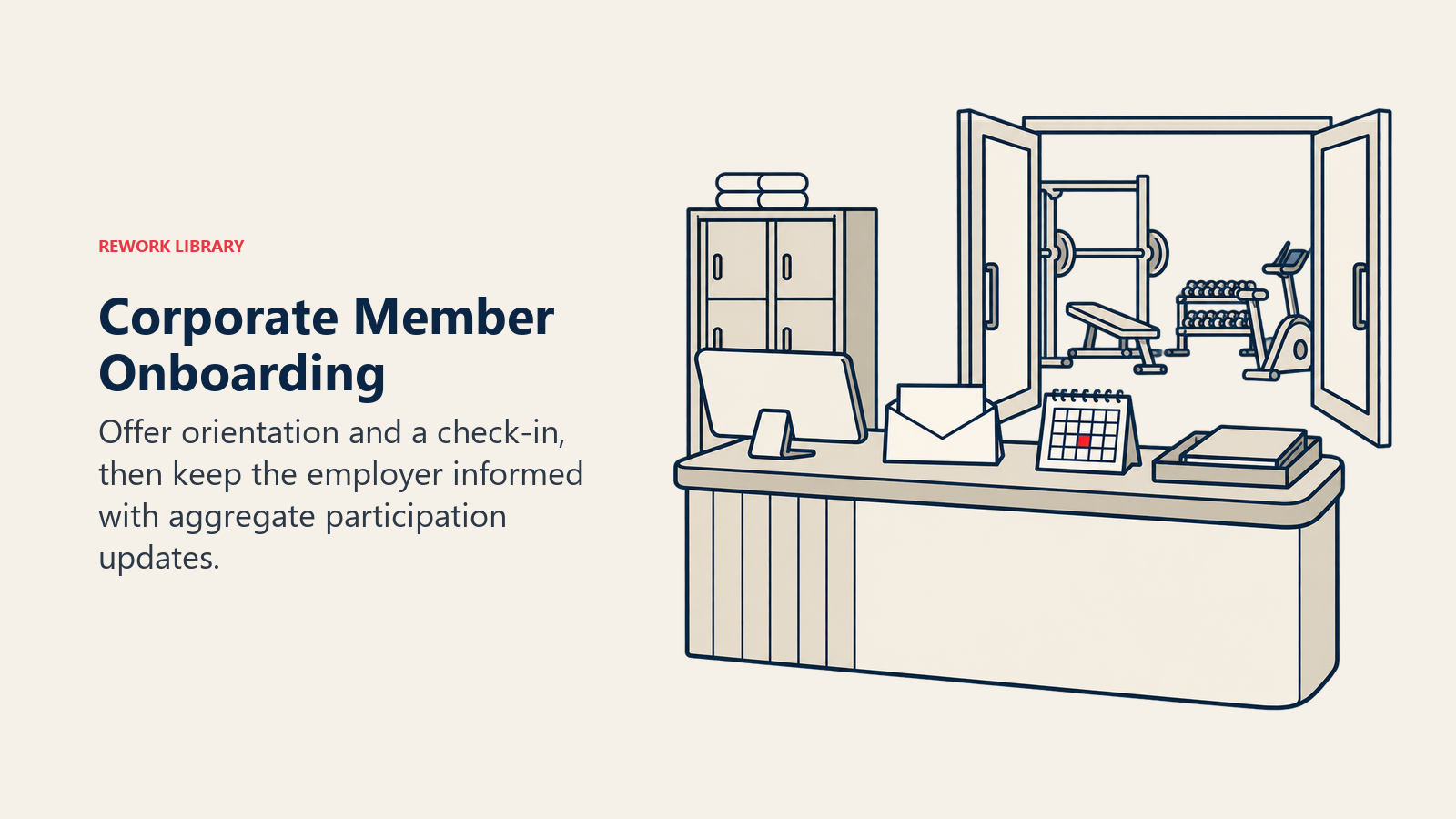
The first 60 days are critical. Corporate members who attend fewer than 6 times in their first month have a 72% probability of becoming inactive within 90 days. Harvard Business Review's landmark analysis of the hard return on employee wellness programs found that well-run programs generate ROI as high as six to one, data that's directly useful when you're making the business case to an HR director. Build an onboarding sequence specifically for corporate accounts: a welcome email from you personally, a quick orientation session offer, and a 30-day check-in from your team. Your new member onboarding process should have a corporate-specific variant that accounts for the fact that these members didn't choose your gym independently.
Corporate members also respond strongly to group identity. Create a company-specific locker section, a branded water bottle for members who sign up through a corporate partner, or a monthly team challenge between employees from the same company. These small touches transform an impersonal benefit into something members feel ownership over.
Stay in regular contact with your corporate contact, not just the employees. A quarterly wellness report (aggregate attendance data, classes used, trends) keeps you top of mind when they renew the agreement. When renewal time comes, you want them remembering that their team actually used the benefit, not wondering if anyone showed up.
One more thing on B2B churn: when the employer terminates the wellness agreement, you often lose the entire account overnight. This is the key risk of corporate partnerships. Mitigate it by converting active corporate members to individual plans whenever possible. Build a specific offer: "If your company wellness program changes, you can keep your gym access at a preferred rate." Get that offer in front of active users six months before the contract renewal date.
Building a Pipeline of Corporate Accounts
One corporate partnership is a nice revenue bump. Five or six is a recurring revenue channel. Here's how to build the pipeline systematically.
Set a monthly outreach target: 10 new company contacts per month. Even at a 10% close rate (which is realistic for a well-run corporate sales process), that's one new corporate account per month. After 12 months, you have 12 corporate accounts potentially delivering 150 to 400 committed members. Track this alongside your other key gym metrics so corporate MRR is visible as a distinct revenue line.
Ask every corporate client for an introduction to one peer company. "Do you know any other companies in [area] who take employee benefits seriously?" is a question you ask at the 90-day mark, when the relationship is established and the client is satisfied. Warm introductions to HR contacts are far more valuable than cold outreach. The introduction ask works the same way it does with your gym referral program for individual members: the best moment to ask is when the client is already satisfied.
Attend local chamber of commerce meetings and business networking events, not as a general fitness ambassador but as someone who specifically works with local employers on wellness programs. ACE Fitness has documented the case for workplace wellness programs including outcome data on participation and health impact that you can reference in your sales materials. That positioning is more compelling than "come try our gym."
Corporate partnerships aren't just volume. They're revenue stability. One solid portfolio of corporate accounts can represent 20 to 30% of your total MRR, and those accounts renew annually rather than month to month. That's the kind of revenue base that lets you plan, hire, and invest without being held hostage by fluctuating individual membership numbers.
Frequently Asked Questions
What is a business wellness partnership for a gym? It's an agreement where an employer pays for, or subsidizes, gym access for its staff. The gym bills the company directly or offers discounted employee rates, turning one signed contract into 15 to 50 committed members rather than chasing individual sign-ups.
How much can a gym charge for corporate memberships? Common rates run $35 to $45 per employee per month for basic access, $50 to $65 for an access-plus-classes tier, and $80 to $100 for a premium package with personal training credits. Annual prepay at a 10% discount strengthens cash flow and locks in the relationship.
Which companies are the best wellness partnership targets? Aim for employers with 25 to 200 staff: large enough to have a benefits budget and an HR or office manager, small enough to skip a 6 to 12 month procurement cycle. Technology, professional services, healthcare, and financial firms adopt fitness benefits most readily.
Do corporate members stay longer than regular members? Yes. Corporate gym partnerships average roughly 18-month retention versus about 9 months for consumer-acquired members. The main risk is losing the whole account if the employer ends the program, so convert active corporate members to individual plans before renewal.
How do I bill a corporate wellness account? Invoice the employer monthly, net 30, against a roster of participating employees, and include a minimum-commitment clause so you bill for reserved capacity even when not every seat is used. Designate one company contact to handle roster changes and keep admin manageable.
Learn More

Senior Operations & Growth Strategist