Supplements & Retail Revenue for Gyms: Building a Profitable In-Club Store
Turn this article into takeaways for your work.


Each assistant summarizes the article only for you and suggests best practices for your work.
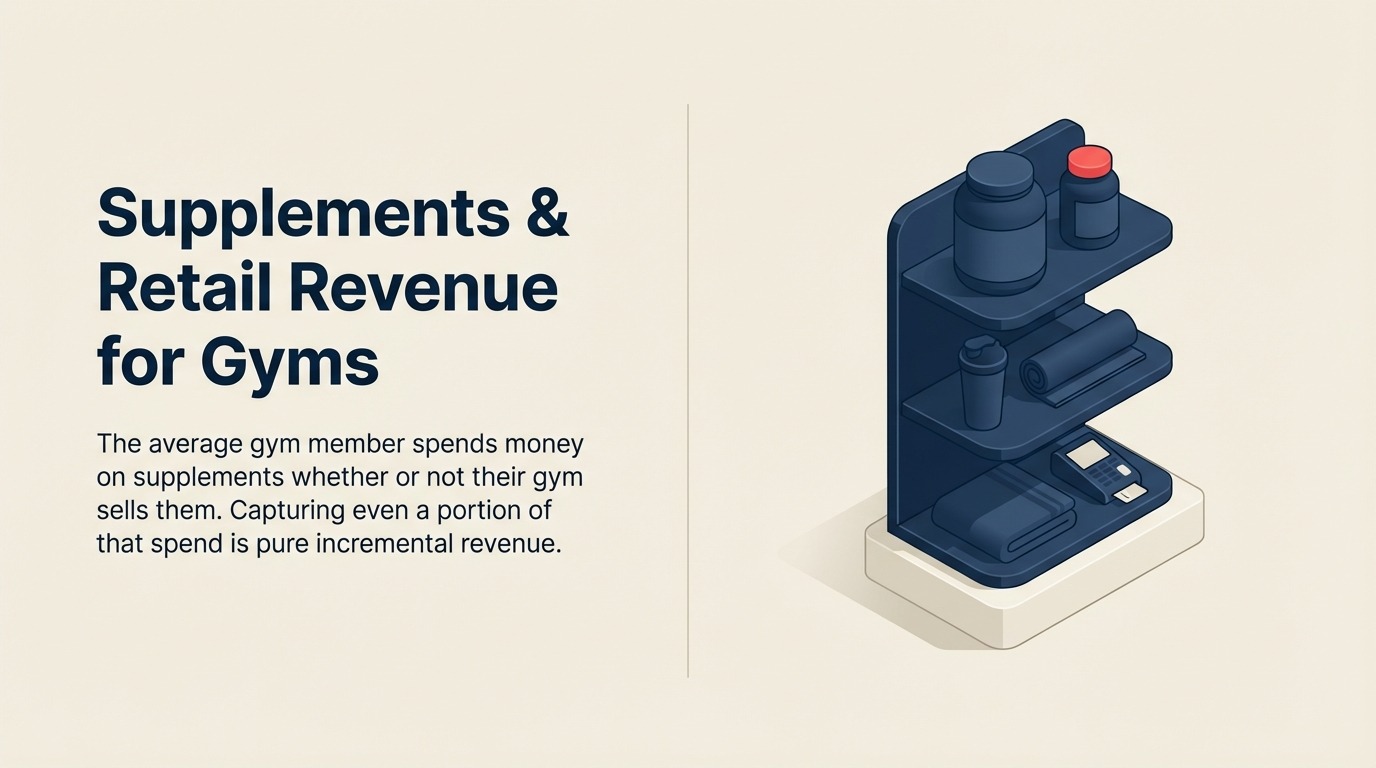
Gym supplement and retail revenue is the income a club earns by selling protein powder, pre-workout, smoothies, and branded gear to existing members. It typically runs 8 to 15 percent of total revenue but carries far higher margins than membership dues, making it one of the fastest ways to grow profit without adding new members.
The average gym member spends $50-100 per month on supplements. They buy protein powder, pre-workout, creatine, and BCAAs - usually from Amazon, GNC, or a local nutrition store. Whether your gym sells supplements or not, your members are spending that money somewhere. The global sports nutrition market was valued at approximately $27 billion in 2022 and is forecast by Statista to grow to over $37 billion by 2027 - the category your members are buying from is expanding, not contracting. The question is whether it's going to you or your competitors.
Capturing even a fraction of that existing spend represents pure incremental revenue on a customer relationship you've already built. You don't need to acquire new customers. You don't need to convince anyone that supplements are valuable - your members already believe that. The conversion cost is near zero; you just need to be in the right place with the right products. Supplement retail pairs well with nutrition coaching and recovery services - a member who's working with your nutrition coach will naturally look to your supplement shelf first when making purchasing decisions.
Retail and supplement revenue rarely exceeds 10-15% of total gym revenue, but it contributes disproportionately to profit margins compared to membership revenue, which carries high overhead costs. And a well-stocked supplement counter or a smoothie bar adds to the member experience in ways that support retention - it's not just a revenue line, it's part of the value proposition.
Key Facts: Gym Retail Revenue
- Supplement retail represents 8-12% of total revenue for gyms with an active retail program (IHRSA, 2024)
- Gyms with smoothie bars report 15-25% gross margins on beverages, with well-run operations achieving 50-60% gross margin (Club Industry Report, 2024)
- In-gym supplement sales carry 30-50% gross margins compared to 10-15% for equipment and apparel (Nutrition Business Journal, 2024)
- Gyms with retail programs see member retention rates 8-12% higher than comparable gyms without retail offerings (IHRSA Member Experience Study, 2024)
Product Selection Strategy
Start narrow. The biggest mistake in gym retail is stocking too many SKUs too soon. A supplement wall with 40 different protein powders looks impressive and sells slowly because members can't decide. A focused selection of 12-15 proven products in key categories sells faster because the choice is simple.
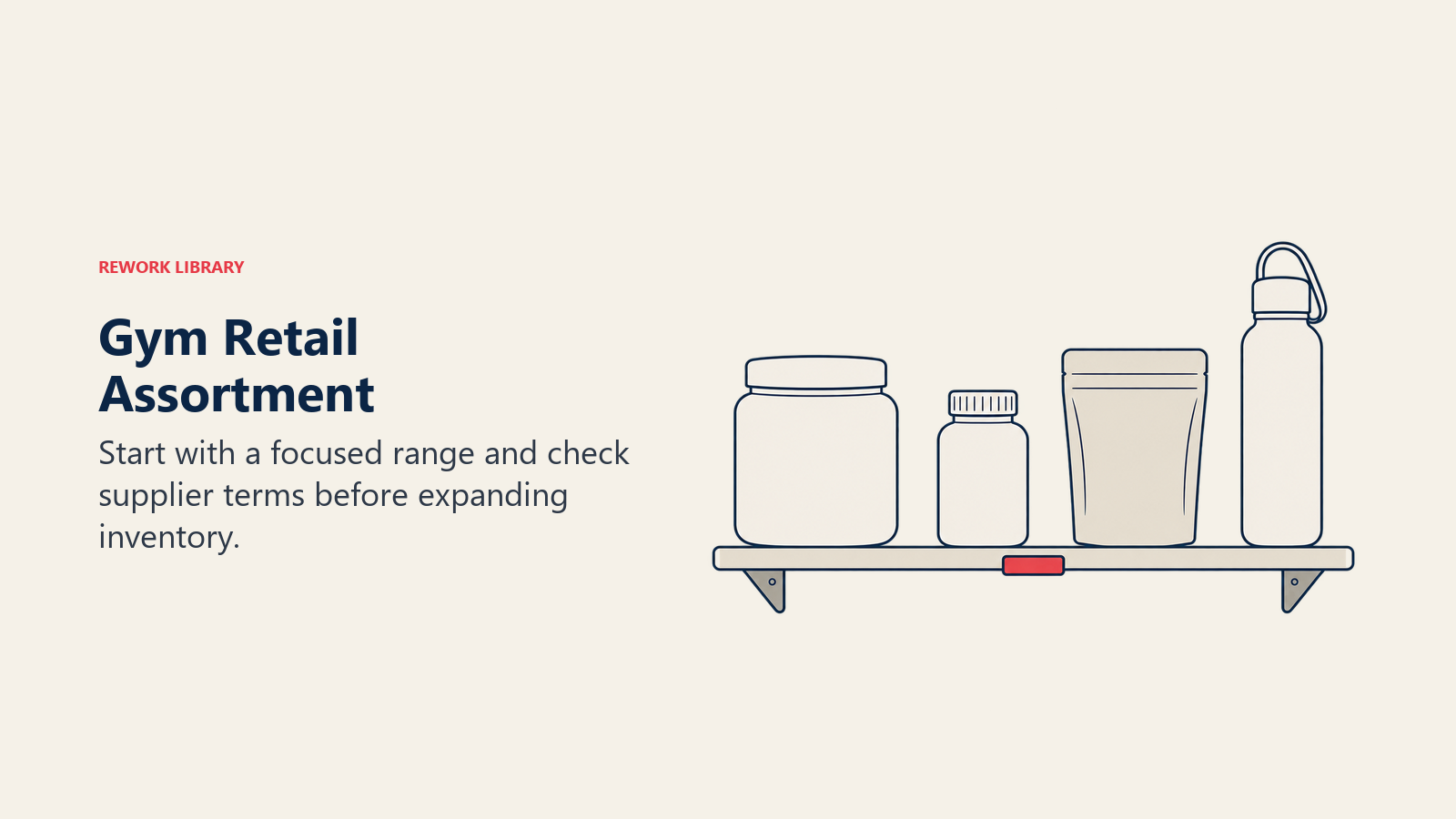
The highest-velocity supplement categories for gyms, in order:
Protein powder is the anchor category. Every serious gym member buys it. Start with 3-4 options: a whey isolate, a whey concentrate, a plant-based option, and potentially a ready-to-drink (RTD) option for impulse purchase near the water fountain. Whey protein margins run 35-45% at retail.
Pre-workout is the highest-impulse category. Members who forget to bring theirs are a captive market - they'll pay your price rather than work out without it. Stock 2-3 flavors of one or two brands. Pre-workout margins run 40-55%.
Creatine monohydrate is one of the best-studied and most recommended supplements in sports nutrition. It sells steadily to strength-focused members and carries 40-50% margins. ACE Fitness classifies creatine as having strong evidence for efficacy and apparent safety - making it one of the few supplements your staff can recommend confidently within scope of practice. It doesn't require flavor variety - a single 500g unflavored container covers most demand.
BCAAs and EAAs sell to endurance and strength members alike. A single quality product in 2-3 flavors is sufficient for most gyms.
Merchandise and accessories (branded gym bags, water bottles, resistance bands, lifting straps) carry lower margins (20-30%) but enhance brand visibility and serve as gifts and impulse purchases. Keep this category small - accessories shouldn't compete for shelf space with supplements. Heart rate monitors and fitness accessories also belong in this tier, especially if your gym offers wearable integration in group classes - selling the device and the class experience together is a natural bundle.
Brand selection criteria matter as much as category selection. Choose brands with:
- Strong market recognition (members who already buy the brand will trust your source)
- A return or exchange policy for damaged/expired product
- Minimum 35% margin at your target retail price
- Available wholesale accounts without excessive minimum order quantities
Private label (putting your gym's brand on white-label supplement products) offers the highest margins (50-65%) but requires minimum orders of 100+ units per SKU, upfront design costs, and inventory risk. It makes sense for gyms with 500+ members and strong brand identity. For most gyms under that size, third-party brands are lower risk and faster to move.
Display and Merchandising
Placement drives sales more than product quality. The best supplement on an ignored shelf sells less than a mediocre supplement placed at eye level near a high-traffic zone.
Near the check-in desk is your highest-traffic location. Every member passes it on arrival and departure. This is where impulse-purchase items belong: RTD protein drinks, energy bars, single-serve pre-workout packets. Items under $10 that require no consideration time.
Near the water fountain or hydration stations places products where members are already thinking about what they're drinking and how their workout is going. A small refrigerated display of RTD drinks here outperforms the same display tucked against a back wall by a factor of 2-3x.
A dedicated supplement counter or display case signals to members that this is a serious retail offering, not an afterthought. Glass display cases work well for protein powders and accessories; open-face shelving works for pre-workout and creatine. Keep the display uncluttered - more white space, not more product.
Sample programs are among the highest-ROI tactics in gym retail. A small sample of a new pre-workout flavor costs you $0.50-$1.00 in product and converts to a $30-40 purchase at rates far higher than any signage. Give samples to members who seem interested; don't wait for them to ask.
Staff product knowledge is the limiting factor for most gym retail programs. Front desk and training staff who can answer "what's a good protein powder for someone who works out 4x per week?" will sell significantly more than staff who shrug and point at the shelf. Build brief product knowledge training into your staff onboarding - 30 minutes covering your top 10 SKUs, their key benefits, and how to match them to common member questions. Personal trainers are especially effective at soft-selling supplements because they already have a trusted advisory relationship - this connects to broader personal training upsell strategies where product recommendations become part of the coaching conversation.
Smoothie Bar Economics
A smoothie bar is the highest-visibility retail option in a gym and one of the more complex to execute well. The revenue potential is real, but so are the staffing and operational demands.
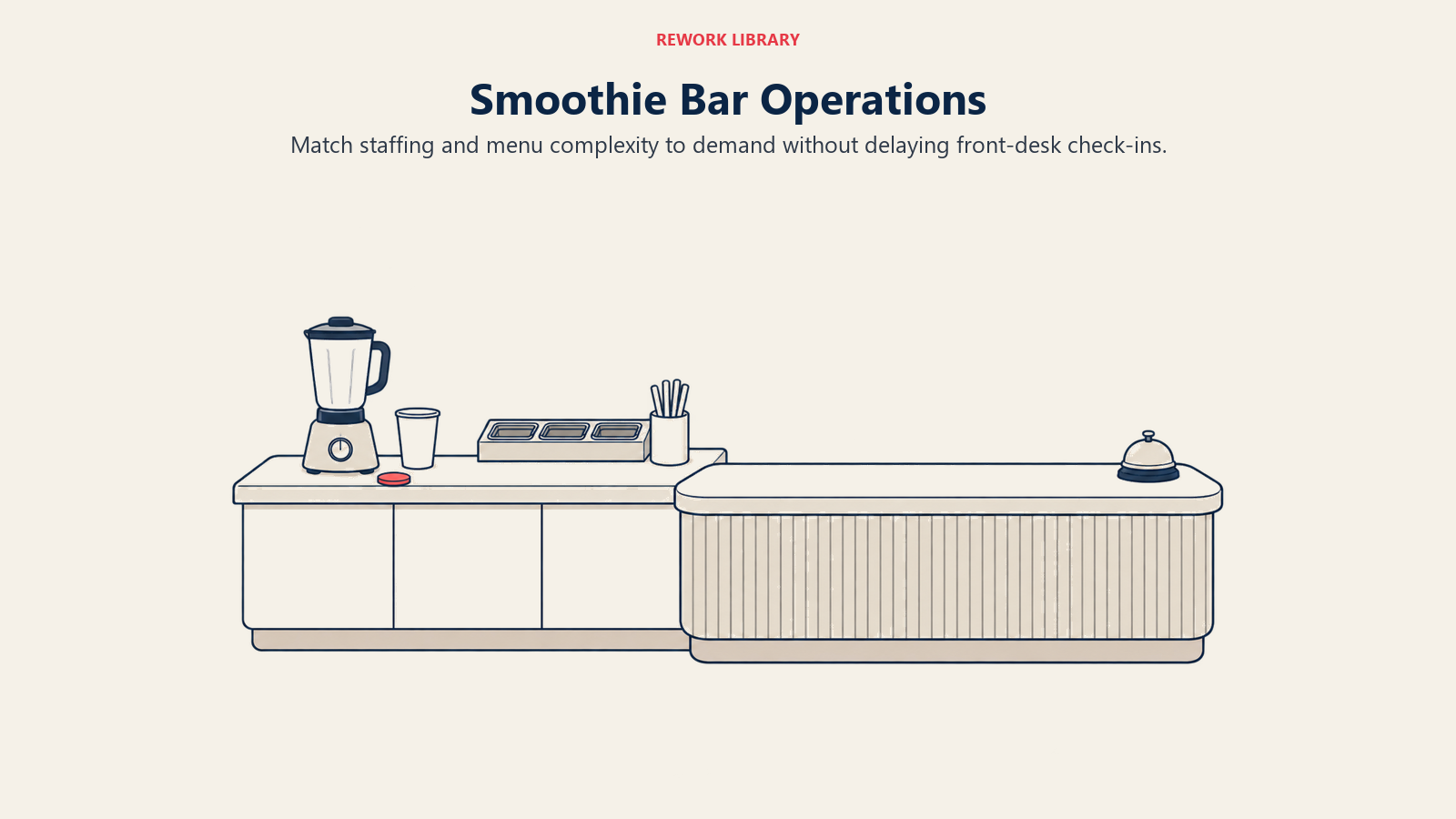
Equipment investment for a basic smoothie bar runs $3,000-6,000 (commercial blenders, refrigeration unit, preparation surface, storage). A full-service setup with a dedicated counter, commercial freezer, and signage runs $8,000-15,000 for new buildout. Used commercial blenders and refrigeration reduce this significantly.
The target P&L for a smoothie bar: ingredients typically cost 35-45% of the sale price, leaving 55-65% gross margin before labor. A $10 smoothie with $3.50 in ingredients has $6.50 gross margin. If you sell 30 smoothies per day at $10 average, that's $195/day gross margin, or approximately $5,800/month before labor.
The labor question is critical. A dedicated smoothie bar employee at 20 hours/week costs approximately $2,000-2,500/month (depending on wage rates and benefits). That leaves $3,300-3,800/month net after labor costs - a real margin contribution that justifies the operation, but only at sufficient volume. At 15 smoothies per day, the operation barely breaks even once labor is factored in. Model the staffing costs carefully as part of your key gym metrics and financial review - smoothie bar revenue looks compelling at the gross level but is tighter once labor is allocated correctly.
Cross-training front desk staff to prepare smoothies works at lower-volume gyms where smoothie demand is 10-20 units per day and can be handled between check-ins. It doesn't work when smoothie demand creates wait times that degrade the front desk experience. Know which scenario you're in before committing to the staffing model.
Menu complexity vs speed is the key operational tradeoff. A menu of 8-10 smoothies with standardized recipes and pre-portioned ingredients produces consistent quality in under 2 minutes per order. A menu of 25 customizable options looks impressive and creates a bottleneck during peak hours. Start simple, add variety only once you have the operational rhythm dialed in.
Pricing targets: Standard protein smoothies $8-12, specialty or premium blends $12-16, add-on supplements (extra scoop of protein, creatine, greens) $1-3 each. Price for 55-60% gross margin minimum, knowing that labor brings your net margin to 30-40% at target volumes.
Brand Partnerships and Sponsorships
Exclusive brand partnerships offer a different revenue model from standard wholesale. Rather than simply stocking a brand's products, you negotiate a relationship where the brand gets marketing access to your member base in exchange for better terms.
What brands want from gym partnerships: Member-facing marketing (email list access, social media mentions, in-gym signage), product sampling opportunities at events or during check-in, visibility in your app or onboarding materials, co-branded content.
What you can negotiate in return: Better wholesale pricing (20-30% below standard wholesale), quarterly product co-op funds ($500-2,000/quarter) to offset your marketing costs, free product for in-gym sampling, co-branded merchandise, and event sponsorship contributions.
A single exclusive brand partnership with a mid-sized supplement company typically generates $2,000-8,000 in annual value across pricing benefits and co-op funds for a mid-size gym. For larger gyms with established member counts, the value is higher.
Revenue share vs wholesale is the alternative model for smoothie ingredients. Rather than buying ingredients wholesale and absorbing the inventory and preparation overhead, some gyms structure a revenue share arrangement where a local nutrition company supplies the products and staff, runs the smoothie bar operation, and pays the gym 15-25% of gross revenue for the floor space and customer access. This model is lower margin but zero operational risk for the gym.
Co-branded fitness challenges pair your brand with a supplement company's brand for a 4-6 week member challenge. The supplement company provides prizes and product (free samples and challenge rewards), you provide the programming and promotion. These work well as acquisition events (bring a friend to the challenge) and retention tools (challenge completion rates correlate with retention through the following 90 days). Promote these challenges through your social media content channels with before/after check-ins, weekly progress posts, and winner announcements - they generate natural, high-engagement content over the challenge period.
Inventory Management
Inventory management is the operational discipline that separates profitable gym retail from a cluttered shelf that's always either overstocked or out of your bestsellers.
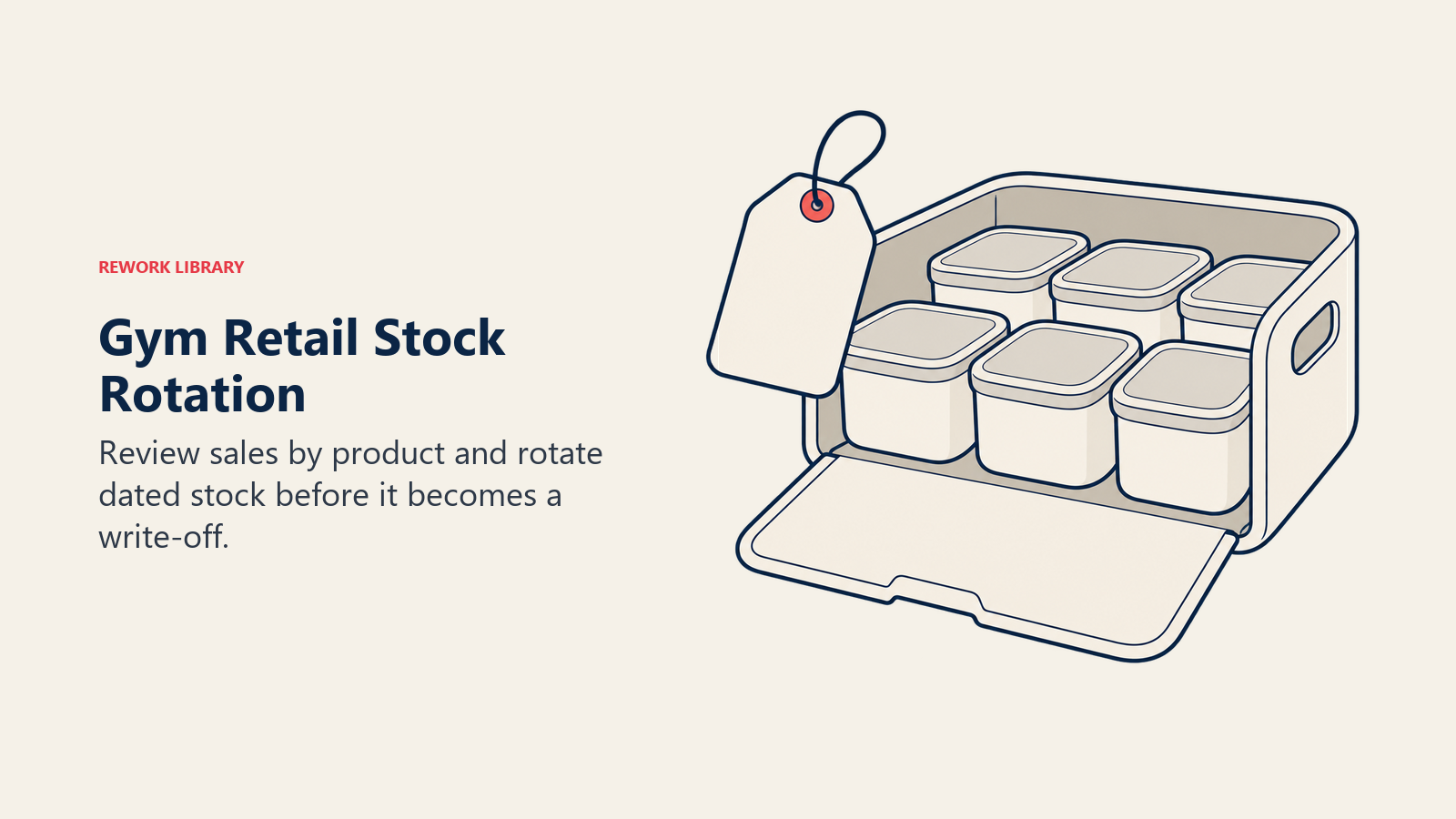
Start with 30-45 days of inventory on hand for each SKU, calculated from your actual sales data. For the first 60-90 days of operation, you're estimating - err on the side of too little rather than too much. Running out of a product creates urgency for a reorder; sitting on expired product creates a write-off.
Track sales by SKU weekly. After 90 days, you'll have real data on which products move fast (order more frequently with larger quantities), which move slowly (reduce your reorder quantity or consider dropping the SKU), and which don't move at all (liquidate and replace).
Expiration date management is your primary inventory risk. Protein powders have 12-24 month shelf lives, which gives you room to manage. Pre-workout and some RTD products have shorter windows. Rotate stock (first in, first out) and flag product within 90 days of expiration for promotional pricing rather than full-price sell-through.
The Bigger Picture
Retail and supplement revenue is rarely the primary financial story of a gym's growth. But it's a meaningful margin contributor and a genuine member experience enhancer that supports retention across all membership tiers. According to IHRSA's industry data, the US fitness and health club market generates approximately $30 billion annually, and operators who capture ancillary revenue streams - including retail - consistently report stronger overall unit economics than those relying solely on membership dues.
The member who buys their protein powder from you each month has made a small additional commitment to your facility. The member who grabs a post-workout smoothie has extended their time in your space and deepened the post-workout association with your brand. These aren't just transactions - they're touchpoints that build the habit of your gym being the center of someone's fitness life. Gyms that combine retail with membership tier design - for example, including a monthly product credit in higher tiers - turn retail into a structural benefit that differentiates premium membership rather than treating it as a standalone add-on.
Frequently Asked Questions
How much revenue can a gym make from supplements and retail? Most gyms with an active retail program earn 8 to 15 percent of total revenue from supplements, smoothies, and merchandise. The bigger story is margin: in-gym supplements run 30 to 50 percent gross margin versus the thin margins on membership dues, so retail contributes disproportionately to profit.
What supplements sell best in a gym? Protein powder is the anchor, followed by pre-workout (the highest-impulse category), creatine monohydrate, and ready-to-drink protein near the check-in desk. Start with 12 to 15 proven SKUs rather than a wall of options, because too much choice slows sales.
Is a smoothie bar profitable for a gym? A smoothie bar can clear 55 to 65 percent gross margin on ingredients, but labor decides whether it nets out. At 30 smoothies a day around $10 each, the operation contributes real profit after a part-time employee. Below 15 a day, it barely breaks even once labor is allocated.
How much inventory should a gym keep on hand? Start with 30 to 45 days of stock per SKU based on actual sales, then track sales weekly. After 90 days you will know which products to reorder aggressively, which to cut, and which to flag for promotional pricing as they near expiration.
Learn More

Senior Operations & Growth Strategist