Free Trial & Day Pass Strategies That Convert Visitors to Members
Turn this article into takeaways for your work.


Each assistant summarizes the article only for you and suggests best practices for your work.
The highest-converting gym growth strategy treats a free trial or day pass as a structured sales process, not a giveaway. Build a designed experience arc with a goals-based intake, pre-booked sessions, a day-one and day-three touchpoint, and a direct membership conversation on the final day. Gyms that do this convert at 30 to 45 percent, versus 10 to 20 percent for open-door trials.
A free trial that doesn't convert isn't a marketing tactic. It's a charity service for your competitors' future members. You paid to generate the lead, you invested staff time in the experience, and the prospect walked out the door and joined the studio down the street two weeks later because that studio had a structured follow-up process and you didn't.
Most gym operators treat free trials as a product sample: give someone a taste, and if they like it, they'll buy. That model might work for protein bars. It doesn't work for gym memberships, where the barrier between "I really enjoyed that" and "I'm committed to a recurring payment" is significant. The prospect has to overcome inertia, budget resistance, scheduling anxiety, and the psychological weight of committing to a lifestyle change. A passive "let us know if you'd like to join" follow-up approach completely fails to address any of that.
A good trial strategy is a structured sales process with deliberate touchpoints, a designed experience arc, and a specific conversion conversation. It generates predictably higher conversion rates than a passive approach: typically 30-45% versus 10-20% for gyms with no formal trial protocol. The leads who enter your trial typically come from local marketing channels or paid social campaigns, and the trial is where that acquisition investment either pays off or gets wasted.
Key Facts: Gym Trial Conversion
- The average gym-industry trial-to-membership conversion rate is 19% without a structured follow-up process and 38% with one (Fitness Business Pro 2024)
- 7-day free trials outperform 3-day trials in conversion rate (35% vs 27%) but have higher dropout risk on days 4-7 without active engagement (Mindbody Business)
- The single highest-converting moment in a trial is the end of the first session, when emotional engagement is highest. Most gyms miss this window entirely
IHRSA's research on how gyms use member data to improve retention shows that the first 30 days are the highest-risk window for member dropout, which is exactly why structured trials that build early habit and connection convert at significantly higher rates than passive open-door experiences.
Trial Strategy vs. Trial Giveaway
The distinction between a trial strategy and a trial giveaway is the difference between a structured sales process and an open door with a welcome mat.
A trial giveaway gives a prospect unrestricted access, no structured onboarding, no specific goals conversation, no touchpoints during the trial, and a vague "hope to see you around" at the end. These trials generate foot traffic but rarely generate members. The prospect experiences the facility but never experiences the transformation conversation, the community connection, or the specific reason why your gym is the right fit for their goals.
A trial strategy is designed from the first moment of contact through the membership offer with one explicit goal: converting this person to a committed member. Every element (the intake conversation, the first session experience, the check-in on day three, the close on the final day) is deliberate. It treats the trial as a sales funnel, not a customer service interaction. Once a prospect converts, how you structure their new member onboarding in the first 30 days determines whether they become a long-term member or a statistic in your early attrition rate.
Three trial formats and when to use each:
Free 7-day trial: The most effective format for membership conversion when properly managed. Seven days is long enough for the prospect to establish a basic routine habit, experience multiple class types or coaching styles, and build the early social connections that make cancellation feel costly. It requires more active management than shorter formats but generates higher conversion rates.
Free 3-day trial: Useful for boutique studios with premium pricing where extended trials create cost exposure. Works well when paired with a strong initial intake conversation and a specific conversion offer on day three. The shorter window puts more pressure on the quality of each interaction.
Day pass (single visit): A lower-commitment entry point useful for walk-in prospects who aren't ready for a multi-day commitment. Day passes convert at lower rates than structured trials but serve an important top-of-funnel role. The goal is to deliver an experience compelling enough that the person returns for a proper trial conversation.
Founding member offers: Pre-launch trials paired with early pricing incentives. These are high-conversion because the social proof element (being a founding member, getting the best rate) is built into the offer. Effective for new gym launches but require careful management of member expectations about the facility experience before it's fully operational.
Trial Design Principles
Length alone doesn't determine trial conversion rates. The design of what happens during the trial matters far more.
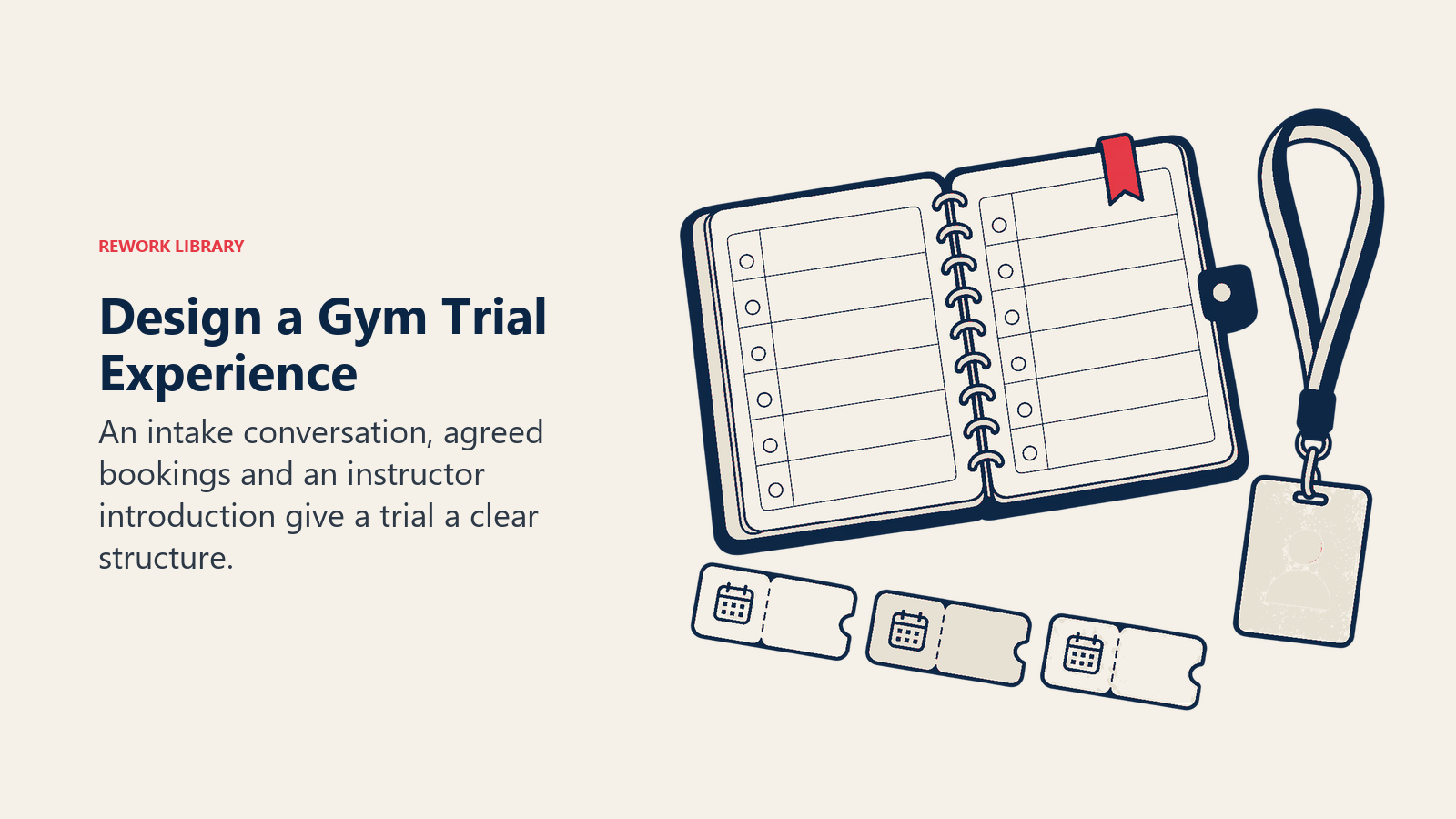
Intake conversation first: Before the prospect ever steps foot on the floor, have a genuine 10-15 minute conversation about their fitness history, their current challenges, and their specific goals. This conversation does three things: it personalizes the experience, it creates a reference point for all subsequent follow-up ("How are you feeling about the strength goals we talked about on day one?"), and it triggers reciprocity. ACE Fitness's resource on effective fitness business promotions emphasizes that prospects who receive a goals-oriented intake consultation before their trial are significantly more likely to return for additional sessions. You've invested real attention in this person before they've given you any money.
Limit access strategically: A trial that gives unlimited access to every class and every piece of equipment feels generous but actually reduces conversion. The prospect doesn't know where to start, never establishes a routine, and experiences the facility in a diffuse, unfocused way. Instead, recommend a specific 3-session path based on their intake conversation. You're not restricting access. You're curating their experience for maximum impact. This is especially important for group fitness offerings where new members may feel overwhelmed without guidance about which classes suit their current fitness level.
Create commitment during the trial: Small commitments compound. Ask the trial member to book all three (or five, or seven) sessions at the intake conversation. "Let's get your whole trial scheduled right now so we can make sure you get the most out of it." Pre-scheduled sessions have dramatically higher attendance rates than open-access trials where the prospect decides each day whether to come in.
Instructor handoff: The front desk introducing a trial member to a specific instructor by name ("This is Jamie. Jamie, this is Alex, they're doing their first class today and working on building a strength base") creates an immediate personal connection. It tells the prospect that your gym is the kind of place where people know each other. That feeling is what boutique fitness is selling, and the trial is the first chance to deliver it.
The Conversion Funnel: Day by Day
Here's the contact schedule for a 7-day trial. The same framework condenses to days 1, 2, and last day for a 3-day trial.
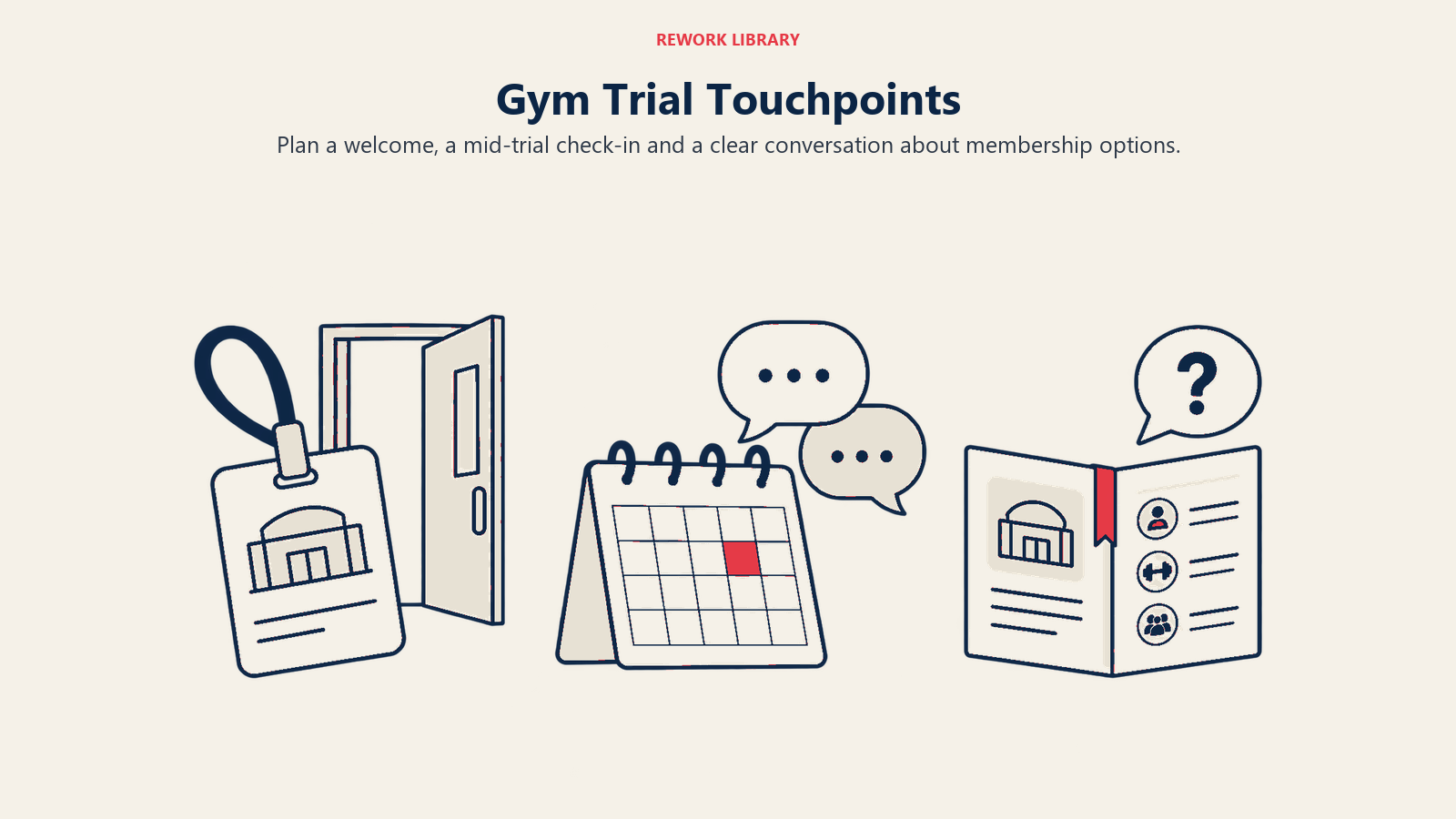
Day 1: First session:
The end of the first session is the highest-conversion moment in any trial. The prospect has just had a positive experience, their endorphins are elevated, and they're feeling good about the decision to try your gym. This is the moment to plant the membership seed, not sell it.
After the class, the instructor or a staff member has a 2-3 minute check-in: "How did that feel? How does that compare to what you've been doing before?" Listen genuinely, then: "I'd love to see you come back on [specific day]. I'll make sure [instructor] knows you're coming."
The day-one email (sent within 2 hours): "Really glad you made it in today, Alex. Based on what you told us about your strength goals, I think you'd love [specific class] on Thursday. I've sent you a booking link, let's get that locked in."
Day 3: Check-in:
A brief text or personal call from the person who did the intake: "Hey Alex, how are you feeling after your first two sessions? Any questions for me about the programming or the schedule?" This call has one purpose: make the prospect feel that a real person is tracking their progress and genuinely cares about their outcome.
Day 5: Pre-close:
An email or in-person conversation that acknowledges their progress and creates a soft deadline awareness: "You've got two sessions left in your trial. I want to make sure we get some time to talk about the best way for you to keep the momentum going."
Final day: The conversion conversation:
This is the designed sales conversation, and it should happen in person, not via email. At the end of the last session, a staff member or the owner has a 5-10 minute conversation:
- Acknowledge what they've accomplished: "You've done five sessions in seven days. That's not easy, and you should feel good about that."
- Connect back to their goals: "You mentioned at the start that your main goal was building back the strength routine you had before [event]. Do you feel like what we're doing here is the right fit for that?"
- Present the membership offer specifically: "Here's what I'd recommend for where you are right now..." (present a specific tier, not all options)
- Address the money question directly: "The investment is [price]/month. Does that work for you, or do you want to talk through the options?"
Most operators skip step 4 because they're uncomfortable with direct pricing conversations. But vagueness about pricing is the single biggest conversion killer in gym sales. If you can't clearly state the price and ask if it works, you're not having a sales conversation. You're having a pleasant chat. Your membership tier structure should give you two or three clear options to present, not a menu of eight choices that overwhelms the prospect.
Follow-Up Sequences for Non-Converters
Not everyone converts on the final day. A good follow-up sequence recovers a meaningful percentage of these prospects over the following 30 days.
Day 8 (the day after the trial ends):
SMS or email: "Hey Alex, thanks for being part of the community this week. It was great having you here. The trial offer we discussed yesterday is available until [specific date, 5 days from now]. If you have any questions before then, I'm happy to chat."
Day 11:
Email: "A quick note to let you know the founding member rate / intro offer expires on [date]. A few people from your trial week have already joined, including [one name they'd recognize, if you have permission]. We'd love to have you as part of the regular crew."
Day 15:
A personal text or call from the instructor or coach who worked with them most during the trial: "Hey Alex, this is Jamie from [Studio]. Just wanted to check in. Are you still working on your strength training goals? Let me know if you want to talk through the options."
Day 30: Re-engagement:
"It's been a few weeks since your trial, and we'd love to see you back. We have a new offer running this month: [specific offer, different from the original]. Is there anything about the original trial that felt like it wasn't quite the right fit? I'd love to understand."
The day-30 message has two purposes: it gives a non-converter another specific offer, and it opens a feedback conversation that often reveals genuine objections you can address. The insight you gather here should feed into your member feedback loops, since non-converters often surface the same friction points as members who cancel early.
Tracking Trial ROI
These three metrics tell you whether your trial program is healthy:
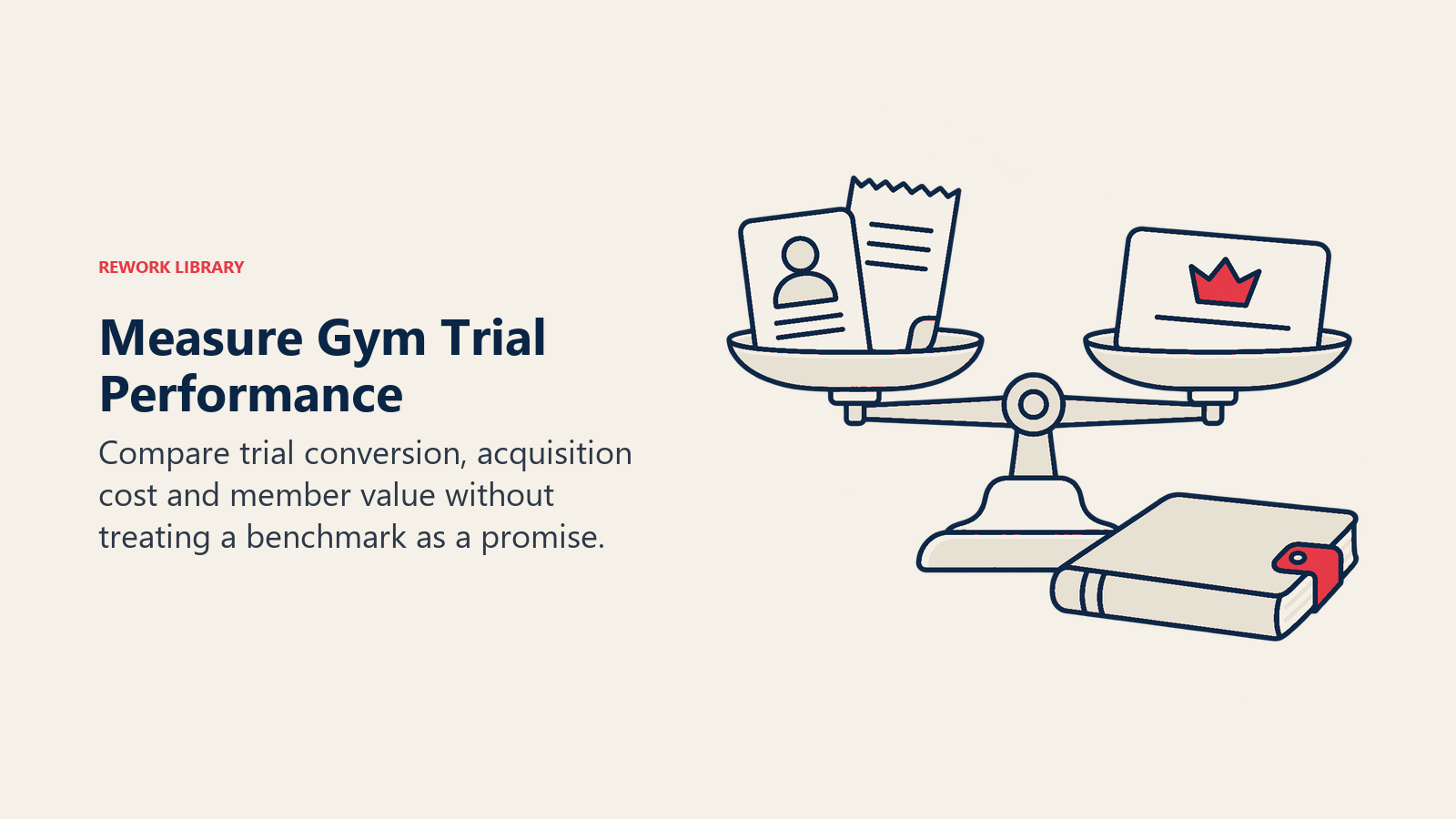
Trial conversion rate: Memberships sold ÷ trials completed × 100. Target: 30-45%. Below 20% means your trial experience, follow-up process, or pricing conversation needs work. The Statista data on gym membership length in the U.S. reveals that members who commit to a membership after a structured trial tend to stay longer than those who join through promotional discounts, a finding that reinforces investing in trial quality over trial volume.
Cost per converted trial: Total trial program cost (marketing, staff time, trial operation) ÷ memberships acquired through trials. Compare this to your CPA from other channels to understand relative efficiency.
Trial-to-LTV ratio: Average LTV of members who joined via trial vs. other acquisition channels. In most gyms, trial-acquired members have higher LTV because the trial built genuine commitment before the membership conversation. If this isn't true in your gym, you may be over-indexing on getting people to sign up and under-investing in the quality of the trial experience itself. Member win-back campaigns can recover some of the non-converters who slipped through your follow-up sequence, but they're far less efficient than converting them during the original trial window.
Design the Trial as a Sales Process, Not a Product Sample
The operators who consistently convert trials at 35-40%+ share one characteristic: they treat the trial as a sales process with designed touchpoints, not an open-door hospitality experience. They've scripted the intake conversation, trained staff on the day-one connection, established the follow-up sequence in their CRM, and rehearsed the membership conversation until it feels natural rather than pushy.
It's not manipulative to design a trial that converts well. You're helping people make a decision that's good for their health and their life. The alternative, a passive experience that leaves them without direction, doesn't serve them either. Design the trial to make the yes as easy as possible, and you'll find that the members who join are more committed, more motivated, and more likely to stick around.
Frequently Asked Questions
What is a good gym free trial conversion rate?
A structured trial converts at 30 to 45 percent of completed trials into paying members. Open-door trials with no follow-up convert at 10 to 20 percent. If you sit below 20 percent, the gap is almost always in the follow-up sequence or the final-day pricing conversation, not the trial length.
How long should a gym free trial be?
Seven days converts better than three (about 35 percent versus 27 percent) because it gives a prospect time to build a routine habit and early social connections. Boutique studios with premium pricing often use a tighter three-day trial paired with a strong intake conversation. Day passes work as a lower-commitment entry point that feeds prospects into a proper trial.
What is the best day pass strategy for a gym?
Treat the day pass as the top of the funnel, not the whole sale. Deliver one compelling session, capture contact details, and invite the visitor back for a structured multi-day trial where the real conversion conversation happens.
When is the best moment to ask a trial member to join?
The end of the first session is the single highest-converting moment, when emotional engagement peaks. Plant the membership idea then, reinforce it on day three, and hold the direct pricing conversation in person on the final day.
Learn More