Ancillary Services for Gyms: Nutrition Coaching & Recovery Services Revenue Guide
Turn this article into takeaways for your work.


Each assistant summarizes the article only for you and suggests best practices for your work.
Members who get results stay. And results come from training plus nutrition plus recovery - the two legs most gyms leave entirely to the member to figure out on their own. McKinsey's global wellness research values the wellness market at $1.8 trillion globally with nutrition and fitness as two of its fastest-growing dimensions - a market signal that members are increasingly willing to pay for services that address the full wellness picture, not just access to equipment. The average gym member shows up, does their workout, and then returns home with no guidance on what to eat, how to recover, or how to adapt their training to their body's current state.
That gap is an opportunity. Gyms that offer nutrition coaching and recovery services capture revenue from the full wellness equation rather than just the exercise piece. But more importantly, they get members results faster - and members who get results are members who stay, refer their friends, and upgrade to higher membership tiers. These services pair naturally with supplement and retail revenue - a member receiving nutrition coaching is significantly more likely to purchase their protein powder and recovery supplements from your gym rather than Amazon.
The retention data is clear. Members who engage with both training and nutrition coaching churn at rates 40-50% lower than members who train alone. Members who use recovery services regularly report higher satisfaction scores and stay 3-6 months longer on average. These services aren't just revenue lines; they're retention infrastructure.
Key Facts: Ancillary Services Revenue
- Members who purchase both training and nutrition services churn at 40-50% lower rates than training-only members (IHRSA Health and Wellness Report, 2024)
- Infrared sauna generates $80-200 per square foot annually at typical utilization rates, vs $40-80 per square foot for gym floor space (Club Industry, 2024)
- Nutrition coaching services carry 65-80% gross margins when delivered as group programming vs 40-55% for individual sessions (NSCA, 2024)
- Cryotherapy break-even typically requires 8-12 sessions per day at $40-70 per session to cover equipment financing and labor (Cryotherapy Industry Report, 2024)
Nutrition Coaching Services
The single most important decision in nutrition services is understanding scope of practice before you offer anything. Getting this wrong creates legal liability.
Registered Dietitian (RD): Can assess, diagnose, and treat nutritional deficiencies. Can provide medical nutrition therapy. Can make specific dietary prescriptions for health conditions. Requires a four-year degree, supervised internship, and state licensure.
Certified Nutrition Coach (CNC) or Sports Nutrition Specialist: Can provide general nutrition education, healthy eating guidance, and goal-oriented dietary strategies for healthy individuals. Cannot diagnose or treat any health condition, and cannot prescribe specific dietary interventions for medical conditions. Certification bodies vary in rigor; look for credentials from NASM, ISSN, or Precision Nutrition.
For most gyms, a certified nutrition coach is the appropriate starting point. The scope is sufficient for the majority of what active gym members need: macronutrient guidance, meal timing, supplement education, and habit-building coaching. If your member population includes individuals with diagnosed health conditions (diabetes, eating disorders, hypertension), partner with or refer to a registered dietitian for those cases. ACE Fitness outlines scope of practice for fitness professionals providing nutrition guidance - knowing where the line falls protects both your staff and your gym from liability exposure.
Service delivery formats:
One-on-one nutrition coaching sessions ($75-150/session) offer the highest personalization and the highest margin per hour, but the most limited scalability. A nutrition coach running 25 sessions per week at $100/session generates $10,000/month in revenue against a salary of $3,000-5,000 and minimal overhead - an attractive margin profile.
Group nutrition programs (8-12 week structured programs, $150-350 per participant) scale the coach's time across 8-15 participants simultaneously. A 10-week program with 10 participants at $250 each generates $2,500 per program cohort. Running two cohorts per quarter at the same fee structure produces $20,000/year from one coach's time investment of roughly 3-4 hours per week per cohort.
App-based coaching (members follow a structured nutrition plan with check-ins via messaging) allows a single coach to manage 30-50 clients simultaneously at $50-100/month each. This is the highest-revenue-per-coach-hour model, but it requires the right software platform and a coach who communicates effectively in writing.
Integration with PT and membership packages: Bundling nutrition coaching with personal training packages increases average transaction value and creates a more complete results-driven offering. A "12-week body composition program" that includes 3 PT sessions per week plus weekly nutrition coaching sessions commands a premium over either service sold alone, and the combined approach produces better client results (which drives testimonials and referrals). See the personal training upsell strategies guide for how to structure these conversation and conversion paths within your existing PT program.
Recovery Services Overview
Recovery services occupy a rapidly growing market. Demand for cryotherapy, infrared sauna, massage therapy, and compression therapy has expanded from performance athletes to mainstream fitness enthusiasts - and gym members are increasingly asking for these services in the facilities they already attend.
Cryotherapy (whole-body cold exposure at -110°C to -140°C for 2-3 minutes) requires a cryosauna or cryochamber with nitrogen gas or electric cooling. Equipment costs run $35,000-80,000 for a single unit, plus installation, electrical upgrades, and safety certification.
Revenue model: Sessions priced at $40-70 each. Break-even requires 8-12 sessions per day at $50/session (before staff labor). A mature cryotherapy operation with strong utilization can generate $15,000-25,000/month in revenue, but the 12-18 month ramp to full utilization is capital-intensive. Best suited for gyms in markets with demonstrated demand and a member base willing to pay premium service prices.
Massage therapy is often the most accessible recovery service to launch because it doesn't require specialized equipment - just a treatment room (100-150 sq ft minimum), a massage table, and a licensed therapist.
The in-house employee vs independent contractor decision has compliance implications that vary by state. Many massage therapists operate as independent contractors and prefer it. Verify your state's employment classification rules before structuring the arrangement. Revenue share models (therapist keeps 60-70%, gym keeps 30-40%) are common and align incentives for utilization.
A single massage therapist running 6-7 sessions per day at $80-100/session generates $500-700/day in revenue. The gym's share (30-40%) is $150-280/day, or $3,500-6,500/month for one therapist's schedule. The space cost is the primary constraint.
Infrared sauna has one of the best revenue-per-square-foot profiles of any gym ancillary service. A single 2-person infrared sauna unit costs $3,000-6,000 and requires approximately 50-80 square feet of space. At $20-35 per 30-minute session with 4-6 sessions per hour of operation, a sauna running 8 hours per day at 50% utilization generates $320-560/day, or $8,000-14,000/month in revenue.
Infrared saunas are popular as membership add-on pricing: "Unlimited sauna access" bolt-on for $40-60/month, or "Recovery Membership" tier that includes sauna plus class access at a premium over standard membership. The recurring revenue model is more predictable than session-by-session pricing. Structuring recovery access as a membership tier works best when your overall membership tier design creates a clear logical progression from basic access to full-service wellness.
Compression therapy (NormaTec-style pneumatic compression devices for legs, hips, or arms) requires equipment investment of $5,000-8,000 per unit and minimal space. Session pricing runs $25-40 for a 20-30 minute compression session. Lower investment and lower revenue potential than cryotherapy or sauna, but strong member satisfaction scores. Best positioned as a complement to recovery rooms or physical therapy partnerships rather than a standalone service.
Cold plunge and contrast therapy (alternating between cold and hot water immersion) has surged in consumer demand following increased wellness media coverage. A commercial cold plunge tub costs $8,000-25,000 depending on temperature control precision and size. Cold/hot contrast circuits (cold plunge + sauna or steam room) are particularly popular in performance-oriented gyms.
Revenue per square foot comparison:
| Service | Space Required | Annual Revenue/Sq Ft (at target utilization) |
|---|---|---|
| Infrared Sauna | 50-80 sq ft | $100-200 |
| Massage Therapy | 100-150 sq ft | $80-150 |
| Cold Plunge | 80-120 sq ft | $70-130 |
| Cryotherapy | 150-200 sq ft | $80-160 |
| Compression | 60-100 sq ft | $60-100 |
| Gym Floor (comparison) | Per member | $40-80 |
Recovery services consistently generate higher revenue per square foot than gym floor space at maturity - the premium pricing justifies the specialized buildout.
Revenue Modeling for Recovery Services
Space allocation is the starting point. Every square foot dedicated to recovery services is a square foot not available for training floor or group fitness space, so the opportunity cost needs to be explicit in your modeling.
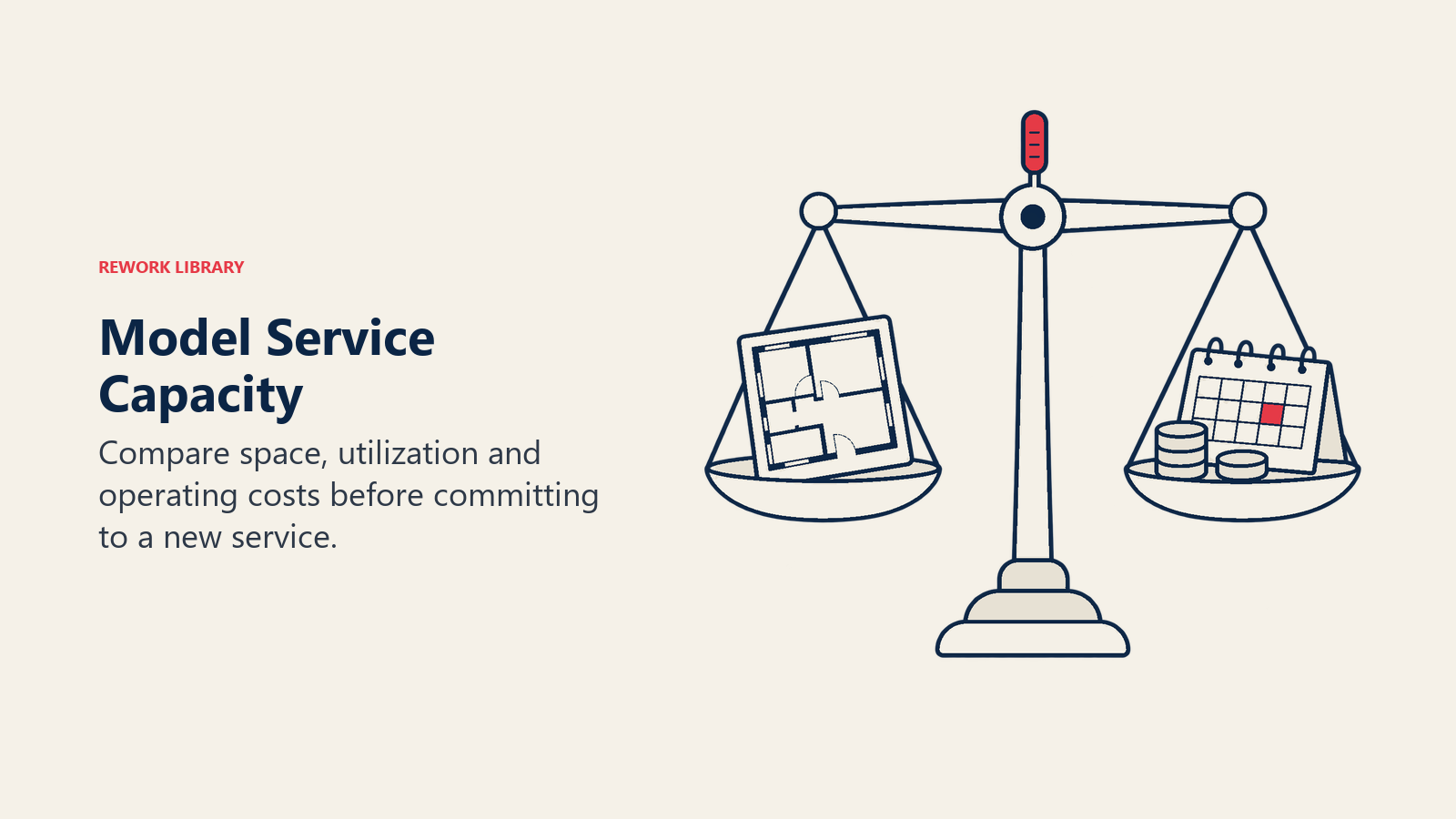
Utilization rate is the critical variable. A cryotherapy unit at 30% utilization generates very different economics than the same unit at 70% utilization. For new services with low initial demand, model conservatively (30-40% utilization in year one, 50-60% in year two, 65-75% at maturity) and ensure your break-even analysis uses year-one numbers, not maturity numbers. Run these projections as part of your broader key gym financial metrics review - recovery services need to be evaluated against their true opportunity cost, including the square footage they displace from training floor space.
Pricing model options:
Per-session pricing (a la carte) maximizes revenue per use but reduces utilization predictability. Members who use recovery services occasionally pay the full session price; members who want regular access do the math and realize a subscription is cheaper if they use it more than 3-4 times per month.
Membership add-on pricing ($30-80/month for unlimited access to a specific service) increases utilization predictability and member stickiness. A member who pays $40/month for unlimited sauna access is more likely to visit the gym 3-4 times per week (to use what they're paying for) than a member without that add-on.
Recovery membership tier (premium membership that includes a bundle of recovery services plus standard gym access) positions your gym as a full-service wellness destination and commands $50-100/month above standard membership pricing. This tier works best when you have two or more complementary recovery services to bundle (sauna + compression, or cryotherapy + massage discounts).
Member Experience Integration
The members most likely to use nutrition and recovery services are also your most engaged, highest-LTV members. But they won't self-discover these services without a structured introduction.

Onboarding integration: Include a recovery and nutrition services orientation in your new member onboarding sequence. A 10-minute conversation about what services are available and who they're best suited for plants the seed without being a sales pitch. "Here's what we offer and who typically benefits most" is more effective than "here's why you should buy this."
Cross-selling from PT: Personal trainers are the natural channel for selling recovery and nutrition services to their clients. A trainer who notices a client's recovery isn't keeping pace with their training load can authentically recommend cryotherapy or massage therapy as a tool for progress. Train your PT staff on the benefits of each recovery service and give them a simple referral process.
First-use offers: A $25 introductory session for first-time recovery service users reduces the barrier to trial. Once a member has experienced infrared sauna or cryotherapy, repeat purchases are much easier - they're no longer buying based on marketing claims but on their own experience.
Member satisfaction tracking: Measure net promoter scores (NPS) separately for recovery service users vs non-users. Recovery service users consistently show higher NPS scores, which supports the retention argument for investing in these services. When you have the data, share it internally to maintain organizational commitment to the investment.
The Full-Service Wellness Destination
The gyms adding nutrition and recovery services aren't just adding revenue lines - they're repositioning themselves from equipment rental businesses to full-service wellness destinations. IHRSA data shows the US fitness industry revenue stood at approximately $30 billion annually, with the operators capturing the highest per-member revenue consistently those offering services beyond basic equipment access. That distinction matters for pricing power across all services.
A gym that is "the place I work out" faces constant competition from budget alternatives. A gym that is "the place where I train, eat better, and recover properly" creates a relationship with the whole wellness lifestyle, not just the exercise component. That relationship supports premium pricing, reduces price sensitivity, and generates the kind of genuine advocacy that drives member referrals without requiring an explicit referral program. This positioning shift is the same fundamental logic behind fitness studio market positioning - a differentiated wellness destination commands higher prices and faces less direct price competition than a facility defined only by equipment.
The investment in these services - equipment, staff, space, training - is real. But the retention improvement they generate, measured in reduced monthly churn, can justify the investment quickly. If adding a sauna and nutrition coaching reduces your monthly churn rate from 4% to 3%, and your average member LTV is $900, the value of that 1% churn reduction on a 500-member gym is $4,500/month in preserved revenue. The services pay for themselves before you count the direct revenue they generate. Build these outcomes into your gym churn reduction strategy and track retention rates separately for members who use ancillary services versus those who don't - the data will make the case internally for continued investment.
Learn More

Senior Operations & Growth Strategist