Wearable Integration for Gyms: Heart Rate Tracking, Leaderboards & Partner Devices
Turn this article into takeaways for your work.


Each assistant summarizes the article only for you and suggests best practices for your work.
Wearable integration lets gyms connect members' fitness trackers and heart rate monitors to in-class displays, leaderboards, and progress tracking. It's a proven growth lever: classes using real-time heart rate data show 18 to 25% higher retention, because effort becomes visible, competition feels fair, and tracked progress creates switching costs.
Wearables have crossed the mainstream threshold. More than 30% of US adults now wear a fitness tracker or smartwatch regularly, and in gym-going populations that number is closer to 50%. According to Statista, approximately 41% of US households owned a wearable device as of 2024, with adoption rates near 50% among the 35–44 age group most likely to hold active gym memberships. The members walking into your facility on any given day are already tracking their heart rate, steps, and calorie burn. The question isn't whether to engage with this behavior - it's whether your gym captures the engagement opportunity or lets it go to the device manufacturer.
Gyms that integrate with wearable devices tap into existing member behavior rather than trying to create new habits. They're extending what members already do into the gym experience, making workouts more measurable, more social, and more motivating. Gyms that ignore wearable integration are increasingly invisible to this segment - members who care about their metrics will choose the facility that respects and uses those metrics over one that ignores them.
This isn't a technology-for-its-own-sake argument. It's a behavioral one. Heart rate visibility during training drives harder effort and higher satisfaction. Leaderboards create accountability and community. Progress tracking creates switching costs. Each of these outcomes translates into attendance frequency and retention - the two metrics that drive gym profitability. Wearable data is most powerful when it flows into a platform your members interact with daily - your member app engagement strategy determines whether that data becomes a habit-building tool or just a background metric.
Key Facts: Wearable Integration
- 30%+ of US adults regularly wear a fitness tracker or smartwatch, rising to ~50% among active gym members (Statista, 2024)
- Group fitness classes using real-time heart rate displays show 18-25% higher member retention than comparable classes without them (Myzone internal data, 2024)
- Heart rate monitor adoption in group fitness settings increases perceived workout effectiveness scores by 31% (ACSM research, 2024)
- Members who participate in opt-in leaderboards attend class 22% more frequently than non-participants (Les Mills data, 2024)
Heart Rate-Based Training
Heart rate monitoring transforms a subjective workout ("that felt hard") into an objective one ("I spent 22 minutes in Zone 4"). That objectivity does something important: it removes the guesswork about whether a member is working hard enough, allows instructors to coach with precision rather than intuition, and gives members a tangible measure of progress over time.
The 5-zone training model is the industry standard, and most major wearable platforms support it. Zone 1 (50-60% max HR) is active recovery. Zone 2 (60-70%) is aerobic base building. Zone 3 (70-80%) is aerobic conditioning. Zone 4 (80-90%) is threshold training. Zone 5 (90-100%) is maximum effort, unsustainable beyond short intervals. ACE Fitness provides a practical heart rate zone calculator and intensity guide that instructors can use to establish accurate zones for members before they begin heart rate-monitored training. This structure maps naturally to group fitness programming - instructors can design class intervals with specific zone targets, and wearable data confirms whether the programming is achieving its intended training effect.
When members see their zone in real-time during class, they self-regulate more effectively. Members who are clearly in Zone 1 when the coach is calling for Zone 3 work tend to push harder. Members who redline into Zone 5 and sustain it too long back off before injury risk accumulates. The coaching conversation shifts from "work harder" to "get to Zone 4 and hold it for 90 seconds" - which is both more effective instruction and more satisfying to execute.
Display options for in-class heart rate monitoring range from individual member screens (each member sees only their own data on a personal device or app screen) to class-wide leaderboard displays on a large monitor or TV at the front of the studio. The leaderboard format creates social dynamics that individual screens don't - which is powerful for competitive members and potentially alienating for less competitive ones. Design for both, with individual viewing as the default and leaderboard participation as an opt-in.
Leaderboards and Competition Mechanics
The design of leaderboard mechanics determines whether they motivate or alienate. A performance-based leaderboard that ranks members by raw metrics (fastest time, heaviest weight, most calories burned) will consistently put the same fit members at the top and provide little motivation for the majority. That's not a community tool; it's a trophy case for your top performers.
Effort-based leaderboards are the solution. Myzone, the leading platform in this space, uses a proprietary MEPs (Myzone Effort Points) system that awards points based on percentage of maximum heart rate rather than absolute output. A 45-year-old member working at 85% of their max HR earns the same MEPs as a 25-year-old elite athlete at 85% of theirs. The leaderboard rewards relative effort, which means every member can compete regardless of fitness level.
This design principle is not just philosophically sound - it's commercially sound. An effort-based leaderboard creates engagement across your full member population, not just the top 15%. And the members in the middle and lower fitness bands are exactly the ones at highest churn risk; keeping them engaged with competitive mechanics that feel fair is retention strategy. The same principle applies to community building in fitness studios more broadly - inclusive competition creates belonging, while exclusive performance rankings create division.
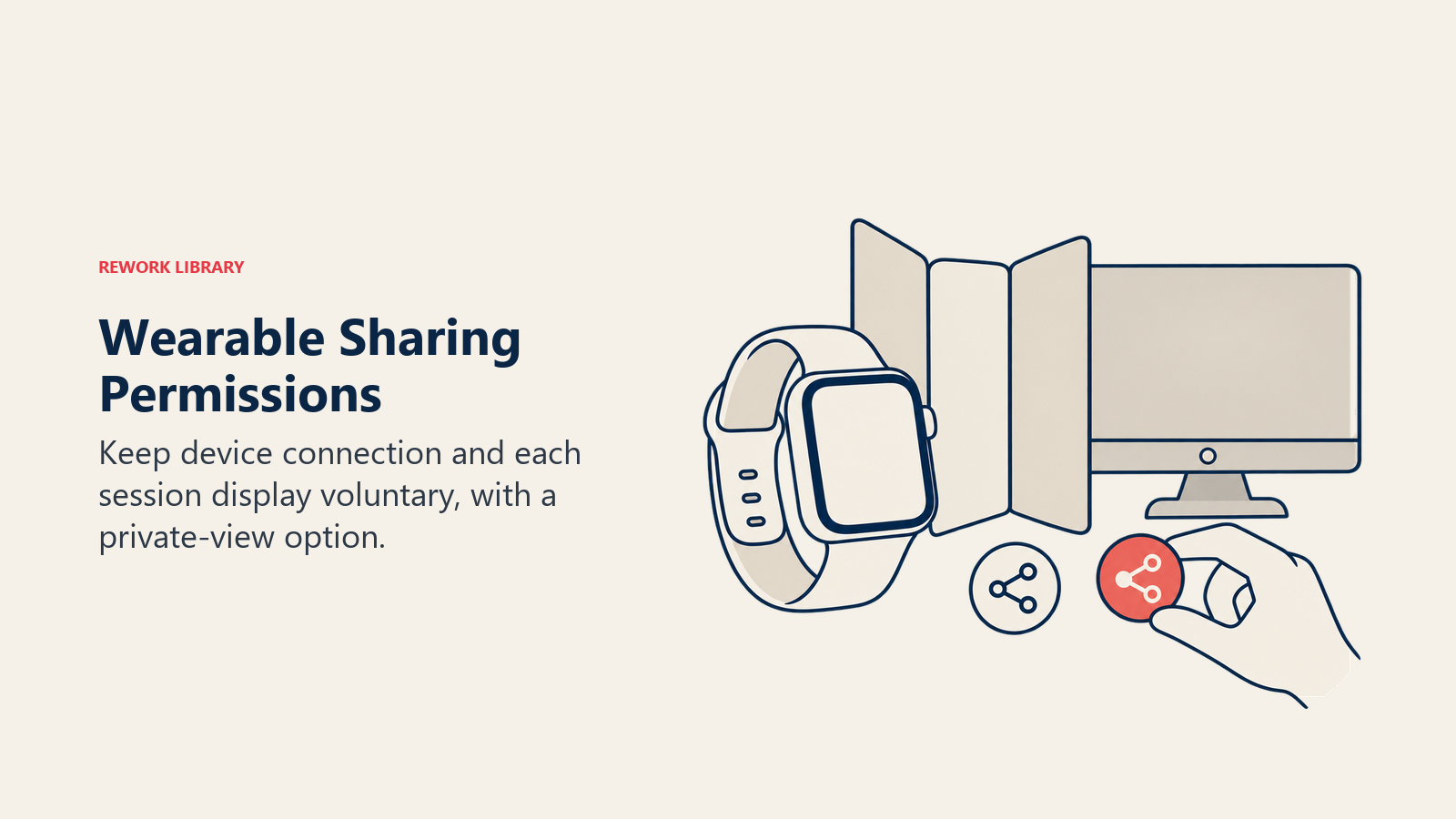
Opt-in design is non-negotiable. Some members want nothing to do with a leaderboard, and forcing their data into one - or even making their absence visible - will drive disengagement. Design opt-in at both the platform level (does the member connect their device?) and the session level (does the member want their data shown today?). This respects privacy and removes the social pressure that makes leaderboards stressful for some members.
Monthly challenges work well for members who don't participate in in-class leaderboards. A gym-wide challenge - most MEPs in February, most heart rate minutes in Zone 3 or above, first to 500 workout minutes for the month - creates a community goal without the intensity of real-time class competition. The prize doesn't need to be large; recognition and community status drive participation more than cash value. These challenges also generate natural content for your social media - member progress updates and final standings make authentic posts that support fitness studio social media strategy.
The Major Platform Landscape
Myzone is the gym-industry-specific platform built around the effort-based MEPs system. It includes gym-branded display hardware, a social community app, challenge creation tools, and analytics dashboards for operators. Monthly licensing costs range from $150-400/month depending on gym size and features. Myzone integrates with most major gym management software platforms and works with its own heart rate monitors plus some third-party devices.
Apple Watch (GymKit) is the highest-adoption consumer device but requires GymKit-compatible equipment for deep integration. GymKit syncs Apple Watch directly with compatible cardio machines (Technogym, Life Fitness, and others support it) so the machine's data flows into the member's Health app. Without GymKit, Apple Watch still tracks workouts independently, but the gym doesn't benefit from the integration. Apple Watch health data can be accessed by third-party fitness apps with user permission.
Garmin and Polar are popular with serious endurance athletes and strength athletes who want detailed training load analytics. Both support third-party API integration for gym platform connection, and both have strong app ecosystems that allow workout summary sharing.
Whoop is positioned at the performance end of the market, focusing on recovery, strain, and sleep data rather than in-workout display. It's popular with strength-focused and CrossFit-oriented members. Whoop doesn't display real-time heart rate on a leaderboard natively, but its data can be integrated via API.
Platform compatibility summary:
| Platform | Real-Time Display | Leaderboard | Effort-Based | Monthly Cost |
|---|---|---|---|---|
| Myzone | Yes | Yes | Yes | $150-400/mo |
| Apple Watch + GymKit | Machine-only | No | No | Equipment cost |
| Garmin Connect | Via API | Via 3rd party | No | Free (API) |
| Polar | Via API | Via 3rd party | No | Free (API) |
| Whoop | No | No | No | Member-paid |
For most gym operators, Myzone is the only platform that provides a complete gym-facing solution out of the box. Apple Watch integration matters for offering seamless data sync to members who already wear one, but it requires GymKit-compatible equipment rather than a platform subscription.
Device Rental and Purchase Programs
Not every member arrives with a compatible wearable. A device rental or purchase program removes the barrier to participation in heart rate-based classes and leaderboards.
Chest strap heart rate monitors ($60-150) are more accurate than wrist-based monitors for high-intensity training and represent a reasonable purchase price for motivated members. Some gyms sell branded monitors with a small margin (10-20%) as a retail item. Others partner with monitor brands for bulk pricing that they pass on to members at cost, treating device adoption as a member experience investment rather than a revenue line. This accessory retail approach fits naturally within a broader supplement and retail strategy - monitors, hydration products, and resistance bands can all share display space near the check-in desk.
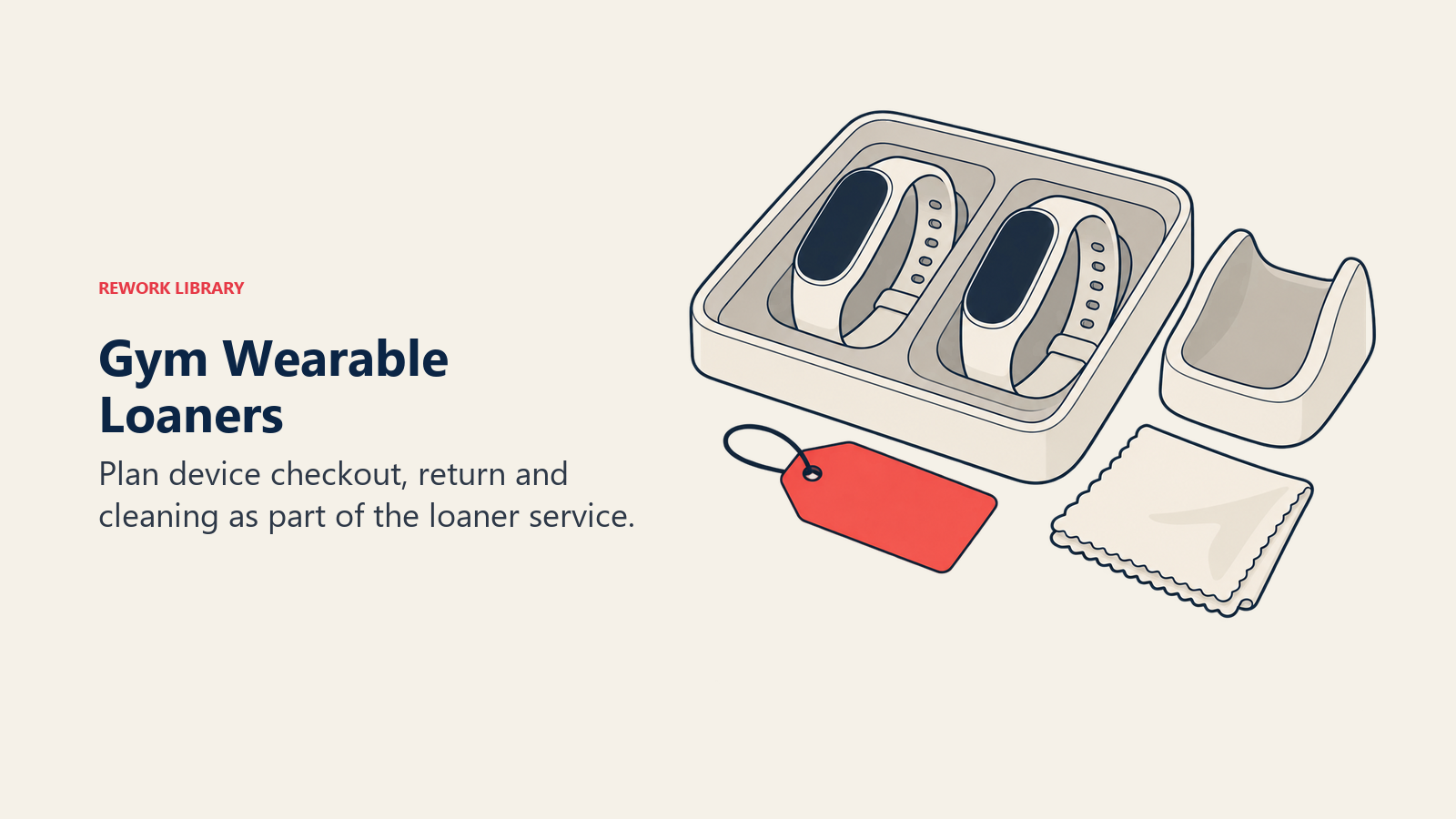
Rental programs (loaner monitors for members to borrow during class, returned and sanitized after) reduce the financial barrier but add operational overhead. For boutique studios with high average member spend, the operational cost is worth it - wearable participation rates above 70% of class attendees create noticeably different class dynamics than 20-30% participation.
Progress Sharing and Social Features
Member workout summaries are natural social media content. After a class, a member who hit a personal best MEP score, achieved their highest Zone 4 percentage, or completed a month-long challenge has something worth sharing - and the data visualization that wearable platforms generate makes that content visually appealing without any design effort from the member.
Build sharing into your platform flow. When a member hits a milestone, prompt them to share it with a branded template that includes your gym name and logo. Every organic share is free marketing to that member's social network, which skews heavily toward people with gym-going habits. Milestone shares combined with a gym referral program create a reinforcing loop: members share achievements, friends see the post, and a referral incentive gives those friends a reason to act on their curiosity.
Trainer access to aggregate member data (with appropriate consent language) enables better programming decisions. If your Tuesday HIIT class is showing average Zone 4 percentages of 35% across the class, the programming is probably appropriate. If it's 15%, the class isn't challenging enough for the population attending it. If it's 55%, the class may be too intense for retention of lower-fitness members. These are real coaching insights that wearable data makes visible.
At the community level, aggregate class data can be shared with members post-session: "This class burned an average of 420 calories and spent 18 minutes in Zone 3 or above." That transparency makes the value of the class concrete and gives members something to talk about.
Implementation Approach
Start with a single class format before rolling wearable integration across your full schedule. A HIIT or group cycling class is the natural starting point - these are the formats where heart rate data is most actionable and competition mechanics feel most natural.
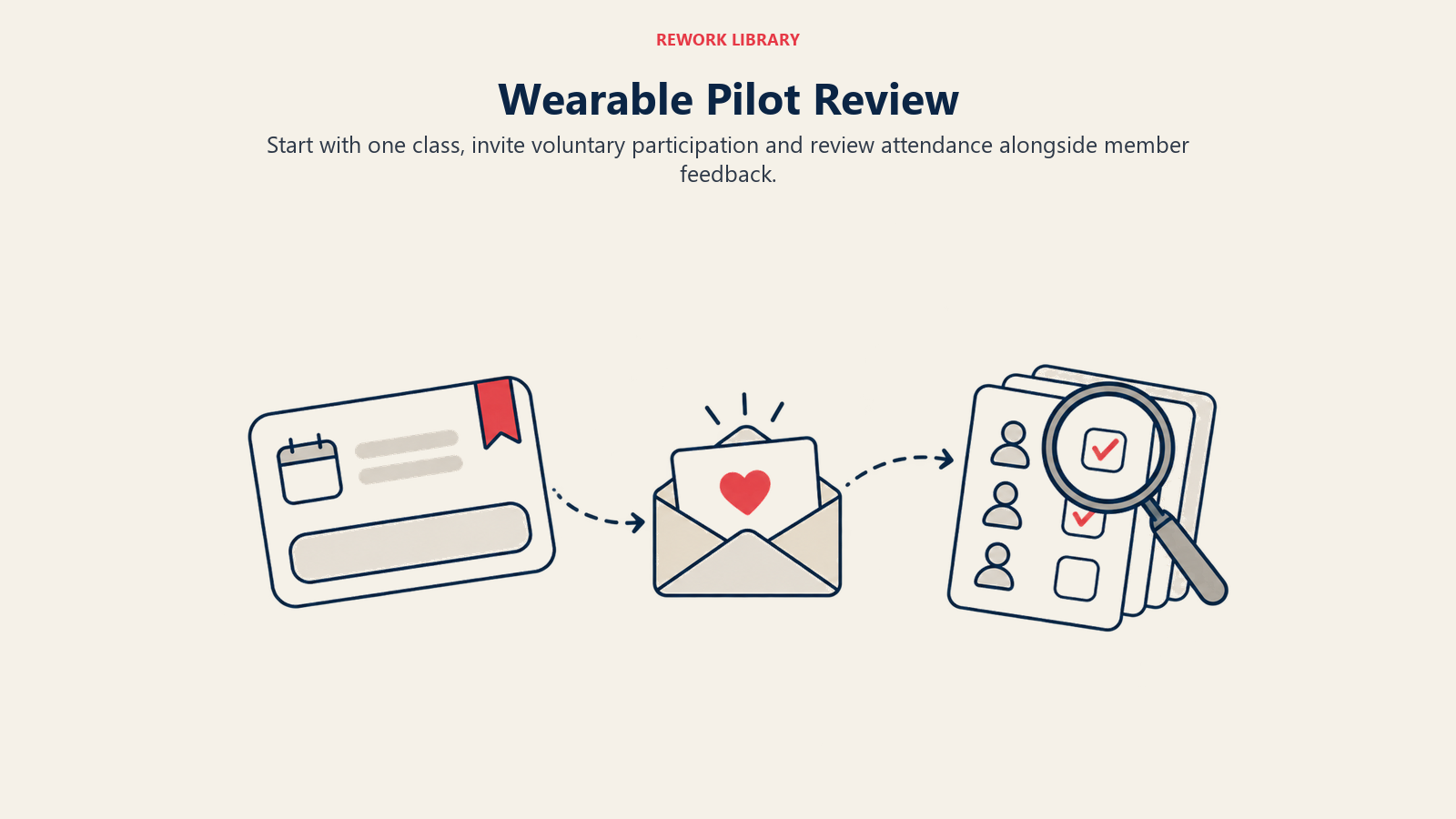
Run a 60-day pilot with opt-in participation. Measure before-and-after attendance rates for participating vs non-participating members. Track leaderboard opt-in rates and adjust the display design if you're seeing lower-than-expected participation. Gather qualitative feedback from instructors and members in weeks 4 and 8.
Use the pilot data to build the business case for platform investment. If 30 members participate in a Myzone pilot and their class attendance increases by 2 visits per month on average, at $50 revenue per visit that's $3,000 in incremental monthly revenue against a $300 platform cost. IHRSA's analysis of health clubs using member data to increase retention shows that personalized engagement metrics - exactly what wearables provide - are among the most predictive signals of long-term member loyalty. That's a 10x return, which is the kind of ROI that justifies rolling out across all formats. Wearable data also integrates naturally with virtual and hybrid fitness classes - members streaming from home can still see their heart rate zone in real-time, keeping the effort-based experience intact outside the physical facility.
Wearable Integration for Gyms FAQ
What is wearable integration for gyms?
It connects members' fitness trackers and heart rate monitors to gym systems like in-class displays, leaderboards, and progress dashboards. The result is workouts that are more measurable, more social, and more motivating, which drives attendance and retention.
Does wearable integration actually improve retention?
Yes. Group classes using real-time heart rate displays show 18 to 25% higher retention than comparable classes without them, and members on opt-in leaderboards attend roughly 22% more often, according to platform data from Myzone and Les Mills.
Which wearable platform is best for gyms?
For a complete gym-facing solution, Myzone is the strongest out-of-the-box option thanks to its effort-based MEPs system and operator tools. Apple Watch (via GymKit), Garmin, Polar, and Whoop integrate at the device or API level but don't provide a full operator platform.
How should a gym start with wearable integration?
Run a 60-day opt-in pilot in a single HIIT or cycling class, measure attendance for participants versus non-participants, then build the business case from the data before rolling it out across the schedule.
Do members need to buy a device to participate?
Not necessarily. A device rental or purchase program removes the barrier. Chest strap monitors ($60 to $150) are accurate for high-intensity work, and loaner programs let members borrow a monitor for class.
Learn More