Equipment Lifecycle & Maintenance Planning for Gyms: A Financial Framework - 2025 Guide
Turn this article into takeaways for your work.


Each assistant summarizes the article only for you and suggests best practices for your work.
Nothing frustrates members faster than broken cardio equipment with an out-of-order sign that's been there for three weeks. It communicates two things simultaneously: the gym doesn't care about the member experience, and management can't execute basic operations. Either message is enough to push an already-ambivalent member toward cancellation.
Equipment downtime is a silent churn driver because it rarely shows up in exit survey data. Members don't say "I cancelled because the treadmill was broken." They say "I found a better gym" or "I wasn't using it enough" - and those answers are technically true, because they went looking for alternatives once the broken equipment made the decision easier to justify. The real cause stays invisible in the data. This is why equipment quality should feature in your broader gym churn reduction strategy.
Most equipment downtime is preventable. Not all of it - mechanical failures happen. But the difference between a gym that routinely has 2-3 machines out of service and one that maintains near-100% uptime is almost entirely a maintenance discipline problem, not an equipment quality problem.
Key Facts: Equipment & Maintenance Benchmarks
- Emergency equipment repairs cost 3-4x more than the same repair done preventively (Precor Commercial Service Data, 2024)
- Cardio equipment experiences 40% more failures when preventive maintenance intervals are skipped even once
- Gyms with documented maintenance programs average 2.1 out-of-service incidents per month; those without average 6.8
Equipment Lifecycle Benchmarks by Category
Gym equipment lifecycle planning means tracking how long each asset class lasts and budgeting to replace it before it fails. Cardio machines run 7 to 10 years, strength equipment 15 to 20, free weights 20 to 30, and rubber flooring 5 to 8. Pair those benchmarks with daily, weekly, monthly, and annual preventive maintenance and a monthly replacement reserve, and you trade surprise capital shocks for a predictable cost cycle.
Understanding useful life expectations by equipment category is the foundation of capital planning. Buying a treadmill this year means planning for replacement in 7-10 years - not being surprised by it.
Cardio equipment (treadmills, ellipticals, stationary bikes, rowers): 7-10 year useful life under commercial use. Statista's global fitness equipment market data shows cardiovascular equipment is the fastest-growing fitness gear category, with manufacturers responding to rising commercial replacement demand driven by aging fleets and expanding club footprints. High-traffic machines in large gyms may hit end of useful life at 5-7 years. The standard depreciation schedule is 7 years straight-line for financial accounting purposes. Signs of approaching end-of-life before full mechanical failure: console malfunctions that require repeated reboots, belt replacement cycles shorter than 18 months, motor replacement more than once in a 3-year window, and structural frame wear that creates user safety concerns.
Strength equipment (selectorized machines, plate-loaded equipment): 15-20 year useful life. Strength equipment is more durable than cardio and depreciates over 10-15 years on most accounting schedules. End-of-life indicators: weight stack cable fraying that requires more than one replacement per year, shroud and upholstery wear that creates a poor aesthetic even after reupholstering, and frame welds that show stress cracking.
Free weights (barbells, dumbbells, kettlebells): 20-30 year useful life with basic maintenance. Dumbbells last nearly indefinitely if the chrome or rubber coating is maintained. Barbells need bearing and sleeve maintenance every 2-3 years but rarely need full replacement unless they've been dropped repeatedly from significant height. These are the lowest-maintenance assets in the gym.
Flooring: 5-8 years for rubber gym flooring under heavy use. Specialty surfaces (hardwood for group fitness, turf for functional training zones) vary: hardwood 10-15 years with refinishing, turf 3-5 years. Flooring replacement is often delayed too long because deterioration is gradual, but worn flooring is a safety issue (slip risk from compressed rubber) and an aesthetic signal that affects member perception. Flooring decisions also interact with your facility layout and zone design choices, since zone-specific surfaces like hardwood or turf shape what activities can happen where.
Depreciation for financial planning: Cardio equipment at $4,000 per unit on a 7-year schedule creates $571 in annual depreciation per unit. A fleet of 30 cardio machines generates $17,143 in annual depreciation - which should correspond to a replacement reserve contribution of similar magnitude if the equipment is to be replaced from operating cash flow rather than debt.
Preventive Maintenance Protocols by Equipment Type
A preventive maintenance program has four time horizons: daily, weekly, monthly, and annual. Each serves a different function.
Daily maintenance is member-facing hygiene: wiping down surfaces, checking console function, confirming safety features (emergency stop clips, weight stack pins), and flagging any member-reported issues. The NSCA facility safety checklist for exercise floors recommends that all equipment be inspected daily with findings logged, and that any damaged equipment be removed from service immediately rather than tagged out-of-order. This is largely staff responsibility during or immediately after peak hours. Create a daily equipment checklist for floor staff that takes 10-15 minutes to complete per equipment zone. Structuring floor staff responsibilities around maintenance protocols is part of broader gym staff management best practices.
Weekly maintenance is the first tier of technical maintenance. Checking belt alignment on treadmills, lubricating running surfaces, testing tension on elliptical linkages, inspecting cables on selectorized machines for fraying, and checking that resistance mechanisms on bikes function across the full range. This can be done by a trained floor staff member or a part-time maintenance coordinator.
Monthly maintenance requires more technical knowledge. Treadmill motor and controller inspection, elliptical bearing lubrication, bike pedal mechanism check, barbell bearing service, and structural integrity check on all strength equipment frames. This tier typically involves either an in-house maintenance coordinator with technical training or a periodic service visit from a maintenance vendor.
Annual maintenance is comprehensive technical service. Full internal cleaning of cardio machine motors and electronics (dust accumulation is the leading cause of motor failure), belt replacement assessment, complete cable replacement on selectorized machines past year 3, structural weld inspection on strength equipment. Annual service for large gyms is typically done via a service contract with commercial fitness equipment vendors.
In-house vs vendor service agreements: The break-even point for in-house maintenance capability (a part-time coordinator at $20-$25/hour with technical training) vs full vendor service contracts depends on fleet size. For gyms with fewer than 20 cardio machines, vendor service contracts often deliver better value. Above 30-40 machines, in-house maintenance with vendor support for specialized repairs typically costs less and responds faster. Logging maintenance data in your gym management software keeps equipment records accessible to both staff and vendors without depending on paper logs.
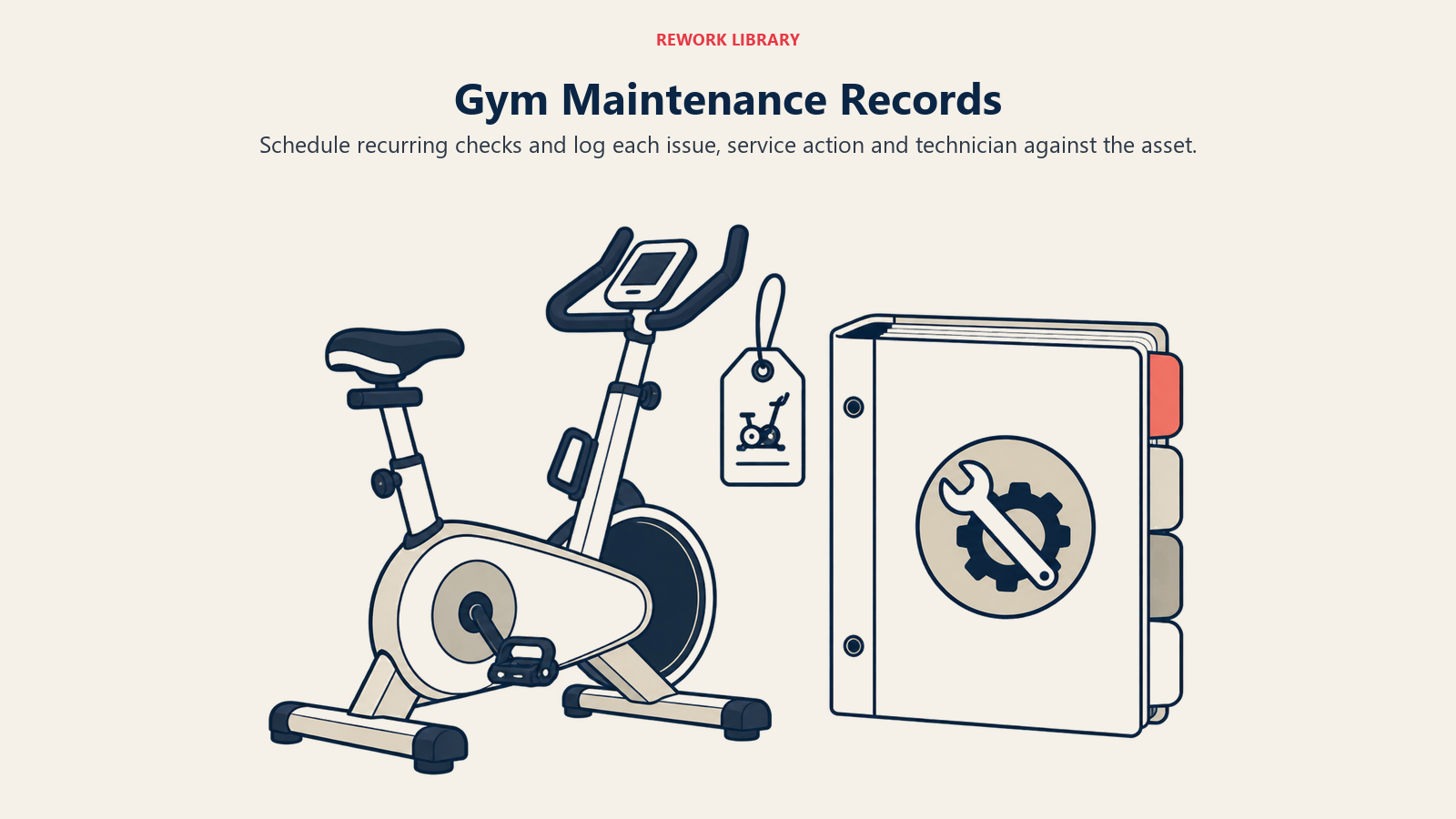
Maintenance log requirements: Every maintenance action, every reported issue, and every repair should be logged against the specific piece of equipment with date and technician. This log serves three purposes: identifying chronic failure patterns (a machine that's in the log 4 times in 8 months is a replacement candidate), supporting warranty claims, and demonstrating due diligence if a member injury claim involves equipment condition.
Vendor Relationships & Service Contracts
Evaluating service contract value: Service contracts from equipment manufacturers (Precor, Life Fitness, Technogym) typically cover parts and labor for specified maintenance intervals and repairs. Annual cost for a full-service contract on a commercial cardio unit runs $200-$400 per machine. For a 20-machine cardio fleet, that's $4,000-$8,000 annually. Compare that against your actual repair history: if you're spending $3,000 or less on repairs annually, the contract may not pay. If you're spending $6,000-$8,000, the predictability alone justifies the cost.
Multi-brand service providers: Third-party commercial fitness equipment service companies can service multiple brands under a single contract and are often 15-25% less expensive than OEM service programs. The tradeoff is that some manufacturers void warranties for non-OEM service - verify this before switching.
Parts inventory for common failures: For gyms without service contracts, keeping a small inventory of the highest-frequency failure parts (treadmill belts and running boards for your most common models, console power supplies, weight selector pins) reduces repair turnaround from 1-3 weeks to 1-2 days. This inventory investment of $500-$2,000 pays for itself quickly in reduced downtime.
SLA expectations for repair response: When evaluating vendors, establish clear SLA expectations: 24-hour response for any equipment creating an immediate safety concern, 48-72 hour response for primary cardio equipment, and 5-7 days for secondary or specialty equipment. Put these in writing. A vendor unwilling to commit to response times in writing is telling you something about their service capacity. Cardio equipment SLAs matter most during high-demand windows, and the peak hour management guide covers how equipment availability directly affects member experience during congested periods.
Capital Replacement Planning
The gym operator who hasn't built a replacement reserve fund gets the same call every few years: a major cardio unit fails beyond economic repair in the same month two others go offline, and the choice is either emergency purchase on credit or running 15% below equipment capacity during peak season.
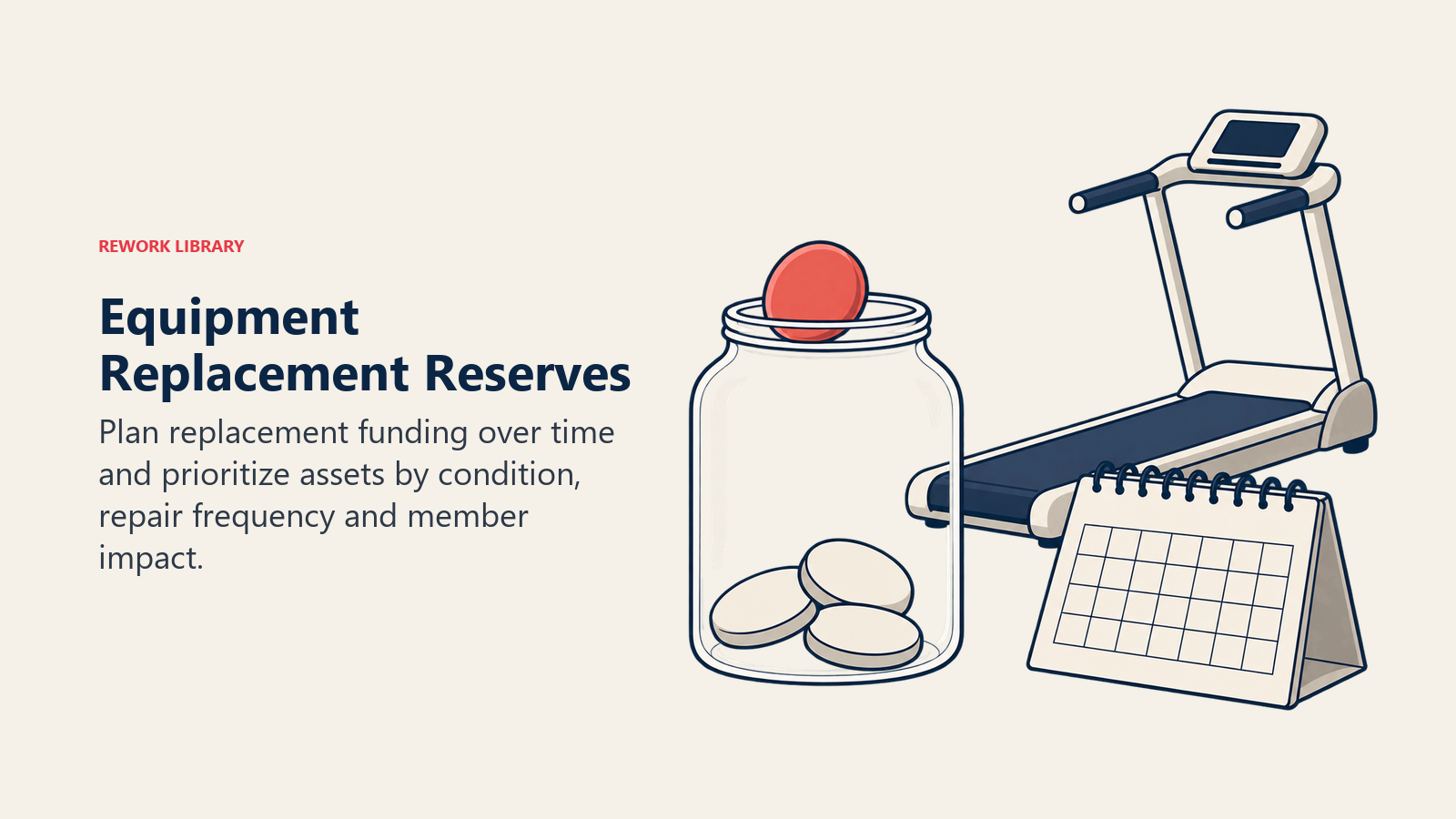
Building a multi-year equipment replacement fund: Calculate your total equipment replacement value. A 40-machine cardio fleet at an average replacement cost of $5,000 per unit equals $200,000 in replacement value. Over a 7-year cycle, that's roughly $28,500 per year in replacement costs. Contributing $2,400/month to a reserved equipment fund creates a manageable capital cycle rather than a crisis cycle.
Prioritizing replacements by member impact and repair frequency: Not all equipment failures are equal. A treadmill in the primary cardio zone during peak hours matters more than a recumbent bike in a low-traffic corner. Build a priority scoring matrix: member visibility (high/medium/low) x failure frequency (repairs per year) = replacement priority score. This prevents the common mistake of replacing newer equipment with cosmetic issues while aging equipment in high-traffic areas continues to fail.
Lease vs purchase analysis for high-cost cardio equipment: Commercial treadmills at $4,000-$8,000 per unit represent significant capital for small gym operators. Equipment leasing (3-5 year terms from specialty fitness equipment lenders) converts this into monthly payments of $100-$200 per unit - manageable as an operating expense but ultimately more expensive than purchase over the full cycle. The lease argument is strongest when: you're in a growth phase and want to preserve capital, the equipment brand offers lease-to-own with upgrade options, or you anticipate significant format changes in your facility within the lease term.
Timing replacements with membership growth phases: Replacing equipment during a membership growth phase (post-January surge, after a major marketing push) maximizes the impact of new equipment on member satisfaction and new member conversion. New members seeing new equipment during their trial period contributes to conversion. Replacing equipment during a low-season trough minimizes operational disruption during the replacement process. If a major equipment refresh coincides with a facility renovation, sequence both using the principles in the facility layout optimization guide.
The NSCA's Strength and Conditioning Professional Standards and Guidelines provide detailed standards for equipment inspection, maintenance documentation, and facility management that commercial gyms can use as a baseline framework, particularly useful when structuring vendor contracts or preparing for insurance audits.
The gym operations leaders who sleep well at night are the ones who know exactly what equipment they have, what its age and condition is, and what their replacement timeline and budget looks like. That knowledge doesn't come from memory - it comes from a maintained asset register and a capital plan that's reviewed quarterly alongside financial reporting. Equipment capital costs should be factored into your key gym financial metrics and MRR tracking to avoid surprises in annual planning.
Frequently Asked Questions about Gym Equipment Lifecycle & Maintenance
How long does gym equipment last?
Under commercial use, cardio machines (treadmills, ellipticals, bikes, rowers) last 7 to 10 years, strength machines 15 to 20 years, free weights 20 to 30 years, and rubber flooring 5 to 8 years. High-traffic cardio in large clubs can hit end of life at 5 to 7 years.
What does preventive gym equipment maintenance cost versus emergency repair?
Emergency repairs run 3 to 4 times the cost of the same work done preventively, per Precor commercial service data. Cardio equipment also sees about 40% more failures when a preventive maintenance interval is skipped even once.
How much should a gym set aside for equipment replacement?
Take total replacement value and spread it over the useful-life cycle. A 40-machine cardio fleet at $5,000 each is $200,000 in replacement value, or roughly $28,500 a year over seven years, which works out to about $2,400 a month into a reserved fund.
Is a service contract or in-house maintenance better?
Below 20 cardio machines, OEM or third-party service contracts usually deliver better value. Above 30 to 40 machines, an in-house coordinator with vendor support for specialized repairs typically costs less and responds faster. Compare the contract price against your actual annual repair history.
Should a gym lease or buy cardio equipment?
Leasing converts a $4,000 to $8,000 unit into $100 to $200 monthly payments, easier on cash flow but more expensive over the full cycle. Lease when you are in a growth phase, want upgrade options, or expect a facility format change within the term.
Learn More

Senior Operations & Growth Strategist