Social Media Content Strategy for Fitness Studios: What Actually Drives New Members
Turn this article into takeaways for your work.


Each assistant summarizes the article only for you and suggests best practices for your work.
Fitness social media content works best when it shows real members, real staff, and real community rather than stock photos or constant discount offers. Build four or five recurring content pillars (member spotlights, behind-the-scenes, education, social proof, and limited promotion), post 4-6 times a week, and treat each post as a local brand tool aimed at people within a few miles, not a national ad.
Most gym social media falls into two traps. The first is posting generic motivational quotes overlaid on stock photos of abs - content that gets scrolled past without a second glance because it looks exactly like every other fitness account. The second is running constant promotional offers that train your audience to wait for discounts rather than paying full price. Neither approach builds a brand that attracts members or makes existing ones feel proud to belong.
The gyms with the most engaged local followings are showing something different: real members, real staff, and real community. Not polished advertising. Not model-quality photography. Not perfectly scripted educational content. The raw, authentic stuff - the member who just hit their first pull-up after eight months of trying, the instructor setting up at 5:30am, the class that went so well the instructor forgot to call time. That content performs because it's real and local, and your community will always respond more to that than to production value. Understanding how to position your fitness studio in the local market shapes the angle and tone of that content - premium studios show a different side of their community than budget-friendly gyms.
Social media for a gym is a local brand tool, not a national lead generation engine. Your posts aren't competing with Nike or Peloton - they're competing for attention within a 5-mile radius. That reframe changes everything about your content strategy. McKinsey research finds that 82% of US consumers now consider wellness a top priority, and around 50% of gym-goers say fitness is a core part of their identity - an audience primed to engage with content that speaks to their values.
Key Facts: Fitness Social Media Performance
- Fitness accounts that post member spotlight content see 3-4x higher engagement rates than those posting promotional content exclusively (Hootsuite Fitness Report, 2024)
- Instagram Reels receive 22% more reach than standard posts for local fitness business accounts (Meta Business Insights, 2024)
- Gyms posting 4-6 times per week generate 2x the follower growth rate of those posting fewer than twice weekly (Sprout Social, 2024)
- Authentic transformation story posts generate 8x the comment volume of promotional discount posts (Social Media Examiner, 2024)
The Content Pillar Framework
Sustainable social media doesn't come from trying to be creative every day. It comes from building four or five content pillars - recurring content categories you rotate through - so you always know what you're posting next. This is how you produce 4-5 posts per week without burning out or resorting to motivational quotes.
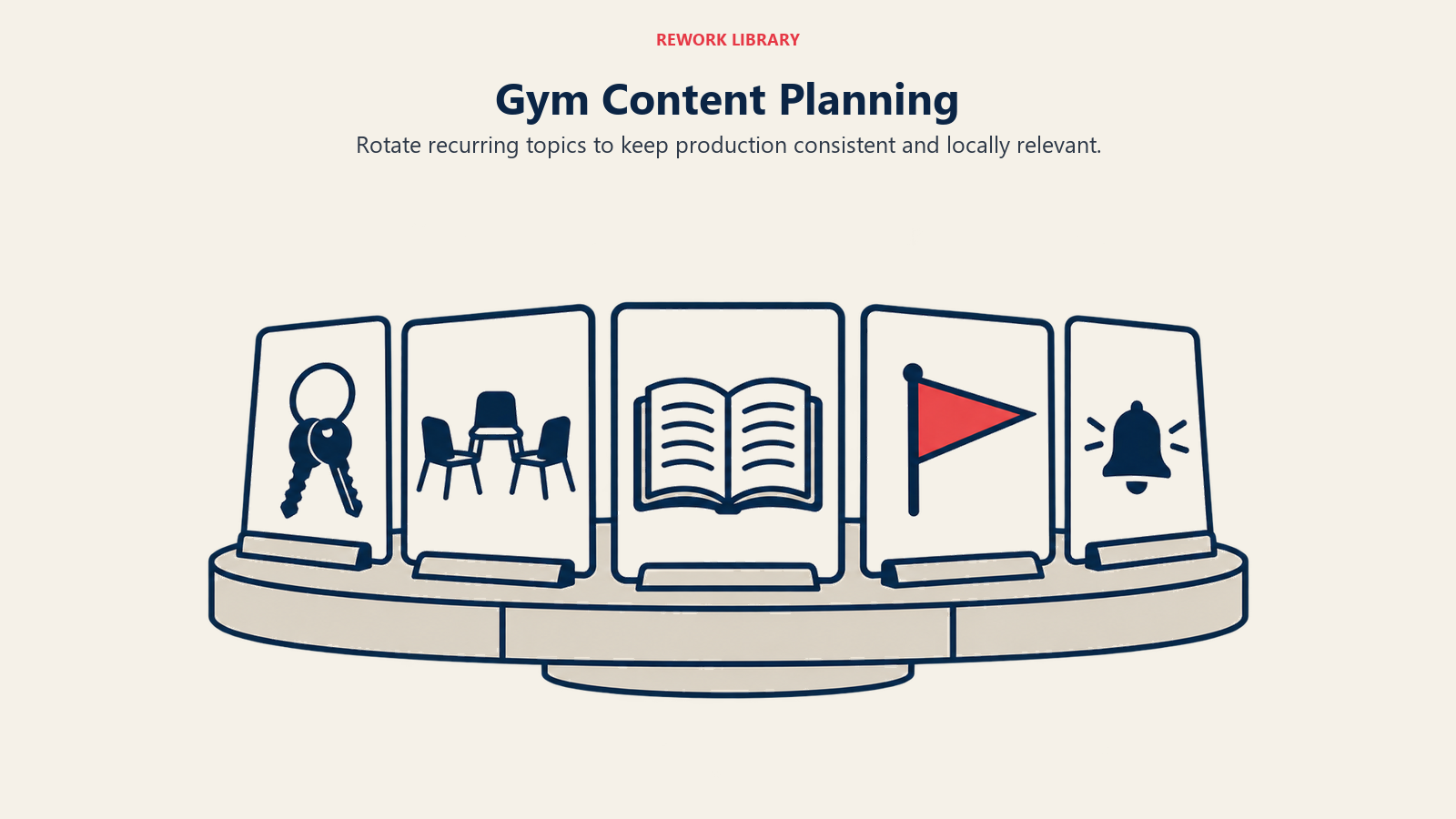
Member spotlights are your highest-performing pillar. A 60-second video or a three-image carousel featuring a real member's story - their starting point, what they struggled with, what they've achieved - generates more engagement than anything else in a fitness gym's content toolkit. It works because it's specific and local. People in your area see someone they might know, or someone who looks like them, and they think "if that person did it, maybe I could too." That's the conversion trigger that turns a follower into a trial visit. Member spotlights also fuel your gym referral program - a member who's just been featured in your content is primed to share that post and bring a friend.
Behind-the-scenes content gives your brand a human face. Show your instructors prepping class plans the night before. Show the front desk staff setting up at opening. Show the maintenance team repairing equipment. Show what it looks like to plan a new class format. This content performs well because it's rare - most gyms don't show the work behind the work - and it builds genuine affection for the people who run the facility.
Educational content positions your gym as the local expert in fitness. Short-form videos demonstrating proper squat form, explaining why protein timing matters, breaking down what heart rate zones actually mean for fat loss - this type of content gets saved and shared more than any other format, which signals value to the algorithm and extends your reach. Keep it simple and practical; gym members want actionable, not academic. If your gym offers nutrition coaching or recovery services, educational content about those topics - what cryotherapy actually does, how to structure your post-workout meal - doubles as soft promotion for those premium services.
Social proof and community content documents what happens inside your gym: packed class energy, event moments, members celebrating milestones with staff, birthday surprises, charity workout events. This content answers the unspoken question potential members are asking: "Will I belong there? Does it look like somewhere I'd want to be?" The answer needs to be yes, and the best way to say yes is to show it rather than tell it.
Promotional content (special offers, new membership pricing, referral incentives, event promotions) should represent no more than 20% of your total output. When promotional content dominates a feed, the audience either unfollows or trains themselves to wait for the next discount. When it appears occasionally within a content-rich feed, it performs better because the audience is already engaged.
Platform Strategy by Demographic
Not every platform is worth your time, and the right platform depends on who your target members are.
Instagram is the baseline for fitness content. Its demographic skew (25-44 primary, female-leaning) maps well to most gym membership targets. Reels drive discovery; Stories drive community. Use Reels for your member spotlights, form tutorials, and class highlight clips to reach people who don't already follow you. Use Stories for day-to-day community content - polls, Q&As with instructors, class schedule reminders, quick check-ins.
TikTok is essential if you're targeting 18-34. It has the highest organic reach of any platform for fitness content, and its algorithm distributes content geographically in ways that help local businesses punch above their weight. Statista data shows users spend an average of 95 minutes daily on TikTok - nearly double Instagram's engagement - and wellbeing and fitness ranks among the platform's most-searched content categories. A 45-second class highlight video or a "day in the life of a gym instructor" can reach thousands of local people who've never heard of you. The content style is rawer and less polished than Instagram - lean into that rather than fighting it.
Facebook is still where your 35-55 demographic lives, especially for local community engagement. Facebook Groups for gym members can be more effective than any other community-building tool for this age group. The feed algorithm is brutal for organic reach, so focus your Facebook energy on your private member group rather than your public page. A well-managed Facebook Group feeds directly into community building in fitness studios - it's one of the most effective ways to extend the gym's social dynamic beyond the four walls.
YouTube is worth building if you're committed to on-demand content or want to support a virtual fitness offering. Long-form workout videos (20-45 minutes) get sustained search traffic that short-form platforms don't. It's a 12-18 month investment before you see meaningful results, but the evergreen value of a strong YouTube library is substantial. A YouTube archive also provides the content infrastructure for a virtual and hybrid fitness class offering - your on-demand library is already halfway built.
Platform posting benchmarks:
- Instagram: 4-5 posts/week (2-3 Reels, 2 feed posts, daily Stories)
- TikTok: 3-5 posts/week, shorter and rawer than Instagram
- Facebook: 2-3 posts/week, prioritize the member community group
- YouTube: 1-2 videos/month if building a content library
Member Spotlights and Transformation Stories
Member spotlight content is your most powerful lead generation tool and your most ethically complex content type. Done well, it celebrates real members with their permission and their pride. Done badly, it exploits personal stories for marketing without adequate consent or consideration.
The right process starts with proactive story sourcing rather than reactive requests. Build a milestone survey into your member journey - a short questionnaire that goes out at the 3-month, 6-month, and 12-month marks asking members to reflect on their progress and whether they'd like to share their story. This catches members at moments of genuine satisfaction rather than cold-calling them for content.
Keep the storytelling structure simple: Where were they when they started? What was the challenge they faced? What did they do? What's changed? Four questions, honest answers, genuine emotion. Don't over-produce it. A member talking directly to camera on a phone in front of the squat rack is more credible than a polished testimonial in a branded interview setting. Members with compelling stories are also natural candidates for free trial and day pass promotions - their authentic content can anchor a trial offer campaign targeted at their demographic.
Before and after content requires explicit consent documentation and carries platform-specific risks. Instagram and TikTok have restricted before/after health content in some categories, particularly weight loss. Know the platform policies before you post. More importantly, get written consent that covers how the images will be used, where they'll appear, and for how long. A simple one-page consent form protects both the member and your gym.
Some of the most effective member spotlights aren't transformation stories at all - they're milestone stories. "Maria just deadlifted her bodyweight for the first time after 4 months of training" is a powerful post that doesn't require before/after imagery or weight loss narrative. These stories celebrate fitness as skill and strength development rather than aesthetic change, which resonates with a broader member audience.
Production Without a Full-Time Team
You don't need a marketing hire to run a strong social media presence. What you need is a system that makes content production repeatable without requiring creative energy every single day.
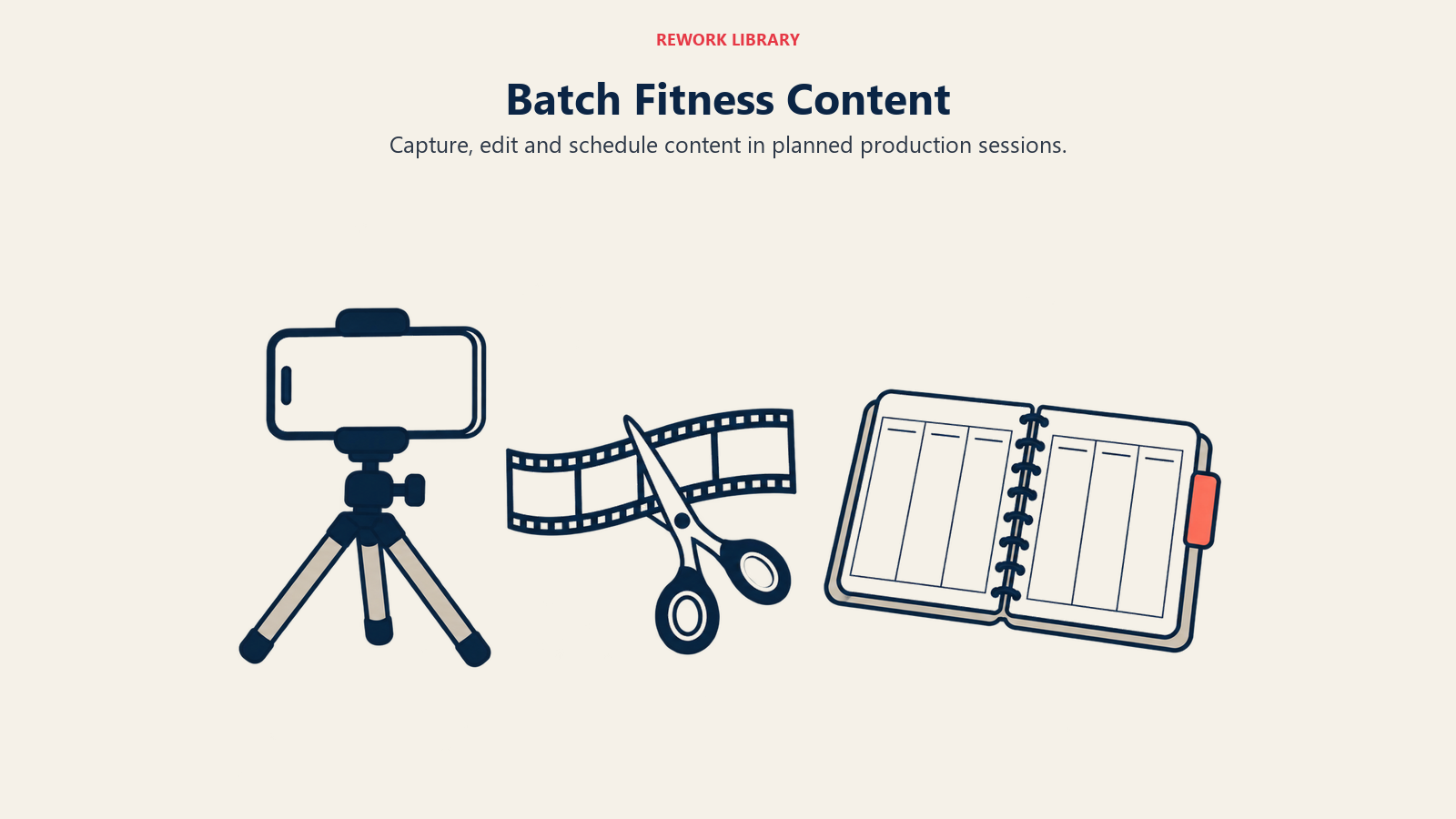
Content batching is the core strategy. Set aside 2-3 hours once per month to film the majority of your content in one session. Walk through your facility with a smartphone and film 10-15 short clips: instructor interviews, exercise demonstrations, class highlights, facility features. You now have raw material for weeks of posts. The editing can happen in batches too - one afternoon per month to trim, caption, and schedule.
Smartphone filming is entirely sufficient for fitness social media. iPhone 14+ and equivalent Android cameras shoot better video than most prosumer cameras from five years ago. What matters more than camera quality:
- Lighting: Film near windows for natural light, or invest in a single LED panel ($50-80) for indoor instructor content. Flat, even lighting looks professional; harsh shadows don't.
- Audio: A $30 lapel mic that plugs into your phone's headphone jack makes a real difference for talking-head content. For class videos with music, the ambient audio often works fine.
- Stability: A $25 phone tripod or a phone grip for handheld video. Shaky footage loses viewers within 2 seconds.
For editing, CapCut (free, mobile) handles everything a gym needs: trimming, captions, music, transitions, text overlays. Canva Pro ($13/month) handles static graphics, promotional images, and Instagram grid designs. These two tools plus a smartphone cover 95% of fitness content production needs.
Build a simple content calendar: Monday (educational content), Wednesday (member spotlight or behind-the-scenes), Friday (class highlight or community moment), Saturday (promotional or event content). Four content types, four days, consistent rhythm. The discipline of a calendar is more valuable than spontaneous creativity.
Measuring What Actually Matters
Most gym social media reports focus on vanity metrics: follower count, likes, reach. These aren't meaningless, but they're not the metrics that justify the time investment.
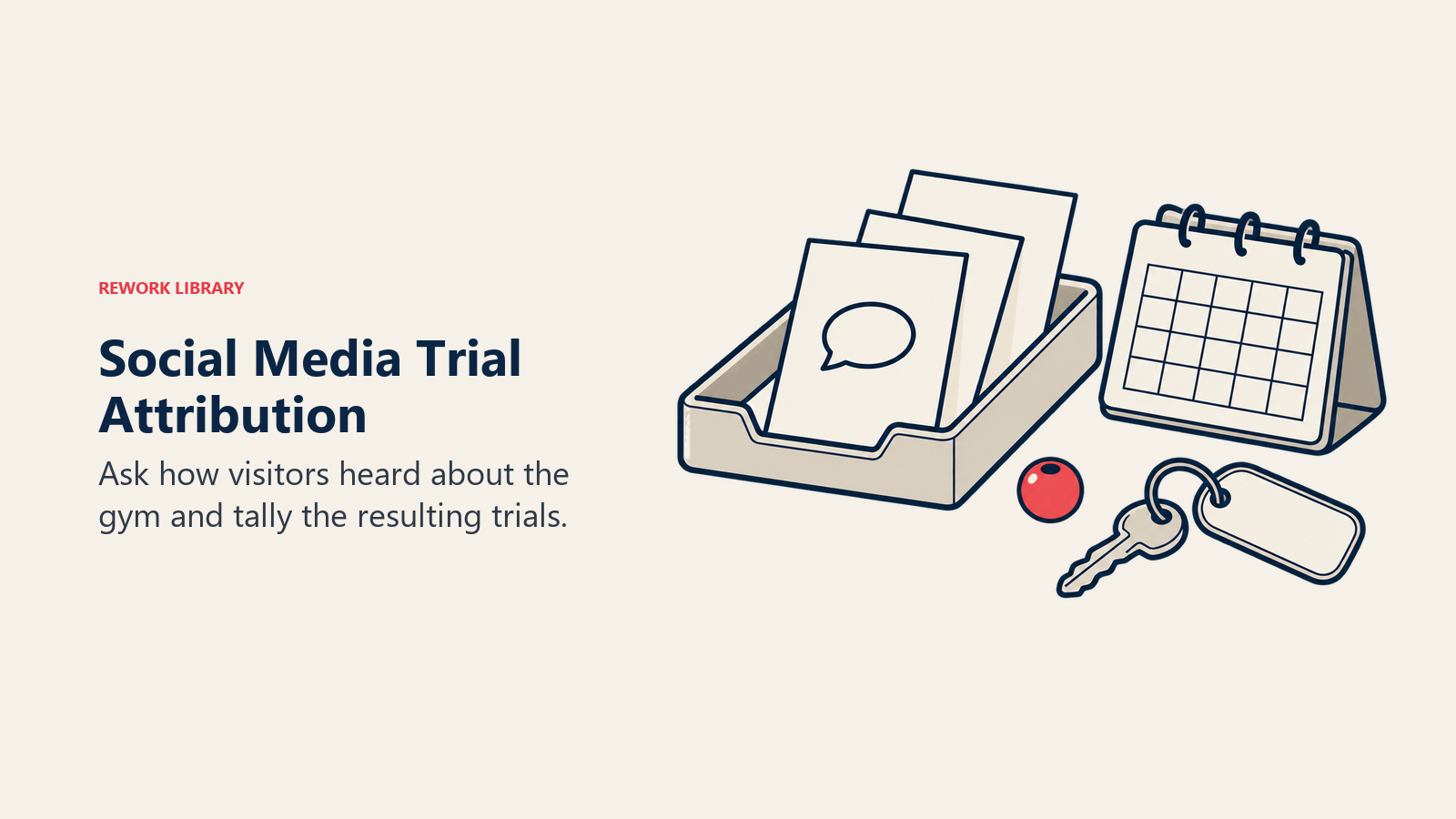
Track trial visit attribution. At every consultation or trial class, ask "How did you hear about us?" and track when someone says "Instagram" or "TikTok" or "saw your video." The IHRSA member experience research on health club engagement and digital outreach documents how clubs that link digital touchpoints to member acquisition consistently outperform those treating social media as a vanity channel. Build a monthly tally of social media-attributed trials and conversions. This is the metric that connects your content investment to revenue. If you want to scale beyond organic reach, social media ads for fitness studios let you put your best organic content in front of highly targeted local audiences - the ads work better when your organic content is already strong.
Track profile visits and bio link clicks. When someone sees your content and visits your profile, they're interested. If they click your link, they're highly interested. These micro-conversions tell you whether your content is generating real interest before it generates visits.
Engagement rate (total engagement divided by reach, expressed as a percentage) is more meaningful than raw like counts. For local business fitness accounts, engagement rates above 3-5% are strong. Below 1% suggests content that isn't resonating with your existing audience, regardless of reach.
Story completion rate (what percentage of viewers watch through all your Story slides) tells you whether your Stories are holding attention. Below 60% suggests your Stories are too long or not engaging enough. Above 80% is excellent.
The Long Game
Building a fitness brand on social media takes 12-18 months of consistent effort before the compounding effect becomes obvious. The gyms that give up after 3 months of modest results miss the inflection point where community recognition starts driving referrals.
The practical commitment is 3-4 hours per week: batched filming once a month (2-3 hours), daily engagement with comments and DMs (30 minutes), and posting/scheduling (30 minutes per week using a scheduling tool). That's sustainable for a small team or even a single owner-operator. Combine this with a broader local marketing strategy for gyms - social media works best when it's one channel in a coordinated local presence rather than the only marketing effort.
The content that works is the content that's real. Show your actual members, your actual staff, and your actual community. Don't try to look like a national fitness brand. Be the best local gym in your market, and let your social media reflect that.
Frequently Asked Questions
What should a gym post on social media? Rotate through four or five content pillars: member spotlights and milestone stories, behind-the-scenes of staff and classes, short educational form and nutrition videos, social proof of packed classes and events, and occasional promotions kept under 20% of your output. This rhythm lets you post consistently without resorting to motivational quotes.
How often should a fitness studio post? Aim for 4-6 posts per week. On Instagram, mix 2-3 Reels with 2 feed posts plus daily Stories. TikTok wants 3-5 rawer posts a week, Facebook 2-3 with a focus on a private member group, and YouTube 1-2 longer videos a month if you are building a library. Gyms posting 4-6 times weekly grow followers about twice as fast as those posting twice or less.
Which platform is best for gym marketing? Instagram is the baseline for most studios because its 25-44 audience maps to gym membership. Use TikTok if you target 18-34, since it has the highest organic local reach. Facebook Groups work well for the 35-55 community, and YouTube suits on-demand or virtual class offerings.
Do I need a marketing team to run fitness social media? No. Batch-film 10-15 clips in one 2-3 hour session each month with a smartphone, edit in CapCut, design graphics in Canva, and schedule ahead. The realistic ongoing commitment is 3-4 hours a week, which a single owner-operator can sustain.
Learn More