Community Events & Open Houses: Turning Foot Traffic Into Members
Turn this article into takeaways for your work.


Each assistant summarizes the article only for you and suggests best practices for your work.
An open house that doesn't have a conversion plan is just a free workout for people who'll never join. You've paid for staff time, cleaned the facility, maybe bought food, and 60 people walked through your doors, then left. Two joined. That's not a marketing success. That's an expensive charity event.
The operators who consistently convert community events into membership revenue treat events as a structured sales channel, not a brand awareness exercise. McKinsey's fitness consumer research found that 81 percent of respondents attended in-person fitness classes in the past year, underscoring just how strong demand for physical, community-based fitness experiences remains. They set conversion targets before the event, staff it like a sales floor, and follow up within 48 hours with a sequence designed to close the remaining interested prospects. The community goodwill is real, but it's a by-product, not the goal. Events work best as part of a broader gym member acquisition strategy that defines which acquisition channels your gym prioritizes.
This guide gives you the planning framework, on-the-day tactics, and post-event follow-up system to make every community event measurably profitable.
Key Facts: Event-Based Member Acquisition
- Gyms with structured post-event follow-up sequences convert 3x more attendees than those relying on walk-in sign-ups alone
- The average open house attracts 40 to 80 visitors; structured conversion programs close 12 to 20% on event-only offers
- 68% of fitness consumers who attend a gym event and don't join same-day are still reachable within 72 hours via email or SMS (Mindbody Business, 2024)
- Event-acquired members have 22% higher 6-month retention than members acquired through paid digital ads
Types of Community Events and Their Conversion Goals
Not all events are the same, and conflating them leads to poor planning. Each type attracts a different visitor profile with a different likelihood of converting.
Open houses are the broadest format. You open your doors, showcase your facility, offer free trial classes or facility tours, and make membership offers. The goal is maximum volume (as many people walking through as possible) combined with a structured conversion process. Open houses work best for new gym launches, post-renovation reveals, or seasonal pushes when you want rapid membership growth. Tracking which stage of growth your gym is in helps calibrate how aggressively to pursue event-based acquisition; see gym growth stages for context.
Specialty workshops are targeted acquisition tools. A free 60-minute strength fundamentals workshop attracts people who want to lift but don't know where to start. That's exactly the profile that benefits most from your coaching and is likely to stay long-term. The conversion goal is smaller than an open house, but the prospects are higher quality. Expect 15 to 30 attendees with a 25 to 35% same-day conversion rate on a well-structured workshop. ACE Fitness has a useful breakdown of how to structure a successful fitness business promotion that applies directly to workshop and open house design.
Charity fitness events are brand builders with secondary conversion potential. A charity boot camp or 5K benefits a local cause, generates press and social content, and brings in community members who wouldn't normally set foot in a gym. Conversion rates are lower (expect 5 to 10%), but the audience reach and goodwill value are significant. These events work best as quarterly brand investments, not primary acquisition channels.
Partnership co-events share audiences with complementary local businesses. A yoga event with a local healthy food brand, a strength challenge with a local sports retailer, or a nutrition seminar with a local dietitian practice. Each partner brings their audience, you both win exposure, and the cross-referral dynamic tends to produce warmer leads than cold open house traffic. These co-events also naturally extend into social media content for fitness studios, since shared audiences create more opportunities for tagging and organic reach.
Choose your event type based on your current acquisition priority, not what seems most exciting to plan.
The 4-Week Event Planning Framework
A community event that converts requires four weeks of lead time minimum. Here's the planning checklist by week:
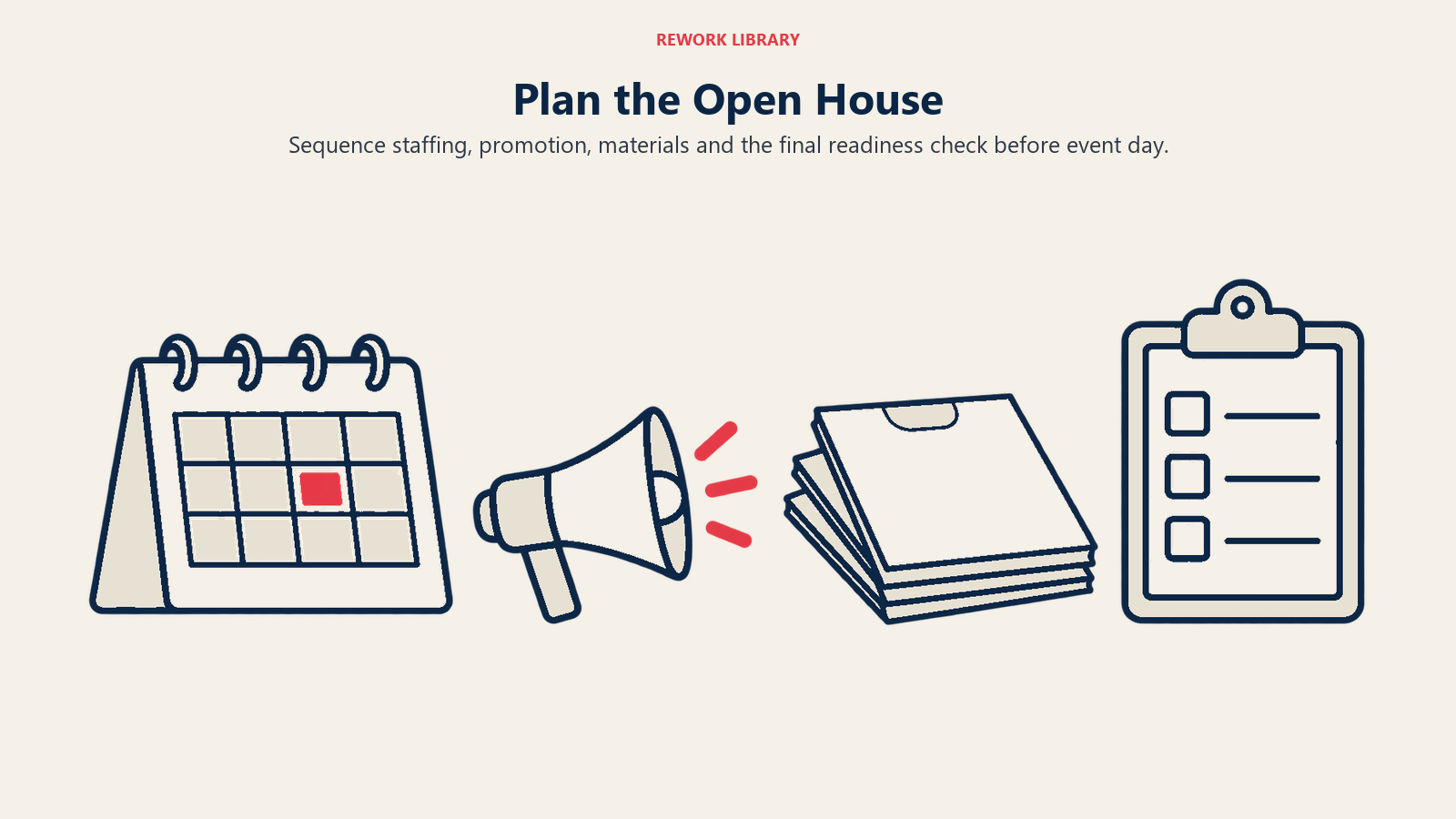
Week 4 (28 days out)
- Set a clear primary goal: number of sign-ups, number of trials, or number of qualified leads captured
- Confirm date, time, and staffing. Avoid Mondays and Fridays. Saturday mornings (9am to noon) convert best for fitness events
- Define your event-only offer: what deal exists only for people who join on the day
- Set promotion budget and channels: social ads, email to existing prospects, local Facebook groups, partner cross-promotion
Week 3 (21 days out)
- Launch social media promotion. Create a Facebook event. Run targeted local ads to a 5-mile radius
- Email your prospect list: anyone who's inquired but not joined in the past 6 months
- Confirm with any partner businesses or guest instructors
- Brief all staff on their roles: who greets, who gives tours, who runs consultations, who closes
Week 2 (14 days out)
- Second email wave to prospects with early RSVP incentive (free PT session with membership for RSVPs before event day)
- Hang in-gym signage for current members, who can bring a friend for free
- Confirm RSVP count. Adjust staffing if needed
- Prepare event-day materials: sign-up sheets, offer one-pagers, member feedback forms
Week 1 (7 days out)
- Send final reminder to all RSVPs
- Train front desk on event-day conversion script
- Set up consultation station with clear signage
- Prepare welcome packages for anyone who joins on the day (welcome letter, schedule, facility map)
Day before
- Clean and prepare all areas being used
- Confirm staff schedule one final time
- Brief team on attendance goal, conversion target, and follow-up process
Without this planning structure, events become chaotic, staff are unclear on their roles, and conversion opportunities get missed in the noise.
On-the-Day Conversion Tactics
The most critical element of a successful open house is what happens in the first 10 minutes of a visitor's experience. People form their impression quickly. Your job is to move them from curious to committed within that window.
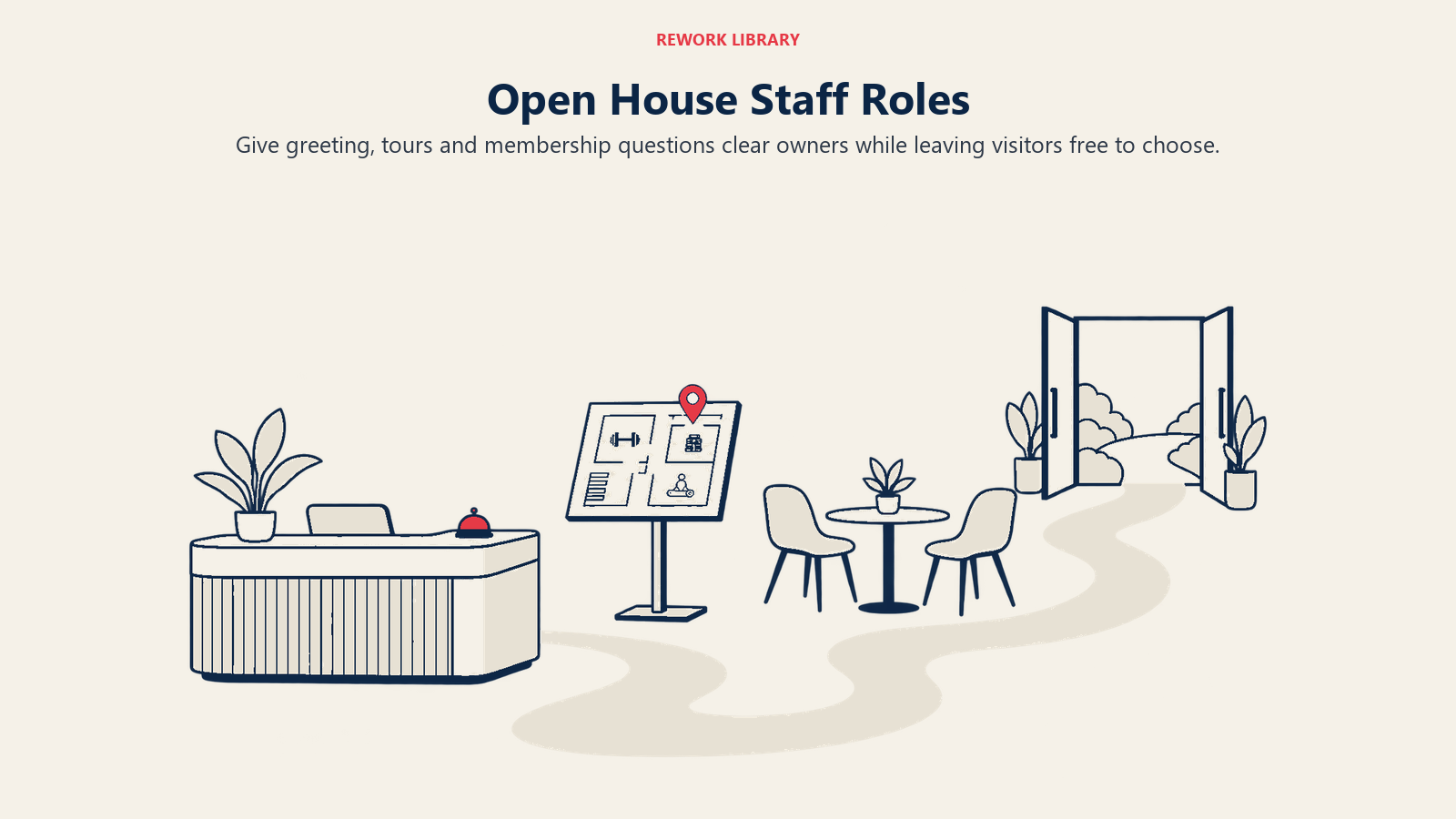
Staff assignment: Every event needs three functional roles filled: a greeter who captures contact information at the door, a tour guide or class leader who showcases your facility and culture, and a membership consultant who conducts one-on-one consultations and closes the offer. Don't let one person do all three. Specialty creates clarity. Your gym staff management practices directly affect how well your team executes these defined roles on event day.
Contact capture before anything else: When someone walks in, the first interaction is a sign-in sheet or digital check-in. Name, email, phone. This is non-negotiable. "We'd love to keep you updated on what we offer" is all the framing you need. Without contact information, anyone who doesn't join on the day is lost forever.
The consultation station: Set up a dedicated area (a table, two chairs, clear signage) labeled something like "Find Your Plan" or "Membership Consultation." Staff this at all times. The moment a visitor has finished a tour or class, direct them: "Before you head out, let me introduce you to [Name] who can answer any questions about getting started." This transition is where most gyms fail. They let visitors drift to the exit without a structured handoff.
The event-only offer: Create a deal that expires at the end of the event day. It doesn't have to be a price discount. In fact, avoid discounting your base membership price if you can. Instead, offer added value: first month's personal training included, enrollment fee waived, three guest passes, or a free nutrition assessment. The offer needs to be genuinely compelling and genuinely exclusive. "Join today and get a free 30-minute PT session" converts better than "get 10% off this month." Framing this offer correctly is an exercise in pricing psychology for fitness studios: emphasize what they gain, not what they save.
Sign-up momentum: Post a whiteboard or counter display showing sign-ups as they happen. "17 new members have joined today." Social proof in real time creates urgency without pressure. People who are on the fence respond to the signal that others are committing.
Post-Event Follow-Up: The 48-Hour Sequence
Most of your conversions won't happen on the day. They happen in the 48 to 72 hours after the event, when the experience is still fresh and the offer is still available.
Build a three-message follow-up sequence before the event:
Message 1 (same evening, 6pm): Email subject: "Great to meet you today at [Gym Name]." Content: Thank them for coming, recap the event-only offer (if still valid, ideally extend it 24 hours for anyone who attended), include a direct link to sign up or book a follow-up consultation. SMS version: "Thanks for stopping by [Gym Name] today. Your exclusive offer is still available until midnight tomorrow. Reply or click to get started."
Message 2 (24 hours after): Email subject: "Your spot is still open." Content: A brief testimonial or quote from a current member, a reminder of what joining includes, and a 24-hour urgency close. "We had 20 new members join yesterday. Spots in our popular Tuesday evening class are filling fast."
Message 3 (72 hours after): Email subject: "One last thing before I close this out." Content: Direct, personal tone. "I know joining a gym is a real commitment. If you have any questions about whether [Gym Name] is the right fit, I'd love to spend 10 minutes on the phone. Here's my direct calendar link." This message shifts the conversation from promotion to consultation, which converts hesitant prospects.
Track open rates, click rates, and conversions for each message. The sequence improves with every event. Prospects who engage but don't convert through this sequence become candidates for your member win-back campaigns later.
Measuring Event ROI
Every event should produce a clear return-on-investment calculation. Here's how to structure it:
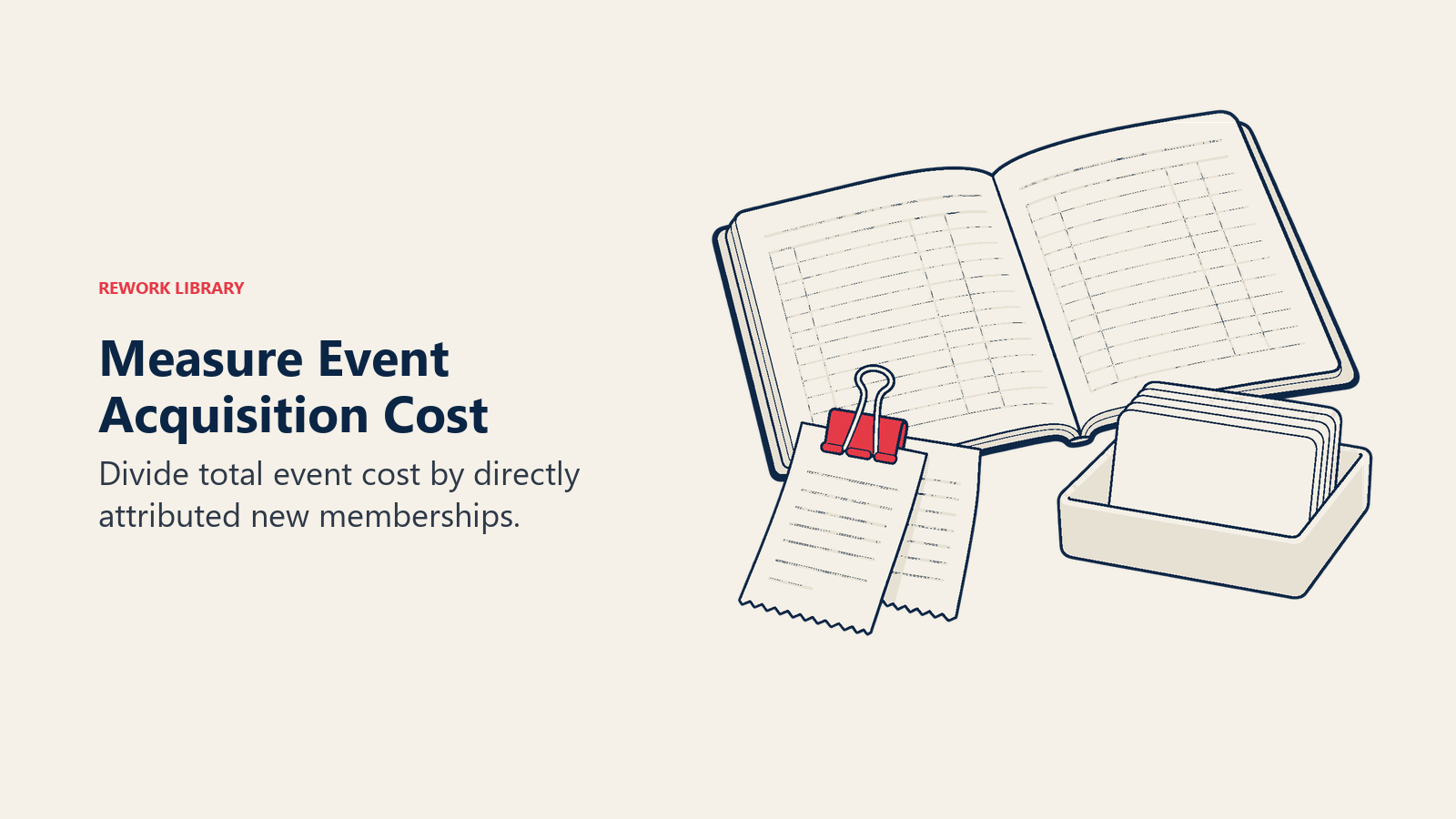
Total event cost: Add together staff hours (at loaded hourly rate), promotional spend, supplies and food, any speaker or partner fees, and facility costs if any were incurred.
Revenue generated: Count only members who joined as a direct result of the event, tracked through your sign-in sheet and CRM. Multiply by your average first-year membership value (monthly fee x average retention months). Don't count existing members or renewals.
Cost per member acquired: Total event cost ÷ number of new members. Compare this to your cost per acquisition from paid digital ads (typically $80 to $200 per member) and word-of-mouth referrals. Statista's US fitness and health club industry overview provides benchmark context on the scale of the market your events are competing in. Tracking event CPA alongside your other key gym growth metrics keeps your acquisition channels directly comparable.
Example calculation:
- Event cost: $800 (staff: $400, ads: $200, supplies: $200)
- Attendees: 55
- New members: 9
- Average first-year value: $660 (12 months x $55)
- Total first-year revenue: $5,940
- Cost per member: $89
- Return: 7.4x
That's a solid event ROI. An event that produces 4 members from $800 in cost is a $200 CPA, which is still acceptable if your digital CPA is higher. An event that produces 1 or 2 members needs a serious review of your conversion process.
Run at least four community events per year: two high-production open houses and two smaller specialty workshops. The broader US fitness industry context on Statista is worth bookmarking: knowing the market's size and growth trajectory helps calibrate how aggressively you should invest in acquisition events at each stage of growth. Track the ROI for each and double down on the formats that consistently outperform. New members who join through events benefit significantly from a structured new member onboarding process that converts their event-day enthusiasm into a lasting gym habit.
Events as a Conversion Mechanism
The operators who get the most from community events are the ones who resist the temptation to measure success by attendance alone. 80 people in your gym on a Saturday is exciting. But it's meaningless if 8 of them join. 35 people in your gym is a smaller crowd, but 11 memberships is a win.
Events are a sales channel. Plan them like one. Staff them like one. Follow up like one. The community goodwill will build itself. It's the natural by-product of people having a great experience in your space. But the membership revenue requires intention.
Set your conversion targets before every event. Brief your team on those targets. Celebrate when you hit them. Diagnose when you don't. That discipline is the difference between events that grow your gym and events that just fill your weekend.
Learn More