Sales Operations Leadership: Building the System Behind Revenue
Turn this article into takeaways for your work.


Each assistant summarizes the article only for you and suggests best practices for your work.
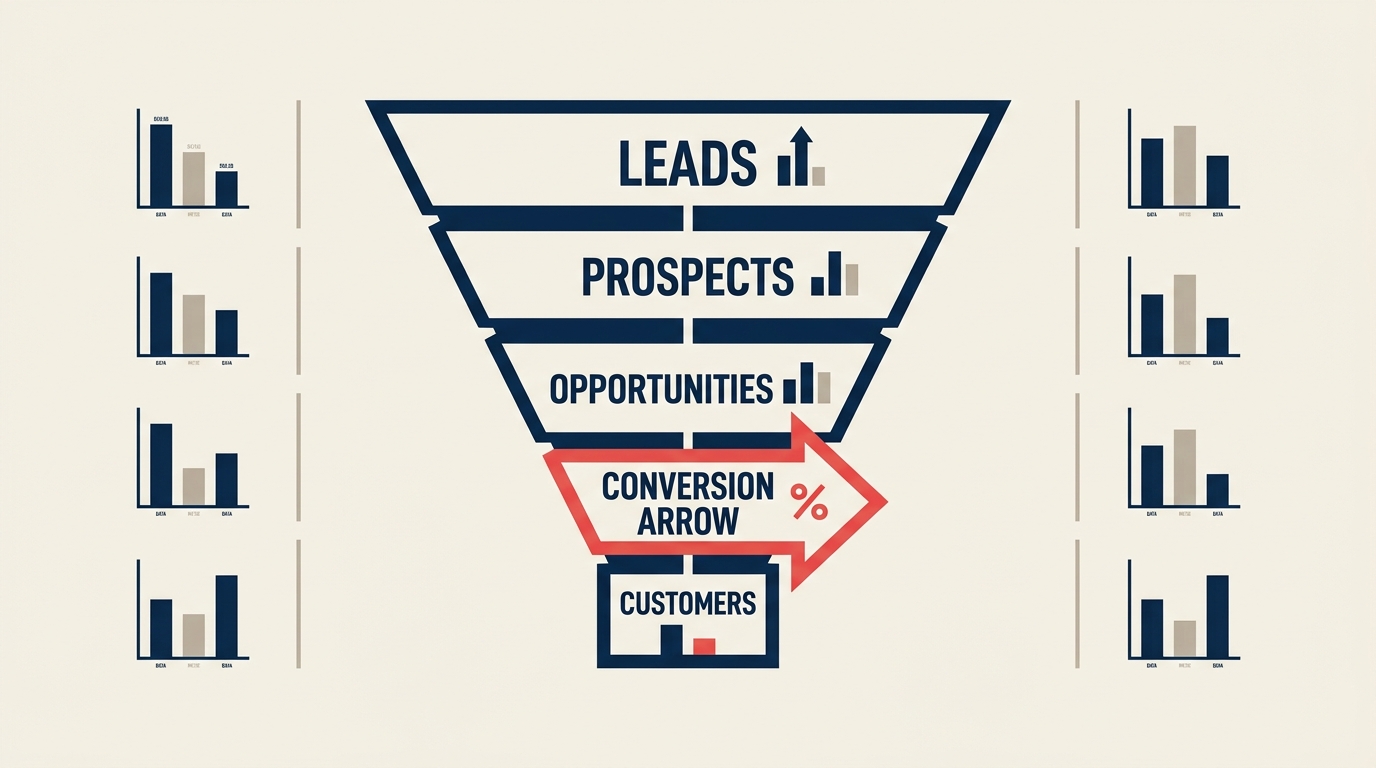
A sales team that is working hard but not performing well usually has an operations problem, not a people problem. Reps are spending too much time on non-selling activity. The pipeline data is unreliable. Territory design is creating imbalances. Compensation is rewarding the wrong behaviors. Forecasts are consistently wrong.
These are not problems that motivation or training can fix. They require systematic diagnosis and deliberate redesign of the underlying infrastructure. That is the domain of sales operations leadership.
Sales operations (often called Sales Ops or, in its broader form, Revenue Operations) is the organizational function that sits behind the frontline sales effort and makes it possible for that effort to produce consistent, scalable results. Leading it well is a different discipline than leading sales itself.
What Sales Operations Actually Does
The scope of sales operations has expanded significantly as companies have shifted to data-intensive go-to-market models. The core responsibilities include:
Process design and optimization. Defining how deals move through the pipeline, what activities happen at each stage, what criteria must be met to advance, and where common deals fall apart. Good process design eliminates ambiguity that slows reps down and creates the predictability that makes forecasting possible.
Technology and tooling. Owning the CRM, the sales engagement platform, and the data infrastructure that connects them. This is not just administration. It includes making decisions about what data to capture, how systems integrate, and what automation is valuable versus what adds complexity without value.
Analytics and reporting. Turning sales data into the insights that guide decisions. Which reps are on track? Which territories are structurally advantaged or disadvantaged? Where in the funnel is conversion breaking down? What does the pipeline actually support as a forecast?
Territory and quota design. Allocating accounts across reps in ways that are fair, achievable, and aligned with the company's growth priorities. Poor territory and quota design creates problems that no amount of coaching or pressure can solve.
Compensation plan design. Building incentive structures that reward the right behaviors and outcomes. Sales compensation is one of the most powerful management tools available, and also one of the most frequently misused.
Forecasting. Producing reliable projections of what the team will close in a given period. This requires both good data and a disciplined methodology, not just a roll-up of rep self-assessments.
The Leadership Dimension
Running sales operations is about managing systems, but leading it well requires a set of skills that are distinct from system management.
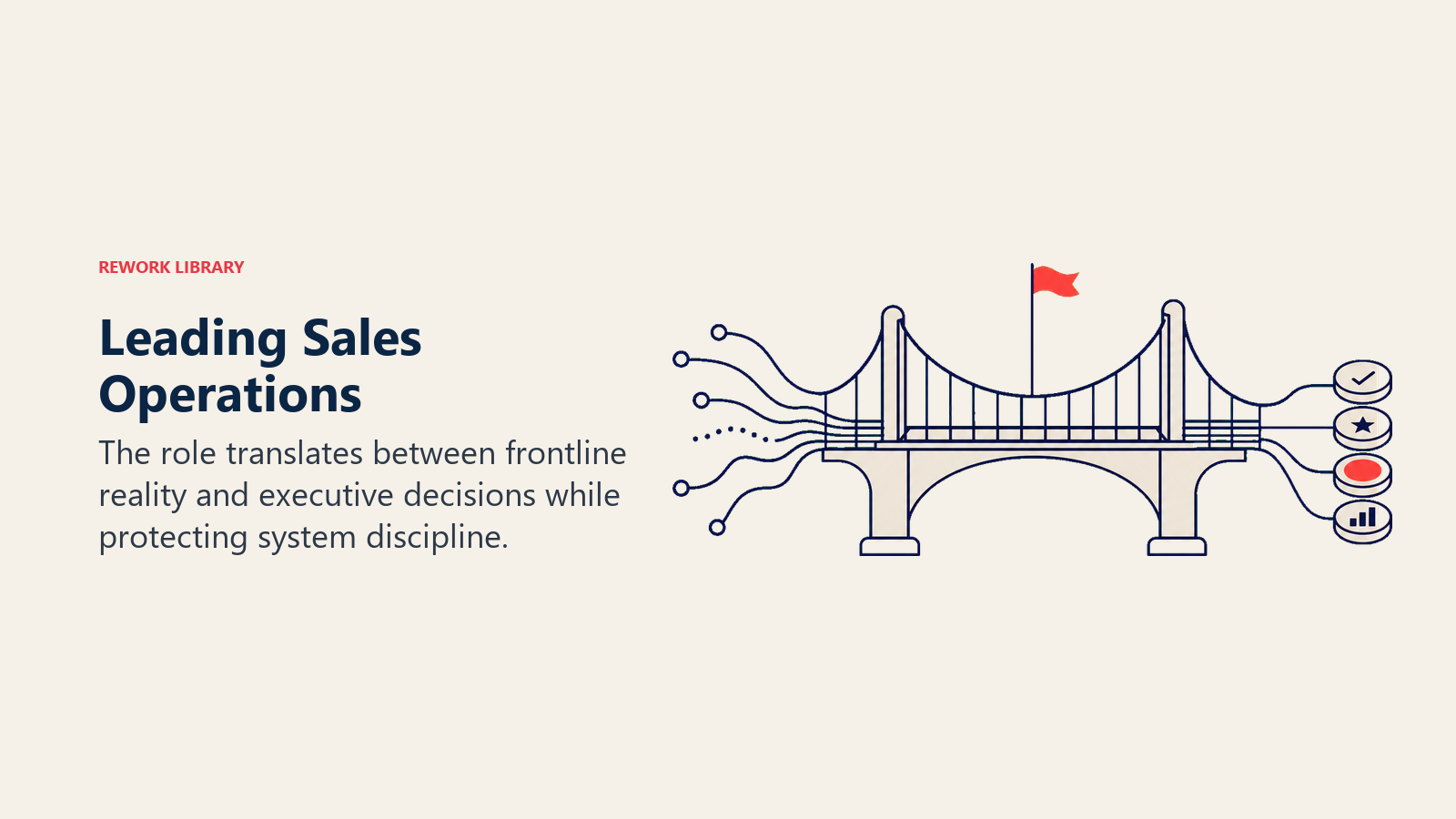
Translating between two worlds
Sales operations leaders must communicate effectively with two very different audiences: the frontline sales team and the executive layer.
With the sales team, the challenge is demonstrating that operational improvements are in their interest. Reps are often skeptical of new processes and systems because past changes have added administrative burden without improving their results. An effective Sales Ops leader shows reps specifically how process changes and better tools reduce friction in their day and put more commission-generating hours into selling.
With executives, the challenge is translating data into decisions. An executive does not need to understand the details of a pipeline hygiene audit. They need to understand what the pipeline data implies for the forecast, what the highest-leverage problems are, and what it would take to fix them.
Managing without authority
Sales operations does not control the revenue outcome. The frontline leaders do. But Sales Ops is responsible for the systems and processes those leaders depend on. This creates an influence challenge: the Sales Ops leader must get sales managers to change how their teams operate without having formal authority over those teams.
This requires building credibility through demonstrated insight. When Sales Ops surfaces a problem (a territory imbalance, a pipeline stage that is leaking deals, a compensation design flaw) with clear evidence and a recommended fix, and the fix works, trust accumulates. That trust is the actual authority.
Prioritization under constant demand
Every function in the business wants something from Sales Ops: a new report, a CRM change, a new field, a different workflow. The volume of requests routinely exceeds the team's capacity. Effective Sales Ops leaders build a prioritization framework that focuses investment on changes with the highest revenue impact and the clearest line between the change and the result.
A useful heuristic: work that improves the accuracy of the forecast or increases the time reps spend in front of customers almost always ranks higher than work that satisfies a reporting request or adds a new data field to the CRM.
Building a Reliable Forecast
Forecasting is the output that most visibly tests Sales Ops leadership capability, because the CEO and board care directly about it. A chronically inaccurate forecast signals either bad data, a broken methodology, or both.
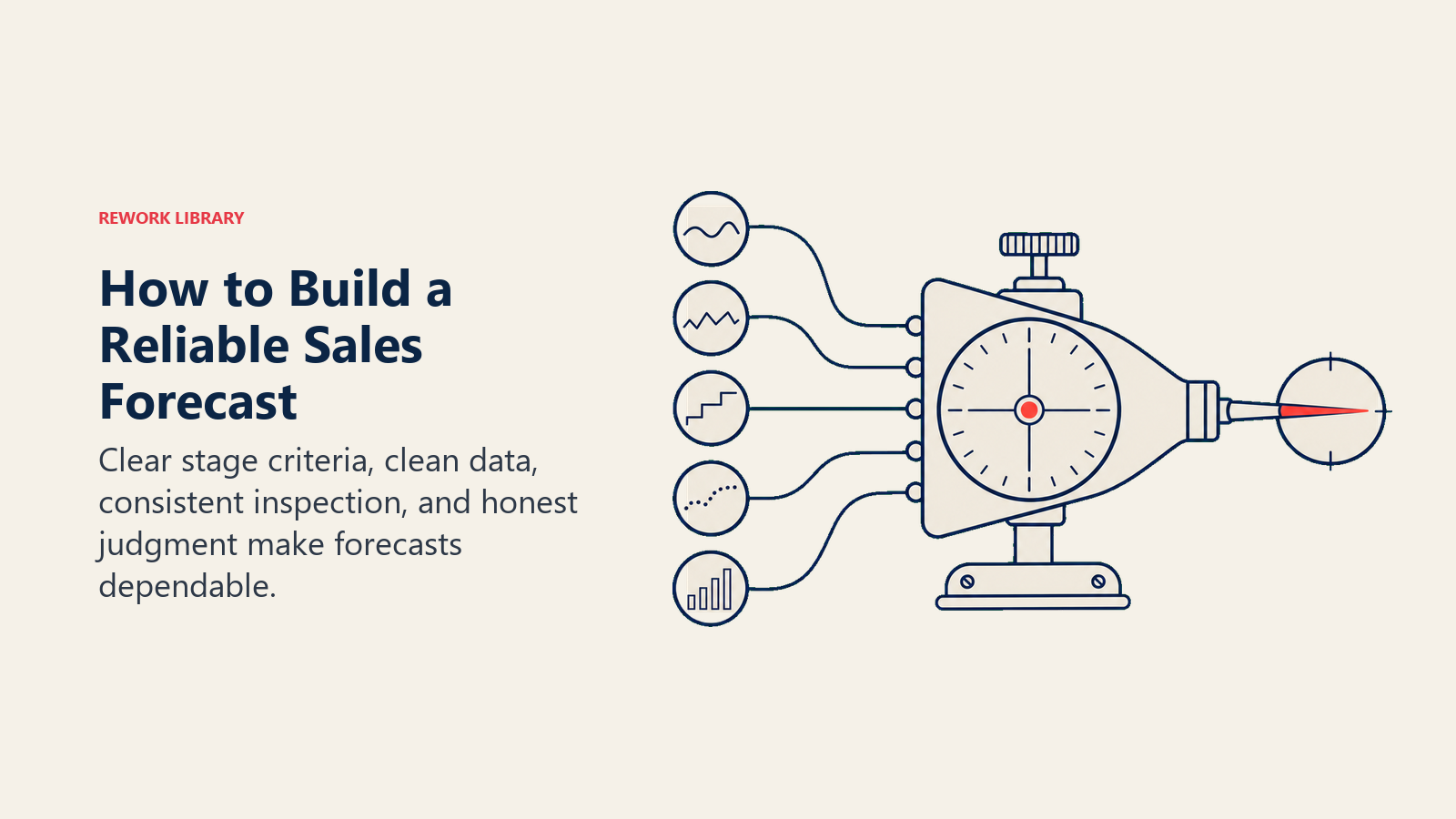
The most common cause of forecast failure is that the pipeline stage definitions are ambiguous. When reps disagree about what it means for a deal to be "qualified" or "in proposal," the aggregate pipeline number has no reliable relationship to what will close. Fixing this requires making stage criteria specific and verifiable, not judgmental.
The second most common cause is that reps inflate their pipeline because forecast discussions feel like performance reviews. Reps who fear being penalized for low pipeline fill it with deals that are unlikely to close. The Sales Ops leader needs to create conditions where honest pipeline assessment is valued over an impressive-looking number.
Good forecasting methodology combines bottom-up rep assessment, historical conversion rate data by segment and rep cohort, and a structured review of deals that are unusually large, stalled, or at risk of pushing. The combination is more reliable than any of these inputs alone.
Territory and Quota Design Principles
Territory and quota design is one of the highest-leverage levers in Sales Ops, and one of the most politically sensitive.
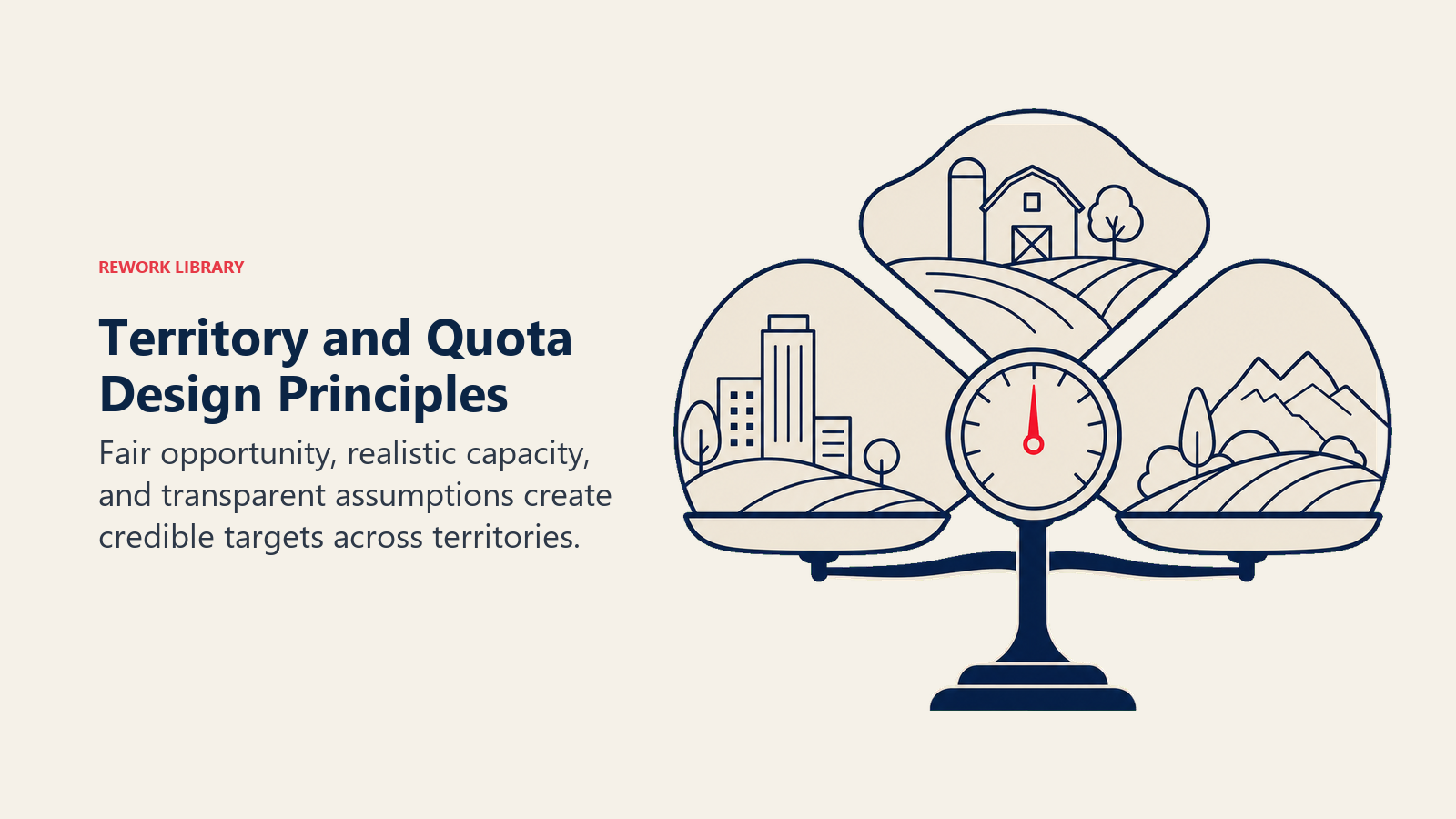
Territories should be designed so that a strong rep in any territory has a comparable earnings opportunity to a strong rep in any other. When one territory is structurally easier to sell into (larger addressable market, more inbound leads, fewer active competitors), the rep assigned to it will outperform regardless of their capability. When another territory is structurally harder, a genuinely strong rep will underperform. Both outcomes distort performance assessment and create retention risk.
Quota should be set at a level that is stretching but achievable. The standard framework: if fewer than 60% of reps are hitting quota, the quota is set too high (or the territories are wrong). If more than 85% are hitting quota, it may be set too low. The target is a realistic challenge that rewards genuine performance without being designed to fail.
Both territory and quota decisions carry significant organizational politics because they directly affect individual earnings. Effective Sales Ops leaders do this work transparently, explain the methodology clearly, and engage sales leadership in the design process rather than presenting a finished plan that catches people by surprise.
Technology Strategy
Sales technology has proliferated. The average mid-market sales organization operates more tools than any individual contributor can use effectively. Paradoxically, more tools often means less data quality, because when data entry is required across many systems, compliance degrades.
Effective Sales Ops technology strategy is built around a small number of principles:
Data entry must be minimized. Every field that a rep must manually fill reduces the time available for selling and increases the risk of inaccurate data. Automation (call recordings that auto-log activities, email integration that syncs outreach, lead scoring that pre-qualifies inbound) is valuable specifically because it takes work off reps while improving data quality.
The CRM is the system of record. Every other tool should integrate into the CRM, not exist as a separate data store. When pipeline data lives in multiple places, it cannot be trusted. When all activity flows into one system, the data becomes the basis for reliable decisions.
Tool consolidation is a periodic discipline. Every 12-18 months, Sales Ops should evaluate the tool stack and retire tools that are underused, redundant, or creating integration complexity without commensurate value. The instinct is to add; the discipline is to prune.
Compensation Design Pitfalls
Compensation design is where Sales Ops can create the most leverage, and also the most unintended consequences.
Common pitfalls:
Too many metrics. If a rep's comp plan has more than two or three performance metrics, the incentive signal is diluted. Reps optimize for the metric that is easiest to hit or most visible, and the rest get deprioritized.
Rewarding revenue but not margin. A plan that pays commission on revenue regardless of deal terms creates pressure to discount. If deal economics matter, the comp plan should reflect that.
Caps that discourage overperformance. Comp caps send a message that the company does not want to pay for outperformance. Removing caps and maintaining uncapped upside is expensive, but the cost of losing a top performer to a competitor without caps is usually higher.
Retroactive plan changes. Nothing destroys trust faster than changing the rules of the comp plan mid-period after reps have structured their activity around the original terms. Even if the original plan had a flaw, changing it mid-year requires careful communication and often some form of make-whole provision for reps who were on track under the old terms.
Key Facts
- Sales rep non-selling time is a major productivity drag. Research across B2B sales organizations consistently shows that reps spend the majority of their working hours on administrative tasks, internal meetings, and CRM hygiene rather than customer-facing activity. Reducing this is the highest-impact thing Sales Ops can do for short-term revenue.
- Forecast accuracy improves with pipeline hygiene, not optimism. The leading driver of forecast miss is not market conditions but stale deals left in the pipeline because no one removed them. A regular pipeline review cadence is one of the cheapest interventions with the highest forecast accuracy payoff.
- Compensation plan changes take two quarters to show behavioral effects. When you change how reps are paid, the behavioral response lags. Budget accordingly and measure the full-cycle effect before concluding the plan is or is not working.
Frequently Asked Questions about Sales Operations Leadership
What is the difference between sales operations and sales management?
Sales management is about leading the frontline sales team: coaching reps, managing performance, running the sales process with customers. Sales operations is about the systems, data, and processes that the sales team depends on. The sales manager is accountable for results; Sales Ops is accountable for the infrastructure that makes results repeatable.
When should a company hire its first Sales Ops leader?
Generally when the sales team reaches 10-15 reps and the problems of inconsistent process, unreliable forecasting, or technology complexity are starting to limit performance. Before that scale, the sales leader can usually handle operations personally. After it, the complexity typically exceeds one person's capacity to both lead the team and manage the systems.
What is the relationship between Sales Ops and Revenue Ops?
Revenue Operations (RevOps) is the broader function that aligns Sales Ops, Marketing Ops, and Customer Success Ops into a unified operation, sharing data, technology, and process design across the full customer lifecycle. It is more common in larger organizations where the handoffs between marketing, sales, and success create significant coordination problems.
How do you measure the Sales Ops function's impact?
The most direct metrics are forecast accuracy, average selling time as a share of rep hours, quota attainment distribution, and ramp time for new reps. Secondary metrics include CRM data quality (completeness and accuracy of key fields), tool adoption rates, and sales process compliance.
Related Reading

Co-Founder, Rework.com