Trait Theory: are great leaders born or made?
 Trait leadership theory holds that effective leaders share identifiable personal characteristics, such as confidence, drive, integrity, charisma, and resilience. It grew from the older "Great Man" idea that leaders are born, but modern research shows these traits are a starting point that leaders can build on through learned skills and experience.
Turn this article into takeaways for your work.


Each assistant summarizes the article only for you and suggests best practices for your work.
Have you ever heard someone described as a "natural-born leader" and wondered if great leadership is truly something people are born with, or if it's a skill they can develop over time? Trait Theory of leadership tackles exactly this intriguing question. It's one of the foundational frameworks explored in our introduction to leadership theories.
A Bit of History
Trait Theory has its roots in the Great Man theory, which became popular in the 19th century. Early proponents like philosopher Thomas Carlyle believed that history was shaped by extraordinary individuals with unique, innate traits figures like Napoleon or Julius Caesar. The core idea was straightforward: leaders were born, not made.
In the early 20th century, scholars began scrutinizing this idea more scientifically. Researchers tried to pinpoint the specific traits that separated great leaders from everyone else. Initially, these studies reinforced the idea that leadership hinged upon inherent qualities.
However, by the mid-20th century, many researchers recognized that leadership effectiveness wasn't solely determined by personal traits. Context mattered. A leader successful in one scenario could falter in another. This realization led to theories like contingency theory gaining prominence, and Trait Theory briefly faded from focus.
Trait Theory Revisited
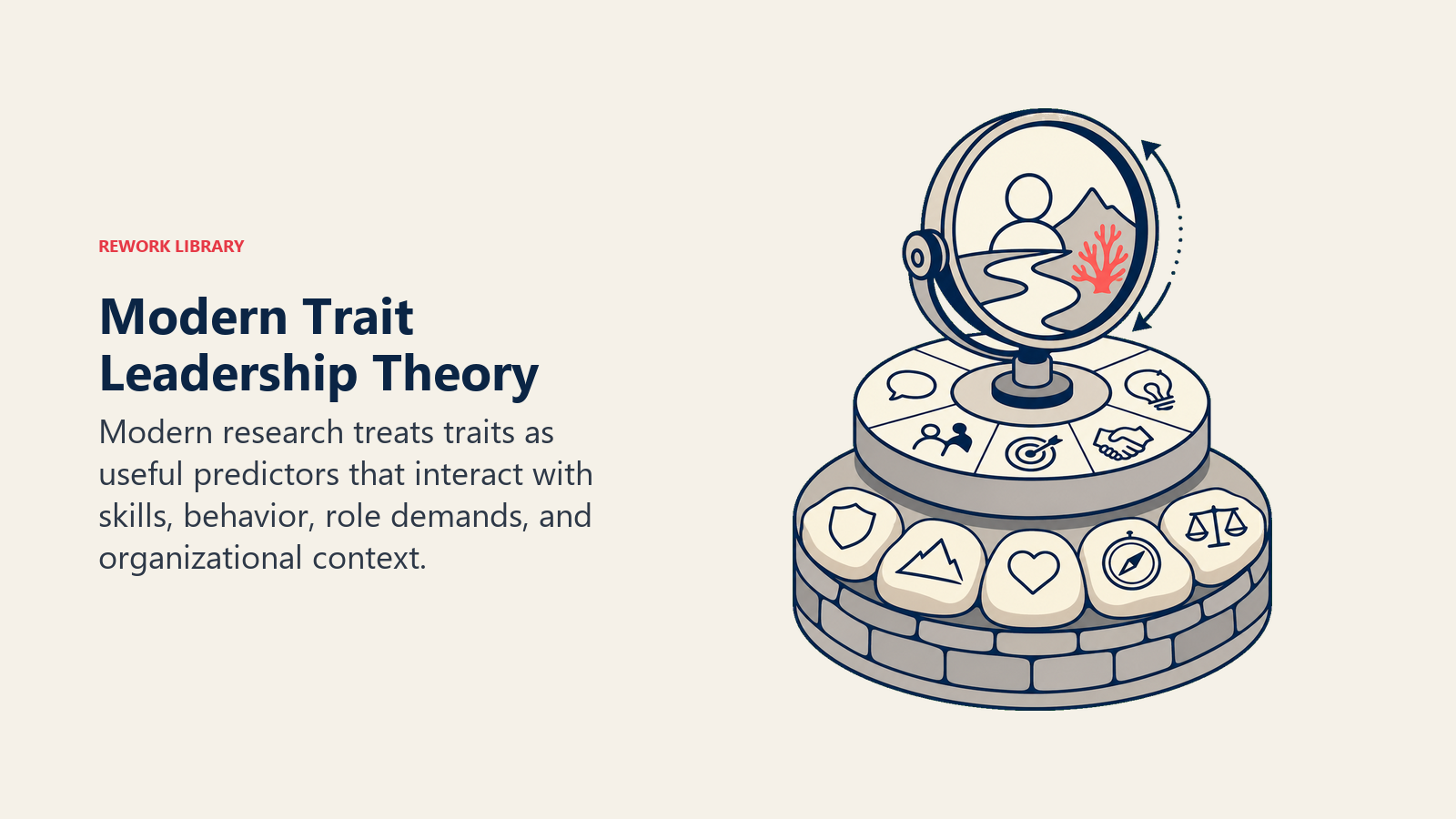
Interestingly, Trait Theory made a strong comeback in recent decades. Modern research confirmed that while leadership isn’t exclusively determined by inborn traits, certain qualities indeed enhance leadership effectiveness. Traits commonly associated with effective leadership include:
- Confidence: Believing in oneself and one's decisions.
- Drive and Motivation: A strong desire to achieve goals and push through challenges.
- Integrity: Being trustworthy and ethical, earning respect from followers.
- Charisma: The ability to inspire and attract others through one's personality and vision.
- Resilience: The capacity to bounce back from setbacks and maintain composure under pressure.
But crucially, contemporary Trait Theory also acknowledges that leaders can actively develop skills like communication, decision-making, and emotional intelligence. This perspective aligns with behavioral theory, which focuses on learnable actions. In other words, leaders might have certain innate advantages, but these traits are just a starting point, not a guarantee of success.
Real-world Examples
A notable example of Trait Theory in action is Elon Musk’s transformational leadership at Tesla and SpaceX. Musk’s relentless drive, visionary mindset, and ability to inspire teams through shared purpose exemplify the interplay between innate traits and learned behaviors. Similarly, Steve Jobs’ success at Apple Inc. highlights the importance of challenging the status quo and setting high expectations, demonstrating how traits like self-confidence and venturesomeness contribute to organizational innovation.
Another oft-cited example is Steve Jobs. Jobs had a charismatic presence and a laser-focused vision – by many accounts, innate qualities that helped him lead Apple to revolutionary innovations. Yet, it’s also well documented that Jobs evolved as a leader over time. After being ousted from Apple in 1985, he gained maturity and perspective from failures at his next ventures (NeXT and Pixar) and returned to Apple a more effective leader. This blend of inherent talent and hard-won growth illustrates the nuanced reality behind Trait Theory: natural traits are just a starting point
Inherent traits provide a foundation, then great leaders blend natural talent with hard-earned wisdom and skill development.
Reflect on Your Own Leadership
So, are you born to lead, or can you become a great leader through effort and experience? Trait Theory encourages you to reflect on your own strengths and limitations. Maybe you've always possessed natural confidence or charisma. These traits could give you a head start in leadership roles. Or perhaps you've had to develop skills like public speaking or team management, proving that leadership capabilities can indeed be cultivated.
If you recognize certain strong traits within yourself, leverage them as assets. However, if you worry that you lack some mythical "leadership gene," don't be discouraged. Modern Trait Theory reassures us that while innate traits help, true leadership success comes from a blend of inherent qualities and learned skills.
Remember, being a leader isn't about checking boxes of predefined traits. It's about recognizing your natural talents, actively working on areas for improvement, and adapting to the ever-changing context of your leadership journey. Whether born or made, great leaders are always evolving, continually striving to become better versions of themselves. For examples of how different traits manifest in practice, explore Bill Gates' leadership approach.
Learn More
- Behavioral Theory: can leadership be learned?
- Classic Leadership Styles
- Transformational Leadership Theory
Frequently Asked Questions about Trait Leadership Theory
What is trait leadership theory?
Trait leadership theory explores whether great leaders are born with certain innate qualities or if leadership skills can be developed over time. It focuses on identifying specific personal characteristics that make leaders effective.
What are the key traits associated with effective leadership?
Key leadership traits include confidence (believing in oneself and decisions), drive and motivation (strong desire to achieve goals), integrity (being trustworthy and ethical), charisma (ability to inspire others), and resilience (capacity to bounce back from setbacks).
Are great leaders born or made according to trait theory?
Modern trait theory suggests both: leaders might have certain innate advantages, but these traits are just a starting point. Leaders can actively develop skills like communication, decision-making, and emotional intelligence over time.
What is the historical background of trait theory?
Trait theory has roots in the 19th century "Great Man" theory, which believed leaders like Napoleon were born with unique traits. It evolved in the 20th century as researchers tried to identify specific leadership qualities scientifically.
What are examples of trait theory in action?
Elon Musk at Tesla and SpaceX demonstrates traits like relentless drive and visionary mindset. Steve Jobs at Apple showed charismatic presence and laser-focused vision, but also evolved as a leader through experience and failures.
How can someone develop leadership traits?
You can leverage natural strengths as assets while actively working on areas for improvement. True leadership success comes from blending inherent qualities with learned skills and adapting to different leadership contexts.

Senior Operations & Growth Strategist