Transactional Theory: do rules and rewards really work?
Turn this article into takeaways for your work.


Each assistant summarizes the article only for you and suggests best practices for your work.
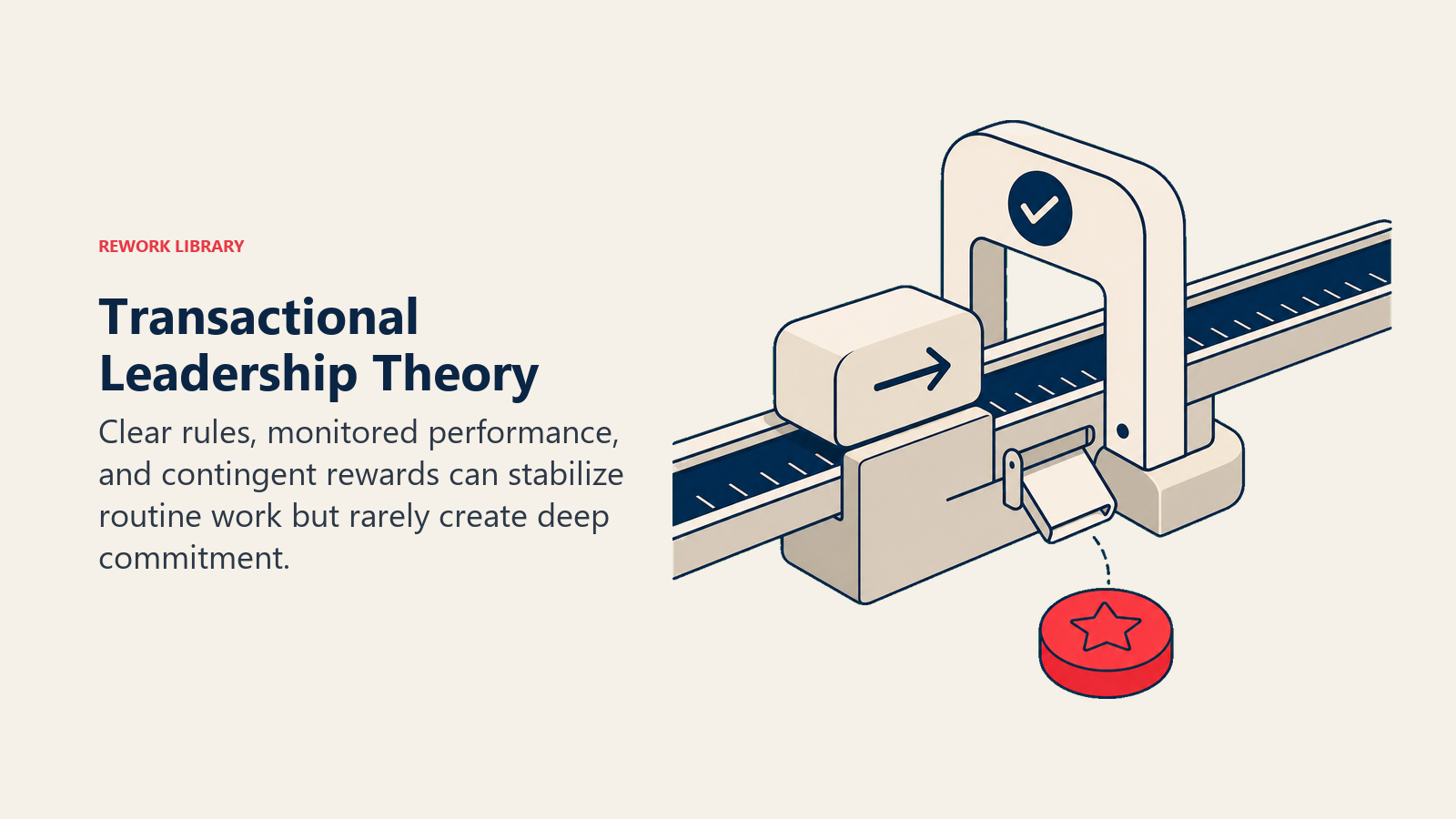
Some leaders focus on setting clear rules and giving rewards when people meet goals. This is what Transactional Theory is all about. It says that good leadership comes from clear agreements between the leader and the team: if you do the job, you get the reward.
What the Theory Says
Transactional leaders give structure. They explain what needs to be done, when it is due, and what happens if people succeed or fail. They often use rewards like bonuses, promotions, or praise to encourage good performance. On the other hand, if someone does not meet expectations, there might be penalties like warnings or lost opportunities.
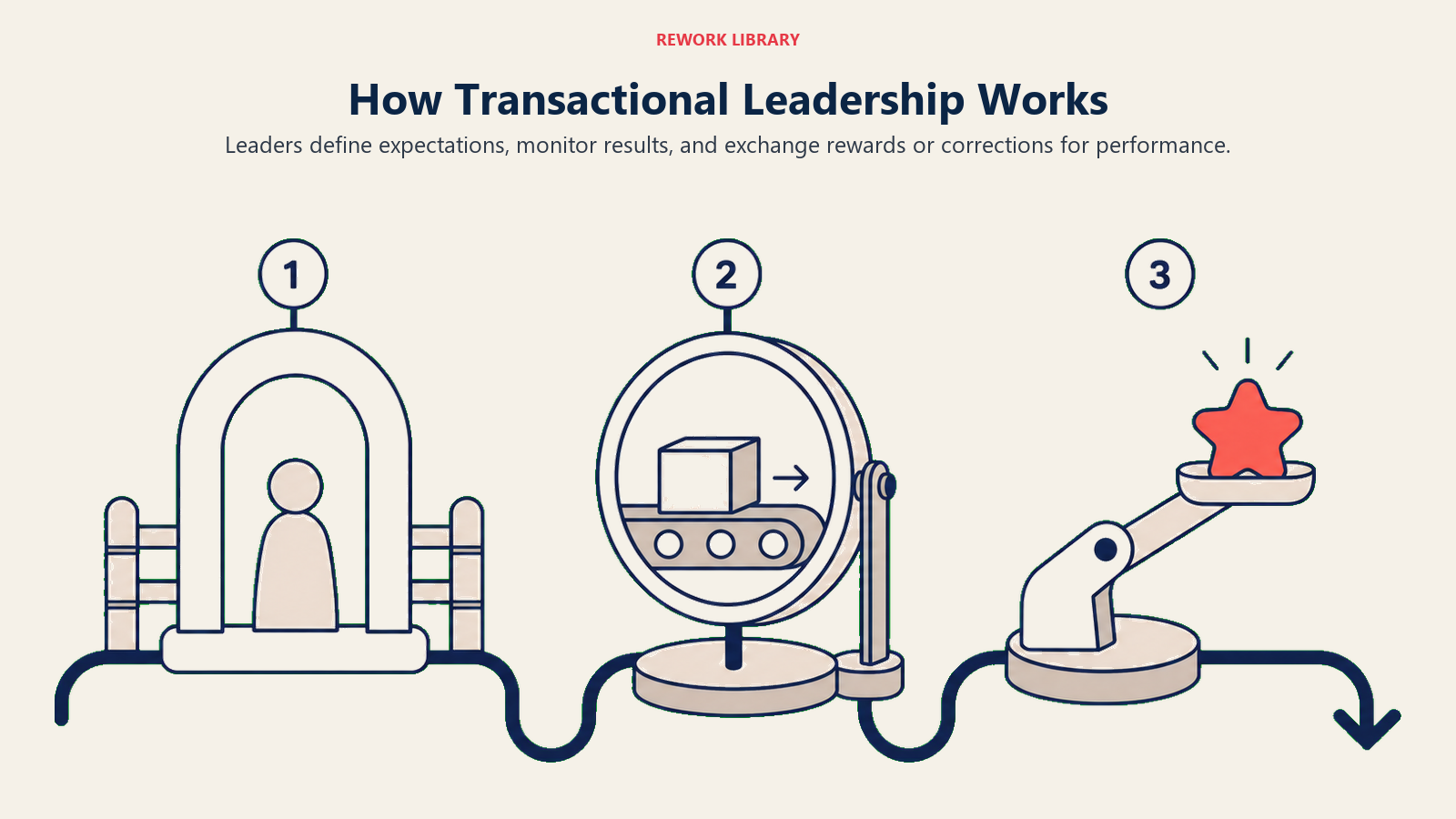
This style works well when the tasks are clear and people know what is expected of them. It is common in sales teams, factories, and other places where results can be measured. This approach represents one of several major leadership theories that explain how leaders influence their teams.
Key Parts of Transactional Leadership
- Set clear goals – Everyone knows what to aim for.
- Give rewards for success – People are motivated to do well.
- Correct problems quickly – If things go off track, the leader steps in.
- Focus on short-term tasks – It is about getting the job done today or this week.
A Real Example
Jack Welch, the former CEO of General Electric, is a good example of a transactional leader. He set high standards, rewarded top performers, and replaced people who did not deliver results. Under his leadership, GE became one of the most valuable companies in the world.
Sales teams also often use this style. For example, if a salesperson meets their monthly target, they get a bonus. If they do not, they may lose out. This clear link between performance and reward can push people to work harder.
When This Style Works
- When tasks are clear and measurable
- When quick results are needed
- In environments where following rules is very important (like safety, finance, or operations)
Transactional leadership can be very useful, especially in fast-paced or high-stakes settings. It helps teams stay focused and get results. But it should not be the only tool a leader uses. The best leaders know when to set rules and give rewards, and when to inspire, support, and lead with vision. Many leaders combine this approach with transformational leadership to get the best of both worlds. Used well, transactional leadership is a helpful part of any leader's toolkit.
The Limits of Transactional Leadership
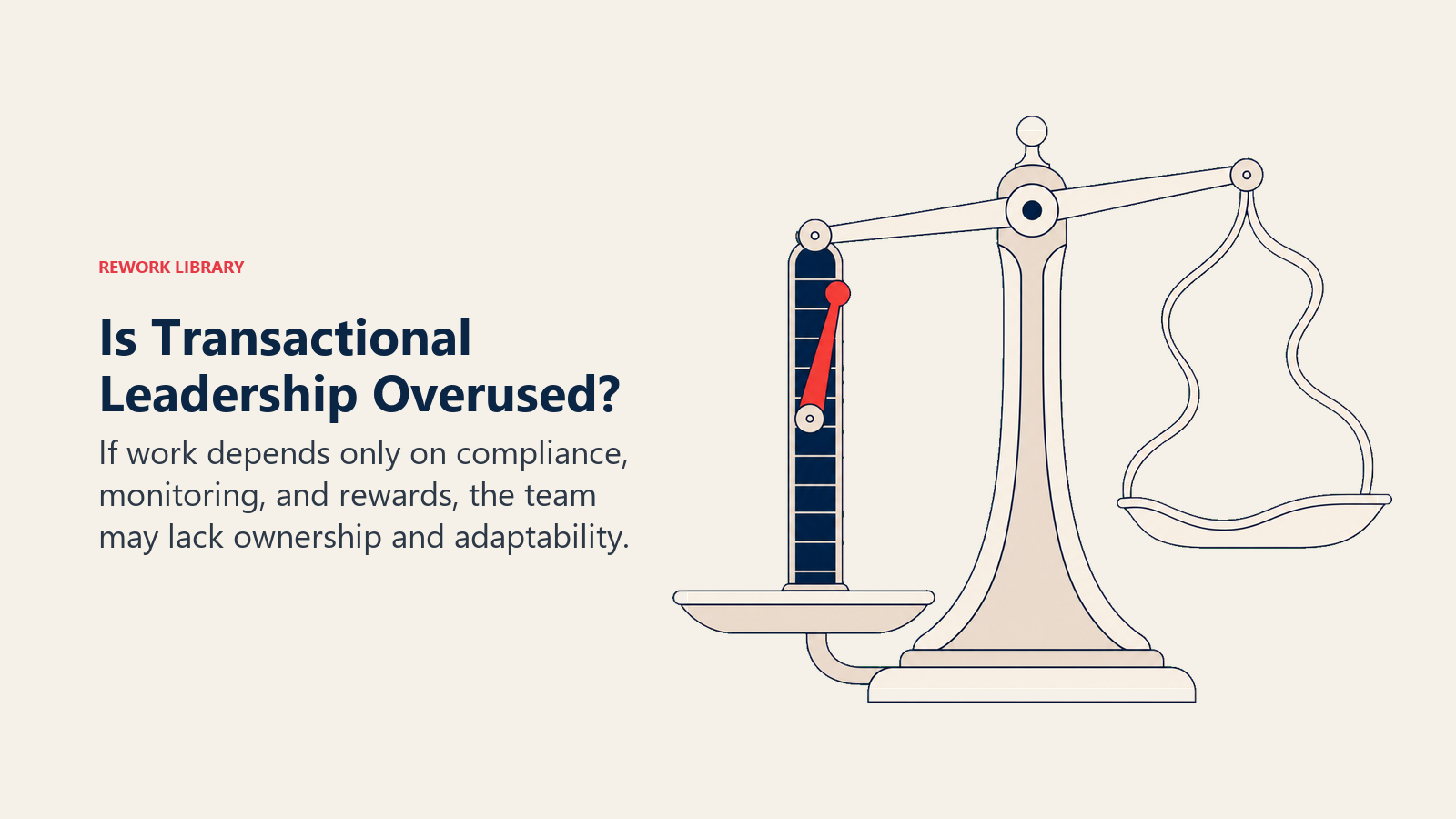
While this style can drive performance, it has some downsides. It may not work well in jobs that need creativity or teamwork (in marketing team, or product team). People might only do the minimum needed to earn their reward, rather than thinking of new ideas or helping others. In these situations, situational leadership may be more effective because it adapts to team needs.
Also, it can create stress if people feel they are only judged by numbers. And over time, rewards may not feel as exciting. If leaders only focus on rules and rewards, they may miss chances to inspire and connect with their team. Leaders who want to grow beyond this style should explore emotional leadership styles that help build deeper connections.
A Quick Self-Check
- Do I give my team clear goals?
- Do I reward people fairly when they succeed?
- Am I too focused on fixing problems instead of helping people grow?
If you answered "yes" to the first two and "no" to the last, you are likely using transactional leadership in a healthy way.
Frequently Asked Questions about Transactional Leadership Theory
What is transactional leadership theory?
Transactional leadership theory focuses on clear agreements between leaders and teams: if you do the job, you get the reward. Leaders set clear rules, explain expectations, and use rewards or penalties to encourage performance.
What are the key parts of transactional leadership?
The key parts are setting clear goals (everyone knows what to aim for), giving rewards for success (motivating good performance), correcting problems quickly (stepping in when things go wrong), and focusing on short-term tasks.
When does transactional leadership work best?
This style works best when tasks are clear and measurable, when quick results are needed, and in environments where following rules is very important, such as safety, finance, or operations.
What's the difference between transactional and transformational leadership?
Transactional leadership focuses on clear agreements, rewards, and penalties to manage performance. Transformational leadership focuses on inspiring people through vision, empathy, and helping them grow personally.
What are the limits of transactional leadership?
It may not work well in jobs requiring creativity or teamwork, people might only do the minimum needed to earn rewards, it can create stress if people feel judged only by numbers, and rewards may lose their appeal over time.
What is an example of transactional leadership?
Jack Welch at General Electric set high standards, rewarded top performers, and replaced people who didn't deliver results. Sales teams also use this style by giving bonuses for meeting targets.

Senior Operations & Growth Strategist