AI Agent Data Privacy: PII Handling, Residency, and Minimization
Turn this article into takeaways for your work.


Each assistant summarizes the article only for you and suggests best practices for your work.
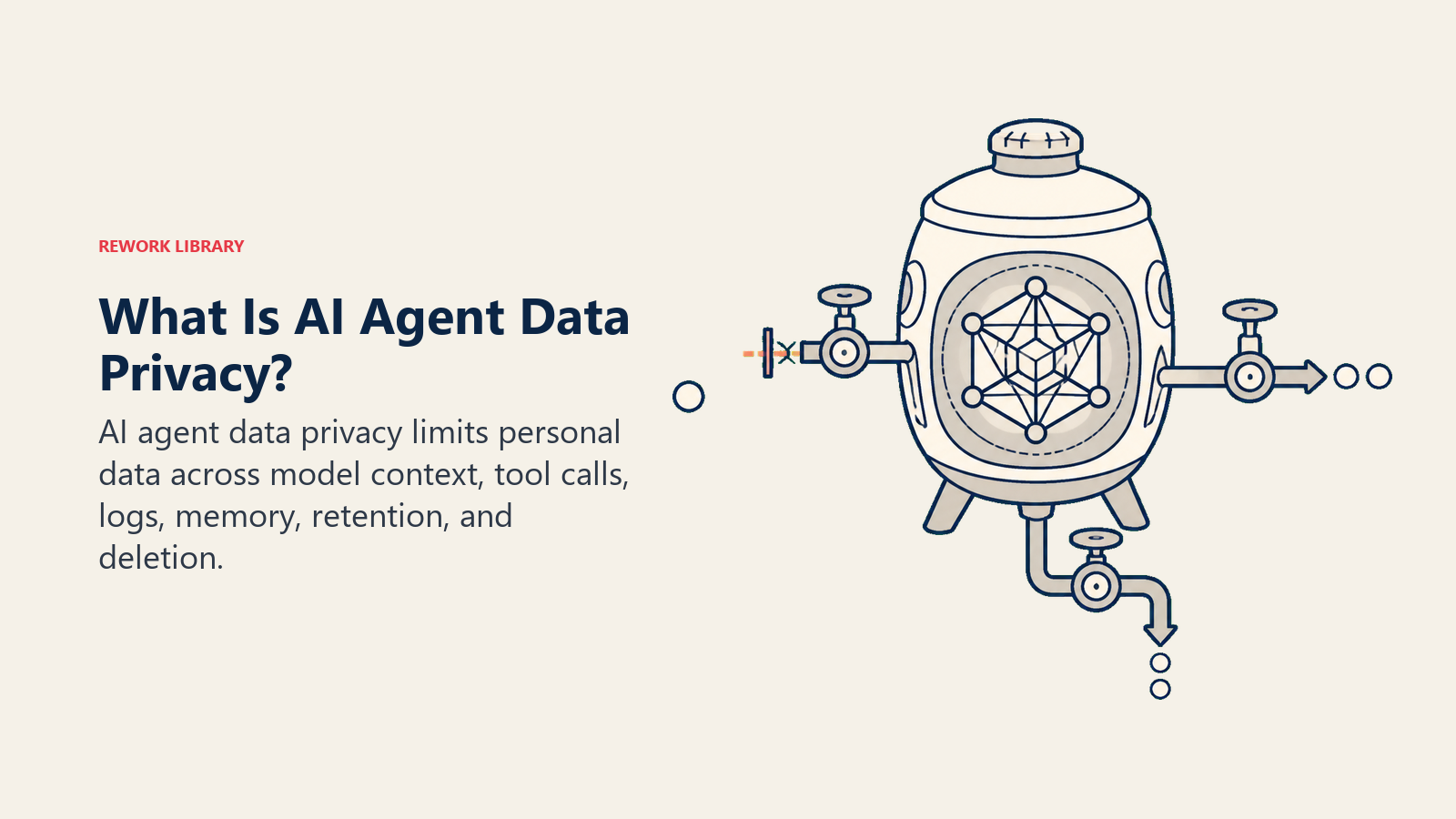
AI agent data privacy is the discipline of controlling what personal data an agent reads, sends, stores, and deletes as it moves through its own loop: which fields it pulls from a system of record, what it passes along to a model or a third-party tool, what it keeps in memory afterward, and how long any of that sticks around. It's a bigger surface than privacy for a single model call, because an agent's tool calls fan data out across multiple systems on every run, not just to one model provider. Three practices carry most of the weight: handling PII deliberately instead of by accident, minimizing what the agent touches in the first place, and knowing where data actually gets processed, not just where it's stored.
Why an Agent's Privacy Surface Is Bigger Than a Model's
A single prompt to a model has one privacy question: what did you put in it. An agent has many. How AI agents work describes the loop an agent runs, perceive, reason, act, observe, repeat, and the perceive step alone can pull data from a CRM, a support system, and a document store before the agent has made a single decision. How AI agents use tools covers the mechanism: every tool call is a data flow, sending parameters out and getting a result back, and each one is a place personal data can travel to a system that wasn't part of the original conversation at all.
Data privacy sits underneath the broader umbrella of AI governance, the policies and oversight that keep any AI system aligned with regulatory and organizational expectations. What makes it worth its own dedicated practice for agents is that fan-out: AI agent security asks whether the agent can be tricked into doing something harmful, while data privacy asks a narrower, quieter question that doesn't require anyone to be attacking anything. Even when everything works exactly as designed, whose data went where, and did it need to?
PII Handling: Know It Before You Move It
Personal data covers more than the obvious fields. Name and email are PII, but so is an IP address, a device ID, a support ticket's free-text description of a medical situation, and a performance review comment tied to an employee. An agent that reads any system with real customer or employee records is handling PII whether or not anyone labeled it that way. The AI Benefits Enrollment Agent is a clear example: helping an employee pick a health plan means touching health-adjacent data and dependent information that carries a higher bar than an average support ticket, whether or not the agent's design treats it that way by default.
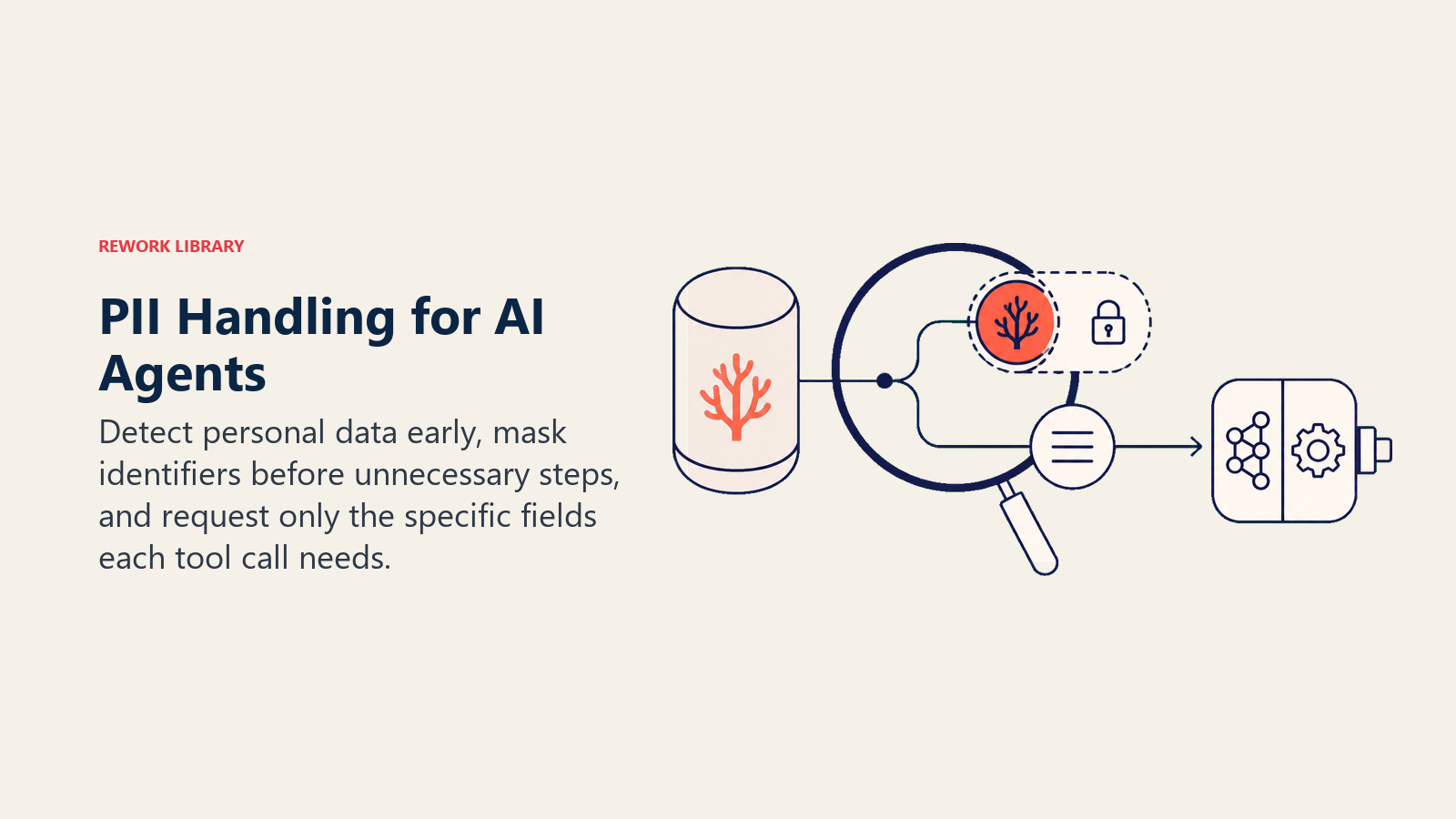
A few habits make the difference between handling that data deliberately and leaking it by accident:
- Never let raw PII sit in a debug log or a prompt that gets cached or retained upstream. Logging is often treated as a safe, internal space. It usually isn't, especially once a log gets shipped to a third-party observability tool or an outside model provider's logging retention.
- Redact or mask before data reaches a step that doesn't need the identifiable version. A step that's classifying a support ticket's topic doesn't need the customer's full name and account number in context to do it; a ticket ID is often enough.
- Scope tool calls to specific fields, not whole records. The privacy version of least-privilege tool design is asking for
customer.plan_tierinstead ofget_full_customer_recordwhen plan tier is all a step actually needs. - Treat every new tool integration as a new data flow to review, not just a new capability to celebrate. A tool that's technically capable of returning a customer's full purchase history is a privacy decision every time it's called, not just an engineering one.
Minimization: The Same Discipline as Least Privilege, Applied to Data
AI agent security makes the case for least privilege on tool access: give an agent only the permissions its actual job requires, nothing more. Data minimization is the identical principle applied to data instead of permissions: pull only the fields a step genuinely needs, not the entire record because it happened to be available in one API call.
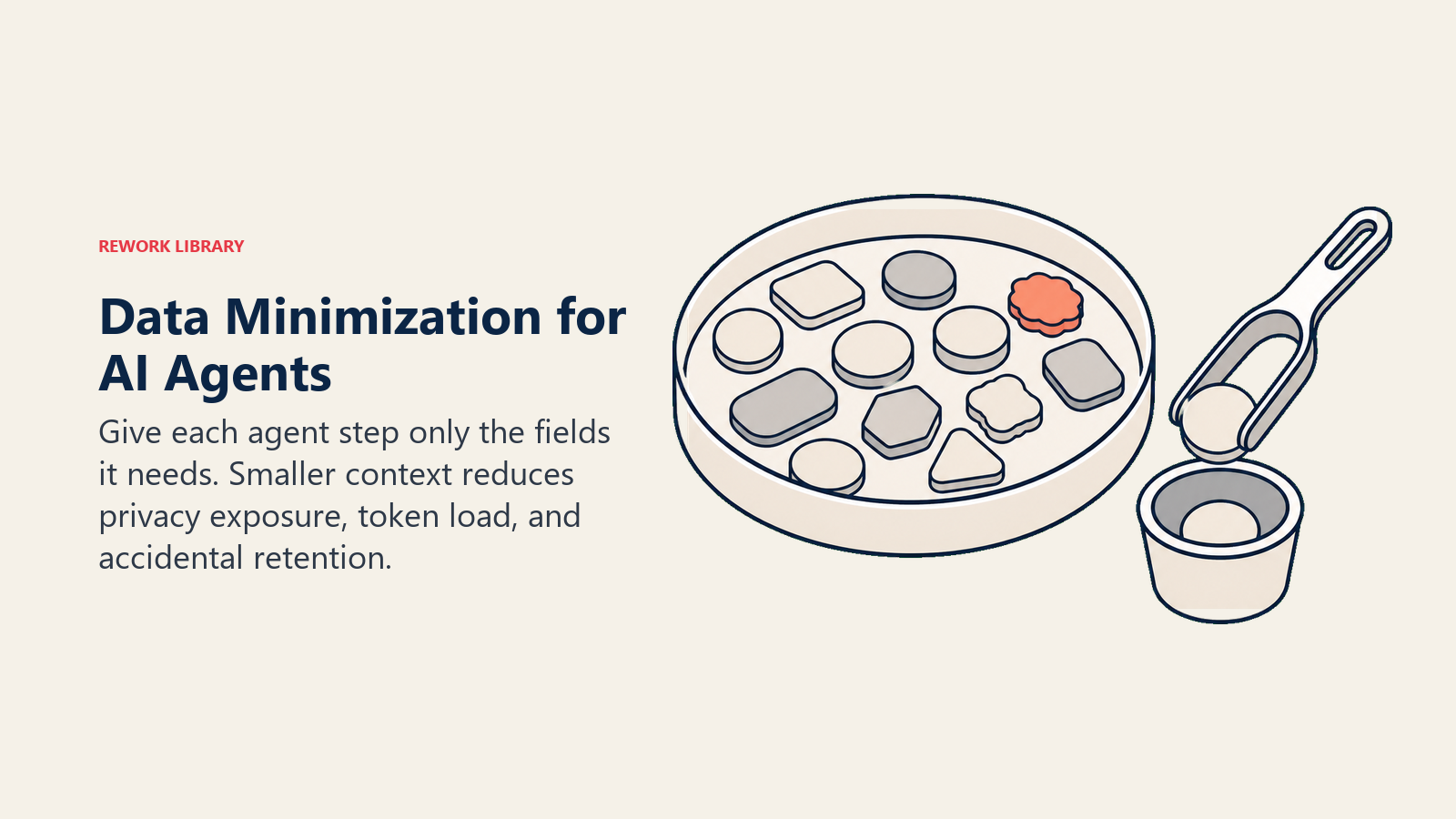
This isn't just a compliance nicety. It's also a context-management problem: every field an agent pulls into its context window that it doesn't actually need is both a privacy risk and dead weight the model has to process on every step. AI agent context management covers the budgeting side of that same instinct, keeping only what a step needs in context, applied to tokens generally rather than personal data specifically. The two disciplines point the same direction for the same underlying reason: pulling everything just in case is worse than pulling exactly what's needed, whether you're worried about token cost or about a data protection officer's next question.
Memory Is Where Privacy Debt Quietly Accumulates
AI Agent Memory covers how an agent's long-term memory persists facts and history across sessions, usually in a database or vector store the agent can query later. That's exactly where privacy debt tends to build up unnoticed. A memory store that keeps every detail an agent has ever learned about a customer, indefinitely, with no expiration and no deletion path, is a growing liability even if nothing about it looks unusual on any given day.
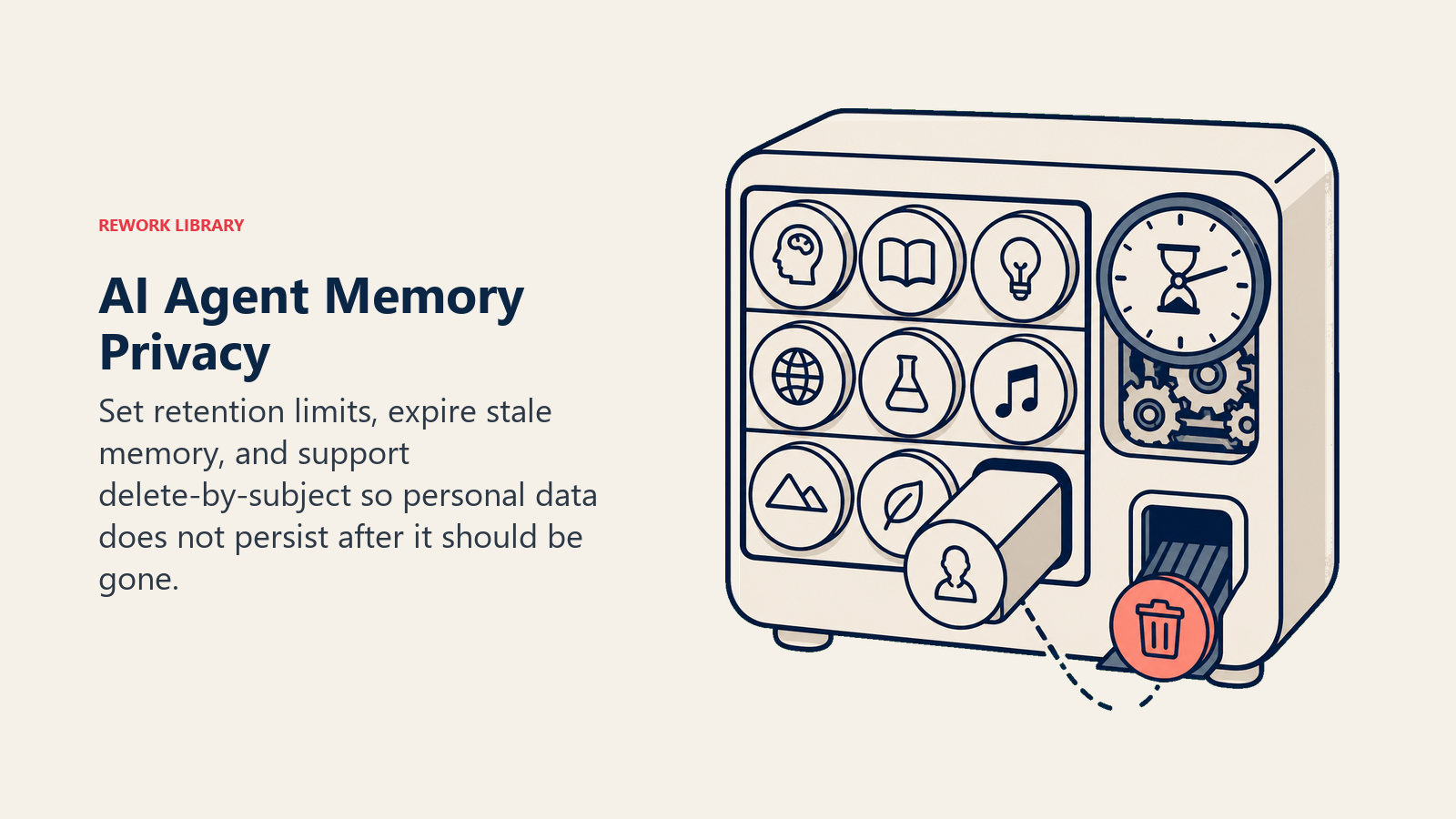
Two capabilities matter here specifically because of privacy regulation, not just good hygiene. First, a retention and expiration policy: decide what a memory store is allowed to keep and for how long, rather than defaulting to forever. Second, and often missed, a delete-by-subject capability: under GDPR-style erasure rights, a person can ask that their data be deleted, and an agent's memory store needs a real way to find and remove everything tied to that person, not just the record in your primary database while a shadow copy lingers in a vector index nobody remembers to check.
Data Residency, Briefly: Storage Isn't the Whole Question
Where a record is stored used to be most of the data residency question. An agent adds a second location that matters just as much: where the data gets processed when a tool call or a retrieval step pulls it into a model's reasoning. Regulated personal data read into a model running in a different region than where it's stored is a data flow with its own compliance profile, not an implementation detail.
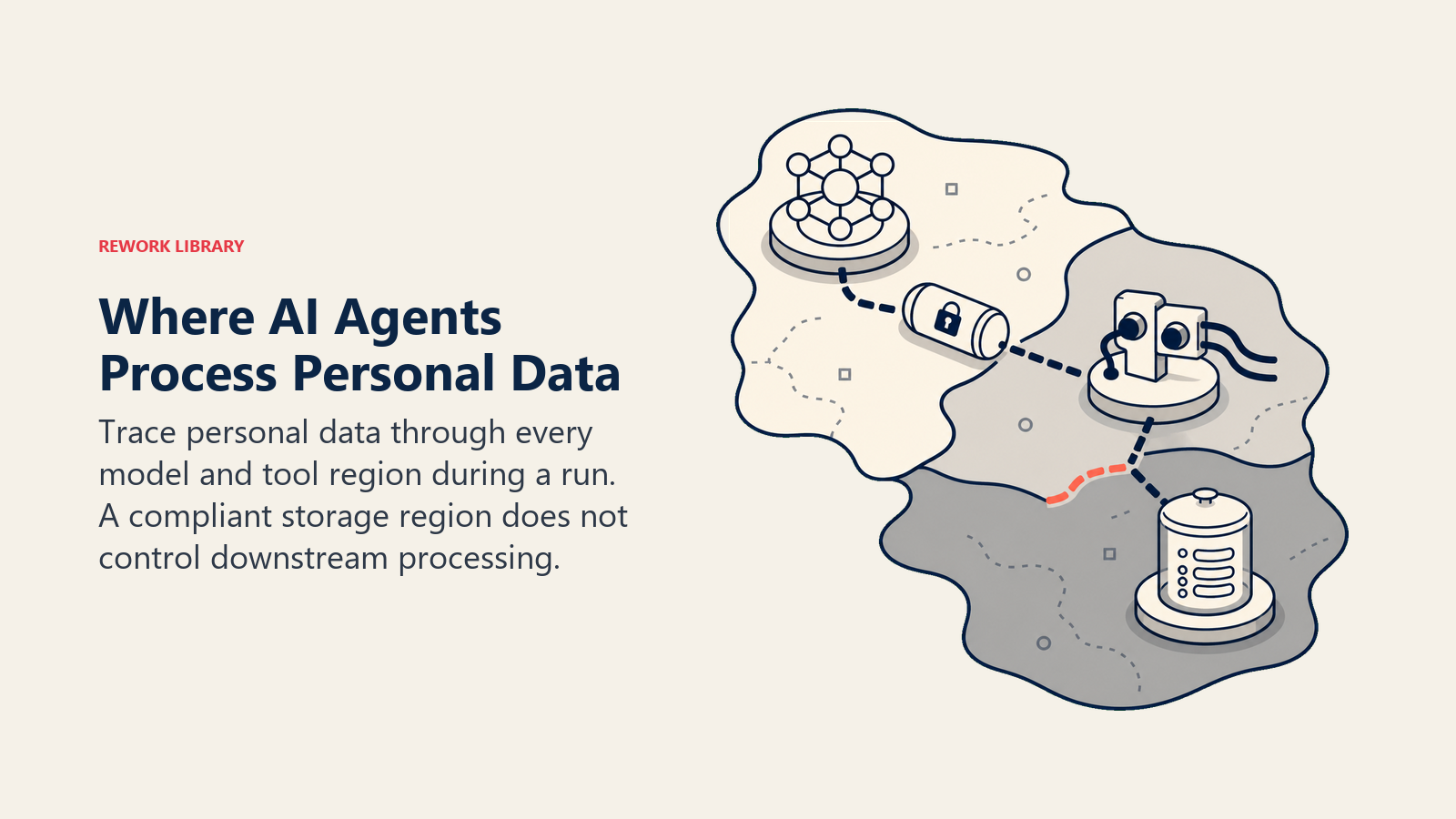
AI Agent Compliance covers this ground in real depth, including how it maps against the EU AI Act and what an audit trail needs to capture, and is the place to go for the regulatory mapping. The privacy-specific takeaway here is simpler: know, tool by tool, where each one actually processes the data it touches, not only where the underlying system stores it, and treat any agent that reasons over regulated personal data as a vendor relationship worth the same scrutiny as a new subprocessor, because that's what it is.
This isn't a hypothetical concern teams can deprioritize. Cisco's 2026 Data and Privacy Benchmark Study, surveying more than 5,200 privacy and security professionals, found that 81% of organizations face heightened demand for data localization, and 85% say it adds real cost, complexity, and risk to cross-border service delivery. The same study found that while 75% of organizations now have a dedicated AI governance body, only 12% describe it as actually mature. Most companies have started building the structure. Very few have finished it.
What Weak Data Hygiene Actually Costs
The cost of getting this wrong isn't abstract. IBM's 2026 Cost of a Data Breach Report found that just 37% of organizations encrypt sensitive data at rest and in transit, meaning most breached organizations were missing a baseline control long before an agent or a model was ever involved. The same report found that more than 20% of organizations reported a breach targeting AI models or applications directly, with compromised APIs, applications, or plug-ins tied for the leading root cause at 27%, the exact surface an agent's tool calls create. Separately, OWASP's Top 10 for LLM Applications ranks Sensitive Information Disclosure at LLM02, up from sixth place in the prior edition, a sign of how quickly this risk has moved up the list as more systems gained the ability to actually retrieve and act on personal data instead of just discussing it in the abstract.
If you're bringing in a new AI platform or agent vendor that will touch personal data, our AI tools comparisons weigh data handling as part of the evaluation, and the SaaS vendor evaluation scorecard gives you a weighted template for scoring a new tool's privacy and security posture before you connect it to anything that touches real customer or employee data.
A Practical Starting Checklist
Five questions worth answering before an agent gets access to any system holding personal data:
| Question | What it catches |
|---|---|
| What PII does this agent actually need to see to do its job? | Scopes tool access to fields, not whole records |
| Where does raw PII show up in logs, prompts, or caches? | Catches the accidental leaks nobody designed on purpose |
| How long does anything the agent remembers actually need to persist? | Forces a retention policy instead of an indefinite default |
| Can you find and delete everything tied to one person if asked? | Tests whether erasure rights are real or theoretical |
| Where does each tool call actually process the data it touches? | Surfaces cross-border processing that storage location alone hides |
Key Facts
- An agent's privacy surface is bigger than a single model call's because every tool call is its own data flow, fanning personal data out to multiple systems on a single run.
- Data minimization for agents is the same principle as least-privilege tool access, applied to data: pull only the fields a step needs, not the whole record.
- Long-term agent memory is where privacy debt accumulates quietly; it needs both a retention and expiration policy and a real delete-by-subject capability for erasure requests.
- Cisco's 2026 Data and Privacy Benchmark Study found 81% of organizations face heightened demand for data localization, and only 12% describe their AI governance structure as mature despite 75% having one in place.
- IBM's 2026 Cost of a Data Breach Report found only 37% of organizations encrypt sensitive data at rest and in transit, and compromised APIs, applications, or plug-ins were tied for the top root cause (27%) of breaches targeting AI models or applications.
Frequently Asked Questions about AI Agent Data Privacy
What is AI agent data privacy?
It's the practice of controlling what personal data an agent reads, sends to a model or tool, stores, and eventually deletes as it runs its loop. It covers handling PII deliberately, minimizing what the agent accesses, and knowing where data actually gets processed, not just where it's stored.
How is data privacy different from data security for an AI agent?
Security asks whether an agent can be manipulated into doing something harmful, like leaking data to an attacker. Privacy asks a narrower question that applies even when nothing is being attacked: whose data went where during a normal, correctly functioning run, and did it need to go there at all.
What is data minimization for an AI agent?
It's the practice of pulling only the specific fields a task needs rather than an entire record just because an API call makes the whole thing available. It's the same logic as least-privilege tool access, applied to data instead of permissions, and it reduces both privacy exposure and unnecessary context.
Can an AI agent's memory violate someone's right to be forgotten?
Yes, if the memory store has no way to find and delete everything tied to a specific person on request. Long-term memory, covered in AI Agent Memory, persists facts across sessions, and without a retention policy and a real delete-by-subject capability, it can keep data well past when a person has a right to have it removed.
Does storing data in the right region solve AI agent data residency?
Not by itself. An agent can pull data stored in a compliant region into a model or tool that processes it somewhere else entirely during a run. Data residency for an agent means checking where each tool and model actually processes what it touches, not just where the underlying records live.
Where to Go Next
Data privacy for an agent is closely tied to two other disciplines covered elsewhere in this library. AI agent security covers the threat-model side, keeping the agent from being manipulated into leaking data on purpose. AI Agent Compliance covers the regulatory mapping, audit trail, and EU AI Act side in depth. Read privacy alongside both rather than in isolation, since a genuinely well-governed agent needs all three working together.

On this page
- Why an Agent's Privacy Surface Is Bigger Than a Model's
- PII Handling: Know It Before You Move It
- Minimization: The Same Discipline as Least Privilege, Applied to Data
- Memory Is Where Privacy Debt Quietly Accumulates
- Data Residency, Briefly: Storage Isn't the Whole Question
- What Weak Data Hygiene Actually Costs
- A Practical Starting Checklist
- Key Facts
- Where to Go Next