The Agentic Workforce: How AI Agents Become Digital Coworkers
Turn this article into takeaways for your work.


Each assistant summarizes the article only for you and suggests best practices for your work.
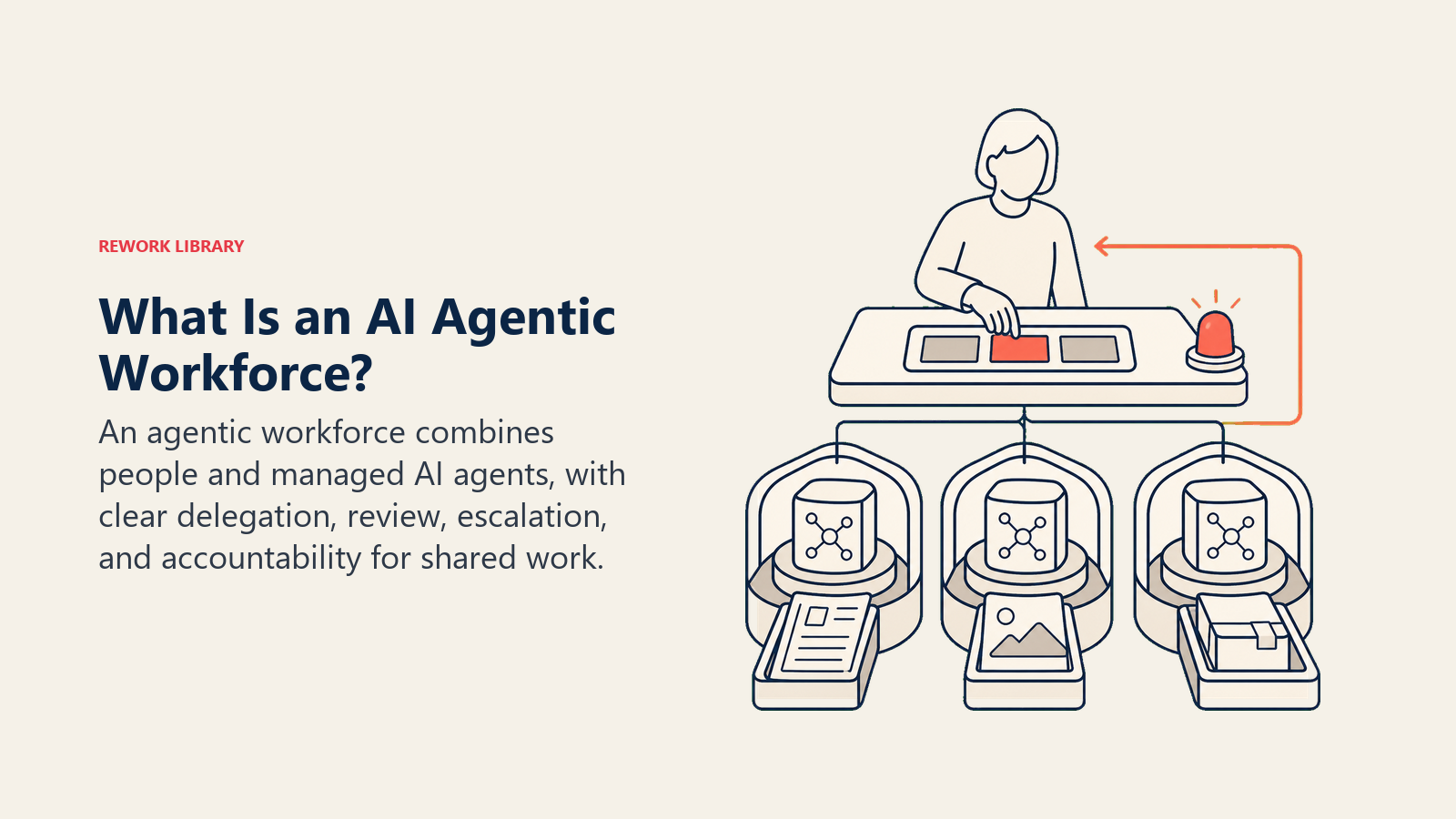
The agentic workforce is the shift from treating AI agents as software you click to treating them as digital coworkers you delegate to, review, and manage, the way you would a new hire who's very fast, works around the clock, and needs clear direction to do the job well. It's not a metaphor for a slide deck. It changes who owns what work, who reviews it, and who's accountable when it goes wrong. This page covers what that shift actually requires: a new kind of management role, real changes to how jobs get designed, and the risks that show up when a company adopts the language of "digital coworker" faster than it adopts the oversight that language implies.
From Workflow to Coworker
Agentic workflows describes the mechanics: AI that completes a multi-step business process end to end instead of just answering a question about it. The agentic workforce is what happens next, once an organization has enough of those workflows running that it stops managing them one at a time and starts managing them the way it manages a team.
Microsoft's 2025 Work Trend Index put a name on the person doing that managing: the "agent boss," someone who builds, delegates to, and oversees one or more agents much like a manager runs a small team. In its survey, 82% of leaders said they were confident about using agents to expand their team's capacity within the next 12 to 18 months, and 46% said their company already uses agents to fully automate at least one workflow end to end. Agentic AI in 2026 covers the full adoption trend line behind that shift. This page goes deeper on what it actually changes about how you organize and manage the work itself.
The New Role: Someone Has to Manage the Agents
Call it an agent boss, an agent manager, or just "part of the job now," the function is the same: someone defines what the agent owns, reviews what it produces, handles the exceptions it can't resolve on its own, and decides when it's earned more autonomy. Harvard Business Review's coverage of this emerging role, drawing on examples like Salesforce's internal use of its own Agentforce platform, describes agent managers who spend their day the way a data analyst would, living in dashboards, scorecards, and observability tooling that tracks how their agents are actually performing, not just whether they're running.
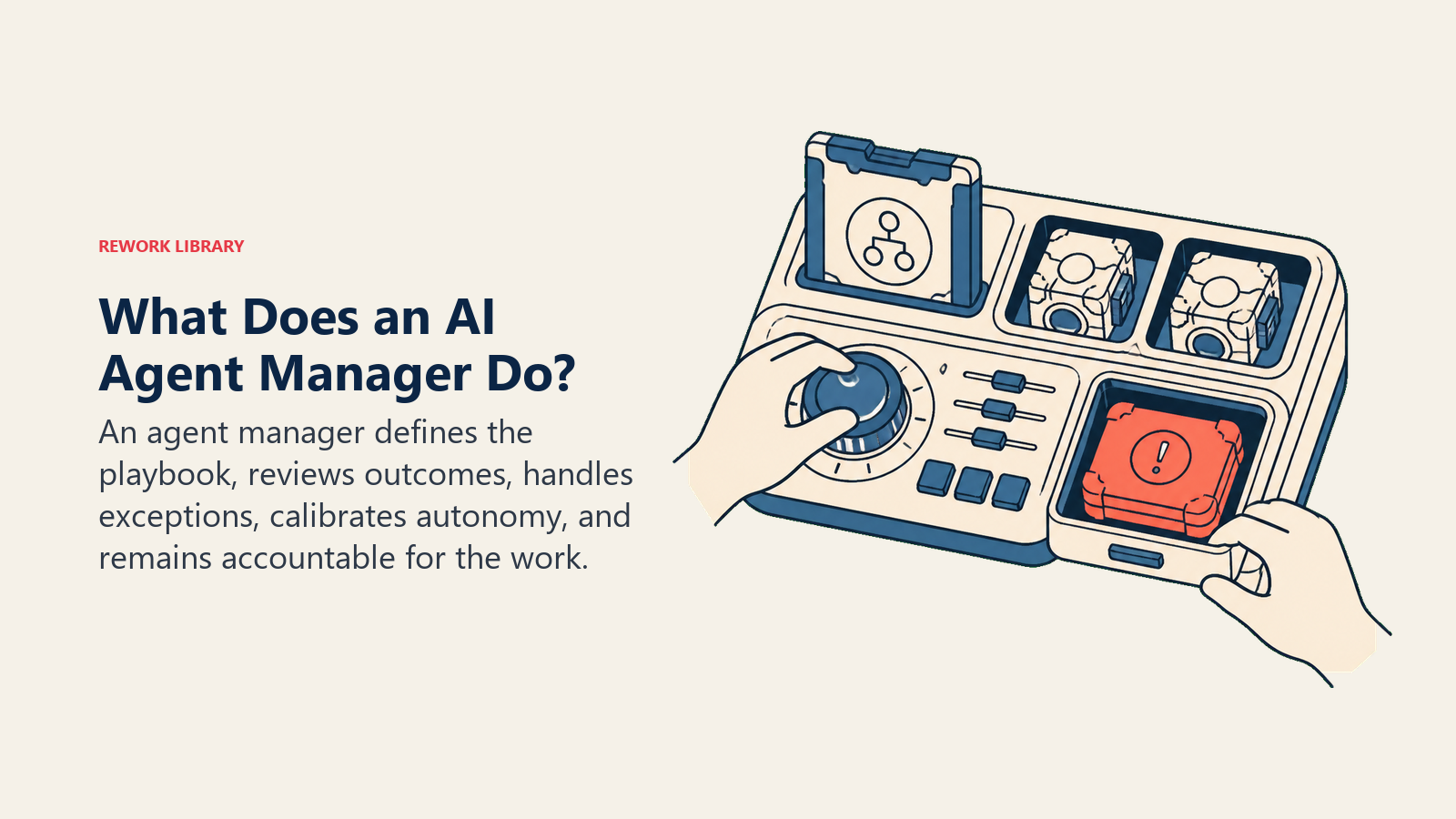
What makes this a genuinely new skill, not just a rebrand of "using a tool," is that it borrows directly from people management. Human-in-the-loop for AI agents covers the mechanics of where to place approval gates in an agent's loop. The agent manager is the person who owns that design: writing the playbook the agent follows, calibrating how much it can do unsupervised, and stepping in when a handoff note says the agent got stuck. It's less like flipping a switch and more like onboarding and coaching a new report, except the report can be reconfigured in an afternoon and never has an off day.
The scale of this shift is already visible in deployment numbers, not just survey sentiment. PagerDuty's 2025 Agentic AI Survey found 51% of companies have already deployed AI agents, another 35% plan to within two years, and 86% expect to be operational with agents by 2027. The same survey found leaders expect nearly 40% of work to be automated or expedited with the help of AI agents, which is exactly the volume of delegated work that needs someone playing the agent manager role, formally or not.
Redesigning Jobs, Not Just Automating Tasks
The easy mistake is pointing an agent at the exact process a human used to run and calling that transformation. Deloitte's research on what it calls the "silicon-based workforce" makes the sharper point: the organizations getting real value aren't automating their existing process, they're redesigning the work around what an agent and a person are each actually good at. Deloitte's 2026 State of AI in the Enterprise survey found only 11% of organizations are running agentic AI in production today, but 74% expect to be using agents at least moderately by 2027, 23% extensively, and 5% expect agents to be a core, embedded part of how the business runs. The gap between those numbers is the redesign work most companies haven't started yet.
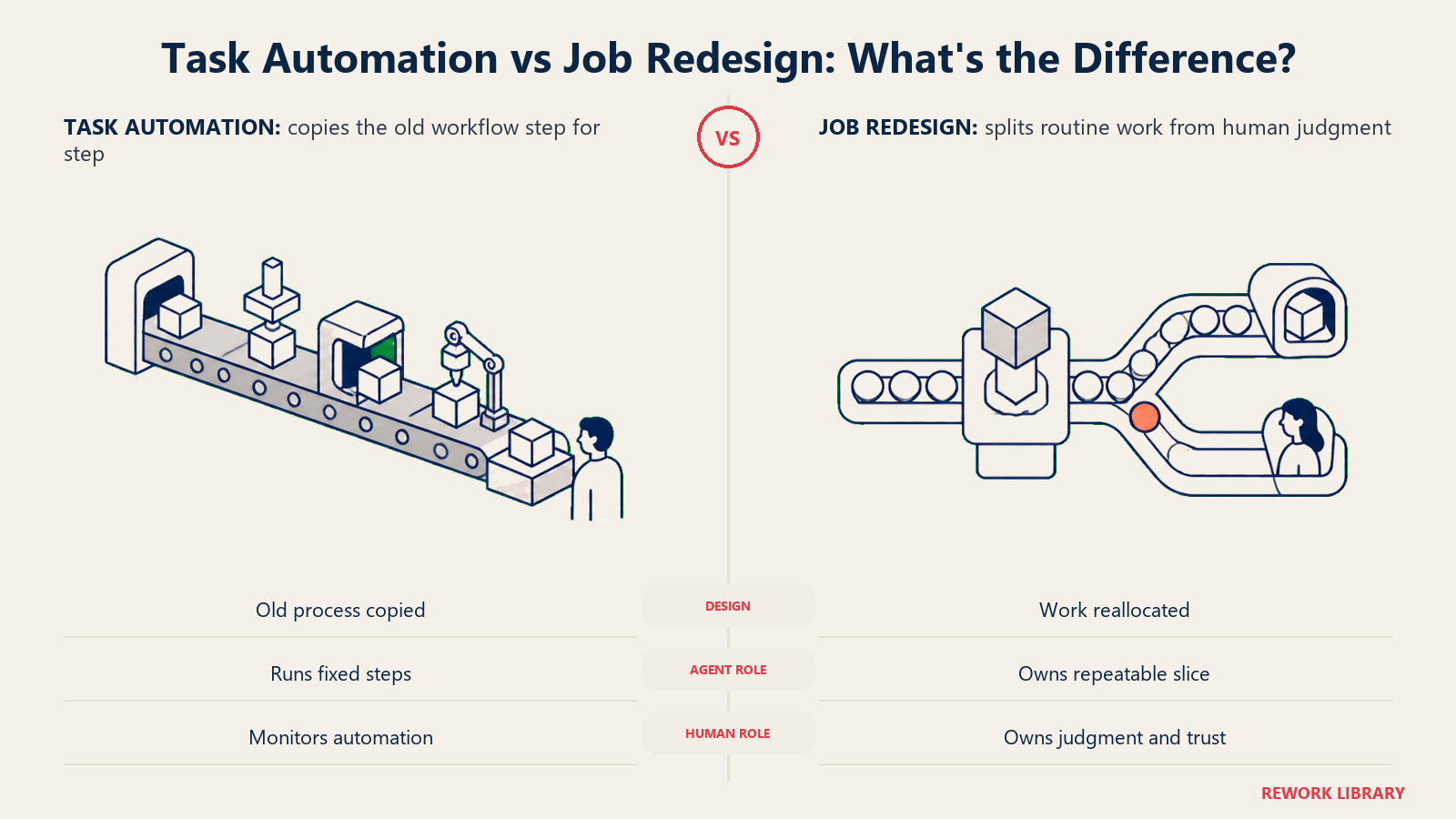
When to use an AI agent lays out which slice of a job is a good fit for an agent: repeatable, rule-bound, cheap to get wrong occasionally. Job redesign is what happens when you take that slice seriously at the role level, not just the task level. A support rep's job doesn't disappear when something like the AI Support Triage Agent handles first-line classification and routing. It changes shape: less time on repetitive lookups, more time on the judgment calls and relationship moments an agent should never have owned in the first place.
What Changes About Team Structure
Once a few of these redesigned roles exist side by side, team structure itself starts to shift. A manager who used to oversee eight people managing zero agents each might now oversee six people who each also manage two or three narrow agents, which changes what "span of control" even means: fewer direct reports doing more, plus an unfamiliar layer of software reports that don't take vacation but do need calibration.
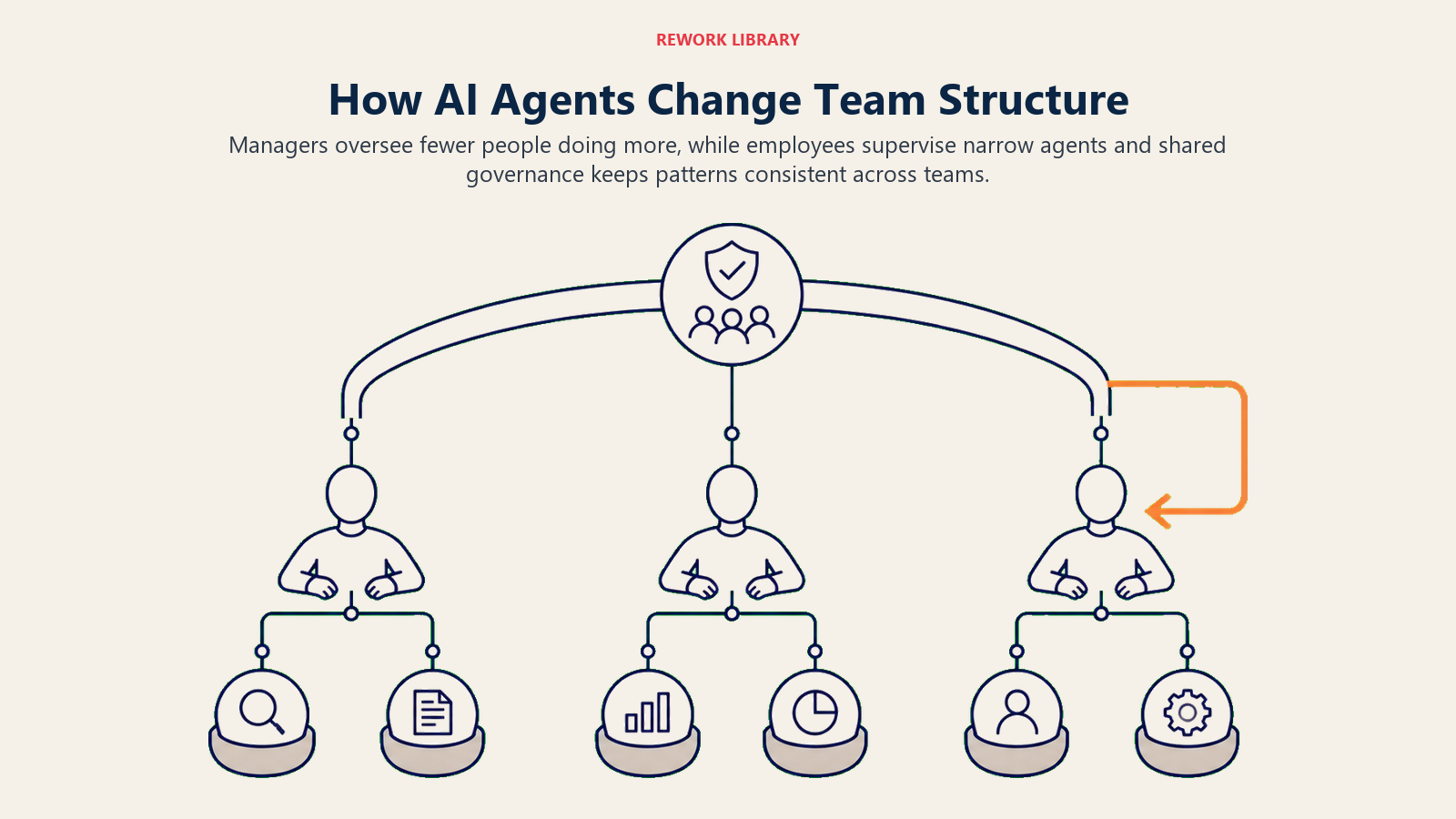
Building that capability deliberately, not accidentally, pulls in two disciplines already named for the broader AI shift. AI talent strategy covers the build-train-buy decision for the skills an agentic workforce actually needs, and agent management is turning out to be one of the more scalable ones, since it leans more on judgment and delegation than deep technical skill. AI change management covers the harder part: the adoption curve, the resistance patterns, job security fears chief among them, and the training programs that turn "an agent took my task" into "I own more now, and an agent handles the part I never liked." Neither discipline is optional once agents move from a pilot to a real part of headcount planning. And as the number of agent-managing roles grows past a handful of early champions, an AI Center of Excellence is usually what keeps the pattern consistent across teams instead of every manager inventing their own version of the agent boss role from scratch.
The Risks of Treating Agents Like Coworkers
The coworker framing is useful for building the right instincts around delegation and review. It's also where a few real risks hide if you take it too literally.
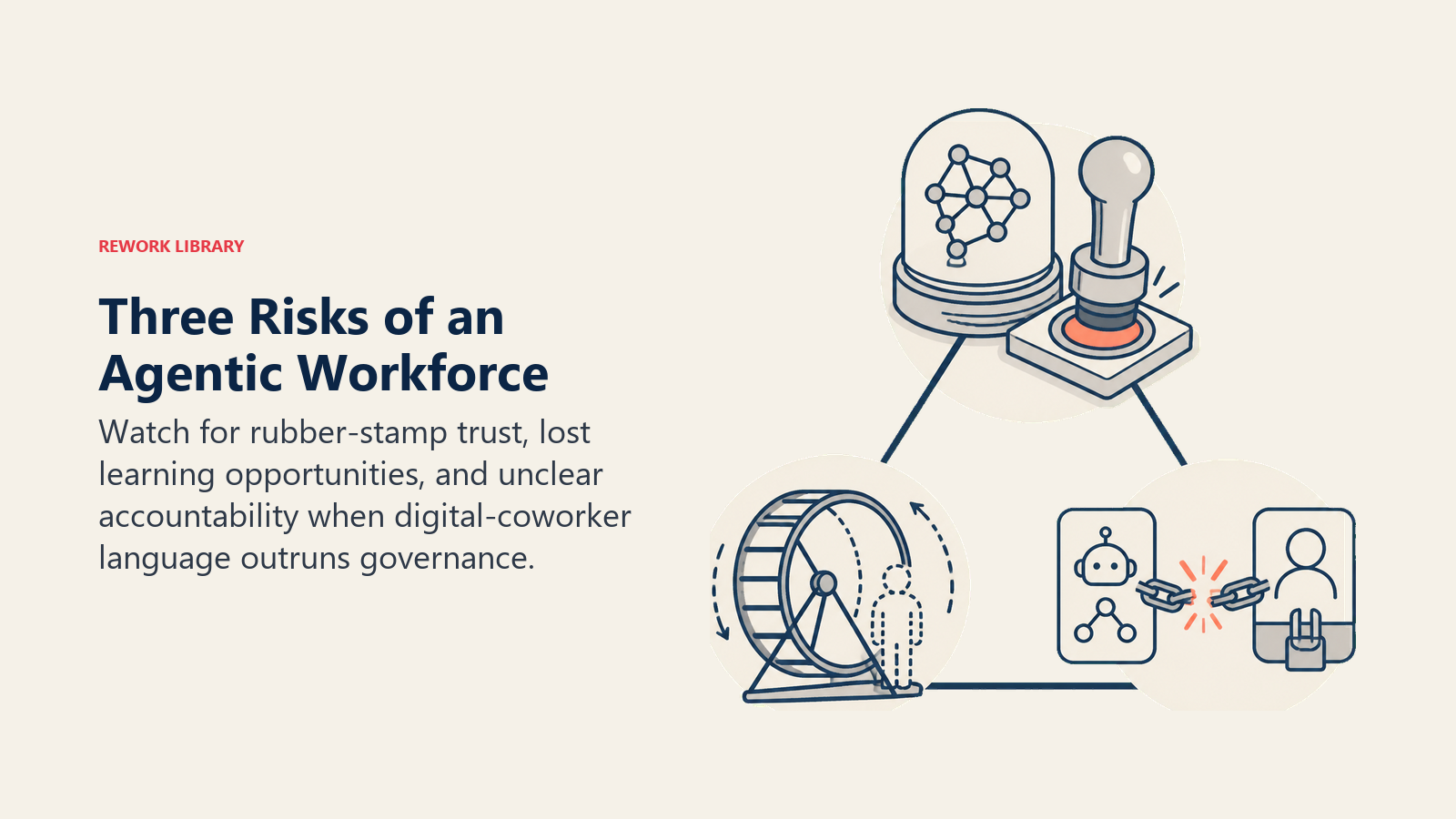
Overtrust. Human-in-the-loop design names the failure mode directly: route enough low-stakes decisions through a human reviewer and they learn to rubber-stamp, which quietly defeats the point of keeping a human there at all. Treating an agent as a trusted teammate makes this worse, not better, because trust is exactly the thing that erodes vigilance.
Skill atrophy. If an agent owns every first-pass draft, every routine lookup, and every repetitive judgment call a junior employee used to learn from, that employee gets fewer reps at the work that used to build their expertise. This is a real, still-unresolved question in how organizations are redesigning entry-level roles around agents, not a settled one, and it deserves the same deliberate design attention as the agent's own guardrails.
A blurry accountability line. When an agent drafts a customer email, updates a financial record, or screens a resume, who's actually accountable if it's wrong: the agent manager who set it up, the vendor whose model it runs on, or the department that owns the outcome? "The agent did it" doesn't satisfy a customer, a regulator, or a board. The org chart needs a real answer to this before the informal "coworker" language gets ahead of it, and that answer is closer to a governance decision than a technical one.
Building Toward an Agentic Workforce Deliberately
None of this happens well by accident, and most of it only becomes real once an organization is past its first pilot. The AI agent maturity model covers the stages in more depth, but the short version here: the agentic workforce, in any meaningful sense, is what the run stage looks like from the inside. Crawl and walk are about proving individual agents work and getting the governance basics in place. Run is where enough of that groundwork exists that "who manages the agents" becomes a real organizational design question instead of a hypothetical one.
Start smaller than the framing suggests. Pick one team, name one person as the agent manager for one agent, and measure what actually happens to their time, not just what the agent produces. AI agent ROI covers why measuring outcome instead of activity matters so much here: capacity an agent frees up is only valuable if someone deliberately redirects it toward higher-value work, the same reinvestment gap Gartner has found sales teams struggling to close even when the time savings from AI are real and measured.
Key Facts
- Microsoft's 2025 Work Trend Index found 82% of leaders confident about expanding team capacity with agents within 12 to 18 months, and 46% already fully automate at least one workflow end to end with agents, the survey that coined the term "agent boss."
- PagerDuty's 2025 survey found 51% of companies have already deployed AI agents, 35% plan to within two years, and 86% expect to be operational by 2027, with leaders expecting nearly 40% of work automated or expedited by agents.
- Deloitte's 2026 State of AI in the Enterprise survey found only 11% of organizations run agentic AI in production today, but 74% expect at least moderate use by 2027, 23% extensive use, and 5% expect agents fully embedded as a core part of operations.
- The real risk in an agentic workforce isn't agents doing the work. It's the accountability, oversight, and skill-development gaps that open up when "digital coworker" language outpaces actual governance.
- The agentic workforce is what the run stage of AI agent maturity looks like from the inside: agents planned around as a capacity layer, not managed one pilot at a time.
Where to Go Next
Building an agentic workforce well starts with getting a handful of individual agents right first. The AI agent maturity model shows how crawl and walk lead into this stage, and AI agent ROI covers how to measure whether the capacity agents free up is actually being put to good use. If you're building the talent and change management plan behind this shift, the HR software roundup and how to choose HR software guide are useful next stops for the systems side of planning around a workforce that now includes agents.
