Just-in-Time (JIT): Inventori Lean Dijelaskan
Turn this article into takeaways for your work.


Each assistant summarizes the article only for you and suggests best practices for your work.
Kebanyakan sistem pengeluaran dibina berdasarkan satu soalan: "Berapa banyak yang perlu kita hasilkan?" Just-in-time (JIT) mengubah keseluruhan kerangka soalan itu. Soalannya menjadi "Apa yang pelanggan perlukan sekarang?", dan jawapan itulah yang menggerakkan setiap keputusan di hulu.
Apakah itu just-in-time (JIT)?
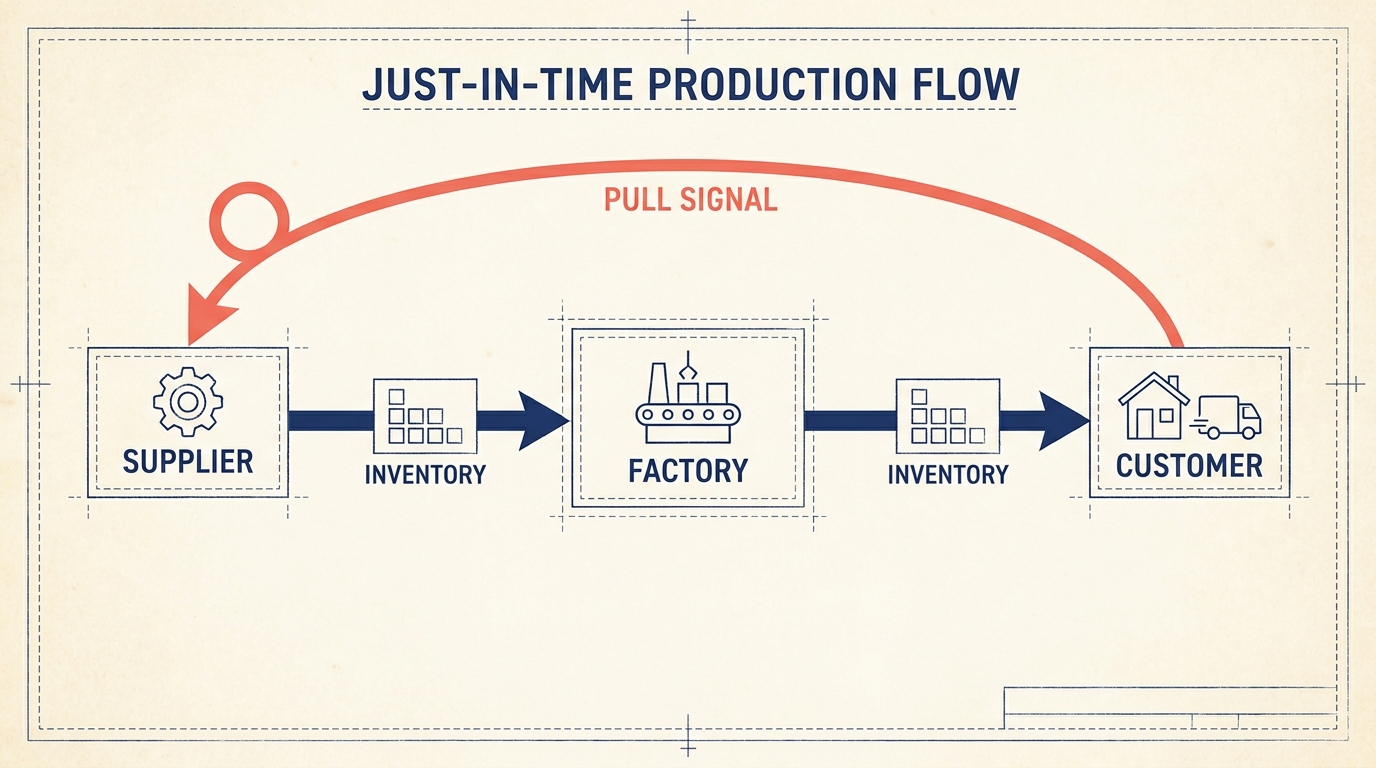
Just-in-time (JIT) ialah strategi pengeluaran dan inventori di mana bahan, komponen, dan barang siap dihasilkan atau dihantar hanya apabila benar-benar diperlukan, tidak lebih awal, dan dalam kuantiti yang tepat. Matlamatnya ialah menghapuskan inventori berlebihan, mengurangkan pembaziran, dan mengekalkan wang tunai yang terikat dalam stok sehampir mungkin kepada sifar.
JIT ialah elemen teras Sistem Pengeluaran Toyota (TPS), yang dibangunkan semasa pembinaan semula Toyota selepas perang di Jepun. Taiichi Ohno, yang mengetuai sebahagian besar pembangunan TPS, mendapat inspirasi sebahagiannya daripada cara kedai runcit Amerika mengisi semula rak: rak diisi semula hanya apabila pelanggan mengambil barang, bukan sebelum itu. Logik itu, iaitu tarik, bukan tolak, menjadi tulang belakang operasi just-in-time.
Dalam sistem tolak, pengeluaran dijadualkan berdasarkan ramalan. Anda menghasilkan barang lebih awal daripada permintaan dan berharap pelanggan akan membelinya. Dalam sistem tarik, pengeluaran dicetuskan oleh permintaan sebenar. Pesanan pelanggan (atau isyarat penggunaan di hiliran) memberi kebenaran kepada langkah di hulu untuk menghasilkan. Tiada apa yang bergerak tanpa isyarat.
Fakta utama: just-in-time
- Pendekatan pembuatan berasaskan JIT Toyota membantu syarikat mengurangkan inventori barang siap daripada bekalan berbulan-bulan kepada beberapa jam sahaja di kilang utama, menyumbang kepada kedudukan Toyota sebagai pengeluar kereta terbesar di dunia mengikut jumlah (Laporan Tahunan Toyota; data OICA, 2008-sekarang).
- Penanda aras LNS Research dan IndustryWeek tahun 2023 mendapati pengeluar dengan program JIT/Lean yang matang melaporkan pengurangan 20-40% dalam masa pendahuluan proses dalam tempoh 18 bulan penggunaan berterusan.
- McKinsey Global Institute menganggarkan pengeluar yang menyimpan inventori berlebihan mengikat 20-30% lebih banyak modal kerja berbanding rakan sebaya yang beroperasi secara lean (McKinsey Global Institute, 2022), menekankan kos kewangan langsung daripada penampan just-in-case.
JIT lawan just-in-case (JIC)
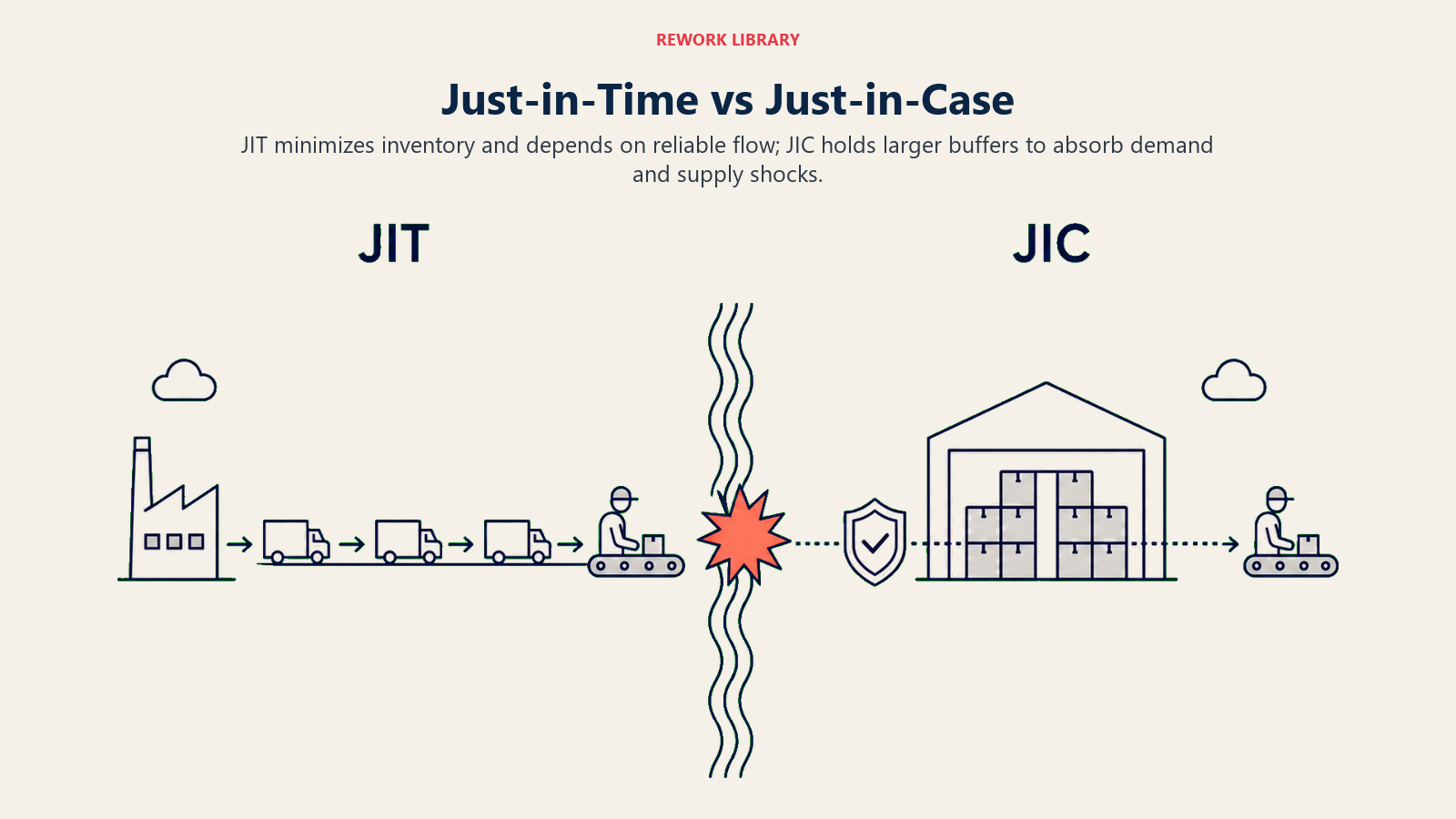
Alternatif kepada JIT sering dipanggil just-in-case (JIC), iaitu menyimpan stok keselamatan dan inventori penampan bagi kemungkinan lonjakan permintaan atau gangguan bekalan. Tiada satu pendekatan pun yang betul secara universal. Berikut cara kedua-duanya dibandingkan pada dimensi yang paling penting.
| Dimensi | Just-in-time (JIT) | Just-in-case (JIC) |
|---|---|---|
| Tahap inventori | Minimum, selalunya kerja dalam proses (WIP) hampir sifar | Penampan tinggi pada setiap peringkat |
| Modal kerja terikat | Rendah | Tinggi |
| Risiko rantaian bekalan | Tinggi, sebarang gangguan menghentikan aliran | Rendah, penampan menyerap kejutan |
| Responsif terhadap lonjakan permintaan | Rendah, rentak pengeluaran tetap mengikut takt | Tinggi, boleh ambil daripada stok sedia ada |
| Struktur kos | Penyimpanan lebih rendah, pembaziran lebih rendah, margin lebih ketat | Penyimpanan lebih tinggi, risiko hapus kira lebih tinggi |
| Pendedahan pembaziran | Secara aktif menghapuskan pembaziran inventori | Menoleransi dan menyembunyikan pembaziran |
| Paling sesuai untuk | Permintaan stabil, pembekal dipercayai, masa pendahuluan singkat | Permintaan tidak menentu, masa pendahuluan pembekal panjang, alat ganti kritikal |
Jawapan jujurnya ialah kebanyakan rantaian bekalan moden menggunakan gabungan kedua-duanya. Logik JIT terpakai untuk SKU bervolum tinggi dan boleh diramal. Logik JIC terpakai untuk komponen kritikal dengan bekalan tidak dipercayai atau untuk pasaran di mana permintaan boleh melonjak secara tidak dijangka. Menetapkan nisbah yang betul antara kedua-duanya adalah salah satu kemahiran sebenar dalam reka bentuk rantaian bekalan.
Faedah just-in-time
Kos penyimpanan inventori yang lebih rendah. Ruang storan, insurans, risiko lapuk, dan modal yang terikat dalam barang belum terjual semuanya memakan kos. JIT mengurangkan kos tersebut dengan mengekalkan inventori pada tahap minimum yang boleh dijalankan. Bagi pengeluar dengan margin nipis, ini boleh menjadi kelebihan daya saing yang ketara.
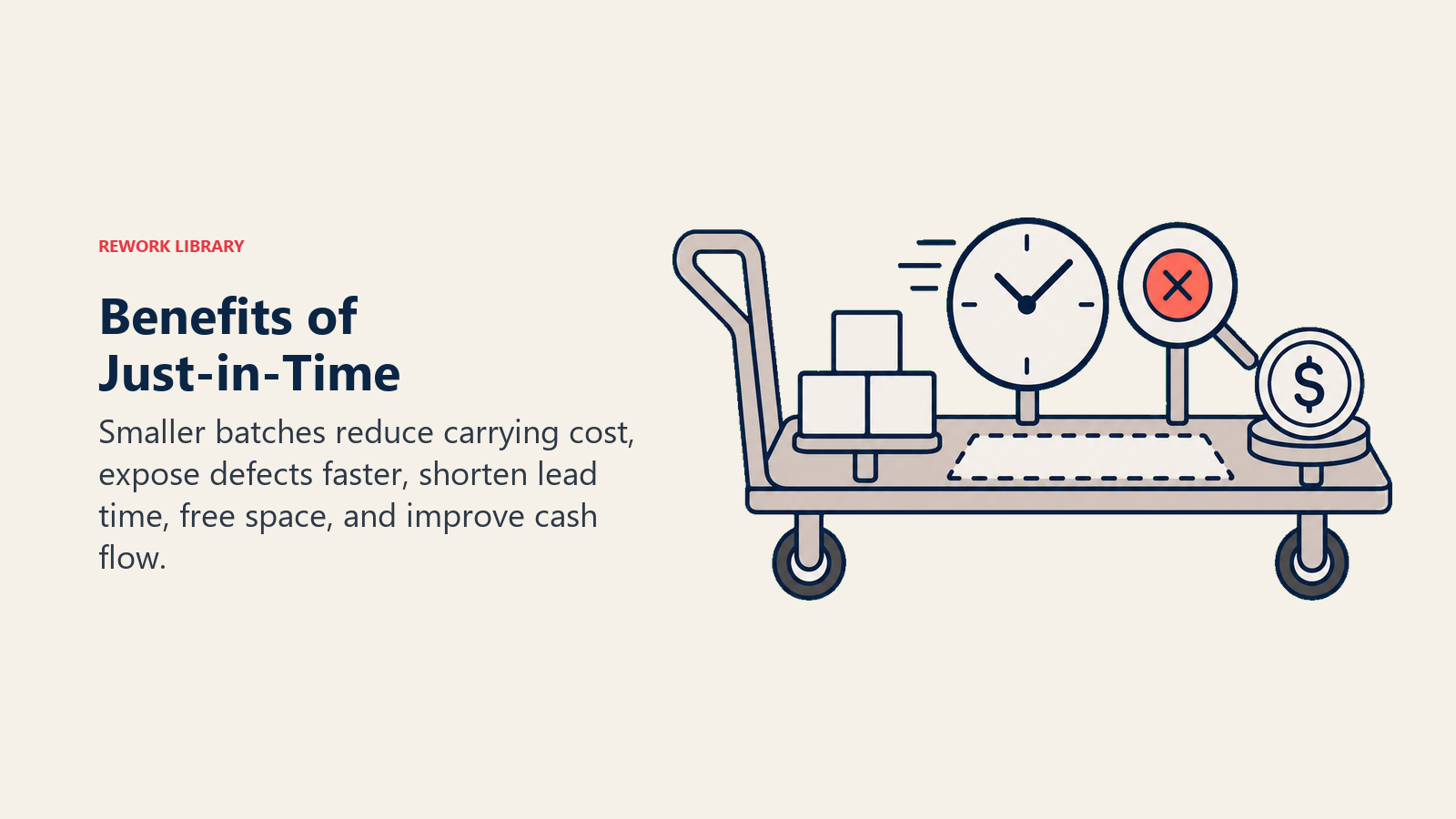
Pengesanan kecacatan yang lebih pantas. Apabila anda menghasilkan dalam kelompok kecil berdasarkan permintaan sebenar, kecacatan akan muncul dengan cepat dan tidak dapat disembunyikan dalam timbunan barang siap. Kelompok 50 unit dengan kecacatan akan dikesan dan dibetulkan sebelum 5,000 unit lagi dihasilkan. Ini berkait langsung dengan prinsip metodologi lean iaitu membina kualiti di sumbernya berbanding memeriksanya kemudian.
Pengurangan muda, mura, dan muri. JIT menangani secara langsung pengeluaran berlebihan (muda), turun naik permintaan yang mencipta aliran tidak sekata (mura), dan pembebanan berlebihan ke atas manusia dan mesin yang berpunca daripadanya (muri). Dengan menyelaraskan kadar pengeluaran mengikut masa takt, iaitu rentak permintaan pelanggan, JIT mengekalkan beban kerja yang sekata dan boleh diramal.
Peningkatan aliran tunai. Inventori ialah wang tunai yang tersimpan di atas rak. Setiap hari sesuatu unit siap berada dalam gudang ialah hari syarikat belum mengutip hasil. JIT menukar modal beku itu kepada wang tunai yang lebih pantas digunakan.
Hubungan pembekal yang lebih kukuh. JIT hanya berfungsi jika pembekal boleh dipercayai. Usaha yang diperlukan untuk membina hubungan itu biasanya menghasilkan perkongsian yang lebih rapat, komunikasi lebih baik, dan masa tindak balas lebih pantas, faedah yang melangkaui pengurusan inventori semata-mata.
Batasan dan risiko JIT
Kecekapan JIT adalah nyata. Begitu juga dengan kerapuhannya.
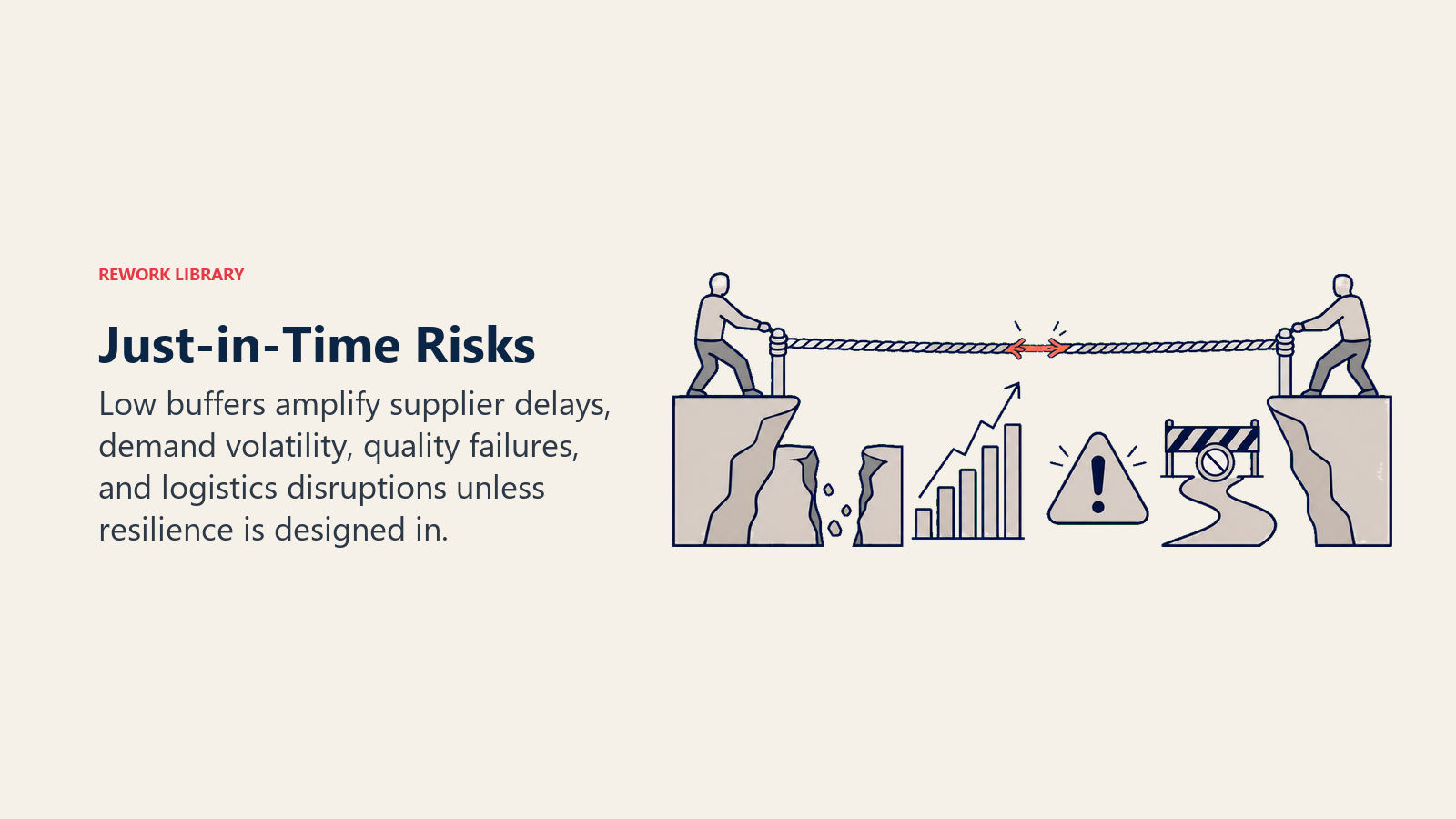
Gangguan rantaian bekalan. Sistem just-in-time beroperasi dengan hampir tiada ruang lapang. Apabila pembekal terlepas tempoh penghantaran, sama ada disebabkan bencana alam, mogok, kesesakan pelabuhan, atau kejutan geopolitik, barisan pengeluaran boleh terhenti dalam masa beberapa jam. Pengeluar automotif mengalami ini dengan jelas semasa kekurangan semikonduktor global dan gangguan logistik berkaitan pandemik pada 2020-2022. Barisan yang telah beroperasi mengikut prinsip JIT selama beberapa dekad mendapati diri mereka terhenti dalam masa beberapa hari selepas gangguan bekalan.
Pergantungan pembekal. JIT lazimnya menumpukan pembelian kepada sebilangan kecil pembekal yang layak dan dipercayai berbanding mengekalkan pembekal sandaran dalam keadaan sedia. Tumpuan itu mencipta kelebihan rundingan dan kos lebih rendah dalam keadaan normal. Ia menjadi satu titik kegagalan apabila pembekal utama menghadapi masalah.
Turun naik permintaan. Sistem berasaskan tarik ditentukur mengikut kadar permintaan yang agak stabil. Jika permintaan melonjak mendadak, seperti jualan kilat, produk menjadi viral, atau lonjakan bermusim yang mendadak, sistem JIT tidak dapat bertindak balas secepat sistem JIC yang menyimpan inventori. Pelanggan yang mahukan produk sekarang mungkin hanya menemui notis kehabisan stok.
Keperluan masa persediaan. JIT sejati memerlukan keupayaan untuk menukar pengeluaran antara SKU dengan pantas, tanpa masa pertukaran yang panjang. Mencapai itu memerlukan pelaburan khusus dalam metodologi 5S, alat yang diseragamkan, dan latihan operator. Organisasi yang melangkau asas itu akan mendapati JIT sukar dijalankan.
Tidak sesuai untuk setiap konteks. Alat ganti kritikal, peralatan keselamatan, dan komponen dengan masa pendahuluan yang sangat panjang selalunya calon yang kurang sesuai untuk logik JIT yang ketat. Kos kehabisan stok dalam kategori tersebut jauh melebihi kos penyimpanan inventori penampan.
Cara melaksanakan just-in-time
JIT bukan pemasangan perisian. Ia adalah sistem amalan yang perlu dibina lapisan demi lapisan. Kebanyakan pelaksanaan mengikuti urutan ini.
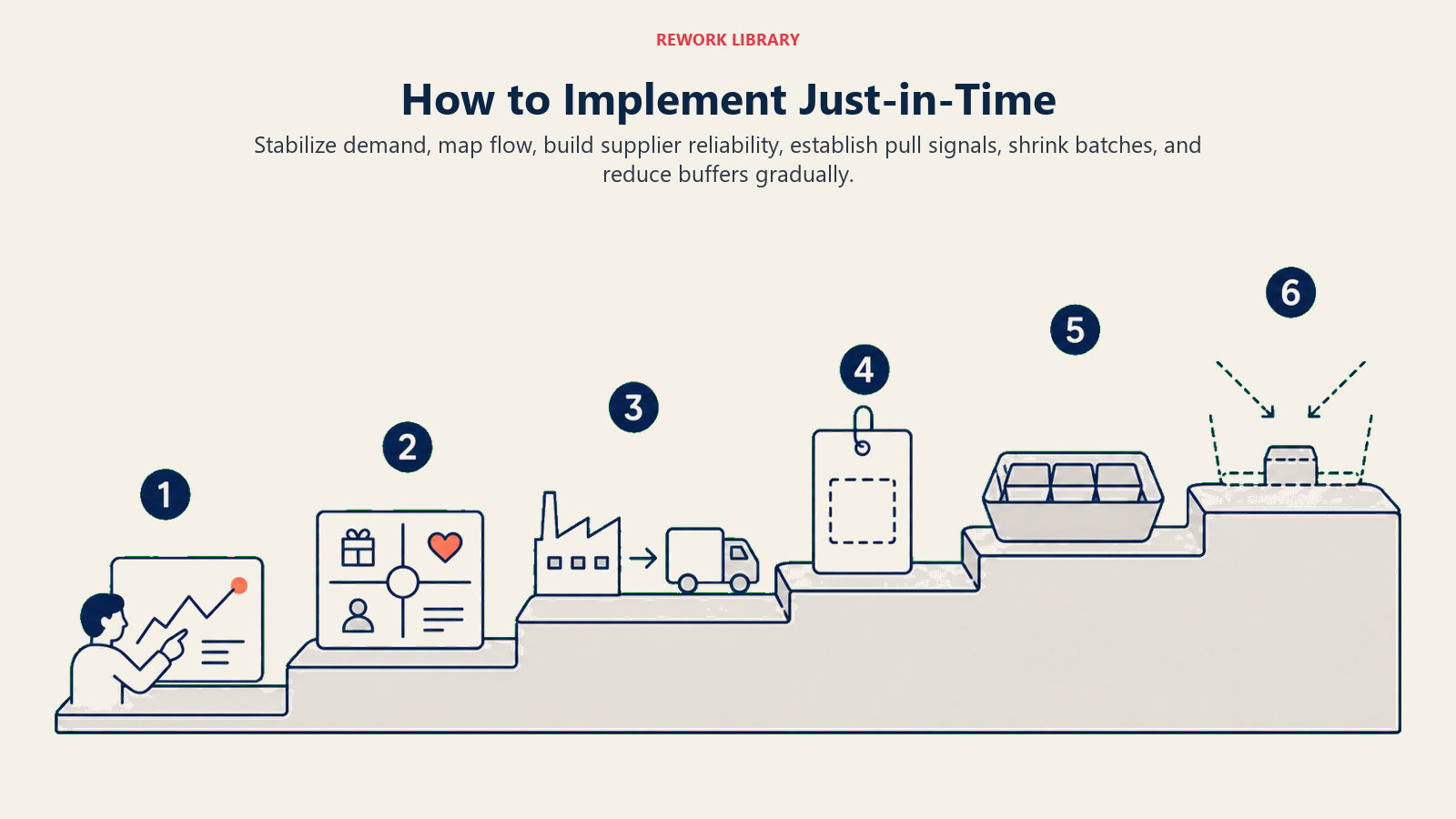
Langkah 1: Stabilkan isyarat permintaan
Sebelum mengeluarkan penampan inventori, anda perlu gambaran yang lebih jelas tentang permintaan sebenar. Petakan aliran nilai anda dan dokumenkan corak permintaan mengikut keluarga produk, tempoh masa, dan segmen pelanggan. Jika data permintaan anda tidak boleh dipercayai, betulkan itu dahulu. JIT membesarkan kesan ramalan yang buruk, bukan membetulkannya.
Kira masa takt anda: masa pengeluaran yang tersedia dibahagikan dengan unit yang diperlukan pelanggan dalam tempoh itu. Angka itu memberitahu anda rentak yang perlu dikekalkan oleh sistem. Setiap langkah di hulu perlu menghasilkan pada atau hampir kadar tersebut.
Langkah 2: Bina perkongsian pembekal
JIT memerlukan pembekal yang boleh menghantar kuantiti kecil secara boleh dipercayai dan kerap, selalunya mengikut jadual harian atau malah setiap jam berbanding pesanan pukal mingguan. Itu satu hubungan yang secara asasnya berbeza daripada pembelian transaksi biasa.
Kenal pasti pembekal laluan kritikal anda. Bekerjasama dengan mereka mengenai keterlihatan jadual pengeluaran anda, piawaian kualiti bersama, dan masa tindak balas yang dipersetujui. Sesetengah organisasi membantu pembekal membina amalan lean mereka sendiri, ini memberi manfaat kepada kedua-dua pihak. Kelayakkan pembekal sandaran untuk apa-apa sahaja yang akan menghentikan pengeluaran jika berlaku satu kegagalan.
Langkah 3: Ratakan pengeluaran (heijunka)
Permintaan berubah-ubah. Pengeluaran tidak sepatutnya berubah, sekurang-kurangnya bukan pada magnitud yang sama. Heijunka (perataan pengeluaran) ialah amalan meratakan jumlah dan campuran pengeluaran sepanjang tempoh perancangan, supaya barisan berjalan pada rentak yang stabil dan boleh diramal berbanding bergerak antara lonjakan dan kekurangan secara mendadak.
Matlamatnya bukan untuk mengabaikan turun naik permintaan. Ia adalah untuk menyerap turun naik itu dalam perancangan anda berbanding menyalurkannya ke hulu sebagai ayunan pesanan pengeluaran yang diperbesarkan, iaitu corak klasik yang dikenal pasti oleh penyelidikan kesesakan perniagaan sebagai kesan bullwhip.
Langkah 4: Laksanakan isyarat tarik dengan kanban
Sebaik sahaja sisi permintaan stabil dan sisi pembekal boleh dipercayai, anda boleh menggantikan jadual pengeluaran berasaskan tolak dengan kanban, iaitu isyarat tarik visual yang memberi kebenaran kepada unit pengeluaran seterusnya hanya apabila langkah di hiliran telah menggunakan satu.
Kanban boleh berbentuk fizikal (kad, bekas, ruang lantai yang ditanda) atau digital (had WIP pada papan tugas, amaran pengisian semula dalam sistem ERP). Prinsipnya sama: tiada apa yang bergerak ke hulu tanpa isyarat daripada hiliran. Ini adalah teras operasi JIT.
Sebagai amalan sokongan, gunakan kaizen (penambahbaikan berterusan) untuk mengurangkan masa persediaan, meningkatkan kelajuan pertukaran, dan menghapuskan kelewatan mikro yang berkumpul sepanjang syif.
Langkah 5: Perbaiki secara berterusan
JIT bukan satu keadaan yang anda capai, ia adalah arah yang anda terus bergerak ke arahnya. Sebaik sahaja gelung kanban pertama anda beroperasi, ketatkannya. Kurangkan saiz kelompok. Pendekkan kitaran pengisian semula. Gunakan setiap gangguan sebagai peristiwa pembelajaran, bukan alasan untuk membina semula penampan inventori secara kekal.
Jejaki metrik yang mendedahkan sama ada sistem anda benar-benar menarik: pusingan inventori, tahap kerja dalam proses, masa pendahuluan dari pesanan hingga penghantaran, serta kekerapan dan keterukan kehabisan stok. Libatkan pekerja barisan hadapan dalam mengenal pasti geseran. Kehebatan Sistem Pengeluaran Toyota bukan sekadar alatnya, tetapi budaya mendedahkan masalah berbanding menyembunyikannya.
Contoh just-in-time
JIT telah tersebar jauh melangkaui pembuatan automotif. Berikut cara logik itu diterjemahkan merentasi industri.
Automotif: model asal
| Proses | Amalan JIT | Hasil |
|---|---|---|
| Bekalan komponen | Pembekal menghantar terus ke barisan pemasangan dalam kelompok kecil, mengikut jujukan pengeluaran | Menghapuskan gudang penerimaan bagi kebanyakan komponen |
| Barang siap | Kenderaan dibina berdasarkan pesanan peniaga atau pelanggan yang disahkan, bukan ramalan | Inventori barang siap hampir sifar |
| Tindak balas kecacatan | Mana-mana pekerja boleh menghentikan barisan (jidoka); kecacatan dibaiki sebelum unit seterusnya dibina | Kecacatan tidak berganda |
Runcit: fesyen pantas
Peruncit seperti Zara membina model daya saing berdasarkan logik JIT dalam fesyen. Berbanding komited kepada larian bermusim yang besar enam bulan lebih awal, mereka menghasilkan kelompok kecil, mengukur apa yang laris, dan mengisi semula atau menghentikan pengeluaran dengan cepat. Masa pendahuluan dari reka bentuk hingga ke rak mengambil masa beberapa minggu berbanding beberapa bulan. Pertukarannya ialah kos pengeluaran seunit yang lebih tinggi, diimbangi oleh pembaziran diskaun akhir musim yang jauh lebih rendah.
Perkhidmatan makanan
McDonald's dan rantaian perkhidmatan segera yang serupa menggunakan JIT pada peringkat dapur. Item popular disimpan dalam giliran pemanasan kecil, diperbaharui apabila terjual. Item kurang popular dimasak mengikut pesanan berbanding disimpan. Matlamatnya ialah menghidangkan makanan segar tanpa pembaziran menyimpan kuantiti besar yang menjadi sejuk atau basi. Sistem ini bergantung kepada ramalan jualan yang tepat mengikut jam dan hari dalam minggu.
Perisian dan DevOps
Logik JIT terpakai secara semula jadi kepada penghantaran perisian. Saluran paip penghantaran berterusan yang menerapkan kod ke pengeluaran dalam kelompok kecil, dicetuskan oleh ciri yang telah siap dan bukan kitaran keluaran suku tahunan, adalah aliran berasaskan tarik. Kerja dalam proses dikekalkan kecil, gelung maklum balas pendek, dan kecacatan ditangkap sebelum ia berkumpul. Papan kanban dengan had WIP adalah terjemahan langsung kawalan inventori JIT ke dalam kerja berasaskan pengetahuan.
Amalan terbaik
Lakukan ini:
- Ukur masa takt sebelum mengurangkan inventori, supaya anda tahu rentak pengeluaran yang direka
- Mulakan projek rintis JIT pada produk yang stabil dan bervolum tinggi sebelum diterapkan pada keseluruhan katalog
- Bina hubungan pembekal sebelum mengeluarkan penampan inventori, kebolehpercayaan mesti diutamakan dahulu
- Anggap setiap kehabisan stok sebagai isyarat sistem, bukan insiden terpencil
- Gunakan pengurusan visual (papan kanban, penanda lantai, kad isyarat) untuk menjadikan aliran kelihatan kepada semua orang
Elakkan ini:
- Memotong inventori sebelum menstabilkan isyarat permintaan (anda akan mencipta pemadaman kebakaran yang berterusan)
- Bergantung kepada satu sumber sahaja bagi komponen kritikal tanpa melayakkan pembekal sandaran
- Melangkau heijunka dan cuba menjalankan JIT terhadap permintaan mentah yang tidak diratakan
- Menganggap JIT sebagai latihan pemotongan kos berbanding perubahan reka bentuk sistem
- Mengeluarkan semua stok keselamatan daripada komponen yang benar-benar kritikal atau bermasa pendahuluan panjang
Bacaan Berkaitan
- Metodologi Lean: falsafah lebih luas tempat JIT berada, 5 prinsip, 8 pembaziran, dan cara bermula.
- Masa Takt: kira rentak pengeluaran yang diperlukan oleh JIT.
- Muda, Mura, Muri: tiga jenis pembaziran yang disasarkan secara langsung oleh JIT.
- Pemetaan Aliran Nilai: gambarkan aliran semasa anda sebelum mengeluarkan penampan inventori.
- Kaizen: amalan penambahbaikan berterusan yang mengekalkan sistem JIT terus bertambah baik selepas dilancarkan.
- Metodologi 5S: asas penyusunan tempat kerja yang menjadikan pertukaran pantas dan isyarat tarik praktikal.
- Kesesakan Perniagaan: kenal pasti kekangan yang akan didedahkan oleh JIT sebaik sahaja penampan dikurangkan.

Customer Success Operations Manager
On this page
- Apakah itu just-in-time (JIT)?
- JIT lawan just-in-case (JIC)
- Faedah just-in-time
- Batasan dan risiko JIT
- Cara melaksanakan just-in-time
- Langkah 1: Stabilkan isyarat permintaan
- Langkah 2: Bina perkongsian pembekal
- Langkah 3: Ratakan pengeluaran (heijunka)
- Langkah 4: Laksanakan isyarat tarik dengan kanban
- Langkah 5: Perbaiki secara berterusan
- Contoh just-in-time
- Automotif: model asal
- Runcit: fesyen pantas
- Perkhidmatan makanan
- Perisian dan DevOps
- Amalan terbaik
- Bacaan Berkaitan