Das Vroom-Yetton-Entscheidungsmodell erklärt
 Das Vroom-Yetton-Entscheidungsmodell zeigt Führungskräften genau, wie stark sie ihr Team in eine bestimmte Entscheidung einbeziehen sollen. Victor Vroom und Philip Yetton entwickelten es 1973 und ersetzten damit das Bauchgefühl durch eine strukturierte Diagnostik, die das Maß der Beteiligung an die jeweilige Situation anpasst.
Turn this article into takeaways for your work.


Each assistant summarizes the article only for you and suggests best practices for your work.
Wer sich je gefragt hat, ob er eine Entscheidung alleine treffen oder dem Team öffnen soll, bekommt hier eine Antwort: einen Ja/Nein-Entscheidungsbaum statt eines Achselzuckens.
Die meisten Führungsmodelle beschreiben allgemeine Führungsweisen. Vroom-Yetton ist enger gefasst und im konkreten Moment nützlicher: Es sagt Ihnen, wie Sie diese eine Entscheidung, heute, angesichts Ihrer Informationslage und der notwendigen Akzeptanz, treffen sollten.
Was ist das Vroom-Yetton-Entscheidungsmodell?
Das Vroom-Yetton-Entscheidungsmodell ist ein situatives Führungsrahmenwerk, das Führungskräfte auf Basis situativer Faktoren zum geeignetsten Führungsstil für die Entscheidungsfindung leitet. Anstatt einen einzigen festen Stil für alle Führungskräfte vorzugeben, stellt es eine Reihe diagnostischer Fragen zur jeweiligen Entscheidung und führt Führungskräfte zu einer von fünf Beteiligungsstufen.
Victor Vroom, Professor an der Yale School of Management, und Philip Yetton veröffentlichten das Modell 1973 in ihrem Buch „Leadership and Decision-Making". Die zentrale Erkenntnis war einfach, aber wirkungsvoll: Das richtige Maß der Teambeteiligung hängt vom konkreten Problem ab, nicht von der Persönlichkeit oder den Vorlieben einer Führungskraft.
Wichtige Fakten
- Vroom und Yetton stellten das Modell 1973 vor. Vroom erweiterte es später gemeinsam mit Arthur Jago 1988 um Nuancen zu Zeitdruck und Mitarbeiterentwicklung (das Vroom-Jago-Modell).
- Im Academy of Management Journal veröffentlichte Forschungsergebnisse zeigten, dass Entscheidungen nach dem vorgeschriebenen Stil deutlich wirksamer waren als solche nach einem nicht vorgeschriebenen Stil (Vroom & Jago, 1978).
- Das Modell identifiziert 14 verschiedene Problemtypen, wenn alle sieben diagnostischen Fragen angewendet werden, und ordnet jedem einen empfohlenen Führungsstil für die Entscheidungsfindung zu.
Die 5 Entscheidungsstile
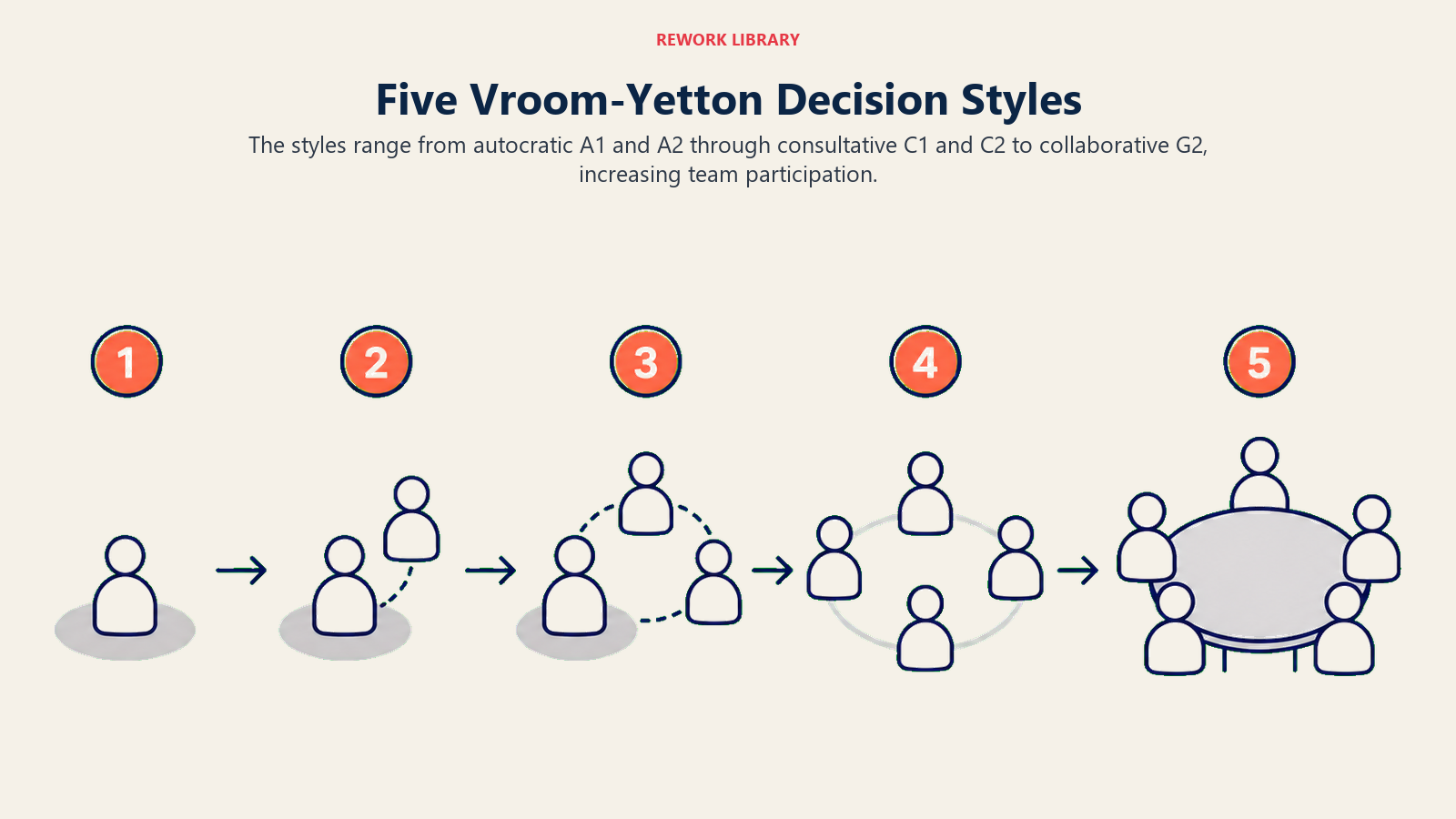
Das Modell definiert fünf Beteiligungsstufen, gegliedert in drei Kategorien. Sie lassen sich als Punkte auf einem Spektrum vom vollständigen Alleingang bis zur vollständigen Zusammenarbeit verstehen.
| Stil | Kürzel | Bedeutung |
|---|---|---|
| AI | Autocratic I | Die Führungskraft entscheidet allein auf Basis verfügbarer Informationen. Kein Teaminput. |
| AII | Autocratic II | Die Führungskraft holt spezifische Informationen von Teammitgliedern ein und entscheidet dann allein. Die Teammitglieder wissen möglicherweise nicht, warum sie befragt wurden. |
| CI | Consultative I | Die Führungskraft schildert das Problem Einzelpersonen im Gespräch unter vier Augen, hört deren Vorschläge an und entscheidet dann allein. |
| CII | Consultative II | Die Führungskraft bringt die Gruppe zusammen, stellt das Problem vor, nimmt den gemeinsamen Input entgegen und entscheidet dann allein. |
| GII | Group / Collaborative | Die Führungskraft legt das Problem der Gruppe vor. Das Team diskutiert es gemeinsam und erzielt einen Konsens. Die Führungskraft akzeptiert die Entscheidung der Gruppe. |
Der Sprung von CI über CII zu GII bedeutet eine spürbare Verschiebung: vom Einholen privater Meinungen über das offene Sammeln von Gruppeninput bis hin zur Übertragung der eigentlichen Entscheidung. Jeder Schritt tauscht etwas Geschwindigkeit gegen mehr Akzeptanz und Teamwissen ein.
Ein häufiger Fehler ist es, CI und CII als im Wesentlichen gleichwertig zu behandeln. Das sind sie nicht. Befragen Sie Einzelpersonen getrennt (CI), antwortet jede Person, ohne zu wissen, was andere gesagt haben. Befragen Sie die Gruppe gemeinsam (CII), bauen die Teilnehmenden aufeinander auf, bringen Meinungsverschiedenheiten offen zur Sprache und kommen zu fundierteren Vorschlägen. Die Wahl zwischen beiden hängt im Wesentlichen davon ab, ob das Problem von einer Gruppendiskussion profitiert oder ob privater, ehrlicher Input wichtiger ist.
Die 7 diagnostischen Fragen
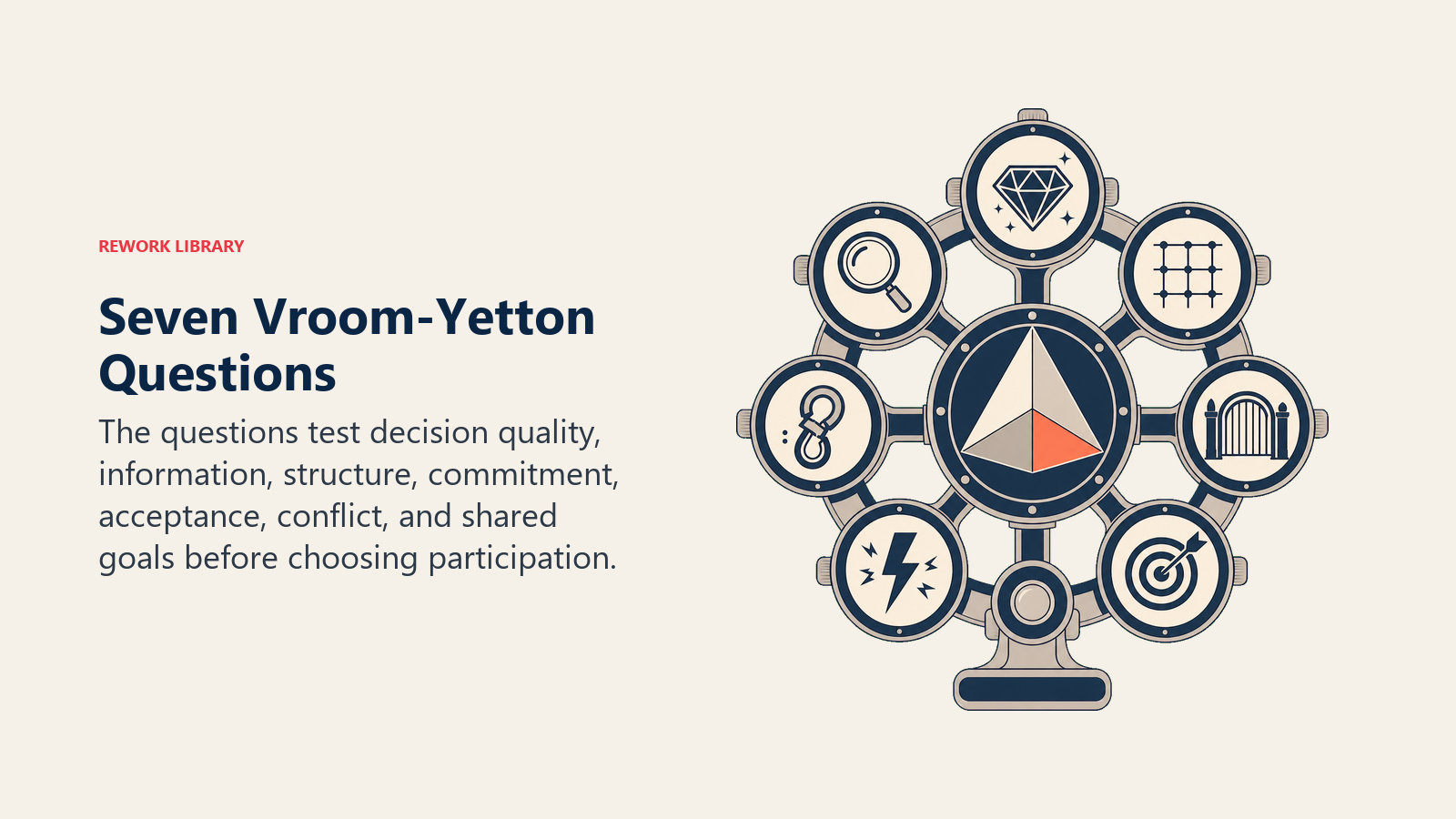
Vor der Wahl eines Stils arbeiten Führungskräfte sieben Ja/Nein-Fragen durch. Jede filtert Stile heraus, die zur Situation nicht passen.
| Nr. | Frage | Was sie prüft |
|---|---|---|
| A | Gibt es eine Qualitätsanforderung? Ist eine Antwort besser als eine andere? | Bedarf an Entscheidungsqualität |
| B | Verfügt die Führungskraft über ausreichende Informationen, um allein eine qualitativ hochwertige Entscheidung zu treffen? | Informationsstand der Führungskraft |
| C | Ist das Problem strukturiert? Ist klar, welche Informationen benötigt werden und wo sie zu finden sind? | Problemstruktur |
| D | Ist die Akzeptanz der Entscheidung durch das Team entscheidend für eine wirksame Umsetzung? | Bedeutung der Akzeptanz |
| E | Wenn die Führungskraft allein entscheidet, wird das Team die Entscheidung wahrscheinlich akzeptieren? | Akzeptanzwahrscheinlichkeit ohne Beteiligung |
| F | Teilen die Teammitglieder die organisatorischen Ziele, die bei diesem Problem auf dem Spiel stehen? | Zielübereinstimmung |
| G | Sind unter den Teammitgliedern Konflikte über die bevorzugte Lösung zu erwarten? | Konfliktrisiko |
Die Beantwortung in dieser Reihenfolge verengt den Weg durch den Entscheidungsbaum. Die meisten realen Entscheidungen erfordern nicht alle sieben Fragen; der Baum verzweigt sich früh, wenn die Situation eindeutig ist.
Fragen A und D leisten die meiste Arbeit. Wenn Qualität kein Thema ist und Akzeptanz nicht kritisch ist, lässt sich die Entscheidung oft in zwei oder weniger Fragen lösen. Wenn jedoch sowohl Qualität als auch Akzeptanz eine Rolle spielen, lohnt sich die vollständige Durcharbeitung. Eine übersprungene Frage kann zu einem Stil führen, der effizient wirkt, aber in der Umsetzung scheitert.
Der Entscheidungsbaum
Die sieben Fragen bilden einen binären Entscheidungsbaum. Jede Antwort, Ja oder Nein, führt einen spezifischen Ast entlang, bis man auf einem oder mehreren empfohlenen Stilen landet.
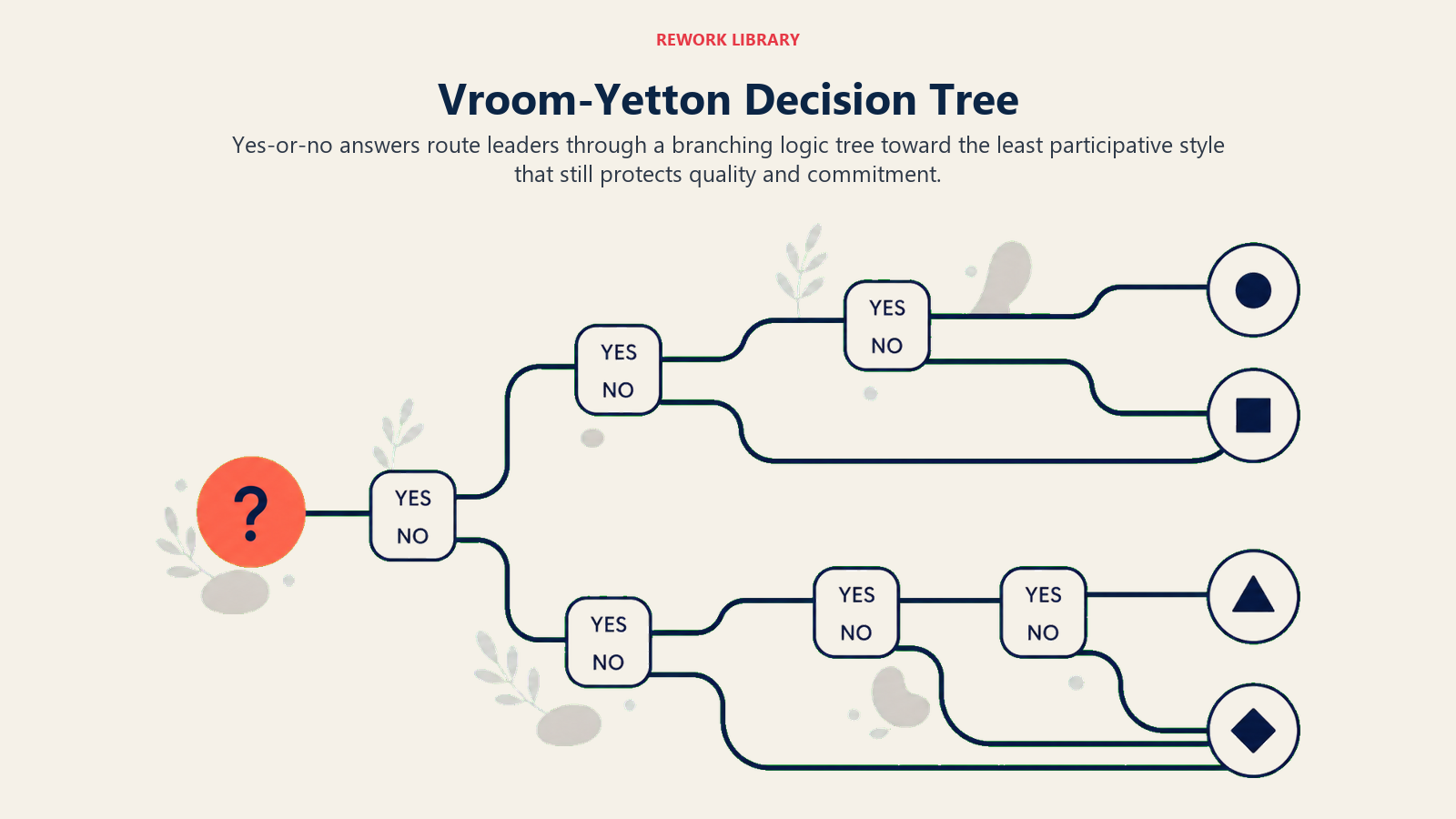
So funktioniert die Wegeführung auf hoher Ebene:
- Keine Qualitätsanforderung (Frage A = Nein) und Akzeptanz nicht kritisch (D = Nein): AI ist in der Regel geeignet, schnell handeln, weitermachen.
- Qualität ist wichtig, Sie verfügen über die Informationen (B = Ja) und Akzeptanz ist nicht kritisch: AI oder AII je nach Struktur.
- Qualität ist wichtig, Informationen fehlen, Problem ist unstrukturiert: GII wird empfohlen, da das kombinierte Wissen der Gruppe benötigt wird.
- Akzeptanz ist kritisch und Teammitglieder teilen die Organisationsziele: GII oder CII, weil Alleinentscheidungen Widerstand riskieren, der die Umsetzung gefährdet.
- Akzeptanz ist kritisch, aber Ziele könnten den Organisationsinteressen widersprechen: GII wird dennoch empfohlen, jedoch nur wenn die Mitarbeitenden die Organisationsziele teilen (F = Ja). Wenn nicht, schützen CI oder CII die Qualität.
- Konflikte sind wahrscheinlich (G = Ja): GII rückt vor CII, weil eine offene Gruppendiskussion Meinungsverschiedenheiten sichtbar macht und löst, anstatt sie schwelen zu lassen.
Der Baum zeigt nicht immer auf einen einzigen Stil. Wenn mehrere Stile akzeptabel sind, empfehlen Vroom und Yetton den schnellsten zu wählen, also im Zweifel AI statt AII und AII statt CI, sofern alles andere gleich ist. Zeit ist eine echte Ressource.
So wenden Sie das Vroom-Yetton-Modell an
Schritt 1: Entscheidung klar formulieren
Bevor Sie die diagnostischen Fragen angehen, legen Sie fest, was Sie tatsächlich entscheiden. Vage Problemformulierungen führen zu unzuverlässigen Antworten. Schreiben Sie es auf: „Wir müssen X bis [Datum] entscheiden, damit [Ergebnis] eintritt."
Schritt 2: Die sieben diagnostischen Fragen beantworten
Arbeiten Sie die Fragen A bis G der Reihe nach durch. Beantworten Sie jede ehrlich auf Basis der aktuellen Situation, nicht auf Basis dessen, was Sie gerne wäre wahr. Wenn Sie unsicher sind, ob Sie über ausreichend Informationen verfügen (Frage B), lautet die ehrliche Antwort Nein.
Schritt 3: Dem Entscheidungsbaum zum empfohlenen Stil folgen
Verfolgen Sie Ihre Ja/Nein-Antworten durch den Baum. Notieren Sie, welcher Stil oder welche Stile am Ende Ihres Pfades stehen. Wenn mehrere Stile akzeptabel sind, bevorzugt das Modell den mit geringerer Beteiligung, weil übermäßige Konsultation Zeit kostet, ohne Mehrwert zu schaffen.
Schritt 4: Den empfohlenen Stil anwenden
Treffen Sie die Entscheidung nach dem Stil, auf den der Baum hingewiesen hat. Bei AI entscheiden Sie jetzt. Bei GII setzen Sie einen echten Gruppenprozess auf und verpflichten sich, das Ergebnis zu akzeptieren. Der Nutzen des Modells verfällt, wenn Sie GII durchführen, die Gruppenentscheidung aber übergehen.
Ein praktischer Hinweis: GII funktioniert nur, wenn die Führungskraft wirklich bereit ist, an die Gruppenentscheidung gebunden zu sein. GII als Schein-Beteiligung einzusetzen und die Entscheidung dennoch zu überstimmen, zerstört Vertrauen schneller, als nie jemanden zu befragen. Wenn Sie das Ergebnis der Gruppe nicht akzeptieren können, ist CI oder CII die ehrlichere Wahl.
Stärken und Grenzen
| Stärken | Grenzen |
|---|---|
| Ersetzt Bauchgefühl durch eine strukturierte Diagnostik | Die binären Ja/Nein-Fragen vereinfachen komplexe, gemischte Situationen zu stark |
| Deckt ein vollständiges Spektrum an Beteiligungsstufen ab | Zeitdruck kann den diagnostischen Prozess träge wirken lassen |
| Forschungsbasiert: vorgeschriebene Stile übertreffen nicht vorgeschriebene | Setzt Selbstwahrnehmung und ehrliche Selbsteinschätzung der Führungskraft voraus |
| Praktisch, nach einiger Übung in Minuten anwendbar | Berücksichtigt nicht die Fähigkeiten der Führungskraft bei der Moderation von Gruppenentscheidungen |
| Reduziert Entscheidungsmüdigkeit, indem Prozessambiguität beseitigt wird | Das Modell von 1973 ist statisch und passt sich nicht an veränderte Bedingungen während einer Entscheidung an |
Vroom-Yetton im Vergleich mit anderen situativen Modellen
Das Vroom-Yetton-Modell steht neben anderen situativen Führungsrahmenwerken, die den Führungsansatz an den Kontext anpassen. Hier ein Vergleich mit zwei verwandten Modellen.
| Modell | Kerngedanke | Fokus | Beteiligungslogik |
|---|---|---|---|
| Vroom-Yetton | Entscheidungsstil dem Problemtyp anpassen via diagnostische Fragen | Entscheidungsfindungsprozess | Explizit: folgt einem binären Entscheidungsbaum |
| Fiedler-Kontingenzmodell | Führungsstil an situative Kontrolle anpassen | Fester Führungsstil | Implizit: situative Kontrolle bestimmt die Passung |
| Situative Führung | Stil an den Entwicklungsstand der Mitarbeitenden anpassen | Reife der Mitarbeitenden | Direktiv vs. unterstützend je nach Reifegrad |
Der wesentliche Unterschied zum Fiedler-Kontingenzmodell liegt darin, dass Fiedler den Führungsstil als weitgehend unveränderlich betrachtet: Entweder passt man zur Situation oder nicht. Vroom-Yetton geht davon aus, dass Führungskräfte ihre Beteiligungsstufe der jeweiligen Entscheidung anpassen können und sollen.
Situative Führung fordert Führungskräfte ebenfalls zur Anpassung auf, konzentriert sich aber auf den Entwicklungsstand der Mitarbeitenden statt auf den Entscheidungstyp. Vroom-Yetton ist im Fokus enger: Es geht speziell darum, eine konkrete Entscheidung gut zu treffen, nicht um den allgemeinen Führungsstil.
Für eine breitere Einführung in das situative Denken lesen Sie Was ist situative Führungstheorie.
Vroom-Jago: Die spätere Weiterentwicklung
1988 veröffentlichten Victor Vroom und Arthur Jago eine aktualisierte Version, die einige Lücken des Modells von 1973 schloss. Das Vroom-Jago-Modell ersetzte die starren Ja/Nein-Fragen durch eine Skala (1 bis 5) und fügte zwei neue situative Merkmale hinzu: Zeitdruck und die Bedeutung der Entwicklung der Entscheidungsfähigkeiten der Mitarbeitenden.
Der praktische Schluss daraus: Bei starkem Zeitdruck verschiebt das Modell sich zugunsten schnellerer Stile, auch wenn Beteiligung sonst ideal wäre. Wenn Teamentwicklung wichtig ist, neigt das Modell zu mehr Einbeziehung, selbst wenn die Führungskraft allein entscheiden könnte. Diese Ergänzungen machten das Modell realistischer für Führungskräfte, die echte Abwägungen zwischen Geschwindigkeit, Qualität und Teamwachstum treffen müssen.
Weiterführende Artikel

On this page
- Was ist das Vroom-Yetton-Entscheidungsmodell?
- Die 5 Entscheidungsstile
- Die 7 diagnostischen Fragen
- Der Entscheidungsbaum
- So wenden Sie das Vroom-Yetton-Modell an
- Schritt 1: Entscheidung klar formulieren
- Schritt 2: Die sieben diagnostischen Fragen beantworten
- Schritt 3: Dem Entscheidungsbaum zum empfohlenen Stil folgen
- Schritt 4: Den empfohlenen Stil anwenden
- Stärken und Grenzen
- Vroom-Yetton im Vergleich mit anderen situativen Modellen
- Vroom-Jago: Die spätere Weiterentwicklung
- Weiterführende Artikel