Transformationale vs. transaktionale Führung: Die wichtigsten Unterschiede
Turn this article into takeaways for your work.


Each assistant summarizes the article only for you and suggests best practices for your work.
Der Vergleich zwischen transformationaler und transaktionaler Führung ist einer der praktisch nützlichsten im Management, weil beide Stile funktionieren und beide versagen können, je nach Situation. Der eine inspiriert Menschen zu einer gemeinsamen Vision. Der andere hält die Leistung durch klare Erwartungen und Belohnungen auf Kurs. Zu wissen, wann welcher anzuwenden ist und wann man sie kombiniert, unterscheidet gute Führungskräfte von herausragenden.
Transformationale vs. transaktionale Führung auf einen Blick
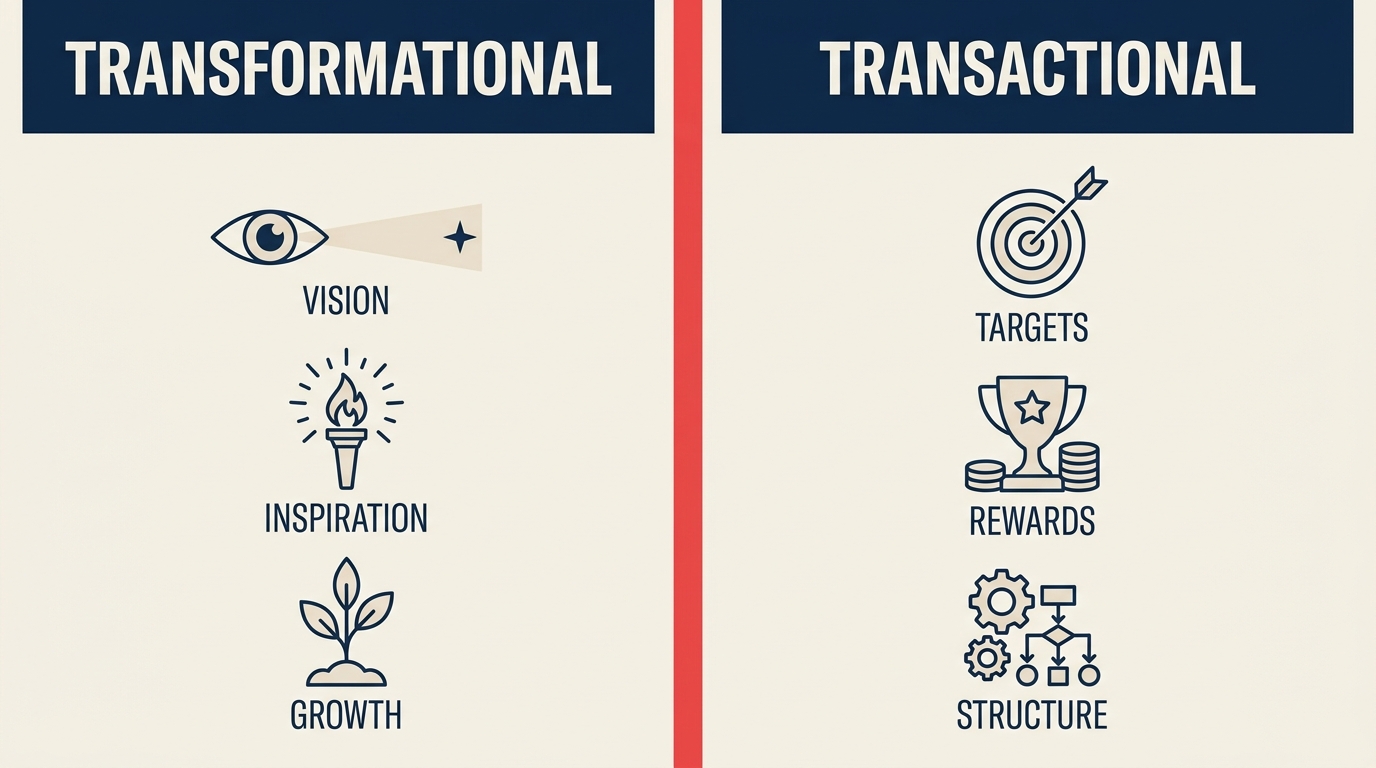
Transformationale Führung motiviert durch Inspiration, Vision und echte Investition in das Wachstum der Menschen. Transaktionale Führung motiviert durch Struktur, klare Ziele und einen vorhersehbaren Austausch: Gute Leistung wird belohnt, schlechte Leistung hat Konsequenzen.
| Dimension | Transformational | Transaktional |
|---|---|---|
| Kernfokus | Wandel und Wachstum inspirieren | Leistung und Ergebnisse managen |
| Motivationstreiber | Gemeinsame Vision, Sinn, persönliche Entwicklung | Belohnungen, Verantwortlichkeit, Zielerreichung |
| Struktur | Flexibel, visionsgeleitet | Definierte Regeln, klare Kennzahlen |
| Wann am wirksamsten | Veränderungsperioden, kreative Arbeit, Kulturaufbau | Stabiler Betrieb, messbare Aufgaben, dringende Umsetzung |
| Beispiele | Steve Jobs, Satya Nadella | Jack Welch, Vince Lombardi |
| Risiko | Abhängigkeit vom Charisma der Führungskraft; Vision ohne Umsetzung | Pflichterfüllung ohne Engagement; geringe Kreativität |
Key Facts
Ursprung und Belege: Der Begriff „transformationale Führung" wurde vom Politikwissenschaftler James MacGregor Burns in seinem 1978 erschienenen Buch Leadership eingeführt. Bernard M. Bass formalisierte ihn 1985 als Managementmodell, ergänzte das Framework der Vier I's und prägte das „Full Range Leadership Model". Eine 2020 im Journal of Applied Psychology veröffentlichte Meta-Analyse (Judge und Piccolo) fand, dass transformationale Führung in 87 Studien eine positive Beziehung zur Motivation und Leistung von Mitarbeitenden aufwies, während transaktionale Contingent Reward stark mit Aufgabenleistung korrelierte. Ein Gallup-Bericht zur Arbeitswelt von 2023 ergab, dass nur 23 % der Beschäftigten weltweit bei der Arbeit engagiert sind, eine Lücke, die transformationale Verhaltensweisen konsequent verkleinern.
Was ist transformationale Führung?
Transformationale Führung ist ein Stil, bei dem Führungskräfte Mitarbeitende dazu inspirieren, die eigenen Erwartungen zu übertreffen, indem sie deren Arbeit mit einem größeren Zweck verbinden. Die Führungskraft weckt Glauben an eine gemeinsame Mission, fordert Menschen heraus, anders zu denken, und behandelt jedes Teammitglied als individuelle Person, die es zu entwickeln gilt.

James MacGregor Burns beschrieb das Konzept erstmals 1978 und grenzte Führungskräfte, die bloß Ressourcen gegen Einsatz tauschen, von solchen ab, die die Werte und Leistung ihrer Mitarbeitenden erhöhen. Bernard Bass baute 1985 auf diesem Fundament auf und lieferte uns die Vier I's, das Verhaltensframework, das transformationale Führung bis heute definiert.
Die Vier I's der transformationalen Führung:
- Idealisierter Einfluss: Die Führungskraft verkörpert die Werte und Verhaltensweisen, die sie sehen möchte. Menschen folgen ihr, weil sie die Führungskraft aufrichtig respektieren, nicht weil sie müssen. Das ist die Komponente „Vorbild sein".
- Inspirierende Motivation: Die Führungskraft kommuniziert eine überzeugende Zukunftsvision und lässt Mitarbeitende spüren, dass diese Vision erreichbar ist. Teammitglieder fühlen sich energetisiert, nicht nur informiert.
- Intellektuelle Stimulation: Die Führungskraft ermutigt Menschen, Annahmen zu hinterfragen, neue Ansätze auszuprobieren und selbst zu denken. Herausfordernde Ideen einzubringen hat keine negativen Folgen.
- Individuelle Berücksichtigung: Die Führungskraft achtet auf die einzigartigen Stärken, Ziele und Bedürfnisse jedes Teammitglieds. Mentoring und Coaching sind zentral, nicht beiläufig.
Transformationale Führungskräfte treten häufig in Veränderungsperioden in Erscheinung: Satya Nadella beim Wiederaufbau von Microsofts Kultur um ein Wachstumsmindset, Nelson Mandela beim Zusammenhalten einer Nation durch einen historischen Übergang. Aber Sie brauchen kein historisches Mandat, um es zu praktizieren. Eine Abteilungsleitung, die sich die Zeit nimmt, die Arbeit jedes Teammitglieds mit der Unternehmensausrichtung zu verbinden und in deren Entwicklung zu investieren, praktiziert transformationale Führung auf eine reale und messbare Weise.
Was ist transaktionale Führung?
Transaktionale Führung basiert auf einem klaren Austausch: Sie erfüllen den Standard, Sie erhalten die Belohnung. Die Führungskraft setzt Erwartungen, überwacht die Leistung und greift ein, wenn Dinge aus dem Ruder laufen. Das Modell ist von vornherein explizit und zuverlässig.

Das Modell funktioniert auf zwei Hauptmechanismen:
Contingent Reward: Die Führungskraft legt fest, was erwartet wird und was die Person erhält, wenn sie liefert. Boni für das Erreichen von Vertriebszielen, Beförderungen für das Erreichen von Meilensteinen, Anerkennung für termingerechte Projektabschlüsse. Das sind Contingent Rewards. Menschen wissen, worauf sie hinarbeiten und warum es für sie persönlich wichtig ist.
Management by Exception: Die Führungskraft greift ein, wenn die Leistung außerhalb des erwarteten Bereichs fällt. Aktives Management by Exception bedeutet, dass die Führungskraft engmaschig überwacht und Probleme korrigiert, bevor sie eskalieren. Passives Management by Exception bedeutet, dass die Führungskraft wartet, bis Abweichungen sichtbar werden, bevor sie handelt. Die meisten erfahrenen transaktionalen Führungskräfte verwenden eine Kombination aus beidem, je nach Bedeutung der Situation.
Jack Welch bei General Electric ist das meistgenannte Beispiel. Er setzte Leistungsstandards, differenzierte konsequent zwischen Top-Performern und Unterperformern und strukturierte die Organisation um messbare Verantwortlichkeit. Der Börsenwert von GE wuchs während seiner Amtszeit von 12 Milliarden auf 410 Milliarden US-Dollar. Das war nicht visionär im transformationalen Sinne. Es war strukturell, systematisch und für das, was GE zu dieser Zeit brauchte, äußerst wirksam.
Transaktionale Führung ist verbreitet in Vertriebsorganisationen, der Fertigung, beim Militär und in jeder Umgebung, in der Leistung messbar ist, Pflichterfüllung wichtig ist und kurzfristige Ergebnisse Priorität haben.
Die wichtigsten Unterschiede erklärt
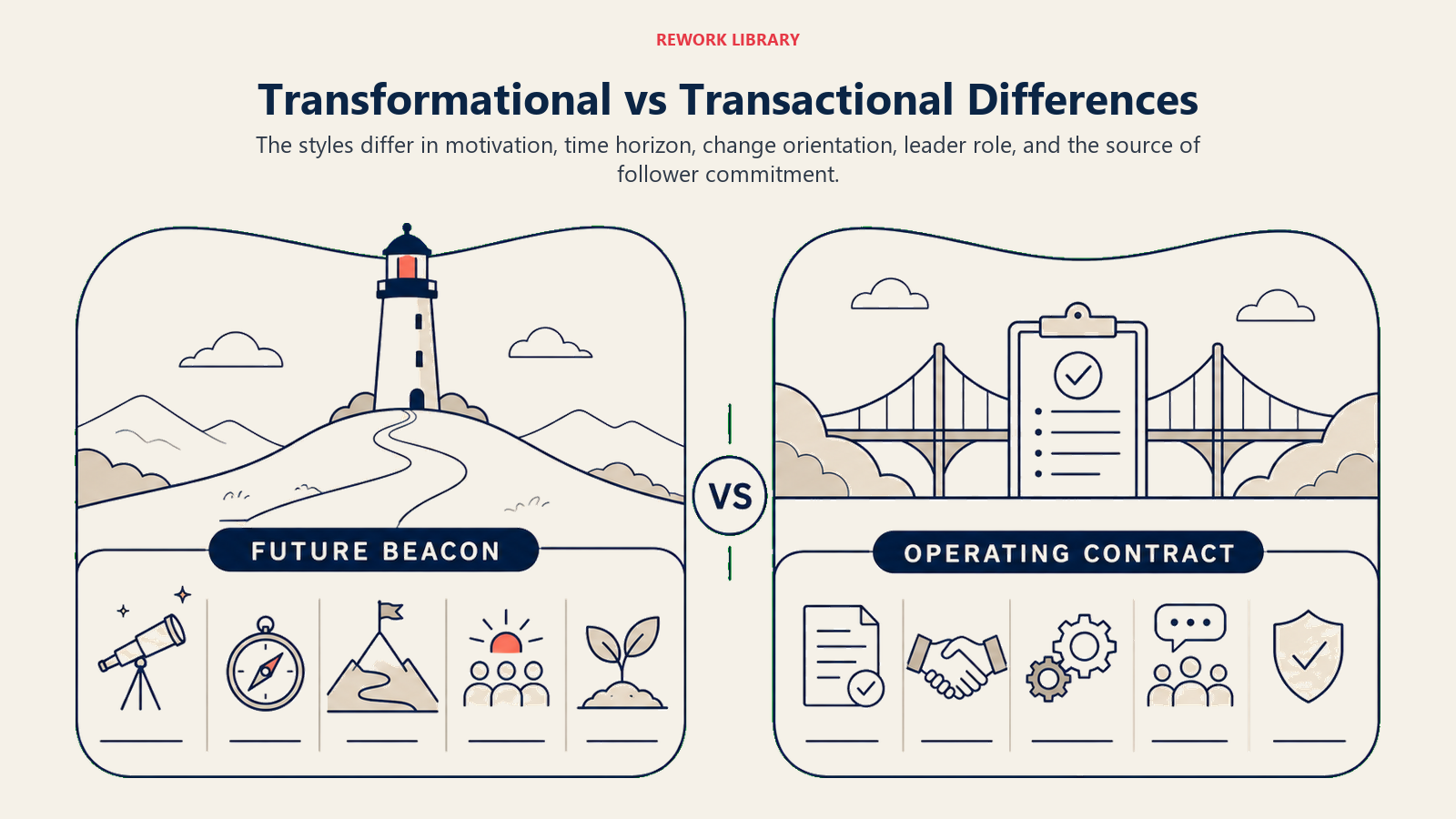
Die praktischen Unterschiede zeigen sich darin, wie jeder Stil Menschen motiviert, mit Regeln umgeht und reagiert, wenn die Leistung nachlässt.
Motivationsquelle
Transaktionale Führungskräfte motivieren über das, was eine Person erhalten wird: den Bonus, die Beförderung, die Anerkennung oder die Vermeidung einer Konsequenz. Transformationale Führungskräfte motivieren über das, woran eine Person glaubt: die Mission, das Gefühl von Sinn und das Erleben, dass das eigene Wachstum zählt. Beide sind echte Motivatoren. Aber sie aktivieren verschiedene Aspekte des Antriebslebens einer Person.
Zeithorizont
Transaktionale Führung fokussiert auf jetzt: die Quartalszahlen, die Lieferung dieser Woche, die heutige Einhaltung von Verfahren. Transformationale Führung fokussiert darauf, was die Organisation wird. Kein Horizont ist besser, sie sind einfach verschieden, und die meisten Unternehmen brauchen beide gleichzeitig.
Rolle der Führungskraft
Eine transaktionale Führungskraft ist in erster Linie ein Leistungsmanager. Sie setzt Erwartungen, misst Ergebnisse und passt Inputs und Outputs an. Eine transformationale Führungskraft ist in erster Linie eine Entwicklerin von Menschen und Kultur. Sie prägt, wie das Team denkt, was es glaubt und wie es sein eigenes Potenzial wahrnimmt.
Umgang mit Regeln
Transaktionale Führung hängt von klar definierten Regeln und Strukturen ab. Der Austausch funktioniert nur, wenn alle die Bedingungen verstehen. Transformationale Führung erfordert manchmal das Biegen oder Umschreiben von Regeln, wenn die Vision es verlangt. Eine Führungskraft, die den Status quo nie in Frage stellt, kann nicht transformational sein.
Umgang mit Misserfolgen
In der transaktionalen Führung löst Misserfolg typischerweise eine vorbestimmte Konsequenz aus: eine Verwarnung, eine Leistungsbeurteilung, reduzierte Belohnung. In der transformationalen Führung wird Misserfolg eher als Daten behandelt. Die Führungskraft fragt, was die Person gelernt hat und wie der Ansatz geändert werden sollte. Das prägt sehr unterschiedliche Risikoprofile innerhalb des Teams.
Nachhaltigkeit
Transaktionale Systeme funktionieren, solange die Belohnungen eintreffen und die Ziele erreichbar bleiben. Wenn die Belohnungen aufhören, bedeutsam zu sein, oder die Ziele aufhören, realistisch zu sein, sinkt das Engagement. Transformationale Kulturen tendieren dazu, dauerhafter zu sein, weil die Motivation intern ist. Aber sie erfordern kontinuierliche Investitionen in Vision, Kommunikation und Personalentwicklung, um lebendig zu bleiben.
Wann welcher Stil angewendet werden sollte
Kein Stil ist universell besser. Die Evidenz zeigt konsistent, dass die richtige Wahl vom Kontext abhängt.
Transaktionale Führung anwenden, wenn:
- Aufgaben klar definiert und messbar sind
- Sie schnelle, zuverlässige Ausführung mit geringer Varianz brauchen
- Sicherheit oder Pflichterfüllung nicht verhandelbar ist (Gesundheitswesen, Luftfahrt, Finanzoperationen)
- Das Team neu in der Arbeit ist und klare Struktur zum Aufbau von Sicherheit braucht
- Kurzfristige Leistung die dominierende Priorität ist
Transformationale Führung anwenden, wenn:
- Die Organisation einen bedeutenden Wandel durchläuft
- Sie Menschen anziehen und halten müssen, die Wahlmöglichkeiten haben
- Kreative, komplexe oder wissensintensive Arbeit der Kernoutput ist
- Sie etwas Neues aufbauen und Menschen brauchen, die glauben, bevor die Belege vollständig existieren
- Langfristiges Engagement und Kultur Priorität haben
Viele wirksame Führungskräfte kombinieren beide Ansätze, und das ist tatsächlich die formale Position in der Führungsforschung. Bernard Bass nannte dies das Full Range Leadership Model. An einem Ende: transaktive Verhaltensweisen (Contingent Reward, Management by Exception). Am anderen Ende: transformationale Verhaltensweisen (die Vier I's). Hervorragende Führungskräfte positionieren sich nicht an einem der Extreme. Sie nutzen transaktionale Mechanismen zur Aufrechterhaltung von Verantwortlichkeit, während sie transformationale Verhaltensweisen einsetzen, um Motivation, Bedeutung und Entwicklung aufzubauen.
Eine VP of Sales, die klare Quoten setzt und großzügige Provisionen zahlt (transaktional), aber auch jeden Vertriebsmitarbeitenden auf Karriereziele hin coacht und eine Vision davon formuliert, was das Team aufbaut (transformational), praktiziert Full Range Leadership. Das ist kein Widerspruch. Das ist Kompetenz.
Wie Sie Ihren Ansatz wählen
Schritt 1: Aktuellen Zustand Ihres Teams bewerten
Fragen Sie: Weiß mein Team, wie gute Leistung aussieht und was es dafür erhält? Wenn ja, ist das transaktionale Fundament vorhanden. Wenn nein, beginnen Sie dort, bevor Sie versuchen, irgendjemanden zu inspirieren. Transformation ohne Verantwortlichkeit tendiert dazu, Begeisterung zu erzeugen, aber keine Ergebnisse.
Schritt 2: Identifizieren Sie, was die Leistung blockiert
Wenn Unterleistung aus unklaren Erwartungen, falsch ausgerichteten Anreizen oder fehlender Verantwortlichkeit resultiert, beheben es transaktionale Werkzeuge. Wenn Unterleistung aus geringem Engagement, fehlendem Sinn oder Menschen resultiert, die keine Zukunft für sich im Team sehen, adressieren transformationale Verhaltensweisen die Ursache.
Schritt 3: Den situativen Kontext lesen
Sanierungen und Krisen brauchen kurzfristig oft mehr transaktionale Struktur. Stabile, wachsende Organisationen mit starken Performern profitieren üblicherweise von mehr transformationaler Investition. Phasen großer Veränderungen (neue Strategie, neues Produkt, neuer Markt) erfordern fast immer transformationale Führung, um Menschen durch die Unsicherheit zu führen.
Schritt 4: Ihren eigenen Standardstil prüfen
Die meisten Führungskräfte haben eine natürliche Neigung. Wenn Sie detailorientiert und ergebnisorientiert sind, greifen Sie wahrscheinlich standardmäßig auf transaktionale Führung zurück. Wenn Sie visionsorientiert und menschenorientiert sind, greifen Sie wahrscheinlich standardmäßig auf transformationale Führung zurück. Keine der Standardneigungen ist ein Problem. Das Problem ist es, diese nicht zu kennen. Identifizieren Sie Ihre, und üben Sie dann bewusst die andere Seite.
Schritt 5: Den fehlenden Ansatz ergänzen
Geben Sie Ihren Standardstil nicht auf. Ergänzen Sie ihn. Eine transaktionale Führungskraft, die echte individuelle Coaching-Gespräche hinzufügt und beginnt zu formulieren, warum die Arbeit des Teams über die Quote hinaus wichtig ist, bewegt sich bereits in Richtung Full Range Leadership. Eine transformationale Führungskraft, die klarere Leistungskennzahlen einführt und bei Konsequenzen nachfasst, baut die Verantwortlichkeit auf, die ihre Inspiration braucht, um zu landen.
Beispiele: Gleiche Situation, unterschiedliche Reaktionen
| Situation | Transaktionale Reaktion | Transformationale Reaktion |
|---|---|---|
| Team verfehlt Quartalsziel | Kennzahlen prüfen, Lücken identifizieren, Anreize oder Verantwortlichkeitsmaßnahmen anpassen | Gespräche darüber führen, was blockiert hat, Team mit der größeren Mission reconnecten, zu spezifischen Hindernissen coachen |
| Top-Performer möchte Beförderung, die Sie noch nicht geben können | Einen spezifischen meilensteinbasierten Weg mit klarem Zeitplan aufzeigen | Erkunden, in welche Richtung die Person wachsen möchte, herausfordernde Sonderaufgaben schaffen, die darauf hinarbeiten |
| Neue strategische Ausrichtung wird von oben bekannt gegeben | Die neuen KPIs und was sich für jede Rolle ändert kommunizieren | Den Wandel als Chance rahmen, das Warum dahinter erklären, zu Umsetzungsfragen einladen |
| Team ist nach einem harten Quartal ausgebrannt | Den Einsatz anerkennen, die Belohnung für die Lieferung klären, einen Erholungszeitplan festlegen | Das Opfer öffentlich würdigen, Menschen Erholungsraum geben, ehrliche 1:1-Gespräche über deren Befinden führen |
| Neue Mitarbeitende erfüllt frühe Erwartungen nicht | Erwartungen explizit besprechen, sicherstellen, dass die Person die Leistungsvereinbarung versteht | Fragen, was die Arbeit schwer macht, klarstellen, wie sie mit den Teamzielen verbunden ist, Coaching und häufigere Check-ins anbieten |
Führung ist keine feste Identität. Sie ist eine Reihe von Entscheidungen, die Sie danach treffen, was Ihr Team gerade braucht. Dienende Führung fügt eine weitere Dimension hinzu, indem sie die Energie der Führungskraft auf das Beseitigen von Hindernissen und das Entwickeln von Menschen richtet. Coaching-Führung geht noch tiefer in die individuelle Entwicklung. Und charismatische Führung untersucht, was passiert, wenn Vision magnetisch wird.
Aber transformational und transaktional sind die zwei grundlegenden Pole. Verstehen Sie, wo Sie standardmäßig stehen, wissen Sie, was Ihnen fehlt, und beginnen Sie, die andere Seite zu üben. So bauen Sie die Bandbreite auf, um über Situationen hinweg zu führen, nicht nur in jenen, die zufällig zu Ihrem natürlichen Stil passen.
Einen breiteren Überblick darüber, wie diese Ansätze in die gesamte Landschaft passen, finden Sie unter Was sind Führungstheorien.

Senior Operations & Growth Strategist
On this page
- Transformationale vs. transaktionale Führung auf einen Blick
- Key Facts
- Was ist transformationale Führung?
- Was ist transaktionale Führung?
- Die wichtigsten Unterschiede erklärt
- Motivationsquelle
- Zeithorizont
- Rolle der Führungskraft
- Umgang mit Regeln
- Umgang mit Misserfolgen
- Nachhaltigkeit
- Wann welcher Stil angewendet werden sollte
- Wie Sie Ihren Ansatz wählen
- Schritt 1: Aktuellen Zustand Ihres Teams bewerten
- Schritt 2: Identifizieren Sie, was die Leistung blockiert
- Schritt 3: Den situativen Kontext lesen
- Schritt 4: Ihren eigenen Standardstil prüfen
- Schritt 5: Den fehlenden Ansatz ergänzen
- Beispiele: Gleiche Situation, unterschiedliche Reaktionen