Bahasa Indonesia
Portfolio Discipline: Cara Pemimpin Mengelola Beberapa Taruhan Strategis
Turn this article into takeaways for your work.


Each assistant summarizes the article only for you and suggests best practices for your work.
Setiap organisasi yang memiliki kompleksitas tertentu menjalankan banyak hal sekaligus. Lini produk yang berbeda. Inisiatif pasar yang berbeda. Taruhan strategis yang berbeda. Profil investasi yang berbeda. Ini bukan masalah. Diversifikasi di berbagai taruhan adalah cara organisasi mengelola ketidakpastian, mengembangkan kemampuan baru, dan memposisikan diri untuk masa depan yang tidak sepenuhnya dapat diprediksi.
Namun mengelola portofolio memerlukan disiplin yang tidak pernah dikembangkan sebagian besar organisasi. Alih-alih mengelola portofolio secara aktif, mereka justru mengakumulasinya. Proyek disetujui tanpa diprioritaskan satu sama lain. Sumber daya tersebar di semua hal ketimbang dikonsentrasikan pada yang paling penting. Tidak ada yang dihentikan karena menghentikan sesuatu itu sulit. Hasilnya adalah portofolio yang terlalu luas, terlalu sedikit sumber dayanya, dan sebagian besar tidak berkaitan dengan prioritas strategis aktual organisasi.
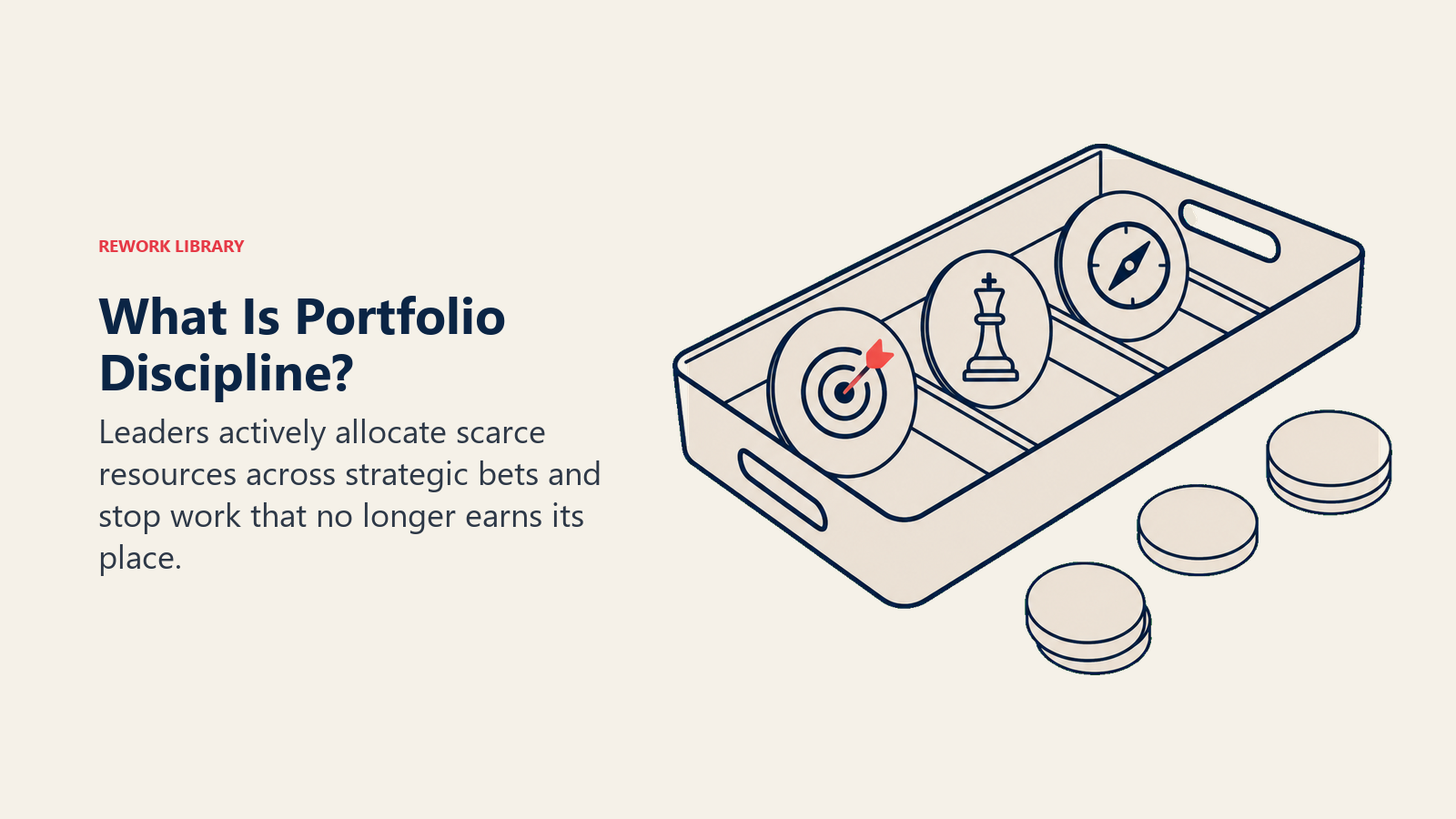
Portfolio discipline adalah praktik melakukan sebaliknya: secara aktif mengelola apa yang diinvestasikan organisasi, bagaimana investasi tersebut diprioritaskan satu sama lain, dan kriteria apa yang menentukan apakah sesuatu tetap dalam portofolio atau dihapus.
Apa yang Bukan Portfolio Discipline
Sebelum mendefinisikan apa itu portfolio discipline, ada baiknya meluruskan beberapa kesalahpahaman.
Ini bukan hal yang sama dengan memiliki rencana strategis. Rencana strategis menggambarkan ke mana organisasi ingin pergi. Portfolio discipline adalah tentang secara aktif mengelola apakah sumber daya organisasi benar-benar diarahkan ke sana. Banyak organisasi memiliki dokumen strategi yang sangat baik tetapi portfolio discipline yang buruk, karena strategi dan alokasi sumber daya aktual secara efektif terputus.
Ini bukan hal yang sama dengan efisiensi. Efisiensi adalah tentang melakukan hal-hal dengan lebih sedikit. Portfolio discipline adalah tentang melakukan lebih sedikit hal dengan baik. Sebuah organisasi bisa sangat efisien dalam melaksanakan portofolio yang disusun dengan buruk. Disiplin dimulai dari pertanyaan komposisi, bukan pertanyaan pelaksanaan.
Ini bukan hanya untuk konglomerat yang terdiversifikasi. Bahkan organisasi yang relatif terfokus menjalankan beberapa taruhan produk, beberapa inisiatif pasar, dan beberapa prioritas operasional pada waktu tertentu. Pemikiran portofolio berlaku di setiap tingkatan: portofolio taruhan strategis CEO, portofolio inisiatif produk VP, portofolio proyek direktur.
Masalah Inti: Mengapa Portofolio Menyimpang
Portofolio menyimpang dari koherensi strategis ke penyebaran strategis melalui serangkaian keputusan yang secara individual tampak masuk akal.

Proyek lebih mudah dimulai daripada dihentikan. Memulai inisiatif baru hanya memerlukan kesepakatan bahwa itu layak dicoba. Menghentikan inisiatif memerlukan pengakuan bahwa itu tidak berhasil atau bukan lagi prioritas, yang tidak nyaman bagi orang yang mendukungnya dan berinvestasi di dalamnya. Hasilnya adalah ratchet: portofolio hanya tumbuh ke satu arah.
Sumber daya terasa berlimpah ketika didistribusikan. Ketika anggaran dibagi di antara dua puluh inisiatif, setiap tim inisiatif hanya melihat bagiannya dan sering merasa tidak cukup. Pemegang portofolio mungkin tidak dengan jelas melihat bahwa tingkat sumber daya agregat tidak berkelanjutan. Membuat kendala sumber daya total terlihat di seluruh portofolio lebih sulit daripada mengelola lini anggaran individual.
Ketidakpastian membuat pemotongan terasa prematur. Para pemimpin sering menunda keputusan untuk memotong atau mengkonsentrasikan karena gambaran belum jelas. Namun gambaran hampir tidak pernah sepenuhnya jelas. Keputusan portofolio yang ditunda, seperti keputusan kinerja yang ditunda, cenderung memperparah masalah ketimbang menyelesaikannya.
Politik internal mendukung mempertahankan hal-hal. Setiap inisiatif dalam portofolio memiliki pendukung yang akan mengadvokasi kelangsungannya. Perspektif tingkat portofolio, yang melihat keseluruhan dan membuat trade-off, sering kurang terwakili dibandingkan advokat inisiatif individual.
Prinsip-prinsip Portfolio Discipline
Visibilitas, kriteria yang eksplisit, sumber daya yang terkonsentrasi, dan keputusan berhenti secara berkala menjaga taruhan tetap koheren.\n\n
Jadikan Portofolio Terlihat
Langkah pertama dalam mengelola portofolio adalah membuatnya terlihat. Ini berarti memiliki satu tampilan terkonsolidasi tentang apa yang diinvestasikan organisasi: setiap inisiatif signifikan, kebutuhan sumber dayanya, rasional strategisnya, status saat ini, dan pengembalian yang diharapkan. Sebagian besar organisasi tidak memiliki tampilan ini. Portofolio mereka tersebar di berbagai sistem perencanaan, proses anggaran, dan strategi departemen.
Membuat portofolio terlihat segera mengungkapkan masalah yang tidak terlihat ketika setiap inisiatif dikelola secara terpisah: upaya duplikat yang mengejar tujuan yang sama, inisiatif tanpa rasional strategis yang jelas, konsentrasi sumber daya yang tidak selaras dengan prioritas yang dinyatakan, dan inisiatif yang telah berjalan bertahun-tahun tanpa hasil yang jelas.
Tentukan Kriteria Prioritisasi Sebelum Anda Membutuhkannya
Waktu untuk mendefinisikan apa yang menjadikan sesuatu prioritas portofolio adalah sebelum keputusan trade-off spesifik perlu dibuat. Ketika kriteria ditetapkan terlebih dahulu, keputusan portofolio adalah tentang menerapkan kriteria tersebut daripada merevisitasi strategi setiap kali.
Kriteria prioritisasi portofolio yang baik cenderung multidimensi. Kriteria tersebut biasanya mencakup beberapa kombinasi dari: keselarasan strategis (apakah ini memajukan strategi yang telah kita nyatakan?), pengembalian yang diharapkan (apa nilai realistis jika ini berhasil?), probabilitas keberhasilan (mengingat apa yang kita ketahui tentang kemampuan dan pasar kita?), dan nilai opsi strategis (apakah ini menciptakan pilihan strategis masa depan yang ingin kita miliki?).
Kriteria tersebut tidak akan disetujui secara universal, dan menerapkannya memerlukan pertimbangan. Namun memilikinya sama sekali jauh lebih baik daripada membuat keputusan portofolio melalui debat ad hoc, di mana siapa yang berargumen paling meyakinkan yang menang.
Alokasi Sumber Daya sebagai Keputusan Portofolio
Ekspresi paling penting dari strategi portofolio adalah bagaimana sumber daya benar-benar dialokasikan. Jika prioritas portofolio yang dinyatakan adalah Produk A, tetapi tim engineering dibagi rata di antara Produk A, B, dan C, prioritas portofolio nyata berbeda dari yang dinyatakan.
Portfolio discipline mengharuskan keputusan alokasi sumber daya dibuat di tingkat portofolio daripada di dalam setiap inisiatif. Ini adalah pertanyaan tata kelola sekaligus pertanyaan strategis: siapa yang memiliki wewenang untuk membuat trade-off lintas inisiatif, dan apakah proses anggaran aktual memberi mereka wewenang tersebut?
Organisasi yang membuat keputusan alokasi sumber daya di dalam setiap departemen atau inisiatif, kemudian mengagregasinya ke atas, cenderung mendapatkan portofolio yang mencerminkan kekuatan tawar kepala departemen relatif daripada prioritas strategis. Perspektif tingkat portofolio, dengan wewenang nyata untuk mengalokasikan ulang, diperlukan untuk mengabaikan dinamika ini.
Investasi Bertahap dan Gerbang Keputusan
Salah satu praktik manajemen portofolio yang paling efektif adalah investasi bertahap: membuat taruhan awal yang kecil, mendefinisikan kriteria yang jelas tentang apa yang akan membenarkan investasi tambahan, dan membuat komitmen yang lebih besar hanya ketika bukti awal mendukungnya.
Pendekatan ini, kadang disebut proses stage-gate, berlaku secara eksplisit untuk inisiatif baru dan secara implisit untuk portofolio yang sedang berjalan. Inisiatif yang telah berjalan dua tahun tanpa kemajuan yang jelas harus dievaluasi berdasarkan kriteria yang sama yang akan membenarkan pendanaan berkelanjutannya, daripada diasumsikan berhak mendapat investasi berkelanjutan karena sudah ada dalam portofolio.
Gerbang keputusan memaksa percakapan portofolio yang dihindari sebagian besar organisasi: bukti apa yang akan membuat kita meningkatkan investasi di sini, dan bukti apa yang akan membuat kita memotong? Membuat kriteria tersebut eksplisit, sebelum bukti tiba, mengurangi kecenderungan untuk merasionalisasi investasi berkelanjutan dalam inisiatif yang tidak berhasil.
Keputusan Membunuh Portofolio
Keputusan portofolio yang paling sulit adalah membunuh inisiatif. Memotong inisiatif yang tidak berkinerja memerlukan pengakuan bahwa investasi awal salah, bahwa orang-orang yang mengerjakan ini akan dipindahkan atau diarahkan ulang, dan bahwa organisasi telah kehilangan waktu dan sumber daya yang tidak dapat dipulihkan. Semua hal itu benar-benar mahal, dan ketidaknyamanan mengakuinya adalah nyata.
Namun biaya tidak membunuh inisiatif yang berkinerja buruk juga nyata. Sumber daya yang terus mengalir ke inisiatif yang berkinerja buruk tidak mengalir ke yang lebih baik. Tim yang mengerjakan inisiatif yang tidak benar-benar berkomitmen oleh organisasi tidak mencapai apa pun yang berarti dan sering mengetahuinya. Kinerja keseluruhan portofolio dibatasi oleh komponen terlemahnya yang menyeret keseluruhan.
Pemimpin yang efektif dalam portfolio discipline mengembangkan hubungan yang jernih dengan keputusan membunuh inisiatif. Mereka memperlakukannya sebagai realokasi sumber daya daripada vonis kegagalan. Mereka menciptakan izin budaya untuk memotong hal-hal yang tidak berhasil tanpa menjadikannya risiko karier bagi orang-orang yang mendukungnya. Dan mereka membedakan antara inisiatif yang gagal karena pasar atau teknologi tidak mendukung (hasil yang masuk akal dari taruhan yang valid) dan inisiatif yang gagal karena kegagalan pelaksanaan yang seharusnya terdeteksi lebih awal.
Mengelola Inti versus Cakrawala
Kerangka portofolio yang berguna membedakan antara investasi dalam bisnis inti (meningkatkan dan melindungi apa yang sudah berhasil), peluang yang berdekatan (ekspansi ke pasar atau kemampuan terdekat), dan taruhan transformasional (area yang benar-benar baru yang bisa mendefinisikan masa depan).
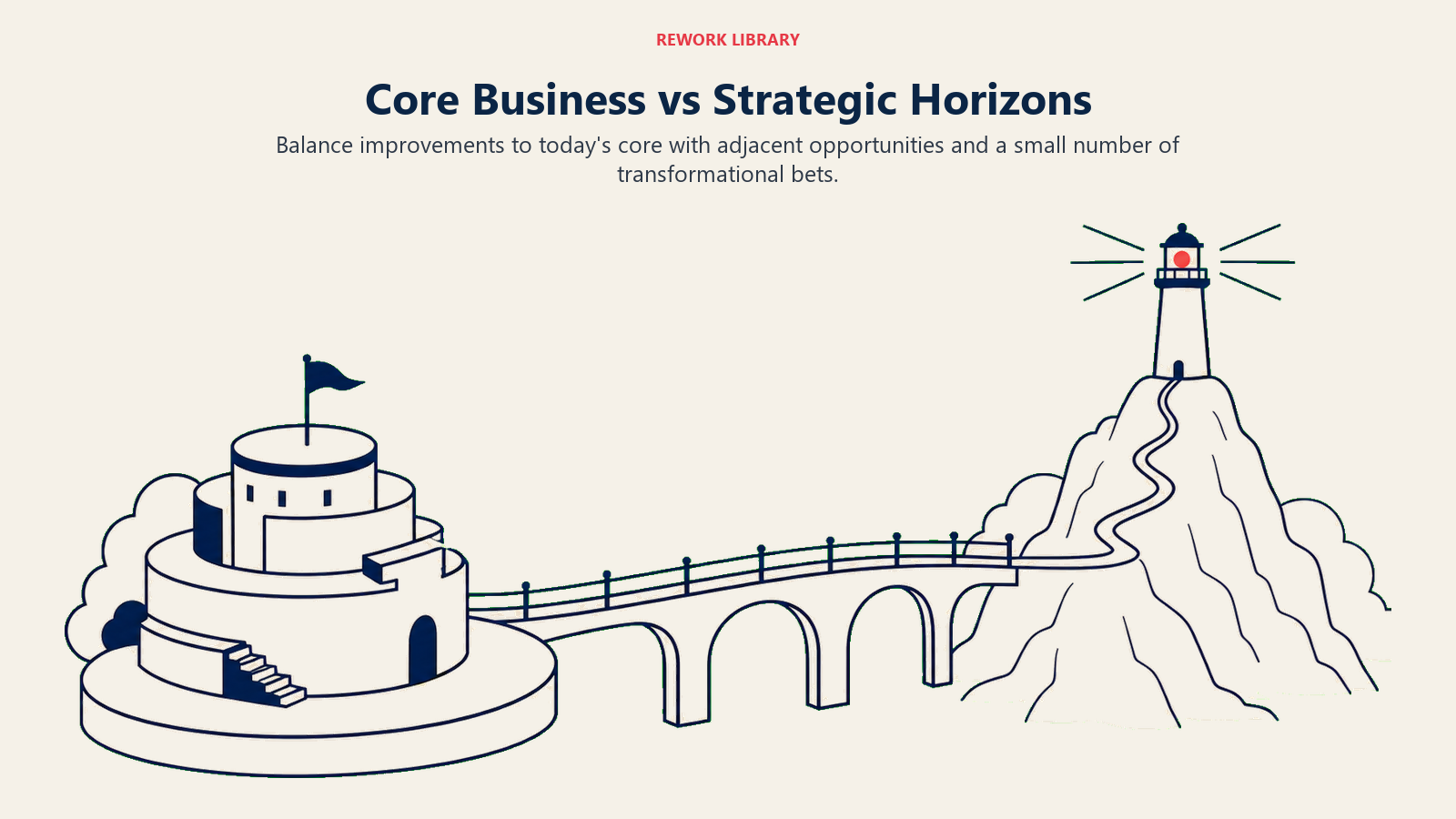
Sebagian besar organisasi berinvestasi berlebih pada inti dan berinvestasi kurang pada cakrawala. Inti lebih mudah dibenarkan (pengembalian jelas, ketidakpastian lebih rendah), sementara taruhan cakrawala lebih sulit dibenarkan dalam jangka pendek dan sering kalah dalam pertarungan alokasi sumber daya internal melawan inti.
Portfolio discipline yang efektif melibatkan keputusan alokasi yang disengaja di antara kategori-kategori ini. Berapa persentase sumber daya yang digunakan untuk inti dibandingkan berdekatan dibandingkan transformasional? Ini pada akhirnya adalah penilaian strategis tentang toleransi risiko dan cakrawala waktu, tetapi membuatnya eksplisit mencegah default membiarkan inti menyingkirkan semua yang lain.
Ini juga memerlukan pendekatan manajemen yang berbeda untuk setiap kategori. Investasi inti dikelola berdasarkan metrik kinerja jangka pendek. Investasi berdekatan memerlukan cakrawala waktu yang lebih panjang dan kriteria keberhasilan yang berbeda. Taruhan transformasional memerlukan perlindungan dari naluri organisasi untuk menerapkan standar kinerja yang sama dengan inti sebelum mereka sempat berkembang.
Tinjauan Portofolio sebagai Praktik Kepemimpinan
Mekanisme operasional untuk mempertahankan portfolio discipline adalah tinjauan portofolio rutin: percakapan tim kepemimpinan terstruktur tentang seluruh portofolio, bukan sekadar pembaruan inisiatif individual.
Tinjauan portofolio yang efektif mengajukan pertanyaan yang tidak secara alami diajukan organisasi:
Apakah kita benar-benar berinvestasi dalam prioritas yang kita nyatakan, atau apakah alokasi nyata berbeda? Apa yang diceritakan hasil awal kepada kita tentang taruhan mana yang berhasil? Apa yang paling tidak kita yakini, dan apa yang akan mengurangi ketidakpastian itu? Jika kita harus mengalokasikan ulang 20 persen sumber daya portofolio kita besok, ke mana kita akan meletakkannya dan apa yang akan kita potong?
Percakapan ini tidak nyaman. Mereka mengharuskan pengungkapan trade-off yang dihindari tinjauan inisiatif individual. Namun itulah mekanisme yang dengannya portfolio discipline dipertahankan, bukan sekadar dinyatakan.
Fakta Penting
- Penelitian tentang strategi korporat secara konsisten menemukan bahwa alokasi sumber daya yang terkonsentrasi di belakang sejumlah kecil taruhan berprioritas tinggi mengungguli penyebaran sumber daya secara merata di seluruh portofolio besar, terutama di pasar yang kompetitif.
- Hasil paling umum dari audit portofolio di organisasi yang matang adalah penemuan sejumlah besar inisiatif yang tidak dapat dihubungkan langsung ke prioritas strategis yang dinyatakan mana pun, sering mewakili bagian substansial dari total pengeluaran sumber daya.
- Organisasi dengan kadens tinjauan portofolio yang eksplisit, di mana seluruh portofolio ditinjau di tingkat kepemimpinan setidaknya setiap kuartal, membuat keputusan membunuh lebih awal dan dengan total biaya lebih rendah daripada yang tidak.
- Alat manajemen portofolio yang paling jarang digunakan adalah gerbang keputusan yang telah ditentukan sebelumnya: kriteria, disetujui terlebih dahulu, yang akan menyebabkan inisiatif didanai, ditingkatkan, dikurangi, atau dipotong.
Pertanyaan yang Sering Diajukan
Bagaimana Anda menangani situasi di mana tim yang berkinerja tinggi mengerjakan inisiatif berprioritas rendah?
Ini adalah tantangan manajemen portofolio yang umum. Jawabannya melibatkan pemisahan keputusan bakat dari keputusan inisiatif. Potong atau kurangi inisiatif berdasarkan manfaat strategisnya, dan buat keputusan terpisah yang aktif tentang menggunakan kembali bakat tersebut untuk pekerjaan yang lebih berprioritas tinggi. Orang-orang berkinerja tinggi tidak boleh terjebak dalam pekerjaan berprioritas rendah, tetapi kehadiran mereka tidak menjadikan inisiatif berprioritas tinggi.
Berapa banyak taruhan strategis yang dapat dikelola organisasi secara realistis sekaligus?
Ini sangat bergantung pada ukuran organisasi dan sifat taruhannya. Heuristik yang berguna: jika Anda tidak dapat menyebutkan tiga prioritas portofolio teratas Anda dari memori, Anda memiliki terlalu banyak. Para pemimpin senior harus dapat mengungkapkan komposisi dan prioritas portofolio tanpa merujuk ke dokumen.
Apakah setiap inisiatif harus memiliki target ROI yang eksplisit?
Tidak selalu. Beberapa jenis investasi portofolio, terutama taruhan eksplorasi, tidak cocok untuk proyeksi ROI yang tepat. Namun setiap inisiatif harus memiliki kriteria yang jelas tentang seperti apa keberhasilan itu dan bukti apa yang akan menyebabkan Anda melanjutkan, meningkatkan, atau memotong investasi.
Bagaimana Anda mencegah keputusan portofolio didorong oleh politik internal daripada manfaat strategis?
Tetapkan kriteria terlebih dahulu, jadikan seluruh portofolio terlihat oleh tim kepemimpinan secara kolektif, dan libatkan berbagai perspektif dalam evaluasi. Ketika orang dengan kekuasaan organisasi paling besar juga merupakan pendukung inisiatif yang dievaluasi, tandai konflik tersebut secara eksplisit dan bawa perspektif yang tidak berinvestasi dalam hasilnya.
Kapan Anda harus meningkatkan investasi dalam inisiatif daripada memotongnya?
Ketika bukti awal menunjukkan peluang pasar itu nyata dan pendekatan organisasi berhasil, ketika Anda memiliki jendela kompetitif yang dibatasi waktu, atau ketika Anda telah cukup belajar dari taruhan awal untuk membuat investasi berikutnya dengan keyakinan yang jauh lebih tinggi. Kuncinya adalah mendasarkan keputusan peningkatan pada bukti daripada biaya yang telah dikeluarkan atau optimisme awal.
Bacaan terkait: Contrarian Strategy | Platform Strategy Guide | Managing at Scale | Succession Planning | Purpose-Driven Business Strategy | Product Leadership Lessons

Co-Founder, Rework.com
On this page
- Apa yang Bukan Portfolio Discipline
- Masalah Inti: Mengapa Portofolio Menyimpang
- Prinsip-prinsip Portfolio Discipline
- Jadikan Portofolio Terlihat
- Tentukan Kriteria Prioritisasi Sebelum Anda Membutuhkannya
- Alokasi Sumber Daya sebagai Keputusan Portofolio
- Investasi Bertahap dan Gerbang Keputusan
- Keputusan Membunuh Portofolio
- Mengelola Inti versus Cakrawala
- Tinjauan Portofolio sebagai Praktik Kepemimpinan
- Fakta Penting