Bahasa Indonesia
Gaya Kepemimpinan Coaching: Kapan dan Bagaimana Menggunakannya
Turn this article into takeaways for your work.


Each assistant summarizes the article only for you and suggests best practices for your work.
Gaya kepemimpinan coaching adalah salah satu alat paling kuat yang tersedia bagi manajer yang ingin mengembangkan tim mereka daripada sekadar mengarahkan mereka. Tetapi ini juga salah satu yang paling banyak disalahgunakan, sering dikacaukan dengan mentoring, pelatihan, atau sekadar bersikap "baik" kepada tim Anda.
Apa itu gaya kepemimpinan coaching?
Gaya kepemimpinan coaching adalah salah satu dari enam gaya kepemimpinan emosional yang diidentifikasi oleh psikolog Daniel Goleman dalam penelitiannya tentang efektivitas kepemimpinan. Di mana gaya lain berfokus pada mendorong kinerja segera, kepemimpinan coaching berfokus pada mengembangkan orang untuk jangka panjang. Pekerjaan utama pemimpin adalah memahami kekuatan, area pengembangan, dan tujuan setiap orang, kemudian menciptakan kondisi di mana orang tumbuh melalui pekerjaan mereka daripada sekadar menyelesaikannya.
Goleman menggambarkannya sebagai berikut: pemimpin coaching menghubungkan apa yang ingin dicapai seseorang dengan tujuan organisasi. Setiap penugasan, setiap percakapan sulit, dan setiap bagian umpan balik dibingkai sebagai peluang pengembangan. Pertanyaannya bukan "apakah kamu menyelesaikannya?" melainkan "apa yang kamu pelajari, dan bagaimana kamu akan menggunakannya lain kali?"
Gaya ini berada bersama lima gaya lain dalam kerangka kerja Goleman: visionary, demokratis, affiliatif, pacesetting, dan commanding. Masing-masing cocok untuk situasi yang berbeda. Coaching paling efektif ketika tim termotivasi dan siap untuk berkembang, dan ketika kinerja jangka pendek dapat mengakomodasi beberapa investasi dalam pengembangan jangka panjang.
Fakta Kunci
- Analisis Gallup tahun 2020 menemukan bahwa kualitas manajer menjelaskan 70% varian dalam skor keterlibatan karyawan. Manajer yang memprioritaskan pengembangan daripada arah tugas murni secara konsisten dinilai lebih tinggi pada pendorong keterlibatan "seseorang di tempat kerja mendorong pengembangan saya." (Gallup, 2020)
- Studi Global Coaching ICF (International Coaching Federation) 2023 menemukan bahwa organisasi dengan budaya coaching yang kuat melaporkan keterlibatan karyawan 14% lebih tinggi dan pertumbuhan pendapatan 28% lebih tinggi dibandingkan organisasi tanpa praktik coaching formal.
- Penelitian McKinsey menemukan bahwa manajer lini depan yang secara aktif melatih tim mereka melihat peningkatan kinerja 20% lebih tinggi pada bawahan langsung mereka dibandingkan yang mengandalkan terutama instruksi direktif. (McKinsey, 2022)
Karakteristik pemimpin coaching
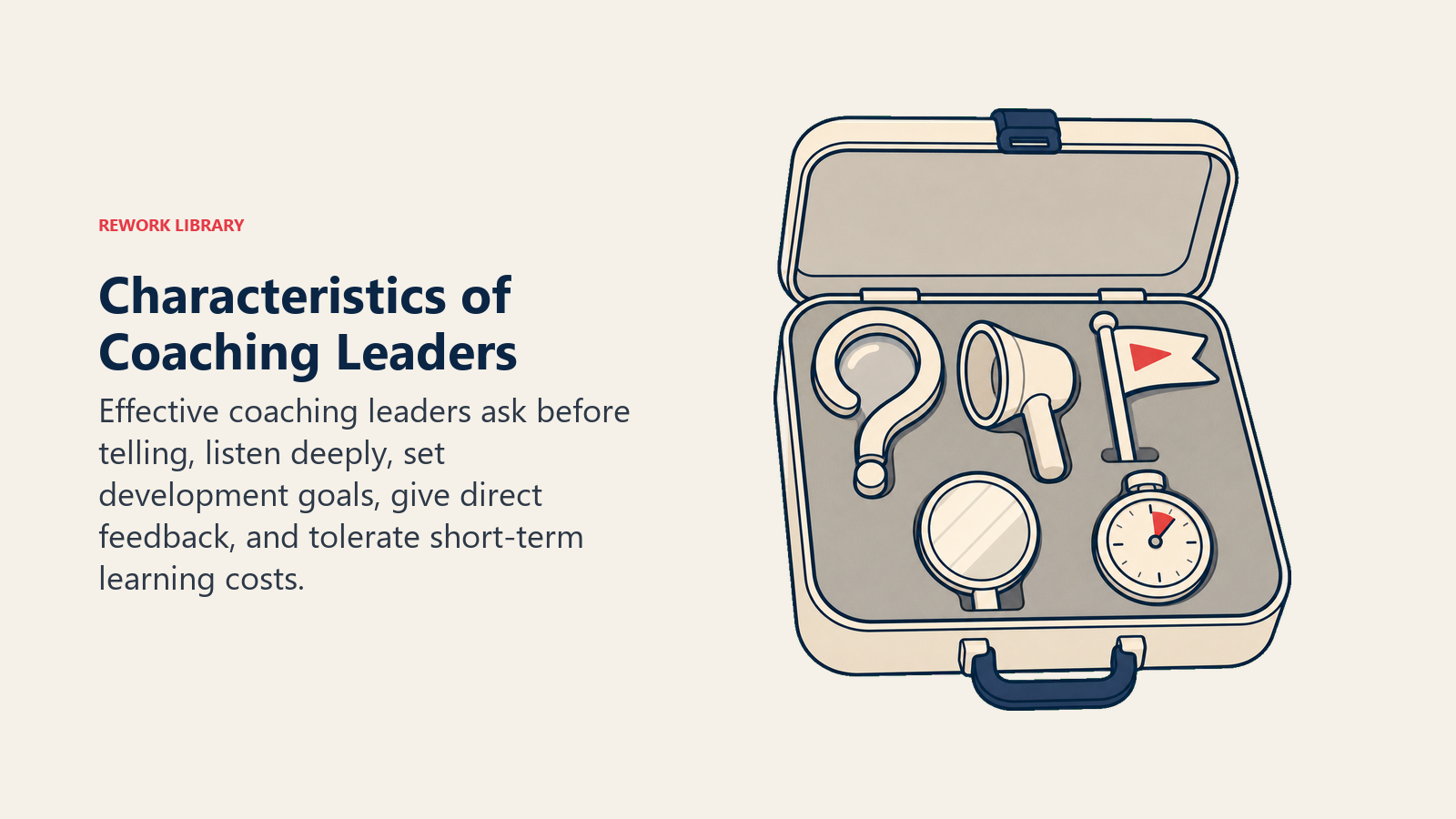
Pemimpin coaching berbagi sekumpulan perilaku yang mudah dikenali. Ini bukan sifat kepribadian yang Anda miliki atau tidak miliki. Ini adalah keterampilan yang dapat Anda pelajari dan praktikkan.
| Ciri | Tampilannya dalam praktik |
|---|---|
| Bertanya sebelum memberitahu | Daripada langsung menyelesaikan masalah, pemimpin bertanya "Apa yang sudah kamu coba? Apa pilihan yang kamu lihat?" dan membiarkan anggota tim mencari jalannya sendiri |
| Memperlakukan umpan balik sebagai alat pengembangan | Umpan balik bersifat spesifik, tepat waktu, dan terkait dengan tujuan pertumbuhan, bukan hanya koreksi kinerja |
| Mengetahui tujuan setiap orang | Pemimpin memahami ke mana setiap bawahan langsung ingin pergi secara profesional, bukan hanya apa yang sedang mereka kerjakan minggu ini |
| Berinvestasi dalam 1:1 | Rapat satu-satu yang teratur digunakan untuk percakapan pengembangan, bukan sekadar pembaruan status |
| Benar-benar sabar | Coaching membutuhkan waktu lebih lama dari pengarahan langsung. Pemimpin menerima bahwa kecepatan jangka pendek mungkin lebih lambat sebagai imbalan dari kemampuan jangka panjang |
| Memberikan penugasan menantang secara sengaja | Pekerjaan ditugaskan sebagian berdasarkan apa yang akan menantang dan mengembangkan orang tersebut, bukan hanya siapa yang paling memenuhi syarat untuk melakukannya sekarang |
| Merayakan pertumbuhan secara eksplisit | Pemimpin menyebutkan dan mengakui kemajuan dalam keterampilan dan pola pikir, bukan hanya hasil |
Coaching vs gaya kepemimpinan lainnya
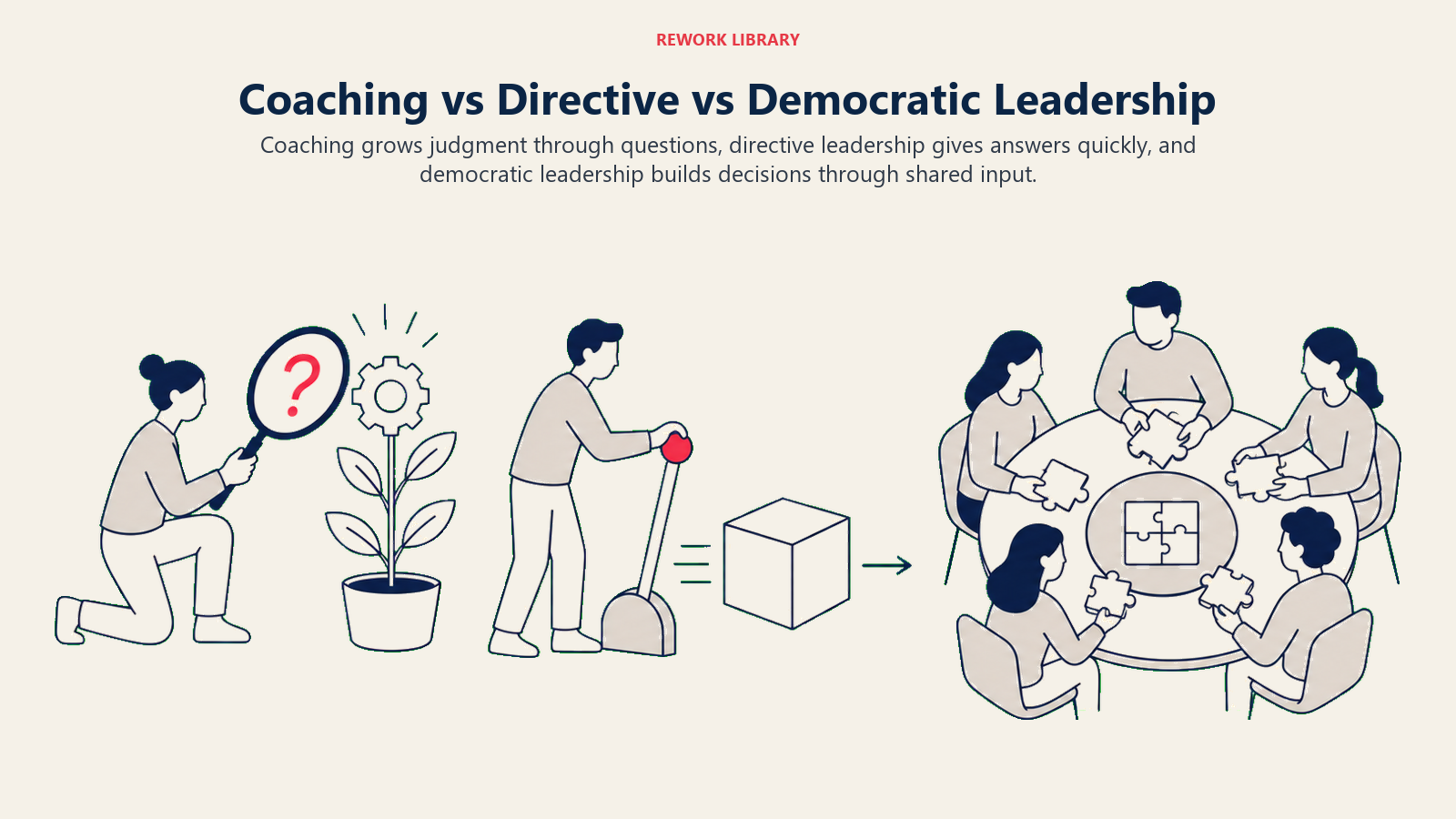
Kepemimpinan coaching sering dikontraskan dengan gaya direktif dan dikacaukan dengan gaya demokratis. Perbedaannya penting dalam praktik.
| Gaya | Fokus utama | Peran pemimpin | Paling cocok untuk |
|---|---|---|---|
| Coaching | Pengembangan jangka panjang | Pengembang dan penanya | Tim yang termotivasi dan siap berkembang |
| Direktif / Otokratis | Kepatuhan segera | Pengambil keputusan dan instruktur | Krisis, anggota tim baru, tugas kritis keselamatan |
| Demokratis | Kualitas keputusan melalui masukan | Fasilitator dan pengambil keputusan akhir | Keputusan kompleks yang membutuhkan keahlian tim |
| Melayani | Kesejahteraan tim dan keberlanjutan | Penghilang hambatan dan pendukung | Pekerja berpengetahuan dengan kepercayaan tinggi dan masa kerja panjang |
Perbedaan paling jelas adalah antara coaching dan kepemimpinan direktif. Pemimpin direktif memberitahu orang apa yang harus dilakukan dan bagaimana melakukannya. Pemimpin coaching mengajukan pertanyaan yang membantu orang mencari tahu sendiri. Kepemimpinan direktif menghasilkan hasil yang lebih cepat dalam jangka pendek. Kepemimpinan coaching membangun tim yang membutuhkan lebih sedikit arahan dari waktu ke waktu, yang merupakan hasil yang lebih dapat diskalakan.
Manfaat gaya kepemimpinan coaching
Ketika sesuai dengan situasinya, kepemimpinan coaching menghasilkan hasil yang terukur di empat dimensi.
Orang berkembang lebih cepat. Ketika manajer berinvestasi dalam mengidentifikasi kesenjangan pengembangan dan menciptakan peluang menantang yang disengaja, orang membangun keterampilan lebih cepat daripada yang mereka lakukan dalam peran eksekusi murni. Ini terakumulasi dari waktu ke waktu: tim yang berkembang lebih cepat dari pesaing membangun keunggulan kemampuan yang tahan lama.
Keterlibatan meningkat. Salah satu prediktor terkuat keterlibatan karyawan adalah apakah seseorang di tempat kerja peduli dengan perkembangan mereka. Pemimpin coaching adalah jawaban nyata atas pertanyaan itu. Tim yang merasa benar-benar dikembangkan lebih sulit direbut dan lebih mungkin bertahan melalui periode sulit.
Penilaian meningkat di seluruh tim. Ketika pemimpin selalu memberikan jawaban, penilaian tim mengalami atrofi. Ketika pemimpin mengajukan pertanyaan, tim membangun kemampuan untuk memikirkan masalah secara mandiri. Dalam 12 hingga 18 bulan, ini menghasilkan tim yang dapat beroperasi dengan pengawasan lebih sedikit dan menangani masalah yang benar-benar baru.
Waktu pemimpin sendiri menjadi lebih efektif. Tim dengan penilaian tinggi membutuhkan lebih sedikit waktu pemimpin untuk pemecahan masalah rutin. Bandwidth pemimpin beralih ke pekerjaan yang lebih tinggi: strategi, hubungan eksternal, penentuan posisi organisasi.
Retensi karyawan berkinerja tinggi. Karyawan terbaik bertahan di tempat mereka merasa ditantang dan dikembangkan. Lingkungan yang berfokus pada coaching lebih menarik bagi orang-orang ambisius daripada lingkungan direktif, karena orang-orang ambisius ingin tumbuh, bukan hanya berhasil.
Kelemahan dan kapan tidak menggunakannya
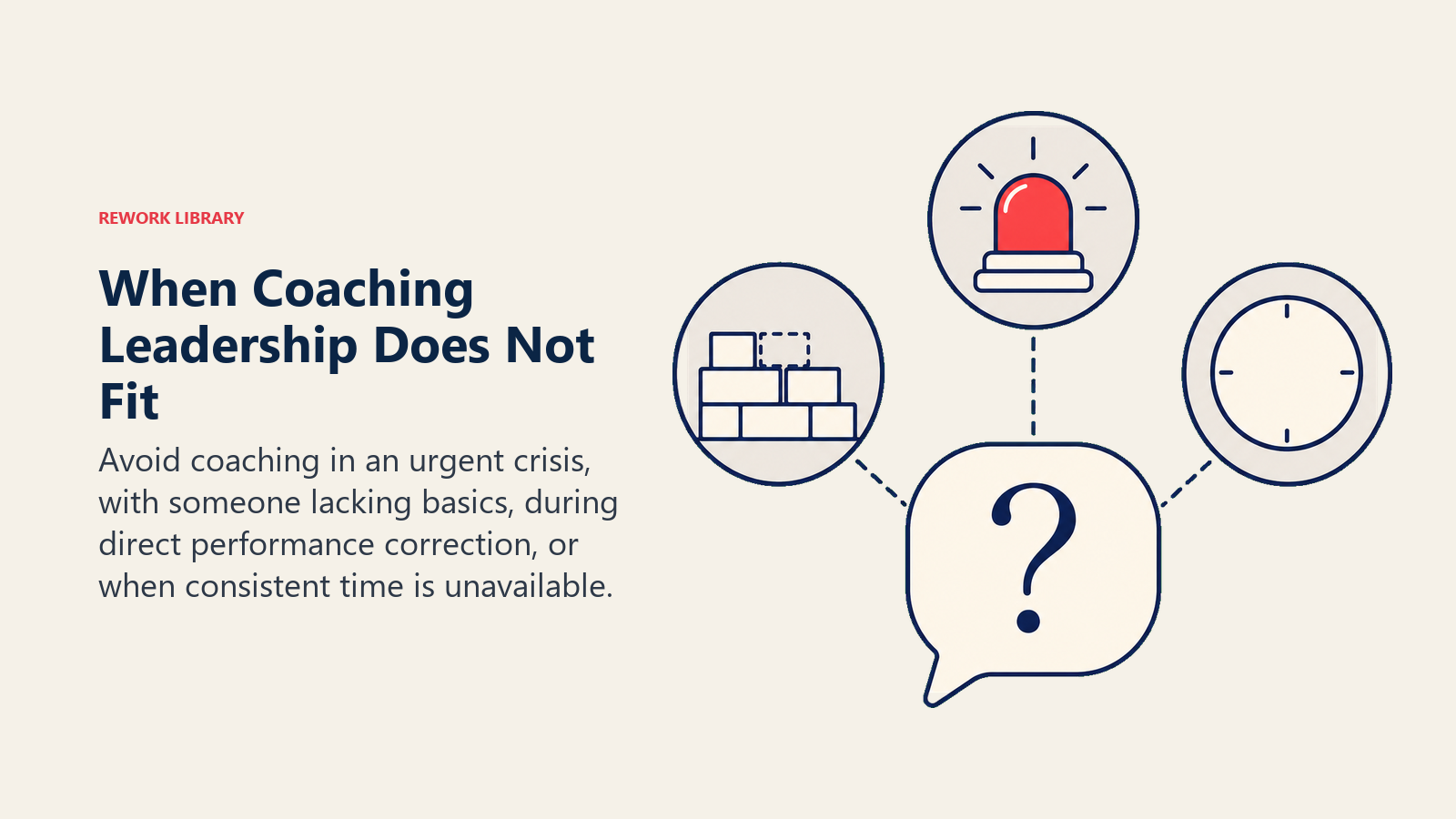
Kepemimpinan coaching bukan alat yang tepat dalam setiap situasi. Menggunakannya pada waktu yang salah menghasilkan biaya nyata.
Ini membutuhkan banyak waktu. Coaching membutuhkan perhatian individual per orang. Dalam tim delapan orang, itu berarti delapan percakapan pengembangan yang berbeda, delapan set tujuan pertumbuhan, delapan rencana penugasan menantang. Manajer di bawah beban operasional tinggi sering tidak memiliki bandwidth ini.
Ini tidak berhasil dalam krisis. Ketika sebuah produk bermasalah, klien marah, atau tim perlu membuat keputusan cepat di bawah tekanan, "apa menurut kamu pilihannya?" adalah pertanyaan yang salah. Dalam krisis, orang membutuhkan arahan yang jelas. Kepemimpinan coaching bekerja sebelum dan setelah krisis, bukan selama itu.
Ini membutuhkan pelajar yang mau. Coaching hanya bekerja dengan orang-orang yang ingin berkembang. Beberapa anggota tim tidak berada dalam fase pertumbuhan: mereka kelelahan, tidak terlibat, atau memiliki langit-langit keterampilan yang sudah mereka terima. Melatih orang-orang ini tanpa memahami keadaan mereka yang sebenarnya bisa terasa menggurui daripada mendukung.
Ini bisa membuat frustrasi anggota tim baru yang membutuhkan arahan. Seseorang yang baru dalam sebuah peran sering membutuhkan instruksi eksplisit sebelum mereka bisa mendapat manfaat dari pertanyaan coaching. Menanyakan analisis baru "menurutmu pendekatan yang tepat apa?" sebelum mereka membangun konteks yang cukup menghasilkan kecemasan, bukan wawasan. Kepemimpinan direktif lebih dulu; coaching menjadi mungkin setelah ada fondasi untuk dibangun.
Ini tidak berhasil sebagai pengganti manajemen kinerja. Coaching bukan cara untuk menghindari percakapan sulit. Jika seseorang berkinerja buruk karena berada di peran yang salah atau kurang keterampilan dasar yang tidak dapat diatasi coaching tepat waktu, pendekatan coaching dapat menunda keputusan yang diperlukan dan membingungkan tim tentang standar yang sebenarnya.
Kemajuan lambat muncul dalam metrik. Hasil kepemimpinan coaching, penilaian tim, retensi, kemampuan promosi internal, adalah nyata tetapi membutuhkan 12 hingga 24 bulan untuk terwujud dengan jelas. Dalam organisasi dengan siklus perencanaan pendek, ini membuat lebih sulit untuk dipertahankan.
Cara memimpin seperti seorang coach (GROW model)
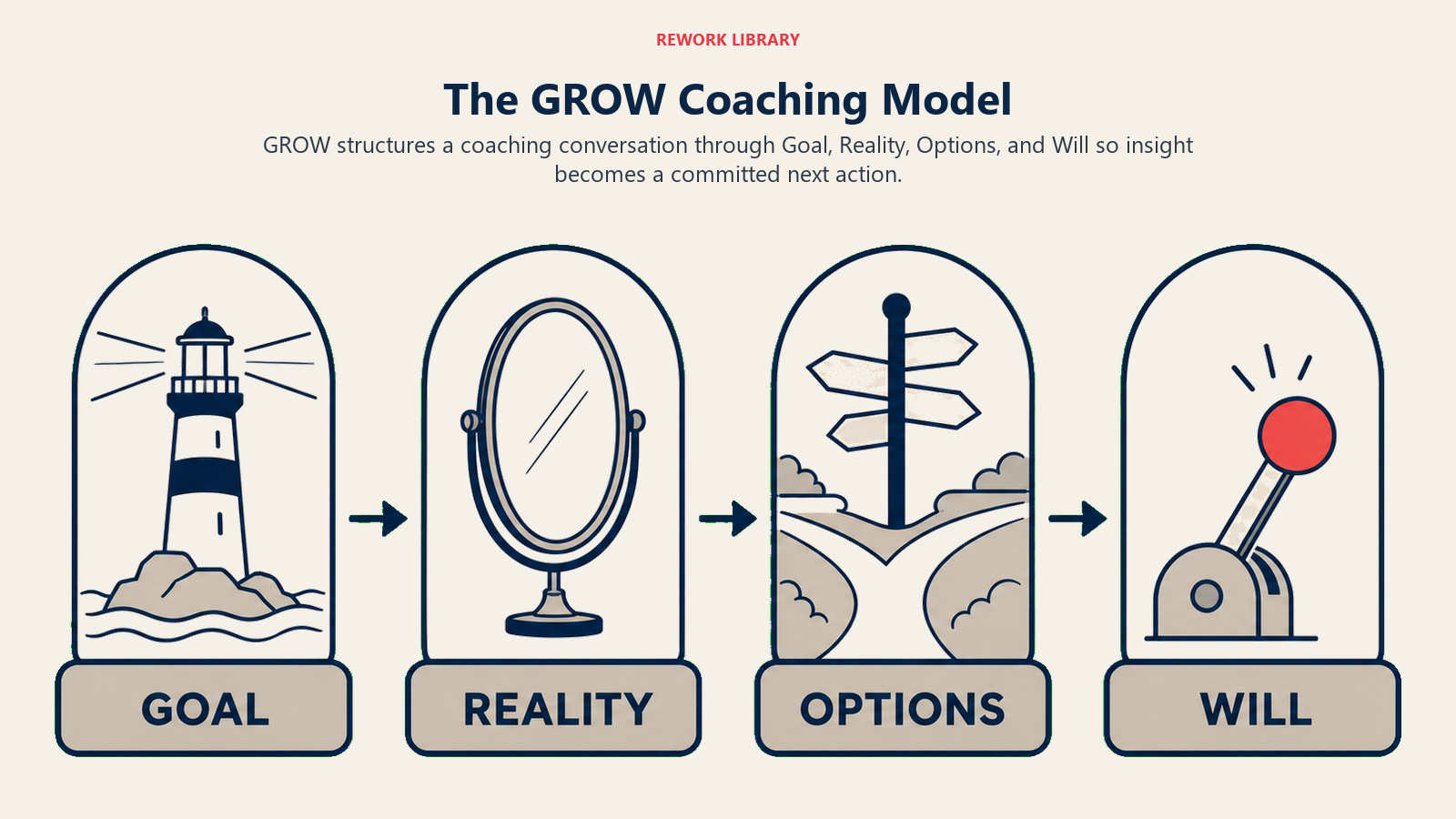
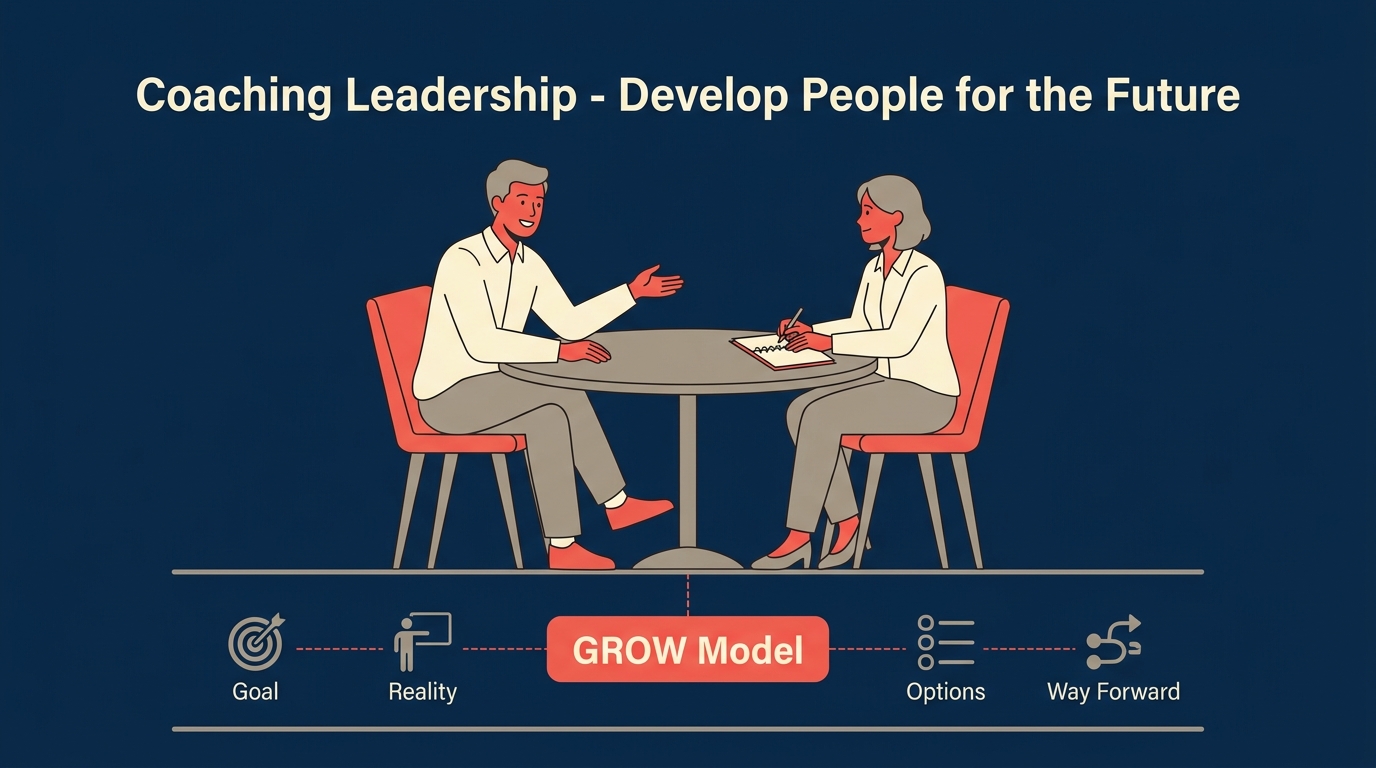
GROW model adalah kerangka kerja yang paling banyak digunakan untuk menyusun percakapan coaching. Dikembangkan oleh Sir John Whitmore dan dipopulerkan dalam bukunya Coaching for Performance, GROW memberi pemimpin struktur empat tahap yang dapat diulang yang mengubah percakapan pengembangan dari dorongan yang samar menjadi tindakan praktis.
Langkah 1: Goal (Tujuan)
Mulailah dengan mendapatkan kejelasan tentang apa yang ingin dicapai seseorang, bukan hanya dalam percakapan ini tetapi dalam pekerjaan dan karier mereka secara lebih luas. Pertanyaan tujuan yang berguna bukan "apa yang kamu coba capai minggu ini?" melainkan "di mana kamu ingin berada enam bulan dari sekarang, dan kemampuan apa yang paling ingin kamu bangun untuk sampai ke sana?"
Tahap tujuan menjangkarkan percakapan. Tanpanya, sisa proses GROW menjadi saran taktis daripada coaching.
Contoh pertanyaan: "Jika kamu melihat kembali kuartal ini dan berkata 'itulah saat aku benar-benar berkembang sebagai pemimpin,' apa yang harus terjadi?"
Langkah 2: Reality (Realita)
Sebelum melompat ke solusi, bantu orang tersebut memahami secara akurat di mana mereka berada sekarang. Tahap ini adalah tentang memunculkan situasi saat ini yang sebenarnya, termasuk kesenjangan yang mungkin belum dinamai orang tersebut dengan jelas, tanpa penilaian.
Banyak percakapan coaching melewati langkah ini. Hasilnya adalah saran yang tidak terhubung dengan titik awal nyata orang tersebut.
Contoh pertanyaan: "Apa yang berjalan dengan baik sekarang, dan di mana kamu merasa paling tertantang atau terjebak?"
Langkah 3: Options (Pilihan)
Setelah tujuan dan realita jelas, jelajahi rentang kemungkinan jalur di antaranya. Pemimpin coaching yang baik menahan diri untuk tidak memberikan satu jawaban. Mereka membantu orang menghasilkan beberapa pilihan, kemudian memikirkan pertimbangannya.
Ini adalah tahap di mana pertanyaan seperti "apa lagi yang bisa kamu coba?" dan "apa yang akan kamu lakukan jika pendekatan biasa tidak ada di meja?" melakukan pekerjaan terpentingnya. Tujuannya adalah memperluas pemikiran orang tersebut sebelum menyempitkan ke rencana.
Contoh pertanyaan: "Apa tiga cara berbeda yang bisa kamu gunakan untuk mengatasi ini? Apa biaya masing-masing, dan apa yang akan didapatkan masing-masing?"
Langkah 4: Will (Kemauan/Langkah ke depan)
Tahap terakhir mengubah percakapan menjadi sebuah komitmen. Orang tersebut memilih jalur, mendefinisikan langkah-langkah selanjutnya yang spesifik, dan menyebutkan dukungan apa yang mereka butuhkan. Tanpa langkah ini, percakapan coaching menghasilkan wawasan tetapi bukan tindakan.
Pekerjaan pemimpin di sini adalah membantu orang berkomitmen pada sesuatu yang spesifik dan realistis, kemudian menindaklanjutinya.
Contoh pertanyaan: "Apa yang akan kamu lakukan, dan kapan? Apa yang mungkin menghalangi, dan bagaimana kamu akan mengatasinya?"
Di luar struktur GROW, pemimpin coaching secara konsisten mempraktikkan dua kebiasaan spesifik. Pertama, mereka mengajukan pertanyaan terbuka (dimulai dengan "apa," "bagaimana," dan "ceritakan tentang") daripada pertanyaan mengarahkan yang memberi tahu jawaban yang diharapkan. Kedua, mereka memberikan umpan balik yang terkait dengan perilaku yang diamati dan dampaknya, bukan pada kepribadian atau potensi ("ketika kamu melewatkan pembaruan pemangku kepentingan, tim kehilangan seminggu penyelarasan" daripada "kamu tidak cukup strategis").
Contoh kepemimpinan coaching
Orientasi analis junior
Seorang analis baru bergabung dengan tim dan ditugaskan untuk laporan klien pertama mereka. Pemimpin direktif akan memandu mereka melalui strukturnya, meninjau draf dengan cermat, dan mengoreksi kesalahan. Pemimpin coaching memiliki titik awal yang berbeda.
Setelah minggu pertama, pemimpin coaching duduk untuk percakapan penetapan tujuan: "Di mana kamu ingin berada sebagai analis dalam setahun? Bagaimana menurutmu 'luar biasa' itu terlihat?" Mereka menugaskan laporan tersebut sebagai penugasan menantang, menjelaskan tujuan pengembangan di baliknya, kemudian memeriksa dengan pertanyaan: "Pendekatan apa yang kamu pikirkan untuk bagian tiga? Alternatif apa yang kamu pertimbangkan?"
Ketika laporan kembali dengan masalah struktural, pemimpin coaching tidak menulisnya ulang. Mereka bertanya: "Apa pertanyaan pembaca di bagian tiga? Apakah struktur kamu saat ini menjawabnya?" Analis menemukan masalah, memperbaikinya, dan mengingat prinsipnya. Ini membutuhkan lebih banyak waktu di kuartal pertama. Pada kuartal ketiga, analis tersebut menangani laporan secara mandiri.
Mengembangkan manajer berpotensi tinggi
Seorang manajer senior telah diidentifikasi untuk peran direktur, tetapi umpan balik mereka menunjukkan pola terlalu mengontrol tim dan tidak mendelegasikan secara efektif. Pemimpin coaching menggunakan ini sebagai fokus pengembangan.
Dalam 1:1 mereka, pemimpin bertanya: "Ketika kamu turun tangan dalam proyek Chen, apa yang coba kamu cegah? Apa menurutmu yang akan terjadi jika kamu membiarkan Maya menanganinya?" Mereka menugaskan manajer sebuah proyek menantang dengan batasan eksplisit: manajer tidak dapat membuat salah satu dari tiga keputusan utama secara pribadi. Setiap keputusan melewati anggota tim.
Manajer merasa tidak nyaman. Pemimpin coaching memeriksa: "Apa yang muncul untukmu saat kamu menahan diri? Apa yang kamu perhatikan tentang respons timmu?" Enam bulan kemudian, manajer tersebut telah membangun tim yang berjalan mandiri dan mulai melatih bawahan langsung mereka sendiri. Promosi direktur berjalan.
Praktik terbaik
Memimpin dengan gaya coaching adalah sekumpulan kebiasaan, bukan tipe kepribadian. Praktik-praktik ini membuatnya berkelanjutan.
Tetapkan tujuan pengembangan bersama tujuan kinerja. Pada awal setiap kuartal atau paruh tahun, duduk bersama setiap bawahan langsung dan identifikasi satu atau dua keterampilan atau perilaku kepemimpinan yang ingin mereka kembangkan. Jadikan ini sekongkrit tujuan kinerja: "berikan umpan balik yang diterima tanpa defensif dalam tiga contoh terdokumentasi kuartal ini" daripada "jadilah komunikator yang lebih baik."
Lindungi waktu 1:1 untuk pengembangan. 1:1 adalah korban paling umum dari kalender yang sibuk dan hal pertama yang kembali menjadi pembaruan status di bawah tekanan. Jaga mereka. Jika sebuah 1:1 telah menjadi pembaruan status murni, ada sesuatu yang salah dengan struktur pelaporan tim, bukan dengan model coaching.
Bangun pertanyaan ke dalam respons alami Anda. Ketika seseorang membawa masalah kepada Anda, insting adalah menjawabnya. Gantikan insting tersebut dengan satu pertanyaan pembuka: "Apa yang sudah kamu coba sejauh ini?" Ini tidak menambah waktu. Ini segera mengubah dinamikanya.
Tindaklanjuti komitmen. Tahap Will dari GROW menghasilkan komitmen. Menindaklanjutinya adalah yang membuat coaching terasa nyata daripada penampilan. Sebuah pertanyaan sederhana "bagaimana percakapan dengan Chen?" di awal 1:1 berikutnya menutup lingkaran.
Ketahui kapan harus berganti gaya. Coaching adalah salah satu gaya di antara beberapa. Ketika situasi membutuhkan arahan yang jelas (krisis, anggota tim baru, tenggat waktu kepatuhan), gunakan gaya direktif dengan bersih dan tanpa meminta maaf. Kembali ke coaching ketika tekanan mereda. Kerangka kerja 5 tingkatan kepemimpinan menggambarkan bagaimana pemimpin yang paling efektif bergerak dengan lancar di antara gaya tergantung konteks.
Padukan coaching dengan praktik kepemimpinan adaptif. Coaching membantu orang tumbuh melalui tantangan pengembangan rutin. Kepemimpinan adaptif membantu orang menavigasi masalah yang benar-benar baru di mana tidak ada solusi yang sudah ditetapkan. Kedua pendekatan saling melengkapi dengan baik dalam lingkungan yang kompleks dan bergerak cepat.
Pertanyaan yang Sering Diajukan tentang Kepemimpinan Coaching
Apakah kepemimpinan coaching sama dengan mentoring?
Tidak persis. Keduanya melibatkan orang yang lebih berpengalaman mendukung pertumbuhan seseorang, tetapi mekanismenya berbeda. Mentoring biasanya berdasarkan berbagi pengalaman dan saran: "inilah yang berhasil bagi saya." Coaching, sebagai gaya kepemimpinan, berdasarkan mengajukan pertanyaan untuk membantu orang menemukan jawaban mereka sendiri. Pemimpin coaching tidak perlu pernah melakukan pekerjaan orang tersebut sebelumnya. Mereka perlu mengajukan pertanyaan yang baik, mendengarkan dengan baik, dan membantu orang berpikir lebih jernih. Banyak manajer mempraktikkan keduanya, tergantung situasi.
Kapan Anda harus menghindari gaya kepemimpinan coaching?
Coaching adalah pilihan yang salah dalam empat situasi. Pertama, dalam krisis yang sesungguhnya di mana arahan yang cepat dan jelas lebih penting dari pengembangan. Kedua, dengan anggota tim yang benar-benar baru dalam sebuah peran dan kurang fondasi untuk mendapat manfaat dari pertanyaan terbuka. Ketiga, ketika seseorang berkinerja buruk dengan cara yang membutuhkan manajemen kinerja langsung daripada dukungan pengembangan. Dan keempat, ketika waktu pemimpin sangat terbatas sehingga percakapan pengembangan individual tidak dapat terjadi secara konsisten. Coaching yang tidak konsisten sering lebih buruk dari gaya direktif yang jelas, karena menciptakan ambiguitas tentang ekspektasi.
Bisakah Anda melatih seseorang yang tidak mau dilatih?
Dengan susah payah. Gaya coaching bekerja paling baik dengan orang-orang yang secara intrinsik termotivasi untuk berkembang. Jika seseorang sedang dalam fase pemeliharaan, tidak terlibat, atau melihat perannya sebagai pekerjaan yang stabil daripada peluang pengembangan, percakapan coaching sering terasa seperti tekanan daripada dukungan. Respons yang tepat biasanya adalah percakapan langsung tentang jenis dukungan apa yang sebenarnya diinginkan orang tersebut, dan menyesuaikan pendekatan kepemimpinan sesuai.
Bagaimana kepemimpinan coaching cocok dengan [kepemimpinan karismatik](/id/libraries/leadership/charismatic-leadership)?
Keduanya bekerja dengan baik bersama dalam peran yang saling melengkapi. Kepemimpinan karismatik efektif dalam menginspirasi orang menuju sebuah visi, membangun energi di sekitar sebuah tujuan, dan menciptakan rasa identitas bersama. Kepemimpinan coaching mengubah energi itu menjadi pertumbuhan individual: setelah orang terinspirasi, coaching membantu mereka membangun keterampilan untuk benar-benar sampai ke sana. Pemimpin yang menggabungkan keduanya dapat menginspirasi dan mengembangkan secara bersamaan, yang jarang dan kuat.
Berapa lama untuk melihat hasil dari pendekatan kepemimpinan coaching?
Jadwalnya jujur dan layak disebutkan. Pengembangan keterampilan individual dari coaching biasanya muncul dalam tiga hingga enam bulan. Peningkatan tingkat tim dalam penilaian dan kemandirian membutuhkan waktu mendekati dua belas hingga delapan belas bulan. Peningkatan retensi dan keterlibatan dapat muncul dalam data survei dalam enam bulan jika budaya coaching konsisten dan tulus. ROI-nya nyata, tetapi bukan solusi cepat, itulah mengapa kepemimpinan coaching membutuhkan kesabaran organisasi bersama praktik individual.
Gaya kepemimpinan coaching bukan jawaban untuk setiap tantangan manajemen. Tetapi untuk tim yang termotivasi, kompeten, dan siap berkembang, ini adalah alat paling kuat yang dimiliki seorang pemimpin. Manajer yang memperlakukan setiap 1:1 sebagai percakapan pengembangan, yang bertanya sebelum memberitahu, dan yang mengukur keberhasilan mereka berdasarkan pertumbuhan tim daripada visibilitas mereka sendiri adalah mereka yang membangun organisasi yang terus membaik. Lihat apa itu kepemimpinan untuk pandangan lebih luas tentang bagaimana coaching cocok dalam gambaran lengkap kepemimpinan yang efektif.
Bacaan terkait
- Gaya Kepemimpinan Emosional - kerangka kerja yang mencakup kepemimpinan coaching bersama lima gaya lainnya
- Kepemimpinan Demokratis - melibatkan tim dalam keputusan; sering dipasangkan dengan coaching dalam budaya partisipasi tinggi
- Kepemimpinan Melayani - menghilangkan hambatan dan mengembangkan orang; berbagi fokus pengembangan kepemimpinan coaching
- Kepemimpinan Otokratis - gaya yang berlawanan: direktif, cepat, dan kurang berfokus pada pengembangan
- 5 Tingkatan Kepemimpinan - kerangka kerja John Maxwell untuk memahami tahapan pengembangan kepemimpinan
- Gaya Kepemimpinan Klasik - bagaimana semua gaya utama, termasuk coaching, cocok dalam lanskap kepemimpinan yang lebih luas
- Kepemimpinan Adaptif - melengkapi coaching untuk menavigasi tantangan yang benar-benar baru
- Kepemimpinan Karismatik - berpasangan baik dengan coaching untuk inspirasi plus pengembangan individual

Senior Operations & Growth Strategist
On this page
- Apa itu gaya kepemimpinan coaching?
- Karakteristik pemimpin coaching
- Coaching vs gaya kepemimpinan lainnya
- Manfaat gaya kepemimpinan coaching
- Kelemahan dan kapan tidak menggunakannya
- Cara memimpin seperti seorang coach (GROW model)
- Langkah 1: Goal (Tujuan)
- Langkah 2: Reality (Realita)
- Langkah 3: Options (Pilihan)
- Langkah 4: Will (Kemauan/Langkah ke depan)
- Contoh kepemimpinan coaching
- Orientasi analis junior
- Mengembangkan manajer berpotensi tinggi
- Praktik terbaik
- Bacaan terkait