Bahasa Indonesia
Kepemimpinan Afiliatif: Ketika Orang Jadi Prioritas

Turn this article into takeaways for your work.


Each assistant summarizes the article only for you and suggests best practices for your work.
Kepemimpinan afiliatif adalah gaya yang menempatkan orang di pusat setiap keputusan. Ketika tim terpecah, semangat rendah, atau kepercayaan telah rusak, ini sering menjadi pendekatan yang kembali menggerakkan segalanya.
Apa itu kepemimpinan afiliatif?
Kepemimpinan afiliatif adalah gaya kepemimpinan yang dibangun di sekitar koneksi emosional, kepercayaan, dan keharmonisan tim. Keyakinan intinya sederhana: orang adalah prioritas utama. Segalanya yang lain, yaitu target, proses, metrik, mengikuti dari memiliki tim yang merasa dihargai, aman, dan benar-benar terhubung.
Ini adalah salah satu dari enam gaya kepemimpinan emosional yang diidentifikasi oleh psikolog Daniel Goleman dalam penelitian Harvard Business Review-nya yang terkenal. Di mana beberapa gaya mendorong keras pada kinerja atau visi, gaya afiliatif memprioritaskan ikatan emosional antara pemimpin dan tim. Pemimpin yang berkata "orang adalah prioritas utama" dan benar-benar menghayatinya setiap hari.
Fakta kunci: kepemimpinan afiliatif
- Penelitian Goleman terhadap lebih dari 3.000 eksekutif menemukan bahwa kepemimpinan afiliatif memiliki dampak positif keseluruhan pada iklim organisasi, bersama gaya otoriter, demokratis, dan pembinaan (Harvard Business Review, 2000)
- Analisis Gallup terhadap 2,7 juta karyawan di 100.000 tim menemukan bahwa manajer bertanggung jawab atas setidaknya 70% varians dalam skor keterlibatan tim, yang menekankan betapa kuatnya gaya relasional seorang pemimpin membentuk hasil (Gallup, 2015)
- Hanya 22% karyawan percaya bahwa pemimpin mereka efektif dalam menciptakan lingkungan kerja yang menarik, menyoroti kesenjangan signifikan yang dapat ditutup oleh perilaku afiliatif (High5 Test / Employee Engagement Report, 2024)
Ciri-ciri pemimpin afiliatif
Anda biasanya dapat mengenali pemimpin afiliatif dari cara mereka tampil dalam momen-momen sulit. Ketika sesuatu berjalan salah, naluri pertama mereka bukan menyalahkan, melainkan memahami apa yang sedang dialami orang tersebut dan membantu.
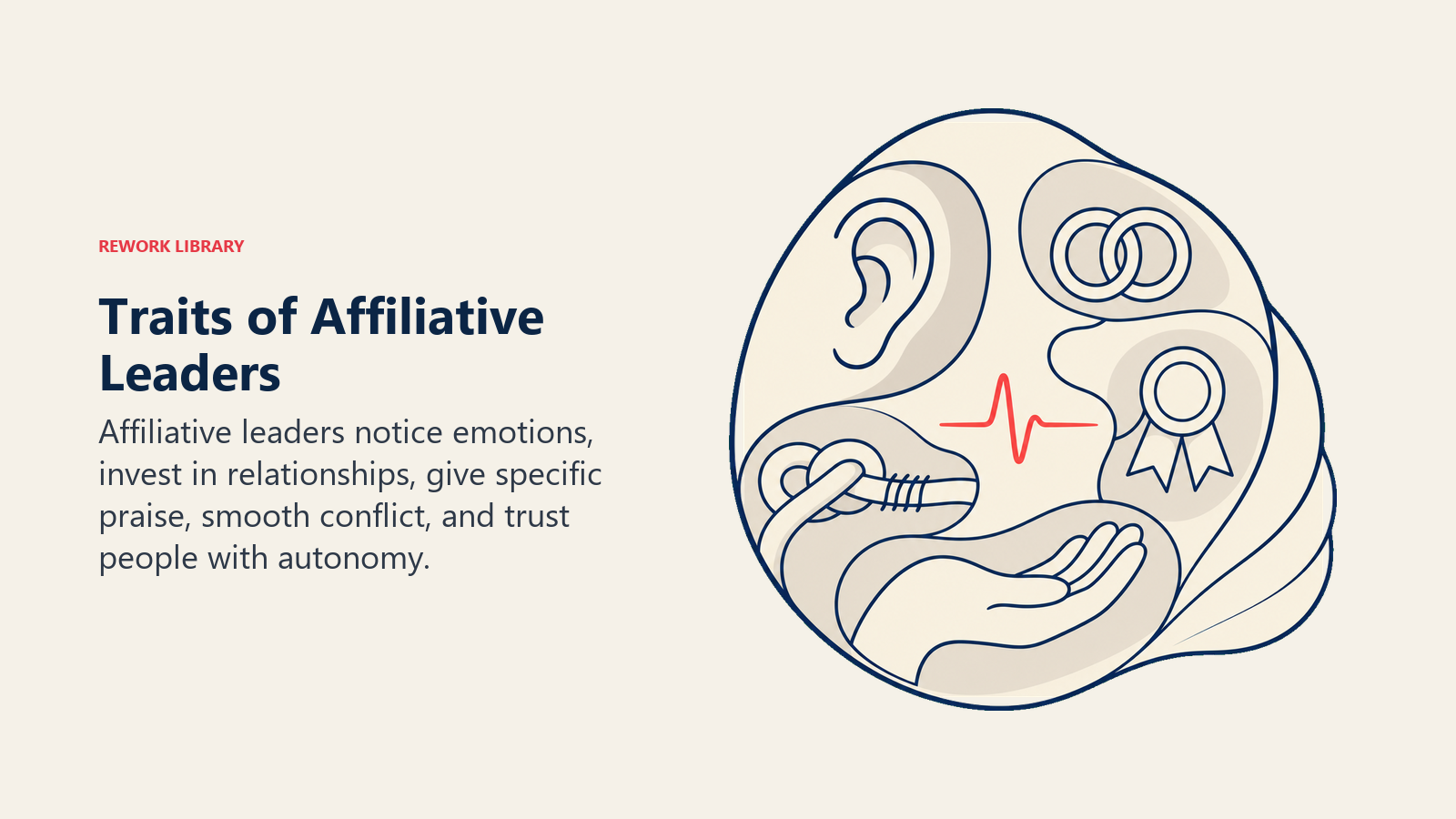
Empati sebagai landasan. Pemimpin afiliatif memperhatikan dengan cermat bagaimana perasaan anggota tim, bukan hanya apa yang mereka hasilkan. Mereka memperhatikan ketika seseorang tampak kewalahan, tidak terlibat, atau berjuang dengan sesuatu di luar pekerjaan. Kesadaran itu membentuk cara mereka berkomunikasi.
Cara pikir yang mendahulukan hubungan. Mereka menginvestasikan waktu nyata untuk mengenal orang-orang mereka. Bukan sebagai taktik, melainkan karena mereka benar-benar peduli. Ini adalah pemimpin yang mengingat ulang tahun, menindaklanjuti situasi pribadi berminggu-minggu kemudian, dan membuat pendatang baru merasa disambut sejak hari pertama.
Umpan balik yang positif dan dermawan. Pemimpin afiliatif konsisten dalam memberikan pujian. Mereka mencari hal-hal yang berjalan benar dan mengatakannya, sering dan dengan spesifik. Ini bukan pujian kosong, melainkan pengakuan atas upaya dan kemajuan yang tulus dengan cara yang terasa personal daripada sekadar formalitas.
Meredakan konflik daripada konfrontasi. Ketika ketegangan muncul, pemimpin afiliatif bergerak cepat untuk memulihkan keharmonisan. Mereka menyatukan orang, mendorong percakapan terbuka, dan cenderung mencari titik temu daripada menyatakan pemenang. Ini bisa menjadi kekuatan dalam situasi yang bergejolak dan kelemahan ketika konfrontasi langsung sebenarnya akan lebih baik bagi tim.
Kebebasan dalam struktur. Karena mereka mempercayai orang-orang mereka, pemimpin afiliatif sering memberikan otonomi yang signifikan. Mereka tidak memantau terus-menerus. Mereka memantau, menawarkan dukungan, lalu mundur.
Kepemimpinan afiliatif vs demokratis vs pembinaan
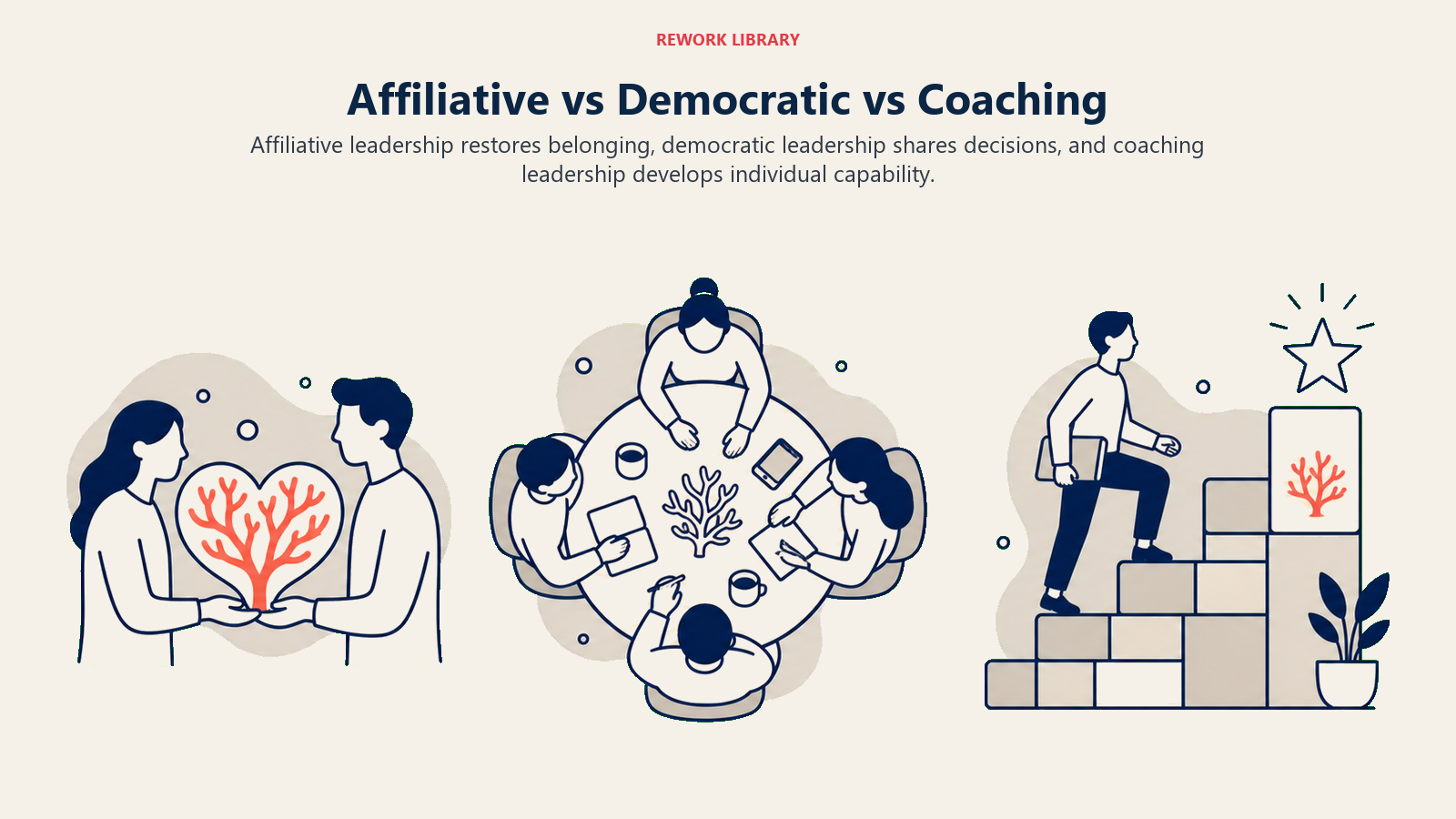
Ketiga gaya ini memiliki orientasi yang positif terhadap orang, tetapi cara kerjanya berbeda dan cocok untuk situasi yang berbeda.
| Gaya | Fokus inti | Memotivasi dengan | Terbaik untuk |
|---|---|---|---|
| Afiliatif | Keharmonisan emosional dan kepercayaan | Rasa memiliki, koneksi, keamanan psikologis | Menyembuhkan konflik, membangun kembali semangat, mendukung tim melewati perubahan |
| Demokratis | Masukan bersama dan konsensus | Suara, kepemilikan, rasa hormat terhadap ide | Membangun komitmen, menyelesaikan masalah kompleks dengan tim yang kompeten |
| Pembinaan | Pengembangan individu jangka panjang | Pertumbuhan, penguasaan, kemajuan karier | Anggota tim berpotensi tinggi yang ingin berkembang dan belajar |
Gaya afiliatif bertanya "bagaimana perasaan Anda?", gaya demokratis bertanya "apa pendapat Anda?", dan gaya pembinaan bertanya "ke mana Anda ingin berkembang?" Ketiganya berharga, dan pemimpin paling efektif dapat berpindah di antara mereka dengan lancar. Jelajahi gaya kepemimpinan emosional untuk melihat gambaran lengkap tentang bagaimana enam gaya ini berinteraksi.
Manfaat kepemimpinan afiliatif dan kapan ia paling efektif
Gaya ini mendapatkan tempatnya dalam perangkat karena ada situasi nyata di mana ia adalah pilihan yang paling berdampak.
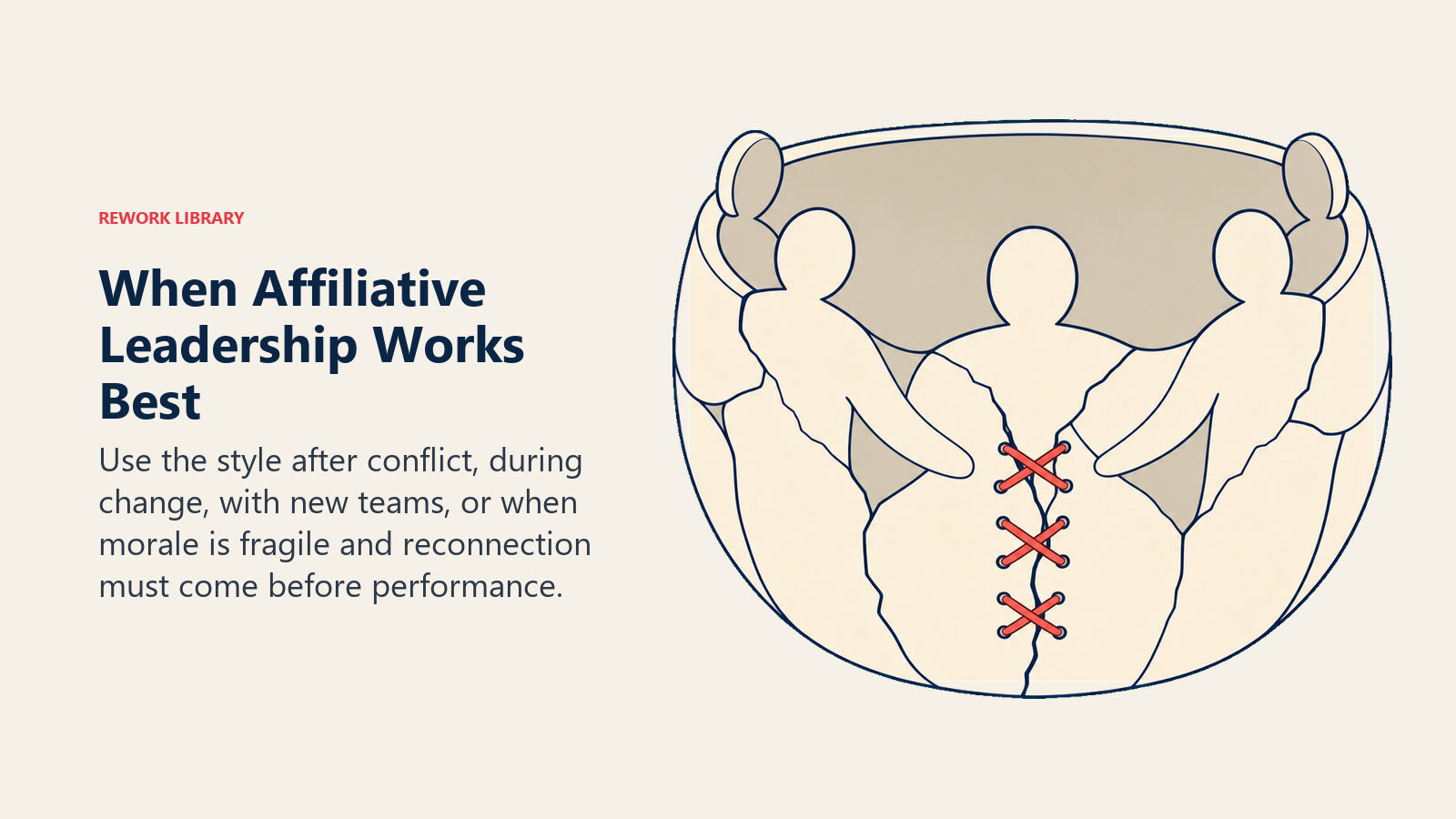
Setelah perselisihan dalam tim. Pertengkaran antara rekan kerja, putaran PHK, proyek yang gagal dan membuat orang demoralisasi, semua ini adalah momen ketika tim membutuhkan reconneksi sebelum dapat berkinerja lagi. Pemimpin afiliatif fokus pada penyembuhan terlebih dahulu.
Selama perubahan organisasi besar. Restrukturisasi, merger, transisi kepemimpinan, semua ini menciptakan ketidakpastian dan kecemasan. Pemimpin afiliatif memberikan stabilitas emosional ketika situasi strategis tidak jelas.
Dengan tim baru atau pemimpin baru. Ketika orang belum saling mempercayai atau memercayai manajer mereka, berinvestasi dalam hubungan lebih awal membuat segalanya lebih mudah nanti. Perilaku afiliatif di awal hubungan menghasilkan imbal balik yang terus bertumbuh.
Untuk meningkatkan semangat dalam tim yang kelelahan. Jika tim telah bekerja keras selama berbulan-bulan, pengakuan, apresiasi, dan koneksi yang tulus membantu mempertahankan momentum dan mencegah kelelahan.
Ketika keadaan individu perlu diakui. Anggota tim yang menghadapi penyakit keluarga, kehilangan pribadi, atau tantangan kesehatan mental membutuhkan pemimpin yang memperhatikan dan merespons dengan kepedulian, bukan sekadar instruksi.
Gaya afiliatif bekerja paling baik ketika dipasangkan dengan rasa tujuan tim yang jelas. Keharmonisan tanpa arah bisa menyimpang, hubungan tanpa hasil akhirnya membuat semua orang frustrasi.
Keterbatasan dan risiko
Digunakan dengan baik, kepemimpinan afiliatif membangun loyalitas yang bertahan lama. Digunakan secara eksklusif atau pada waktu yang salah, ia menciptakan masalah nyata.
Masalah kinerja bisa tidak tertangani. Keinginan pemimpin afiliatif untuk menjaga keharmonisan dapat membuat umpan balik yang sulit terasa mustahil untuk disampaikan. Jika seseorang tidak mencapai target atau menciptakan gesekan, respons yang murni afiliatif, yaitu fokus pada empati dan menghindari percakapan sulit, membiarkan masalah membesar. Tim memperhatikan, dan seiring waktu hal itu mengikis kepercayaan terhadap pemimpin.
"Baik" bisa berubah menjadi "tidak jelas." Ketika seorang pemimpin memprioritaskan membuat semua orang merasa baik, mereka bisa akhirnya berkomunikasi dengan cara yang kurang jelas dan akuntabilitas. Tujuan menjadi lunak. Tenggat waktu menjadi saran. Standar mulai menurun.
Situasi krisis membutuhkan cara yang berbeda. Ketika sesuatu mendesak, yaitu produk gagal, klien pergi, masalah kepatuhan muncul, orang membutuhkan arahan yang tegas dan jelas. Gaya afiliatif bisa terasa terlalu lambat, terlalu lembut, terlalu fokus pada perasaan di saat yang membutuhkan tindakan.
Penggunaan berlebihan melemahkan sinyal. Jika pemimpin afiliatif memuji segalanya, pujian kehilangan maknanya. Jika mereka selalu meredakan konflik, tim berhenti membawa masalah nyata ke permukaan.
Goleman jelas dalam penelitian aslinya: gaya afiliatif hampir selalu harus digunakan bersama pendekatan lain, terutama kepemimpinan visioner (untuk memberikan arahan yang jelas) dan gaya kepemimpinan pembinaan (untuk mendorong pengembangan). Tidak ada satu pun yang secara lengkap menyelesaikan seluruh pekerjaan.
Cara mempraktikkan kepemimpinan afiliatif
Gaya ini bisa dikembangkan. Ini bukan sifat kepribadian yang Anda miliki atau tidak, melainkan serangkaian praktik.

Langkah 1: Bangun hubungan yang tulus sebelum Anda membutuhkannya
Jangan menunggu krisis untuk menunjukkan bahwa Anda peduli tentang tim Anda. Investasikan dalam hubungan selama masa-masa biasa. Lakukan percakapan satu-per-satu yang tidak didorong oleh agenda. Tanyakan bagaimana keadaan orang-orang, dan benar-benar dengarkan. Ketahui sesuatu yang nyata tentang setiap orang di tim Anda, apa yang membuat mereka bersemangat, apa yang menantang mereka, apa yang mereka pedulikan di luar pekerjaan.
Langkah 2: Berikan umpan balik positif yang spesifik dan tepat waktu
Pemimpin afiliatif dermawan dalam pengakuan, tetapi pengakuan yang paling efektif adalah yang spesifik. "Kerja bagus" itu baik. "Cara Anda menangani pertanyaan klien itu secara spontan menyelamatkan akun kita, itu keputusan yang tepat" adalah sesuatu yang diingat orang. Kaitkan pujian dengan perilaku atau keputusan spesifik, dan sampaikan sedekat mungkin dengan saat terjadinya.
Langkah 3: Ciptakan keamanan psikologis
Keamanan psikologis berarti orang dapat berbicara, mengajukan pertanyaan, mengakui kesalahan, dan tidak setuju, tanpa takut malu atau dihukum. Pemimpin afiliatif membangun ini dengan memodelkan kerentanan sendiri (berbagi ketidakpastian mereka sendiri, mengakui kesalahan mereka sendiri), merespons kesalahan dengan rasa ingin tahu daripada menyalahkan, dan membuat pendapat yang tidak populer terlihat aman untuk diungkapkan.
Langkah 4: Selesaikan konflik daripada hanya meredakannya
Ada perbedaan antara menyembuhkan konflik dan menekannya. Pemimpin afiliatif membawa pihak-pihak yang berkonflik ke dalam percakapan, membantu setiap pihak merasa didengar, dan bekerja menuju resolusi yang tulus. Itu berbeda dengan hanya memberi tahu semua orang untuk "melupakannya." Jika dua anggota tim dalam gesekan yang nyata, menutupinya tidak membantu, hanya menunda masalah.
Langkah 5: Imbangi fokus relasional dengan kejelasan hasil
Ini adalah disiplin kritis bagi pemimpin afiliatif. Pastikan tim Anda memiliki tujuan yang jelas, standar yang jelas, dan akuntabilitas yang jelas, bahkan saat Anda memimpin dengan kehangatan dan kepedulian. Pemimpin afiliatif terbaik juga fasih dalam kepemimpinan demokratis, menarik masukan tim tentang tujuan, dan dalam kepemimpinan melayani, menghilangkan hambatan agar orang dapat melakukan pekerjaan terbaik mereka. Tinjau 5 tingkat kepemimpinan untuk memahami di mana perilaku afiliatif cocok dalam model kepemimpinan yang lebih luas.
Contoh kepemimpinan afiliatif
Seperti apa ini dalam praktik? Konteks sangat penting.
| Situasi | Respons afiliatif |
|---|---|
| Anggota tim baru bergabung setelah merger | Pemimpin menghabiskan dua minggu pertama dalam pertemuan satu-per-satu informal, menciptakan ritual bersama, fokus pada koneksi daripada produktivitas yang cepat |
| Pemain kunci menunjukkan tanda-tanda kelelahan | Pemimpin mengakui tekanan secara langsung, sementara mengurangi beban kerja, memantau secara teratur, dan tidak hanya mendorong terus ke tenggat waktu berikutnya |
| Konflik tim atas kepemilikan proyek | Pemimpin memfasilitasi percakapan antara kedua pihak, membantu masing-masing merasa dipahami, menemukan definisi keberhasilan bersama |
| Penurunan semangat setelah PHK | Pemimpin transparan tentang apa yang terjadi, menyebutkan ketidakpastian, fokus pada membangun kembali kepercayaan sebelum mendorong tujuan |
| Karyawan bintang melewatkan target utama | Pemimpin afiliatif memeriksa apa yang terjadi secara personal sebelum langsung ke manajemen kinerja |
Perhatikan bahwa di baris terakhir, pendekatan afiliatif adalah titik awal, bukan respons lengkap. Jika masalah kinerja berlanjut, pemimpin pada akhirnya perlu beralih ke pendekatan yang lebih direktif atau pembinaan.
Praktik terbaik
Lakukan:
- Investasikan dalam hubungan secara konsisten, bukan hanya di masa-masa sulit
- Berikan pengakuan yang spesifik dan personal
- Pantau bagaimana perasaan orang, bukan hanya apa yang mereka hasilkan
- Modelkan kerentanan dan keterbukaan yang ingin Anda tunjukkan pada tim Anda
- Padukan kepemimpinan afiliatif dengan tujuan yang jelas dan umpan balik langsung ketika diperlukan
- Gunakan gaya ini dengan sengaja setelah konflik, selama perubahan, atau ketika semangat sedang rapuh
Jangan:
- Biarkan keinginan untuk harmonis menghentikan Anda dari percakapan kinerja yang sulit
- Keliru mengira disukai dengan menjadi pemimpin yang efektif
- Terapkan gaya ini dalam krisis yang membutuhkan tindakan cepat dan tegas
- Gunakan pujian begitu luas sehingga berhenti bermakna
- Asumsikan setiap orang di tim Anda membutuhkan tingkat perhatian relasional yang sama
Kepemimpinan afiliatif tidak akan menyelesaikan setiap masalah, tidak ada satu gaya pun yang demikian. Tetapi untuk tim yang menghadapi ketidakpastian, membangun kembali setelah konflik, atau sekadar membutuhkan pemimpin yang melihat mereka sebagai manusia daripada sekadar angka, ini adalah titik awal yang tepat. Pemimpin yang melakukannya dengan paling baik juga adalah mereka yang cukup jujur untuk beralih cara ketika keharmonisan harus mengalah pada kejelasan.

On this page
- Apa itu kepemimpinan afiliatif?
- Ciri-ciri pemimpin afiliatif
- Kepemimpinan afiliatif vs demokratis vs pembinaan
- Manfaat kepemimpinan afiliatif dan kapan ia paling efektif
- Keterbatasan dan risiko
- Cara mempraktikkan kepemimpinan afiliatif
- Langkah 1: Bangun hubungan yang tulus sebelum Anda membutuhkannya
- Langkah 2: Berikan umpan balik positif yang spesifik dan tepat waktu
- Langkah 3: Ciptakan keamanan psikologis
- Langkah 4: Selesaikan konflik daripada hanya meredakannya
- Langkah 5: Imbangi fokus relasional dengan kejelasan hasil
- Contoh kepemimpinan afiliatif
- Praktik terbaik