Bahasa Indonesia
Kepemimpinan Otokratis: Definisi, Kelebihan, dan Kekurangan
Turn this article into takeaways for your work.


Each assistant summarizes the article only for you and suggests best practices for your work.
Kepemimpinan otokratis adalah gaya yang paling banyak dibayangkan orang ketika membayangkan eksekutif yang bergerak cepat, mengambil keputusan dengan tegas, tidak mengharapkan perlawanan, dan langsung melanjutkan. Gaya ini mendapat reputasi buruk di kalangan manajemen, tetapi memahami kapan ia benar-benar membantu versus kapan ia merusak kepercayaan adalah yang membedakan pengetahuan berguna dari sekadar penilaian moral.
Apa itu kepemimpinan otokratis?
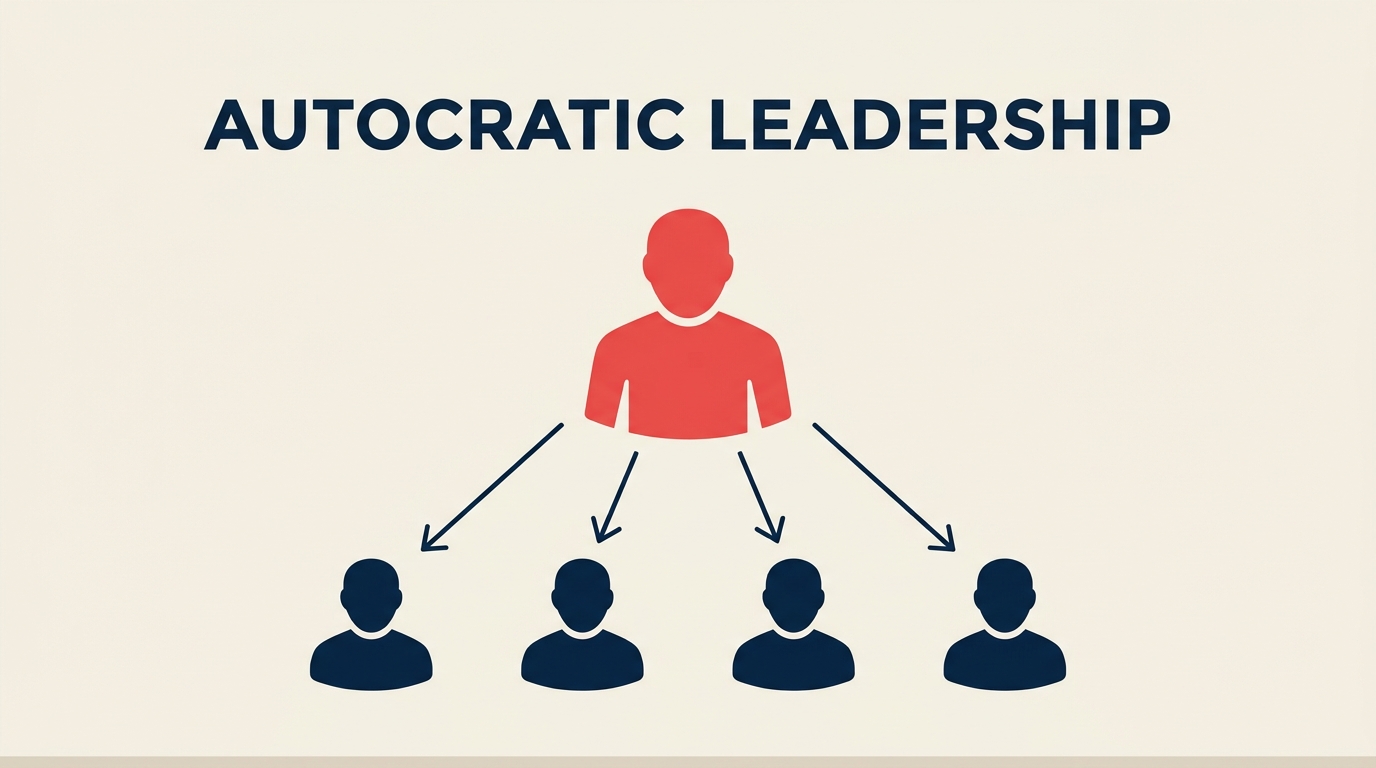
Kepemimpinan otokratis adalah gaya kepemimpinan di mana satu orang memegang semua atau sebagian besar otoritas pengambilan keputusan, dengan sedikit atau tanpa masukan dari kelompok. Pemimpin menetapkan arah, mendefinisikan aturan, dan mengharapkan tim untuk melaksanakannya.
Tiga gaya kepemimpinan klasik pertama kali diidentifikasi oleh psikolog Kurt Lewin, Ronald Lippitt, dan Ralph White dalam studi Universitas Iowa tahun 1939 yang monumental. Bekerja dengan kelompok anak laki-laki, mereka membandingkan pendekatan otokratis (aturan satu orang), demokratis (partisipasi kelompok), dan laissez-faire (bimbingan minimal) serta mengukur dampaknya pada perilaku, semangat, dan output. Studi tersebut menjadi salah satu fondasi yang paling banyak dikutip dari teori kepemimpinan modern.
Fakta Kunci
Studi klub anak laki-laki Universitas Iowa tahun 1939 oleh Lewin, Lippitt, dan White telah mengumpulkan lebih dari 12.000 kutipan di Google Scholar, menjadikannya salah satu studi fondasi yang paling banyak dikutip dalam penelitian kepemimpinan.
Gallup's State of the Global Workplace 2024 menemukan bahwa hanya 23% karyawan di seluruh dunia yang terlibat aktif dalam pekerjaan, sebuah angka yang turun tajam dalam lingkungan kontrol tinggi dengan ruang suara yang rendah.
Meta-analisis tahun 2023 yang diterbitkan di The Leadership Quarterly menemukan bahwa kepemimpinan yang sangat direktif mengurangi perilaku menyuarakan pendapat dan hasil inovasi dalam tim pekerjaan berbasis pengetahuan, bahkan ketika karyawan melaporkan pemimpin tersebut sebagai kompeten.
Ciri-ciri pemimpin otokratis
Pemimpin otokratis berbagi sekumpulan perilaku yang mudah dikenali. Tidak semuanya negatif, tetapi bersama-sama mereka menciptakan profil yang khas:
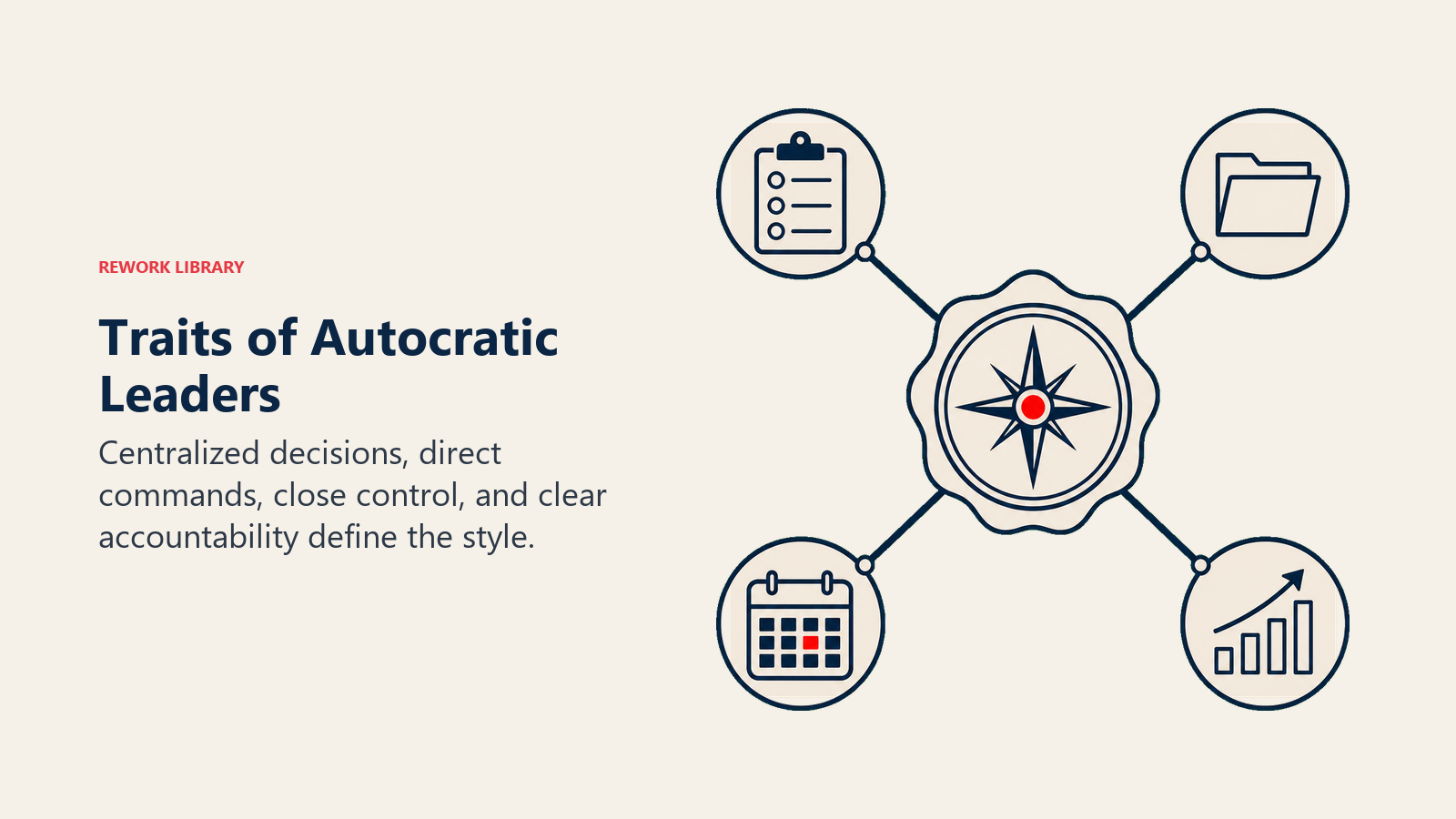
- Pengambilan keputusan terpusat. Pemimpin membuat sebagian besar atau semua keputusan signifikan tanpa mencari konsensus kelompok, menjaga otoritas terkonsentrasi di puncak.
- Perintah yang jelas dan langsung. Instruksi bersifat spesifik, tidak ambigu, dan tidak dapat dinegosiasikan setelah dikeluarkan, yang mengurangi kebingungan tentang seperti apa "selesai" itu.
- Toleransi terbatas terhadap debat. Meskipun pertanyaan untuk klarifikasi mungkin diizinkan, tantangan terhadap keputusan inti tidak disambut dan bisa ditolak dengan cepat.
- Akuntabilitas pribadi yang tinggi. Karena pemimpin memiliki keputusan tersebut, mereka juga memiliki hasilnya. Blame jarang mengalir ke bawah ketika pemimpin benar-benar otokratis.
- Lingkungan terstruktur. Peran, aturan, dan proses didefinisikan dengan baik. Anggota tim tahu persis apa yang diharapkan dari mereka, meskipun mereka tidak membantu menetapkan ekspektasi tersebut.
- Kecepatan di atas konsensus. Mengambil keputusan dengan cepat lebih penting daripada mendapatkan dukungan semua orang terlebih dahulu.
- Pemantauan ketat. Pemimpin otokratis cenderung memantau pelaksanaan dengan cermat dan melakukan intervensi dini jika terjadi penyimpangan dari rencana.
- Jarak emosional. Hubungan pribadi bersifat sekunder terhadap penyelesaian tugas. Pemimpin sering dapat didekati dalam arti profesional tetapi tidak terbuka secara emosional dalam situasi tim.
Kepemimpinan otokratis vs demokratis vs laissez-faire
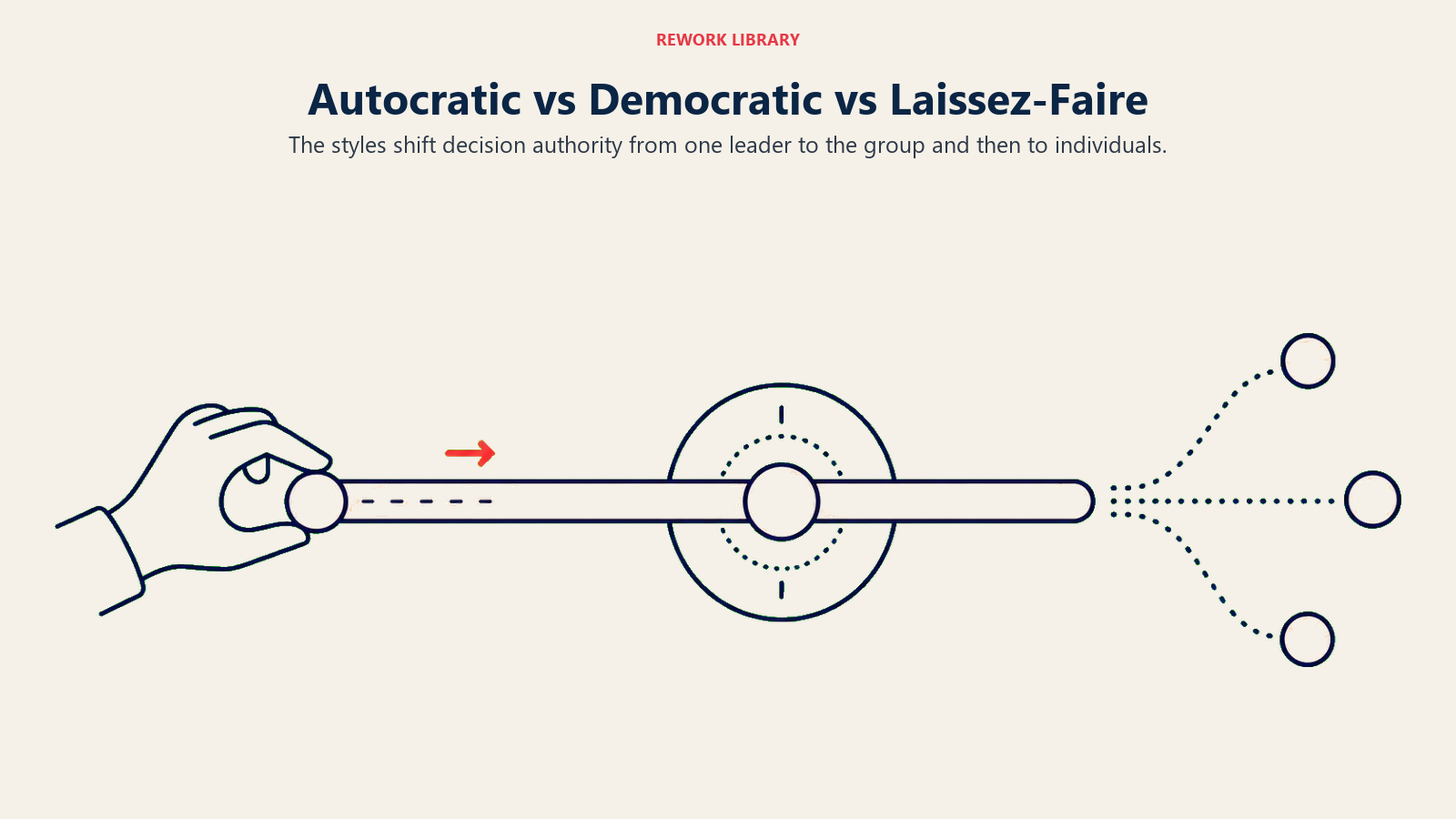
Ketiga gaya ini berbeda secara fundamental dalam hal di mana otoritas keputusan berada dan seberapa banyak anggota tim diharapkan berkontribusi di luar pelaksanaan.
| Dimensi | Otokratis | Demokratis | Laissez-faire |
|---|---|---|---|
| Otoritas keputusan | Pemimpin seorang diri | Pemimpin + masukan tim | Anggota tim secara individual |
| Kecepatan | Cepat | Lebih lambat | Bervariasi (bisa lambat) |
| Suara karyawan | Rendah | Tinggi | Sangat tinggi |
| Akuntabilitas | Terpusat | Dibagi bersama | Menyebar |
| Risiko utama | Semangat rendah, inovasi rendah, ketergantungan | Kelumpuhan analisis, pelaksanaan lebih lambat | Kebingungan, inkonsistensi, kurangnya arah |
| Paling cocok untuk | Krisis, keselamatan berisiko tinggi, tim baru atau tidak terampil | Pekerjaan berbasis pengetahuan, perencanaan strategis, tim kuat | Profesional ahli, peneliti otonom |
Pilihan di antara ketiganya bukan soal moral, melainkan soal konteks. Seperti yang ditetapkan oleh penelitian teori kepemimpinan perilaku, tidak ada satu gaya terbaik; pendekatan yang tepat bergantung pada apa yang dituntut pekerjaan dan apa yang dibutuhkan tim.
Kapan kepemimpinan otokratis berhasil
1. Kedaruratan dan respons krisis

Ketika gedung terbakar, koordinator evakuasi tidak mengadakan pemungutan suara. Kecepatan dan koordinasi lebih penting daripada dukungan bersama. Logika yang sama berlaku dalam krisis korporat: pelanggaran data, penarikan produk, kedaruratan keuangan. Komando yang jelas, pelaksanaan cepat, tanpa ambiguitas. Salah satu hasil terdokumentasi dari studi asli Lewin adalah bahwa kelompok otokratis menghasilkan lebih banyak pekerjaan dalam jangka pendek, yang secara langsung memetakan ke kasus penggunaan ini.
2. Industri berisiko keselamatan jiwa
Penerbangan, pembedahan, operasi pembangkit nuklir, dan satuan militer beroperasi di bawah hierarki komando yang ketat bukan karena orang-orang yang terlibat kurang cerdas, melainkan karena biaya dari otoritas yang tidak jelas pada momen kritis adalah kematian. Pilot-in-command memiliki otoritas akhir justru karena keputusan komite di ketinggian tidak dapat berfungsi.
3. Lingkungan keterampilan rendah atau pergantian tinggi
Karyawan baru di restoran cepat saji di shift pertama mereka tidak perlu ikut merancang proses perakitan burger. Instruksi yang jelas dan direktif membuat mereka berfungsi lebih cepat dan mengurangi kesalahan. Ketika masa kerja singkat dan waktu pelatihan terbatas, pendekatan otokratis menciptakan struktur yang mencegah kekacauan.
4. Militer dan organisasi berbasis rantai komando
Seluruh logika rantai komando bergantung pada perintah yang diikuti tanpa unit individual berimprovisasi secara otonom. Ini bukan tentang menekan kecerdasan; ini tentang koordinasi dalam skala besar. Peleton yang memperdebatkan perintah di tengah pertempuran adalah peleton yang kalah.
5. Fase pelaksanaan dengan tenggat waktu ketat
Setelah strategi telah diperdebatkan dan diputuskan, fase pelaksanaan sering mendapat manfaat dari tangan yang lebih direktif. Kembali ke pengambilan keputusan partisipatif selama implementasi menciptakan penundaan dan sinyal yang campur aduk. Kepemimpinan otokratis yang diterapkan pada rencana yang sudah disepakati menjaga proyek tetap bergerak.
Kapan kepemimpinan otokratis gagal
1. Tim pekerjaan berbasis pengetahuan
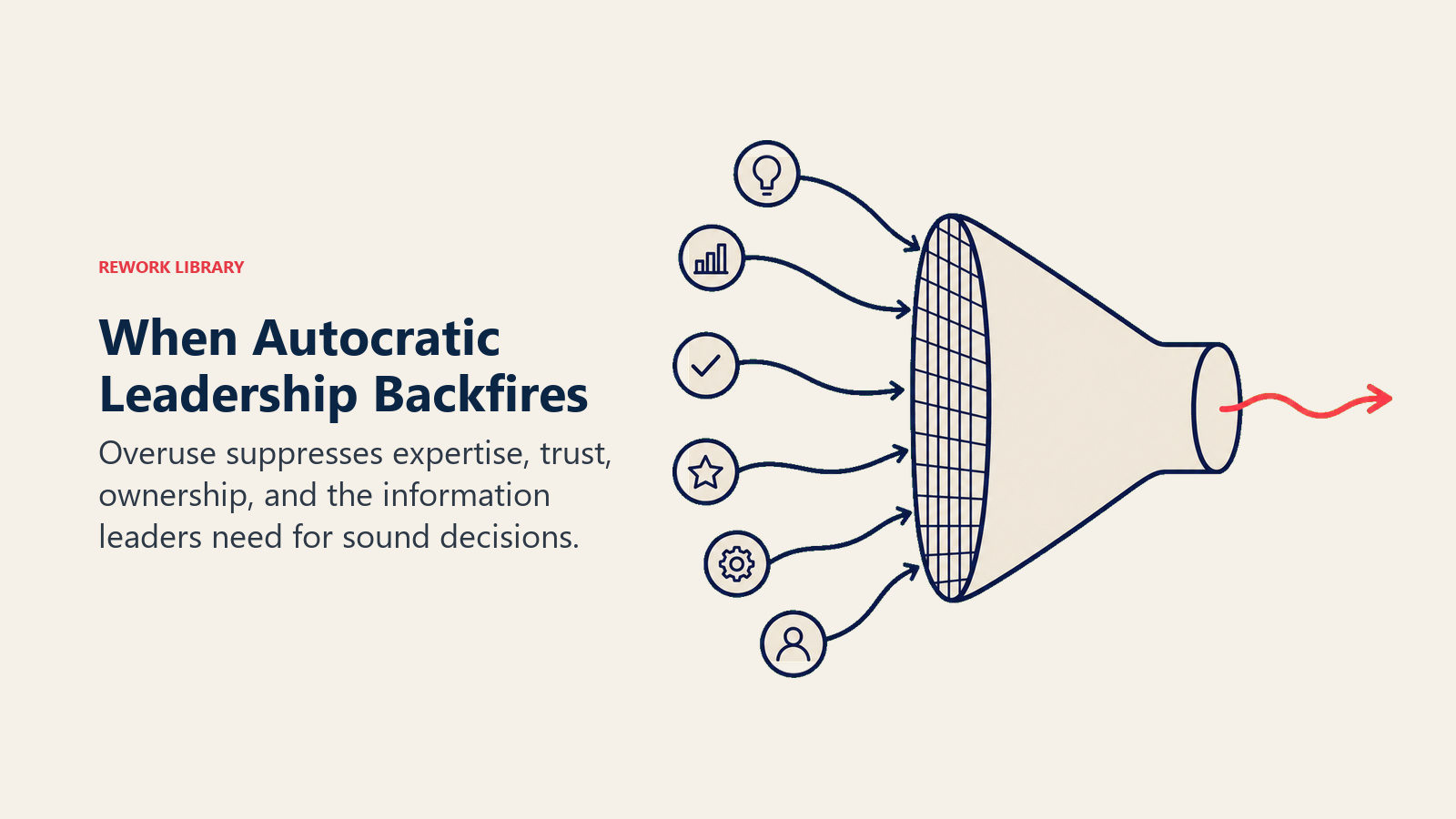
Insinyur perangkat lunak, peneliti, ahli strategi pemasaran, dan desainer produk membawa keahlian domain yang sering tidak dimiliki pemimpin. Ketika pemimpin mengabaikan keahlian itu tanpa penjelasan, orang-orang terbaik pergi, dan kualitas keputusan memburuk. Meta-analisis Leadership Quarterly 2023 menemukan pola ini dapat diukur dan konsisten.
2. Proyek kreatif
Kreativitas bergantung pada keamanan psikologis. Jika pemimpin menolak ide-ide awal, anggota tim berhenti menghasilkannya. Anda bisa secara otokratis mengarahkan fase produksi proyek kreatif, tetapi Anda tidak bisa secara otokratis mengarahkan fase ideasi tanpa mematikan output.
3. Profesional dengan masa kerja panjang
Profesional berpengalaman mengharapkan untuk dikonsultasikan, bukan sekadar diperintah. Manajer otokratis yang ditempatkan di atas tim yang sudah bekerja 10 tahun biasanya menghadapi resistensi diam-diam, keterlibatan rendah, dan akhirnya pengunduran diri. Pekerja-pekerja ini memiliki pengetahuan institusional yang dibutuhkan organisasi tetapi tidak akan membagikannya jika merasa diabaikan.
4. Tim jarak jauh dan hybrid
Dalam lingkungan terdistribusi, tim beroperasi dengan otonomi tinggi karena kebutuhan. Gaya otokratis dalam konteks jarak jauh cenderung dibaca sebagai micromanagement tanpa manfaat kompensasi dari kehadiran fisik. Ini merusak kepercayaan tanpa meningkatkan koordinasi. Lihat micromanagement untuk penjelasan lengkap tentang mengapa dinamika ini merusak kinerja.
5. Manajemen perubahan
Membuat orang mengubah perilaku mereka dalam skala besar membutuhkan dukungan, bukan sekadar perintah. Perubahan yang dipaksakan menciptakan kepatuhan semu. Orang mengikuti proses baru ketika diamati dan kembali ke cara lama ketika tidak. Penelitian tentang adopsi perubahan secara konsisten menunjukkan bahwa partisipasi meningkatkan komitmen, yang berlawanan dengan apa yang biasanya dihasilkan manajemen perubahan otokratis.
Contoh nyata pemimpin otokratis
Henry Ford (era awal Model T)
Ungkapan Ford, "warna apa saja selama itu hitam," bukan slogan pemasaran. Itu adalah cerminan langsung dari filosofi operasinya. Ford membuat keputusan sepihak tentang desain produk, proses manufaktur, dan hubungan pemasok. Ia terkenal memecat eksekutif yang mempertanyakan pendekatannya. Hasilnya luar biasa dalam jangka pendek: Model T menjadi mobil paling terjangkau di Amerika. Biaya jangka panjangnya adalah ketidakmampuan untuk beradaptasi ketika General Motors menawarkan konsumen pilihan yang Ford menolak untuk dibuat.
Steve Jobs (kembali ke Apple, 1997)
Jobs kembali ke Apple selama masa hampir kebangkrutan dan membuat keputusan sepihak yang luas: hapus 70% lini produk, pecat eksekutif, batalkan proyek yang didukung seluruh perusahaan. Ia terkenal menolak masukan komite untuk desain produk dan bersikeras mendapat otoritas final atas setiap detail pengalaman pengguna. Pendekatan otokratis mendorong iMac, iPod, dan iPhone ke pasar dalam kerangka waktu yang singkat. Ini juga menciptakan perputaran karyawan berbakat yang tinggi karena tidak bisa beroperasi di bawah penolakan yang terus-menerus.
Vince Lombardi (Green Bay Packers)
Lombardi mengambil alih tim yang hanya memenangkan satu pertandingan di musim sebelumnya dan memenangkan lima kejuaraan NFL dalam tujuh tahun. Ia menjalankan operasi yang ketat dan direktif: latihannya, permainannya, aturannya. Pemain menggambarkannya sebagai menuntut dan tidak fleksibel pada standar. Ia juga menciptakan ekspektasi yang sangat jelas dan memegang dirinya sendiri pada standar yang sama yang ia tuntut dari orang lain, yang membedakan pemimpin otokratis berkinerja tinggi dari yang sekadar mengontrol.
Kelebihan dan kekurangan kepemimpinan otokratis
Kelebihan:
- Keputusan diambil dengan cepat tanpa penundaan dari konsensus kelompok
- Akuntabilitas yang jelas: satu orang memiliki hasilnya
- Bekerja dengan baik dalam lingkungan bertekanan tinggi, sensitif waktu, atau berisiko tinggi
- Mengurangi kebingungan dalam tim dengan peran yang tidak jelas atau pengalaman rendah
- Mempertahankan konsistensi ketika satu visi perlu dijaga dengan teguh
Kekurangan:
- Menekan suara karyawan, yang mengikis inovasi dan semangat dari waktu ke waktu
- Menciptakan ketergantungan: tim kehilangan kemampuan untuk beroperasi tanpa arahan
- Mengusir orang-orang berpengalaman dan berinisiatif tinggi yang ingin berkontribusi
- Meningkatkan biaya keputusan yang salah, karena lebih sedikit pemeriksaan yang ada
- Sulit dipertahankan dalam lingkungan pekerjaan berbasis pengetahuan atau kreatif tanpa perputaran karyawan yang signifikan
Cara menggunakan kepemimpinan otokratis tanpa menghancurkan tim Anda
Pemimpin yang menerapkan pengambilan keputusan otokratis secara efektif cenderung mengikuti beberapa praktik yang membedakan kinerja tinggi dari kehancuran tim:
- Jelaskan cakupan dan horison waktu. Beritahu tim secara eksplisit kapan Anda beroperasi dalam mode komando dan untuk berapa lama. "Untuk sprint ini, keputusan adalah milik saya; kita akan mendebrifing sebagai kelompok setelah peluncuran" sangat berbeda dari "saya selalu membuat semua keputusan."
- Jelaskan alasannya meskipun Anda tidak memerlukan konsensus. Anda tidak berhutang suara kepada tim, tetapi Anda berhutang konteks yang cukup kepada mereka untuk melaksanakan dengan komitmen. Transparansi singkat tentang mengapa Anda membuat keputusan tersebut secara dramatis mengurangi kebencian.
- Buat saluran aman untuk keberatan. Utas Slack pribadi, 1:1 rutin di mana ketidaksetujuan secara eksplisit disambut, atau proses asinkron tertulis memberi orang sebuah saluran. Keberatan yang ditekan berubah menjadi ketidakterlibatan; keberatan yang tersalur terkadang memunculkan masalah nyata sebelum menjadi mahal.
- Default ke demokratis di luar jendela krisis. Cadangkan mode otokratis untuk situasi yang benar-benar membutuhkannya. Jika Anda menggunakannya untuk setiap rapat, setiap proses, setiap keputusan produk, Anda telah melatih tim Anda untuk bersikap pasif, dan kepasifan itu akan merugikan Anda ketika Anda benar-benar membutuhkan penilaian mereka.
- Tinjau keputusan setelah kejadian. Retrospektif singkat tentang keputusan direktif, bahkan ketika berhasil, memodelkan kejujuran intelektual dan membangun kredibilitas untuk lain kali Anda perlu bergerak cepat tanpa konsensus.
Memahami perbedaan antara kepemimpinan vs manajemen juga penting di sini. Kepemimpinan otokratis tidak sama dengan manajemen yang kaku. Para praktisi terbaik menggunakan otoritas direktif secara selektif dan tetap waspada terhadap kapan situasi berubah.

Senior Operations & Growth Strategist
On this page
- Apa itu kepemimpinan otokratis?
- Fakta Kunci
- Ciri-ciri pemimpin otokratis
- Kepemimpinan otokratis vs demokratis vs laissez-faire
- Kapan kepemimpinan otokratis berhasil
- Kapan kepemimpinan otokratis gagal
- Contoh nyata pemimpin otokratis
- Kelebihan dan kekurangan kepemimpinan otokratis
- Cara menggunakan kepemimpinan otokratis tanpa menghancurkan tim Anda