Bahasa Indonesia
Action-Centred Leadership: Model John Adair
Turn this article into takeaways for your work.


Each assistant summarizes the article only for you and suggests best practices for your work.
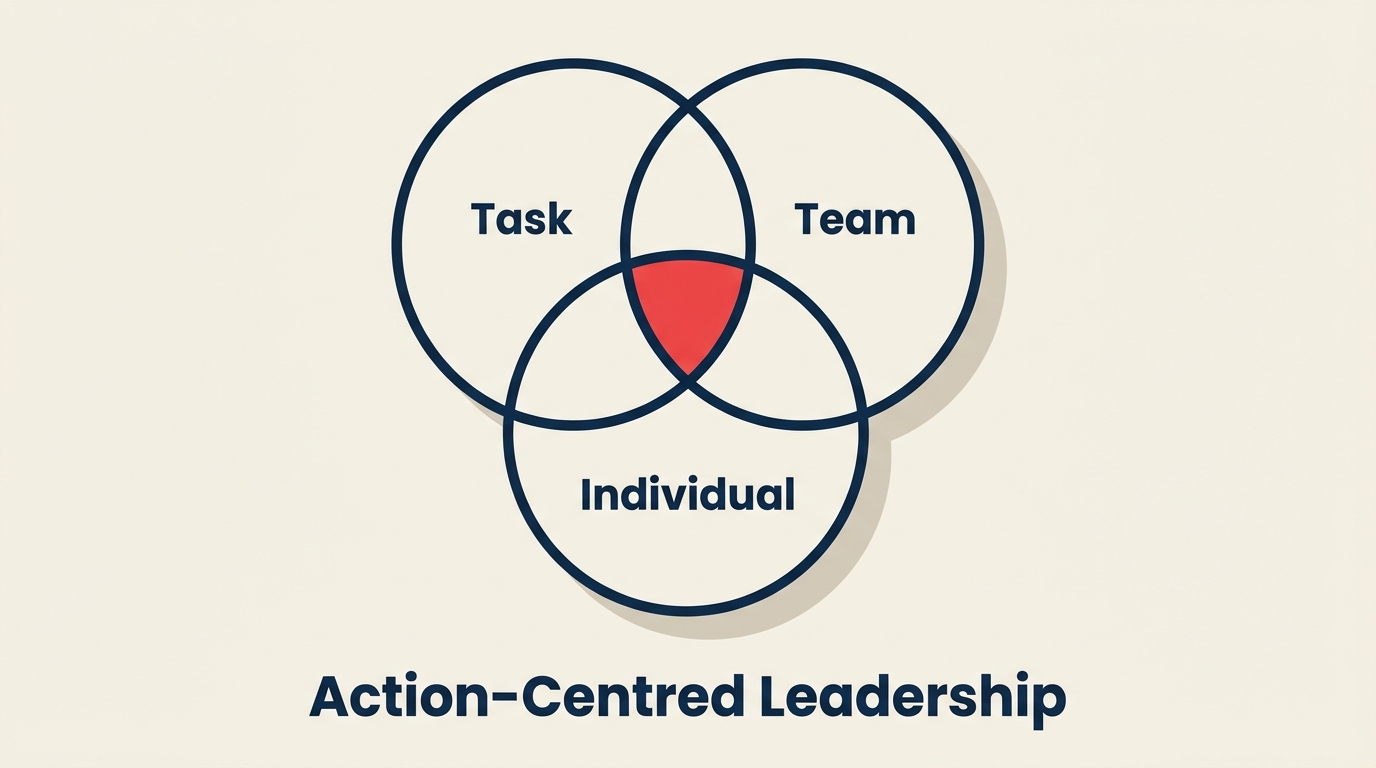
Action-centred leadership adalah salah satu kerangka kerja kepemimpinan yang paling bertahan lama dalam pengembangan manajemen, dibangun di atas visual yang sederhana: tiga lingkaran tumpang tindih yang mewakili Tugas, Tim, dan Individu. Dikembangkan oleh John Adair pada 1973, model ini menawarkan peta praktis tentang ke mana perhatian seorang pemimpin harus diarahkan. Alih-alih menggambarkan tipe kepribadian atau gaya manajemen yang kaku, model ini menggambarkan serangkaian tanggung jawab yang harus diseimbangkan seorang pemimpin secara bersamaan.
Model ini sangat berguna bagi pemimpin yang merasa tertarik ke berbagai arah yang saling bersaing. Ketika sebuah proyek mulai terlambat, apakah Anda menekan lebih keras pada tenggat waktu, lebih banyak meluangkan waktu bersama tim, atau fokus pada satu orang yang menghambat kemajuan? Jawaban Adair: biasanya ketiganya sekaligus, dengan proporsi yang berbeda tergantung pada apa yang sebenarnya sedang terjadi.
Apa Itu Action-Centred Leadership?
Action-centred leadership adalah model kepemimpinan yang dikembangkan oleh John Adair, diperkenalkan dalam karyanya tahun 1973, yang berargumen bahwa kepemimpinan yang efektif didefinisikan oleh tiga area tanggung jawab yang saling tumpang tindih: mencapai Tugas, membangun dan mempertahankan Tim, serta memperhatikan kebutuhan Individu. Ketiga lingkaran ini tumpang tindih karena area-area tersebut memang tidak terpisah. Keberhasilan di satu area memperkuat area lainnya, dan kelalaian di satu area merusak area lainnya.
Varian bahasa Inggris Amerika mengeja "action-centered leadership," tetapi ejaan Inggris Britania asli "action-centred" mencerminkan terminologi Adair sendiri.
Fakta Kunci
- John Adair mengembangkan model ini saat menjabat sebagai dosen senior di Royal Military Academy Sandhurst pada 1960-an, dan mempublikasikan kerangka kerja lengkapnya pada 1973.
- Adair diakui secara luas sebagai profesor studi kepemimpinan Inggris pertama, diangkat di University of Surrey pada 1979.
- Delapan fungsi kepemimpinannya telah diintegrasikan ke dalam program pelatihan di perusahaan termasuk Shell, McKinsey, dan Unilever, serta akademi militer di seluruh Inggris dan Amerika Serikat.
Latar belakang Adair di Sandhurst membentuk ketegasan model ini. Kepemimpinan militer tidak memiliki kemewahan untuk memisahkan penyelesaian tugas dari manajemen orang. Anda harus melakukan keduanya, di bawah tekanan, secara bersamaan. Itulah wawasan utama di balik desain tiga lingkaran ini.
Model ini menempatkan kepemimpinan sebagai serangkaian perilaku dan fungsi daripada sifat kepribadian. Hal ini menjadikannya mudah diakses. Anda tidak perlu menjadi visioner yang karismatik untuk menggunakannya. Anda hanya perlu memahami apa yang menjadi tanggung jawab Anda dan di mana Anda saat ini kurang berinvestasi. Untuk gambaran yang lebih luas tentang bagaimana ini cocok dengan sejarah pendekatan perilaku, teori kepemimpinan perilaku memberikan konteks yang berguna.
Tiga Lingkaran: Tugas, Tim, Individu
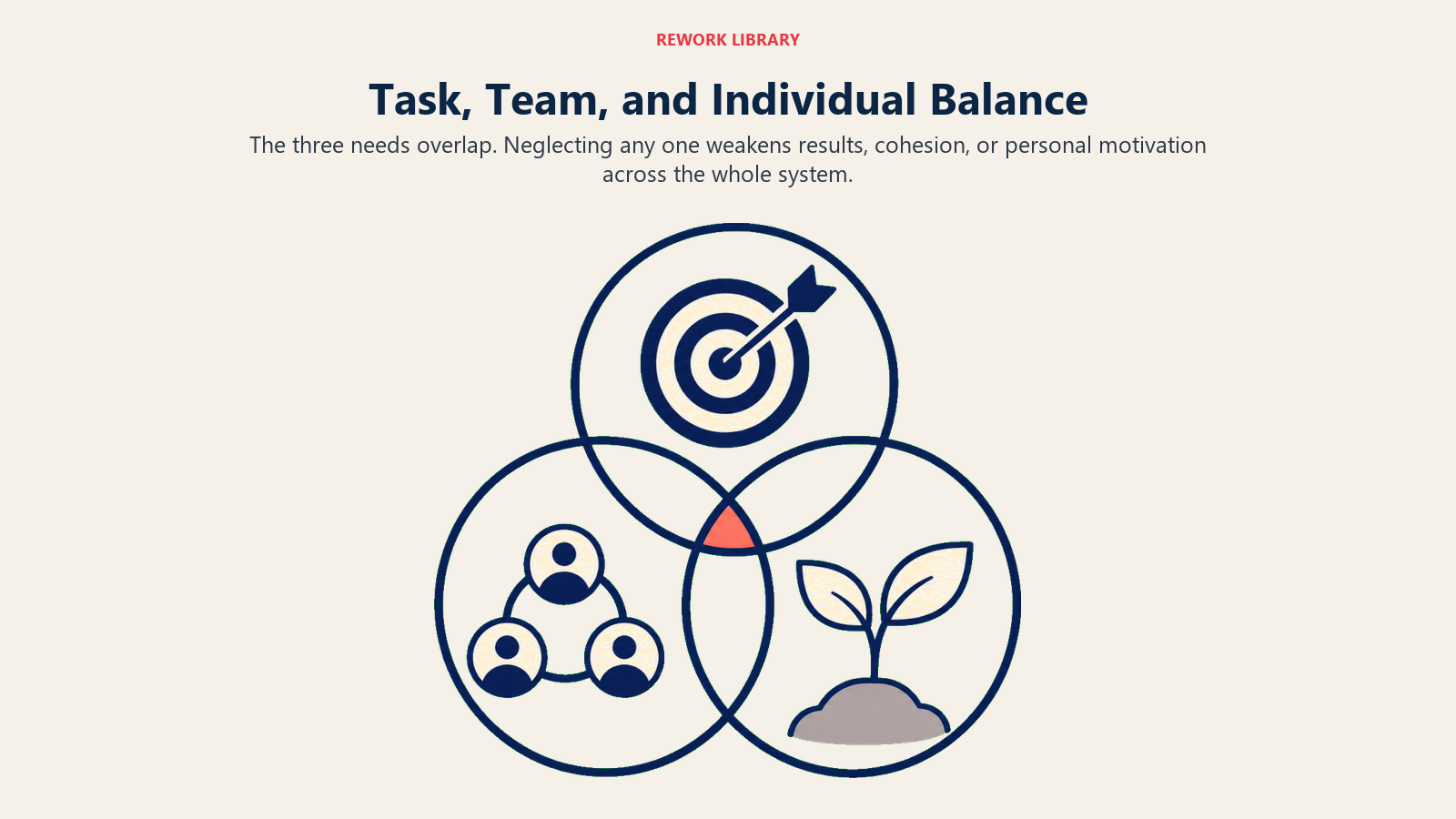
Tiga lingkaran adalah inti visual dari model ini. Mereka digambarkan sebagai tumpang tindih karena area-area tersebut memang berinteraksi secara nyata. Sebuah tim yang didukung dengan baik tetapi tidak jelas mengenai tugasnya tidak akan menghasilkan output. Seorang individu yang sangat termotivasi tetapi menjadi bagian dari tim yang disfungsional tidak dapat berkinerja optimal. Sebuah tugas yang terdefinisi dengan baik tetapi diberikan kepada individu yang tidak memiliki kemampuan yang sesuai akan menghasilkan kegagalan.
| Lingkaran | Fokus Pemimpin | Apa yang Terjadi jika Diabaikan |
|---|---|---|
| Tugas | Mendefinisikan tujuan, menetapkan tenggat waktu, mengalokasikan sumber daya, memantau kemajuan | Pekerjaan menyimpang, tenggat waktu terlewat, celah akuntabilitas muncul |
| Tim | Membangun kohesi, mempertahankan semangat, mengelola konflik, berkomunikasi dengan jelas | Ketidakikutsertaan, gesekan internal, kehilangan bakat, sekat-sekat |
| Individu | Mengembangkan keterampilan, mengakui kontribusi, menangani kesejahteraan, memberikan umpan balik | Kinerja rendah, ketidakikutsertaan, tingginya perputaran karyawan |
Tugas mencakup semua yang diperlukan untuk mendefinisikan dan mencapai tujuan. Ini meliputi memecah tujuan menjadi tonggak-tonggak yang jelas, menetapkan akuntabilitas, memantau kemajuan, dan mengadaptasi rencana ketika keadaan berubah. Pemimpin yang kuat dalam tugas cenderung menghasilkan hasil dalam jangka pendek. Namun jika mereka terlalu fokus di sini dengan mengorbankan lingkaran lainnya, mereka akan menguras tim dan kehilangan orang-orang terbaik mereka.
Tim mencakup dinamika dalam kelompok: kepercayaan, komunikasi, norma bersama, motivasi kolektif, dan bagaimana konflik dikelola. Tim bukan sekadar kumpulan individu yang mengerjakan tugas individual. Ini adalah sistem dengan budayanya sendiri. Pemimpin yang berinvestasi dalam lingkaran tim membangun organisasi yang dapat menangani kompleksitas dan ambiguitas, bukan hanya mengeksekusi rencana yang terdefinisi dengan baik.
Individu mencakup kebutuhan, pengembangan, dan kinerja setiap orang dalam tim. Orang-orang tidak dapat dipertukarkan. Seseorang yang baru bergabung dengan tim memiliki kebutuhan yang berbeda dari seseorang yang sudah berada di sana selama lima tahun. Seorang berkinerja tinggi yang kelelahan membutuhkan perhatian yang berbeda dari seorang karyawan baru yang membutuhkan arahan. Pemimpin yang memperlakukan individu sebagai satu massa yang tidak terbedakan melewatkan sinyal-sinyal yang memprediksi ketidakikutsertaan dan kepergian.
Fungsi-Fungsi Kepemimpinan Inti
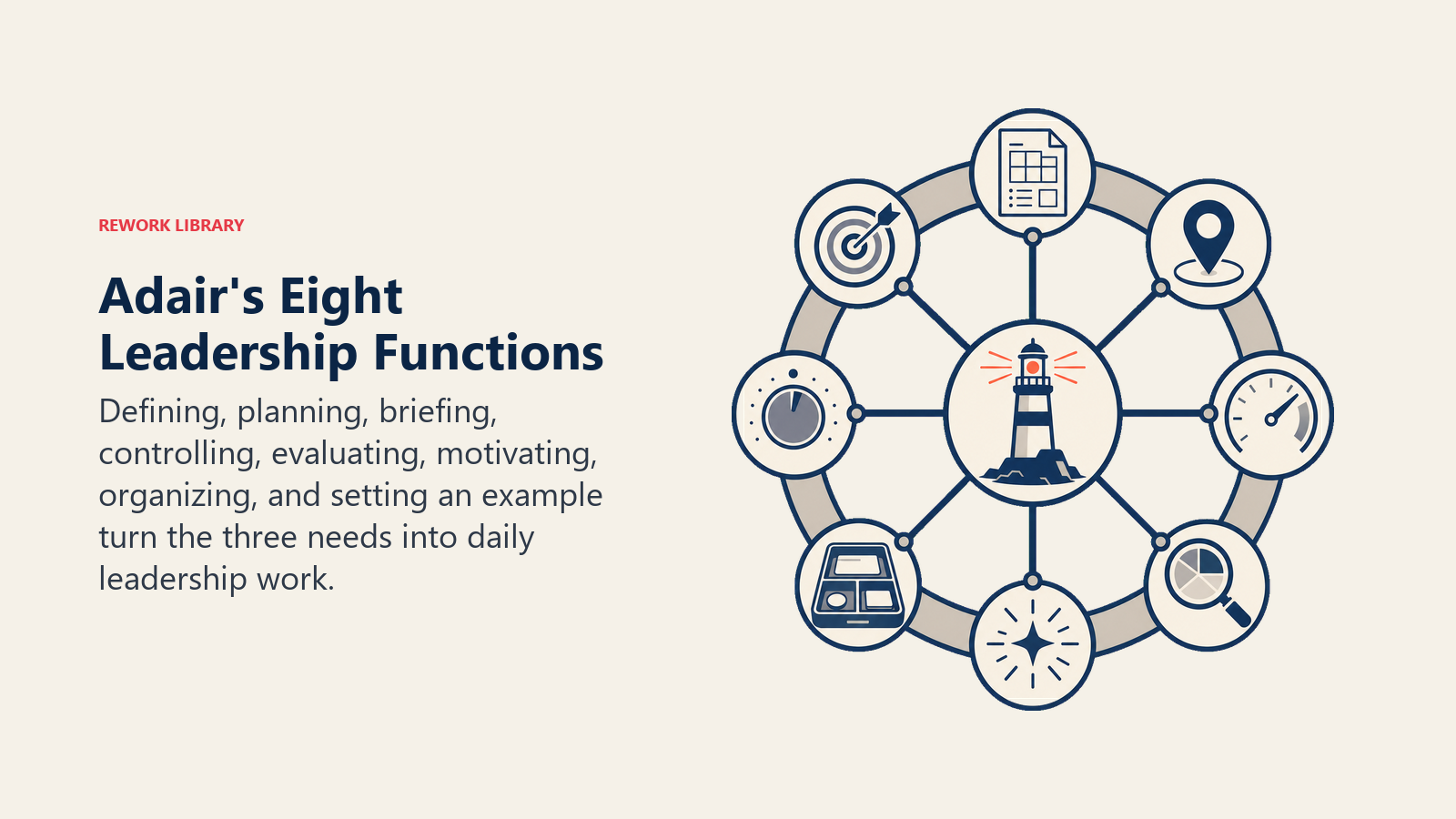
Adair mengidentifikasi delapan fungsi spesifik yang harus dilakukan seorang pemimpin di ketiga lingkaran. Ini bukan sifat kepribadian. Ini adalah aktivitas yang dapat dipraktikkan, dikembangkan, dan ditingkatkan.
| Fungsi | Deskripsi | Lingkaran Utama |
|---|---|---|
| Mendefinisikan tugas | Membuat tujuan jelas, spesifik, dan dipahami oleh semua orang | Tugas |
| Perencanaan | Mengidentifikasi sumber daya, tenggat waktu, kemungkinan, dan langkah tindakan | Tugas |
| Brifing | Mengkomunikasikan rencana dengan jelas agar tim dapat menindaklanjutinya | Tugas / Tim |
| Pengendalian | Memantau kemajuan, mengidentifikasi penyimpangan, mengambil tindakan korektif | Tugas |
| Evaluasi | Meninjau kinerja terhadap tujuan, mengambil pelajaran | Tugas / Tim |
| Motivasi | Membangkitkan semangat tim dan individu menuju tujuan | Tim / Individu |
| Pengorganisasian | Menyusun peran, tanggung jawab, dan hubungan kerja | Tim / Individu |
| Menjadi teladan | Memimpin dengan perilaku, bukan sekadar instruksi | Ketiga lingkaran |
Fungsi terakhir, menjadi teladan, memotong ketiga lingkaran. Seorang pemimpin yang menuntut akuntabilitas dari orang lain tetapi melewatkan komitmennya sendiri melemahkan setiap fungsi lainnya. Dan seorang pemimpin yang jelas-jelas peduli terhadap hasil dan orang menciptakan lingkungan di mana semua delapan fungsi dapat bekerja.
Fungsi-fungsi ini juga tumpang tindih dalam praktik. Brifing sebagian bersifat berorientasi tugas (membuat tujuan jelas) dan sebagian berorientasi tim (menciptakan pemahaman bersama). Evaluasi sebagian tentang mengukur output dan sebagian tentang memberikan umpan balik kepada individu yang membantu mereka berkembang. Kekuatan model ini berasal dari memperlakukan ini sebagai satu set terintegrasi, bukan daftar periksa yang dijalankan secara berurutan. Pendekatan fungsional ini melengkapi apa yang digambarkan oleh kerangka keterampilan manajemen sebagai lapisan operasional kepemimpinan.
Kesalahan Umum
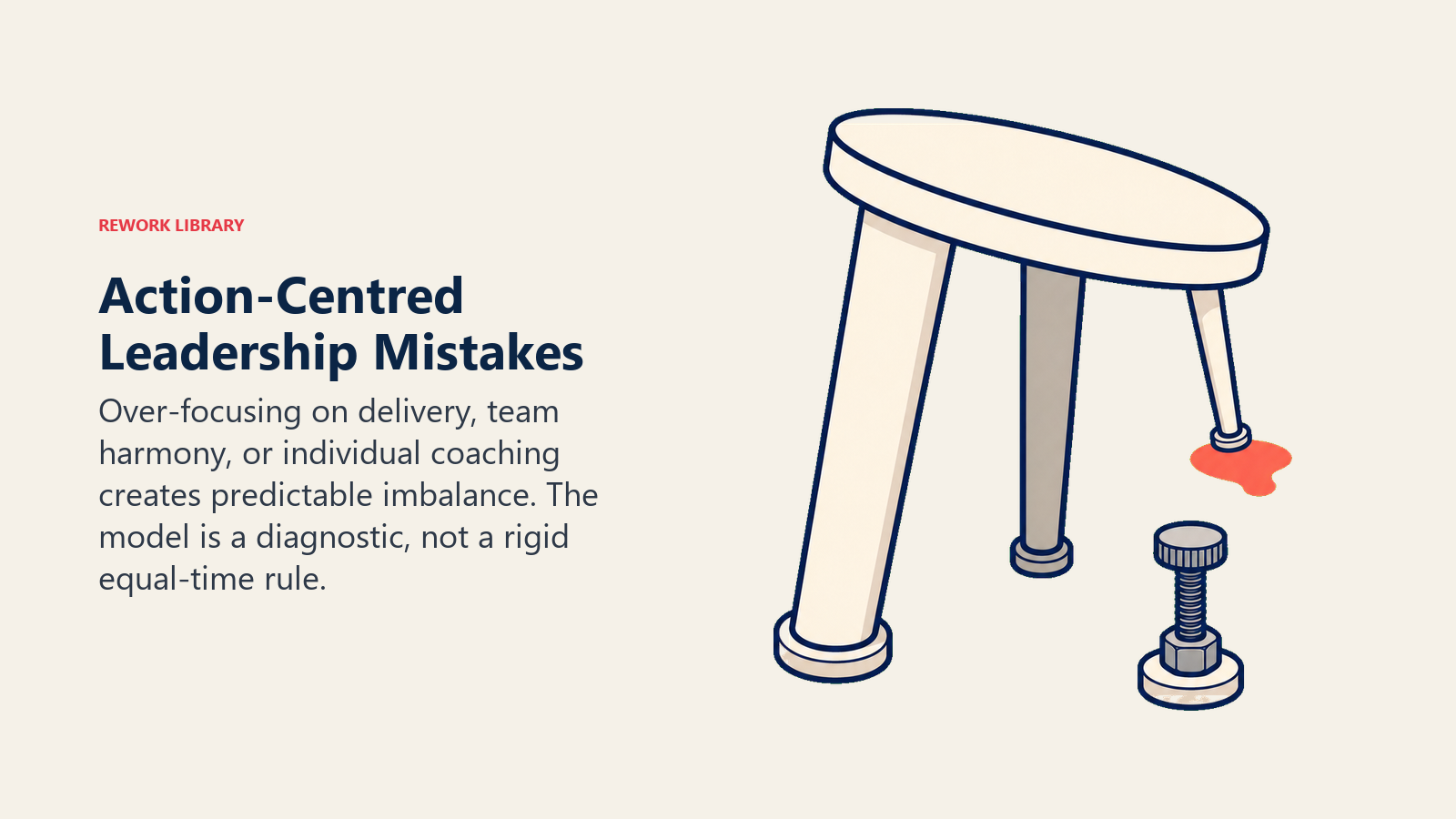
Model tiga lingkaran mengungkap tiga pola kegagalan berulang dalam kepemimpinan. Masing-masing melibatkan terlalu fokus pada satu lingkaran dengan mengorbankan yang lain.
Terlalu fokus pada Tugas. Ini adalah pola paling umum, terutama di antara pemimpin yang naik jabatan karena menghasilkan hasil. Ketika ragu, mereka menambahkan lebih banyak proses, memperketat tenggat waktu, dan mendorong lebih keras pada eksekusi. Lingkaran tim menyusut. Kebutuhan individu tidak diakui. Hasil jangka pendek bertahan, kemudian bakat mulai pergi, semangat turun, dan akhirnya tugas pun ikut menderita. Anda tidak bisa mencapai target dengan tim yang tidak mau berada di sana.
Terlalu fokus pada Tim. Beberapa pemimpin berinvestasi besar dalam budaya, kohesi, dan semangat tetapi kehilangan pandangan terhadap tugas yang sebenarnya. Rapat tim terasa produktif, hubungan hangat, tetapi hasil kerja terlewat tanpa konsekuensi. Ini adalah padanan kepemimpinan dari gaya manajemen country club pada Blake-Mouton grid: kepedulian tinggi terhadap orang, kepedulian rendah terhadap hasil. Tim menikmati bekerja bersama tetapi tidak banyak yang dicapai.
Terlalu fokus pada Individu. Pemimpin yang menghabiskan sebagian besar energi mereka pada pembinaan individual, pengembangan karier, dan manajemen satu-per-satu dapat mengabaikan tim dan tugas. Mereka menjadi pembina yang brilian untuk individu tertentu sementara tim tidak memiliki identitas kolektif dan pekerjaan tidak memiliki arah yang jelas. Pola ini sering muncul pada pemimpin yang berasal dari latar belakang pembinaan atau pelatihan.
Tujuannya bukan bobot yang sama di ketiga lingkaran setiap saat. Tujuannya adalah kesadaran. Seorang pemimpin yang menjalankan sprint krisis mungkin secara sah fokus pada Tugas selama dua minggu. Seorang pemimpin yang mewarisi tim setelah restrukturisasi mungkin perlu berinvestasi besar pada Individu dan Tim selama bulan pertama. Model Adair tidak menetapkan rasio tetap. Ini memberi tahu Anda apa yang menjadi tanggung jawab Anda, sehingga Anda menyadari ketika satu lingkaran sudah padam.
Cara Menerapkan Action-Centred Leadership
Langkah 1: Audit keseimbangan Anda saat ini
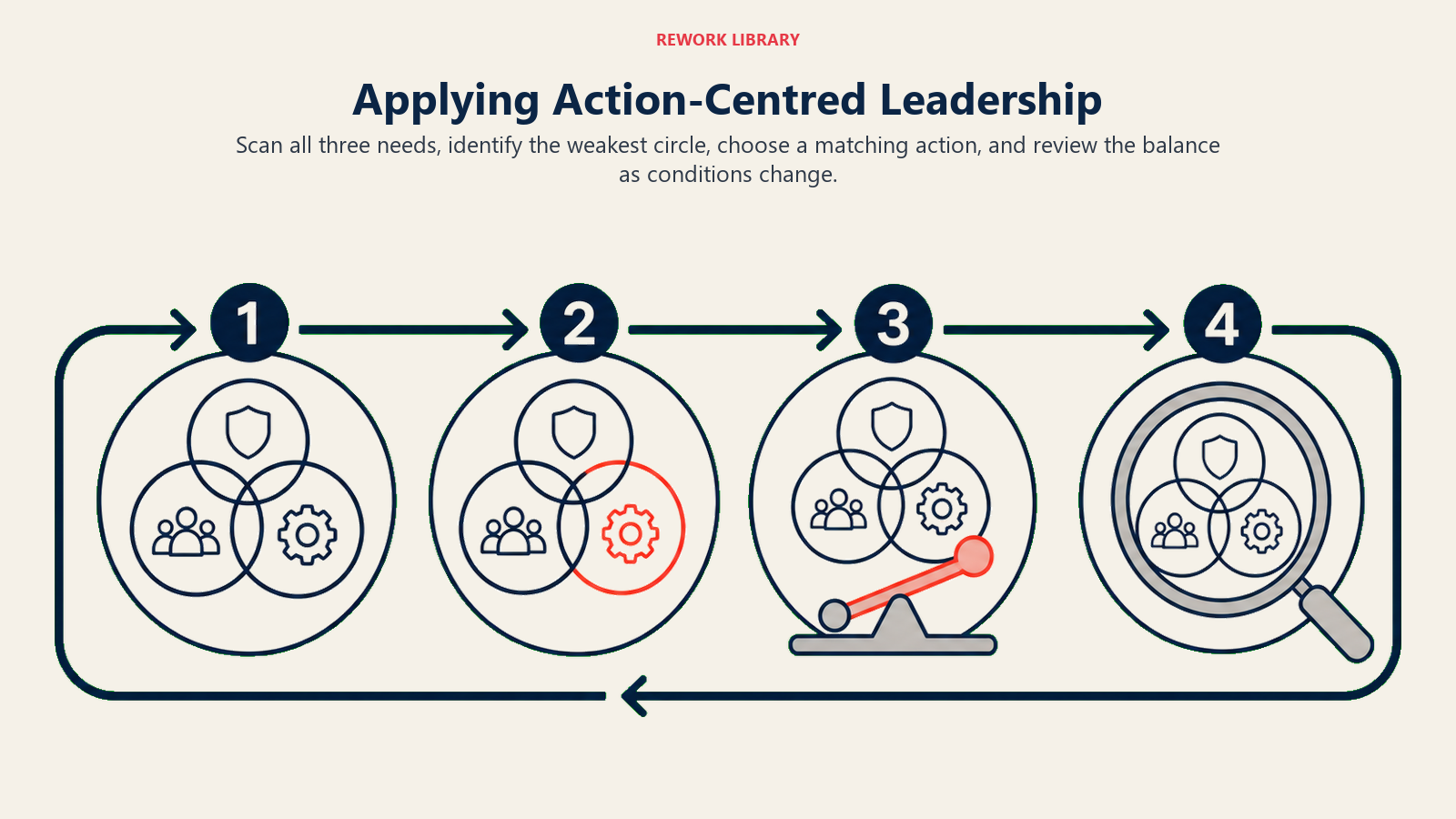
Sebelum mengubah apapun, pahami di mana Anda menghabiskan waktu Anda. Lacak satu minggu aktivitas kepemimpinan di ketiga lingkaran. Berapa jam dihabiskan untuk mendefinisikan dan memantau tugas? Berapa jam untuk rapat tim, budaya, dan penyelesaian konflik? Berapa jam untuk percakapan satu-per-satu dengan anggota tim individual? Kebanyakan pemimpin terkejut dengan apa yang diungkapkan oleh audit tersebut.
Langkah 2: Definisikan tugas dengan jelas
Pastikan setiap orang dalam tim memahami tujuan, tenggat waktu, peran spesifik mereka, dan seperti apa "selesai" itu. Adair sangat eksplisit tentang ini: ambiguitas dalam tugas adalah kegagalan kepemimpinan, bukan kegagalan tim. Tuliskan. Tinjau dalam brifing Anda berikutnya. Minta anggota tim untuk mengulangnya kembali untuk mengkonfirmasi pemahaman.
Langkah 3: Bangun tim
Jalankan tinjauan singkat tentang dinamika tim. Apakah ada pola komunikasi yang memperlambat segalanya? Apakah ada konflik yang belum terselesaikan yang menyerap energi? Apakah tim jelas tentang norma bersamanya? Anda tidak perlu retreat atau perombakan budaya. Mulailah dengan rapat mingguan rutin yang memiliki agenda nyata, dan retrospektif tim di akhir setiap proyek atau sprint.
Langkah 4: Perhatikan individu
Jadwalkan pertemuan satu-per-satu secara teratur. Bukan pembaruan status. Percakapan nyata tentang bagaimana keadaan setiap orang, apa yang mereka butuhkan untuk berkinerja baik, dan ke mana mereka ingin berkembang. Gaya kepemimpinan situasional dapat membantu Anda mengkalibrasi seberapa direktif atau suportif Anda harus bersikap dengan setiap orang tergantung pada pengalaman dan motivasi mereka.
Langkah 5: Jaga ketiga lingkaran tetap aktif
Bangun kebiasaan sederhana: di awal setiap minggu, tanyakan pada diri sendiri satu pertanyaan per lingkaran.
- Tugas: "Apakah tujuan sudah jelas dan apakah kemajuan sesuai rencana?"
- Tim: "Apakah tim berfungsi dengan baik bersama?"
- Individu: "Apakah ada seseorang yang sedang berjuang atau kurang dimanfaatkan?"
Itu tiga pertanyaan. Butuh dua menit. Sudah cukup untuk menangkap masalah sebelum bertambah parah.
Langkah 6: Sesuaikan keseimbangan seiring perubahan konteks
Situasi yang berbeda membutuhkan bobot yang berbeda. Tim baru membutuhkan investasi besar pada lingkaran Individu dan Tim di awal. Tim dalam minggu terakhir pengiriman bertaruhan tinggi membutuhkan fokus Tugas. Tim yang baru keluar dari restrukturisasi yang sulit membutuhkan perhatian Tim sebelum hal lainnya. Model ini memberi Anda izin untuk menggeser keseimbangan secara sengaja daripada beralih ke apa pun yang paling Anda sukai.
Contoh Action-Centred Leadership
Bayangkan tim produk di perusahaan SaaS yang menuju peluncuran besar. Manajer proyek, Leila, menjalankan tinjauan tiga lingkaran cepat dua minggu sebelum peluncuran.
| Lingkaran | Apa yang Leila temukan | Tindakan yang diambil |
|---|---|---|
| Tugas | Fitur inti sudah selesai, tetapi tiga dependensi belum diuji secara menyeluruh | Leila menjalankan sesi tinjauan dependensi dan menetapkan pemilik yang jelas untuk setiap uji integrasi |
| Tim | Dua insinyur hampir tidak berkomunikasi setelah perselisihan dalam tinjauan sprint minggu lalu | Leila bercakap-cakap singkat dengan masing-masing, mengangkat masalah, dan memfasilitasi rapat resolusi 20 menit |
| Individu | Pemimpin QA bekerja hingga larut malam setiap hari tetapi tidak menyampaikan beban kerjanya | Leila melakukan percakapan langsung, mendistribusikan kembali dua kasus uji ke anggota tim lain, dan memantau setiap hari hingga peluncuran |
Tanpa lensa tiga lingkaran, Leila mungkin tetap fokus sepenuhnya pada tugas, dengan asumsi tim baik-baik saja karena tidak ada yang secara terbuka mengeluh. Model ini mendorongnya untuk melihat secara eksplisit pada Tim dan Individu, di mana risiko nyata tersembunyi.
Jenis pemeriksaan terstruktur ini terhubung langsung dengan apa yang digambarkan oleh 5 tingkat kepemimpinan sebagai kepemimpinan Tingkat 3, di mana pengaruh seorang pemimpin berasal dari rekam jejak produksi dan kemampuan mereka untuk mengembangkan orang lain secara bersamaan.
Praktik Terbaik
- Gunakan model ini sebagai alat diagnostik, bukan resep. Model ini memberi tahu Anda area apa yang perlu diperiksa, bukan persis apa yang harus dilakukan di setiap area. Terapkan penilaian Anda pada hal-hal spesifik.
- Libatkan tim dalam definisi tugas. Ketika orang membantu menetapkan tujuan, mereka memilikinya secara berbeda dibandingkan ketika itu diturunkan dari atas. Investasi itu terlihat dalam eksekusi.
- Jangan simpan umpan balik untuk ulasan. Perhatian individu dalam model Adair berlangsung terus-menerus, bukan berkala. Umpan balik real-time pada perilaku spesifik lebih berguna daripada penilaian kuartalan.
- Waspadai masalah yang diam. Lingkaran Tim dan Individu sering memiliki masalah yang tidak muncul sampai serius. Bangun pemeriksaan rutin yang mudah, bukan hanya tinjauan formal.
- Padukan dengan model lain jika berguna. Action-centred leadership menggambarkan apa yang menjadi tanggung jawab Anda. Tannenbaum-Schmidt Leadership Continuum membantu Anda memutuskan seberapa banyak otoritas yang akan dibagi saat mengambil keputusan. Full Range Leadership Model memperluas kerangka kerja dengan dimensi transaksional dan transformasional. Gunakan bersama untuk gambaran yang lebih lengkap.
- Jadilah teladan secara konsisten. Dari delapan fungsi Adair, yang satu ini paling sulit untuk dibuat-buat. Tim akan segera menyadari apakah perilaku Anda sesuai dengan apa yang Anda minta dari mereka.
Untuk perbandingan struktural tentang bagaimana action-centred leadership cocok di samping kerangka kepemimpinan lainnya, apa itu teori kepemimpinan mensurvei aliran pemikiran utama.
Bacaan Terkait
- Apa Itu Kepemimpinan? Teori dan Gaya
- Teori Kepemimpinan Perilaku
- Blake-Mouton Managerial Grid
- 5 Tingkat Kepemimpinan
- Gaya Kepemimpinan Situasional
- Keterampilan Manajemen
- Tannenbaum-Schmidt Leadership Continuum
- Full Range Leadership Model
Model tiga lingkaran telah bertahan selama 50 tahun karena terus mengajukan pertanyaan yang tepat: apakah Anda memperhatikan apa yang sebenarnya penting dalam memimpin orang? Sebagian besar masalah kepemimpinan dapat ditelusuri kembali ke satu lingkaran yang padam sementara seorang pemimpin fokus pada dua lainnya. Model ini membuat pola tersebut terlihat lebih awal, saat masih ada waktu untuk mengoreksinya.

On this page
- Apa Itu Action-Centred Leadership?
- Tiga Lingkaran: Tugas, Tim, Individu
- Fungsi-Fungsi Kepemimpinan Inti
- Kesalahan Umum
- Cara Menerapkan Action-Centred Leadership
- Langkah 1: Audit keseimbangan Anda saat ini
- Langkah 2: Definisikan tugas dengan jelas
- Langkah 3: Bangun tim
- Langkah 4: Perhatikan individu
- Langkah 5: Jaga ketiga lingkaran tetap aktif
- Langkah 6: Sesuaikan keseimbangan seiring perubahan konteks
- Contoh Action-Centred Leadership
- Praktik Terbaik
- Bacaan Terkait