Bahasa Indonesia
Model Leadership Pipeline: 6 Tahap Kepemimpinan Dijelaskan
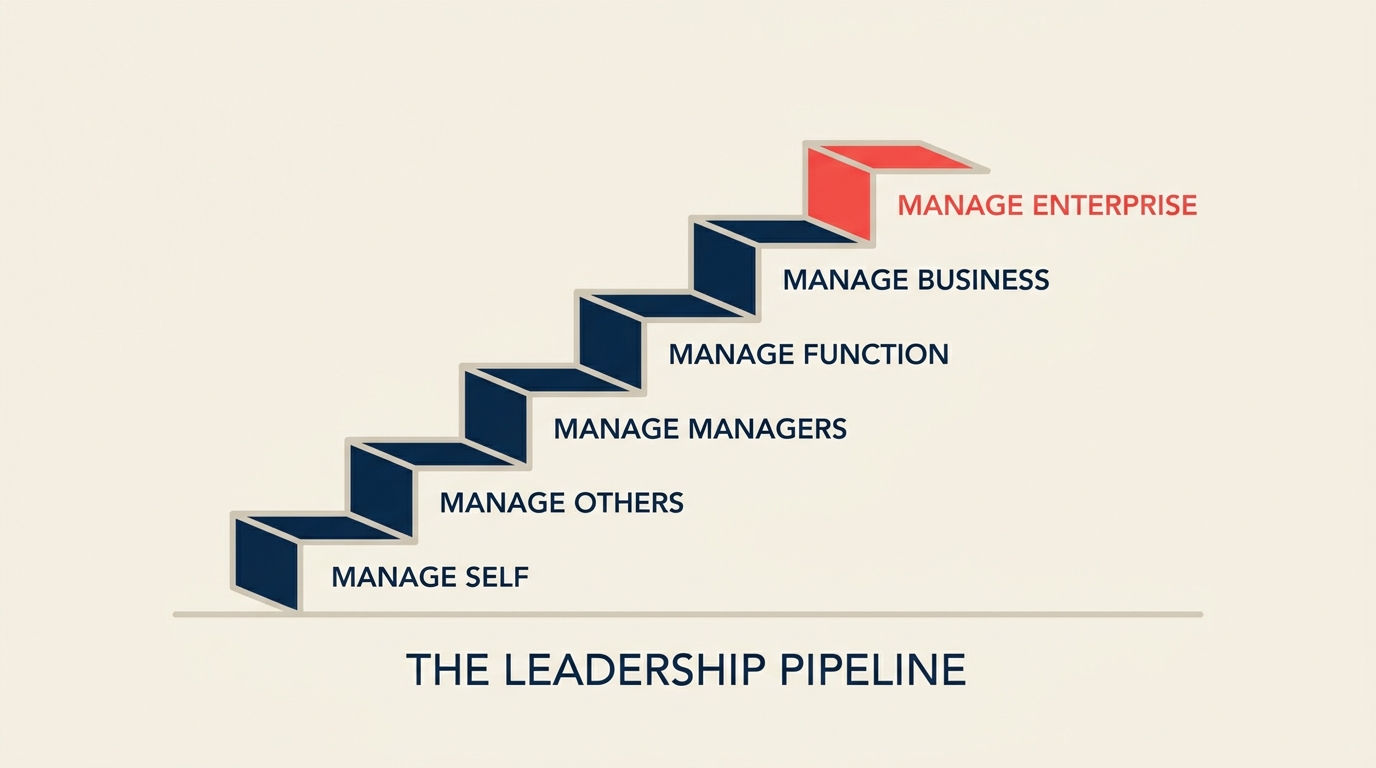 Sebagian besar program pengembangan kepemimpinan berfokus pada membangun keterampilan. Model leadership pipeline melakukan sesuatu yang berbeda: model ini memetakan transisi spesifik yang harus dinavigasi para pemimpin saat mereka naik dalam organisasi, dan mengidentifikasi mengapa begitu banyak orang berbakat terhambat di setiap langkahnya.
Turn this article into takeaways for your work.


Each assistant summarizes the article only for you and suggests best practices for your work.
Memahami di mana para pemimpin Anda berada dalam pipeline adalah salah satu cara tercepat untuk mengetahui mengapa mereka kesulitan dan jenis dukungan apa yang benar-benar akan membantu.
Apa itu model leadership pipeline?
Model leadership pipeline adalah kerangka pengembangan bakat yang mendefinisikan enam tahap kepemimpinan yang berbeda, masing-masing memerlukan perubahan mendasar dalam keterampilan, penerapan waktu, dan nilai kerja. Diperkenalkan oleh Ram Charan, Stephen Drotter, dan James Noel dalam buku mereka tahun 2001 "The Leadership Pipeline," model ini berargumen bahwa pengembangan kepemimpinan bukan tentang menambahkan lebih banyak keterampilan yang sama. Ini tentang melepaskan kebiasaan lama dan membangun kebiasaan yang benar-benar baru di setiap transisi karier.
Wawasan utamanya adalah bahwa sebagian besar kegagalan kepemimpinan bukan disebabkan oleh kurangnya kemampuan. Kegagalan tersebut disebabkan oleh para pemimpin yang masih menerapkan nilai dan perilaku dari peran sebelumnya setelah dipromosikan ke peran baru. Seorang kontributor individu yang brilian yang dipromosikan menjadi manajer tim sering kali gagal karena mereka terus melakukan pekerjaan individu alih-alih belajar memimpin orang lain yang melakukan pekerjaan tersebut.
Key Facts
- Organisasi yang mengembangkan pipeline kepemimpinan yang kuat 2,2 kali lebih mungkin untuk mengungguli pesaing secara finansial, menurut studi Bersin by Deloitte (2015).
- Asosiasi untuk Pengembangan Bakat (ATD) melaporkan bahwa perusahaan menghabiskan lebih dari $1.500 per peserta setiap tahun untuk pengembangan kepemimpinan, namun sebagian besar program tidak membahas perilaku spesifik untuk setiap transisi.
- Penelitian McKinsey (2019) menemukan bahwa 70% pemimpin senior menyebut "kegagalan melepaskan perilaku peran sebelumnya" sebagai alasan utama mengapa manajer berpotensi tinggi berkinerja buruk setelah promosi.
Model ini menggunakan metafora pipeline karena bakat mengalir melalui organisasi dari tingkat entry hingga puncak. Ketika pemimpin terhambat di suatu tahap, mereka menyumbat pipeline: mereka memblokir jalur promosi di bawah mereka dan gagal memberikan nilai di tingkat atas mereka.
6 tahap kepemimpinan
Setiap tahap melibatkan tiga pergeseran: keterampilan (apa yang perlu Anda lakukan), penerapan waktu (bagaimana Anda mengalokasikan jam Anda), dan nilai kerja (apa yang Anda yakini paling penting). Ketiganya harus berubah agar transisi berhasil.
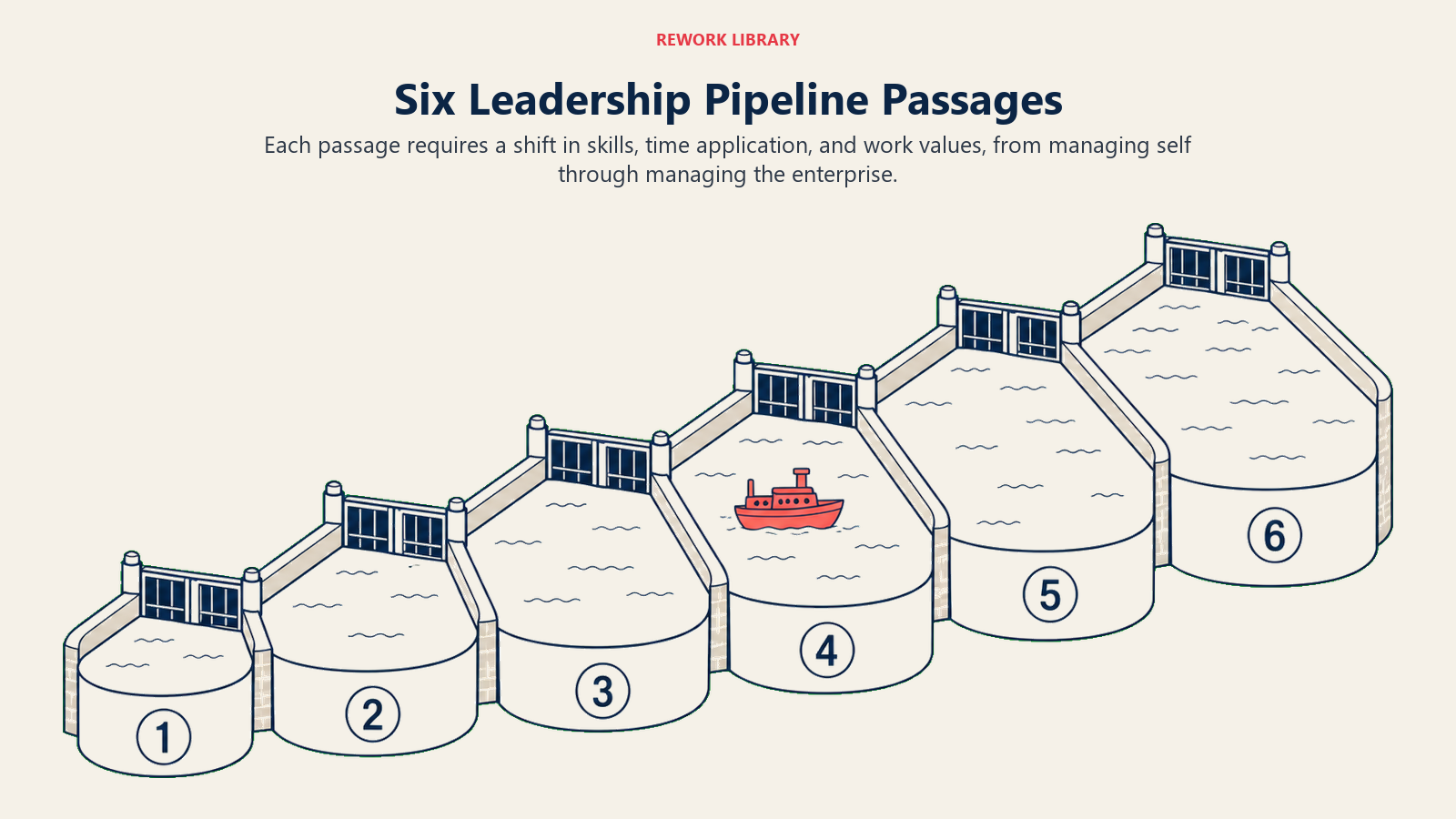
Tahap 1: Mengelola Diri Sendiri ke Mengelola Orang Lain
Ini adalah transisi pertama dan sering kali yang paling sulit. Seorang kontributor individu dipromosikan karena mereka unggul dalam pekerjaan mereka sendiri. Namun sekarang tugas mereka adalah mendapatkan hasil melalui orang lain, bukan melalui output mereka sendiri.
Pergeseran keterampilan: Merencanakan pekerjaan untuk orang lain, menugaskan tugas berdasarkan kekuatan individu, mengevaluasi kinerja, dan memberikan umpan balik. Keterampilan teknis yang menghasilkan promosi menjadi sekunder. Keterampilan interpersonal menjadi utama.
Pergeseran penerapan waktu: Lebih sedikit waktu mengerjakan, lebih banyak waktu merencanakan dan melatih. Manajer pertama kali yang masih menghabiskan sebagian besar harinya pada pekerjaan individu gagal dalam tahap ini, bahkan jika mereka merasa produktif.
Pergeseran nilai kerja: Manajer baru harus benar-benar menghargai keberhasilan anggota tim mereka, bukan hanya metrik kinerja mereka sendiri. Ketika seorang anggota tim berhasil, keberhasilan itu harus terasa bermakna. Jika tidak, manajer akan terus melakukan pekerjaan individu alih-alih mengembangkan orang lain.
Hambatan paling umum di Tahap 1: para ahli teknis yang dipromosikan ke manajemen tetapi masih mengidentifikasi diri sebagai kontributor individu. Mereka mengambil kembali tugas dari tim mereka, tidak mengembangkan orang-orang mereka, dan frustrasi bahwa tidak ada yang melakukan hal-hal sebaik mereka.
Tahap 2: Mengelola Orang Lain ke Mengelola Manajer
Tahap ini sering diabaikan dalam perencanaan suksesi, tetapi di sinilah banyak pipeline mengalami kerusakan. Pemimpin kini bertanggung jawab atas para manajer, bukan kontributor individu. Itu memerlukan model operasi yang sangat berbeda.
Pergeseran keterampilan: Memilih orang yang tepat untuk peran manajer, meminta pertanggungjawaban manajer tersebut untuk mengembangkan orang-orang mereka sendiri, dan melatih manajer daripada melatih kontributor individu secara langsung. Pemimpin di tingkat ini juga harus mulai berpikir lintas fungsi, bukan hanya dalam tim mereka sendiri.
Pergeseran penerapan waktu: Fokus beralih dari output sehari-hari menuju pemikiran cakrawala yang lebih panjang: kesehatan pipeline, pengembangan tim, dan koordinasi lintas fungsi.
Pergeseran nilai kerja: Pemimpin harus menghargai pengembangan manajer sebagai hasil bisnis, bukan hanya sebagai tanggung jawab administratif. Jika mereka masih mengukur keberhasilan mereka sendiri berdasarkan seberapa banyak yang mereka hasilkan secara pribadi, mereka akan melewati lapisan manajer dan langsung ke pekerjaan, melemahkan manajer mereka dalam prosesnya.
Mode kegagalan yang umum di sini: pemimpin yang unggul di Tahap 1 kini mengelola manajer mereka dengan cara yang sama seperti mereka mengelola kontributor individu. Mereka memberi kontributor individu umpan balik langsung, melewati manajer menengah, dan secara bertahap membuat manajer mereka tidak relevan.
Tahap 3: Mengelola Manajer ke Manajer Fungsional
Pada tingkat ini, pemimpin bertanggung jawab atas seluruh fungsi: divisi Penjualan, departemen Rekayasa, atau kelompok Operasional. Untuk pertama kalinya, mereka bekerja bersama pemimpin fungsional lainnya dan harus berkoordinasi secara horizontal sebanyak mereka mengarahkan ke bawah.
Pergeseran keterampilan: Pemikiran strategis dalam fungsi, mewakili kebutuhan fungsi kepada bisnis, mengalokasikan sumber daya di berbagai tim, dan berkolaborasi dengan rekan-rekan di fungsi lain. Manajer fungsional juga perlu memahami dimensi keuangan dari area mereka, bukan hanya dimensi operasional.
Pergeseran penerapan waktu: Lebih banyak waktu pada strategi dan pekerjaan lintas fungsi, lebih sedikit waktu pada operasi internal tim mana pun. Seorang manajer fungsional yang menghabiskan sebagian besar harinya pada masalah tingkat tim belum melakukan transisi ini.
Pergeseran nilai kerja: Pemimpin harus beralih dari menghargai keberhasilan fungsi mereka sendiri secara terpisah menjadi menghargai hasil bisnis secara keseluruhan. Ketika tim penjualan Anda mencapai kuota tetapi tim produk kewalahan oleh permintaan yang dibuat tim Anda, itu bukan kemenangan di tingkat ini.
Tahap 4: Manajer Fungsional ke Manajer Bisnis
Ini adalah salah satu dari dua tahap paling menuntut dalam model. Manajer bisnis menjalankan unit laba-rugi. Untuk pertama kalinya, mereka bertanggung jawab untuk mengintegrasikan beberapa fungsi, bukan hanya mengelola satu.
Pergeseran keterampilan: Manajemen P&L, mengintegrasikan pemasaran, penjualan, operasi, keuangan, dan fungsi orang ke dalam strategi yang koheren. Manajer bisnis harus membuat pertukaran antara fungsi, sesuatu yang belum pernah mereka lakukan sebelumnya. Mereka juga perlu berpikir dalam cakrawala waktu yang jauh melampaui kuartal saat ini.
Pergeseran penerapan waktu: Perencanaan tahunan dan multi-tahun menjadi sentral. Manajer bisnis harus menghabiskan lebih banyak waktu pada positioning strategis dan lebih sedikit pada pemecahan masalah operasional, mendelegasikan lapisan operasional kepada manajer fungsional.
Pergeseran nilai kerja: Pergeseran untuk menghargai enterprise secara keseluruhan daripada fungsi mana pun sangat penting di sini. Manajer bisnis yang secara pribadi masih mengidentifikasi diri sebagai, misalnya, pemimpin penjualan akan secara sistematis mengalokasikan sumber daya yang berlebihan untuk fungsi asalnya dengan mengorbankan yang lain.
Kesulitan spesifik di Tahap 4: kebanyakan manajer fungsional belum pernah harus membuat keputusan di mana fungsi-fungsi bersaing untuk mendapatkan sumber daya. Belajar membuat pertukaran tersebut, dan menerima kenyataan bahwa beberapa fungsi akan kecewa, adalah wilayah yang benar-benar baru.
Tahap 5: Manajer Bisnis ke Manajer Grup
Pada tingkat ini, pemimpin mengelola beberapa unit bisnis. Tugas mereka bukan lagi menjalankan sebuah bisnis. Melainkan menetapkan strategi di seluruh bisnis, mengalokasikan modal di antara mereka, dan mengembangkan manajer bisnis yang menjalankan masing-masing bisnis.
Pergeseran keterampilan: Pemikiran portofolio, alokasi modal, mengevaluasi strategi bisnis (daripada melaksanakannya), dan mengembangkan bakat tingkat manajer bisnis. Manajer grup harus mampu menilai apakah manajer bisnis telah berhasil melakukan transisi Tahap 4.
Pergeseran penerapan waktu: Sebagian besar waktu dihabiskan untuk mengevaluasi kinerja unit bisnis, mendukung manajer bisnis dengan saran strategis, dan mengkoordinasikan antar unit di mana ada saling ketergantungan. Keterlibatan operasional dalam bisnis individual mana pun adalah tanda bahaya di tingkat ini.
Pergeseran nilai kerja: Manajer grup harus menghargai setiap bisnis dalam portofolio atas dasar manfaatnya sendiri daripada melalui lensa satu fungsi atau bisnis tertentu yang pernah mereka jalankan. Mereka juga perlu benar-benar menghargai pengembangan pemimpin lain, karena keberhasilan mereka kini sepenuhnya bergantung pada kualitas manajer bisnis di bawah mereka.
Tahap 6: Manajer Grup ke Manajer Enterprise
Ini adalah tahap CEO. Manajer enterprise bertanggung jawab atas seluruh organisasi: strategi, budaya, struktur modal, dan positioning jangka panjangnya. Pergeseran ini sangat mendalam dalam setiap dimensi.
Pergeseran keterampilan: Menetapkan strategi perusahaan secara keseluruhan, mengalokasikan modal di seluruh portofolio, membentuk budaya organisasi, mengelola hubungan eksternal (dewan, investor, regulator, media), dan mengembangkan manajer grup yang menjalankan setiap klaster bisnis. CEO juga harus mampu berpikir dalam cakrawala waktu yang membentang 10 atau 20 tahun ke depan.
Pergeseran penerapan waktu: Operasi jangka pendek sepenuhnya didelegasikan. Waktu CEO digunakan untuk visi, budaya, pemangku kepentingan eksternal, dan segelintir keputusan yang hanya dapat dibuat oleh CEO. CEO yang secara teratur terlibat dalam pemecahan masalah operasional memiliki masalah pipeline di tingkat di bawah mereka.
Pergeseran nilai kerja: CEO harus menghargai kesehatan dan kelangsungan hidup seluruh enterprise di atas produk, fungsi, unit bisnis, atau kelompok mana pun. Mereka harus bersedia membuat keputusan yang menyakitkan dalam jangka pendek karena benar untuk jangka panjang. Dan mereka harus mampu menahan ketegangan antara memimpin bisnis hari ini dan membangun bisnis hari esok.
Leadership pipeline secara sekilas
| Tahap | Dari | Ke | Pergeseran Kunci |
|---|---|---|---|
| 1 | Kontributor Individu | Manajer Orang Lain | Mendapatkan hasil melalui orang daripada output pribadi |
| 2 | Manajer Orang Lain | Manajer dari Manajer | Mengembangkan manajer, bukan hanya kontributor individu |
| 3 | Manajer dari Manajer | Manajer Fungsional | Strategi lintas fungsi dan alokasi sumber daya |
| 4 | Manajer Fungsional | Manajer Bisnis | Akuntabilitas laba-rugi di beberapa fungsi |
| 5 | Manajer Bisnis | Manajer Grup | Strategi portofolio dan alokasi modal di seluruh unit bisnis |
| 6 | Manajer Grup | Manajer Enterprise (CEO) | Visi, budaya, dan positioning jangka panjang skala enterprise |
Cara menggunakan model leadership pipeline
Langkah 1: Petakan pemimpin Anda saat ini ke tahap-tahapnya
Mulailah dengan mengidentifikasi di mana setiap pemimpin dalam organisasi Anda berada. Ini mudah dalam hal gelar, tetapi pertanyaan sebenarnya adalah apakah mereka telah melakukan transisi dalam hal keterampilan, waktu, dan nilai. Seorang VP Sales yang masih menghabiskan 60% waktunya untuk transaksi secara formal berada di Tahap 3 tetapi secara fungsional masih beroperasi di Tahap 1.
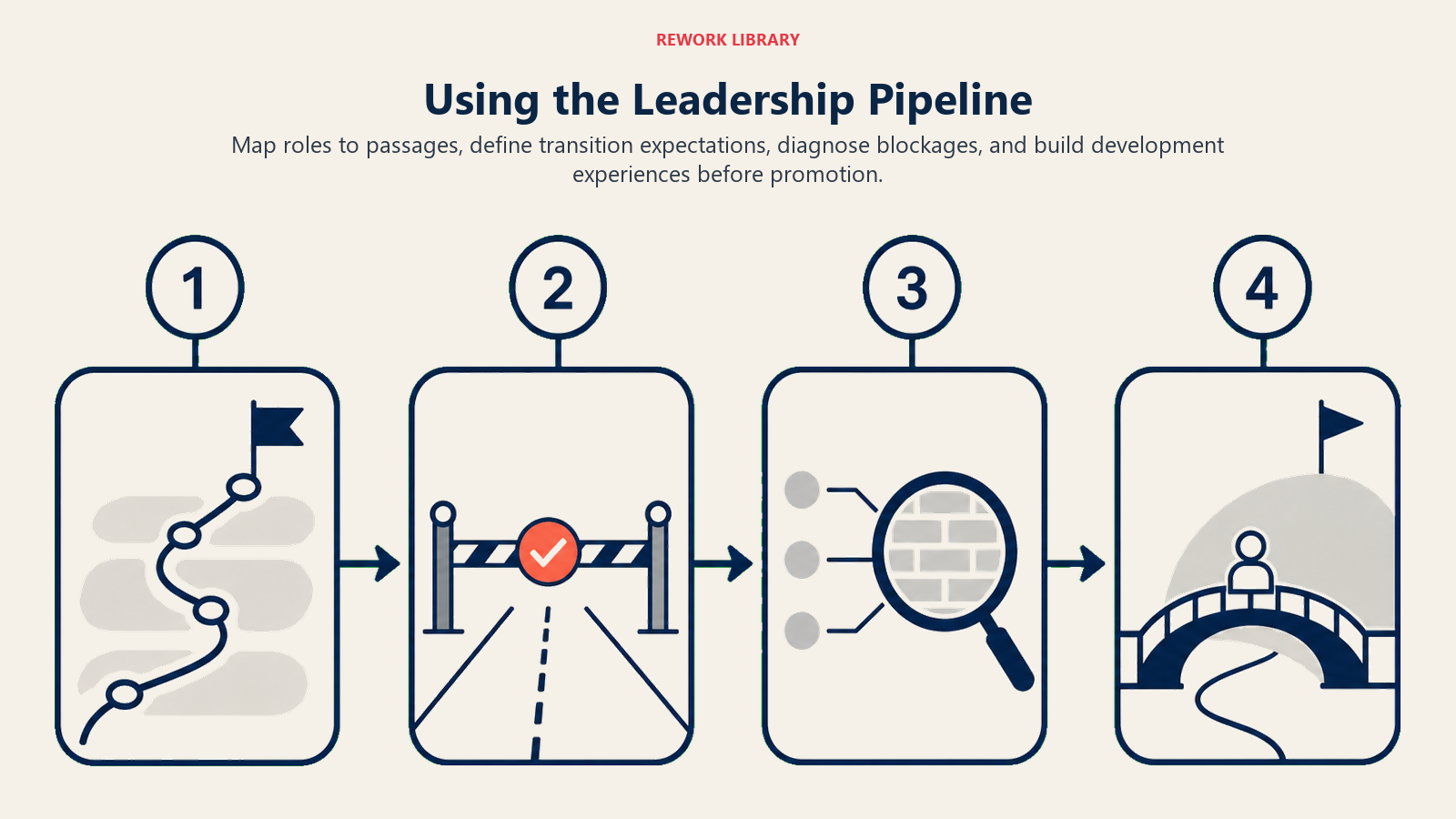
Langkah 2: Identifikasi pelaku yang berkinerja buruk dan pemimpin yang terhambat
Sebagian besar kinerja buruk di tingkat tertentu dapat ditelusuri kembali ke tahap yang belum sepenuhnya dinavigasi. Sebelum mengaitkan perjuangan seorang pemimpin dengan kemampuan atau kepribadian, periksa apakah masalahnya adalah masalah transisi. Apakah mereka masih menerapkan nilai dari peran sebelumnya? Apakah mereka menghabiskan waktu mereka pada lapisan pekerjaan yang salah?
Langkah 3: Rancang pengembangan yang spesifik untuk transisi
Pelatihan kepemimpinan generik tidak memperbaiki kegagalan tahap. Seorang manajer yang kesulitan dengan Tahap 2 membutuhkan pelatihan spesifik tentang cara mengevaluasi dan mengembangkan manajer lain, bukan kursus luas tentang komunikasi atau strategi. Sesuaikan pengembangan dengan transisi.
Langkah 4: Tetapkan standar kinerja yang spesifik untuk setiap tahap
Definisikan seperti apa "bagus" di setiap tingkat dalam organisasi Anda. Apa yang dilakukan manajer Tahap 1 yang berhasil dengan waktu mereka? Keputusan apa yang harus dibuat manajer bisnis Tahap 4 tanpa eskalasi? Standar yang jelas memungkinkan untuk mendeteksi kegagalan tahap lebih awal, sebelum semakin parah.
Langkah 5: Gunakan pipeline sebagai alat suksesi
Lihat dua tingkat di atas setiap pemimpin berpotensi tinggi. Apakah sudah ada orang yang sedang dikembangkan untuk tahap berikutnya? Pipeline dengan kedalaman di setiap tingkat jauh lebih tangguh daripada yang bergantung pada sejumlah kecil eksekutif senior.
Langkah 6: Nilai ulang secara berkala
Kesiapan pipeline berubah seiring pertumbuhan bisnis, pergeseran pasar, dan perkembangan individu. Bangun ritme tinjauan pipeline tahunan di tingkat senior, dengan bertanya: di mana titik sumbatnya? Siapa yang siap untuk bergerak? Siapa yang membutuhkan peran yang berbeda untuk terus berkembang?
Masalah pipeline yang umum
Pipeline yang tersumbat. Ini terjadi ketika seseorang yang belum berhasil melewati suatu tahap tetap dalam peran cukup lama untuk memblokir jalur bagi semua orang di bawah mereka. Seorang manajer Tahap 1 yang pada dasarnya masih merupakan kontributor individu mempersulit kontributor individu terbaik di bawah mereka untuk dipromosikan, karena manajer tersebut belum menciptakan ruang dengan bergerak maju. Hambatan pun bertambah: satu orang yang terhambat di Tahap 2 dapat memblokir pengembangan 5-10 orang di bawahnya.
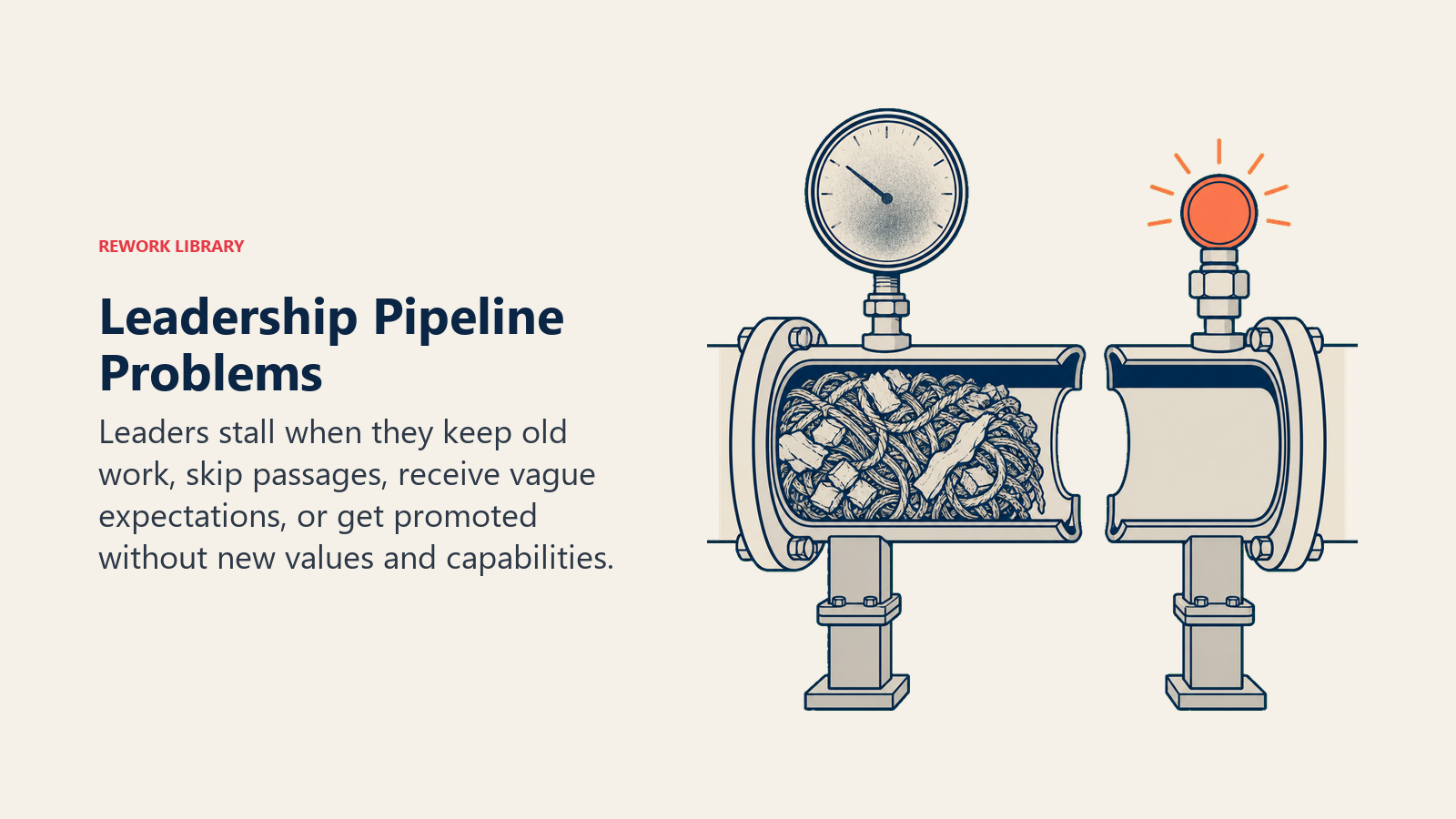
Tahap yang dilewati. Terkadang pelaku tinggi dipromosikan terlalu cepat, melewati satu atau lebih tahap. Seorang kontributor individu yang brilian yang melewati Tahap 1 dan 2 dan langsung menjadi manajer fungsional akan kekurangan pengalaman dasar dalam mengembangkan orang. Mereka mungkin menghasilkan hasil jangka pendek dengan memanfaatkan keahlian mereka sendiri, tetapi mereka tidak akan membangun tim di bawah mereka. Seiring waktu, fungsi menjadi bergantung pada output pribadi mereka dengan cara yang tidak dapat diskalakan. Solusinya tidak selalu mengembalikan seseorang. Tetapi memang harus mengenali kesenjangan dan mengisinya secara sengaja melalui pelatihan, mentoring, atau pengalaman terstruktur.
Ketidaksesuaian gaya kepemimpinan. Beberapa pemimpin menemukan suatu tahap benar-benar tidak nyaman karena memerlukan pergeseran identitas, bukan hanya keterampilan. Seorang manajer fungsional yang benar-benar menyukai menjadi ahli teknis akan kesulitan untuk menghargai strategi dan koordinasi lintas fungsi. Ini sering kali merupakan percakapan pelatihan daripada kesenjangan pelatihan. Memahami kepemimpinan vs manajemen sebagai peran yang berbeda membantu para pemimpin menerima apa yang sebenarnya dituntut oleh setiap tahap.
Praktik terbaik
- Jangan pernah mempromosikan semata-mata berdasarkan kinerja masa lalu. Keterampilan yang membuat seseorang luar biasa di satu tingkat sering kali merupakan kebiasaan yang sama yang membatasi mereka di tingkat berikutnya. Evaluasi kesiapan tahap, bukan hanya rekam jejak.
- Beri pemimpin baru onboarding yang spesifik untuk tahap. 90 hari pertama tahap baru adalah saat kebiasaan lama paling mungkin muncul kembali. Onboarding terstruktur yang membuat transisi menjadi eksplisit mengurangi waktu yang dibutuhkan untuk menyesuaikan diri.
- Bangun loop umpan balik ke dalam tahap. Para pemimpin sering tidak tahu bahwa mereka masih beroperasi di tingkat yang salah. Umpan balik 360 derajat yang dikalibrasi ke perilaku spesifik tahap mengungkap hal ini dengan cepat.
- Jangan confusing antara pendelegasian dan pengabaian. Di setiap tahap, pemimpin tetap bertanggung jawab atas hasil. Metodenya berubah (dari melakukan ke mengarahkan ke mengembangkan), tetapi akuntabilitas tidak hilang.
- Padukan pemikiran pipeline dengan kerangka kerja untuk pengembangan individu. Pipeline memberi tahu Anda di tingkat mana seseorang beroperasi. 5 Levels of Leadership memberikan lensa paralel tentang bagaimana pengaruh dan kepercayaan dibangun seiring waktu. Keduanya lebih berguna bersama daripada sendiri-sendiri.
- Kenali bahwa nilai membutuhkan waktu paling lama untuk berubah. Keterampilan dapat dilatih dengan cepat. Alokasi waktu merespons umpan balik. Tetapi nilai, apa yang diyakini pemimpin benar-benar penting, berubah perlahan dan menolak pembelajaran di ruang kelas. Pelatihan, pengalaman, dan hubungan sejawat adalah mekanisme yang mengubah nilai.
Model pipeline juga berpasangan secara alami dengan kerangka kerja keterampilan manajemen ketika Anda membangun kurikulum pembelajaran yang spesifik untuk tahap, dan dengan apa itu kepemimpinan sebagai orientasi awal bagi para pemimpin yang baru dalam perjalanan pengembangan mereka.
Bacaan terkait
- Apa Itu Kepemimpinan?
- Kepemimpinan vs Manajemen
- 5 Levels of Leadership
- Keterampilan Manajemen
- Five Practices of Exemplary Leadership
- The Four Is of Transformational Leadership
Model pipeline telah bertahan karena menjelaskan sesuatu yang dialami sebagian besar organisasi tetapi jarang diberi nama: alasan orang baik gagal di tingkat baru hampir tidak pernah karena ketidakmampuan. Ini adalah transisi yang tidak lengkap. Petakan tahap-tahapnya, temukan hambatannya, dan bangun pengembangan yang sesuai dengan transisi nyata yang sedang dinavigasi oleh para pemimpin Anda.

On this page
- Apa itu model leadership pipeline?
- 6 tahap kepemimpinan
- Tahap 1: Mengelola Diri Sendiri ke Mengelola Orang Lain
- Tahap 2: Mengelola Orang Lain ke Mengelola Manajer
- Tahap 3: Mengelola Manajer ke Manajer Fungsional
- Tahap 4: Manajer Fungsional ke Manajer Bisnis
- Tahap 5: Manajer Bisnis ke Manajer Grup
- Tahap 6: Manajer Grup ke Manajer Enterprise
- Leadership pipeline secara sekilas
- Cara menggunakan model leadership pipeline
- Langkah 1: Petakan pemimpin Anda saat ini ke tahap-tahapnya
- Langkah 2: Identifikasi pelaku yang berkinerja buruk dan pemimpin yang terhambat
- Langkah 3: Rancang pengembangan yang spesifik untuk transisi
- Langkah 4: Tetapkan standar kinerja yang spesifik untuk setiap tahap
- Langkah 5: Gunakan pipeline sebagai alat suksesi
- Langkah 6: Nilai ulang secara berkala
- Masalah pipeline yang umum
- Praktik terbaik
- Bacaan terkait