Bahasa Indonesia
Teori Leader-Member Exchange (LMX) Dijelaskan
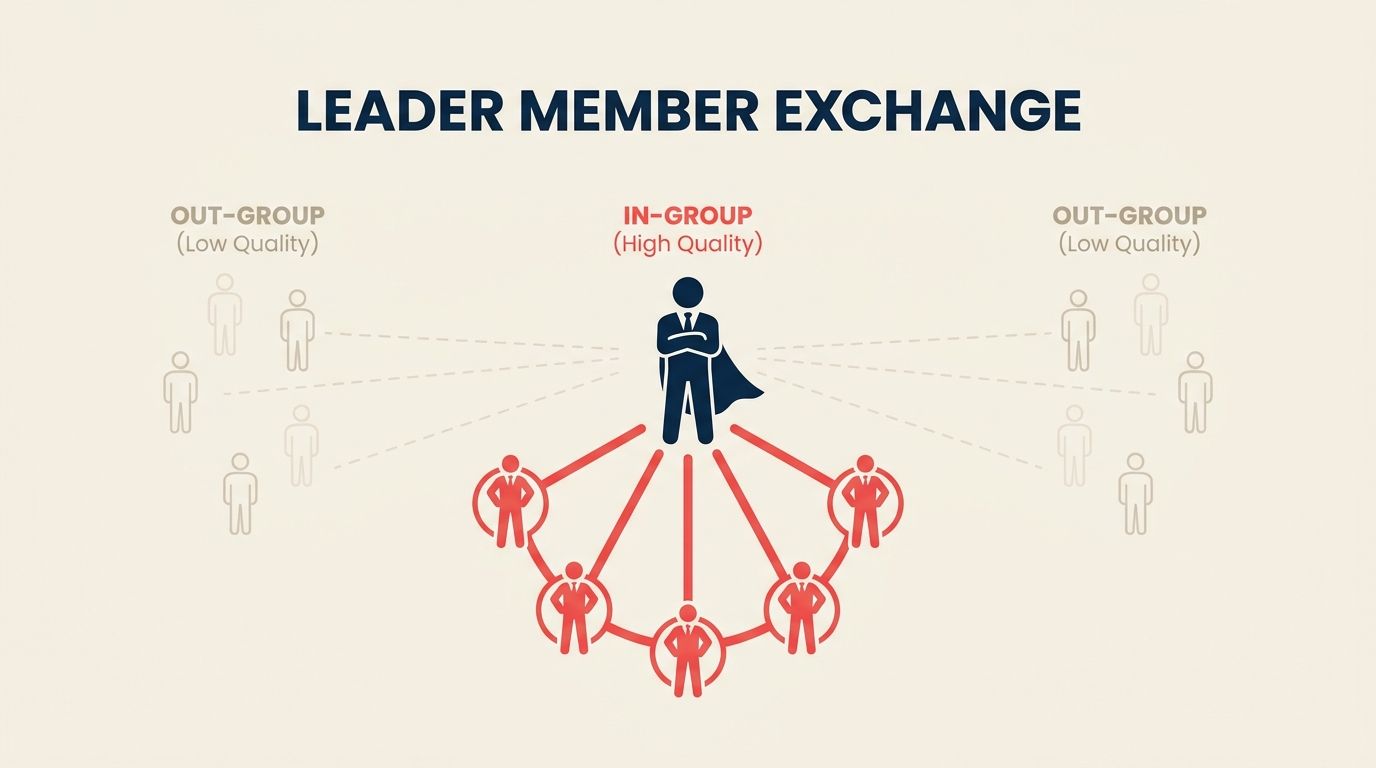
Turn this article into takeaways for your work.


Each assistant summarizes the article only for you and suggests best practices for your work.
Teori leader-member exchange, yang umumnya disingkat LMX, bermula dari pengamatan sederhana namun tidak nyaman: para pemimpin tidak memperlakukan setiap anggota tim dengan cara yang sama, dan perbedaan perlakuan itu memiliki konsekuensi nyata terhadap kinerja, keterlibatan karyawan, dan karier. Alih-alih berpura-pura sebaliknya, teori LMX mempelajari kualitas hubungan individual antara seorang pemimpin dan setiap bawahan langsungnya, serta menjelaskan mengapa beberapa hubungan menghasilkan kepercayaan tinggi dan manfaat bersama sementara yang lain tetap bersifat transaksional dan berjarak.
Apa Itu Teori Leader-Member Exchange?
Teori leader-member exchange adalah model kepemimpinan yang menyatakan bahwa kepemimpinan terjadi melalui kualitas hubungan diadik antara pemimpin dan setiap anggota, bukan melalui satu perilaku seragam yang diterapkan di seluruh tim. Kata "diadik" adalah kuncinya. Artinya hubungan dipelajari sebagai pasangan, satu pemimpin dan satu pengikut, alih-alih memperlakukan perilaku pemimpin sebagai sesuatu yang disiarkan secara identik ke seluruh kelompok.
Klaim utamanya adalah bahwa hubungan LMX berkualitas tinggi, yang ditandai oleh kepercayaan, rasa hormat, dan kewajiban timbal balik, menghasilkan hasil yang lebih baik bagi kedua belah pihak: kinerja lebih tinggi, upaya sukarela lebih besar, kepuasan kerja yang lebih kuat, dan kemajuan karier yang lebih pesat. Hubungan LMX berkualitas rendah tetap berada di dekat kontrak kerja formal. Pengikut melakukan apa yang diperlukan; pemimpin menyediakan apa yang wajib. Tidak ada pertukaran lebih lanjut.
Yang membuat LMX berbeda dari kebanyakan teori kepemimpinan adalah bahwa teori ini tidak bertanya "gaya apa yang harus digunakan seorang pemimpin?" Teori ini bertanya "apa kualitas hubungan spesifik ini, dan bagaimana hubungan itu terbentuk?"
Key Facts
- Teori LMX berawal sebagai Vertical Dyad Linkage (VDL) theory, yang diperkenalkan oleh Dansereau, Graen, dan Haga dalam makalah mereka tahun 1975 berjudul "A Vertical Dyad Linkage Approach to Leadership Within Formal Organizations" (Organizational Behavior and Human Performance). Nama tersebut kemudian diubah menjadi Leader-Member Exchange untuk lebih mencerminkan fokus relasionalnya.
- Penelitian secara konsisten mengaitkan LMX berkualitas tinggi dengan kinerja pekerjaan yang lebih tinggi, komitmen organisasi yang lebih besar, dan niat untuk keluar yang lebih rendah. Meta-analisis oleh Gerstner dan Day (1997) pada 79 studi menemukan LMX berkorelasi positif dengan penilaian kinerja (r = .30), kepuasan (r = .46), dan komitmen (r = .35).
- Skala LMX-7, yang dikembangkan oleh Graen dan Uhl-Bien pada tahun 1995, adalah ukuran kualitas hubungan yang paling banyak digunakan. Skala ini menggunakan tujuh item yang dinilai pada skala 5 poin dan mencakup dimensi afeksi, loyalitas, kontribusi, dan rasa hormat profesional.
Kelompok In-Group vs Kelompok Out-Group
Wawasan paling praktis sekaligus paling diperdebatkan dari teori LMX adalah pengamatan bahwa para pemimpin, secara sadar atau tidak, membentuk in-group dan out-group di dalam tim mereka.
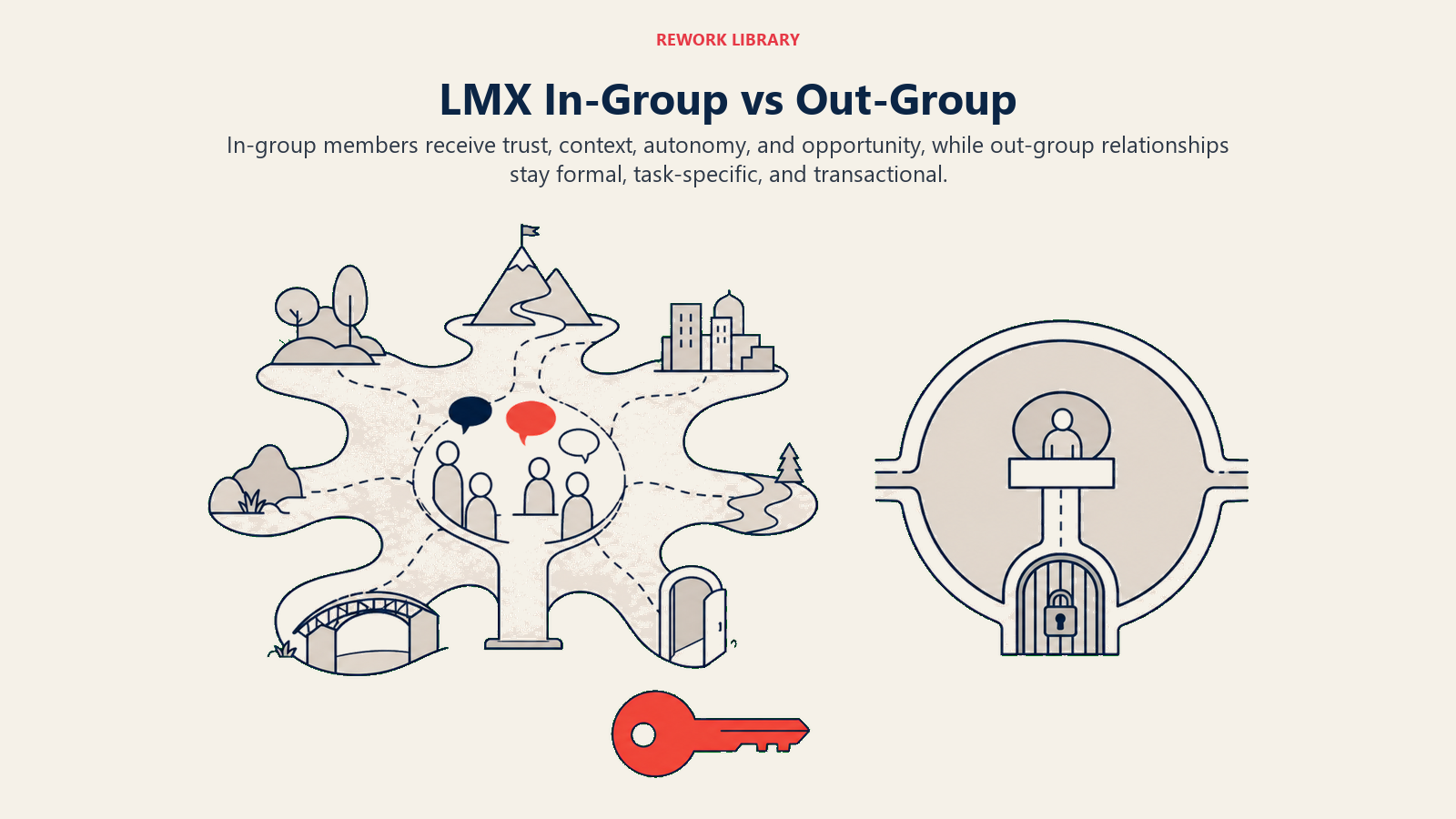
Anggota in-group mengembangkan hubungan LMX berkualitas tinggi. Mereka menerima lebih banyak informasi, lebih banyak peluang pengembangan, lebih banyak keleluasaan untuk bekerja secara mandiri, dan lebih banyak akses informal ke pemimpin. Sebagai imbalannya, mereka mengambil lebih banyak tanggung jawab, melakukan lebih banyak pekerjaan sukarela, dan menunjukkan loyalitas yang lebih tinggi. Pertukaran tersebut benar-benar bersifat timbal balik dan jauh melampaui deskripsi pekerjaan formal.
Anggota out-group beroperasi pada tingkat pertukaran yang jauh lebih rendah. Interaksi mereka dengan pemimpin sebagian besar bersifat transaksional: instruksi, penugasan tugas, umpan balik kinerja yang terkait dengan tinjauan formal. Mereka menerima lebih sedikit mentoring, lebih sedikit peluang menantang, dan memiliki pengaruh informal yang lebih kecil atas keputusan. Banyak dari mereka adalah orang-orang yang mampu. Mereka hanya tidak mengembangkan keakraban atau kepercayaan yang memicu pertukaran yang lebih tinggi.
| Dimensi | In-Group | Out-Group |
|---|---|---|
| Tingkat kepercayaan | Kepercayaan timbal balik tinggi | Rendah hingga sedang, sebagian besar berbasis peran |
| Akses informasi | Awal, informal, konteks lebih luas | Saluran formal, khusus tugas saja |
| Otonomi dan keleluasaan | Tinggi: menetapkan pendekatan dan langkah sendiri | Rendah: lebih dekat ke instruksi eksplisit |
| Perilaku di luar peran | Sering, diprakarsai sendiri | Jarang, biasanya diminta |
| Peluang pengembangan | Mentoring aktif, penugasan menantang | Minimal di luar persyaratan formal |
| Hasil karier | Promosi lebih cepat, visibilitas lebih tinggi | Kemajuan lebih lambat, visibilitas lebih rendah |
| Interaksi dengan pemimpin | Kontak informal rutin | Sebagian besar formal dan terjadwal |
Batas kelompok tidak bersifat tetap, dan biasanya terbentuk lebih awal. Penelitian oleh Liden dan Graen (1980) menemukan bahwa kualitas hubungan LMX sebagian besar sudah terbentuk dalam beberapa minggu pertama hubungan kerja baru, sering kali sebelum pemimpin memiliki data kinerja yang berarti tentang pengikut tersebut.
Tahapan LMX
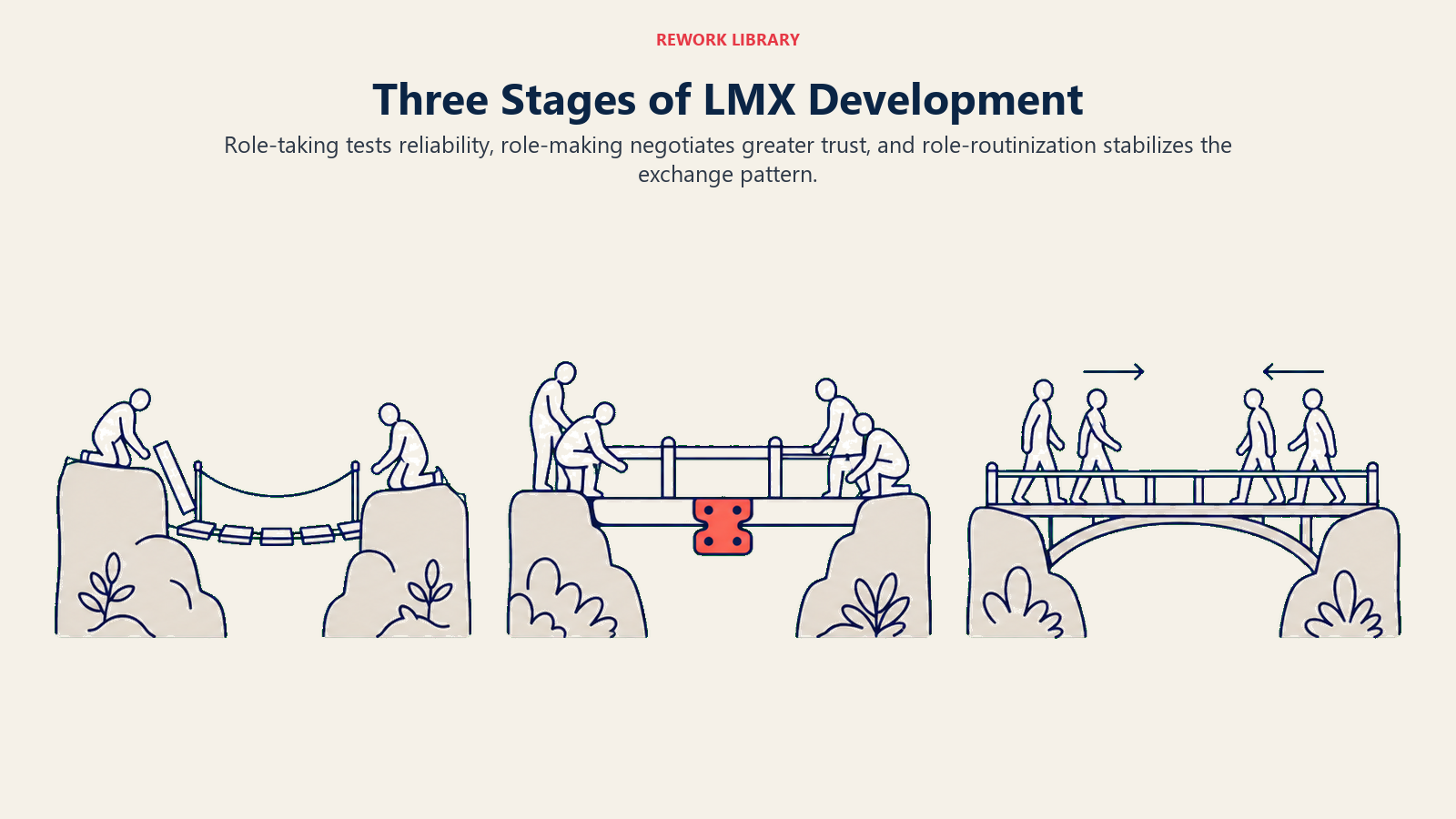
Graen dan Scandura (1987) menggambarkan perkembangan hubungan LMX sebagai proses tiga tahap. Tidak setiap hubungan menyelesaikan ketiga tahap. Banyak yang mandek di tahap pertama atau kedua.
Pengambilan Peran (Role-Taking)
Pengambilan peran adalah fase awal, di mana pemimpin menguji kemampuan, motivasi, dan kepercayaan pengikut. Ini sebagian besar bersifat satu arah. Pemimpin memberikan tugas dan memperhatikan bagaimana pengikut merespons: apakah mereka menyelesaikan pekerjaan tepat waktu? Apakah mereka menunjukkan inisiatif? Apakah mereka mengajukan pertanyaan yang cerdas? Apakah mereka menangani ambiguitas tanpa pengawasan terus-menerus?
Pengikut, sementara itu, membaca pemimpin: seberapa besar dukungan yang mereka tawarkan? Apakah mereka menepati komitmen? Apakah mereka adil? Pada tahap ini, kedua belah pihak membentuk kesan yang akan menentukan apakah hubungan berkembang lebih jauh.
Sebagian besar hubungan yang mandek melakukannya di sini. Pemimpin menyimpulkan bahwa pengikut dapat diandalkan tetapi tidak luar biasa, dan interaksi pun menetap dalam pola yang fungsional namun dangkal.
Pembuatan Peran (Role-Making)
Pembuatan peran adalah tempat dibangunnya hubungan LMX berkualitas tinggi. Pemimpin mulai mendelegasikan pekerjaan yang lebih menantang, berbagi konteks melampaui apa yang secara ketat diperlukan, dan melibatkan pengikut dalam keputusan secara informal. Pengikut, yang merasakan kepercayaan yang meningkat, membalas dengan upaya dan loyalitas yang lebih besar.
Fase ini benar-benar dinegosiasikan, bukan ditugaskan. Pengikut dapat memberi sinyal kesiapan dengan melampaui tugas formal. Pemimpin dapat mengundang keterlibatan yang lebih besar dengan menawarkan lebih banyak keleluasaan. Ketika kedua belah pihak merespons dengan baik, pertukaran pun meningkat. Ketika salah satu pihak mundur, misalnya pengikut menjadi kewalahan atau pemimpin menarik diri setelah kekecewaan, hubungan dapat tergelincir kembali ke pola pengambilan peran.
Perilaku kepemimpinan transformasional cenderung mempercepat tahap pembuatan peran karena menciptakan kondisi tujuan bersama dan keamanan psikologis yang membuat kedua belah pihak lebih bersedia berinvestasi.
Rutinisasi Peran (Role-Routinization)
Rutinisasi peran adalah fase stabil. Kualitas hubungan LMX sudah terbentuk dan dapat diprediksi. Hubungan berkualitas tinggi memiliki ritme dukungan timbal balik, kepercayaan, dan kewajiban timbal balik yang bertahan tanpa memerlukan negosiasi ulang terus-menerus. Hubungan berkualitas rendah sama stabilnya tetapi pada tingkat pertukaran yang jauh lebih rendah.
Di sinilah sebagian besar hubungan kerja menghabiskan sebagian besar waktu mereka. Tantangan bagi para pemimpin adalah mengenali kapan hubungan berkualitas rendah yang telah terutinkan sebenarnya bisa menjadi berkualitas tinggi jika mereka berinvestasi kembali dalam proses pembuatan peran.
Manfaat LMX Berkualitas Tinggi
Penelitian tentang LMX berkualitas tinggi konsisten dan mencakup beberapa dekade.
Keterlibatan dan motivasi. Pengikut dalam hubungan LMX tinggi melaporkan keterlibatan karyawan yang jauh lebih tinggi. Mereka merasa dilihat, dihargai, dan diinvestasikan. Upaya sukarela yang mereka berikan bukan didorong oleh ketakutan akan konsekuensi, melainkan oleh rasa kewajiban dan timbal balik yang tulus. Ketika orang merasa pemimpin berinvestasi pada mereka secara pribadi, mereka pun membalas investasi tersebut.
Kinerja. LMX tinggi memprediksi penilaian kinerja individu yang lebih tinggi di berbagai konteks, dari manufaktur hingga perawatan kesehatan hingga pekerjaan berbasis pengetahuan. Sebagian dari ini adalah bias seleksi: pemimpin secara alami mendelegasikan pekerjaan yang lebih sulit kepada mereka yang dipercayai. Namun sebagian adalah efek nyata. Lebih banyak informasi, umpan balik pengembangan yang lebih banyak, dan lebih banyak keleluasaan benar-benar membuat orang lebih baik dalam pekerjaan mereka.
Retensi karyawan. Orang meninggalkan manajer lebih dari mereka meninggalkan perusahaan. Anggota LMX tinggi jauh lebih kecil kemungkinannya untuk pergi karena kepergian berarti kehilangan hubungan yang mereka nilai dan peluang karier yang disediakannya. Meta-analisis Gerstner dan Day (1997) menemukan LMX berkorelasi negatif dengan niat untuk keluar (r = -.22).
Hasil karier. Kualitas LMX memprediksi promosi, pertumbuhan gaji, dan perluasan tanggung jawab. Anggota in-group mendapatkan lebih banyak visibilitas dengan pemimpin senior, lebih banyak sponsorship untuk proyek-proyek profil tinggi, dan umpan balik pengembangan yang lebih jujur. Ini bertambah seiring waktu dengan cara yang dapat menentukan lintasan karier.
Risiko dan Kritik
Teori LMX bersifat deskriptif: teori ini menjelaskan apa yang sebenarnya terjadi dalam hubungan pemimpin-pengikut. Itulah juga yang membuatnya tidak nyaman untuk diterapkan sebagai resep.
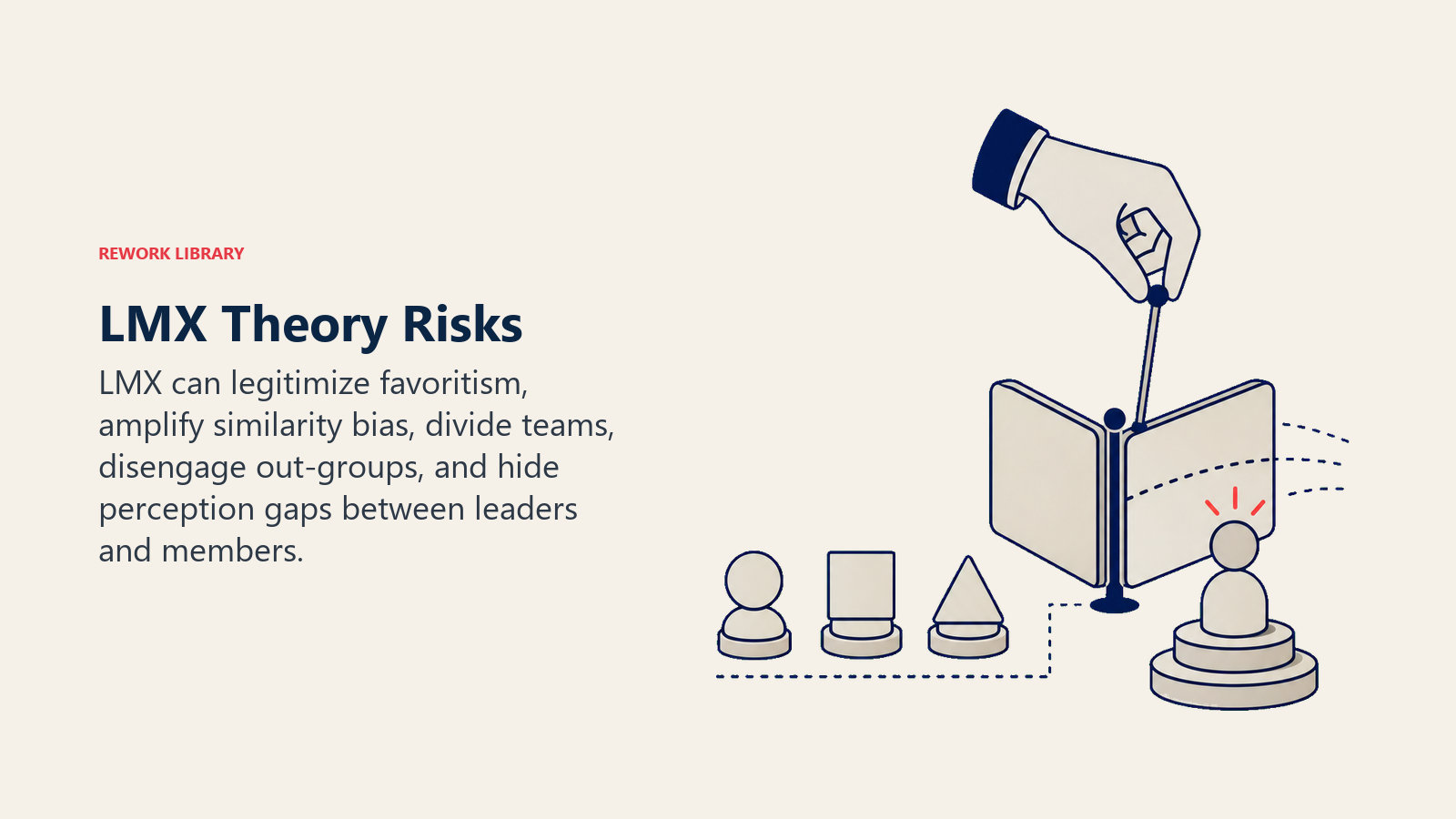
Favoritisme dan persepsi ketidakadilan. Dinamika in-group/out-group secara fungsional tidak dapat dibedakan dari favoritisme kecuali pemimpin bersikap transparan tentang bagaimana diferensiasi bekerja dan memastikan bahwa diferensiasi tersebut didasarkan pada kontribusi daripada kesamaan atau rasa suka. Penelitian oleh Yukl (2010) dan lainnya mencatat bahwa anggota out-group sering kali mengaitkan status mereka dengan politik daripada kinerja, yang mengikis kepercayaan pada pemimpin dan organisasi.
Bias dalam pembentukan hubungan. Pembentukan awal hubungan LMX menciptakan risiko keadilan yang serius. Para pemimpin cenderung mengembangkan LMX berkualitas tinggi lebih cepat dengan orang-orang yang serupa dengan mereka dalam latar belakang, gaya komunikasi, atau karakteristik demografis. Ini berarti in-group secara sistematis dapat mencerminkan bias pemimpin, meninggalkan pengikut yang mampu namun berbeda secara demografis dalam out-group bukan karena kesalahan pekerjaan mereka.
Biaya kohesi tim. Pembagian in-group/out-group yang terlihat merusak kohesi tim. Anggota out-group memperhatikan perlakuan yang berbeda. Kebencian pun tumbuh. Kolaborasi menderita. Dalam pekerjaan yang bergantung pada tim, keuntungan kinerja dari satu atau dua hubungan LMX tinggi mungkin diimbangi oleh biaya kolektif dari tim yang terpecah.
Pelepasan diri out-group. Pengikut yang mengenali diri mereka sebagai anggota out-group sering kali mengurangi upaya sukarela mereka agar sesuai dengan apa yang mereka rasakan sebagai investasi pemimpin terhadap mereka. Ini rasional tetapi memperkuat diri sendiri: upaya yang berkurang mengkonfirmasi penilaian pemimpin yang lebih rendah, yang membuat hubungan tetap dalam keseimbangan berkualitas rendah.
Kompleksitas pengukuran. Hubungan LMX pada dasarnya bersifat subjektif. Para pemimpin dan pengikut sering kali memandang hubungan yang sama dengan sangat berbeda. Seorang pemimpin yang berpikir memiliki hubungan baik dengan anggota tim mungkin memberikan jauh lebih sedikit dari yang dirasakan anggota tersebut sebagai kebutuhan mereka. Kesenjangan persepsi ini nyata dan signifikan secara praktis.
Cara Membangun Hubungan Pemimpin-Anggota yang Lebih Baik
Penelitian tentang LMX secara jelas mengarah pada serangkaian perilaku yang meningkatkan kualitas hubungan di seluruh tim alih-alih memusatkannya dalam in-group yang kecil.
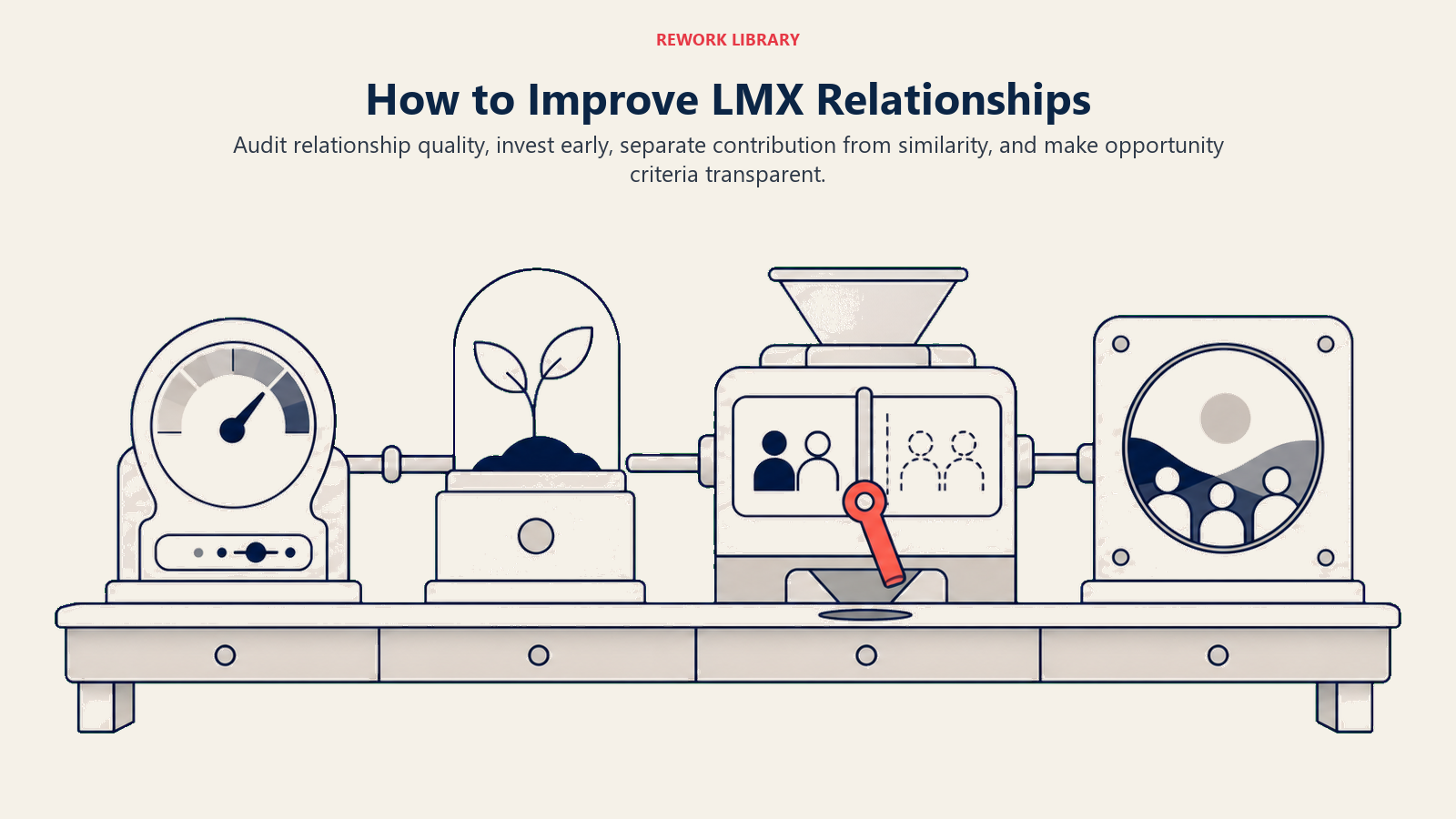
Langkah 1: Audit Hubungan Anda Saat Ini
Bersikaplah jujur tentang di mana setiap anggota tim berada dalam spektrum LMX. Pikirkan seberapa sering Anda melakukan percakapan informal dengan setiap orang, seberapa banyak umpan balik pengembangan yang Anda tawarkan, seberapa sering Anda mengadvokasi mereka dengan kepemimpinan senior, dan seberapa banyak pekerjaan sukarela yang Anda delegasikan kepada mereka. Audit ini akan mengungkap pola yang mungkin tidak Anda perhatikan. Jika hubungan LMX tinggi Anda mengelompok sekitar orang-orang yang terlihat atau berkomunikasi seperti Anda, itu adalah sinyal tentang bias, bukan prestasi.
Langkah 2: Berinvestasi Lebih Awal dan Secara Sengaja
Karena hubungan LMX terbentuk dengan cepat, investasi yang disengaja dalam beberapa minggu pertama hubungan kerja baru sangat penting. Jadwalkan 1:1 awal dengan mendengarkan secara tulus, bukan hanya penugasan tugas. Bagikan konteks melampaui apa yang secara teknis diperlukan. Beri pengikut peluang penugasan menantang yang kecil dan perhatikan bagaimana mereka menanganinya. Tujuannya adalah memberi setiap orang kesempatan yang adil untuk memasuki fase pembuatan peran.
Langkah 3: Pisahkan Kontribusi dari Kesamaan
Pendorong paling umum pembentukan in-group adalah kesamaan yang dirasakan, minat bersama, gaya komunikasi, atau latar belakang daripada kontribusi objektif. Bangun kebiasaan evaluasi yang mengaitkan investasi hubungan dengan kualitas pekerjaan yang ditunjukkan dan potensi pertumbuhan. Gunakan percakapan kinerja terstruktur daripada kesan informal. Tanyakan: "Apa yang telah dilakukan orang ini dalam sebulan terakhir yang memerlukan lebih banyak investasi?" daripada "apakah saya menikmati berbicara dengan orang ini?"
Langkah 4: Ciptakan Transparansi Seputar Peluang
Salah satu aspek paling merusak dari dinamika in-group/out-group adalah bahwa anggota out-group sering tidak tahu mengapa mereka kehilangan peluang. Jadikan kriteria untuk penugasan menantang, sponsorship, dan umpan balik pengembangan bersifat eksplisit dan terlihat. Ketika proyek berisiko tinggi muncul, nyatakan secara terbuka apa yang Anda cari dalam siapa yang memimpinnya. Ini menggeser percakapan dari favoritisme yang dirasakan ke kontribusi yang terlihat.
LMX dalam Praktik
Pertimbangkan sebuah perusahaan perangkat lunak menengah di mana seorang VP Engineering mengawasi delapan pengembang senior. Dalam tiga bulan sejak bergabung, dua pengembang, satu yang secara proaktif mengirimkan analisis tertulis tentang inefisiensi proses seminggu setelah mulai bekerja dan satu lagi yang segera menawarkan diri untuk memimpin proyek dokumentasi onboarding, telah menjadi penasihat informal. VP berbagi keputusan roadmap dengan mereka secara informal, menyertakan mereka dalam email strategis, dan mengadvokasi promosi mereka pada siklus berikutnya.
Tiga pengembang lain melakukan pekerjaan yang solid dan dapat diandalkan tetapi belum menciptakan momen inisiatif awal itu. Mereka mendapatkan penugasan tugas yang jelas, tinjauan kinerja yang adil, dan tidak ada akses informal. Mereka tidak berkinerja buruk. Mereka hanya tidak berada di in-group.
VP mungkin tidak menyadari bahwa ketidakseimbangan tersebut sedang membangun tim dua tingkat. Lima pengembang out-group mulai memperhatikan. Dua mulai memperbarui resume mereka. Satu secara diam-diam mengurangi upaya sukarela.
Penerapan LMX yang sadar akan membuat VP mengaudit distribusi hubungan setelah bulan ketiga, mengidentifikasi pola out-group, dan secara sengaja menciptakan peluang pembuatan peran untuk masing-masing dari lima orang tersebut: mengundang mereka secara individual untuk membentuk bagian dari perencanaan sprint berikutnya, berbagi keputusan teknis untuk mendapat masukan mereka, atau secara eksplisit mensponsori salah satu dari mereka untuk berbicara di konferensi. Tujuannya bukan untuk menghilangkan diferensiasi. Ini untuk mendasarkannya pada kontribusi, bukan pada siapa yang membuat kesan paling berani di minggu pertama.
Teori LMX tidak memberi tahu pemimpin untuk memperlakukan semua orang secara identik. Diferensiasi berdasarkan kontribusi dan kepercayaan adalah hal yang normal, tak terhindarkan, dan dalam banyak hal sehat. Namun yang disampaikan teori ini kepada para pemimpin adalah bahwa mekanisme di balik diferensiasi tersebut sangat penting, dan membiarkannya tidak disadari hampir selalu menghasilkan pola yang tidak adil yang berakar pada bias kesamaan daripada prestasi sejati. Manajer yang mendapatkan hasil terbaik dari tim mereka adalah mereka yang secara aktif mengelola kualitas setiap hubungan diadik: mengaudit posisi mereka, mengidentifikasi siapa yang terjebak dalam fase pengambilan peran bukan karena kesalahan mereka sendiri, dan dengan sengaja menciptakan kondisi untuk pertukaran berkualitas tinggi di seluruh tim. Kualitas hubungan bukan merupakan produk sampingan dari kepemimpinan yang baik. Ini adalah mekanismenya.

On this page
- Apa Itu Teori Leader-Member Exchange?
- Kelompok In-Group vs Kelompok Out-Group
- Tahapan LMX
- Pengambilan Peran (Role-Taking)
- Pembuatan Peran (Role-Making)
- Rutinisasi Peran (Role-Routinization)
- Manfaat LMX Berkualitas Tinggi
- Risiko dan Kritik
- Cara Membangun Hubungan Pemimpin-Anggota yang Lebih Baik
- Langkah 1: Audit Hubungan Anda Saat Ini
- Langkah 2: Berinvestasi Lebih Awal dan Secara Sengaja
- Langkah 3: Pisahkan Kontribusi dari Kesamaan
- Langkah 4: Ciptakan Transparansi Seputar Peluang
- LMX dalam Praktik