Gemba Walk: Arbeit dort beobachten, wo sie stattfindet

Turn this article into takeaways for your work.


Each assistant summarizes the article only for you and suggests best practices for your work.
Ein Gemba Walk ist eines der einfachsten Werkzeuge der Lean-Methodik und zugleich eines der am wenigsten genutzten. Sie verlassen Ihren Schreibtisch, gehen dorthin, wo die Arbeit tatsächlich stattfindet, und schauen zu, wirklich zu, was die Menschen den ganzen Tag tun. Das ist alles. Und trotzdem lassen die meisten Führungskräfte das komplett aus und steuern stattdessen über Dashboards und Statusberichte, die alles Unbequeme herausfiltern.
Was ist ein Gemba Walk?
Gemba (auch genba geschrieben) ist ein japanisches Wort und bedeutet "der reale Ort", also der tatsächliche Ort, an dem wertschöpfende Arbeit stattfindet. In der Fertigung ist das der Fabrikboden. Im Gesundheitswesen ist es die Patientenstation. In der Softwareentwicklung ist es dort, wo das Entwicklungsteam arbeitet. Ein Gemba Walk bezeichnet die Praxis, dass Führungskräfte an diesen realen Ort gehen, um Arbeit zu beobachten, Prozesse zu verstehen und Fragen zu stellen, nicht um zu inspizieren, zu prüfen oder Schuld zuzuweisen.
Das Konzept stammt direkt aus dem Toyota-Produktionssystem (TPS), in dem von leitenden Ingenieuren erwartet wurde, viel Zeit auf dem Fabrikboden statt im Büro zu verbringen. Taiichi Ohno, einer der Architekten des TPS, war überzeugt, dass die Antworten auf Prozessprobleme immer im Gemba lagen und dass Führungskräfte, die nie dort hingingen, auf Basis von Annahmen statt Fakten arbeiteten.
Wichtige Fakten
- Organisationen, die strukturierte Gemba Walks in ihre Lean-Programme integrieren, berichten laut Lean Enterprise Institute (2023) im ersten Jahr von einer Verschwendungsreduktion um 20 bis 40 %.
- Eine Studie der Association for Manufacturing Excellence ergab, dass 67 % der während Gemba Walks identifizierten Verbesserungsmöglichkeiten allein durch eine Datenauswertung nicht entdeckt worden wären (AME, 2022).
- Toyotas ursprüngliche TPS-Richtlinien empfahlen Ingenieuren, mindestens 30 % ihrer Zeit im Gemba zu verbringen, ein Wert, an dem sich viele Organisationen bis heute orientieren (interne Richtlinien der Toyota Motor Corporation, zitiert in Liker, The Toyota Way, 2004).
Der Gemba Walk hängt eng mit Kaizen als kontinuierlicher Verbesserung und der Wertstromanalyse zusammen. Er ist die Beobachtungsgrundlage, die diese Werkzeuge überhaupt erst wirksam macht.
Gemba Walk vs. Management by Walking Around (MBWA)
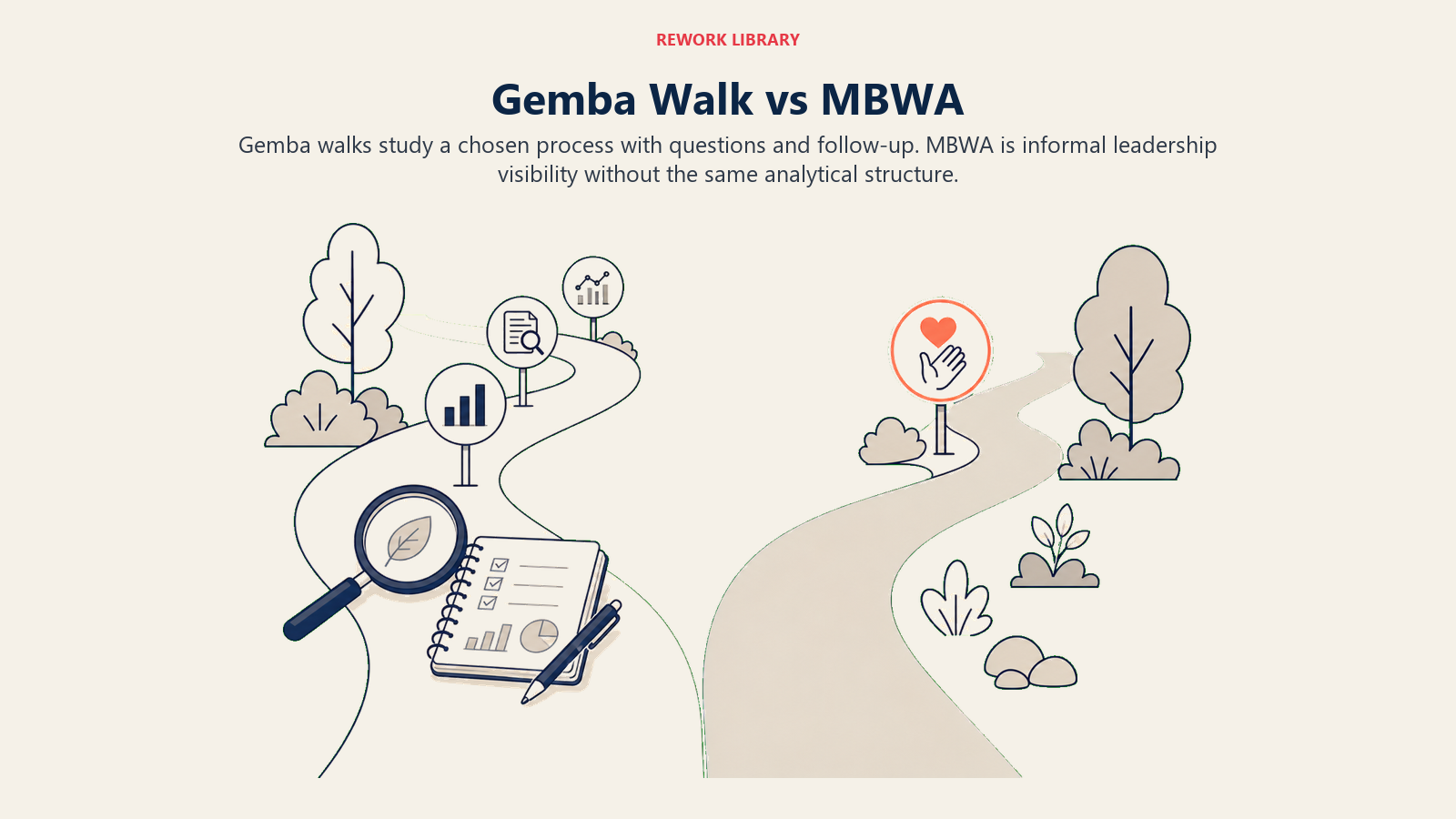
Management by Walking Around (MBWA) wurde durch Tom Peters in In Search of Excellence (1982) populär gemacht und zu einem festen Bestandteil der amerikanischen Managementkultur. Es klingt ähnlich wie ein Gemba Walk, doch Absicht und Struktur unterscheiden sich deutlich.
| Kriterium | Gemba Walk | Management by Walking Around (MBWA) |
|---|---|---|
| Zweck | Den Prozess systematisch beobachten | Vertrauen aufbauen, allgemeine Eindrücke sammeln |
| Struktur | Fokussiertes Thema, vorbereitete Fragen, dokumentierte Erkenntnisse | Informell, gesprächsbasiert, spontan |
| Fokus | Die Arbeit (Prozess, Fluss, Verschwendung) | Die Menschen (Stimmung, Energie, Themen) |
| Häufigkeit | Geplant, regelmäßiger Rhythmus | Unregelmäßig, von der Führungskraft getrieben |
| Ergebnis | Maßnahmenprotokoll, Verbesserungs-Backlog | Eindrücke, Beziehungsaufbau |
| Risiko | Kann bei falscher Anwendung zum Audit werden | Kann aufgesetzt oder beliebig wirken |
| Ursprung | Toyota-Produktionssystem / Lean | Peters & Waterman, HP-Unternehmenskultur |
Keines der beiden ist grundsätzlich besser. Wenn Sie jedoch einen Prozess verbessern wollen, ist der strukturierte Fokus des Gemba Walks auf wie die Arbeit fließt nützlicher als die soziale Dimension von MBWA. Beide können sich ergänzen: MBWA für die Unternehmenskultur, Gemba Walks für den Betrieb.
Die 3 Elemente eines Gemba Walks
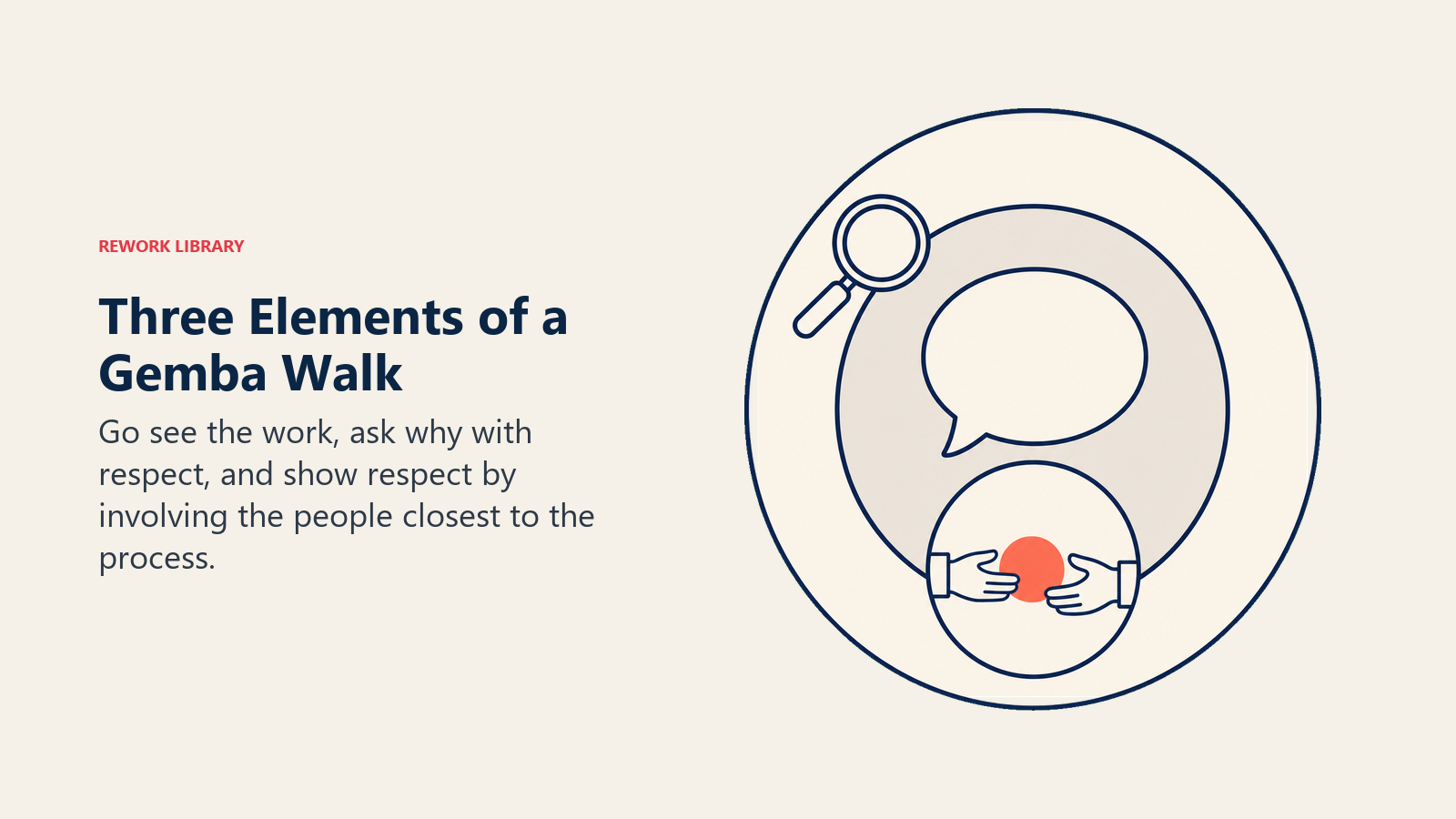
Jeder wirksame Gemba Walk, unabhängig von Branche oder Funktion, besteht aus drei Kernelementen. Toyotas eigene Coaching-Leitfäden beschreiben sie so:
Hingehen und Sehen
Sie begeben sich physisch an den Ort, an dem die Arbeit stattfindet. Nicht in einen Besprechungsraum. Nicht in einen Zoom-Call. Nicht in einen Bericht. An den tatsächlichen Ort, die Fertigungszelle, das Callcenter, die Lagerhalle, die Krankenhausstation. Sie beobachten die Arbeit in Echtzeit. Sie bemerken, was reibungslos läuft und was Menschen zum Stocken bringt, sie zurückgehen, improvisieren oder warten lässt.
Das klingt selbstverständlich, ist es aber nicht. Die meisten Führungskräfte verlassen sich zu stark auf gefilterte Informationen, Dashboards, Zusammenfassungen, Eskalationen, die ihnen mitteilen, was jemand für berichtenswert hielt. Hingehen und Sehen bedeutet, sich ungefilterte Realität zu verschaffen.
Nach dem Warum fragen
Sie stellen Fragen, aber keine anklagenden. Ziel ist es, den Prozess zu verstehen, nicht die Person zu bewerten. "Warum passiert dieser Schritt an dieser Stelle?" "Was passiert, wenn das System ausfällt?" "Was bremst Sie am meisten aus?" "Wenn Sie eine Sache an diesem Prozess ändern könnten, was wäre das?" Gute Fragen bei einem Gemba Walk sind neugierig und offen. Sie behandeln Mitarbeitende an der Front als die Experten, die sie sind.
Das hängt direkt mit der Denkweise der 5S-Methodik zusammen: Bevor Sie organisieren oder verbessern, müssen Sie verstehen, was tatsächlich passiert und warum.
Respekt zeigen
Respekt ist die Grundlage. Sie nutzen den Gemba Walk nicht, um Menschen bei Fehlern zu ertappen. Sie beheben nichts spontan auf eine Weise, die jemanden bloßstellt. Sie machen sich keine Notizen, die sich wie ein Prüfbericht anfühlen. Sie erkennen an, dass die Menschen, die die Arbeit tatsächlich erledigen, Dinge wissen, die Sie nicht wissen. Respekt zeigen heißt, das Wissen und die Zeit jedes Mitarbeitenden als wertvoll zu behandeln, weil sie es sind.
Das unterscheidet Gemba Walks auch von Qualitätsaudits. Audits suchen nach Abweichungen. Gemba Walks suchen nach Erkenntnissen.
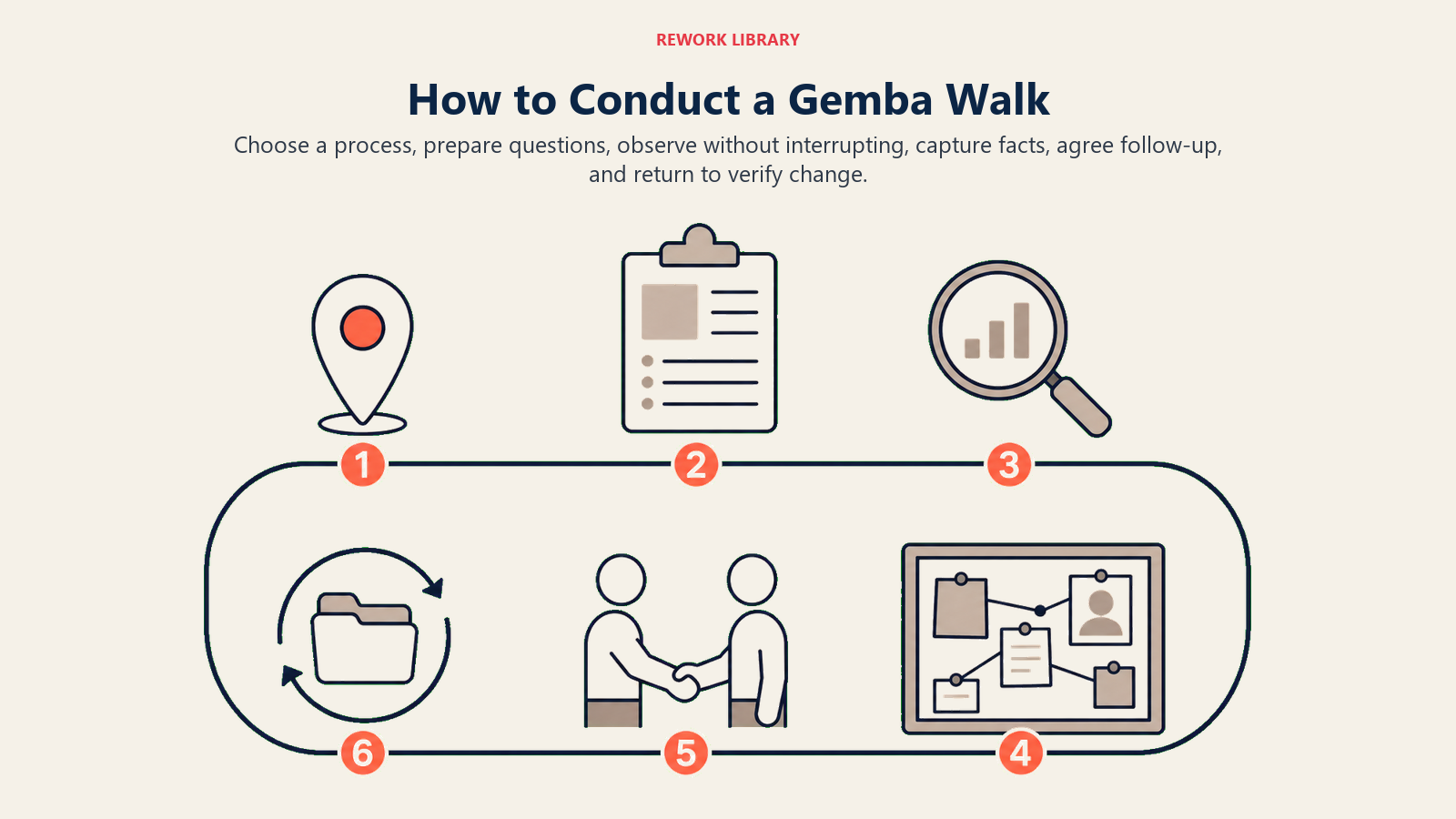
So führen Sie einen Gemba Walk durch
Schritt 1: Ein fokussiertes Thema wählen
Gehen Sie nicht mit dem vagen Auftrag "mal schauen, was los ist" in den Gemba. Wählen Sie eine Sache. Flussprobleme im Auftragsabwicklungsprozess. Verzögerungen bei Übergaben zwischen Teams. Nacharbeitsraten in einer bestimmten Fertigungszelle. Ein fokussiertes Thema macht Ihre Beobachtungen nützlich. Ohne ein solches Thema sammeln Sie Eindrücke ohne Erkenntnisgewinn.
Schritt 2: Fragen im Voraus vorbereiten
Formulieren Sie drei bis fünf konkrete Fragen zu Ihrem Thema, bevor Sie Ihren Schreibtisch verlassen. Das sind keine Skripte, sondern Anker. Wenn das Gespräch woandershin führt und das nützlich ist, folgen Sie ihm. Aber vorbereitete Fragen sorgen dafür, dass Sie nicht in Smalltalk oder allgemeine "Wie läuft's"-Floskeln verfallen.
Schritt 3: Den Wertstrom entlanggehen
Idealerweise folgen Sie dem Arbeitsfluss von Anfang bis Ende und beschränken sich nicht auf eine einzelne Station. Gehen Sie den gesamten Wertstrom entlang, den Ihr Thema betrifft. Wenn Sie sich die Auftragsverarbeitung ansehen, beginnen Sie dort, wo der Auftrag eingeht, und verfolgen Sie ihn durch Kommissionierung, Verpackung, Versand und Bestätigung. An den Übergabepunkten sehen Sie Dinge, die kein einzelner Mitarbeitender für sich allein sehen kann.
Schritt 4: Beobachten, nicht reparieren
Das ist für erfahrene Führungskräfte die schwierigste Regel. Wenn Sie ein Problem sehen, ist der Instinkt, es sofort zu lösen. Widerstehen Sie dem. Wenn Sie während des Walks Dinge reparieren, verwandeln Sie den Gemba Walk in eine Inspektion, und beim nächsten Mal verbergen die Mitarbeitenden Probleme vor Ihnen. Notieren Sie stattdessen, was Sie sehen, und heben Sie sich die Diskussion für das passende Forum auf. Ausnahme: echte Sicherheitsrisiken sollten sofort angegangen werden.
Schritt 5: Direkt im Gemba nachbesprechen
Bevor Sie gehen, teilen Sie mit der Teamleitung oder Aufsichtsperson vor Ort, was Sie beobachtet haben (nicht, was Sie daraus geschlossen haben). Fragen Sie nach deren Einschätzung. "Mir ist aufgefallen, dass der Schritt zur Chargensortierung oft darauf wartet, dass der Scanner frei wird, ist das ein häufiges Muster?" Das bestätigt oder korrigiert Ihre Beobachtung sofort vor Ort. Es zeigt auch Respekt und schließt den Kreis.
Schritt 6: Dokumentieren und nachverfolgen
Halten Sie Ihre Erkenntnisse innerhalb von 24 Stunden schriftlich fest. Verknüpfen Sie Beobachtungen mit Ihrem Verbesserungs-Backlog. Bestimmen Sie Verantwortliche und Zeitpläne für Folgemaßnahmen. Und kommen Sie wieder. Gemba Walks ohne sichtbare Konsequenzen vermitteln den Mitarbeitenden, dass die Rundgänge der Führung reine Show sind. Erst die Nachverfolgung macht die Beobachtung glaubwürdig.
Fragen für den Gemba Walk
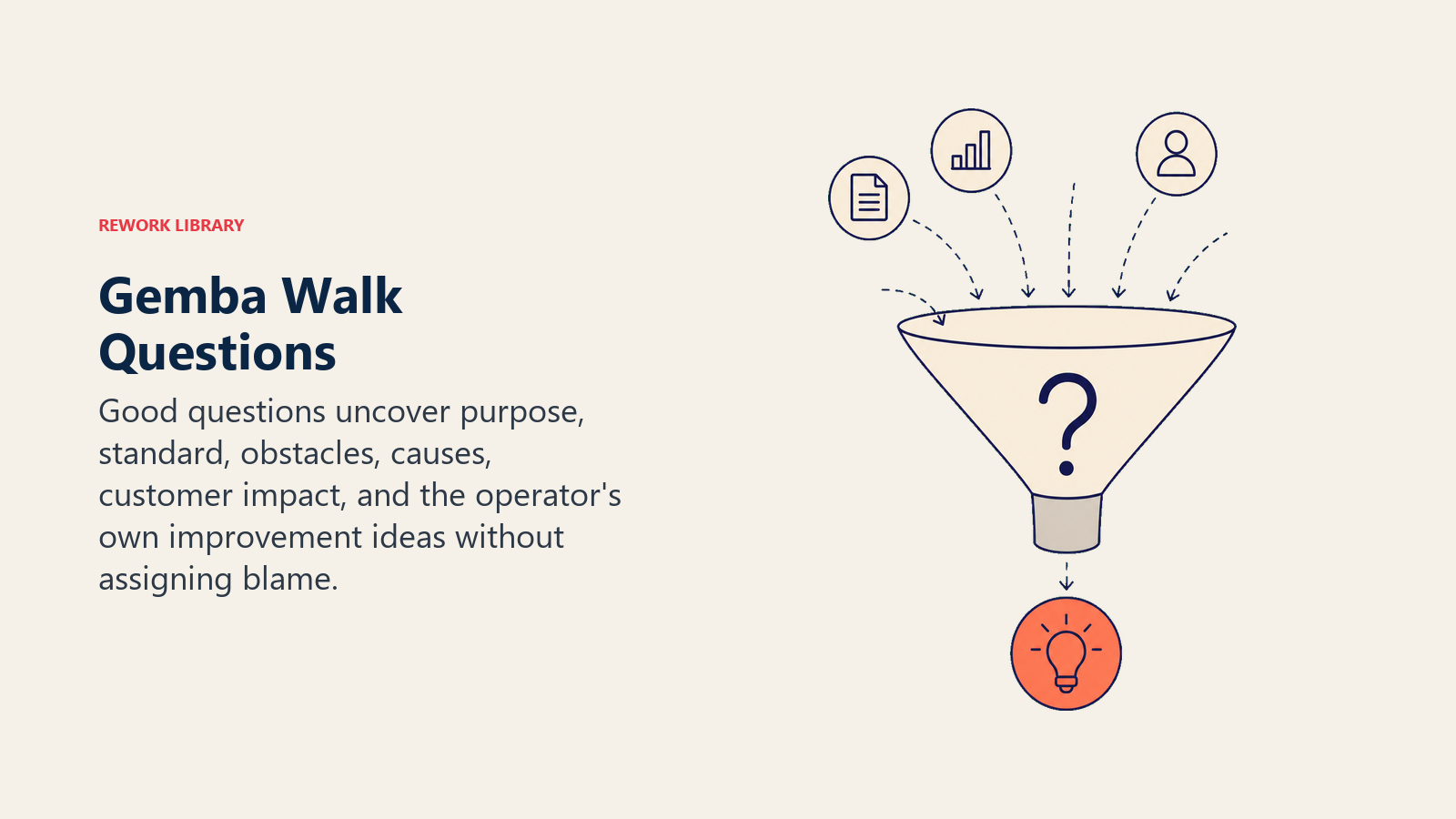
Die richtigen Fragen hängen davon ab, worauf Sie sich konzentrieren. Hier praktische Einstiegsfragen, gegliedert nach Themenbereich:
| Themenbereich | Beispielfragen |
|---|---|
| Fluss und Geschwindigkeit | Was führt dazu, dass dieser Schritt langsamer wird oder stoppt? Wie oft passiert das? |
| Qualität und Nacharbeit | Wenn Fehler hier zurückkommen, wo entstehen sie meist ursprünglich? |
| Übergaben | Welche Informationen aus dem vorherigen Schritt fehlen manchmal? |
| Werkzeuge und Ausrüstung | Gibt es etwas, das Sie für Ihre Arbeit brauchen und das schwer zu bekommen oder zu finden ist? |
| Verschwendungsidentifikation | Was fühlt sich in Ihrem Arbeitsalltag wie verschwendete Zeit oder Bewegung an? |
| Verbesserungsideen | Wenn Sie eine Sache an diesem Ablauf ändern könnten, was wäre das? |
| Sicherheit | Gibt es Schritte, bei denen Sie sich gehetzt oder gefährdet fühlen? |
| Standards | Gibt es einen Standard, wie dieser Schritt ausgeführt werden soll? Nutzen Sie ihn? |
Diese Fragen gelten unabhängig davon, ob Sie sich auf einem Fabrikboden, einer Krankenhausstation, in einem Software-Sprint-Review oder in einem Kundenservicebereich befinden. Die Details ändern sich, die Neugier nicht.
Beispiele für Gemba Walks nach Branche
Gemba Walks sind nicht nur etwas für die Fertigung. Das Konzept gilt überall dort, wo Arbeit stattfindet, also praktisch überall.
| Branche | Gemba-Standort | Was Sie beobachten |
|---|---|---|
| Fertigung | Produktionsboden, Montagelinie | Zykluszeit, Muda (Verschwendung), Maschinenstillstand, Bewegungen der Bedienenden |
| Gesundheitswesen | Patientenstation, Pflegestützpunkt, OP-Vorbereitung | Qualität der Übergaben, Wartezeit, Genauigkeit des Medikationsprozesses |
| Softwareentwicklung | Team-Arbeitsbereich, Standup, Sprint-Board | Blocker, Kontextwechsel, Übergabelücken zwischen Design und Entwicklung |
| Einzelhandel / Lager | Wareneingang, Kommissionier- und Packzone, Kasse | Bewegungsverschwendung, Lagerplatzierung, Scanfehler |
| Finanzdienstleistungen | Operations-Bereich, Kreditbearbeitungsplatz | Genehmigungsengpässe, erneute Dokumentenanfragen, Ausnahmebehandlung |
| Logistik | Versandbereich, Fahrer-Check-in | Ladereihenfolge, Verzögerungsquellen, Kommunikationslücken |
Das Krankenhausbeispiel lohnt einen genaueren Blick. Das Virginia Mason Medical Center in Seattle passte in den frühen 2000er-Jahren bekanntermaßen Toyotas TPS-Methoden, einschließlich Gemba Walks, für den Krankenhausbetrieb an. Zu den Ergebnissen zählten eine Reduzierung der Patientenwartezeiten in einigen Abteilungen um 53 % sowie deutliche Verbesserungen bei der Medikationssicherheit, dokumentiert in ihren veröffentlichten Fallstudien zur Lean-Transformation.
Häufige Fehler bei Gemba Walks
Es in ein Audit verwandeln
Der häufigste Fehler. Wenn Mitarbeitende sich beobachtet fühlen, spielen sie dem Beobachter etwas vor, statt normal zu arbeiten. Sie sehen dann nicht mehr den echten Prozess, sondern die aufgeräumte Version davon. Wenn Ihr Gemba-Walk-Zeitplan dazu führt, dass Menschen aufräumen und Probleme verstecken, bevor Sie eintreffen, funktioniert er wie ein Audit.
Lösung: Seien Sie konsequent und nicht strafend. Was Sie beobachten, fließt in den Verbesserungsprozess ein, nicht in die Leistungsbeurteilung.
Dinge spontan reparieren
Es fühlt sich hilfreich an. Tatsächlich schadet es. Wenn Sie während eines Walks etwas reparieren, signalisieren Sie, dass der Walk eine Inspektion mit unmittelbaren Konsequenzen ist. Beim nächsten Mal verstecken Mitarbeitende Probleme oder lösen sie, bevor Sie eintreffen, damit sie nicht schlecht dastehen. Sie verlieren den Zugang zur Realität.
Lösung: Beobachtungen notieren, nicht im Moment darauf reagieren (Sicherheit ausgenommen). Über die richtigen Kanäle nachverfolgen.
Die Nachverfolgung auslassen
Ein Gemba Walk ohne sichtbares Ergebnis ist schlimmer als gar kein Gemba Walk. Er vermittelt den Mitarbeitenden, dass Beobachtungen der Führung ins Leere laufen, warum also offen sein? Wenn Sie fragen "Was bremst Sie aus?" und sich nichts ändert, haben Sie Vertrauen beschädigt.
Lösung: Veröffentlichen Sie innerhalb von 48 Stunden eine kurze Rückmeldung. Zeigen Sie, was Sie gehört haben, was untersucht wird und was bereits umgesetzt wurde.
Allein gehen, selten gehen
Eine einzelne Führungskraft, die einmal im Quartal geht, lernt weniger als ein Team, das wöchentlich geht. Gemba Walks funktionieren am besten als gewohnheitsmäßige, strukturierte Praxis, nicht als gelegentliche Neugier.
Lösung: Bauen Sie einen festen Rhythmus auf. Beziehen Sie mehrere Führungsebenen ein. Nutzen Sie ein rotierendes Thema, damit jeder Walk etwas Neues lehrt.
Mehr reden als beobachten
Führungskräfte, die den Walk damit verbringen, den Mitarbeitenden Dinge zu erklären, statt ihnen zuzuhören, gewinnen am wenigsten daraus. Der Gemba dient dem Lernen, nicht dem Belehren.
Die Stärke des Gemba Walks liegt in seiner Einfachheit. Sie können nicht verbessern, was Sie nicht wirklich verstehen. Und Sie können Arbeit nicht verstehen, indem Sie darüber lesen, Sie müssen sie dort sehen, wo sie stattfindet. Beginnen Sie mit einem Walk, einem fokussierten Thema und einem ehrlichen Gespräch. Der Rest folgt daraus.
Weiterführende Inhalte

Customer Success Operations Manager
On this page
- Was ist ein Gemba Walk?
- Gemba Walk vs. Management by Walking Around (MBWA)
- Die 3 Elemente eines Gemba Walks
- Hingehen und Sehen
- Nach dem Warum fragen
- Respekt zeigen
- So führen Sie einen Gemba Walk durch
- Schritt 1: Ein fokussiertes Thema wählen
- Schritt 2: Fragen im Voraus vorbereiten
- Schritt 3: Den Wertstrom entlanggehen
- Schritt 4: Beobachten, nicht reparieren
- Schritt 5: Direkt im Gemba nachbesprechen
- Schritt 6: Dokumentieren und nachverfolgen
- Fragen für den Gemba Walk
- Beispiele für Gemba Walks nach Branche
- Häufige Fehler bei Gemba Walks
- Es in ein Audit verwandeln
- Dinge spontan reparieren
- Die Nachverfolgung auslassen
- Allein gehen, selten gehen
- Mehr reden als beobachten
- Weiterführende Inhalte