Der Keeper Test: Ein Framework für Leistung und Talententscheidungen
Turn this article into takeaways for your work.


Each assistant summarizes the article only for you and suggests best practices for your work.
Die meisten Organisationen managen Leistung reaktiv. Jemand erbringt erkennbar schlechte Leistung, und die Organisation reagiert: ein Leistungsverbesserungsplan, ein schwieriges Gespräch, am Ende eine Trennung. Dieser Prozess ist rückwärtsgerichtet, langsam und für alle Beteiligten meist schmerzhaft.
Der Keeper Test ist eine andere Herangehensweise. Statt zu fragen "leistet diese Person gut genug, um zu bleiben?", stellt er eine zukunftsorientierte Frage: "Wenn diese Person mir morgen sagen würde, dass sie das Unternehmen verlässt, würde ich mich ernsthaft darum bemühen, sie zu halten?"
Diese Frage richtet das Leistungsmanagement neu aus: von der Reaktion zur bewussten Entscheidung. Und die Antwort, ehrlich auf ein ganzes Team angewendet, offenbart oft Dinge, die unangenehm, aber nützlich sind.
Die Logik des Keeper Tests
Das Konzept des Keeper Tests kursiert seit Jahren in der Managementliteratur und -praxis und ist mit einem hochleistungsorientierten, verantwortungsbewussten Ansatz im Talentmanagement verbunden. Die Kernthese lautet: Ein Team aus wirklich hervorragenden Personen, von denen jede gut zu ihrer aktuellen Rolle passt, erbringt deutlich bessere Leistung als ein Team, in dem mehrere Stellen von Personen besetzt sind, die "in Ordnung", aber nicht wirklich stark in ihrer Position sind.
Das klingt selbstverständlich. Doch die meisten Organisationen akkumulieren aus durchaus verständlichen Gründen eine erhebliche Anzahl von Mitarbeitenden, die "in Ordnung, aber nicht gut genug" sind: Leistungsprobleme anzusprechen ist unangenehm, Abgänge sind störend, und eine bekannte Größe (auch eine mittelmäßige) fühlt sich oft sicherer an als die Ungewissheit eines Einstellungsverfahrens.
Der Keeper Test schafft einen Handlungszwang. Er fordert Führungskräfte auf, eine ehrliche Einschätzung vorzunehmen, bevor der Druck eines Leistungsgesprächs oder die Dringlichkeit eines Abgangs sie dazu zwingt. Und er fordert sie auf, auf der Grundlage dieser Einschätzung proaktiv statt reaktiv zu handeln.
So wird der Keeper Test angewendet
Der Keeper Test ist ein Diagnoseinstrument, kein Urteil. Es ist eine Frage, die eine Führungskraft intern, für sich selbst, über jedes Mitglied ihres Teams stellt. Die Frage lautet: "Wenn diese Person mir morgen ihre Kündigung geben würde, würde ich darum kämpfen, sie zu halten?"
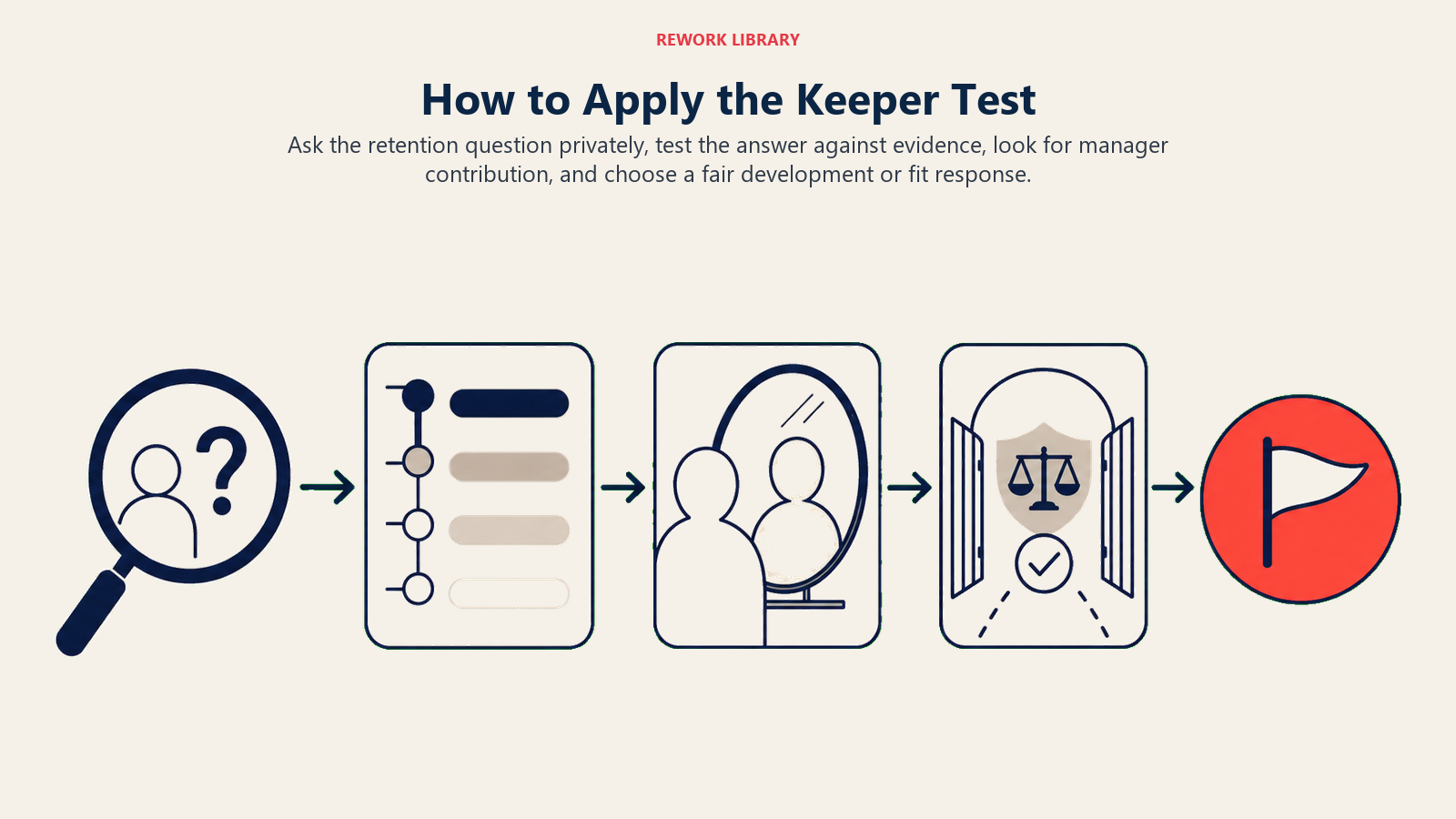
Ein klares Ja bedeutet, dass die Person in der Rolle gute Leistung erbringt und ein echtes Plus für das Team ist. Ein klares Nein, ehrlich anerkannt, eröffnet eine andere Überlegung: Wenn man nicht darum kämpfen würde, diese Person zu halten, was tut man dann eigentlich, indem man sie im Team behält? Die Organisation wird nicht gut bedient, denn sie wäre mit einer stärkeren Person in dieser Position besser aufgestellt. Und der betreffende Mensch wird möglicherweise auch nicht gut bedient, da er in einer anderen Rolle oder einem anderen Umfeld besser aufgehoben sein könnte.
Der schwierigere Fall ist das "wahrscheinlich nicht" oder "ich bin mir nicht sicher". Dies sind oft die wichtigsten Fälle, weil sie dazu neigen, unbehandelt zu bleiben. Die Führungskraft ist nicht beunruhigt genug, um zu handeln, aber auch nicht zufrieden genug, um sicher zu sein. Die Stelle bleibt mit jemandem besetzt, der weder aufblüht noch versagt, und beide Seiten dieser Beziehung wissen das oft.
Fragen, die die Einschätzung schärfen
Der Keeper Test funktioniert am besten, wenn er von gezielteren Diagnosefragen begleitet wird:
Ist diese Person in der richtigen Rolle oder einfach in einer Rolle? Manche Menschen erbringen keine schlechten Leistungen, weil es ihnen an Können mangelt. Sie befinden sich in einer Rolle, die nicht zu ihren Stärken oder Interessen passt. Eine Versetzung könnte für beide Seiten ein Gewinn sein.
Habe ich dieser Person das gegeben, was sie braucht, um gute Leistung zu erbringen? Eine faire Keeper-Test-Bewertung setzt voraus, dass die Führungskraft klare Erwartungen kommuniziert, direktes Feedback gegeben und die notwendigen Ressourcen und Unterstützung bereitgestellt hat. Jemanden als "nicht haltenswert" einzustufen, ohne diese Dinge zuvor getan zu haben, ist keine Leistungsmanagement-Disziplin. Es ist Führungsversagen.
Wende ich den Maßstab konsistent an? Wenn eine Führungskraft ein Leistungsniveau von einer langjährigen Fachkraft akzeptieren würde, das sie von einer neuen Mitarbeiterin nicht akzeptieren würde, wird der Keeper Test inkonsistent angewendet. Der Test sollte den Standard für die Rolle hinterfragen, nicht Betriebszugehörigkeit oder Beziehungsgeschichte.
Was kostet es tatsächlich, passiv zu bleiben? Die Standardoption, wenn eine Führungskraft unsicher über ein Teammitglied ist, ist meist Passivität. Der Keeper Test erzwingt die Frage: Was kostet diese Passivität tatsächlich? Sie kostet die Leistung, die das Team erzielen könnte, wenn die Stelle von jemandem besetzt wäre, der besser passt. Sie kostet das Teammitglied oft die Klarheit über seine Situation. Und sie kostet die Führungskraft Zeit und Energie, die in das Coaching von jemandem fließen könnte, der davon wirklich profitiert.
Was der Keeper Test nicht ist
Der Keeper Test wird manchmal missverstanden als Lizenz für ständigen Personalwechsel oder als ein Framework, das Menschen als austauschbar behandelt. Beides trifft nicht zu.
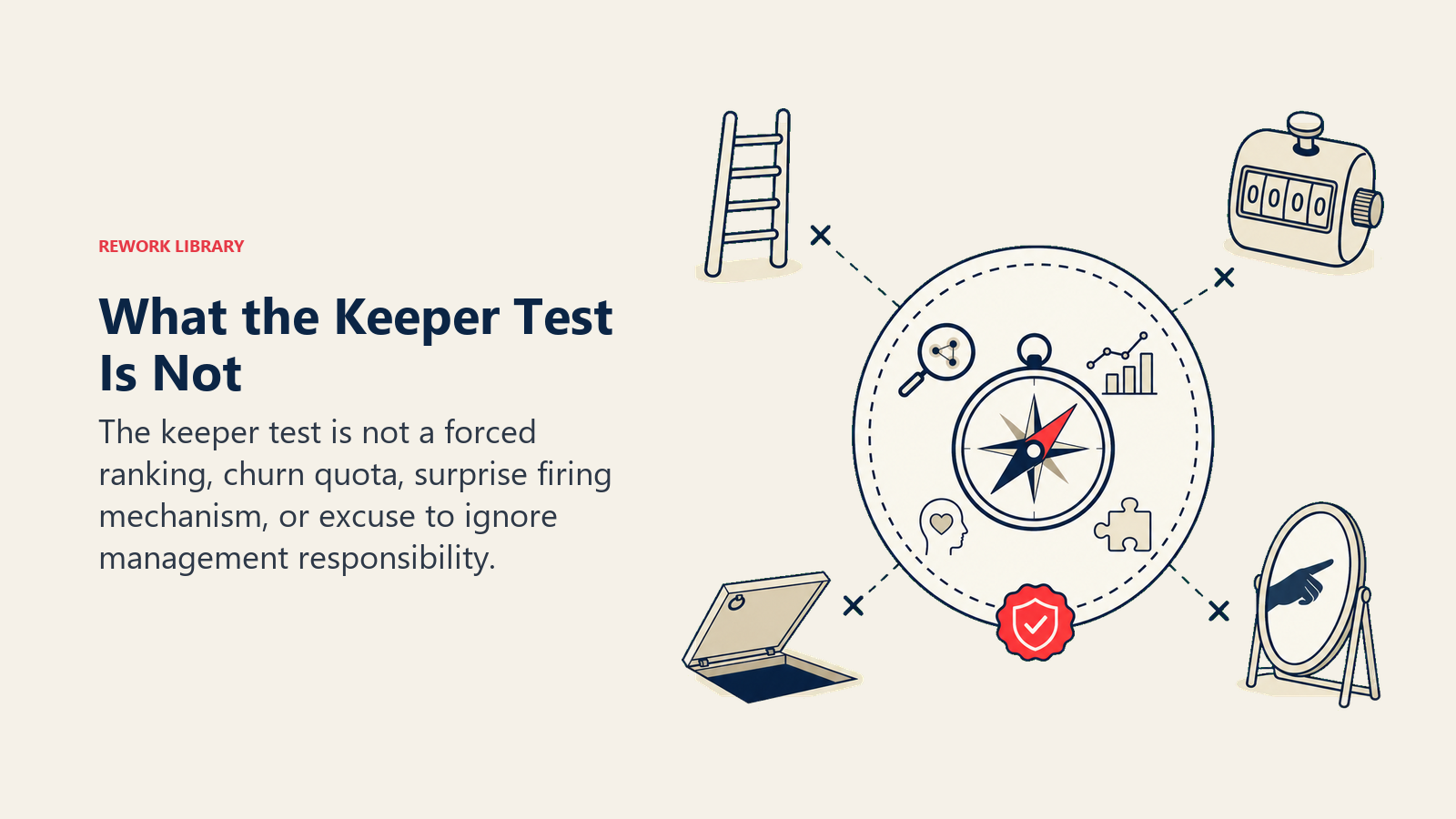
Er ist keine Quote. Der Keeper Test impliziert nicht, dass ein bestimmter Prozentsatz des Teams jedes Jahr ersetzt werden sollte. Wenn jedes Mitglied eines Teams die Messlatte "Ich würde darum kämpfen, diese Person zu halten" wirklich erreicht, ist kein Handeln erforderlich. Der Test ist ein Diagnoseinstrument, kein Mandat.
Er ist kein Ersatz für Investitionen. Eine Führungskraft, die den Keeper Test anwendet, ohne in die Entwicklung eines Teammitglieds investiert, ohne direktes Feedback gegeben und ohne Erwartungen klar kommuniziert zu haben, nutzt ihn als Rationalisierung, nicht als Disziplin. Der Test hat nur dann Bedeutung, wenn echte Anstrengungen zur Unterstützung und Entwicklung der Person vorausgegangen sind.
Er ist kein Test auf Perfektion. Die Frage lautet nicht: "Ist diese Person die bestmögliche Einstellung, die wir für diese Rolle finden könnten?" Es geht darum, ob man, wenn sie gehen würden, aktiv versuchen würde, sie zu halten. Das ist eine realistische und erreichbare Messlatte für gute, effektive Leistungsträger.
Er ist nicht unvereinbar mit psychologischer Sicherheit. Ein Team, in dem Leistung wirklich zählt, ist nicht zwangsläufig ein ängstliches Team. Teams, die ihrer Führungskraft vertrauen, ehrlich mit ihnen zu sein, auch in Leistungsfragen, haben oft eine höhere psychologische Sicherheit als Teams, in denen Leistungsprobleme ignoriert werden, bis sie unumkehrbar werden. Ehrlichkeit, die mit echter Fürsorge für die Person verbunden ist, ist mit einer Kultur vereinbar, in der sich Menschen sicher fühlen, Risiken einzugehen und offen zu sprechen.
Das Gespräch, das folgt
Wenn eine Führungskraft zu dem Schluss kommt, dass ein Teammitglied den Keeper Test nicht besteht, gibt es im Allgemeinen drei Wege:
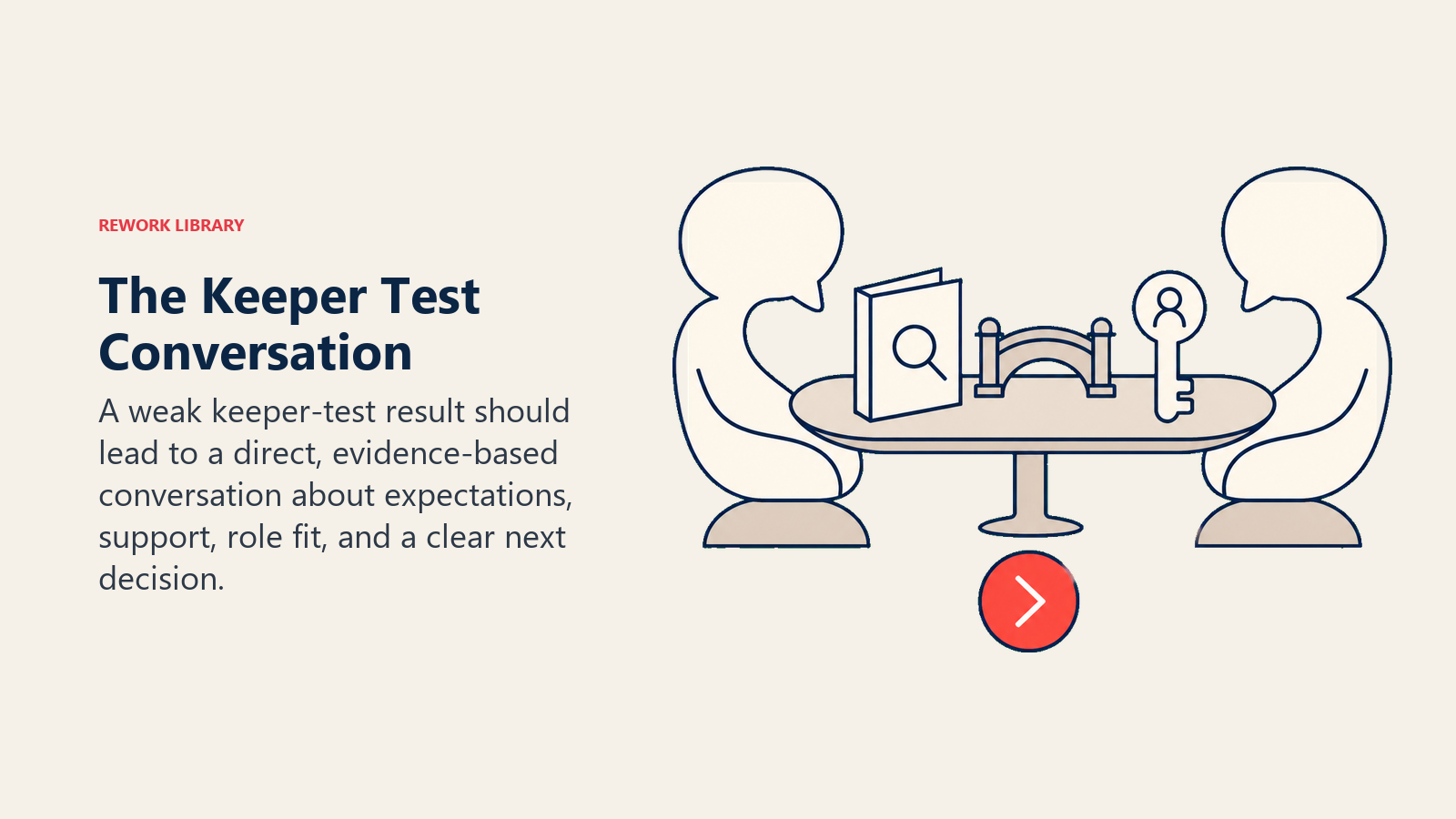
Direktes Gespräch über Erwartungen und Eignung. Das ist oft der respektvollste und produktivste Weg. Die Führungskraft ist gegenüber dem Teammitglied ehrlich über die Lücke zwischen der aktuellen Leistung und dem Standard, den die Rolle erfordert. Dieses Gespräch, gut geführt, gibt der Person die Informationen, die sie braucht, um eigene Entscheidungen zu treffen, und die Gelegenheit, die Lücke zu schließen, wenn sie das möchte.
Neugestaltung der Rolle oder Versetzung. Manchmal liegt die Lücke nicht im Können der Person, sondern in der Passung zwischen Person und Rolle. Jemanden in eine andere Rolle zu versetzen, in der seine Stärken besser zum Einsatz kommen, ist ein positives Ergebnis für alle Beteiligten, sofern die Organisation diese Option hat.
Geregelte Trennung. Manchmal ist die ehrliche Schlussfolgerung, dass die Organisation und die Person nicht zueinander passen, und eine respektvolle, gut gehandhabte Trennung dient beiden Seiten besser als die unbegrenzte Fortsetzung einer Situation, die nicht funktioniert.
Das gemeinsame Merkmal aller drei Wege ist, dass sie Ehrlichkeit erfordern, und der Keeper Test schafft die Disziplin, zu dieser Ehrlichkeit zu gelangen, bevor eine Krise sie erzwingt.
Der Keeper Test auf Führungsebene
Der Keeper Test gilt auf jeder Ebene einer Organisation, auch im Senior Leadership Team. Tatsächlich sind die Konsequenzen einer schwachen Stelle in einem Führungsteam oft größer als bei einer Einzelkraft, weil Führungskräfte die Leistung aller unter ihnen beeinflussen.
Führungskräfte, die den Keeper Test konsequent auf ihre direkt unterstellten Mitarbeitenden anwenden und ihre direkt unterstellten Mitarbeitenden dazu ermutigen, dasselbe in der gesamten Organisation zu tun, schaffen eine Kultur, in der Talentqualität eine echte operative Priorität und kein bloßes Lippenbekenntnis ist.
Das bedeutet auch, dass Führungskräfte bereit sein müssen, den Test auf sich selbst anzuwenden. Würde der Aufsichtsrat darum kämpfen, diesen CEO zu halten? Würde der CEO darum kämpfen, diesen Divisionspräsidenten zu halten? Das sind unbequeme Fragen, aber ehrliche Organisationen stellen sie.
Wichtige Fakten
- Organisationen, in denen Führungskräfte die Teamzusammensetzung proaktiv managen, statt nur auf offensichtliche Leistungsausfälle zu reagieren, berichten von höheren Teamzufriedenheitswerten bei den verbleibenden Teammitgliedern, nicht von niedrigeren.
- Die Kosten einer schwachen Leistung in einer Schlüsselrolle umfassen typischerweise sowohl direkte Leistungsdefizite als auch indirekte Kosten: die Auswirkung auf die Moral der Leistungsträger, die sehen, dass unzureichende Leistung toleriert wird.
- Proaktive Leistungsgespräche, die frühzeitig und mit echter Fürsorge für die Person geführt werden, führen häufiger zu positiven Ergebnissen (Leistungsverbesserung oder respektvolle Trennung) als reaktive Gespräche, die durch eine Leistungskrise ausgelöst werden.
- Der häufigste Grund, den Führungskräfte für die nicht ehrliche Anwendung des Keeper Tests angeben, ist die Unannehmlichkeit des folgenden Gesprächs, nicht die Unsicherheit über die Einschätzung selbst.
Häufig gestellte Fragen
Wie oft sollte ich den Keeper Test anwenden?
Er funktioniert am besten als regelmäßige, niedrigschwellige Disziplin und nicht als formale jährliche Übung. Viele Führungskräfte führen bei jedem 1:1 eine stille Version durch: Entwickelt sich das Verhältnis in die richtige Richtung? Wächst diese Person in die Rolle hinein? Eine formalere Überprüfung quartalsweise oder vor Leistungszyklen kann ebenfalls hilfreich sein.
Was, wenn ein Teammitglied, das ich nicht halten würde, nach allen formalen Kennzahlen auch ausreichend leistet?
Das ist der wichtigste Fall. Formale Kennzahlen messen oft das, was leicht zu messen ist, nicht das, was wirklich zählt. Wenn die ehrliche Einschätzung lautet, dass die Person nicht jemand ist, für den man kämpfen würde, und die formalen Kennzahlen sagen, dass alles in Ordnung ist, bilden die Kennzahlen möglicherweise nicht ab, was einem tatsächlich wichtig ist. Das ist es wert, zu untersuchen: Was wäre nötig, damit man sich in Bezug auf den Beitrag dieser Person wirklich sicher fühlt?
Ist es fair, Teammitglieder an einer Messlatte zu messen, die nicht in ihrer Stellenbeschreibung steht?
Ja, wenn die Messlatte einen echten Beitrag und Eignung betrifft und wenn die Erwartungen klar kommuniziert wurden. Stellenbeschreibungen erfassen die Mindestanforderungen einer Rolle. Der Keeper Test fragt nach etwas, das über das Minimum hinausgeht: Ist diese Person ein echter Gewinn für das Team?
Wie wendet man den Keeper Test auf jemanden an, der in seiner aktuellen Rolle exzellent ist, aber nicht wächst?
Das hängt davon ab, was die Rolle erfordert. Manche Rollen erfordern in erster Linie eine hervorragende, konsistente Ausführung, kein Wachstum. Andere erfordern kontinuierliche Entwicklung. Klären Sie, welches zutrifft. Wenn die Rolle Wachstum erfordert und die Person nicht wächst, ist das ein echtes Problem, das direkt angegangen werden sollte.
Erzeugt eine transparente Keeper-Test-Kultur Angst?
Das kann sie, wenn sie ohne echte Fürsorge für Einzelpersonen oder ohne die unterstützenden Praktiken klarer Erwartungen und direkten Feedbacks angewendet wird. In einem Kontext angewendet, in dem Führungskräfte wirklich in ihre Mitarbeitenden investieren, klar kommunizieren und ehrliches Feedback geben, tendiert sie dazu, Klarheit statt Angst zu erzeugen. Menschen wissen im Grunde oft, wie sie dastehen. Das explizit zu machen und Menschen im Gespräch mit Respekt zu behandeln, ist in der Regel weniger belastend als anhaltende Unklarheit.
Weiterführende Artikel: Hohe Standards ohne Burnout | Psychologische Sicherheit | Schwierige Mitarbeiterkommunikation | Nachfolgeplanung | High-Output Management | Kultur, die skaliert
