Recall & Reactivation Programs: 患者を診療所に呼び戻す
Turn this article into takeaways for your work.


Each assistant summarizes the article only for you and suggests best practices for your work.
あなたのpatient databaseには、最も価値があり活用されていない資産の1つが含まれています: すでにあなたの診療所を知っており、あなたからケアを受けており、次の訪問をscheduleするための適切なpromptが必要なだけの患者です。彼らは、attractするための高価なmarketingを必要とせず、convertするための長いeducationを必要とせず、trustを構築するための時間を必要としません。彼らは単にsystematic contactを必要とします。
しかし、ほとんどの診療所には、ケアが遅れている数百または数千の患者がいますが、彼らを呼び戻すための組織化されたシステムはありません。彼らは、単純なneglectを通じて既存の患者を滑り落ちさせながら、new patient lead generationにmarketing dollarsを集中させています。それは、穴を無視しながらleaky bucketに水を注ぐようなものです。
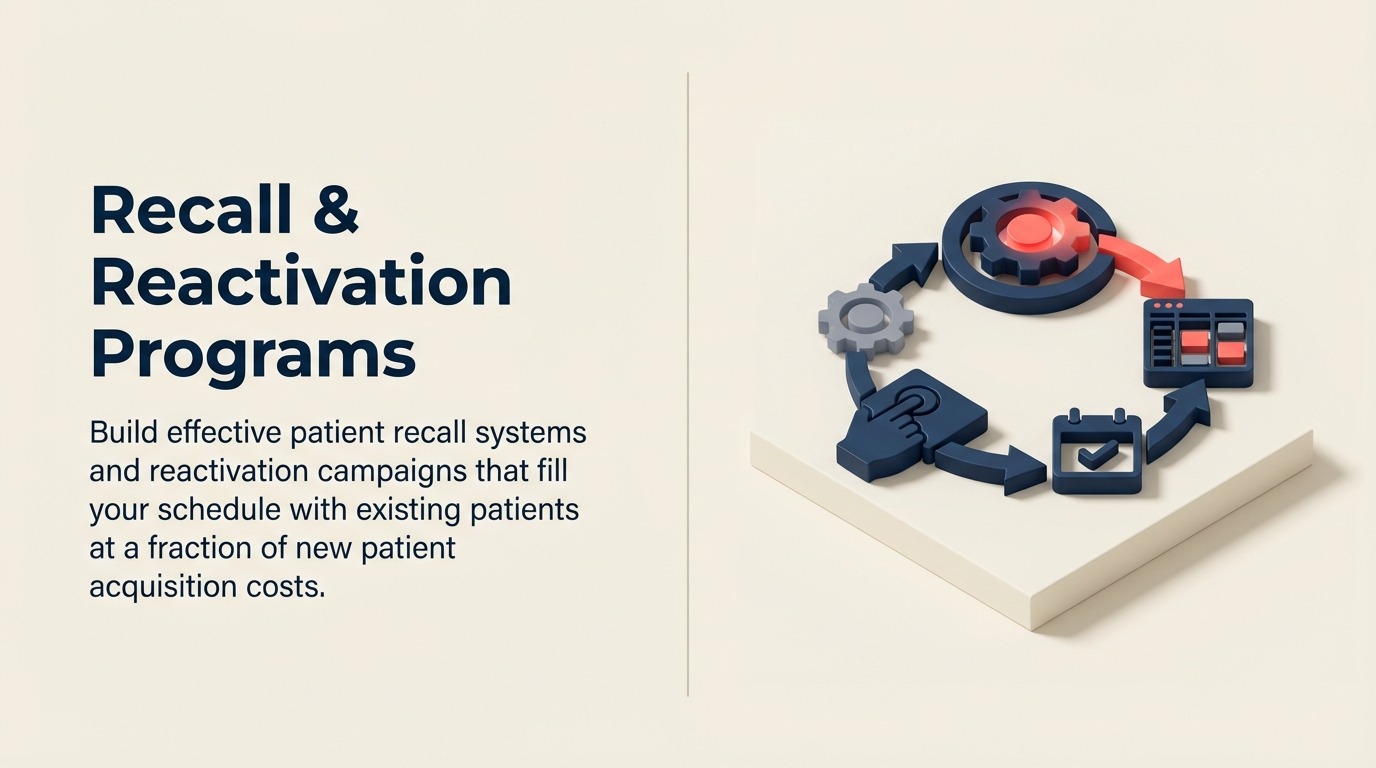
この機会を最大化する診療所は、2つの補完的なシステムを構築します: 定期的な患者をpreventiveおよびongoing careのためのscheduleに保つrecallプログラム、そしてlapsedした患者を取り戻すreactivation campaigns。一緒に、これらのプログラムは、new patient acquisitionのごく一部のcostで、あなたのscheduleの30-50%を埋めることができます。
Understanding Recall vs. Reactivation
これらの用語はしばしば互換的に使用されますが、区別は効果的なprogram designにとって重要です。
Recall systemsは、彼らがあなたのradarから落ちる前に定期的なケアをscheduleするようにpromptすることで、active患者との関係を維持します。これには、annual physicals、six-month dental cleanings、quarterly chronic disease management、periodic screening tests、regular therapy sessionsが含まれます。Patient relationshipは健全です - あなたは単に次のscheduled touchpointを促進しています。
Reactivation campaignsは、すでにlapsedした患者をtargetします—彼らはexpected visitを逃し、previous remindersにもかかわらずrescheduleしませんでした。Relationshipは冷たくなり、彼らを呼び戻すためにstandard recall messagingよりも説得力のあるoutreachが必要です。
Recallを関係maintenance、reactivationを関係repairと考えてください。両方とも重要ですが、異なるapproaches、messaging、expectationsを必要とします。
Designing Effective Recall Programs
Recall successは、異なるpatient typesがいつ戻るべきかのclear standardsから始まります。Defined intervalsがなければ、誰がケアのためにdueであるかをsystematicallyに特定できません。
Specialty-specific recall intervalsは基盤を提供します:
Primary Care:
- Healthy adultsのためのannual wellness visits
- Chronic disease management (diabetes、hypertension、heart disease)のためのquarterly visits
- Complexまたはunstableなconditionsのためのmore frequent monitoring
- USPSTF recommendationsに従ったageとgender-specific screening schedules (mammograms、colonoscopies、etc.)
Dental:
- ほとんどの患者のためのsix-month cleaningsとexams
- Gum disease患者のためのthree-month periodontal maintenance
- Annual x-raysまたはclinically indicated
- Active treatment plansのためのmore frequent visits
Physical Therapy:
- Treatment planによって規定された通り(多くの場合、最初は週2-3回)
- Injury preventionのためのpost-discharge後のperiodic check-ins (3、6、12ヶ月)
- Current appointmentを去る前に次のvisitのimmediate scheduling、appointment scheduling optimization原則に従って
Specialty Care:
- ConditionとspecialtyによってWidelyに異なります
- Specific conditionsのためのestablished clinical guidelinesに従います
- Co-managed患者のためにprimary careとcoordinate
これらのstandardsをdocumentし、スタッフにそれらをtrainします。あなたのrecall systemは、あなたが作業しているintervalsと同じくらい良いだけです。これらをあなたのpractice management softwareに組み込んで、自動的にremindersをtriggerするようにすることを検討してください。
Pre-scheduling strategiesはrecall effectivenessを劇的に改善します。患者があなたのofficeを去る前に、次のappointmentをscheduleします。このsingle practice changeは、recall complianceを40-60%増加させることができます。
心理学は単純です: カレンダーにscheduledされたappointmentは、6ヶ月後に電話するvague intentionよりもはるかに起こりやすいです。後でrescheduleする必要がある場合でも、あなたはexpectationを確立し、confirmする特定の日付を持っています。MGMA research on patient engagementによると、pre-appointment schedulingはpreventive care complianceのhighest-impact strategiesの1つです。
Pre-schedulingは以下の場合に最もよく機能します:
- Clinical staffがfront deskだけでappointmentsをpushingするのではなく、care planの一部としてそれをadvocateする
- 必要に応じてreschedulingについて柔軟である(notice付きのchangesのno-penalty policy)
- Confirmation remindersがwell in advanceに送信されるため、changesをsmoothlyに行うことができる
- なぜintervalが彼らの健康にとって重要であるかを説明する、「6ヶ月ごとにあなたを診たい」だけでなく
Reminder sequencesは、pre-scheduled患者とcontactを維持し、pre-scheduleしなかった患者をpromptします。Effective sequenceは通常以下を含みます:
Due dateの60-90日前: なぜこのvisitが彼らの健康にとって重要であるかについてのeducational reminder (emailまたはportal message)
30日前: 便利なonline booking linkを持つscheduleへのinvitation (email/text)
Scheduled appointmentの7日前: Easy reschedule optionを持つconfirmation request (text preferred)
Appointmentの前日: Practice detailsと何を持ってくるかを持つfinal reminder (text)
Missed appointmentの後: No-showした場合にrescheduleするsame-day follow-up
各messageは、単にactionをdemandするだけでなく、valueを提供する必要があります。「あなたのsix-month cleaningがdueです - 覚えておいてください、regular cleaningsはgum diseaseを防ぎ、問題を早期にcatchします」は「あなたのappointmentの時間です」よりもよく機能します。
Confirmation workflowsはno-showsを減らし、cancelledされたslotsを埋める機会を提供します。あなたのシステムは以下を行う必要があります:
- Appointmentの2-3日前にconfirmationをrequest
- Reschedulingをconfirmingと同じくらい簡単にする
- Confirmedされた患者をno-show prevention trackingに自動的にadd
- High-valueの場合、unconfirmedされたappointmentsをphone follow-upのためにflag
- Waitlistまたはopportunistic outreachを通じてcancelledされたslotsをimmediatelyに埋める
ゴールは単にappointmentsをconfirmingすることだけでなく、あなたのscheduleをproactivelyに管理することです。48-hourのnoticeを持つcancelledされたslotは埋めることができます; 患者がshowしないときに発見されたものは無駄な容量です。
Multi-Channel Communication Strategy
患者は、彼らがどのようにcontactされるかについて強いpreferencesを持っており、間違ったchannelを使用することはresponse ratesを劇的に減らします。あなたのrecall systemは、患者がいる場所で彼らに会う柔軟性が必要です。
Text messaging protocolsはappointment remindersとconfirmationのために非常によく機能します。Textsはemailの20%と比較して98%のopen ratesを持ち、ほとんどの人は受信の数分以内にtextsをcheckします。
Recall textsのためのbest practices:
- 可能な場合、messagesを160文字以下に保つ
- Patient name、appointment date/time、locationを含める
- Simple confirmation method (返信YESまたはlinkをclick)を提供
- Phone numberまたはlinkでreschedulingを簡単にする
- Quiet hoursを尊重(午前8時前または午後8時後にtextsなし)
- Easy opt-outを許可し、preferencesをimmediatelyに尊重
Sample: 「Hi Sarah、これはABC Dentalです。あなたのsix-month cleaningがdueです。[Link]でscheduleするか、555-1234に電話してください。Opt outするにはSTOPと返信してください。」
Email campaignsは、more context、education、visual elementsを持つlonger messagesを可能にします。Emailは以下に適しています:
- なぜvisitがdueであるかの説明を持つinitial recall notifications
- 必要なケアのtypeについてのeducational content
- 関連するケアのためにdueである患者へのnew service announcements
- Value-add contentと一緒にrecall messagesを含むnewsletters
Recall category (annual preventive、chronic disease management、specialty-specific)に基づいてemail listsをsegmentして、messagingがrelevantになるようにします。Generic「come see us」emailsは無視されます。
Phone call scriptingは、high-value患者またはdigital outreachに応答していない患者にpersonal touchを提供します。すべての患者がphone callを必要としているわけではありませんが、strategic callingはholdoutsをconvertし、digital messagesができない障壁に対処します。
あなたのphone scriptsは以下を行う必要があります:
- Appointment pushingではなく、relationship buildingから始める
- 最後のvisit以来の彼らの健康と懸念についてask
- なぜrecommendedされたvisit intervalが彼らに利益をもたらすかをexplain
- Common barriersをproactivelyにaddress (cost、time、anxiety)
- Specific optionsを提供することでschedulingを簡単にする
スタッフにこれらのscriptsをtrainしますが、personalityとauthenticityを許可します。Scriptからroboticallyに読むことは、personal contactの目的を無効にします。
Direct mail optionsは、特定のdemographicsとpractice typesのためにまだ機能します。Digital channelsと比較して高価ですが、physical mailは以下のために価値があります:
- Emailやtextとlessにengagedされているolder患者
- Investmentが正当化されるhigh-value患者
- Quality mailがbrandをreinforceするpremium positioningを持つ診療所
- Visual education (dental before/after photos、aesthetic procedures)から利益を得るspecialty services
Best resultsのためにdigital follow-upとdirect mailをcombineします。Mailは認識とcredibilityを作成します; digitalは簡単なaction pathを提供します。
Reactivation Campaign Design
Lapsed患者はregular recallとは異なるmessagingとstrategyを必要とします。彼らはすでにstandard remindersを無視しているので、なぜlapsedしたかを理解し、それに直接addressする必要があります。
「Lapsed」statusの定義は、practice typeとexpected visit frequencyによって異なります:
- Regular preventive care: Intervalを3+ヶ月逃した後にlapsed (例: six-month dental cleaningのための9ヶ月)
- Chronic disease management: Reschedulingなしに1つのexpected visitを逃した後にlapsed
- Acute care: Treatment planまたはfollow-upをrecommendedされた通りに完了しなかった場合にlapsed
- General practice: Previously activeだった誰かのための18-24ヶ月のvisitなし
あなたのpractice management systemは、これらのcriteria基づいてlapsed患者を自動的にflagする必要があります。これはmanual reviewを必要とするべきではありません - automated reportsはsystematic outreachを駆動します。あなたのpatient retention strategyを理解することは、患者が最初からlapsing防ぐのに役立ちます。
Segmentation strategiesは、なぜ患者がlapsedした可能性が高いかに基づいてpersonalized messagingを可能にします:
Recently lapsed (3-6ヶ月overdue): Easy schedulingを持つgentle reminder。彼らはおそらく単にbusyになったか忘れました。Low-pressure message: 「私たちはあなたの最後のvisit以来しばらくであることに気づきました。私たちは、あなたがscheduleする準備ができたときにここにいます。」
Medium-term lapsed (6-12ヶ月): More direct value proposition。Likely barriersをaddressし、彼らが何を逃しているかをremindします。「Regular careは問題を早期にcatchするのに役立ちます。私たちはあなたに会えないことを寂しく思っており、あなたの健康がtrackに留まることを確認したいと思っています。」
Long-term lapsed (12+ヶ月): Previous relationshipを参照しながら、almost new patient acquisitionのように扱います。Barrierを下げるためにincentiveを検討します。「私たちがあなたを見てから1年以上経ちました。私たちはcomplimentary consultationであなたを歓迎したいと思っています。」
Incomplete treatment: 彼らが完了しなかったものに特定。「私たちはあなたが[condition]のためのtreatment planを完了しなかったことに気づきました。あなたが働いていた健康成果を達成するのをどのように助けることができるか話し合いましょう。」
Insurance changes: 多くの患者は、insuranceがchangeし、あなたがまだin-networkであるかどうかを知らないときにlapseします。「あなたのinsuranceがchangedしたとしても、私たちはまだあなたを見ることができるかもしれません。Coverageをverifyするために私たちに電話してください。」
Win-back messagingはgap acknowledgesしますが、guilt-inducingではありません。患者が去ったことについて悪く感じさせることは決してありません - 代わりに戻るための障壁を取り除きます。
Avoid: 「あなたは複数のappointmentsを逃し、あなたの健康はリスクにあります。」(Accusatory、fear-based)
Better: 「私たちは人生がbusyになることを知っています。私たちは、あなたが再びあなたの健康に焦点を当てる準備ができたときはいつでもここにいます。」(Understanding、welcoming)
Best: 「私たちはあなたに会えないことを寂しく思っており、あなたが[specific health goal]でtrackに戻るのを助けたいと思っています。これをeasyにする方法は次のとおりです...」(Personal、specific、solution-oriented)
Specific value propositionsを含める:
- 彼らが知らないかもしれないnew servicesまたはproviders
- Improved scheduling options (online booking、extended hours、telehealth)
- 彼らのspecific situationのためのdelayed careの健康risksについてのeducational content
- Lapsing後に戻った患者からのtestimonials
- 助けたい、judgeしないというclear statement
Incentive considerationsは戻るための障壁を下げることができますが、慎重に使用します:
Appropriate incentives:
- Lapsed患者のためのwaived consultationまたはexam fee
- Complimentary screeningまたはassessment
- Health statusをcatch upするためのextended appointment time
- Outstanding balancesのためのflexible payment plans
Inappropriate incentives:
- Unnecessary careのinducementと見なされる可能性のあるもの
- あなたのservicesをcheapenするaggressive discounting
- Insuranceの契約や規制に違反するoffers
Incentivesは、long-lapsed患者またはあなたが特に戻したいhigh-value患者のために最もよく機能します。すべてのreactivationをincentivesでconditionしないでください、さもなければ患者をintentionallyにlapseするようにtrainします。
Automation and Technology Integration
Manual recallとreactivationプログラムはscaleしません。患者をidentify、outreachをtrigger、responsesをtrack、resultsをmeasureするtechnologyが必要です、massive staff timeを消費することなく。
Healthcare用に設計されたpatient communication platformsは包括的なautomationを提供します。正しいpatient communication platformsを選択することは、recall successにとって重要です。
探すべきkey features:
- Conversation managementを持つtwo-way texting
- Templatesを持つemail campaign builder
- Appointment statusとpatient dataに基づくautomated triggers
- HIPAA complianceとsecurity
- あなたのpractice management systemとのintegration
- Multi-channel campaigns (textとemail sequences)
- Delivery、open、click、conversion ratesのreporting
Leading platformsには、Weave、Solutionreach、Lighthouse 360、Reputation.comが含まれます。ほとんどのpractice management systemsもbasic recall functionalityを含んでいます。
単にsoftwareを買うだけでなく - 実際にそれをfullyにimplementします。多くの診療所はこれらのtoolsに支払いますが、functionalityの20%のみを使用し、本質的に高価なtext messagingに支払います。
EHR integrationは、あなたのrecall systemがどの患者が何のservicesをいつ必要とするかについてaccurate、current dataを持っていることを保証します。Integrationは以下を行う必要があります:
- Dueまたはoverdue患者をidentifyするためにappointment historyを自動的にpull
- Patient contact preferencesとdemographicsをsync
- Recall outreachを通じてappointmentsがscheduledされたときにupdate
- 患者がどのcampaignsに応答したかをtrack
- Response dataをpatient recordにfeed back
Poor integrationは、スタッフがmanually listsをupdating、患者をmissing、またはdataがstaleであるためにirrelevant messagesを送信することを意味します。Proper integrationはrecallをlargelyに自動にします。
Workflow automationは、recallをtime-consuming staff taskからsystematic background processに変換します:
Automated workflow example:
- Systemはsix-month cleaningのためにdueである患者をidentifies
- Educational contentを持つdue dateの90日前にemailを自動的に送信
- Scheduling linkを持つ30日前にtext messageを送信
- スタッフはnon-respondersのlistをreview、high-value患者にphone callsを行う
- Systemはrecall outreachからscheduledされたappointmentsのdaily reportを生成
- Processは新しいdueである患者のcohortsのために毎月repeat
Staff interventionはexceptionsとhigh-touch casesのためだけに必要です。他のすべては自動的に実行されます。
Performance trackingは何が機能しているか、どこを最適化するかを示します:
Trackするmetrics:
- Recall compliance rate (scheduleするdueである患者のpercentage)
- Channelごとのresponse rate (textとemailとphone)
- Outreachからappointmentのscheduledまでのtime
- Recall appointmentsのshow rateとgeneral appointmentsの比較
- Recall programから生成されたrevenue
- Lapsed患者のreactivation rate
これらのmetricsをpatient type、provider、recall categoryごとにsegmentします。Six-month dental recallが85% complianceを取得する一方でannual physical recallが50%のみを取得することを見つけるかもしれません、異なるapproachesが必要であることを示唆します。
Staff Training and Execution Excellence
Technologyはrecallを可能にしますが、staff executionがsuccessを決定します。あなたのteamは、recallプログラムの「how」と「why」の両方についてtrainingが必要です。
Call scriptsとtalking pointsは、患者にreachingするときにスタッフにconfidenceを与えます。Scriptsはroboticallyに読まれるべきではありませんが、consistent、effective communicationのためのstructureを提供します。
Example reactivation call script:
「Hi [Name]、これは[Practice]の[Staff Name]です。今日はお元気ですか?
私たちは、私たちが最後にあなたを見てから約[timeframe]であることに気づき、check inしたかったので電話しています。Dr. [Name]はあなたとの関係を本当に大切にし、あなたが[health concern/regular care]で必要なサポートを持っていることを確認したいと思っています。
[Barrierに言及した場合]: [Barrier]を理解しています。多くの患者がそれに直面しました。私たちがどのように助けることができるかは次のとおりです: [Solution]
Appointmentをscheduleしたいですか? あなたのscheduleで機能するかもしれないいくつかのoptionsがあります: [Specific timesをoffer]
Objection handling trainingは、患者が戻らなかった一般的な理由に対してスタッフを準備します:
「今はそれを買う余裕がありません」 Response: 「Budget concernsを理解しています。今あなたの健康にとって最も重要なことについて話しましょう。私たちは、それをmore manageableにするかもしれないpayment plansも持っています。Optionsを探したいですか?」
「私はtoo busyです」 Response: 「私はあなたを聞きます - 全員のschedulesはpackedされています。それが実際に私たちがreachingしている理由です - thingsがさらにbusyになる前にscheduleするのを助けるために。私たちはearly morningとevening appointmentsを持っており、visitは通常[Duration]しかかかりません。週のどの日が通常あなたにとって最もよく機能しますか?」
「私は何の問題もなかったので、来る必要があるとは思いませんでした」 Response: 「あなたがwell feelingしているのは素晴らしいです! Regular visitsの目的は、小さな問題が大きな問題になる前にcatchすることでそれをkeepすることです。あなたの車をmaintainingするように考えてください - それがbreak downする前にoilをchangeします。Quick visitは今、すべてがtrackにとどまることを確認するのに役立ちます。」
「私の新しいinsuranceをtakeするかどうかわかりません」 Response: 「今すぐそれをcheckさせてください。あなたのinsurance providerは何ですか? [Check] [Yesの場合] Great news、takeします! [Noの場合] 私たちはまだあなたを見ることができるかもしれません。多くの患者は、[Value proposition]のために、私たちがout of networkであっても私たちとcareを続けることを選択します。あなたのoptionsを話し合いましょう。」
Scheduling optimizationは、recall effortsがfilled appointmentsに変換されることを保証します。Schedule optimization best practicesを実施します:
- Dedicated recall blocks: 常に「fully booked」ではないように、recall appointmentsのために特定の時間をreserve
- Flexible scheduling: 働く患者のためのevening/weekend optionsをoffer
- Buffer time: Recall患者をpackしないで柔軟性がない
- Online scheduling: 患者に自分のappointmentsをbookするための24/7アクセスを与える
Recall appointmentsのshow ratesを別々にtrack。Regular appointmentsよりも一貫してlowerである場合、stronger confirmation processesまたはdifferent messagingが必要な場合があります。
Follow-up protocolsはoutreach campaignsでloopをclose:
- Non-responders: Responseなしの2-3回のoutreach attemptsの後、personal phone callのためにflagまたはactive campaignから削除
- Scheduled appointments: 24-48時間前にstandard reminder processでconfirm
- Rescheduled: Repeatedly rescheduleする患者をtrack - 話し合う価値のある障壁を示す可能性があります
- Permanently inactive: Reactivation effortsを使い果たした後、継続的なoutreachにリソースを無駄にしないようにinactiveとmark
Lapsed患者を管理することは、しばしば修正する価値のあるprocess issuesを明らかにします。多くの患者が同じbarrierを引用する場合、それはあなたのmessagingだけでなく、あなたのpractice operationsを調整する信号です。No-show reductionを理解することは、scheduledされたらrecalledされた患者をengagedに保つのに役立ちます。
Measuring Program ROI
RecallとreactivationプログラムはAny marketing investmentと同じくらい厳密に測定されるべきです。利点は、彼らが非常にtrackableであることです - あなたはどの患者がcontactされ、どの患者がscheduledされたかを正確に知っています。
Recall compliance rateはあなたのprimary effectiveness metricです:
Recall Compliance Rate = Appointments Scheduled / Patients Due for Care
Industry benchmarks:
- Dental six-month recall: 75-85%
- Annual preventive care: 55-70%
- Chronic disease management: 70-85%
- Specialty follow-up: 60-75%
あなたがbenchmarkを大幅に下回っている場合、あなたのプログラムは作業が必要です。Common issuesには、poor messaging、wrong channels、insufficient staff follow-through、またはaccess/convenience barriersが含まれます。
Reactivation success rateはwin-back effectivenessを測定します:
Reactivation Rate = Lapsed Patients Who Scheduled / Lapsed Patients Contacted
Realistic expectations:
- Recently lapsed: 25-35% conversion
- Medium-term lapsed: 15-25% conversion
- Long-term lapsed: 8-15% conversion
これらのratesは、多くの場合2-5%で実行されるcold marketingからのnew patient conversionよりもはるかに高いです。これがreactivationが非常にcost-effectiveである理由です。
Revenue attributionはfinancial impactを示します:
- Recall/reactivationを通じてscheduledされたappointmentsからのrevenueをtrack
- Recall visitがtreatmentにつながる場合、downstream revenueを含める
- Programのcost (staff time + technology + incentives)と比較
- ROIを(Revenue - Cost) / Costとして計算
多くの診療所は、costがnew patient acquisitionと比較して非常に低いため、recallプログラムで10-20x ROIを見ます。
Robust dental hygiene recall systemは、new patient marketingのごく一部のcostで、dental practiceのhygiene productionの40-60%を生成できます。American Dental Associationは、systematic recallをpreventive dental careとpractice sustainabilityのcornerstoneとして強調しています。
Cost per appointment scheduledは、channel mixを最適化するのに役立ちます:
- Automated text recall: Scheduled appointmentあたり$2-5
- Email campaigns: Scheduled appointmentあたり$3-7
- Phone calls: Scheduled appointmentあたり$15-30 (staff timeを含む)
- Direct mail: Scheduled appointmentあたり$25-50
High-value患者またはdigital outreachに応答しない患者のために高価なchannels (phone、mail)を使用します。大多数の患者のために自動digital channelsを使用します。
Building Your Recall Engine
Effective recallとreactivationプログラムは偶然には起こりません。Deliberate design、appropriate technology、trained staff、continuous optimizationを必要とします。
あなたの現在の状況をauditingすることから始めます:
- Due患者をsuccessfullyにrecallingしているpercentageは何ですか?
- あなたのシステムにどれだけのlapsed患者がいますか?
- あなたのcurrent process (もしあれば)はoutreachのために何ですか?
- あなたが使用している、または実装できるtechnologyは何ですか?
- Recallを10-20%改善することからのpotential revenueは何ですか?
次にsystematicallyに構築します:
- Define standards: すべてのpatient typesのためのrecall intervalsをestablish
- Implement technology: Proper communicationとautomation platformを取得
- Create messaging: Recallとreactivationのためのchannel-specific templatesを開発
- Train team: スタッフがprocessを理解し、effectivelyに実行できることを保証
- Launch and monitor: Programを開始し、key metricsをweeklyにtrack
- Optimize: Response dataに基づいてmessaging、timing、channelsをrefine
多くの診療所は、patient databaseにsittingしているrevenueを無視しながら、new patient acquisitionに完全に焦点を当てます。Systematic recallとreactivationプログラムを構築する診療所は、多くの場合、new onesを獲得するcostのごく一部で、既存の患者でscheduleの30-50%を埋めることができることを発見します。
あなたのpatient databaseはあなたのpracticeの最も価値のある資産の1つです。問題は、あなたがそのvalueをsystematicallyにactivateするか、それとも、見知らぬ人をchasingしながらmarketing dollarsを費やしている間にdormantにsitさせるかです。これをpreventive care remindersと組み合わせることで、包括的なpatient retentionとengagement systemを作成します。
RecallとreactivationをmasterするPracticesは持続可能な競争上の優位性を作成します - 彼らはschedulesをmore efficientlyに埋め、stronger patient relationshipsを構築し、これを理解していない競合他社よりも速く成長しながら、acquisitionにless spendingしています。

Senior Operations & Growth Strategist