Metrik Onboarding: Mengukur dan Memperbaiki 90 Hari Pertama

Turn this article into takeaways for your work.


Each assistant summarizes the article only for you and suggests best practices for your work.
Metrik onboarding ialah ukuran yang menjejaki sejauh mana pelanggan baharu mencapai nilai dalam 90 hari pertama mereka, dan ia meramal pengekalan lebih baik daripada hampir apa-apa lagi. Lima metrik teras ialah time to value, kadar penyelesaian onboarding, skor kesihatan peringkat awal, pengekalan 90 hari pertama, dan NPS atau CSAT onboarding. Perhatikan penunjuk awal sejak mula, kerana churn biasanya ditentukan semasa onboarding.
Seorang customer success leader mewarisi team dengan 73% first-year retention dan tiada idea kenapa customers churn. Apabila dia mula track onboarding metrics, cerita menjadi jelas:
Time to Value: 78 hari average (industry benchmark: 45 hari) Onboarding Completion Rate: 64% (tidak pernah finish onboarding) Early Stage Health Score: 48% customers flagged red/yellow dalam 60 hari pertama First 90-Day Retention: Sudah losing 12% customers sebelum reaching first renewal
Team tidak tracking leading indicators. Pada masa customers churn pada bulan 12, outcome sudah ditentukan bulan lebih awal semasa onboarding.
Dia implemented systematic metrics tracking. Dalam dua quarters:
- Time to Value jatuh ke 52 hari
- Completion Rate meningkat ke 87%
- Early health scores improved dramatically
- First-year retention naik ke 89%
The lesson: Anda tidak boleh fix apa yang anda tidak ukur. Onboarding metrics bukan vanity dashboards. Ia adalah early warning systems yang predict retention dan guide improvement.
Metrik Onboarding Teras
Masa Mencapai Nilai (TTV)

Ini yang besar. TTV ukur hari dari contract signature ke first measurable business outcome. Ia peramal retention paling kuat yang saya track. Fast TTV sama dengan high retention. Setiap kali.
Mulakan clock pada contract signature (atau trial start untuk product-led growth). Hentikan apabila customer confirms mereka telah capai value berdasarkan success criteria mereka. Track milestone dates dalam CRM anda.
Benchmarks berbeza mengikut segment:
- Enterprise: 30-60 hari world-class, 60-90 hari good, 90+ needs work
- Mid-Market: 20-45 hari (world-class), 45-75 hari (good), 75+ (needs work)
- SMB: 7-21 hari (world-class), 21-45 hari (good), 45+ (needs work)
- PLG: 1-7 hari (world-class), 7-14 hari (good), 14+ (needs work)
Report median TTV, bukan average. Averages get skewed oleh outliers. Track juga distribution anda: berapa ramai customers hit value dalam under 30 hari versus 30-60, 60-90, atau 90+? Dan watch trend dari masa ke masa. Adakah anda getting better atau worse?
Masa hingga Selesai Onboarding
Ini ukur process efficiency. Mulakan pada kickoff meeting, tamat pada graduation apabila customer meets all completion criteria. Key metric bukan hanya total time, tetapi planned versus actual. Berapa kerap anda finish on time?
Long onboarding berkaitan dengan higher churn risk. Jika enterprise customers anda ambil 90+ hari untuk complete onboarding, anda probably losing mereka sebelum renewal pun comes up.
Benchmarks:
- Enterprise: 60-90 hari
- Mid-Market: 30-60 hari
- SMB: 14-30 hari
- PLG: 7-14 hari
Track on-time completion rate anda. Berapa peratus finish dalam planned timeline? Dan apabila things run late, dig into why. Itulah di mana anda find systemic issues.
Kadar Penyelesaian Onboarding
Yang ini brutal tetapi honest. Berapa peratus customers sebenarnya finish onboarding versus yang stall atau abandon?
Customers yang tidak complete onboarding mempunyai dramatically higher churn. Saya telah lihat teams ignore metric ini kerana ia uncomfortable. Jangan. Ia memberitahu anda sama ada anda selecting right customers dan sama ada process anda mempunyai too much friction.
Target 85%+ completion. Jika anda antara 70-85%, anda doing okay tetapi ada room untuk improvement. Below 70%? Anda mempunyai serious problems dengan customer fit atau onboarding process anda.
120-day cutoff penting. Jika customer belum complete onboarding dalam empat bulan, mereka effectively incomplete. Mereka mungkin masih using produk anda, tetapi tidak pernah fully adopted.
Analyze kenapa incomplete customers failed. Adakah capacity mereka? Product fit issues? Problems dengan process anda? Anda biasanya akan find patterns by segment, CSM, atau product tier.
Skor Kesihatan Peringkat Awal
Ini crystal ball anda. Calculate health score semasa 60-90 hari pertama berdasarkan onboarding progress dan engagement. Ia predicts long-term success atau failure better than anything else.
Build dari empat components:
- Usage dan engagement (product activity)
- Progress against milestones (on track vs delayed)
- Stakeholder engagement (champion dan sponsor involvement)
- Value signals (early wins dan positive feedback)
Score dari 0-100. Green adalah 80-100 (high engagement, on track, positive signals). Yellow adalah 50-79 (moderate engagement, some delays, neutral signals). Red adalah below 50 (low engagement, significant delays, negative signals).
Target 70%+ green accounts dengan fewer than 15% red. Jika anda seeing less than 50% green atau more than 25% red, onboarding anda mempunyai fundamental issues.
Metric ini enables early intervention sebelum problems compound. Red accounts pada day 30 rarely turn green pada day 90 tanpa active intervention.
Pengekalan 30/60/90 Hari Pertama
Early churn rare, tetapi apabila berlaku, ia screams problems. Track percentage customers masih active pada 30, 60, dan 90 hari post-onboarding start.
Guna cohort analysis. Ambil all customers yang started onboarding dalam January. Berapa ramai masih active pada end of February (30 hari)? End of March (60 hari)? End of April (90 hari)?
Benchmarks:
- 30-Day: 97%+ (early churn should be extremely rare)
- 60-Day: 94-97%
- 90-Day: 90-95%
Jika anda losing more than 5% customers dalam 90 hari pertama, something badly broken. Either onboarding mempunyai serious problems atau sales team anda closing customers yang tidak sepatutnya buy produk anda.
NPS atau CSAT Onboarding
Direct feedback pada onboarding experience anda. Hantar survey pada onboarding completion.
For NPS, tanya: "Sejauh manakah anda likely recommend onboarding kami kepada colleague?" (0-10 scale)
For CSAT, tanya: "Sejauh manakah anda satisfied dengan onboarding experience anda?" (1-5 scale)
Always include open feedback: "Apa yang boleh kami improve?"
Good NPS adalah 20-40, excellent adalah 40+. Below 20 needs serious attention. Untuk CSAT, shoot untuk 4.0+ out of 5.0 (excellent), 3.5-4.0 acceptable, below 3.5 needs work.
Ini yang matters most: correlate satisfaction dengan retention. Adakah high NPS sebenarnya predict retention? Jika tidak, customers being polite tetapi not really satisfied. Open feedback sering tells real story.
Metrik Aktiviti dan Penglibatan
Masa dari Kickoff ke Log Masuk Pertama
Hari dari kickoff meeting ke first customer login. Simple metric ini predicts onboarding momentum better than almost anything.
Fast login means engagement dan urgency. Long delay means low prioritization atau technical blockers.
Excellent adalah less than 24 hours. Good adalah 1-3 hari. Concerning adalah more than 7 hari.
Jika customer ambil more than seminggu untuk log in selepas kickoff, mereka telling you ini bukan priority. Intervene immediately. Call champion. Understand apa blocking mereka. Kalau tidak, anda looking at 90-day onboarding yang turns into 150 hari.
Kadar Pengaktifan Pengguna
Berapa peratus licensed users sebenarnya activate? Activation bermaksud mereka completed first meaningful action dalam produk.
Calculate sebagai Activated Users dibahagi dengan Total Licensed Users. Target 70-80%+ activation dalam 30 hari. Between 50-70% acceptable. Below 50% means produk anda tidak reaching end users.
Low activation mempunyai multiple causes. Maybe champion anda bought licenses untuk entire team mereka, tetapi separuh don't actually need tool. Maybe activation process too complex. Maybe anda not doing enough untuk drive adoption beyond champion.
Kadar Penyelesaian Latihan
Track attendance untuk live sessions dan completion untuk on-demand courses. Rate equals Completed dibahagi dengan Required.
Training completion strongly correlates dengan adoption dan retention. Lack of training leads kepada poor usage dan frustration. Simple as that.
Untuk enterprise customers dengan mandatory training, expect 85-95% completion. Mid-market should be 70-85%. Untuk SMB dengan mostly self-serve training, 40-60% typical.
Apabila completion low, figure out why. Adakah sessions scheduled pada bad times? Adakah content boring? Adakah ia too long? Atau adakah customer just not prioritizing ini?
Pengaktifan Ciri mengikut Hari/Minggu
Which core features get activated dan when semasa onboarding? Track feature activation events dalam product analytics anda dan map mereka ke onboarding timeline.
Ini shows adoption velocity dan identifies features customers struggle to adopt. Compare actual activation patterns ke ideal sequence anda.
Tanya diri: Adakah customers activating features dalam expected order? Which features ambil longest untuk activate? Adakah customers yang activate features faster retain better?
Analysis ini often reveals surprises. Maybe customers skipping feature yang anda thought was core. Maybe mereka stuck pada feature yang should be simple. Itulah where anda focus improvement efforts.
Jumlah Tiket Sokongan Semasa Onboarding
Count tickets submitted semasa days 0-90. Categorize by type: technical, how-to, bug.
Good adalah fewer than 5 tickets per customer semasa onboarding. More than 10 tickets indicates significant friction.
High ticket volume bukan just support burden. Ia signal. Ticket topics reveal training gaps atau product issues. Look for patterns. Apa common questions? Those should be addressed dalam onboarding atau documentation.
Customers dengan excessive tickets often require extra support throughout lifecycle mereka. Itu unit economics problem.
Metrik Penjejakan Milestone
Garis Masa Penyelesaian Milestone
Track actual versus planned completion dates untuk key onboarding milestones. Yang penting:
Kickoff completed → Access dan setup complete → Integration live → Data migration complete → Training complete → First production usage → Value achievement → Graduation
Untuk setiap milestone, record planned date (dari implementation plan anda), actual date (apabila completed), dan variance (days early atau late).
On-time completion indicates strong project management. Delays compound. Milestone yang 5 days late biasanya pushes next milestone out by 7-10 hari kerana scheduling conflicts dan momentum loss.
Penyelesaian Tepat Masa vs Lewat
Berapa peratus milestones get completed on time versus delayed? Define on-time sebagai within 2 days of planned date. Apa sahaja more than 2 days late adalah delayed.
Excellent performance adalah 80%+ on-time. Good adalah 65-80%. Below 65% means timeline estimates anda consistently wrong atau anda not managing projects effectively.
Metric ini reveals systemic bottlenecks. Jika 40% customers miss "security review complete" milestone, anda tahu where to focus improvement efforts.
Kesesakan Laluan Kritikal
Which milestones on critical path most frequently cause delays? Track delay frequency by milestone dan average delay duration. Analyze root causes.
Common bottlenecks yang saya lihat:
Security reviews: 2-4 minggu typical delay. Enterprise security teams move slowly. Mulakan process ini earlier atau work dengan legal untuk pre-approve standard configurations.
Data migration: Quality issues cause delays. Garbage in, garbage out. Customers often underestimate seberapa messy data mereka. Build buffer time atau do better discovery upfront.
Integration setup: API access delays. Customer IT teams ambil forever untuk provision credentials atau open firewall rules. Push untuk ini semasa pre-onboarding.
Training scheduling: Calendar conflicts. Everyone busy. Book training dates semasa sales process, bukan after contract signature.
Focus pada fixing highest-impact bottlenecks. Removing satu systemic blocker boleh cut 10-15 hari off median TTV anda.
Metrik Ramalan
Skor Kesihatan Onboarding

Composite score ini predicts onboarding success berdasarkan multiple signals. Weight components berdasarkan apa predicts retention dalam business anda.
Example calculation:
- Progress velocity (milestones on time): 30% weight
- Engagement (usage, meeting attendance, responsiveness): 30% weight
- Value signals (early wins, positive feedback): 25% weight
- Risk signals (delays, low usage, stakeholder concerns): 15% weight (inverted)
- Total score: 0-100
Guna ini untuk flag accounts below threshold (say, 60) for intervention. Prioritize CSM attention pada red dan yellow accounts. Dan predict likelihood of successful graduation.
Keindahan health score adalah ia forces anda look pada multiple signals together. Customer mungkin mempunyai great usage tetapi terrible milestone progress. Atau high engagement dari champion tetapi low activation across broader team. Composite score catches apa individual metrics miss.
Penunjuk Berisiko Semasa Onboarding
Build automated alerts apabila flags ini occur. Trigger intervention playbooks. Escalate red flag accounts ke management.
Red flags:
- No login dalam 7 hari kickoff
- Usage declining week-over-week
- Missed 2+ scheduled meetings
- 30+ days past planned milestone
- Champion unresponsive atau defensive
- Negative feedback dalam check-ins
- Support tickets expressing frustration
Yellow flags:
- Login tetapi minimal usage
- Missed 1 scheduled meeting
- 10-20 days past milestone
- Slow untuk complete action items
- Neutral atau vague feedback
Jangan just track ini. Act on them. Red flags need immediate executive escalation. Yellow flags need proactive outreach dan support.
Korelasi dengan Pengekalan Jangka Panjang
Adakah onboarding metrics sebenarnya predict retention? Segment customers by onboarding metric buckets dan compare retention rates across segments.
Expected correlations:
- Fast TTV → Higher retention
- High completion rate → Higher retention
- Green health score → Higher retention
- High training completion → Higher retention
- Low support tickets → Higher retention
Real example dari SaaS company:
- TTV under 30 days: 96% retention
- TTV 30-60 days: 88% retention
- TTV 60-90 days: 79% retention
- TTV over 90 days: 65% retention
Itu 31 percentage point swing. TTV clearly strong predictor untuk company ini. Mereka should prioritize TTV reduction initiatives above almost everything else.
Run analysis ini untuk all core metrics anda. Identify yang mana strongest predictors of retention dalam business anda. Then optimize untuk metrics itu ruthlessly.
Metrik Kecekapan dan Sumber
Pelaburan Masa CSM Setiap Pelanggan
Track hours CSMs anda spend per customer semasa onboarding. Include meetings, emails, prep work, dan documentation time.
Ini matters untuk capacity planning dan identifying opportunities untuk automation atau process improvement. Jika accounts requiring 2x expected time, figure out why. Adakah process inefficient? Adakah ini customers bad fits? Adakah particular CSM ini less experienced?
Typical investment by segment:
- Enterprise: 40-80 hours total
- Mid-Market: 15-30 hours total
- SMB: 5-10 hours total
- Low-Touch: 1-3 hours total
Look for variance across CSMs. Jika one CSM consistently spend 50% more time than others, either they need coaching atau they're doing something extra yang should be standardized.
Kos Setiap Onboarding
Total cost untuk onboard customer: CSM time plus tools plus training delivery costs. Multiply CSM hours by hourly cost (loaded rate including benefits dan overhead). Add training delivery cost jika anda do live sessions. Add prorated tools dan systems costs. Include implementation specialist time jika applicable.
Cost per onboarding anda should be less than 20% of first-year ACV. Jika higher, unit economics anda don't work at scale.
Lower cost per onboarding equals better margins. Tetapi don't optimize cost at expense of outcomes. $500 onboarding yang achieves 95% retention better than $200 onboarding yang achieves 75% retention.
Guna metric ini untuk inform automation investment ROI. Jika anda spend $100k untuk build self-service onboarding yang cuts average time dari 20 hours ke 10 hours, anda save team anda 10 hours per customer. Pada $75/hour loaded cost, itu $750 per customer. Jika anda onboard 200 customers per year, itu $150k dalam annual savings. Investment pays for itself dalam 8 bulan.
Menggunakan Metrik untuk Memperbaiki Onboarding
Reka Bentuk Dashboard dan Pelaporan
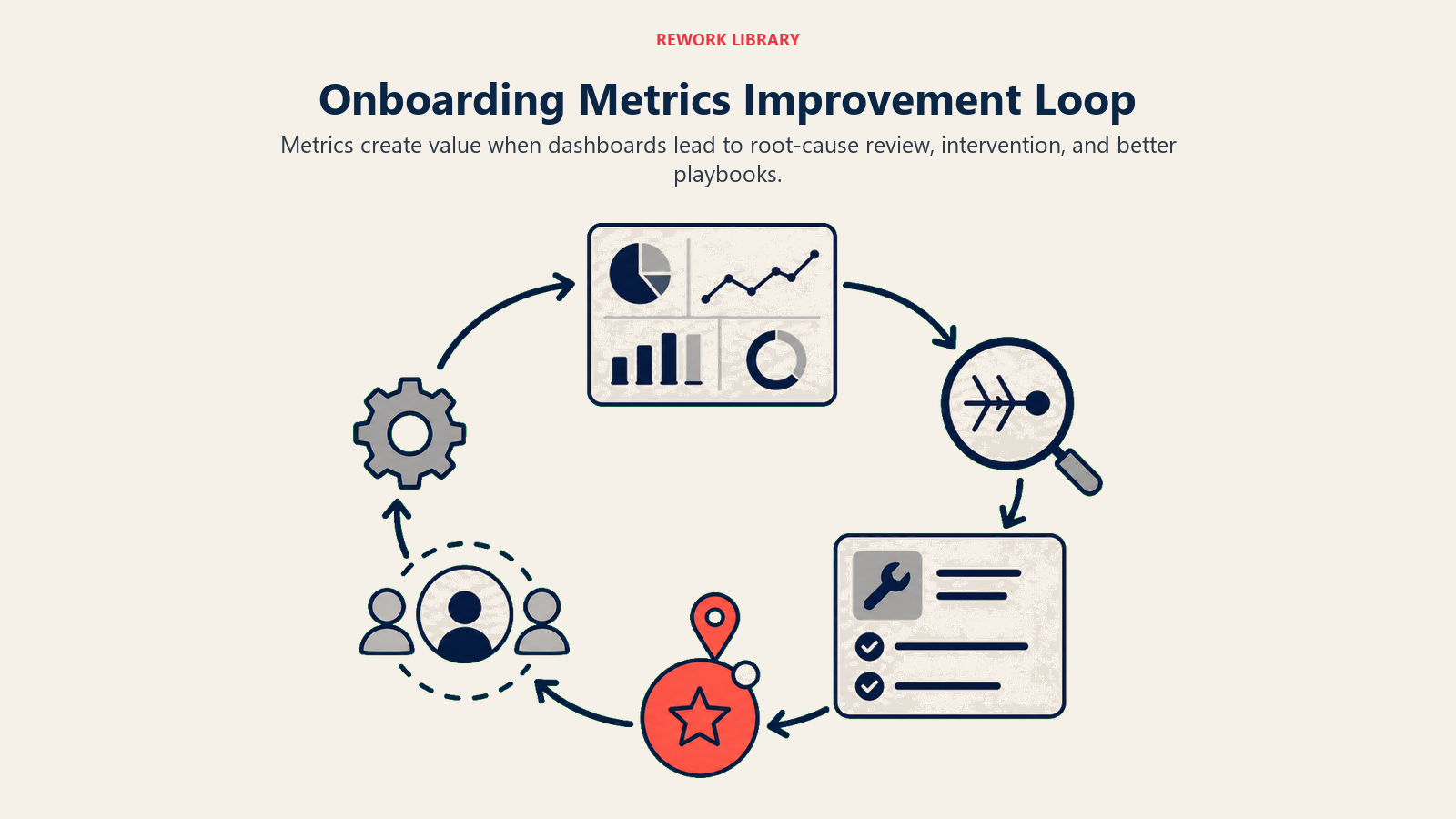
Build tiga dashboards untuk tiga audiences:
Executive Dashboard (Monthly Review):
- Cohort TTV trend
- Completion rate trend
- Health score distribution
- First 90-day retention
- NPS/CSAT
Executives care about outcomes dan trends. Adakah onboarding getting better atau worse? Adakah kita retaining customers? Adakah customers satisfied?
Operations Dashboard (Weekly Team Meeting):
- Active onboarding customers dan status mereka
- At-risk accounts requiring intervention
- Milestone completion rate
- CSM capacity utilization
Operations leaders need tahu what's happening right now. Siapa needs help? Where bottlenecks? Adakah kita mempunyai capacity untuk new customers?
Individual CSM Dashboard (Daily Check):
- My active onboardings dan health scores
- Upcoming milestones dan deadlines
- Customer engagement signals
- Actions required
CSMs need tactical information. Apa yang saya perlu buat hari ini? Which accounts need attention? Apa coming up minggu ini?
Analisis Punca Utama bagi Outlier
Apabila metrics go wrong, dig in. Jangan just report number. Understand why.
Apabila TTV unusually long: Interview both customer dan CSM. Review timeline dan all delays. Identify specific bottleneck. Adakah customer capacity? Technical complexity? Problem dengan process anda? Categorize root cause dan implement fix untuk prevent recurrence.
Apabila customer mempunyai low health score: Check engagement signals seperti usage dan responsiveness. Review milestone progress. Talk directly ke customer untuk understand what's going on. Then develop intervention plan. Jangan just watch score drop.
Apabila completion rate drops: Analyze incomplete customers. Kenapa mereka tidak finish? Look for patterns by segment, CSM, atau product tier. Maybe anda seeing bunch of SMB customers yang all stalled pada same milestone. Itu systemic issue. Fix process atau product, bukan just individual cases.
Eksperimen dan Pengoptimuman
Test variations onboarding process anda:
- Variation A: Control (current process)
- Variation B: Test (process change)
- Measure: TTV, completion rate, satisfaction
- Analyze: Which performed better?
- Roll Out: Winning variation becomes new standard
Example tests untuk run:
- Pre-onboarding prep versus no prep
- Template-based setup versus fully custom
- Live training versus on-demand only
- Weekly check-ins versus bi-weekly
Satu company tested pre-onboarding prep. Mereka sent new customers 30-minute video dan setup checklist sebelum kickoff. Customers yang completed prep mempunyai 12 days faster TTV dan 18% higher completion rates. Prep became standard.
Company lain tested weekly versus bi-weekly check-ins. Weekly check-ins mempunyai slightly better outcomes (3 days faster TTV), tetapi required 25% more CSM time. Mereka calculated ROI dan decided ia not worth it except untuk high-value enterprise accounts.
Test, measure, decide. Itulah cara anda optimize systematically bukannya based on opinions.
Kesimpulan
Onboarding metrics bukan vanity dashboards untuk executive presentations. Ia operational intelligence yang enables continuous improvement, early intervention, dan predictable customer success.
Teams yang systematically track dan act on onboarding metrics achieve:
- 30-50% faster time to value
- 85%+ onboarding completion rates
- 15-25 percentage point higher retention
- Predictable resource needs dan capacity planning
- Continuous improvement culture
Teams yang fly blind atau rely on gut feel experience:
- Unpredictable onboarding outcomes
- Late discovery of at-risk customers
- No visibility into apa working atau broken
- Inability untuk prove ROI of CS investment
- Stagnant atau declining retention
Framework straightforward. Track core metrics (TTV, completion rate, health score, retention, satisfaction). Monitor activity metrics (engagement, training, usage). Watch milestone metrics (on-time completion, bottlenecks). Guna predictive metrics (health score, at-risk flags, retention correlation). Measure efficiency (CSM time, cost per onboarding).
Then act on apa you learn. Retention anda depends on it.
Soalan Lazim
Apakah metrik onboarding terpenting untuk dijejaki?
Lima metrik onboarding teras ialah time to value (TTV), kadar penyelesaian onboarding, skor kesihatan peringkat awal, pengekalan 30/60/90 hari pertama, dan NPS atau CSAT onboarding. TTV ialah peramal tunggal terkuat bagi pengekalan jangka panjang. Sokong metrik ini dengan metrik aktiviti seperti kadar pengaktifan dan penyelesaian milestone tepat masa.
Apakah penanda aras time to value yang baik?
Penanda aras time to value berbeza mengikut segmen. Enterprise: 30 hingga 60 hari ialah tahap terbaik. Mid-market: 20 hingga 45 hari. SMB: 7 hingga 21 hari. Product-led growth: 1 hingga 7 hari. Laporkan median TTV dan bukannya purata, kerana outlier mencondongkan min, dan jejaki aliran dari semasa ke semasa.
Apakah kadar penyelesaian onboarding yang patut disasarkan oleh pasukan?
Sasarkan penyelesaian onboarding 85 peratus atau lebih tinggi. Antara 70 dengan 85 peratus boleh diterima tetapi masih ada ruang untuk bertambah baik, dan di bawah 70 peratus menandakan masalah serius dengan kesesuaian pelanggan atau geseran proses. Gunakan tempoh had 120 hari: pelanggan yang belum menyelesaikan onboarding dalam masa empat bulan dianggap tidak lengkap. Lihat kriteria penyelesaian onboarding untuk takrifan.
Bagaimana metrik onboarding meramal churn?
Metrik onboarding ialah penunjuk awal: kebanyakan churn ditentukan semasa onboarding, beberapa bulan sebelum pelanggan benar-benar pergi. TTV yang lebih pantas, penyelesaian yang lebih tinggi, dan skor kesihatan awal berwarna hijau berkait dengan pengekalan yang jauh lebih tinggi. Menjejaki pemantauan kesihatan pelanggan dan metrik pengekalan bersama-sama membolehkan pasukan campur tangan sebelum akaun berisiko churn.
Ready untuk implement onboarding metrics? Explore onboarding fundamentals, time to value optimization, dan customer health monitoring.
Learn more:

On this page
- Metrik Onboarding Teras
- Masa Mencapai Nilai (TTV)
- Masa hingga Selesai Onboarding
- Kadar Penyelesaian Onboarding
- Skor Kesihatan Peringkat Awal
- Pengekalan 30/60/90 Hari Pertama
- NPS atau CSAT Onboarding
- Metrik Aktiviti dan Penglibatan
- Masa dari Kickoff ke Log Masuk Pertama
- Kadar Pengaktifan Pengguna
- Kadar Penyelesaian Latihan
- Pengaktifan Ciri mengikut Hari/Minggu
- Jumlah Tiket Sokongan Semasa Onboarding
- Metrik Penjejakan Milestone
- Garis Masa Penyelesaian Milestone
- Penyelesaian Tepat Masa vs Lewat
- Kesesakan Laluan Kritikal
- Metrik Ramalan
- Skor Kesihatan Onboarding
- Penunjuk Berisiko Semasa Onboarding
- Korelasi dengan Pengekalan Jangka Panjang
- Metrik Kecekapan dan Sumber
- Pelaburan Masa CSM Setiap Pelanggan
- Kos Setiap Onboarding
- Menggunakan Metrik untuk Memperbaiki Onboarding
- Reka Bentuk Dashboard dan Pelaporan
- Analisis Punca Utama bagi Outlier
- Eksperimen dan Pengoptimuman
- Kesimpulan
- Soalan Lazim
- Apakah metrik onboarding terpenting untuk dijejaki?
- Apakah penanda aras time to value yang baik?
- Apakah kadar penyelesaian onboarding yang patut disasarkan oleh pasukan?
- Bagaimana metrik onboarding meramal churn?