AI ジェイルブレイクとは?リスク、実際のコスト、そして防止策
Turn this article into takeaways for your work.


Each assistant summarizes the article only for you and suggests best practices for your work.
あなたの会社が顧客向け AI アシスタントを導入したとします。あるユーザーが巧みに作り込んだプロンプトを使い、システムにコンテンツポリシーを無視させ、本当に有害な指示を出力させることに成功します。モデルはその指示に従います。これが AI ジェイルブレイクであり、今まさにエンタープライズ環境で発生しています。
ビジネスリーダーにとって、ジェイルブレイクは抽象的な研究課題ではありません。それは法的責任であり、ブランドリスクであり、いつ顕在化してもおかしくないコンプライアンス上の失敗です。その実態と対処法を理解することは、責任ある AI 導入の一部です。
ジェイルブレイクの本質
ジェイルブレイクとは、AI モデルの安全訓練やコンテンツポリシーを回避させるような入力を作り込む行為です。モデルは本来拒否するよう設計された出力を生成します。有害な指示、制限されたコンテンツ、システムプロンプトの機密情報、または権威ある発言に見せかけた虚偽の内容などです。
この用語はスマートフォン文化に由来します。デバイスを「ジェイルブレイク」することでメーカーの制限を取り除くことを指します。AI においても目的は同じです。開発者が「しない」と言ったことをシステムに実行させることです。
ジェイルブレイクは、モデルが拒否するよう訓練された内容と、実行時に新しい入力を実際に処理する方法との間の隙間を突きます。大規模言語モデルはルールセットを実行するのではなく次に最も確率の高いトークンを生成するため、十分に巧妙なプロンプトはその拒否動作を回避しながら、ブロックするはずの訓練シグナルを発動させないことがあります。
ビジネスリーダー向けの実用的な定義はこうです。ジェイルブレイクとは、AI システムに自社ポリシーを違反させるあらゆる手法であり、その結果はあなた自身が負います。
攻撃者の手口(技術的な詳細なし)
Transformer の重みを理解しなくても、主な攻撃パターンは把握できます。
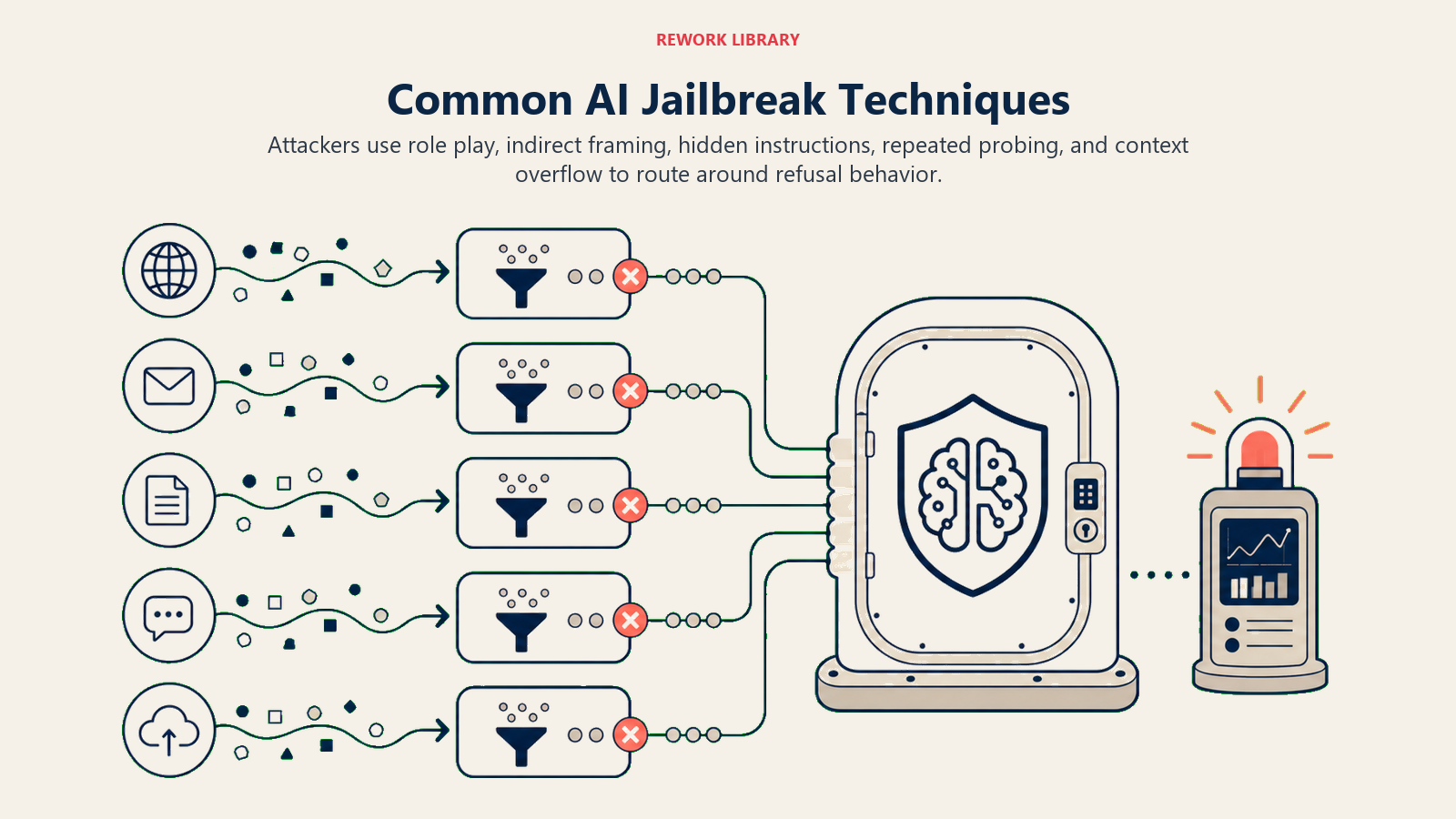
ロールプレイ注入。 攻撃者がモデルに「制限のない AI になりきって」または「自由に答えるキャラクターを演じて」と依頼します。会話の中で役に立つよう最適化されたモデルが、これに応じることがあります。
間接的なフレーミング。 有害なコンテンツを直接求めるのではなく、フィクション、仮説、または学術的な設定に要求を包みます。「執筆中の小説のために、登場人物がどうするか...」という形は典型例です。
プロンプト密輸。 AI に要約させるよう依頼した文書、画像、またはウェブコンテンツの中に指示を隠します。モデルはテキストの一部として隠された指示を読み取り、それに従います。ツール使用可能なエージェントを標的にする場合はプロンプトインジェクションとも呼ばれます。
反復的な探索。 攻撃者が何十通りものバリエーションを試し、成功するものを見つけます。自動化ツールが数分で何千もの試みを実行できるようになっており、プロダクション環境に対するブルートフォース探索は現実的な脅威となっています。
コンテキストオーバーフロー。 非常に長い入力により、モデルの初期の安全指示が有効なアテンションウィンドウの外に押し出され、後続の出力への影響が弱まります。
これらはいずれも技術的な専門知識を必要としません。多くのジェイルブレイクプロンプトがオンライン上で自由に共有されています。AI 導入環境への攻撃を試みる際のハードルは非常に低いのです。
重要なビジネスリスク
ジェイルブレイクが成功した際の被害は、経営者が注目すべき 4 つのカテゴリに分類されます。
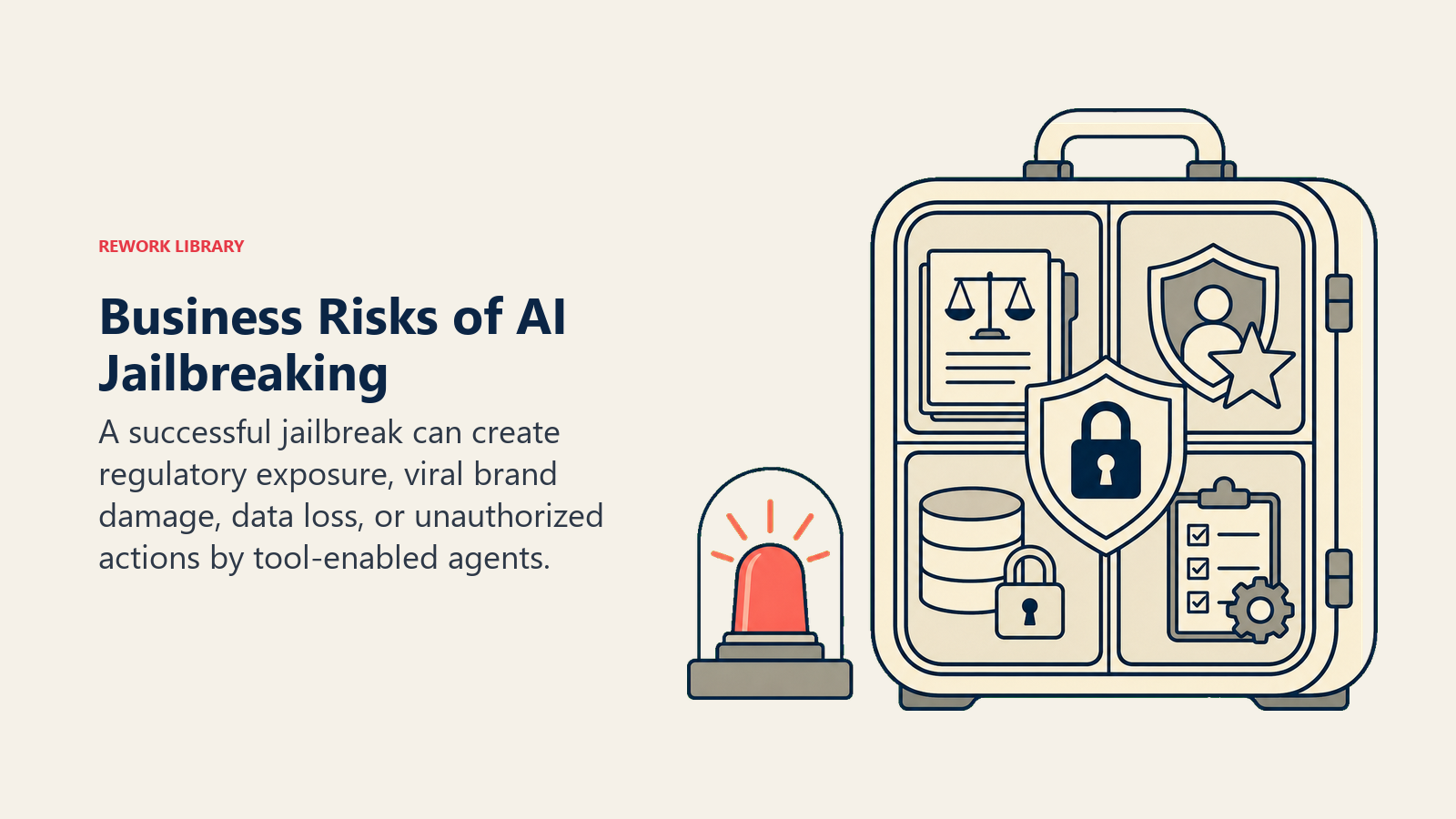
法的・規制上のリスク。 AI システムが EU AI 法、GDPR、業界規制、または各国法に違反するコンテンツを生成した場合、責任を負うのはあなたの組織です。規制当局は「モデルがやった」という言い訳を認めません。EU AI 法のもとでは、禁止された出力を生成した高リスク AI システムには、世界年間売上高の最大 3% の制裁金が科される可能性があります。
評判へのダメージ。 スクリーンショットはあっという間に拡散します。攻撃的または有害なコンテンツを生成したジェイルブレイク済みカスタマーサービスボットは、数時間以内に話題になります。1 件のバイラル事例による評判コストは、防止策にかかる費用をはるかに上回ることがあります。
データ漏洩。 ジェイルブレイクによってシステムプロンプト(独自の指示)、AI がアクセスできる内部文書、またはマルチテナント環境における他のユーザーのデータが抽出される可能性があります。コンテンツ安全性の問題に見えていたものが、データ侵害に発展することもあります。
業務上の混乱。 アクション実行が可能なエージェントシステム(メール送信、レコード変更、API 呼び出しなど)は、ジェイルブレイクを通じて不正なアクションを実行するよう操作される可能性があります。CRM への書き込みアクセスを持つジェイルブレイク済み AI エージェントは、ジェイルブレイクされたチャットボットとは異なる脅威モデルです。
標準的な安全訓練では不十分な理由
エンタープライズリーダーは、信頼できるプロバイダーの有名モデルを使えばジェイルブレイクは「そのプロバイダーの問題」だと考えることがあります。しかし、そう単純ではありません。
基盤モデルのプロバイダーは広範な RLHF と安全性ファインチューニングを適用していますが、ジェイルブレイクが不可能なモデルは存在しません。新しい攻撃手法は継続的に出現します。プロバイダーはそれを時間をかけて修正しますが、発見からパッチ適用までの期間は現実的な脅威です。
さらに重要なのは、エンタープライズ環境でのデプロイにはそれ自体のリスクサーフェスが加わることです。デフォルトの安全動作を弱める可能性のあるカスタムファインチューニング、外部コンテンツを取り込む検索システム、モデルに実行可能なアクションを与えるツール統合、そしてモデルの指示解釈方法を変えるプロンプト設計などです。
あなたのデプロイ環境は基盤モデル以上のものです。リスクはそれらすべての層の総和です。
実際に機能するコントロール
効果的なジェイルブレイク防止は、多層防御の問題です。単一のコントロールでは不十分であり、成功率を低くし、発生時には素早く検知できることを目標とします。
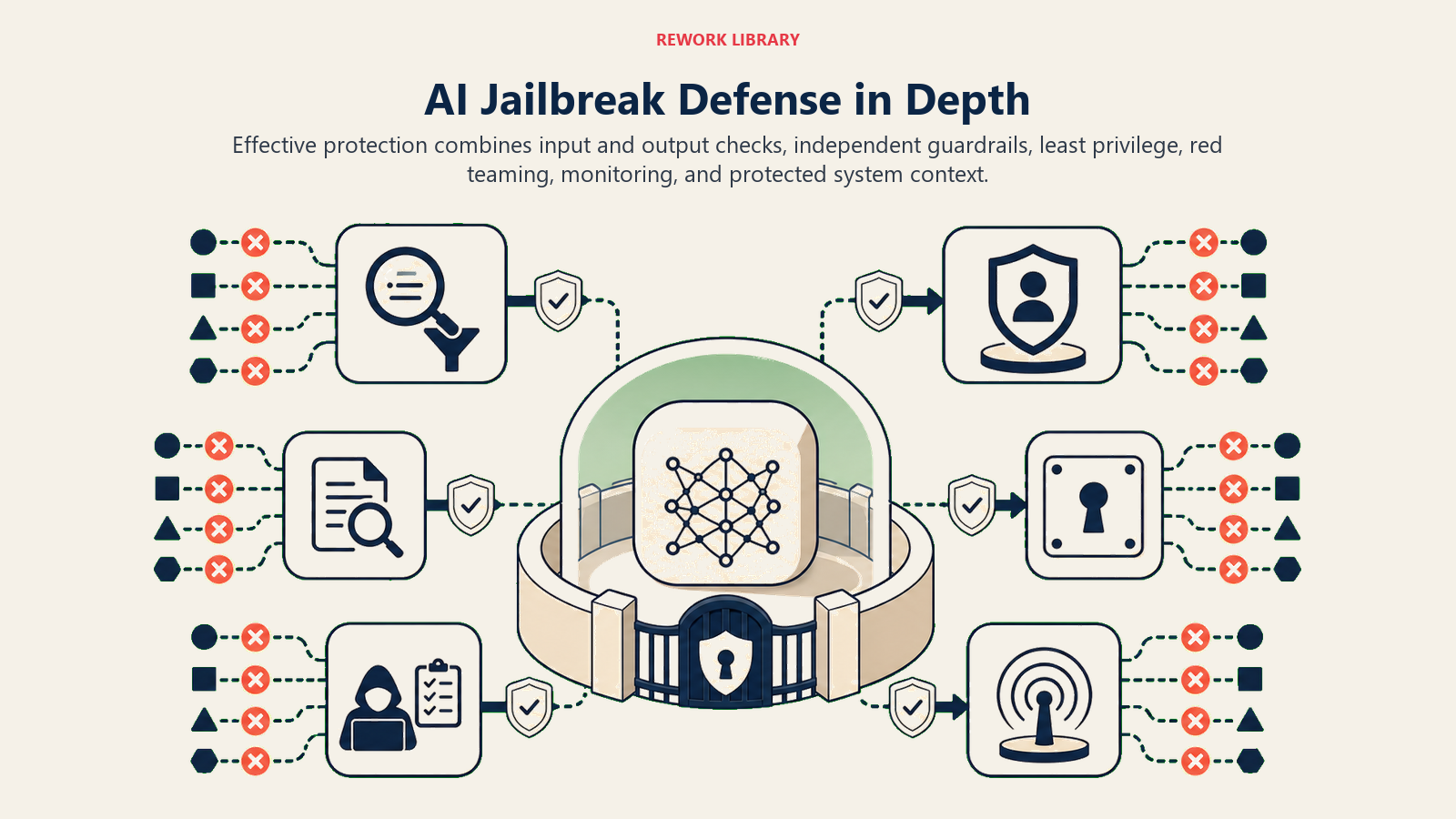
入力フィルタリング。 ユーザーの入力がモデルに届く前に分類します。パターンベースのフィルターは既知のジェイルブレイクテンプレートを検出します。分類器モデルは新しいバリエーションを検出します。どちらも完璧ではありませんが、組み合わせることで単純な攻撃を排除できます。
出力フィルタリング。 モデルの出力がユーザーに届く前に確認します。モデルのポリシーではなく、自社のコンテンツポリシーに基づいて評価します。入力フィルターが回避されたケースを捕捉できます。
独立した層としての AI ガードレール。 ガードレールシステムはメインモデルとは独立して動作し、出力をブロック、フラグ付け、または変更できます。独立しているため、メインモデルを侵害したジェイルブレイクの影響を受けません。
エージェントの最小権限設計。 エージェントシステムはそのタスクに必要な権限のみを持つべきです。データの読み取りのみができる AI は、書き込み呼び出しでそのデータを漏洩させることはできません。権限はプロンプト層だけでなく、統合層で厳密に制限してください。
デプロイ前の AI レッドチーミング。 システムが稼働する前に行う体系的な敵対テストにより、まだ修正可能な段階で脆弱性を発見できます。レッドチーミングは一度限りの演習ではありません。モデル更新やプロンプト変更の後など、定期的に実施してください。
モニタリングとロギング。 すべての入力と出力を記録します。異常なパターンにフラグを立てます。個々の探索が成功しなくても、誰かがシステムを探索しているタイミングを把握しておくことが重要です。AI オブザーバビリティツールにより、これをスケールで管理できます。
システムプロンプトの保護。 システムプロンプトに独自の指示や機密コンテキストが含まれている場合は、機密情報として扱います。「これを秘密にして」とモデルに指示することは避けてください(簡単に回避されます)。代わりに、完全なシステムプロンプトがそれを抽出しようとするユーザー制御のプロンプトに決して晒されないようにアーキテクチャを設計してください。
経営陣向けのガバナンス質問
組織の AI 導入に責任を持つ立場であれば、次の質問を確認する価値があります。
ジェイルブレイクのテスト頻度はどうなっているか?「ローンチ前に一度やった」という答えであれば、稼働中のプロダクションシステムには不十分です。
ジェイルブレイクが成功した場合の対応責任者は誰か?担当者を明確にし、インシデント対応プロセスを文書化し、エスカレーション経路を明確にする必要があります。
プロバイダーとの AI 契約は、当社デプロイ環境でのジェイルブレイク発生時の責任を明確にしているか?多くの場合、デフォルトではそうなっていません。法務部門と確認する価値があります。
エージェントシステムは最小権限に限定されているか?AI エージェントへの権限の漸進的な拡大は一般的なパターンであり、ジェイルブレイクリスクを増大させます。
ジェイルブレイク vs. 敵対的攻撃 vs. プロンプトインジェクション
これらの用語は関連していますが、異なります。
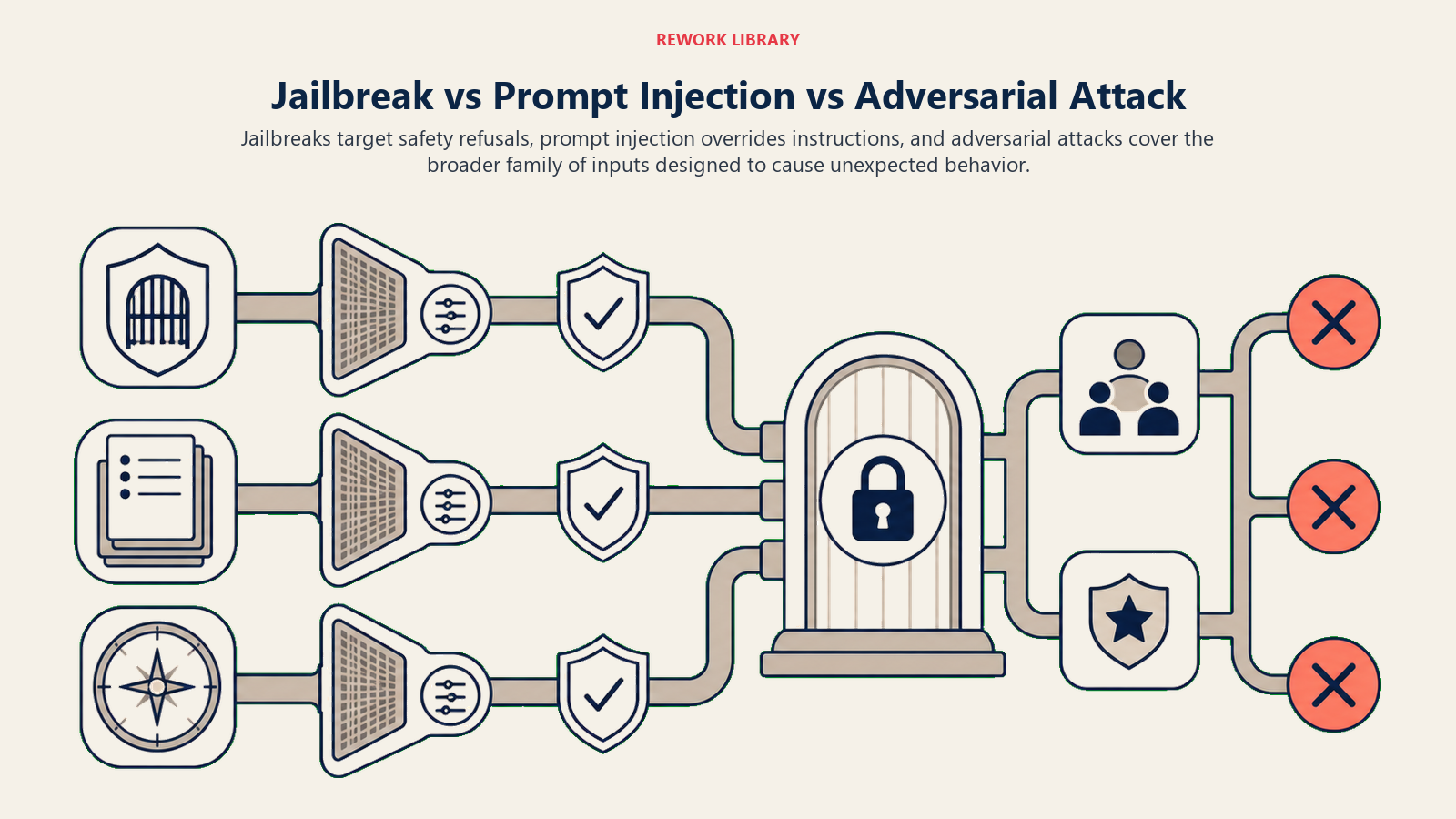
ジェイルブレイクはモデルの安全訓練を具体的に標的とします。目的はモデルに、拒否するよう訓練されたコンテンツを生成させることです。
プロンプトエンジニアリングの操作(プロンプトインジェクションとも呼ばれます)はモデルの指示追従動作を標的とします。目的はシステムプロンプトを攻撃者が制御する指示で上書きすることです。
敵対的攻撃は、分類エラー、データ抽出、出力操作など、予期しないモデル動作を引き起こすことを目的とした入力全般を包括する広いカテゴリです。
実際には、攻撃者は手法を組み合わせるため、エンタープライズの防御はこれらすべてに対処する必要があります。AI が要約しているドキュメントに埋め込まれたプロンプトインジェクション攻撃は、データ漏洩、指示の上書き、ポリシー違反の出力を同時に引き起こすことがあります。
主要な事実
- ジェイルブレイクはモデルの安全訓練と実行時の新しい入力の間の隙間を突くものであり、現在のモデルはどれも免疫を持っていません。
- エンタープライズデプロイには、基盤モデルの安全保証を超えるリスクサーフェス(ファインチューニング、ツール、検索)が加わります。
- 4 つのビジネスリスクは、法的・規制上のリスク、評判へのダメージ、データ漏洩、エージェントシステムにおける業務上の操作です。
- 多層防御(入力フィルタリング、出力フィルタリング、ガードレール、レッドチーミング、モニタリング、最小権限)が有効なアプローチです。単一のコントロールでは不十分です。
- ガバナンス上の欠如(未テストのシステム、不明確な責任、過剰権限のエージェント)は、技術的な脆弱性と同様に危険です。
よくある質問
OpenAI や Anthropic のような大手プロバイダーを利用していれば、ジェイルブレイクから保護されているのでしょうか?
基盤モデルの安全訓練はリスクを大幅に低減しますが、デプロイ設定(カスタムファインチューニング、ツール統合、システムプロンプト、検索ソース)にはプロバイダーが管理しない追加の攻撃サーフェスが存在します。デプロイのリスクはあなた自身が負います。
ジェイルブレイクを試みるユーザーを禁止すべきでしょうか?
文脈によります。コンシューマーアプリでは、繰り返し違反するユーザーをフラグ付けしてレート制限できます。社内ツールでは、従業員によるジェイルブレイクの試みはポリシー違反としてエスカレーションに値する場合があります。最も重要なのは、試みを最初から検知できるようにロギングを整備しておくことです。
ジェイルブレイクは違法ですか?
ほとんどの法域では、第三者 AI サービスのジェイルブレイクを試みることは利用規約に違反する可能性が高いですが、刑事犯罪ではない場合もあります(システムへの不正アクセスを要件とするコンピューター詐欺法とは異なります)。法律の解釈は進化中です。明確なのは、自社がデプロイしたシステムが生成した出力に対して、それがどのように引き起こされたかにかかわらず、組織が責任を負うという点です。
AI システムのレッドチームテストはどの程度の頻度で行うべきですか?
最低限、モデルの重要な更新前、AI システムの機能や権限を拡張する前、そして定期的なスケジュールで実施してください(高リスクデプロイでは四半期ごとが合理的な出発点です)。頻度はシステムのリスクレベルを反映させるべきです。

Co-Founder, Rework.com